
Reviewed · NAGANO TOURS
From Nagano: Tateyama-Kurobe Alpine Route
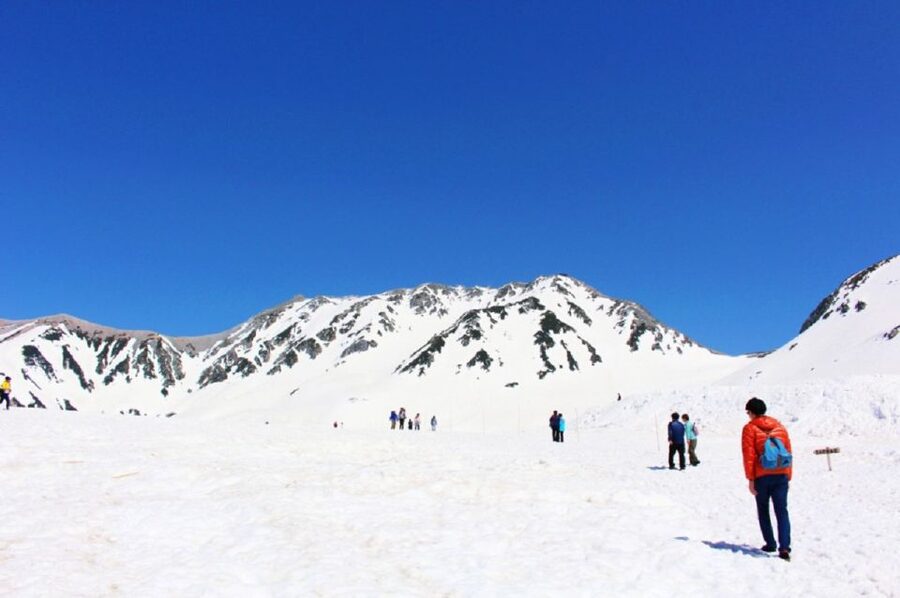
The Tateyama-Kurobe Alpine Route is less a single ride than a carefully organized mountain relay. From Nagano, you’ll switch between buses, trolley buses, a cable car, and a ropeway before reaching Murodo at 2,450 meters. The payoff is big: Japan’s highest dam, steep Chubu Sangaku National Park scenery, and the famous snow corridor.
I especially like two things here. First, the transport changes are part of the fun, not just a way to get somewhere. Second, the tour takes care of the complicated tickets and connections, which matters when crowds and mountain weather can disrupt the day. The main drawback is the schedule: it is a long, tiring day, and poor conditions may close the snow corridor.
Key points to know before booking
- Six mountain transport stages: Ride from Ogisawa toward Murodo using the Kanden Tunnel trolley bus, cable car, Tateyama Ropeway, and final trolley bus.
- Kurobe Dam is a major stop: You get time to view Japan’s highest dam and the surrounding peaks, not just a quick photo stop.
- Murodo sits at 2,450 meters: This is Japan’s highest station and the base for walking around the snow corridor and nearby mountain area.
- The snow corridor is weather dependent: In extreme conditions, routes to it may close, so the famous wall is not guaranteed.
- Guides manage a complex day: Guides such as Teddy, Orlando, Endo, Aiko, Kieron, Shawn, Sijong San, and Dai San have been praised for keeping groups together and on time.
- The $232 price covers the hard part: Return transport from Nagano to Ogisawa, the Alpine Route transport ticket, and an English-speaking guide are included. Lunch is not.
Why this Alpine Route day is worth your time
This is one of Japan’s most unusual day trips because the journey itself is the attraction. You are not simply riding a coach to a viewpoint. You are crossing a high mountain route by a string of specialized vehicles, each built for a different section of difficult terrain.
That variety gives the day a sense of progress. The first bus carries you from Nagano toward Ogisawa. From there, the route turns into a sequence of mountain connections. You pass through a tunnel, cross the Kurobe Dam area, rise by cable car and ropeway, and finish at Murodo. The changing views help prevent the long day from feeling like one continuous transfer.
The setting is Chubu Sangaku National Park, where the scenery is defined by high peaks, exposed slopes, and weather that can change quickly. At lower points, you may be surrounded by mountain greenery. At Murodo, the feeling is more severe and open, with a high-altitude environment that can still look wintry when Nagano is mild.
I also like that you do not need to solve the route on your own. The Alpine Route uses several transport systems, and the order of tickets and boarding points matters. Your guide handles the group movement and explains what comes next. That is a real benefit on a popular day when missed connections could cost you precious time.
A few more Nagano half-days to weigh up
- 1-Day Snow Monkeys, Zenko-ji Temple & Sake in Nagano
★ 5.0 · 1,020 reviews - Nagano: Snow Monkeys, Zenkoji Temple & Sake Day Trip
★ 4.9 · 833 reviews - From Tokyo: Snow Monkey 1 Day Tour with Beef Sukiyaki Lunch
★ 4.6 · 295 reviews
Starting at Nagano Station at 8:15
Meet your guide at 8:15 in front of the Information Board at JR Nagano Station, directly opposite the shinkansen ticket gates. This is an easy point to find, but arrive with time to spare. The day begins early, and the group needs to leave together.
The first bus ride takes about 1.5 hours. This is the least dramatic part of the outing, but it saves you from arranging separate transport to Ogisawa. You can use the ride to settle in, check your shoes and jacket, and keep your sunglasses handy.
The bus reaches Ogisawa at about 10:15. You then prepare for the mountain route, with the first scheduled trolley bus at 11:00. This gap is useful because it gives the group time to gather before entering the more tightly timed section of the day.
Expect a full schedule rather than a slow countryside outing. The route is carefully timed, and the guides must coordinate the group through several transfers. Past groups have praised guides including Teddy, Orlando, Endo, Aiko, Kieron, and Shawn for keeping the day orderly. Sijong San and Dai San were also singled out for patiently helping slower members of the group.
That sort of practical care matters more here than a nonstop stream of facts. You need clear directions, sensible meeting points, and someone watching the clock.
The Kanden Tunnel trolley bus to Kurobe Dam
The first mountain transport is the Kanden Tunnel trolley bus, which carries you from Ogisawa toward the Kurobe Dam section. The tunnel is part of the route’s character. This is not a scenic rail ride with windows on every side, but it takes you through the engineering heart of the Alpine Route.
The main stop is Kurobe Dam, Japan’s highest dam. Construction took place from 1956 to 1963, and the project required the labor of as many as 10 million people. Those figures help explain why the dam is treated as a national achievement rather than just another photo stop.
You have about 2.5 hours for the Kurobe Dam portion, including guided sightseeing and walking. That is enough time to take in the scale of the structure, look toward the surrounding mountains, and move at a reasonable pace instead of being hurried through.
The dam works because it combines human engineering with a very dramatic setting. The concrete structure looks especially powerful against the steep mountain walls. You can appreciate both the practical achievement and the tension between the controlled structure and the rough terrain around it.
This is also one of the better places to understand why the Alpine Route was such a difficult undertaking. The day is not only about reaching a high viewpoint. It shows you the infrastructure needed to connect remote mountain areas.
Wear comfortable shoes. The route includes walking, and the surfaces may be wet, uneven, or snowy depending on the date and weather.
Rising toward Murodo by cable car and ropeway
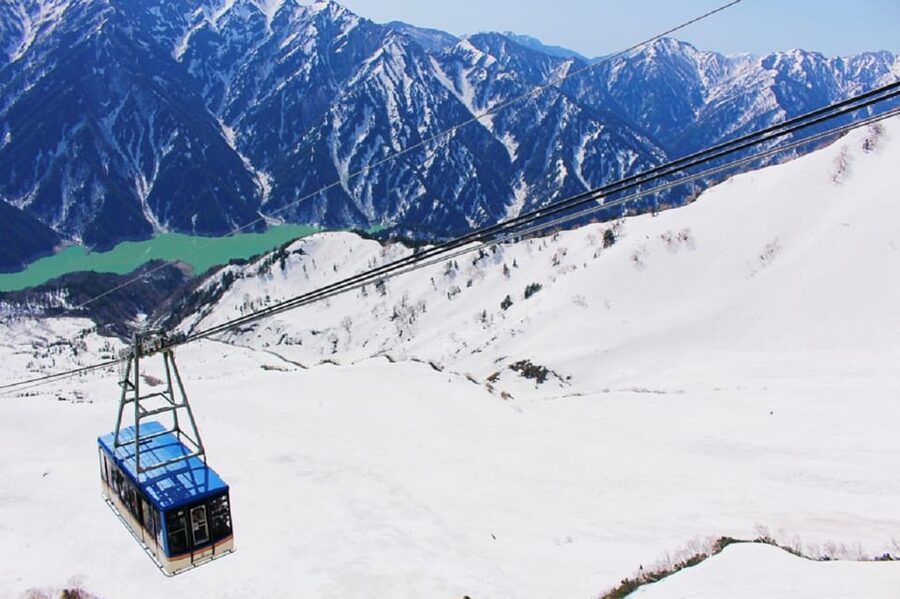
After Kurobe Dam, you continue toward the upper section of the route. The day’s transport changes are a major part of the experience. You will use the Tateyama Ropeway, which spans 1,700 meters, and continue toward Daikanbo before taking the final trolley bus to Murodo.
The ropeway gives you a different view from the tunnel and dam. You are now suspended above the mountain terrain, watching the slopes open below you. In good weather, this is one of the clearest ways to appreciate the scale of the route. In cloud or poor visibility, the ride may be less rewarding, but the transport remains an unusual part of the day.
The progression from one vehicle to another can also be tiring. One recent assessment described the day as tiring because of the many types of transport and the crowds, even though the mountain views made it worthwhile. That is a fair warning. You should book this as an active sightseeing day, not as a restful escape.
The guides are particularly useful during this stretch. A large group can easily scatter at boarding areas, especially when several departures are moving through the system. Guides have been praised for explaining the plan, managing entry and exits, and helping people who fall behind.
Same base, a completely different sort of day:
- Tokyo: Snow Monkey & Nagano Customiseable Private Day Tour
★ 4.8 · 138 reviews - Matsumoto Castle Tour & Samurai Experience
★ 4.9 · 128 reviews - 1-Day Tour from Nagano and Matsumoto Kamikochi & Matsumoto Castle
★ 5.0 · 105 reviews - 1-Day Snow Monkeys & Snow Fun in Shiga Kogen Tour
★ 5.0 · 94 reviews
Murodo at 2,450 meters
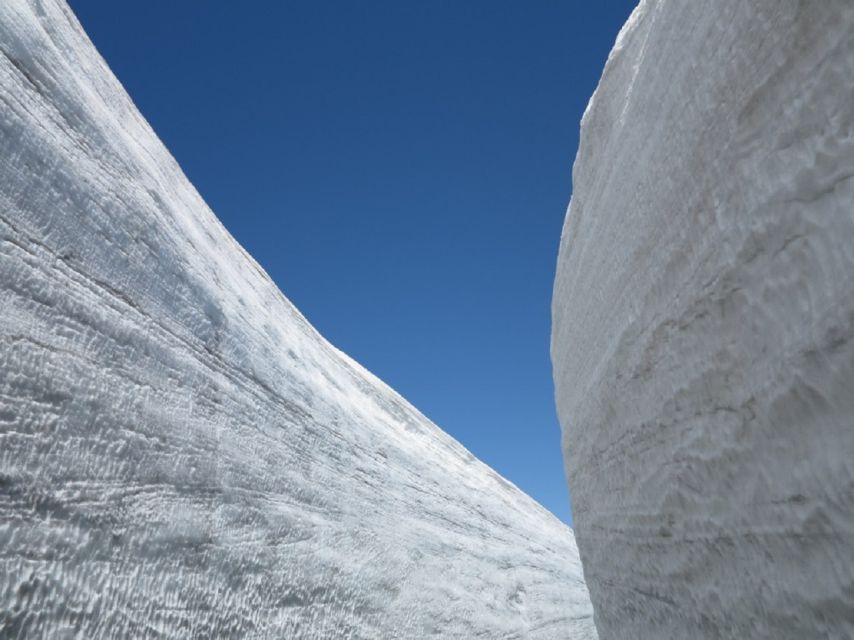
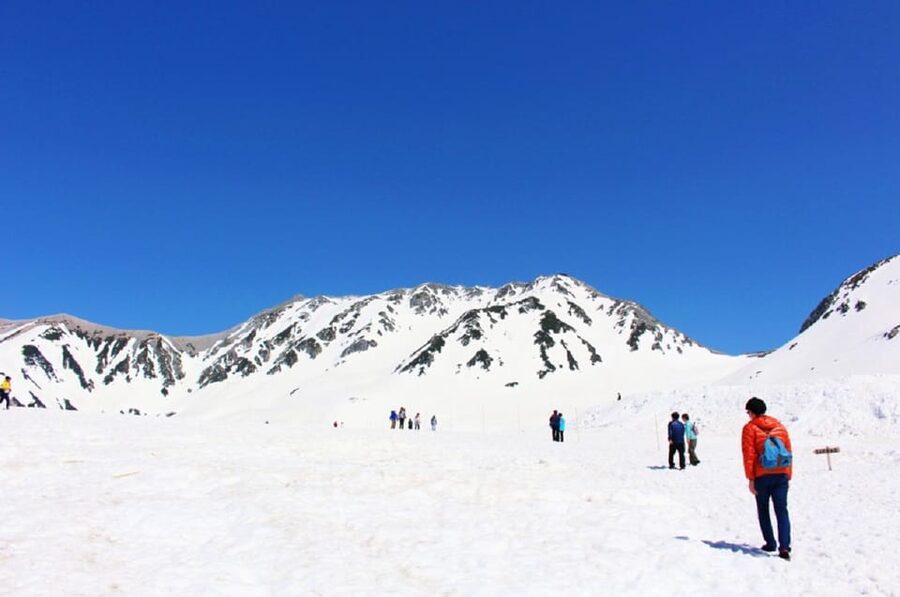
Murodo is the high point of the experience and the emotional payoff of the route. At 2,450 meters, it is Japan’s highest station, an isolated outpost surrounded by a stark mountain environment.
You get about 1.5 to 2 hours of free time here. That is enough for a walk around the snow corridor and the nearby area, with some time left for museums. You should not expect a long mountain hike. The tour gives you a short window to enjoy the high-altitude setting before the return journey begins.
The air and conditions can feel very different from Nagano. Bring sunglasses, as recommended, and wear shoes suited to possibly snowy trails. Comfortable footwear is not optional here. A fashion shoe that works in town will be a poor choice if paths are covered in packed snow or meltwater.
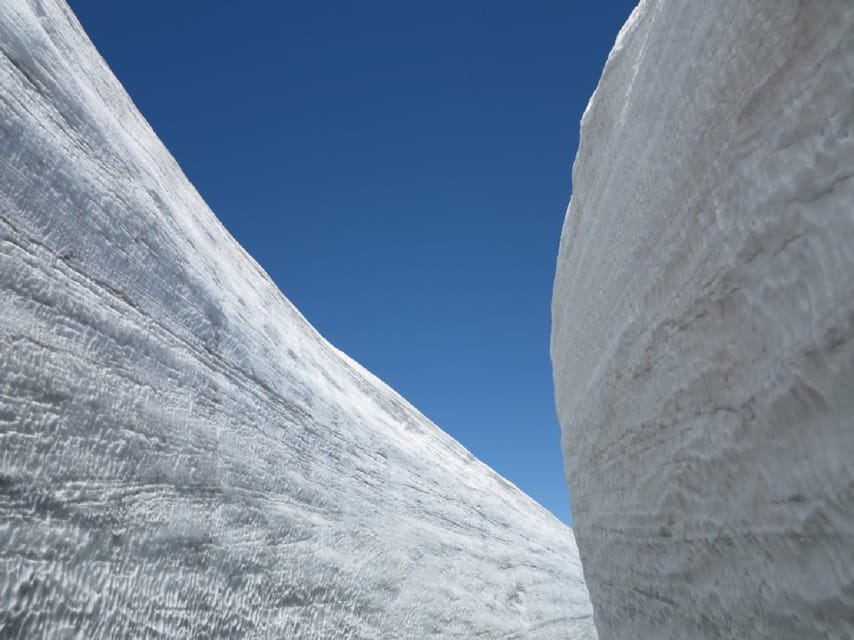
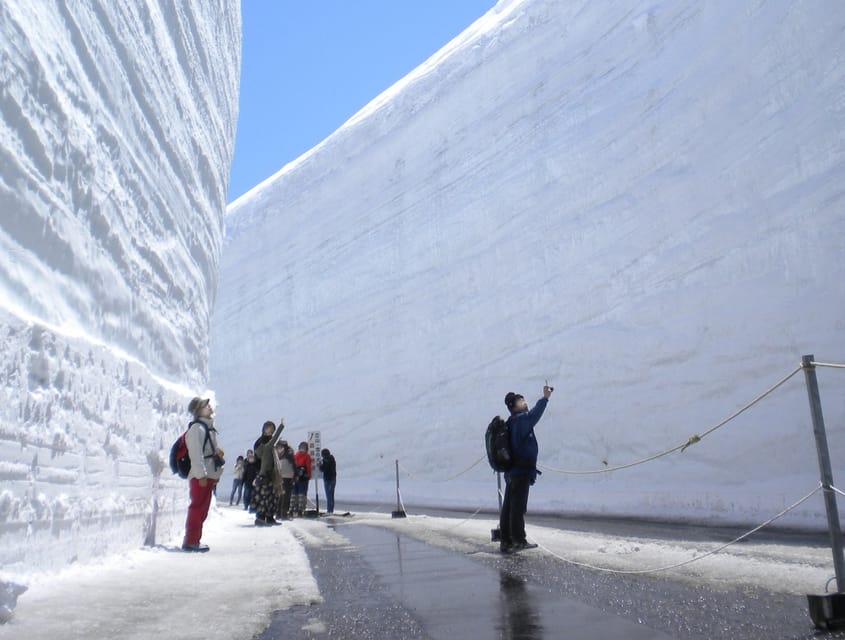
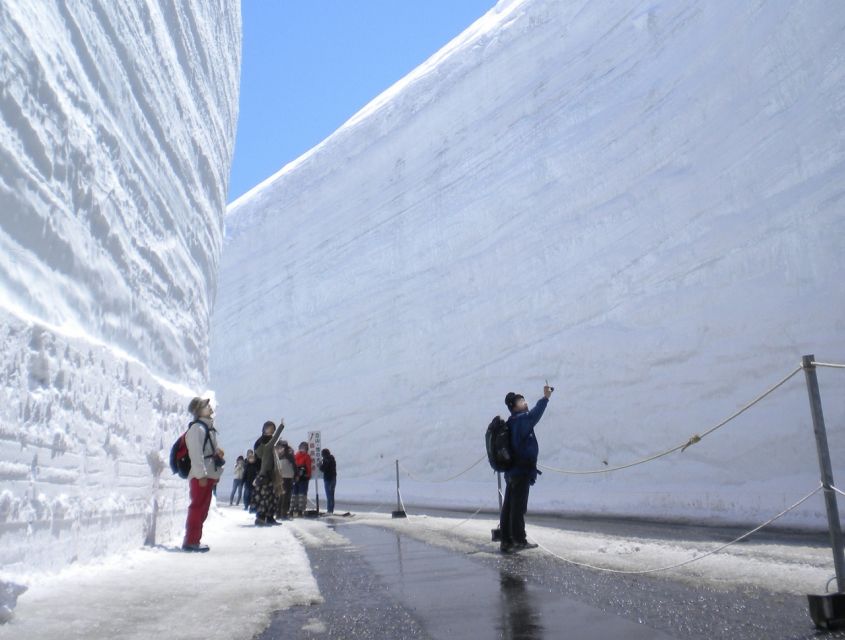
The snow corridor is the image most people associate with this route. Snow walls can rise as high as 20 meters, creating a narrow passage between towering banks. It is an impressive sight, but you need to understand the limits. Extreme weather can close the routes leading to the corridor, and the itinerary may change with conditions.
One person who booked the tour was unhappy after missing the chance to see and touch the snow wall. That experience points to the main risk of booking this day for one photograph alone. The corridor is a major highlight, but it is not a guaranteed feature in every condition or on every departure.
When the weather is clear, Murodo offers the best postcard views of the trip. When clouds move in, the mood becomes more remote and severe. Either way, the high station gives the route a strong sense of place.
The return to Nagano
After your time at Murodo, you retrace the route toward Ogisawa. The return section takes about two hours before you board the coach back to Nagano, with another 1.5 hours on the road.
This is when the day’s length catches up with you. The route begins at 8:15 and brings you back to the same station later in the day. The exact return time can shift with traffic, transport queues, weather, and the pace of the group.
The schedule is based on good traffic conditions, but it can be adjusted. That is normal for a mountain route with several connections. Keep the evening after this tour flexible. Do not plan a tight dinner reservation or an important train immediately after the stated return.
The trip is most enjoyable when you accept the rhythm: gather, board, ride, walk, meet again, and repeat. Guides have been credited with keeping these transitions on time even with large groups. That organization helps turn a potentially confusing route into a manageable day.
There is one practical complaint worth noting. One group found the bus ride noisy because many children were present. If you need a quiet coach ride, this may not always be the ideal setting. The group atmosphere can vary, and the transport sections are shared with other people.
What the $232 price really covers
At $232 per person, this is not a cheap day trip. The value comes from what is bundled into the price: return transport between Nagano and Ogisawa, the Tateyama-Kurobe Alpine Route ticket covering the mountain transport stages, and an English-speaking guide.
The transport ticket is the key inclusion. Buying and coordinating every section separately would add work and create more chances for confusion. You are paying not only for movement, but also for the guide’s help with a complicated chain of connections.
Lunch, snacks, drinks, and other food are not included. Bring something to eat and carry water, especially since your time at the major stops is structured around the transport schedule. You will not have the freedom of a slow restaurant lunch unless the day’s timing allows it.
Shinkansen tickets are also not included. If you are traveling from Tokyo, Kyoto, or another city, you need to arrange your own train to Nagano and leave enough margin for the 8:15 meeting time.
For someone already based in Nagano, the price is easier to justify because it packages the route’s main costs and removes the planning burden. For someone adding an expensive train journey just for this outing, the total day budget becomes much higher.
The free cancellation policy, allowing cancellation up to 24 hours in advance for a full refund, and the option to reserve now and pay later add useful flexibility. Still, check the weather forecast and your wider Japan schedule before committing to a tightly packed trip.
Who will enjoy this tour most
I would recommend this outing to you if you want a major mountain sight but do not want to plan a complicated transport route yourself. It suits first-time visitors to the Alpine Route, families who prefer organized movement, and anyone who values an English-speaking guide at each changeover.
It is also a good match for photographers and fans of infrastructure. Kurobe Dam offers scale and engineering, while the ropeway and high station provide a range of viewpoints. The snow corridor adds a seasonal feature that feels very different from ordinary city sightseeing in Japan.
You should think twice if you dislike crowds, long transport days, or fixed schedules. The trip includes plenty of walking and repeated boarding procedures. It is wheelchair accessible, but the combination of mountain conditions, walking surfaces, and many transport stages means you should confirm that the specific day’s arrangements suit your needs.
Children can join, but the experience may feel long for younger ones. One departure included many children, and the coach became noisy. That does not make it a bad family choice, but it is worth setting expectations.
Most of all, do not book this only because you expect a guaranteed 20-meter snow wall. Weather can close access to the corridor. Book it for the whole Alpine Route: the dam, the transport sequence, the high mountain station, and the chance to see the snow corridor if conditions cooperate.
Practical advice for a smoother day
- Meet at the Information Board opposite the shinkansen ticket gates at 8:15.
- Wear shoes made for walking on snow or wet trails.
- Bring sunglasses for bright snow and exposed mountain conditions.
- Carry lunch, snacks, and drinks because they are not included.
- Keep your evening free in case traffic or mountain connections cause delays.
- Listen closely at every meeting point, since the group must board several different transports.
- Treat the snow corridor as weather dependent, not guaranteed.
- If you are traveling with children, prepare them for a long day with several rides and walking sections.
Should you book the Tateyama-Kurobe Alpine Route from Nagano?
Book it if you want Japan’s high mountain scenery without wrestling with the route’s tickets and connections. The combination of Kurobe Dam, the 1,700-meter ropeway, Murodo at 2,450 meters, and the snow corridor gives you a lot in one day.
The strongest part of the tour is its organization. Guides such as Teddy, Orlando, Endo, Aiko, Kieron, and Shawn have helped keep demanding schedules under control, while patient guides have assisted people who move more slowly. That matters when the route is crowded and every connection counts.
Skip it if you need a relaxed day, guaranteed snow-wall access, or a quiet coach ride. Otherwise, the $232 cost is reasonable for a full day of transport, ticketing, and guiding through one of Japan’s most striking mountain routes.
FAQ
Where does the tour meet in Nagano?
Meet your English-speaking guide at 8:15 at JR Nagano Station, in front of the Information Board directly opposite the shinkansen and bullet train ticket gates.
How long does the tour last?
It is a full-day experience beginning in the morning and returning to Nagano Station later the same day. The listed transport time is about 1.5 hours each way between Nagano and Ogisawa, with several hours spent at Kurobe Dam and Murodo.
What transport do I use on the Alpine Route?
You use return coach transport between Nagano and Ogisawa, the Kanden Tunnel trolley bus, the Tateyama Ropeway, and additional mountain transport including the final trolley bus to Murodo. The Alpine Route ticket covers transport to and from the summit.
Is lunch included?
No. Lunch, snacks, drinks, and other food are not included, so bring what you need for the day.
What should I bring?
Bring comfortable shoes suitable for possibly snowy trails and sunglasses. Suitable footwear is important because walking routes may be snowy or wet.
Is the snow corridor guaranteed?
No. Extreme weather can close routes leading to the snow corridor. The itinerary may also change because of traffic, conditions, or the pace of the group.
Is the tour wheelchair accessible?
Yes, the activity is listed as wheelchair accessible. The tour still includes several mountain transport stages and walking areas, so confirm that the current arrangements meet your specific needs before booking.
Just added around Nagano
- Snow Monkeys, Hokusai & Sake: A Perfect Day in Nagano★ 5.0 · 19 reviews
- 1-Day Tateyama-Kurobe Tour: Walking on the ‘Roof of Japan’★ 5.0 · 20 reviews
- Snow Monkey & Shibu Onsen Afternoon Tour (Depart: Iiyama & Nozwa)★ 5.0 · 54 reviews
- Wasabi Farm Walking Tour & Lunch★ 4.5 · 20 reviews
- Snow Monkey Park, Soba Lunch and Shibu Onsen Tour★ 5.0 · 12 reviews
- Snow Monkey Park & Miso Production Day Tour from Nagano★ 5.0 · 18 reviews
- Ski or Snowboard Lesson in Shiga Kogen (4Hours)★ 5.0 · 34 reviews
- Nagano Spring: 1-Day Cherry Blossoms & Snow Monkeys Guided Tour★ 5.0 · 31 reviews
Nagano Tours, compared.
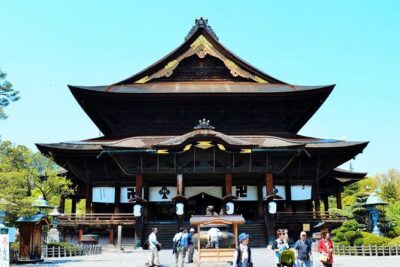
1-Day Snow Monkeys, Zenko-ji Temple & Sake in Nagano
Read our review →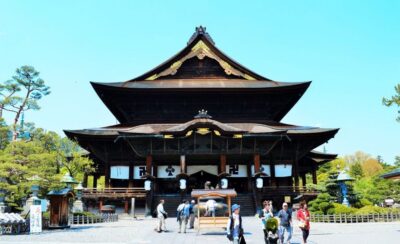
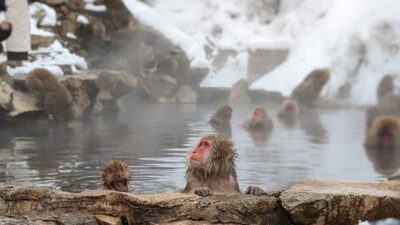
Snow Monkey 1 Day Tour with Beef Sukiyaki Lunch
Read our review →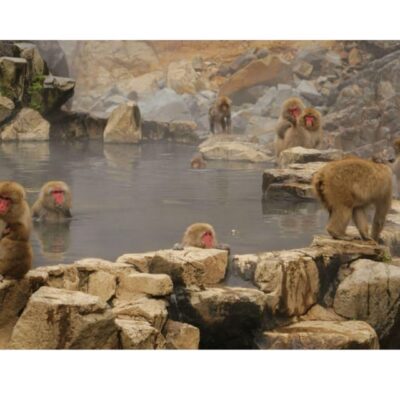
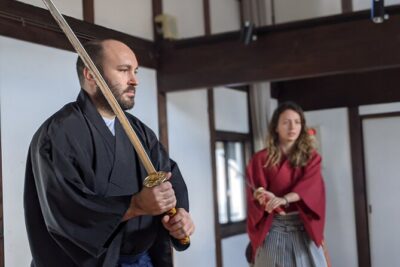
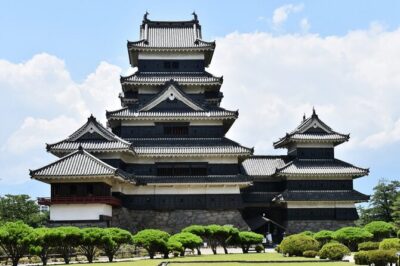
1-Day Tour from Nagano and Matsumoto Kamikochi & Matsumoto Castle
Read our review →
1-Day Snow Monkeys & Snow Fun in Shiga Kogen Tour
Read our review →
Wild Japanese Flying Squirrel Watching Tour in Nagano
Read our review →Browse the lists this tour appears in