
Reviewed · FUKUOKA TOURS
Fukuoka Essentials: History, Culture, & Charms
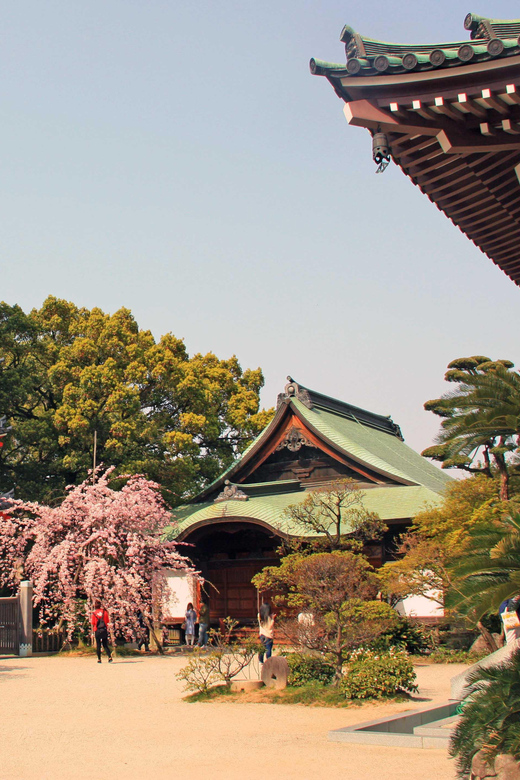
Fukuoka’s best introduction may be on foot, moving from the quiet grounds of Shofukuji, Kyushu’s oldest Zen temple, to the food, shops, and local noise of Kawabata Arcade. The contrast tells you more about Hakata than a string of isolated photo stops ever could.
I like two things here. First, the private guide can shape the outing around your interests and walking speed. Second, the route links major sights with useful local context, from the Hakata Gion Yamakasa festival at Kushida Jinja to the sea connection of Sumiyoshi Jinja. The main drawback is simple: three hours gives you a fine overview, not a slow, detailed visit at every stop.
Key points at a glance
- Shofukuji begins the story: Visit Kyushu’s oldest Zen Buddhist temple in calm, traditional surroundings.
- Kawabata brings local life: Use free time for a snack, small purchase, or quick look at one of Fukuoka’s classic arcades.
- Five major stops fit into one walk: The route covers Shofukuji, Tochoji, Kushida Jinja, Kawabata Arcade, and Sumiyoshi Jinja.
- The guide makes the difference: Radim, Louise, and Vadim are among the guides praised for clear English, friendly conversation, and flexible pacing.
- Hakata Station finishes on a high note: The rooftop gives you a broad view of Fukuoka and a useful sense of how the city fits together.
- Private touring costs $58 per person: That is strongest value for solo visitors, couples, families, or anyone wanting local advice along with sightseeing.
Why this walking tour works in Fukuoka
Fukuoka can feel easy to explore at first. Hakata Station is a major transport hub, the central sights are fairly close together, and the city is less tiring than many larger Japanese destinations. Still, the meaning of a temple gate, a shrine festival, or an old shopping arcade is not always obvious when you are seeing it alone.
This tour gives you a framework. You move through religious sites, commercial streets, and modern city spaces in one compact route. I like that progression because it shows Fukuoka as a living city rather than a museum of old buildings.
You meet at the CASETiFY STUDIO store beside the main entrance of Hakata Station, under the large clock. A hotel meeting is available on request for central locations. From there, the route is mainly on foot, with short walks of about 10, 13, and 14 minutes listed between several stops.
The usual experience lasts about three hours, though available bookings may show durations from three to eight hours. That longer range likely matters if you want a more relaxed pace, extra food stops, or more time for questions. Confirm the actual timing when you choose your start time.
More history-led days in Fukuoka:
- Hakata Old Town Walking Tour Tracing the True History of Fukuoka
★ 5.0 · 17 reviews - Fukuoka’s Sacred Path: Temples, History & Culture
★ 5.0 · 17 reviews - World Heritage Shirakawa-go and Experience Tours from Kanazawa
★ 5.0 · 4,049 reviews
Shofukuji and the quiet beginning
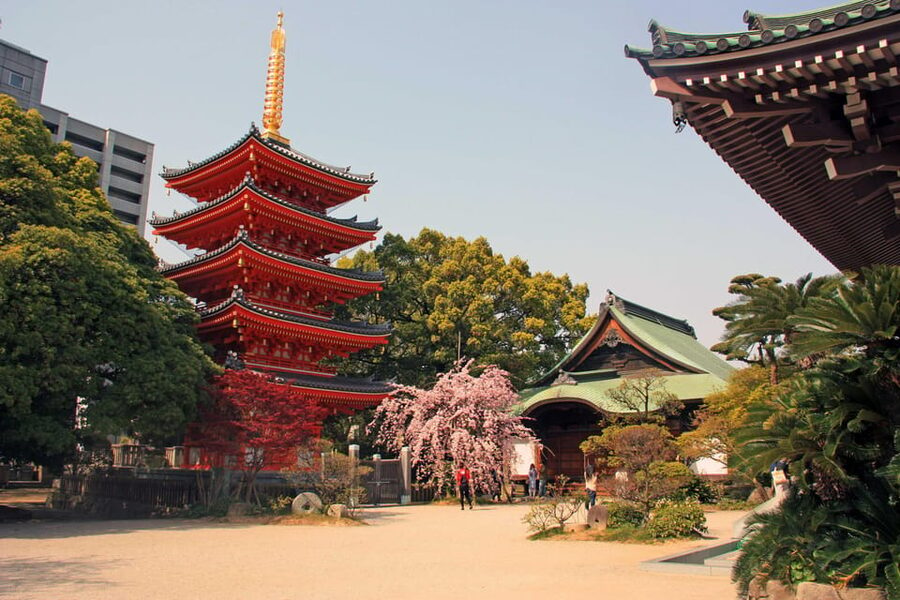
The first major stop is Shofukuji, reached after about a 10-minute walk from the meeting point. This is the oldest Zen Buddhist temple in Kyushu, making it an important first chapter in Fukuoka’s religious story.
The appeal is not only age. Shofukuji offers a peaceful setting after the movement of the station area. You can look at the traditional architecture, pass through quiet temple grounds, and hear how Zen Buddhism became part of the region’s identity.
Your guide explains what you are seeing instead of leaving you to guess at the details. That is especially helpful in Japan, where a gate, roofline, or worship space may carry meaning that is not obvious to first-time visitors.
There is a practical limit. Temple grounds are a place for calm observation, not a long list of activities. If you want constant action, this stop may feel subdued. I see that as part of its value, though. It gives the tour a slower opening before the busier streets ahead.
Tochoji and Fukuoka’s giant Buddha
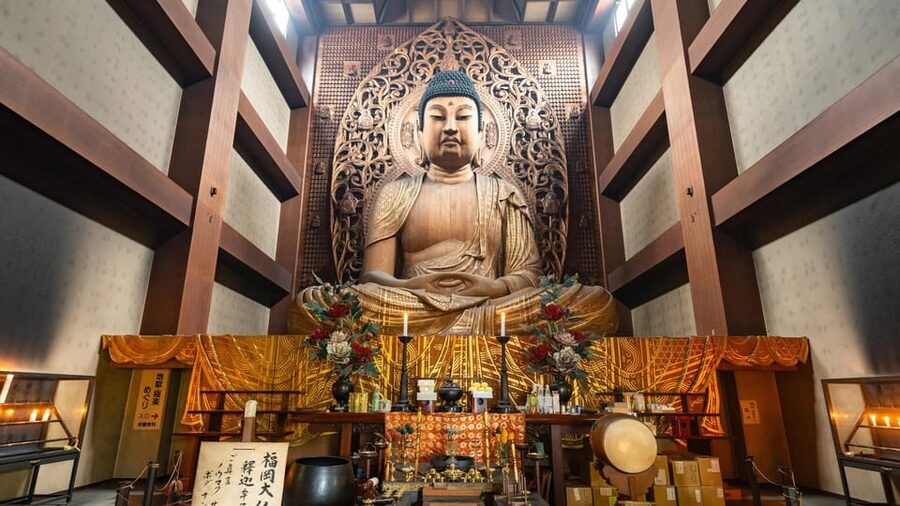
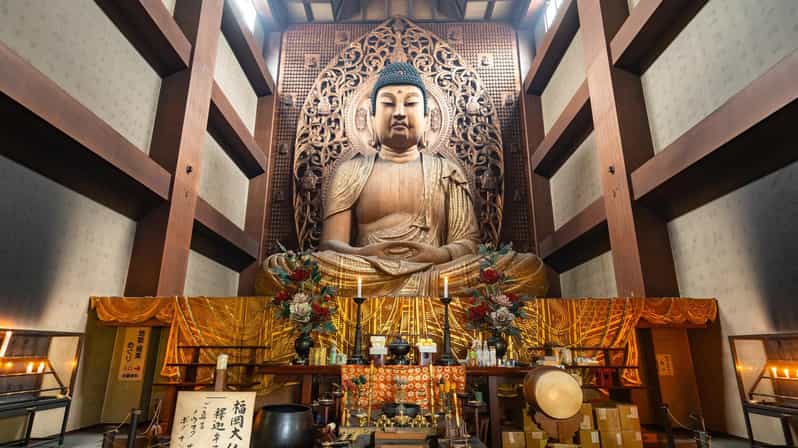
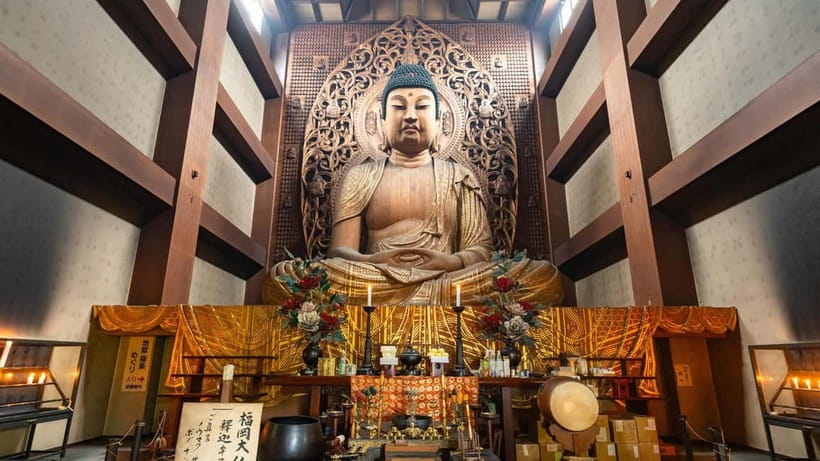
Tochoji follows Shofukuji and adds a different kind of religious sight. The temple is known for its magnificent Buddha statue, which gives you a strong visual counterpoint to Shofukuji’s quieter historical atmosphere.
The guide can help you compare the two temples. Shofukuji is the stronger stop for early Zen history and calm temple grounds, while Tochoji offers the larger, more immediately impressive religious artwork. That comparison makes both places easier to remember.
The stop also keeps the tour from feeling like a single-theme walk. You are not simply visiting one temple after another without context. You are seeing how different buildings and objects express different parts of Buddhist tradition.
You should keep your expectations realistic. The supplied details do not promise a long interior visit or a private religious ceremony. Think of Tochoji as a focused sightseeing stop, with the Buddha as its main visual anchor, rather than a full half-day temple study.
Kushida Jinja and the Hakata Gion Yamakasa
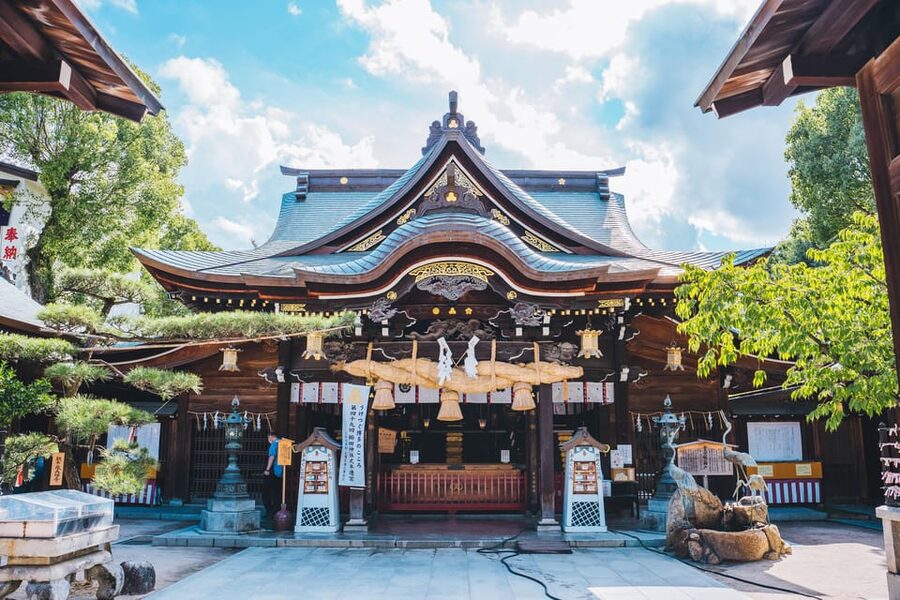
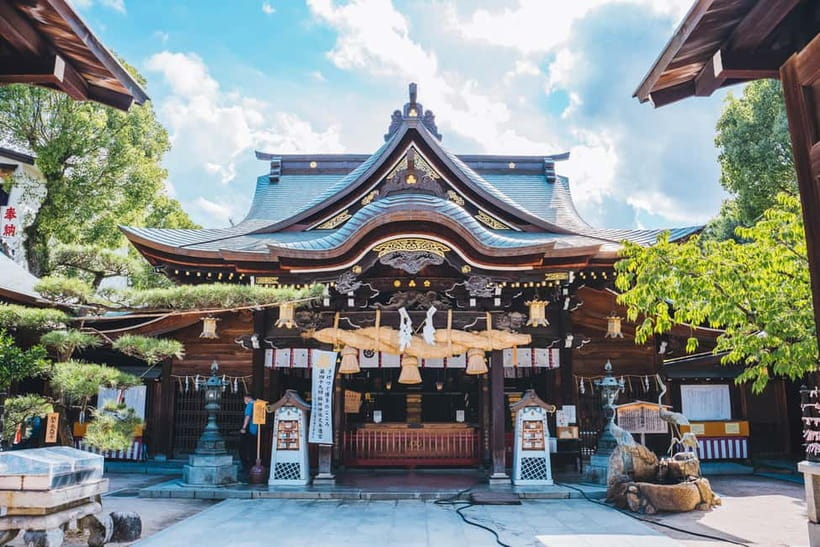
After the temples, the route turns toward Kushida Jinja, Fukuoka’s main shrine. This shift from Buddhist temple to Shinto shrine is useful because you can see two major religious traditions within the same city walk.
Kushida Jinja is closely tied to the famous Hakata Gion Yamakasa festival and remains active throughout the year. Your guide explains the shrine’s place in local life and points out details in its buildings that are easy to miss if you only stop for a quick photograph.
This is one of the tour’s most useful history stops. The festival connection gives the shrine a living purpose. You are not just looking at old architecture. You are learning why this particular place matters to Fukuoka residents.
I would give yourself room to ask questions here. The guides are praised for putting historic sights into the setting of modern Fukuoka, and Kushida Jinja is a natural place to ask how tradition continues in an urban center.
A few more Fukuoka half-days to weigh up
- Mt. Aso & Takachiho Gorge Tour with Optional Boat Ride
★ 4.7 · 222 reviews - Fukuoka: Takachiho Gorge & Scenic Railway One Day Tour
★ 4.8 · 178 reviews - Private Fukuoka Tour with a Local, Highlights & Hidden Gems 100% Personalised
★ 5.0 · 143 reviews - Fukuoka Your Way: 100% Customisable Private Tour with Local Guide
★ 5.0 · 83 reviews
Kawabata Arcade brings the city to life
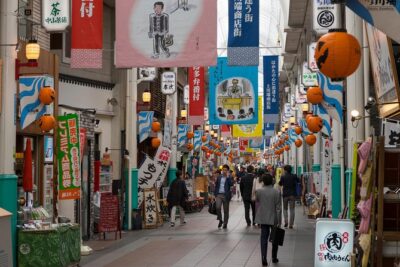
Kawabata Shopping Street changes the mood again. This traditional covered arcade is the most sensory part of the route, with shops, food smells, local products, and the steady movement of everyday commerce.
You get about 15 minutes of free time here. That is enough for a quick look, a small snack, or a souvenir, but not enough for a slow shopping session. If food matters to you, tell the guide early. The experience includes no food or drinks, so anything you taste is purchased separately.
This is where the tour feels most connected to ordinary Fukuoka. Temples and shrines tell you about the city’s past and customs. Kawabata shows how people shop, eat, and move through a traditional commercial street today.
The short free period is both a strength and a weakness. It keeps the three-hour route moving, but you may wish for more time if you find a shop you like. A longer booking may suit you better if sampling food and browsing are central to your plans.
Sumiyoshi Jinja and a quieter urban pause
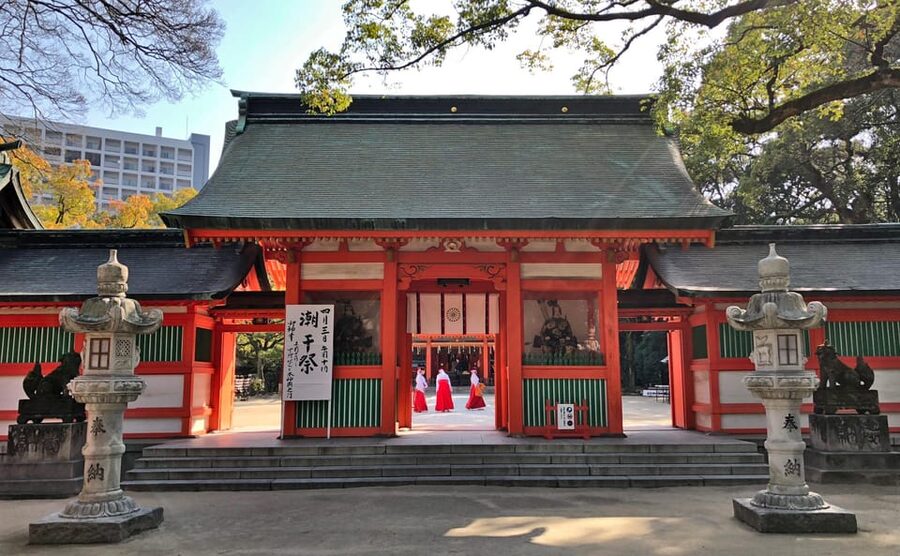
The next walk takes about 14 minutes to Sumiyoshi Jinja. This shrine has a distinctive architectural style that differs from many other shrines in the city, giving the tour another useful point of comparison.
The shrine’s connection to the sea adds a different mood. Within the city, the grounds offer a quieter pause and a reminder of Fukuoka’s position as a port city. Your guide can connect the shrine’s character to that maritime setting without turning the visit into a lecture.
I like the rhythm here. After the shops and food smells of Kawabata, Sumiyoshi Jinja slows things down before the final city view. It prevents the tour from becoming a nonstop march through crowded streets.
Again, this is a guided sightseeing visit rather than a ticketed attraction with a long programmed schedule. No attraction tickets are included, and the supplied information does not list an admission charge for the shrine. Your guide points out the important features and gives you a clearer way to read the grounds.
Hakata Station rooftop views
The final stretch leads back toward Hakata Station, with scenic views along the way. The tour ends at the station rooftop, where you can look across Fukuoka from above.
This is a smart finish. After seeing temples, shrines, and a traditional arcade at street level, you get a broad view that helps you place them within the modern city. If you visit near sunset, the changing light and city lights add extra atmosphere, though the exact timing depends on your start time and season.
The rooftop is also practical. You finish at the same station area where the tour began, close to transport, shops, and restaurants. If you are staying near Hakata Station, the ending makes it easy to continue your evening.
The view is not the sole reason to book this experience. It works best as a final piece of the route, giving shape to everything you have just seen.
What the private guide adds
The strongest feature is the personal format. You are not placed into a large group with a fixed script. A private group is available, and the experience is described as private and personalized.
That flexibility matters in several ways. You can ask for more detail at a temple, spend less time at a stop that does not interest you, or adjust the walking speed. A family with a teenager may want a lively pace and practical recommendations, while a history-focused visitor may prefer longer explanations at Shofukuji and Kushida Jinja.
The named guides associated with this experience include Radim, Louise, and Vadim. Radim is repeatedly praised for an easy walking style, clear English, and useful recommendations for restaurants, shopping, and other activities. Louise is described as willing to answer questions and adapt the route. Vadim is noted for making historical sights relevant to present-day Fukuoka.
The language options are English and Czech. If you have a particular guide preference, ask at booking rather than assuming a specific person will lead your tour.
The personal approach also helped one visitor with a temporary physical limitation, as the guide adjusted the experience to make the outing manageable. That does not mean the tour is fully wheelchair accessible or free of walking. It means you should explain your needs in advance so the route and pace can be discussed.
Walking, timing, and what to bring
This is a walking experience, not a bus tour. You should be comfortable spending several hours on foot and moving between central sights. The listed walks are short, but the total time includes standing, temple visits, shrine grounds, and the route through the city.
Wear comfortable shoes. Bring water, especially in warm weather, though drinks are not included. You may also want a little cash or another payment method for food, drinks, and souvenirs at Kawabata Arcade.
The route begins at CASETiFY STUDIO アミュプラザ博多店, beside Hakata Station’s main entrance and under the big clock. That detail is useful because Hakata Station is large and has many exits. Arrive early enough to find the store without rushing.
Transportation is not included. Other transport can be arranged at an additional cost, but the standard outing is on foot. Hotel pickup is available on request for central locations, so ask before booking if meeting at your hotel would make the start easier.
Is $58 per person good value?
At $58 per person, this is not the cheapest way to walk around Fukuoka. You can visit public streets, temple exteriors, and shrine grounds on your own for far less. The price makes more sense when you value private attention, a flexible pace, and help understanding what you are seeing.
In about three hours, you cover five major stops plus the station view. You also get local suggestions for restaurants, shopping, and additional activities. That can save time during a short stay, particularly if Fukuoka is one stop on a wider Kyushu trip.
The value is strongest for first-time visitors, solo travelers, couples, and families who want a city introduction without a large group. It is also useful if you have only one free morning or afternoon and want someone to connect the sights for you.
The value is weaker if you already know Fukuoka well, dislike guided explanations, or want extended shopping and dining time. Food, drinks, transportation, and attraction tickets are extra, so include those costs in your plans.
Free cancellation is available up to 24 hours before the experience for a full refund, and you can reserve now and pay later. Those terms help if your Kyushu schedule is still shifting.
Who should book this experience?
I would choose this tour if you want a well-paced first look at Hakata rather than a single temple visit. It suits visitors who enjoy history but also want food streets, city views, and practical local advice.
Families can benefit from the private format because the guide can adjust the speed and keep the route engaging. The experience also suits visitors who are unsure how to read Japanese religious sites and want explanations in English or Czech.
You should think twice if you want a food tour, a long shopping trip, or an in-depth visit to every temple. Kawabata includes only about 15 minutes of free time, and the route covers a lot of ground. For a slower experience, check for a longer available duration and discuss your priorities at the start.
Should you book Fukuoka Essentials?
Book it if you want Fukuoka to make sense quickly. The route gives you old Zen tradition at Shofukuji, the large Buddha at Tochoji, festival culture at Kushida Jinja, everyday commerce at Kawabata, a sea-linked shrine at Sumiyoshi, and a rooftop view to tie it together.
I especially like the chance to adjust the walk to your interests and pace. At $58, the tour earns its price through the guide rather than through admission tickets or luxury transport. If you value conversation, context, and a useful first orientation, it is a strong choice.
Skip it if you prefer to wander alone or want to spend most of your time eating and shopping. For everyone else, this is a practical way to meet Fukuoka through both its quiet corners and its busy streets.
FAQ
Where does the tour begin?
The meeting point is the CASETiFY STUDIO store at Hakata Station, right beside the main entrance under the large clock.
Can I meet the guide at my hotel?
A hotel meeting is available on request for central locations.
How long does the experience last?
The tour is described as a three-hour walking experience, with available booking durations listed from three to eight hours. Check the available start times and duration when booking.
Which languages are available?
The live tour guide options are English and Czech.
Is this a private tour?
A private group is available, and the experience is described as private and personalized.
Are food, drinks, and transportation included?
No. Food, drinks, transportation costs, and tickets to attractions are not included. Other transport can be arranged at an additional cost.
Can I cancel for a refund?
Yes. You can cancel up to 24 hours in advance for a full refund. You can also reserve now and pay later.
Just added around Fukuoka
- Fukuoka Sumo Tournament November 2025 with a Sumo Expert Guide★ 5.0 · 21 reviews
- Tour Nagasaki or Fukuoka in Privacy and Comfort.★ 5.0 · 17 reviews
- From Fukuoka: Miyazaki, Takachiho Gorge And Shrine Day Tour★ 4.5 · 44 reviews
- Kyushu: Aso Vocano, Grassland,Onsen and Aso shrine 1-Day Tour★ 4.5 · 23 reviews
- Fukuoka Group/Private Tour by Local Professionals!★ 5.0 · 15 reviews
- Hakata Old Town Walking Tour Tracing the True History of Fukuoka★ 5.0 · 17 reviews
- Dazaifu and Yanagawa Canal Cruise Private Guide Day Tour by Train★ 5.0 · 13 reviews
- Fukuoka Full-Day Private Tour with Government Licensed Guide★ 5.0 · 55 reviews
Fukuoka Tours, compared.

Mt. Aso & Takachiho Gorge Tour with Optional Boat Ride
Read our review →
Private Fukuoka Tour with a Local, Highlights & Hidden Gems 100% Personalised
Read our review →
Fukuoka Your Way: 100% Customisable Private Tour with Local Guide
Read our review →
Day Tour to Miyazaki Takachiho Gorge & Shrine depart from Fukuoka
Read our review →
Fukuoka Full-Day Private Tour with Government Licensed Guide
Read our review →
Nakasu Food Stall Private Guided Tour with Tastings
Read our review →
Fukuoka Private and Personalized Walking Tour with a Local
Read our review →Browse the lists this tour appears in