
Reviewed · NAGANO TOURS
Nagano/Matsumoto: Matsumoto Castle and Narai-juku Day Trip
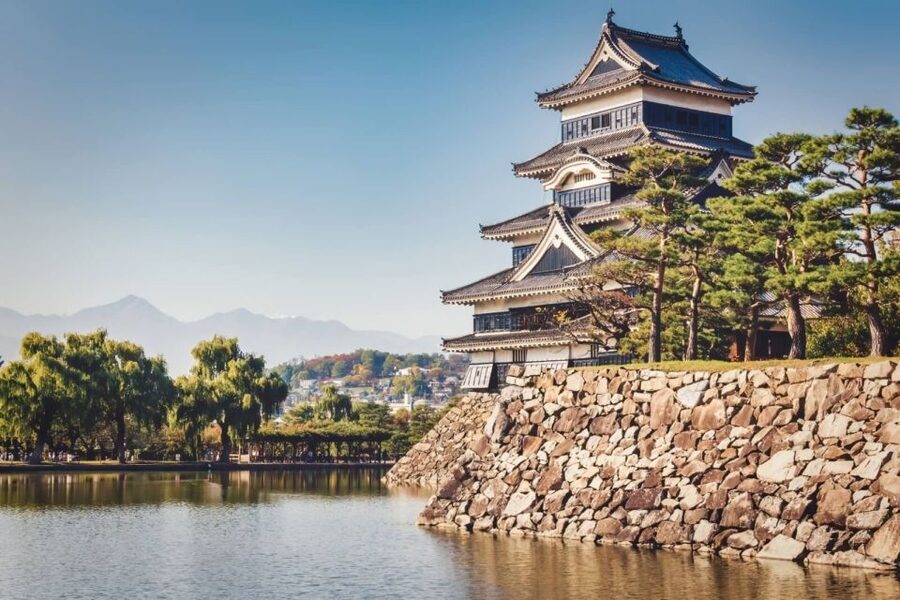
Matsumoto Castle and Narai-juku give you two very different views of old Japan in one long day. At Matsumoto Castle, you climb through a real wooden stronghold with narrow stairs and original details, then walk a preserved post town in the Kiso Valley where old inns once served people traveling between Tokyo and Kyoto.
I like the pairing for two reasons. First, the guide adds useful context to the castle, samurai life, and the Nakasendo road. Second, the bus removes the need to piece together regional trains and buses. The main drawback is the pace: you spend many hours on the road, and both major stops involve a fair amount of walking.
Key points before you book
- A rare surviving castle tower: Matsumoto Castle is Japan’s oldest surviving five-tiered, six-story castle tower.
- Steep stairs inside the castle: The climb is narrow and demanding, so comfortable shoes and steady footing matter.
- Frog Street adds local color: Nawate-doori has more than 50 shops, cafes, restaurants, and frog-themed decorations.
- Narai-juku feels quieter and more rural: The old post town has wooden buildings, mountain scenery, and local crafts.
- A full day with long transfers: The trip takes you from Nagano or Matsumoto through the central Japanese mountains and back.
- The price covers the main transport and castle entry: At $180 per person, the value depends on how much you want convenience and a guide.
Why this day trip works
This is not a quick photo stop at Matsumoto Castle followed by a rushed walk through a historic street. It is a full regional outing built around two places that show different sides of Japan’s past.
Matsumoto was shaped as a castle town during the samurai period. Narai-juku, by contrast, grew around the Nakasendo, the old route linking Tokyo and Kyoto. One stop focuses on defense, power, and warriors. The other focuses on travel, trade, inns, and daily life.
I like that the experience does not rely on one famous sight. If you enjoy Japanese history, the combination gives you more to think about than a castle visit alone. You also get scenery along the way, with fields and mountains that may carry snow in winter.
The trade-off is time. The scheduled bus ride from Nagano to Matsumoto takes about 100 minutes. Matsumoto to Narai-juku takes about an hour, and the return journey can take roughly 2 hours and 15 minutes. Add the two sightseeing blocks, and this is a very long day. You should book it because the destinations matter to you, not simply because you have a spare afternoon.
A few more Nagano half-days to weigh up
- 1-Day Snow Monkeys, Zenko-ji Temple & Sake in Nagano
★ 5.0 · 1,020 reviews - Nagano: Snow Monkeys, Zenkoji Temple & Sake Day Trip
★ 4.9 · 833 reviews - From Tokyo: Snow Monkey 1 Day Tour with Beef Sukiyaki Lunch
★ 4.6 · 295 reviews
Starting from Nagano, Matsumoto, or Kokusai 21
The tour offers three starting location options: Nagano Station, Matsumoto Station, and Kokusai 21. Your exact meeting point depends on the option selected, so check the booking details carefully before setting out.
If you start at Nagano Station, you board the bus first and collect the Matsumoto Station participants on the way. If you are already based in Matsumoto, you avoid the first transfer and join at the second pickup point.
The transportation is one of the strongest practical reasons to choose this outing. You do not need to work out the best combination of regional trains, local buses, and admission tickets. The guide and driver handle the movement between stops, which is especially useful if you are using Matsumoto as a base but want to see Narai-juku too.
The downside is that a shared departure means less control over timing. The bus must collect the full group and follow the planned schedule. A small group can feel more flexible, as one pair on a particularly quiet departure had the experience almost like a private tour, but you should not count on that arrangement.
Nawate-doori, Matsumoto’s Frog Street
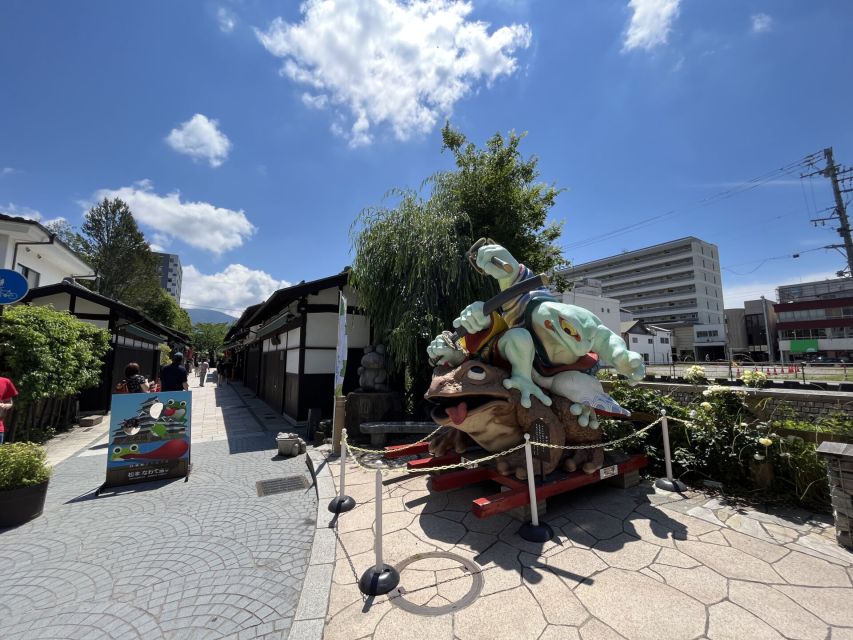
The first Matsumoto stop is Nawate-doori, also called Kaeru Michi, or Frog Street. It runs beside the central part of the city and is lined with more than 50 shops, restaurants, and cafes.
The frog theme is playful rather than grand. You will see frog sculptures, frog souvenirs, and shops selling small local treats. It is a good place to slow down after the bus ride and get your bearings before the castle.
Look for o-senbei rice crackers, taiyaki fish-shaped pastries, dagashi candy, and ice cream. These are the kinds of easy snacks that make a short town walk enjoyable, especially if you have not yet eaten. Lunch is not included, so this area may be a practical place to buy something, although the schedule may affect how much time you have.
The street also gives you a glimpse of ordinary town life around a major historical site. It is not a museum display or a reconstructed samurai village. Shops, food, small decorations, and a nearby temple make it feel more like a living part of Matsumoto.
I would not plan your whole day around Frog Street alone. Its value comes from the setting and the contrast with the castle. You get a little food, shopping, and local character before moving on to the main historical sight.
Inside Matsumoto Castle’s six-story tower
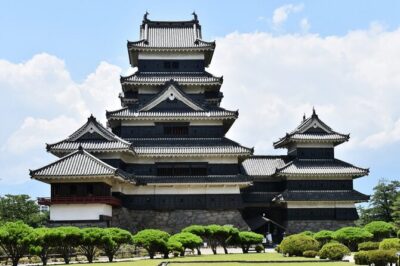
Matsumoto Castle is the centerpiece of the day. It dates from the end of Japan’s Warring States Period, and much of its original structure remains intact. The black exterior gives it a strong, serious appearance, but the interior is where you understand how demanding castle life could be.
The tower is the oldest surviving five-tiered, six-story castle tower in Japan. You enter the castle grounds with your guide, learn how the structure worked, and then climb through all six levels to the top.
Be ready for very steep, narrow stairs. This is not a modern staircase built for easy sightseeing. The climb can be awkward, particularly when people are moving in both directions. Wear shoes with good grip, take your time, and keep one hand free for the rail where available.
The effort pays off in the details. You can examine the castle’s woodwork and see how the structure was built for defense as well as display. From the upper levels, you get views across Matsumoto City and toward the surrounding mountains.
The castle also contains historical guns, weapons, and other objects linked to the warriors who used the building. These displays help connect the architectural features with the people who lived and fought in this period. You are not simply walking through an empty old tower. You are seeing a military building with a practical purpose.
The guide’s explanation makes a real difference here. Shawn, Joyce, and Nadin are among the guides associated with this experience, and their approach includes historical and cultural stories rather than only dates and names. One guide even taught origami during a quieter private-style outing, an example of the personal touches that can appear when the group is small.
Same base, a completely different sort of day:
- Tokyo: Snow Monkey & Nagano Customiseable Private Day Tour
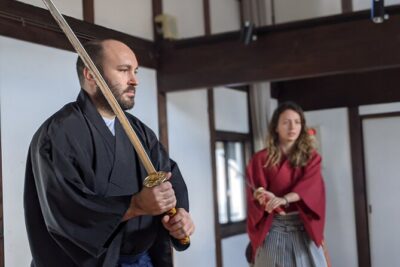
★ 4.8 · 138 reviews - Matsumoto Castle Tour & Samurai Experience
★ 4.9 · 128 reviews - 1-Day Tour from Nagano and Matsumoto Kamikochi & Matsumoto Castle
★ 5.0 · 105 reviews - 1-Day Snow Monkeys & Snow Fun in Shiga Kogen Tour
★ 5.0 · 94 reviews
Free time around the castle
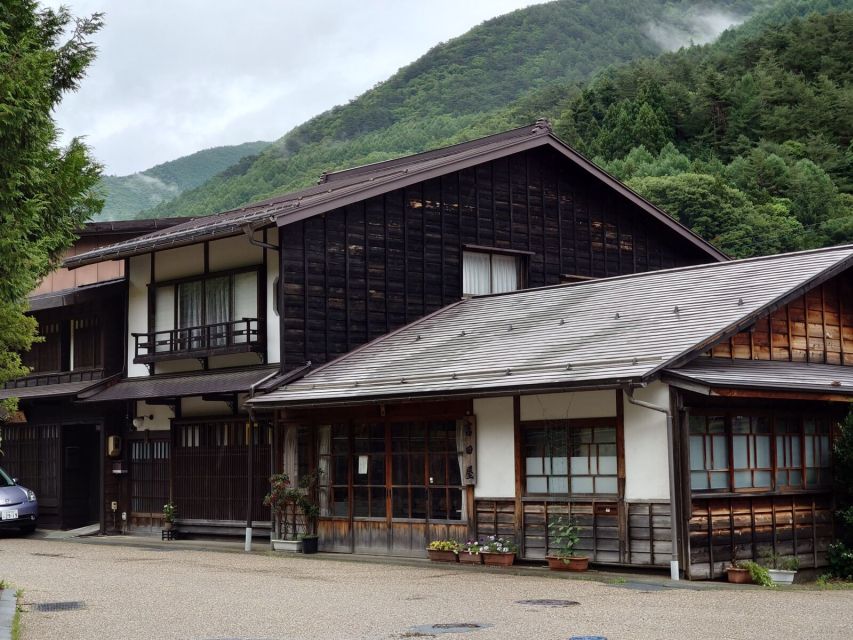
After the guided portion, you have time to look around the castle grounds and visit nearby shops. This is useful because the guided walk can move at a steady pace, while free time lets you stop for photographs or spend longer with displays that catch your attention.
The castle grounds also give you a chance to see the building from different angles. The black-and-white exterior looks especially striking against the city and mountains, though the exact views depend on the season and weather.
Lunch is not part of the tour price. You may be able to eat near the castle or use the Frog Street area, but do not assume a particular restaurant or menu is included. A vegetarian meal can be accommodated with guide help, as one outing included personal assistance for a vegetarian participant, but you should still communicate dietary needs when booking.
Keep an eye on the schedule. The Matsumoto portion is listed as about 2.5 hours, including the visit and guided tour. That sounds generous, but the castle climb, grounds, food, and shopping can use the time quickly.
The road to Narai-juku
The transfer from Matsumoto to Narai-juku takes about an hour. This is more than dead time if you enjoy countryside views. You pass fields and mountains, with snow often covering the higher areas in winter.
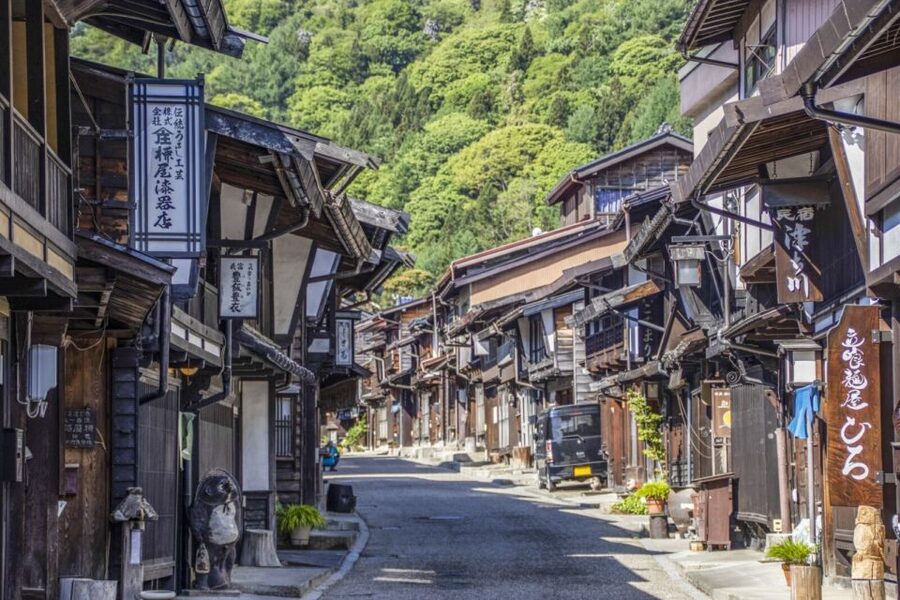
Narai-juku lies in the Kiso Valley and once served people traveling along the Nakasendo road between Tokyo and Kyoto. Its purpose was practical: people needed a place to eat, sleep, and rest during a difficult journey. Today, the preserved main street lets you see how that route functioned.
The bus makes this stop much easier than arranging the journey independently. Narai-juku is not simply another central-city attraction, and transport connections can take planning. Here, you can sit back, watch the scenery, and arrive near the station at the entrance to the old town.
Weather matters more here than it might on a short urban visit. Much of the day is outdoors, and winter can bring snow on the ground. Pack waterproof winter shoes and warm clothing in cold months. In warmer or rainy weather, bring rain gear, an umbrella, sunglasses, and a sun hat. The advice sounds excessive until you spend a full day outside in changing mountain weather.
Walking through Narai-juku’s old post town
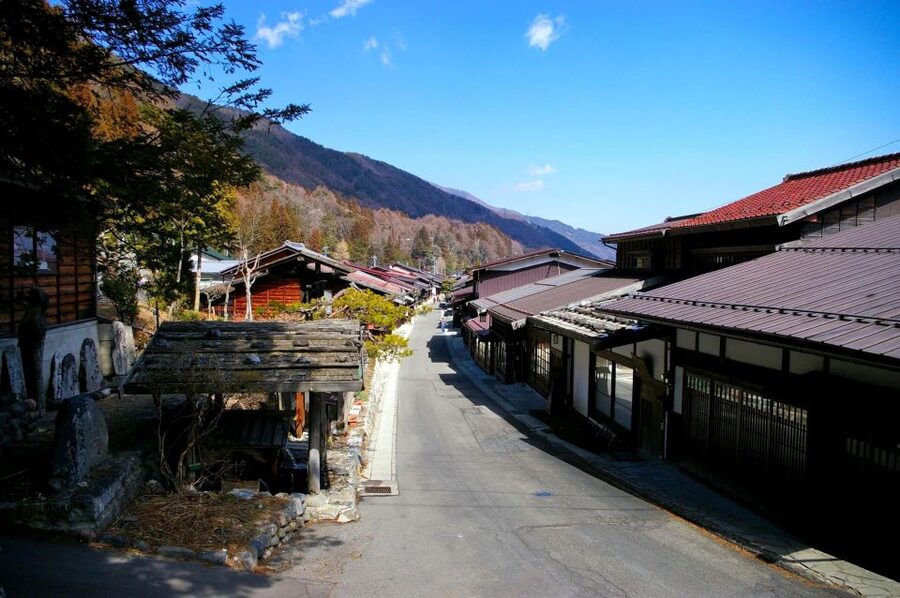
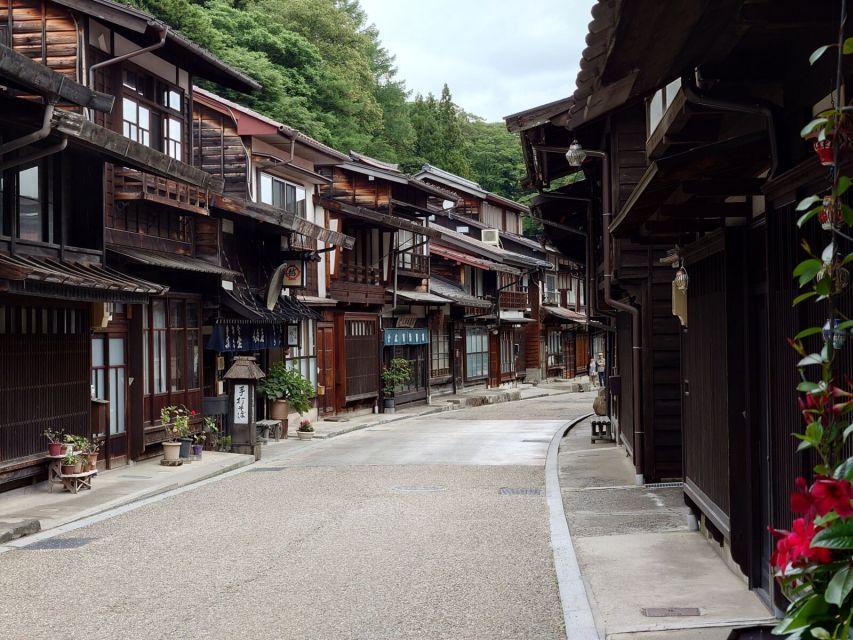
The guided walk begins near the train station and follows the main street through Narai-juku. The buildings, many made of wood, preserve the feel of an Edo-era post town.
Your guide explains the unusual way the town was built and tells stories about its most prosperous period. This context matters because the street can otherwise look like a pleasant row of old shops. Once you understand its role on the Nakasendo, the houses become evidence of a working travel system.
Narai-juku is quieter and more subdued than a major castle site. That is part of its appeal. You can picture travelers arriving tired from the road, looking for food, lodging, and supplies before continuing toward the next stage of their journey.
After the guided walk, you get about an hour of free time. You can browse the shops, visit a cafe, or find a restaurant. Local woodwork and lacquered handicrafts are among the goods you might see.
Do not expect every shop to be open. Business can be stronger on weekends, and on a weekday you may find several shutters closed. That can limit shopping, but it also keeps the town from feeling like a nonstop retail strip. The open stores offer a more focused look at local crafts.
Narai-juku’s mountain setting is one of the day’s quiet rewards. The wooden buildings, surrounding peaks, and seasonal weather create a very different mood from Matsumoto’s castle grounds. Allow yourself time to look up from the shop windows and take in the town as a whole.
Is $180 a fair price?
At $180 per person, this is not a budget sightseeing day. The price includes the guide, transportation between destinations from Nagano and Matsumoto, entry to Matsumoto Castle, the castle tour, and the guided walk at Narai-juku. Lunch, snacks, and any additional travel costs are extra.
The value is strongest if you are starting in Nagano and want to see both places without arranging the connections yourself. Public transport might cost less, but you would still need to coordinate the route, buy castle admission, find Narai-juku, and manage the return journey. The price also buys a full day of explanation in English.
One French participant calculated that the price was not far from the cost of return transport and admission alone, with the guide and driver added on top. That is a useful way to assess it. You are paying less for luxury than for simplicity and regional access.
The value is weaker if you are already comfortable with Japanese transport, speak enough Japanese to manage regional connections, and prefer to set your own pace. You may also find the day expensive if you are mainly interested in taking a quick photograph of Matsumoto Castle.
Walking, weather, and comfort
This is not suitable for wheelchair users or people with mobility impairments. The castle’s stairs are narrow and steep, and both Matsumoto and Narai-juku involve substantial walking.
Bring comfortable shoes with good support. In winter, waterproof shoes are especially important because snow often remains on the ground. You will also want warm layers, since the bus rides may be comfortable while the outdoor stops are cold.
A rain jacket or umbrella is sensible in any season. The tour continues in wet weather, and one outing went ahead in the rain while still covering the planned sights. Sunglasses and a sun hat are useful in bright weather.
I would pack water and a small snack, even though food is available around the stops. The day is long, lunch is not included, and the timing may not give you the freedom to stop exactly when you feel hungry.
Who will enjoy this experience most?
I would choose this tour if you want Japanese history explained in English and prefer not to manage a complicated day of regional transport. It suits people who are interested in castles, samurai-era Japan, historic roads, traditional wooden buildings, and mountain scenery.
It also works well for first-time visitors to the Nagano and Matsumoto area. The guide helps tie the places together, and the schedule covers two destinations that are easy to miss if you stay only in the main cities.
You should think twice if you dislike fixed schedules, long bus rides, or steep stairs. Narai-juku can have limited shop hours, and the weather may be cold, wet, or snowy. This is an active outdoor day, not a relaxed cafe tour.
The English guide is a major part of the experience. Names such as Shawn, Joyce, and Nadin appear in the guiding team, and their tours can include detailed historical explanations, regional stories, dietary help, and small personal touches. The quality of your day will depend partly on the guide assigned to your departure, but the format is designed to give you more context than a self-guided visit.
Should you book it?
Book this day trip if you want to see Matsumoto Castle and Narai-juku together and value a guide, included transportation, and a clear plan. The castle is worth the climb, Frog Street adds an easy local stop, and Narai-juku gives you a quieter view of Japan’s past.
Skip it if you need step-free access, dislike long transfers, or want a leisurely schedule with plenty of time for shopping. At $180, the tour makes the most sense for visitors who would otherwise spend a day solving transport problems. For that audience, the convenience and historical context can justify the cost.
Free cancellation is available up to 24 hours before departure, and you can reserve now and pay later. Still, check the meeting point, starting time, weather forecast, and seasonal availability before committing.
FAQ
How long does the tour last?
It is a full-day experience. The listed travel includes about 100 minutes from Nagano to Matsumoto, one hour from Matsumoto to Narai-juku, and about 2 hours and 15 minutes for the return journey, plus sightseeing time.
Where can I start the tour?
The available starting points are Kokusai 21, Matsumoto Station, and Nagano Station. The meeting point depends on the option you book.
Where does the tour finish?
Drop-off options are Matsumoto Station, Kokusai 21, and Nagano Station.
Is transportation included?
Yes. Transportation between the destinations from Nagano and Matsumoto is included.
Is Matsumoto Castle admission included?
Yes. The price includes the entry ticket and guided tour of Matsumoto Castle.
Is lunch included?
No. Lunch is not included, so you should budget separately for a meal, snacks, or drinks.
Is the tour conducted in English?
Yes. The activity includes a live English-speaking guide.
How difficult is the walking?
The tour includes a reasonable amount of walking. Matsumoto Castle has very steep and narrow stairs, and Narai-juku requires walking along its historic main street.
Is the tour suitable for wheelchair users?
No. The experience is not suitable for wheelchair users or people with mobility impairments.
What should I bring in winter?
Bring warm clothing and waterproof winter shoes. Snow is often present on the ground during winter. Sunglasses, a sun hat, an umbrella, and rain gear are also recommended for changing weather.
Just added around Nagano
- Snow Monkeys, Hokusai & Sake: A Perfect Day in Nagano★ 5.0 · 19 reviews
- 1-Day Tateyama-Kurobe Tour: Walking on the ‘Roof of Japan’★ 5.0 · 20 reviews
- Snow Monkey & Shibu Onsen Afternoon Tour (Depart: Iiyama & Nozwa)★ 5.0 · 54 reviews
- Wasabi Farm Walking Tour & Lunch★ 4.5 · 20 reviews
- Snow Monkey Park & Miso Production Day Tour from Nagano★ 5.0 · 18 reviews
- Snow Monkey Park, Soba Lunch and Shibu Onsen Tour★ 5.0 · 12 reviews
- Ski or Snowboard Lesson in Shiga Kogen (4Hours)★ 5.0 · 34 reviews
- Nagano Spring: 1-Day Cherry Blossoms & Snow Monkeys Guided Tour★ 5.0 · 31 reviews
Nagano Tours, compared.
1-Day Snow Monkeys, Zenko-ji Temple & Sake in Nagano
Read our review →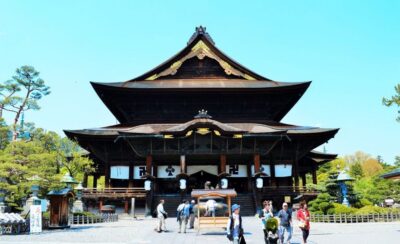
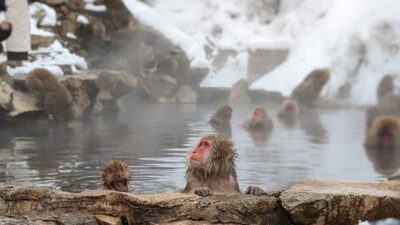
Snow Monkey 1 Day Tour with Beef Sukiyaki Lunch
Read our review →
1-Day Tour from Nagano and Matsumoto Kamikochi & Matsumoto Castle
Read our review →
1-Day Snow Monkeys & Snow Fun in Shiga Kogen Tour
Read our review →
Wild Japanese Flying Squirrel Watching Tour in Nagano
Read our review →Browse the lists this tour appears in