
Reviewed · OSAKA TOURS
Osaka Delights: Traditional Japanese Food Tour
Osaka’s food culture makes the most sense one bite at a time, and this evening tour gives you a quick, tasty introduction. You’ll walk from Namba to Kuromon Market, try several local specialties, then finish beneath the glowing Glico sign at Ebisu Bridge.
I like the mix of street snacks and sit-down Osaka classics, especially the chance to try both okonomiyaki and kushikatsu in one outing. I also like the guide-led route through Namba and Dotonbori, which saves you from guessing where to stop. The main consideration is language balance: the tour is bilingual in English and Spanish, and one English-speaking party felt the guide spoke mainly Spanish.
Key points at a glance
- Four distinct food stops: Try takoyaki, three-color dango, okonomiyaki, kushikatsu, and a warm egg tart.
- Kuromon Market setting: Begin in Osaka’s famous food market, often called Osaka’s Kitchen.
- Dotonbori after dark: Finish with neon streets, the canal, and a photo at Ebisu Bridge.
- Strong guide feedback: Paula, Angeles, Heli, Helimar, and Eli are specifically praised for friendly explanations and local food advice.
- Three hours for $84: A useful introduction if you want guided tastings and city orientation, not a full restaurant meal.
- English and Spanish: Confirm your preferred language and be ready for a walking-heavy evening.
Why this Osaka food tour works
This is a compact introduction to Osaka’s eating culture. In roughly three hours, you move through a market, small food shops, a restaurant stop, a bakery, and one of Japan’s best-known nightlife districts.
That variety matters. A tour focused only on Dotonbori can feel like a parade of signs and crowds. A tour focused only on Kuromon Market may not give you much sense of the wider city. Here, the route connects food with the streets where Osaka’s evening energy is most visible.
The food also covers several textures and styles. Takoyaki is hot and savory, dango is soft and sweet, okonomiyaki is filling, kushikatsu is crisp, and the egg tart closes the meal with custard and pastry. You get a useful first taste of the city without having to decode every menu yourself.
The $84 price is reasonable if you value a guide, several tastings, and a planned route. It is less compelling if you are looking for a large, leisurely dinner. The included food is described as tastings, and drinks, extra meals, entrance fees, and personal spending are not covered.
More Food Tours in Osaka
- Osaka: Shinsekai Food Tour with 13-15 Dishes at 5 Eateries
★ 4.8 · 2,204 reviews - Osaka Food Tour: 13 Dishes at 5 Local Eateries
★ 5.0 · 2,149 reviews - Hungry Osaka Street Food Tour:15 Tastings & 3 Drinks with a Local
★ 5.0 · 1,727 reviews
Starting at Hotel Royal Classic Osaka at 5:30 pm
The meeting point is the Hotel Royal Classic Osaka at 4-chome-3-3 Namba, Chuo Ward. The tour starts at 5:30 pm, a good hour for this route. You begin while the market area is still active, then reach Dotonbori as the signs and canalfront lights become the main attraction.
The first walk takes about 10 minutes toward Kuromon Market. Wear comfortable shoes. The route is not presented as suitable for people with mobility issues, and the tour can include up to 30 people, so you should expect a group walk rather than a private food crawl.
The guide is an important part of the experience. The company provides English and Spanish, and names praised in the feedback include Paula, Angeles, Heli, Helimar, and Eli. Paula receives especially warm attention for her food explanations and local recommendations. Angeles is also praised for clear English and for connecting dishes with Osaka’s story.
If you need English throughout, make your preference clear at booking and again at the meeting point. One negative account came from a small English-speaking group that felt left out while the guide concentrated on a larger Spanish-speaking group. That appears to be an isolated complaint among otherwise positive reports, but it is a fair point to keep in mind.
Kuromon Market, Osaka’s food-first introduction
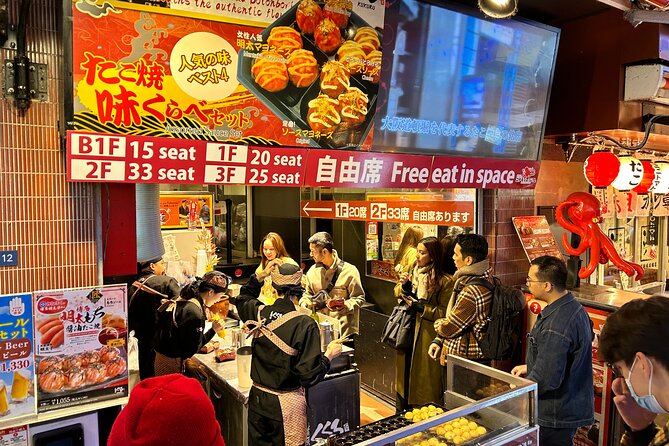
Kuromon Market is the right place to begin. Known as Osaka’s Kitchen, it offers a concentrated look at the city’s long-standing food habits, with stalls and small shops arranged along a lively covered market street.
You do not simply walk through and take photos. The route uses the market as a place to start tasting. That turns the setting into something practical. You see the kind of food Osaka is proud of, then try it while the guide explains what is in front of you.
The market stop itself lasts about 10 minutes in the schedule, followed by the first food stop. That is enough for orientation, but not enough for a slow, independent market wander. If Kuromon is high on your personal list, plan another visit at a different time so you can browse at your own pace.
Wanaka takoyaki: Osaka’s famous hot snack
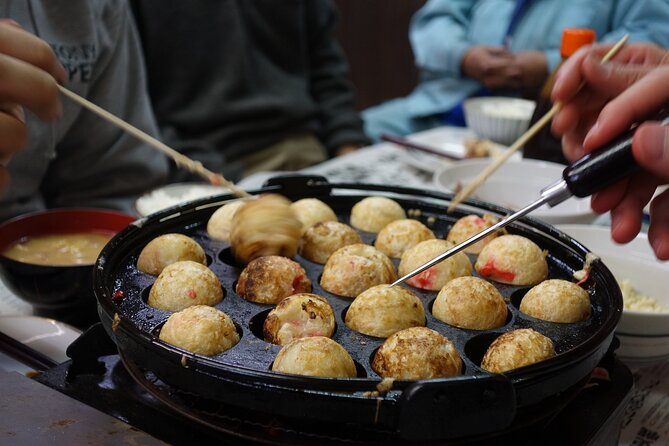
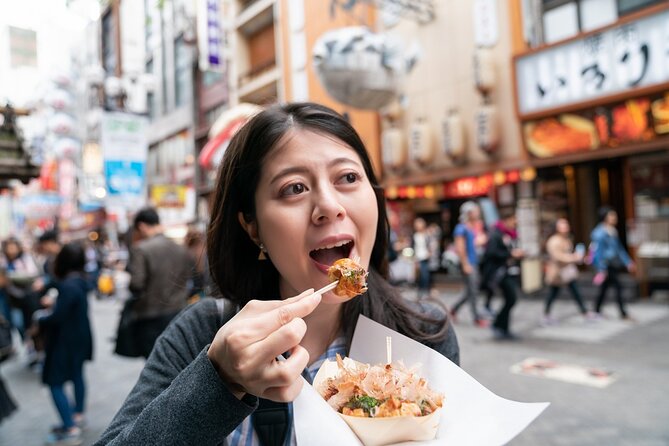
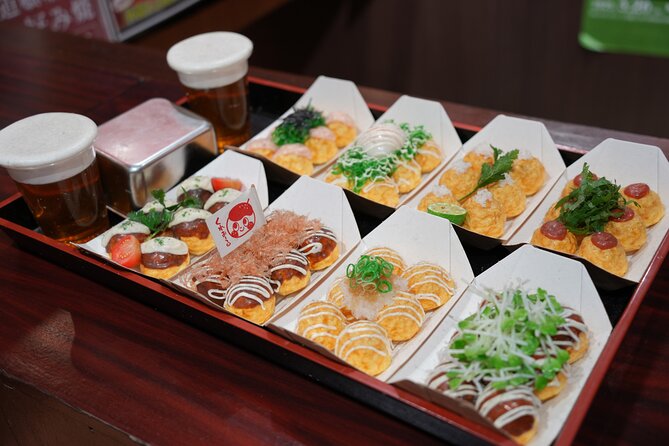
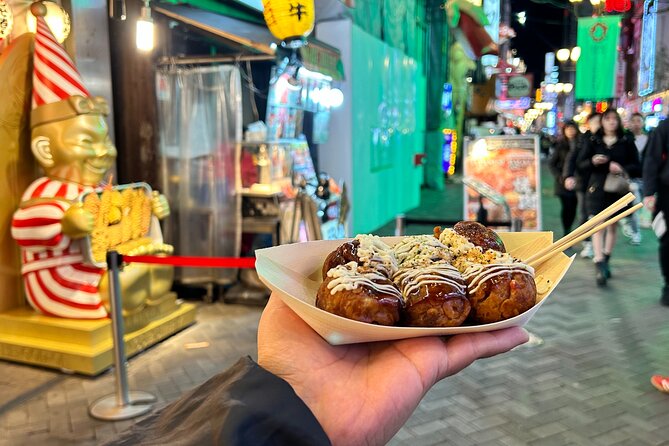
At Wanaka, you try takoyaki, the round snack associated with Osaka. The outside is cooked until firm while the center stays soft, with octopus inside and sauces and bonito flakes on top.
Takoyaki is best understood as street food rather than a formal appetizer. It arrives hot, and the texture is part of the fun. Follow the guide’s lead before taking a big bite, since the center can be very warm.
This is a short stop of about 10 minutes. You are getting a taste, not a broad sampling of the stall’s menu. That suits the tour’s format because there are several more stops ahead, but anyone expecting a full plate at every location may find the portions modest.
The value here is the context. You get to try takoyaki at a well-known market stall instead of ordering a random version from a restaurant menu. The guide can also help explain how the dish fits into Osaka’s food identity.
More food tours in Namba:
- Tokyo: Shinjuku Food Tour (13 Dishes at 4 Local Eateries)
★ 5.0 · 6,603 reviews - Tokyo: Shinjuku Food Tour (15 Dishes and 4 Eateries)
★ 4.9 · 2,033 reviews - Best of Shinjuku: Izakaya Food Tour (4 Stops, 14+ Tastings)
★ 5.0 · 1,863 reviews - Kyoto Night Foodie Tour in Gion (9+ dishes + 6 Sake tastings)
★ 5.0 · 1,762 reviews
Mitoya and the three colors of dango
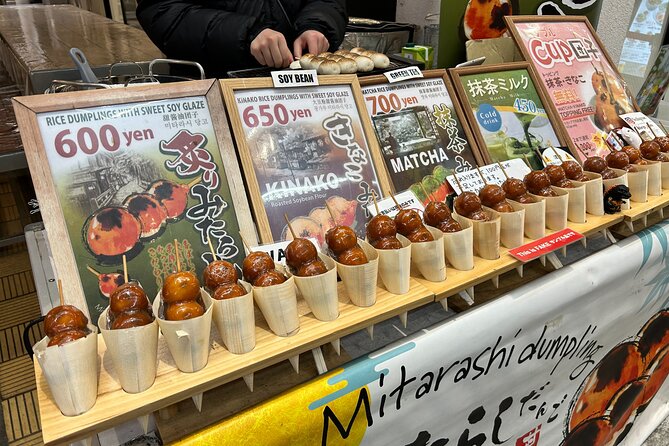
Next comes Mitoya, a shop known for dango. These are sweet rice dumplings served on skewers, with the tour featuring the traditional three-color presentation.
The dango stop lasts about 30 minutes, longer than the takoyaki tasting. That gives you more time to enjoy the snack and hear about the meaning attached to the colors. The tour describes them as symbolizing different parts of Japanese culture, so this is one of the small moments where food becomes a doorway into local customs.
Dango has a chewy texture and a gentle sweetness. It is quite different from the savory food at the market, which keeps the tastings from running together. If you usually choose familiar pastries or chocolate, this is a useful chance to try a Japanese sweet with a more subtle character.
You should not expect dango to be a dessert course in the Western sense. It is a simple, traditional snack. That simplicity is precisely why it works well here, especially with a guide who can explain what you are eating rather than handing you an unnamed skewer.
Okonomiyaki and kushikatsu at Hozenji
The most substantial food stop is Kushikatsu Yokozuna Hozenji. The scheduled visit lasts about 50 minutes, and it brings together two Osaka favorites: okonomiyaki and kushikatsu.
Okonomiyaki is a savory pancake made with ingredients including flour, eggs, and cabbage. The dish is filling and flexible, and it gives you a better sense of Osaka’s comfort-food side than a small market snack can.
Kushikatsu is made from food placed on skewers, coated, and fried until crisp. It is a satisfying contrast to the soft center of takoyaki and the chew of dango. Together, these dishes make this stop the closest thing to dinner on the route.
The restaurant setting also changes the pace. Instead of eating while standing or moving through a market, you have time to sit, eat, and listen. One point to watch is that the experience may feel more like a tasting meal than a full restaurant dinner. A comment about receiving only a single skewer suggests portions may not satisfy every large appetite.
Food quality and restaurant atmosphere are also the biggest risk points. Most of the feedback praises the dishes, the local choices, and the guides, but one party found the restaurant dirty and the food mediocre. I would not ignore that complaint, even though it is sharply different from the broader pattern of positive comments.
A warm egg tart for the sweet finish
After the savory dishes, the tour stops at Egg Tart for a freshly baked pastry. The tart has a creamy custard center and a crisp, flaky shell.
This is a pleasant change from the heavier Osaka dishes. A warm pastry gives the route a clear sweet finish before the walk through Dotonbori. The stop is scheduled for about 20 minutes, so you are not simply handed food while rushing between neighborhoods.
Keep your expectations in check. The dessert is an egg tart, not a full dessert spread. One person specifically wished the tour had ended with a better sweet and noted that the advertised dessert seen elsewhere had been different. Food offerings can be the part of a tasting tour most likely to disappoint if you have a particular image in mind.
Still, the tart makes sense as a small closing bite. You have already had several savory tastes, and a hot pastry is easier to enjoy than another large dish.
Dotonbori and the lights of Namba
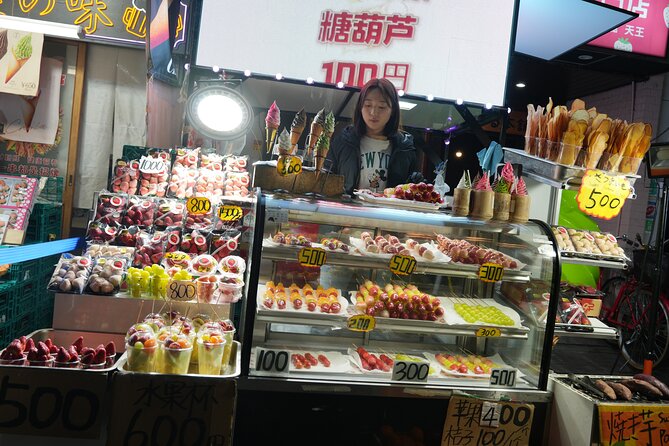
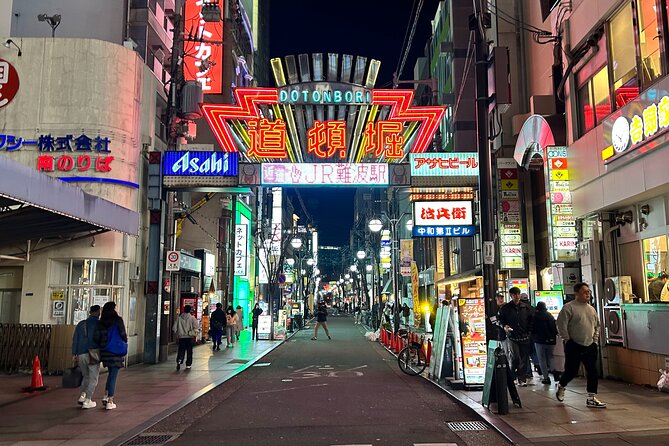
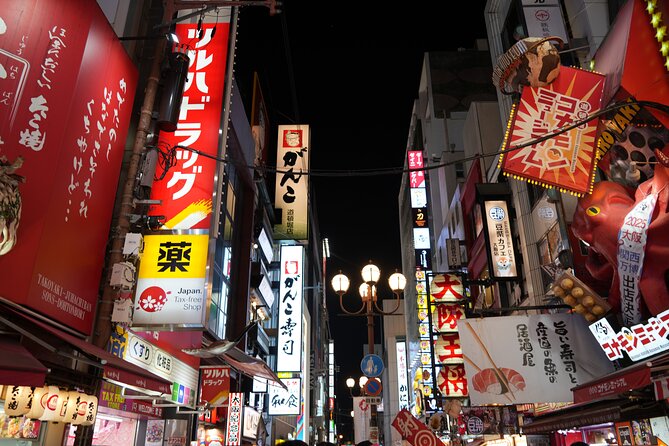
The walk to Dotonbori shifts the experience from food tour to Osaka city tour. This district is famous for bright signs, crowded streets, canal views, and the huge Glico running-man sign.
You get about 30 minutes in Dotonbori, enough for a guided walk and a look at the main sights. This is not a museum visit and no attraction admission is included. The point is the street scene itself, especially after dark.
Dotonbori can be loud and packed, particularly around its best-known photo spots. That is part of its appeal, but it also means you should stay close to the guide and keep your belongings secure. A group of up to 30 people can spread out quickly on a busy sidewalk.
I like this part of the route because it gives the meal a sense of place. You are not eating in an isolated restaurant and then taking a taxi away. The final walk shows you the district that many people picture when they think of Osaka nightlife.
Ebisu Bridge and the Glico sign
The final stop is Ebisu Bridge, beside the Dotonbori Canal. This is where you can take the classic photo beneath the Glico sign, with the illuminated city behind you.
The schedule allows about 20 minutes here. That is generous for a group photo, personal pictures, and a short look along the canal. It also gives the guide a natural place to wrap up the evening.
The bridge is a busy public spot, so do not expect a quiet portrait session. You may need patience to get a clean photo, especially when several groups are stopping at the same place. The payoff is a recognizable Osaka image that marks the end of the route.
The tour ends back at the meeting point, Hotel Royal Classic Osaka. That return point is convenient if you are staying nearby or using Namba as your evening base.
What the $84 price really buys you
At $84 per person, this tour is not the cheapest way to eat in Osaka. You can buy individual street foods for less, and Osaka has no shortage of restaurants where you can order okonomiyaki or kushikatsu on your own.
The price makes more sense when you count the convenience:
- A bilingual guide explains the food and local customs.
- The route links Kuromon Market, Namba, Hozenji, Dotonbori, and Ebisu Bridge.
- You taste several dishes without planning each stop.
- A guide can help with unfamiliar foods and explain what you are eating.
- Paula has been specifically praised for arranging reservations ahead of time at popular local places.
You are paying for structure and interpretation, not just calories. If this is your first evening in Osaka, that can be valuable. The tour also gives you an immediate sense of where to return later for a longer meal.
The price is harder to justify for a repeat Osaka visitor who already knows the food districts and wants large portions. Drinks and anything beyond the listed tastings cost extra, so budget for that if you tend to want tea, beer, or additional dishes.
Who will enjoy this three-hour evening
I would recommend this experience to a first-time Osaka visitor who wants an easy introduction to local food without spending a whole day on it. It also suits anyone who enjoys trying several small dishes instead of choosing one restaurant and staying there.
The tour is a good match for you if:
- You want a guide to explain unfamiliar Japanese dishes.
- You like combining food with neighborhood walks.
- You are staying near Namba or Dotonbori.
- You want a planned evening shortly after arriving in Osaka.
- You speak English or Spanish and want support in one of those languages.
- You are comfortable walking for several hours and eating modest tastings.
I would think twice if you have limited mobility, need a quiet or private setting, or want a guaranteed large dinner. The group may reach 30 people, and the language mix may not always feel perfectly balanced.
The tour also works well early in a Japan trip. Afterward, you will know what takoyaki, dango, okonomiyaki, and kushikatsu are, which makes later independent ordering much easier.
Practical details before you reserve
Your confirmation arrives at booking, and the meeting point is near public transportation. The start time is 5:30 pm, and the duration is about three hours.
The ticket is mobile, so you can keep it on your phone. Free cancellation is available until 24 hours before the start time. Changes or cancellations inside that window are not accepted for a refund, and the cut-off uses local Osaka time.
Most people can participate, but the tour cannot accommodate people with mobility issues. There are several walking sections and crowded public areas, so comfortable shoes are a sensible choice.
The experience is recommended by 94 percent of the people who rated it, with an overall rating of 4.7 from 33 ratings. The strongest pattern is clear: guides such as Paula, Angeles, Heli, Helimar, and Eli receive praise for friendliness, food explanations, and local recommendations. The less positive feedback centers on restaurant cleanliness, portion size, dessert expectations, and language balance.
Should you book Osaka Delights?
Book it if you want a guided first taste of Osaka with a strong mix of food and nighttime sightseeing. The sequence is well chosen: market snacks first, hearty local dishes in the middle, a pastry next, and Dotonbori’s lights at the end.
I would especially choose it for a first Osaka evening, a short stay, or a solo visit when finding the right food stops feels like work. Paula, Angeles, Heli, Helimar, and Eli are names worth noting if the booking system lets you see your guide.
Skip it if your main goal is an abundant dinner, independent food hunting, or a small private group. Also confirm the language arrangement if you need English-only guiding. At $84, the tour earns its value through access, explanation, and efficient routing, not through sheer quantity of food.
FAQ
Where does the Osaka food tour start?
It starts at Hotel Royal Classic Osaka, 4-chome-3-3 Namba, Chuo Ward, Osaka, at 5:30 pm.
How long does the tour last?
The tour lasts approximately three hours.
What food is included?
The included tastings are takoyaki, three-color dango, okonomiyaki, kushikatsu, and a warm egg tart.
Is the tour offered in English?
Yes. The tour includes a bilingual guide in English and Spanish. If you need English guiding, confirm your language preference when booking.
Where does the tour end?
The experience ends back at the meeting point, Hotel Royal Classic Osaka.
Can I cancel for a full refund?
Yes, if you cancel at least 24 hours before the scheduled start time. Cancellations made less than 24 hours before the start are not refunded.
Just added around Namba
- Discover Real Osaka: A Cultural Walk with Food & Drink★ 5.0 · 13 reviews
- From Osaka/Kyoto: Kyoto & Nara Day Trip with Optional Lunch★ 4.5 · 79 reviews
- Osaka 6hr Private Walking Tour with Government Licensed Guide★ 5.0 · 174 reviews
- Private Airport transfer Kansai Intl. Airport(KIX) to OSAKA CITY★ 4.5 · 12 reviews
- Osaka: Namba Local Food Walking Tour (Taste 15 Dishes)★ 5.0 · 20 reviews
- Badminton in Osaka & Kyoto with Locals!★ 5.0 · 15 reviews
- From Osaka or Kyoto: Kyoto and Nara 1-Day Bus Tour★ 3.5 · 141 reviews
- 1 Day Takoyaki Making and Osaka Castle Walking Tour★ 5.0 · 15 reviews
Osaka Tours, compared.


Shinsekai Food Tour with 13-15 Dishes at 5 Eateries
Read our review →
Osaka Food Tour: 13 Dishes at 5 Local Eateries
Read our review →
Hungry Osaka Street Food Tour:15 Tastings & 3 Drinks with a Local
Read our review →



Hotspots & Hidden Gems Walking Tour Private or Group
Read our review →Browse the lists this tour appears in