
Reviewed · OSAKA TOURS
Discover Real Osaka: A Cultural Walk with Food & Drink
Osaka reveals itself best on foot, one changing neighborhood at a time. This four-hour walk links youth culture, neon food streets, a lantern-lit temple lane, a long-running market, anime shops, and old Shinsekai. Guide Mico Yamamoto brings a local artist’s eye to the route, with personal stories, sketches, and tips for seeing beyond the famous signs.
I like the small maximum of nine people, which gives you a better chance to ask questions and keep a steady pace. I also like the food built into the outing: takoyaki, okonomiyaki, and one alcoholic or non-alcoholic drink, with sake available if you choose it.
The main drawback is the amount of ground covered. Four hours is enough for an excellent introduction, but several stops receive only 20 or 30 minutes. The route also ends near Dobutsuen-mae rather than returning to Namba, and any train or taxi costs are extra.
Key points at a glance
- A local-led route through seven Osaka districts: See Amemura, Dotonbori, Shinsaibashi, Hozenji Yokocho, Kuromon Market, Shinsekai, and Nishinari when the group wants the longer local route.
- Food is part of the experience: Takoyaki and okonomiyaki are included, along with one alcoholic and one non-alcoholic drink choice.
- A useful first-day orientation: The walk begins at Swissotel Nankai Osaka in Namba at 10:00 a.m. and finishes near Dobutsuen-mae Station.
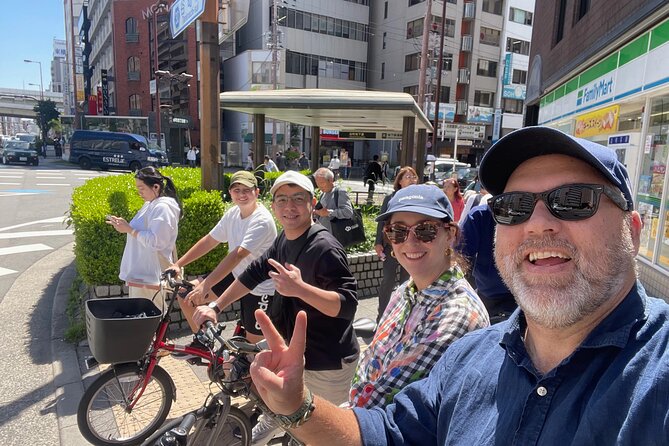
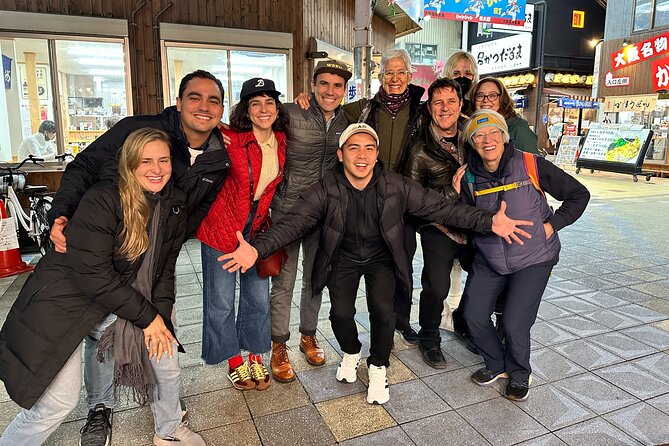
- Small groups keep it personal: Group tours hold no more than nine people, and private options are available.
- Extra Osaka planning help: You receive lifetime access to personal Google Map links, tips, and suggested routes for Osaka, Kyoto, Tokyo, and other destinations.
- Private tours can go farther: Osaka Castle, Abeno Harukas, an ukiyo-e museum, and the Osaka Museum of Housing and Living are available only on private tours.
Why this walk gives you a useful first look at Osaka
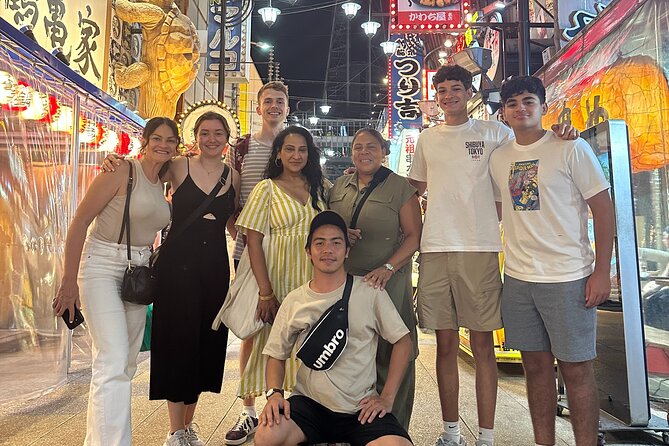
Osaka can feel like several cities joined together. The polished shopping arcades of Shinsaibashi sit close to narrow lanes, old religious sites, market counters, electronics shops, and the retro streets of Shinsekai. This tour makes that contrast the main subject.
Rather than keeping you in one sightseeing zone, the route moves from modern street culture to food, religion, local shopping, and working-class Osaka. That makes it a strong choice for your first full day, especially if you want someone to explain how the areas connect.
Mico Yamamoto presents the city as both a resident and an artist. The tour description emphasizes seasonal sketches, local people, small stories, and places that are easy to pass without noticing. You should expect conversation and interpretation, not simply a string of photo stops.
The four-hour group version is priced at $78.38 per person. That is fair value if you would otherwise pay separately for a food walk and an orientation tour, since the price includes two food items, two drink choices, and a guide for a maximum of nine people. It is less attractive if you mainly want formal entry to museums or major landmarks, since admission tickets are not part of the group route.
More food tours in Namba:
- Osaka Delights: Traditional Japanese Food Tour
★ 4.5 · 33 reviews - Osaka: Namba Local Food Walking Tour (Taste 15 Dishes)
★ 5.0 · 20 reviews - Tokyo: Shinjuku Food Tour (13 Dishes at 4 Local Eateries)
★ 5.0 · 6,603 reviews
Amemura begins with Osaka’s youth culture
The walk starts in America Mura, usually called Amemura by locals. This is Osaka’s youth district, with urban fashion, street art, and hip-hop influences. You get about 20 minutes here, so think of it as a quick introduction rather than a shopping session.
That short visit is still useful. Amemura gives you a sharp contrast with the historic lanes later in the route. It shows a younger side of Osaka and helps explain why the city has a reputation for street style and independent shops.
If you want time to browse, take photos, or shop for clothing, you may feel rushed. The guide’s stories are the main value here, so stay close and use the stop to ask what makes the neighborhood different from Tokyo’s fashion areas.
Dotonbori brings the lights and street food
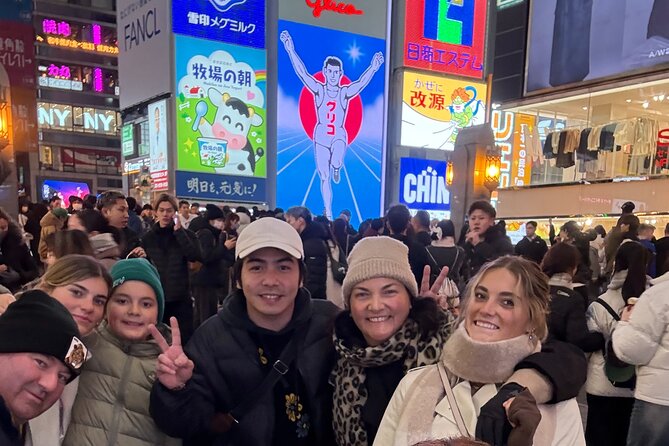
Next comes Dotonbori, Osaka’s best-known food and entertainment strip. You’ll see the Glico Running Man sign and the crowded canal-side setting that appears in so many Osaka photographs. The planned visit lasts around 20 minutes.
This is the place for quick orientation and a few classic pictures. Your guide can help you make sense of the food signs and the way Osaka’s famous eating culture is presented in this compact district.
Do not expect a long meal here. The food included in the tour is tied to the later Kuromon Market stop, and Dotonbori is mainly a visual and cultural introduction. If you want a quiet view, this is not the moment. The area is built around bright signs, crowds, and constant movement.
Shinsaibashi shows Osaka after dark, even in daylight
Shinsaibashi is known for its long shopping street and nightlife. The tour spends about 20 minutes here, with Mico pointing out a less obvious spot and explaining parts of the district that are easy to miss when you are focused on stores.
This stop works well as a bridge between Dotonbori’s showy food street and the quieter Hozenji area. You will see how shopping, dining, and late-night entertainment sit side by side in central Osaka.
Again, timing matters. Twenty minutes lets you understand the setting, but not explore the full shopping arcade. If shopping is a major reason for your Osaka visit, note the stores you like and return later on your own.
Same base, a completely different sort of day:
- Osaka Bar Hopping Night Walking Tour in Namba (3 bars, 6 tastes)
★ 5.0 · 958 reviews - Osaka 4hr Private Tour with Government-Licensed Guide
★ 5.0 · 359 reviews - Osaka Sushi Making Class – Hands-On Nigiri & Rolls (Same-Day OK)
★ 5.0 · 352 reviews - Osaka 6hr Private Walking Tour with Government Licensed Guide
★ 5.0 · 174 reviews
Hozenji Yokocho slows the pace
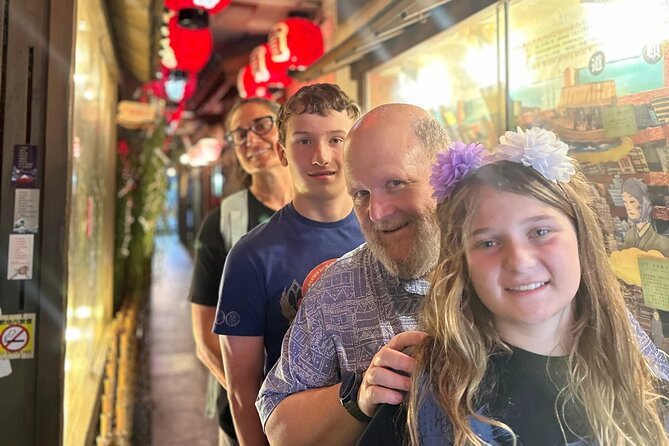
Hozenji Yokocho is one of the most appealing stops because its mood differs so greatly from the surrounding streets. Lanterns, narrow lanes, small eateries, and the moss-covered Hozenji Buddhist statue create a calmer setting. The visit lasts around 30 minutes.
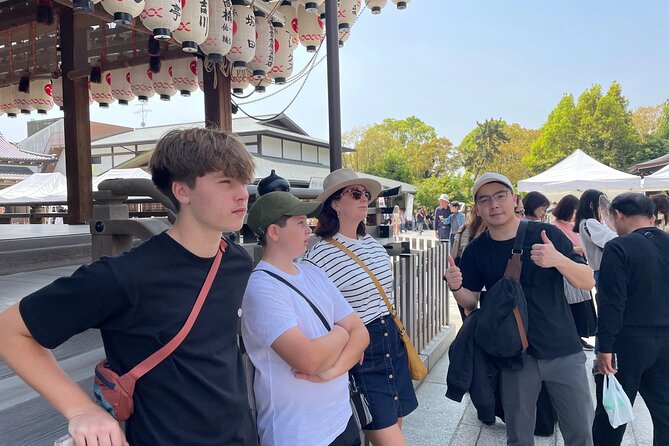
The guide presents Japanese spiritual traditions in a direct, informal way. That can be valuable if you want context rather than a quick photo of a temple. The small space also makes it easier to listen and notice details that you might miss alone.
This is not a large temple complex with many buildings to tour. Its appeal lies in atmosphere, local practice, and the contrast with nearby commercial streets. Use the time to observe quietly and ask questions about the statue, the lane, and the role of the site in Osaka life.
Kuromon Market is the food center of the morning
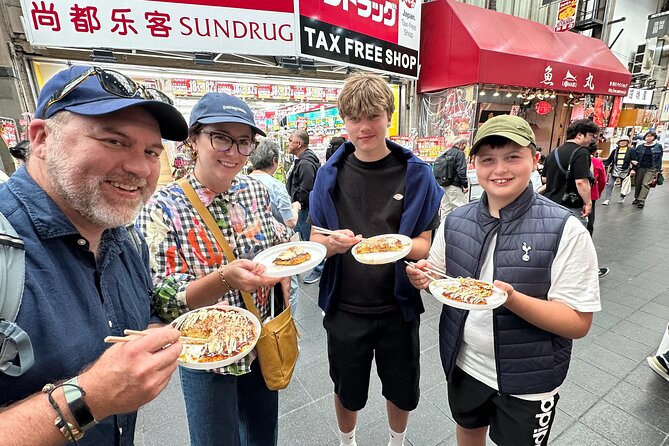
The longest scheduled stop is Kuromon Market, with about one hour here. Known as Osaka’s Kitchen, the market has served local shoppers and eaters for more than 200 years. This is where the included food becomes a central part of the experience.
You’ll stop at a favorite okonomiyaki restaurant for Osaka’s savory pancake. Takoyaki is also included, giving you two foods strongly linked with Osaka’s casual eating culture. One alcoholic and one non-alcoholic drink are included, and you can choose sake if that suits you.
The food portion adds real value to the $78.38 price, especially if you are unsure where to begin in a large market. A guide can help you avoid spending your whole morning trying to choose between stalls and restaurants. You also get a chance to ask how the dishes fit into local life rather than treating them as simple samples.
The tradeoff is that one hour goes quickly. Kuromon Market is a place where you could easily spend much longer browsing, so make a mental note of anything you want to revisit. The market can also be a better fit for people who enjoy informal eating than for anyone seeking a long, seated meal.
DenDen Town adds anime, games, and gadgets
The route can include DenDen Town, Osaka’s district for anime, gaming, electronics, and unusual gadgets. No separate duration is listed for this stop, so the time spent here may depend on the group and the day’s pace.
This is a good addition for anyone interested in Japanese pop culture. It also keeps the tour from becoming only a food-and-temple walk. You see another side of Osaka’s shopping culture, one built around characters, games, technology, and niche interests.
If DenDen Town is high on your list, say so early. The main route has several scheduled stops, and this section appears to be an added part rather than one of the numbered core stops. Private tours may give you more control over the balance.
Tower Knives offers a practical shopping stop
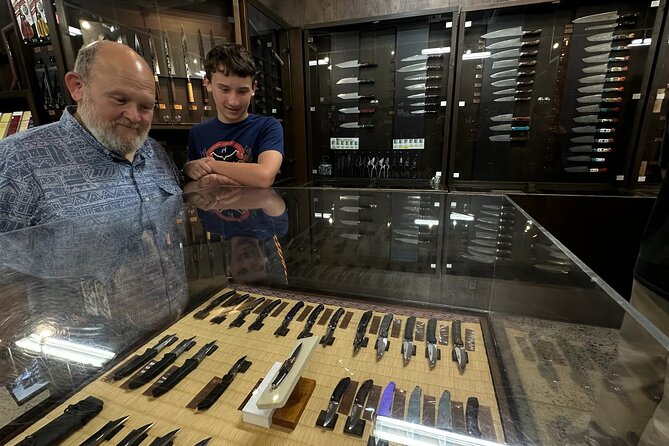
Near Tsutenkaku Tower, Tower Knives specializes in Japanese kitchen knives. Staff can demonstrate how the knives are made and explain the products. The supplied information does not list a fixed duration, so treat this as a possible short stop rather than a guaranteed shopping session with extended browsing time.
This stop makes sense after the market and food tasting. It connects Osaka’s cooking culture with a tangible souvenir. If you are considering a Japanese kitchen knife, you can ask questions and see a demonstration rather than buying blindly in a department store.
Remember that purchases are not included in the tour price. The visit is most useful if you already have some interest in knives or Japanese cooking tools.
Shinsekai brings the retro Osaka finish
The route then reaches Shinsekai, a district known for old-fashioned eateries, neon streets, and Tsutenkaku Tower. You’ll have about 30 minutes to take in the neighborhood.
Shinsekai feels different from the sleek shopping streets around Namba. Its appeal is the older, more nostalgic side of Osaka, with signs, restaurants, and a strong local character. The guide’s comments can help you understand why this district feels so distinct from Dotonbori even though both are associated with food and nightlife.
Thirty minutes is enough for a look and some photographs. It is not enough for a full meal, tower visit, or long restaurant crawl. If Shinsekai interests you most, plan to return after the tour, especially since the walk finishes nearby.
Nishinari is an optional look at harder-edged Osaka
If the group asks for it, the tour can finish with Nishinari Dobutsuen-mae Deep Osaka Street. The description presents Nishinari as an edgy and less polished part of the city, with a rawer local feel. This is not a standard must-see attraction, and the wording makes clear that the stop depends on group interest.
That optional element is useful for people who want to see more than Osaka’s postcard districts. It also calls for good judgment. Stay with the guide, listen to the local explanation, and do not treat the neighborhood as a spectacle.
The tour ends near Dobutsuen-mae Station, close to Shinsekai. From there, the Midosuji Line’s red route gives you access to Namba, Umeda, and other parts of Osaka. Your guide can help with directions.
What private tours add to the route
The group tour focuses on central Osaka and keeps the plan manageable. Private tours can be arranged for four, five, or six hours and allow additional stops that are not part of the standard group route.
Possible private-tour additions include Osaka Castle, the museum of Japanese woodblock prints, Abeno Harukas, and the Osaka Museum of Housing and Living. Osaka Castle gives you a major landmark tied to Toyotomi Hideyoshi and the city’s political past. Abeno Harukas offers views from Japan’s tallest skyscraper at 300 meters.
The ukiyo-e museum displays original Edo-period woodblock prints, including an authentic print of The Great Wave off Kanagawa. The Osaka Museum of Housing and Living recreates Osaka streets from the Edo period, giving you a more hands-on look at how people lived, worked, dressed, and shopped.
These additions make the private option a better fit if you want landmark sightseeing alongside neighborhood walking. They also solve the main weakness of the group route, limited time at each stop. The tradeoff is that private tours cost more than the listed $78.38 group price, and any extra transportation remains at your own expense.
Group size, transport, and timing
The tour begins at Swissotel Nankai Osaka, 5-1-60 Namba, at 10:00 a.m. That location is practical if you are staying around Namba or arriving by rail. Group hotel pickup is not included, despite pickup being offered as a feature, so confirm the exact arrangement before booking if door-to-door service matters to you.
This is a walking tour. Train or taxi rides can be arranged when needed, but you pay those transportation costs yourself. Wear shoes suited to four hours on city streets and allow extra energy for market lanes and commercial districts.
The maximum group size is nine. That is small enough for a personal conversation but large enough that the group’s interests can shape optional stops. Nishinari, DenDen Town, and Tower Knives may receive different attention depending on the group.
The standard duration is about four hours, with five- and six-hour options available. A longer private tour is the clearest choice if you want Osaka Castle, Abeno Harukas, or the museums without squeezing them into a neighborhood walk.
Who gets the most from this Osaka walk
I would choose this tour if you want a local introduction with food, short walks, and plenty of neighborhood contrast. It suits first-time visitors who would rather understand how Osaka feels than spend four hours inside one major attraction.
Food lovers get takoyaki, okonomiyaki, a drink choice, and a guided stop at Kuromon Market. Pop-culture fans get Amemura and DenDen Town. People interested in religious customs and older Osaka get Hozenji Yokocho and Shinsekai.
You may want another plan if you dislike walking, need long visits at museums, or prefer a tightly fixed sightseeing schedule. The route is broad rather than exhaustive, and optional stops can change the balance.
The tour has a five-star rating from 13 reviews and a 100 percent recommendation figure. One especially strong endorsement names Mico Yamamoto and recommends Yamamoto Travel for private touring in both Kyoto and Osaka. That makes Mico’s personal guidance a central reason to book, especially if you are considering a private version.
Free cancellation is available up to 24 hours before the 10:00 a.m. start time. Changes or cancellations inside that window are not accepted for a refund.
Should you book Discover Real Osaka?
Book it if you want an easy first orientation to Osaka that mixes food, local stories, street culture, and old neighborhoods. The included dishes and drinks make the price easier to justify, and the group size keeps the experience from feeling like a large bus excursion.
Choose the private option if you want Osaka Castle, museums, Abeno Harukas, or more control over time at Kuromon Market and Shinsekai. Stay with the group version if your priority is meeting a local guide, trying Osaka foods, and seeing several central districts in one morning.
The key question is simple: do you want depth at two or three sites, or a lively introduction to many parts of Osaka? For the second choice, this walk offers a useful mix, with Mico Yamamoto’s local perspective giving the route its strongest reason to exist.
FAQ
How much does the tour cost?
The listed price is $78.38 per person.
How long does the tour last?
The standard tour lasts about four hours. Five- and six-hour options are also available.
What time does the tour begin?
The tour starts at 10:00 a.m.
Where does the tour begin?
The meeting point is Swissotel Nankai Osaka, 5-1-60 Namba, Chuo, Osaka.
Where does the tour finish?
The tour finishes near Dobutsuen-mae Station, close to Shinsekai.
Is hotel pickup included?
Hotel pickup is not included for group tours. The group meets at the specified meeting point.
What food and drinks are included?
Takoyaki and okonomiyaki are included. You also receive one alcoholic drink, such as sake, and one non-alcoholic drink, with the choice left to you.
Are transportation costs included?
No. The experience is a walking tour. Train or taxi rides can be arranged upon request, but you pay those costs yourself.
How large is the group?
The group tour has a maximum of nine participants. Private tour options are also available.
Can the tour include Osaka Castle and museums?
Osaka Castle, the ukiyo-e museum, Abeno Harukas, and the Osaka Museum of Housing and Living are available for private tours only.
More Walking Tours in Namba
- 1 Day Takoyaki Making and Osaka Castle Walking Tour
★ 5.0 · 15 reviews - Kyoto Geisha Walking Tour: Gion District & Hidden Gems
★ 4.7 · 3,273 reviews - Tokyo Tsukiji Fish Market Food and Culture Walking Tour
★ 5.0 · 3,184 reviews - Kyoto: Gion Magical Night Walking Tour with Geisha Trivia
★ 4.9 · 2,393 reviews
Just added around Namba
- From Osaka/Kyoto: Kyoto & Nara Day Trip with Optional Lunch★ 4.5 · 79 reviews
- Osaka 6hr Private Walking Tour with Government Licensed Guide★ 5.0 · 174 reviews
- Private Airport transfer Kansai Intl. Airport(KIX) to OSAKA CITY★ 4.5 · 12 reviews
- Osaka: Namba Local Food Walking Tour (Taste 15 Dishes)★ 5.0 · 20 reviews
- Osaka Delights: Traditional Japanese Food Tour★ 4.5 · 33 reviews
- 1 Day Takoyaki Making and Osaka Castle Walking Tour★ 5.0 · 15 reviews
- Badminton in Osaka & Kyoto with Locals!★ 5.0 · 15 reviews
- From Osaka or Kyoto: Kyoto and Nara 1-Day Bus Tour★ 3.5 · 141 reviews
Osaka Tours, compared.


Shinsekai Food Tour with 13-15 Dishes at 5 Eateries
Read our review →
Osaka Food Tour: 13 Dishes at 5 Local Eateries
Read our review →
Hungry Osaka Street Food Tour:15 Tastings & 3 Drinks with a Local
Read our review →



Hotspots & Hidden Gems Walking Tour Private or Group
Read our review →Browse the lists this tour appears in