
Reviewed · OSAKA TOURS
Osaka 4hr Private Tour with Government-Licensed Guide
Osaka is easiest to understand when you connect its grand landmarks with its everyday streets. This private four-hour walking tour lets you choose two or three places, from Osaka Castle and Shitennoji to Dotonbori and Kuromon Market, with a licensed English-speaking guide to explain what you are seeing.
I like the flexible route, especially for a first visit, and I like the practical help with trains, restaurants, shopping, and local customs. Guides such as Sachiko, Yuka, Andy, and Yuri have been praised for adjusting plans, sharing photos, and explaining Osaka in clear, friendly English.
The main catch is simple: four hours is not enough for all 11 possible stops, and this is genuinely a walking tour. Transport, food, and entrance fees are extra, and the quality of the day depends heavily on the guide assigned to you.
The essential points before you book
- Choose only two or three sights: The tour is customizable, but you cannot sensibly cover every listed attraction in four hours.
- Expect real city walking: Subway stairs, crowded streets, market aisles, and long shopping arcades can make the day tiring, especially in hot weather or with a knee problem.
- Meet on foot within Osaka: Pickup is offered as an on-foot meeting arrangement in the designated area, not private vehicle service.
- Food can become part of the tour: Your guide can help you find takoyaki, okonomiyaki, sushi, kushikatsu, or a less touristy restaurant, but your meal is not included.
- The guide makes the difference: Strong guides have tailored routes around injuries, weather, food interests, and photography, while two low-rated experiences describe rushed walking and weak communication.
- The price is for guidance, not admission: At $109.43 per person, you are paying for a private, customized half-day rather than a package with transport and tickets.
Why a private Osaka route works well
Osaka can feel like several cities joined together. One moment you are under giant restaurant signs in Dotonbori. Soon after, you may be standing before an ancient shrine, browsing cooking tools, or looking across the city from a modern tower.
That contrast is the real appeal of this experience. A guide can help you choose the right combination instead of sending you across Osaka in a zigzag. You might pair Osaka Castle with Shitennoji for a history-focused morning, or combine Kuromon Market with Dotonbori for food and street life.
The private format also gives you room to ask questions. Guides have helped visitors understand public transportation, choose local restaurants, learn Japanese customs, and find shops that match their interests. One guide suggested a local rapid train from Kyoto instead of the shinkansen, a small piece of advice that shows the practical value of having a local person beside you.
You should discuss your priorities before the start. Tell the guide if you care most about food, old Osaka, shopping, modern architecture, photography, museums, or daily life. Also mention mobility limits, children, heat concerns, and any place you have already seen.
More licensed-guide days in Namba:
- Osaka 6hr Private Walking Tour with Government Licensed Guide
★ 5.0 · 174 reviews - Tokyo 6hr Private Tour with Government-Licensed Guide
★ 5.0 · 3,902 reviews - Tokyo 4hr Private Tour with Government-Licensed Guide
★ 5.0 · 1,394 reviews
Dotonbori and Shinsaibashi: Osaka’s loud, tasty center
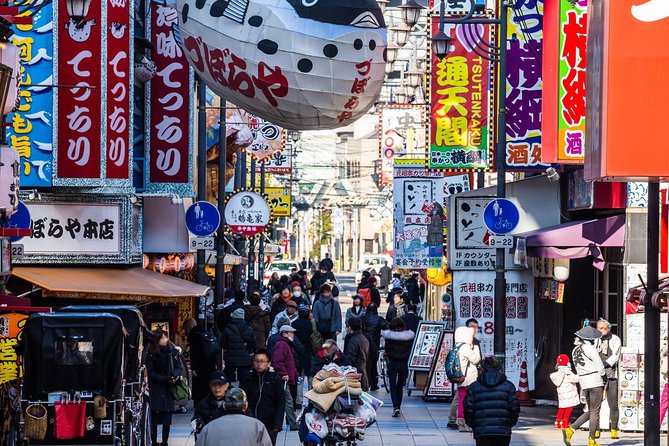
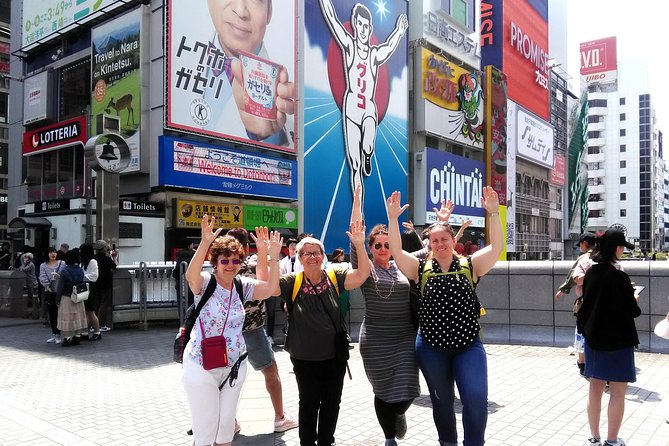
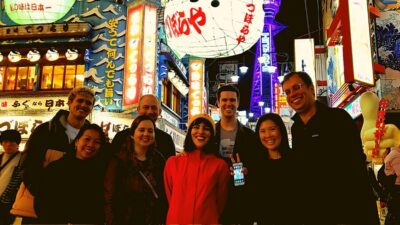
Dotonbori is the obvious choice if you want Osaka’s famous street personality. The route passes huge illuminated signs, restaurants, food stalls, and the canal-side district associated with takoyaki and okonomiyaki.
The planned stop is about 30 minutes, which is enough to get your bearings and discuss what to eat, but not enough for a leisurely meal, shopping, and extensive photographs. Food is extra, so ask your guide how to fit a snack into the schedule without losing one of your chosen sights.
Shinsaibashi-suji extends for about 600 meters and focuses on cosmetics, clothing, restaurants, and general shopping. It is less about ancient Osaka and more about how the city shops today.
The suggested visit is only 15 minutes. That makes it useful as a short walk between other stops, but too brief for serious shopping. If you want time to browse, make Shinsaibashi one of your main interests rather than treating it as an added bonus.
Kuromon Market and Doguyasuji: two useful food stops
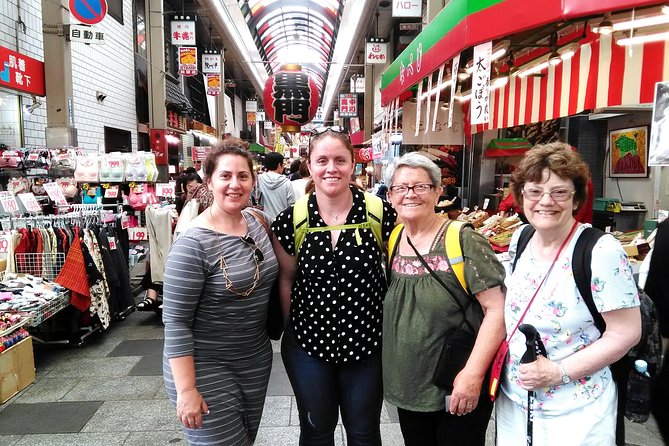
Kuromon Market is a covered market with seafood shops and prepared foods. Seasonal specialties include conger pike in summer and fugu and hamo in winter, with many seafood sellers specializing in fugu and hamo.
The market stop lasts about 30 minutes. That gives you time to see the displays and perhaps buy a bite, but the cost of food comes from your own pocket. I would choose Kuromon if you want to understand Osaka through its ingredients and food culture, not simply take photographs.
Sennichimae Doguyasuji Shopping Street offers a different kind of food culture. This roughly 150-meter arcade is lined with shops selling cooking utensils, tableware, appliances, and other kitchen supplies.
You may find it more interesting than a standard shopping mall because the merchandise explains how restaurants and home cooks operate. It is a good pick for anyone who enjoys Japanese knives, serving dishes, cooking tools, or unusual souvenirs. The planned 30 minutes is enough for a look, but not for careful comparison shopping.
Dotonbori, Kuromon, and Doguyasuji are close enough in central Osaka to make a sensible theme. Still, the guide must account for walking pace and crowd levels. You will get more from these stops if you select two or three related places instead of trying to attach them to distant sights.
Osaka Castle: the grand landmark choice
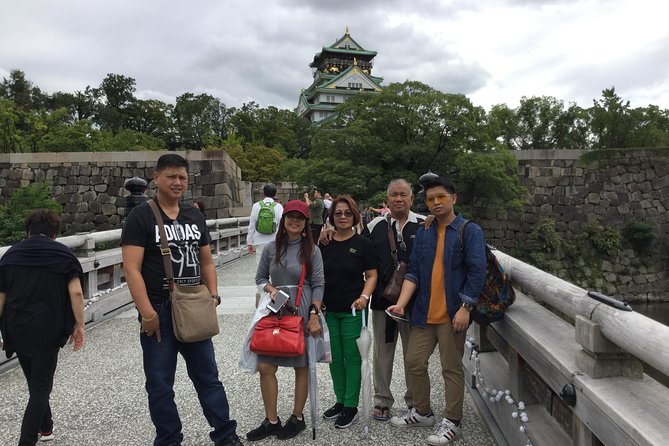
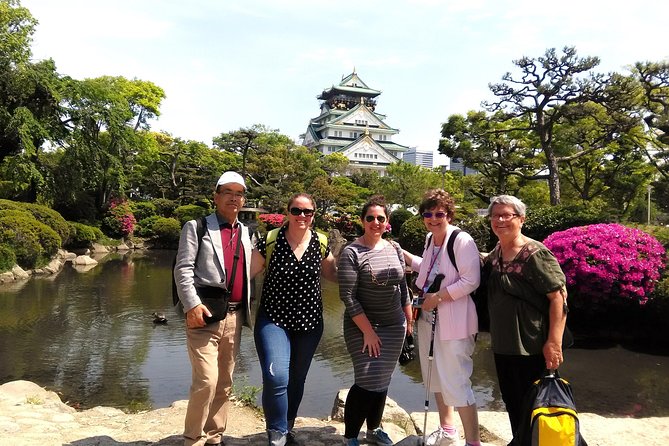
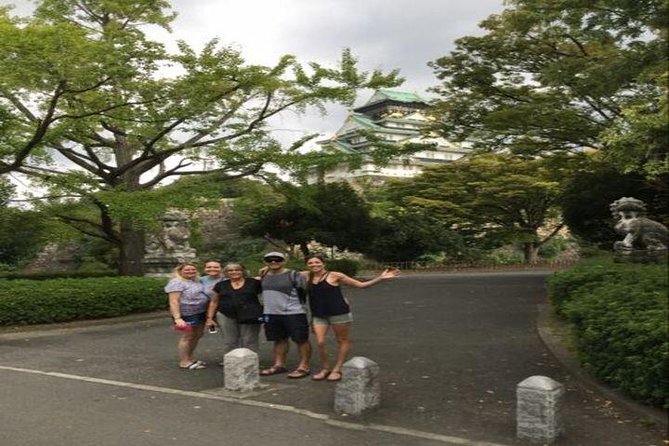
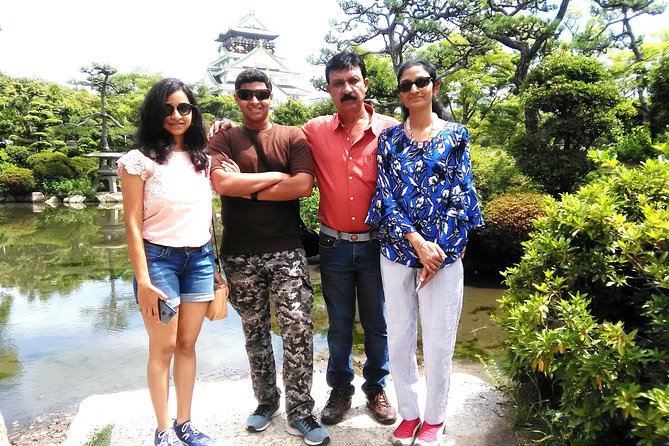
Osaka Castle is the strongest pick for a first visit if you want a major symbol of the city. Its five-story exterior and nearly 450-year story make it one of Osaka’s most recognizable sights.
The listed time is only 15 minutes, which suggests a short exterior visit unless you agree in advance to spend extra time inside. Admission is not included. The castle grounds can also involve considerable walking, so clarify exactly what you want to see.
A good guide can add value here by explaining the castle’s role in Osaka’s past rather than letting the visit become a quick photo stop. Yuji, Miyuki, Lily, and other guides have been praised for explaining the castle’s layout and historical background clearly.
One useful example from the tour feedback is a guide who noticed that a hotel view already made the Umeda Sky Building less necessary, then reshaped the day around other sights. That is the kind of adjustment worth seeking. A private tour should respond to what you have already seen.
A few more Namba half-days to weigh up
- Osaka Bar Hopping Night Walking Tour in Namba (3 bars, 6 tastes)
★ 5.0 · 958 reviews - Osaka Sushi Making Class – Hands-On Nigiri & Rolls (Same-Day OK)
★ 5.0 · 352 reviews - From Osaka or Kyoto: Kyoto and Nara 1-Day Bus Tour
★ 3.5 · 141 reviews - From Osaka/Kyoto: Kyoto & Nara Day Trip with Optional Lunch
★ 4.5 · 79 reviews
Shitennoji and Sumiyoshi Taisha: Osaka’s oldest sacred places
Shitennoji was founded in 593 by Prince Shotoku and is described as Japan’s first temple built by the state. It offers a major historical contrast to Osaka Castle and the neon of Dotonbori.
The suggested visit is about 30 minutes, with admission extra. This is one of the best choices if you want religious history and traditional architecture, but you should not expect a full temple study in half an hour.
Sumiyoshi Taisha is one of Japan’s oldest shrines, founded before Buddhism was introduced to the country. Its architecture has a distinctive style, making it different from the better-known shrine forms you may see elsewhere in Japan.
The stop is also planned for about 30 minutes, with no admission charge listed. Guides have used Sumiyoshi Taisha to add a quieter, more traditional side to an Osaka route. One guide also pointed out a stone-lifting activity used to predict your future, an unusual detail that can turn a short shrine visit into a memorable cultural lesson.
Choosing both Shitennoji and Sumiyoshi Taisha creates a strong religious and historical route, but the locations may require transportation between them. Since fares are extra and private transport is not provided, ask the guide to explain the train plan and expected walking before you commit.
Umeda Sky Building and the National Museum of Art
The Umeda Sky Building rises 173 meters in Osaka’s Kita district near Osaka and Umeda Stations. Its high observation area and modern design make it a natural choice for city views and contemporary Osaka.
The planned stop is only 15 minutes, and admission is extra. That timing works for seeing the building and taking a quick look, but it may not leave room for a relaxed observation visit.
You should also consider your hotel location and existing plans. If you already have a high city view, a guide may suggest using the short tour for a place you would not find as easily alone. That sort of honest route change is one of the best reasons to choose a private guide.
The National Museum of Art, Osaka occupies an underground site on Nakanoshima and holds a major art collection. The suggested visit is 30 minutes, with admission extra.
That is a sensible choice for an art-minded visitor who wants a focused introduction. It is not enough time for a slow museum visit, so tell the guide what kind of art interests you. One private tour included an Ukiyoe collection that became a highlight for the guide and the visitors alike.
Shinsekai and Keitakuen Garden
Shinsekai means New World, and its identity centers on Tsutenkaku, often compared with the Eiffel Tower, along with kushikatsu and the Billiken figure associated with wealth and good fortune.
The planned stop is only 10 minutes. That makes Shinsekai a quick neighborhood introduction rather than a full food or nightlife visit. If kushikatsu is a priority, you will need to discuss adding meal time, since lunch and personal spending are not included.
Keitakuen Garden sits within Tennoji Park. It is a traditional Japanese garden designed in the early 20th century, with a pond, arranged rocks, and seasonal plantings.
The suggested visit is just five minutes, so I would not select it unless you specifically want a brief garden pause or are already visiting nearby. A five-minute garden visit is a glance, not a proper garden experience.
Walking, trains, heat, and the four-hour limit
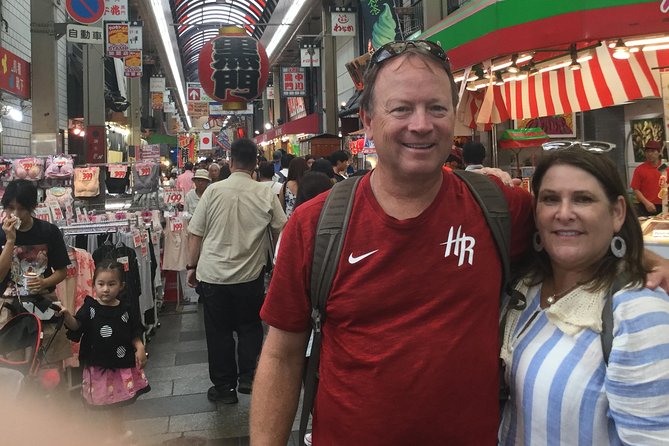
The phrase half-day tour sounds easy, but Osaka’s city blocks, station passages, stairs, and crowded shopping areas add up. One low-rated experience specifically described fast walking, difficulty keeping up, and discomfort in the heat with a nine-year-old. Another noted many steps into and out of the subway system.
I would treat your guide as a walking companion, not a vehicle-based escort. Wear comfortable shoes, bring water, and say clearly if you need a slower pace or regular sitting breaks. If you have a knee injury or another mobility concern, raise it before the route is finalized.
Transportation costs are extra, and the tour does not include private transport. That is not necessarily a problem because guides have helped visitors use Osaka’s clean and punctual subway and rail systems, but the route should be realistic.
The four-hour limit matters most when a meal enters the plan. One visitor found that a sit-down lunch reduced time for photographs and other sights. A quick snack can work better than a full restaurant meal if your main aim is sightseeing.
The guide quality question
The published score is 4.8 from 359 ratings, with 96 percent recommending the experience. The strongest pattern is clear: the best guides adjust the route, explain history in an approachable way, help with public transportation, and share useful local suggestions.
Sachiko is repeatedly associated with thoughtful changes, photography help, food advice, and flexible planning. Yuka is praised for clear explanations and practical recommendations. Andy is noted for strong English, historical information, patient pacing, subway help, and a digital photo book. Yuri and Lily are praised for careful explanations at major sights and help with train directions.
Those names give you useful examples of the kind of guide experience to hope for, but you may not be able to select a specific guide. The operator assigns licensed local guides, and individual teaching styles can differ.
Two very poor experiences describe guides who were rushed, hard to engage, impatient with questions, or not attentive to an injury. The operator responded that guides work independently and that the service is designed for families and small groups, but it does not currently offer a separate family-focused Osaka option.
That limitation deserves attention. If you have young children, ask for a relaxed pace before booking. If you have mobility concerns, put them in writing and choose a compact route with fewer stations and fewer distant stops.
What $109.43 per person really buys
At $109.43 per person, this is not the cheapest way to see Osaka. You still pay for transportation, meals, personal purchases, and entry fees at Shitennoji, the Umeda Sky Building, Osaka Castle, the National Museum of Art, or Keitakuen Garden.
The value comes from private attention. You are not following a fixed group schedule, and you can devote the morning to the subjects that matter to you. A guide can explain a shrine ritual, help you order food, point out a useful train, or change the plan when weather makes one stop less appealing.
For a first visit, that guidance can save time and reduce the stress of figuring out Osaka’s large rail network. For repeat visitors who already know the city, the price is harder to justify unless you want local food advice, cultural context, or a highly specific route.
Group discounts are available, so the cost may work better for several people sharing the private experience. You cannot combine multiple tour groups, and the activity is reserved for your own party.
Who should book this Osaka tour?
I would recommend it most strongly for a first-time visitor with only half a day, a clear list of interests, and a willingness to walk. It also suits couples, families with older children, and small groups who want help with Osaka’s trains and food districts.
It is a particularly good match if you want to combine one major sight with one local area. Osaka Castle plus Dotonbori gives you landmark and street life. Shitennoji plus Kuromon Market balances tradition and food. The National Museum of Art plus Umeda Sky Building creates a modern cultural route.
I would be more cautious if you want a slow museum visit, a long meal, extensive shopping, or all 11 sights. Four hours cannot provide that. I would also reconsider if you dislike walking, need guaranteed accessibility planning, or expect private vehicle transfers.
Free cancellation is available until 24 hours before the local start time. After that point, the cost is not refunded, and changes are not accepted.
FAQ
How long is the Osaka private tour?
The experience lasts approximately four hours and is designed as a half-day walking tour.
How many sights can I visit?
The included service is a customizable tour of two or three sites from the provided selection. The route cannot reasonably cover every possible stop in four hours.
Is the tour private?
Yes. Only your own group participates, and multiple tour groups cannot be combined.
Is an English-speaking guide included?
Yes. A licensed local English-speaking guide is included.
Where does the guide meet me?
The guide meets you on foot within the designated area of Osaka. The experience does not include private vehicle transportation.
Are transportation costs included?
No. Train, subway, and other transportation fees are extra.
Are entrance fees included?
No, entrance fees are generally extra. Guide entry fees are covered only for sights listed under the tour’s expected stops.
Is food included?
No. Lunch, snacks, and other personal expenses are extra. You can ask the guide for help choosing local foods or a restaurant.
Can I cancel for a full refund?
Yes, if you cancel at least 24 hours before the experience start time. Cancellations or changes made less than 24 hours before the start are not accepted for a refund.
Should you book it?
Book this tour if you want a flexible first look at Osaka and value a local person who can explain the city while helping you move through it. Settle on two or three priorities, keep the route compact, and ask for a slower pace if needed.
Skip it if you want a packaged sightseeing bus, included tickets, or a leisurely day with no transit and little walking. The format is strong, but the guide assignment matters. A thoughtful guide can turn four hours into a useful introduction to Osaka, while a rushed guide can make the same route feel like a race.
Just added around Namba
- Discover Real Osaka: A Cultural Walk with Food & Drink★ 5.0 · 13 reviews
- Private Airport transfer Kansai Intl. Airport(KIX) to OSAKA CITY★ 4.5 · 12 reviews
- From Osaka/Kyoto: Kyoto & Nara Day Trip with Optional Lunch★ 4.5 · 79 reviews
- Osaka 6hr Private Walking Tour with Government Licensed Guide★ 5.0 · 174 reviews
- Osaka: Namba Local Food Walking Tour (Taste 15 Dishes)★ 5.0 · 20 reviews
- Osaka Delights: Traditional Japanese Food Tour★ 4.5 · 33 reviews
- Badminton in Osaka & Kyoto with Locals!★ 5.0 · 15 reviews
- From Osaka or Kyoto: Kyoto and Nara 1-Day Bus Tour★ 3.5 · 141 reviews
Osaka Tours, compared.
Shinsekai Food Tour with 13-15 Dishes at 5 Eateries
Read our review →
Osaka Food Tour: 13 Dishes at 5 Local Eateries
Read our review →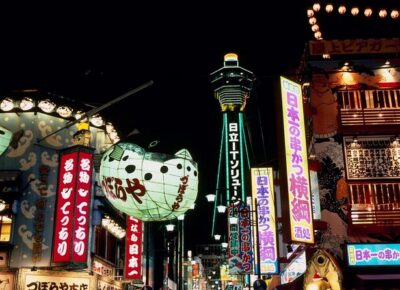
Hungry Osaka Street Food Tour:15 Tastings & 3 Drinks with a Local
Read our review →
Hotspots & Hidden Gems Walking Tour Private or Group
Read our review →Browse the lists this tour appears in