
Reviewed · TOKYO TOURS
Tokyo 4hr Private Tour with Government-Licensed Guide
Tokyo is easier to enjoy when someone else handles the city’s maze of stations, exits, and cross-town transfers. This private four-hour walking tour lets you choose two or three places from a long list, so you can focus on old temples, modern neighborhoods, gardens, food, or a mix of all four.
I like the personal pace and the practical help. Guides such as Katsu, Yusuke, Michio, Julie, and Seizo have helped visitors manage subway cards, avoid long stairs, find useful viewpoints, and understand what they are seeing. The main tradeoff is simple: four hours goes quickly, especially if you choose sights on opposite sides of Tokyo, and transport and entrance fees are extra.
Key Things to Know Before You Book
- You choose two or three main sights: Pick places such as Senso-ji, Meiji Jingu, Shibuya, Tsukiji, the Imperial Palace grounds, or a Japanese garden.
- It is a walking and public-transport tour: There is no private vehicle, and pickup means meeting your guide on foot within a designated Tokyo area.
- The guide can teach you Tokyo’s train system: Several guides help with Suica cards, subway routes, station exits, and onward travel.
- The best value comes from personalization: A focused pair of nearby sights gives you more time than trying to cross the whole city.
- Admission is not always included: Gardens, museums, Tokyo Tower, and some other attractions require separate payment.
- The experience is private: Only your group participates, with a licensed local English-speaking guide.
Why Four Hours Works Best as a Focused Tokyo Introduction
At $109.43 per person, this tour is not the cheapest way to see Tokyo. It is priced as a private service, so the value depends on group size and how much help you need.
For a couple, the cost buys a personal guide for half a day. For a family or small group, the per-person price can look more attractive, especially when you consider the time saved at stations and the chance to shape the route around your interests.
I would not try to see Asakusa, Shibuya, Harajuku, Tsukiji, and the Imperial Palace all in one four-hour session. Tokyo’s rail system is fast, but stations can be enormous, and walking between platforms and exits takes time. Choose two nearby areas, or at most three with a clear plan.
The tour works particularly well on your first full day. You can learn how to use trains, understand basic shrine customs, get a feel for Tokyo’s layout, and then explore independently afterward. Guides have also helped with practical tasks such as finding an ATM, reloading a Suica card, buying Shinkansen tickets, and locating routes for later stops in Kyoto and Osaka.
More Licensed Guide Tours in Tokyo
- Tokyo 6hr Private Tour with Government-Licensed Guide
★ 5.0 · 3,902 reviews - Tsukiji Food and Toyosu Market with Government-Licensed Guide
★ 5.0 · 158 reviews - Toyosu Market Morning Tuna Auction and Tsukiji Food Tour with Licensed Guide
★ 4.5 · 146 reviews
Asakusa and Senso-ji: Tokyo’s Old Downtown Feel
Asakusa gives you the clearest look at Tokyo’s old downtown character. The district grew around Senso-ji, a Buddhist temple associated with a legend about two fishermen who found a statue of Kannon in the Sumida River in the seventh century.
The temple area is colorful and easy to enjoy on foot. The Kaminarimon Gate, shopping approach, incense burner, and main hall give your guide plenty to explain. You can learn how Buddhism and Shinto differ, how to behave at a temple, and why Senso-ji remains one of Tokyo’s most popular religious sites.
The nearby streets also make Asakusa useful for a first taste of everyday Tokyo. You might find traditional snacks, souvenir shops, older eateries, and small streets that feel far removed from the glass towers of Shinjuku.
The drawback is crowding. Senso-ji is rarely quiet in the middle of the day, and a short four-hour tour cannot cover every corner of Asakusa. If you want a slower visit, choose Asakusa as one of your two main areas rather than adding it to a long cross-city route.
Imperial Palace Grounds: Stone Walls, Moats, and Edo-Era Context
The Imperial Palace occupies the former site of Edo Castle, the seat of the Tokugawa shoguns. The grounds combine broad open spaces, moats, massive stone walls, and formal gardens near the center of modern Tokyo.
This is a good choice if you want history without spending hours inside a museum. A guide can explain how Edo became the political center of Japan and how the old castle site relates to the present imperial institution.
Be clear about what you are booking. This tour does not include entry to the inside of the Imperial Palace. The visit focuses on accessible grounds and surrounding areas. That is still worthwhile, but anyone expecting palace rooms or a guided interior visit should adjust expectations.
The palace also pairs well with Tokyo Station, where one guide stopped for lunch with a couple before continuing to Asakusa. Food is not included, but a guide can help you fit a meal into the outing if the timing allows. Remember that eating reduces sightseeing time during a four-hour booking.
Meiji Jingu, Yoyogi Park, and Harajuku in One Compact Area
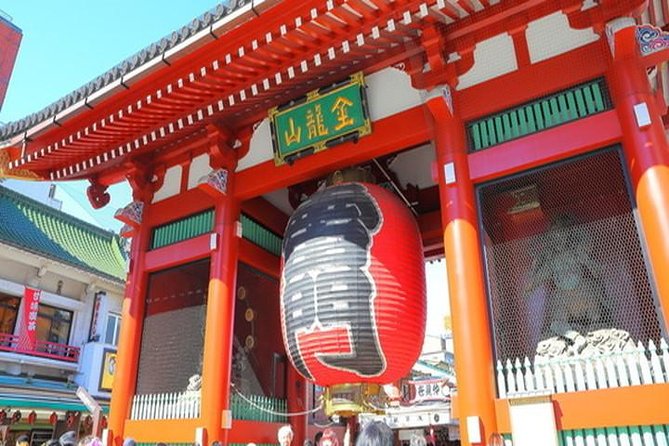
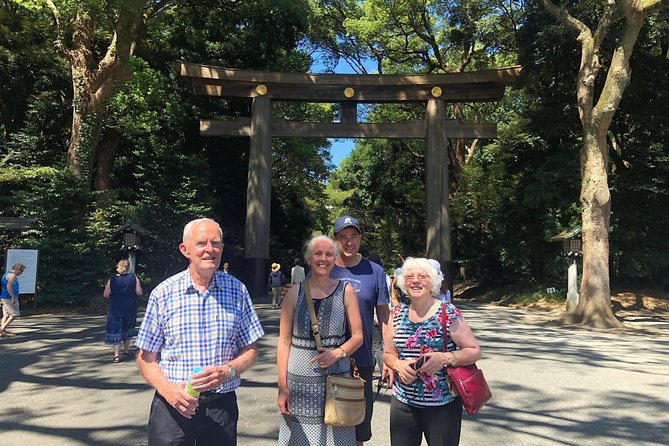
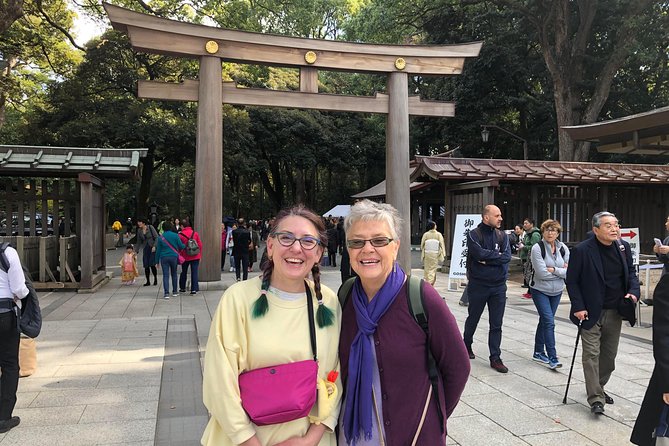
Meiji Jingu is dedicated to Emperor Meiji and Empress Shoken. Its approach passes through a large wooded shrine setting beside Harajuku Station, creating a sharp contrast with the youth fashion and crowded sidewalks nearby.
A guide can show you the correct sequence for visiting a Shinto shrine and explain the difference between Shinto and Buddhism. You may also see wedding processions or seasonal displays, though these are not guaranteed.
Meiji Jingu is one of the strongest choices for a first visit because it combines culture, calm walking, and a major Tokyo landmark without requiring a separate admission ticket. It also connects naturally with Yoyogi Park and Takeshita Street.
Yoyogi Park offers wide lawns, ponds, and wooded sections. It is a useful pause if your group needs open space or a slower pace. One family with a four-year-old had the route adapted to suit the child, while another guide helped older participants avoid long stairways. Those details matter: tell the guide about your pace and mobility needs before setting the route.
Takeshita Street shows Harajuku’s teenage fashion culture, shops, and snack scene. It can feel crowded and commercial, but that is part of its appeal. Pairing it with Meiji Jingu gives you both modern youth culture and a major Japanese shrine in one neighborhood.
More licensed-guide days in Tokyo:
- Tokyo Tsukiji Food & Culture Private Tour Licensed Guide
★ 4.9 · 28 reviews - Kawagoe 4hr Private Tour with Licensed Guide (Kawagoe Dep)
★ 5.0 · 13 reviews - Kyoto 6hr Private Tour with Government-Licensed Guide
★ 5.0 · 1,369 reviews - Hiroshima / Miyajima Full-day Private Tour with Government Licensed Guide
★ 5.0 · 1,298 reviews
Shibuya Crossing and Hachiko: Tokyo’s Modern Stage
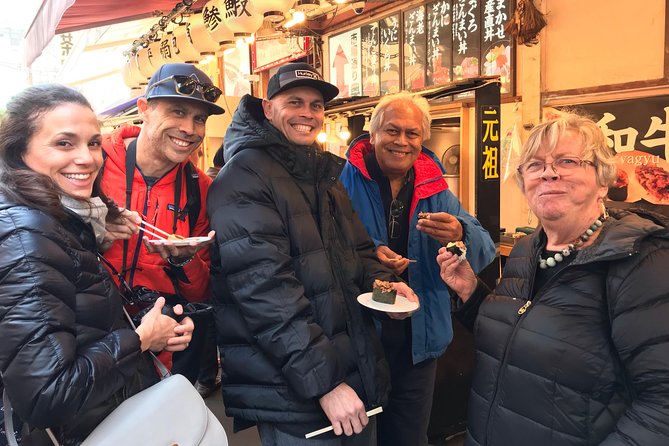
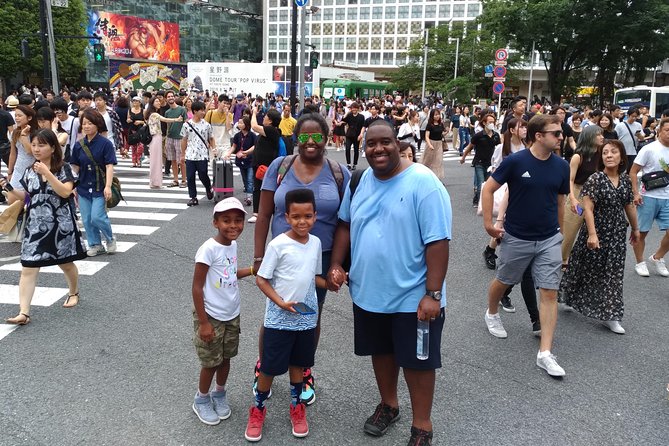
Shibuya Crossing is the city’s great urban spectacle. When the lights change, pedestrians move from several directions across the intersection, surrounded by giant screens and high-rise buildings.
A guide can take you to useful viewing points and explain the story of Hachiko, the loyal dog commemorated by the nearby statue. The Hachiko story adds a human touch to what might otherwise be a quick photo stop.
Shibuya works well for visitors who want Tokyo’s modern side. It is also a good place to learn how station exits work, since the area can be confusing even when you know the name of your destination.
Do not expect the crossing itself to fill four hours. It is best paired with Meiji Jingu, Harajuku, or another nearby stop. If you add the Imperial Palace or Asakusa, ask the guide to estimate transport time before you commit.
Tsukiji Outer Market: A Practical Food Stop
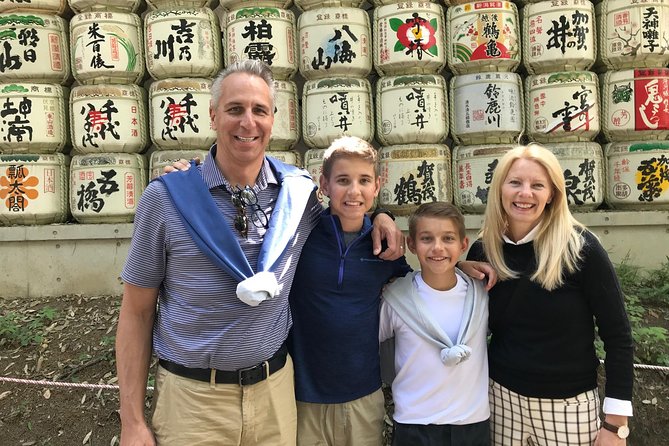
Tsukiji is the former fish-market district, and its outer market remains a popular place for food stalls, small shops, and seafood. It is a good choice if you want an edible part of Tokyo rather than only temples and viewpoints.
Food purchases are your responsibility, but a guide can help you understand what you are seeing and decide how to use the limited time. One guide helped a group sample food at the stalls, while another combined Tsukiji with sushi and sake. You should treat eating as part of the experience, not an extra activity that somehow fits in for free.
Tsukiji pairs well with Hama Rikyu Gardens, the Imperial Palace area, or Ginza if your guide agrees that the route is practical. The market can be crowded, and the best experience depends on your willingness to stop, browse, and eat.
Tokyo’s Gardens: Choose One, Not All Three
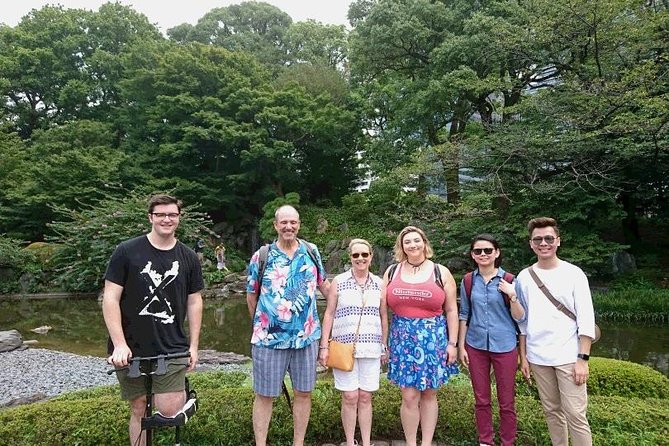
The tour offers several garden choices, but you should normally select only one during four hours.
Shinjuku Gyoen National Garden is one of Tokyo’s largest parks, with broad lawns, winding paths, and a calmer feel than the streets around Shinjuku Station. Its admission fee is not included.
Koishikawa Korakuen is one of Tokyo’s oldest Japanese gardens. Its design dates to the early Edo period and reflects the garden traditions of the Mito branch of the ruling Tokugawa family. It is a strong pick if you want carefully arranged scenery and historical garden design. Admission costs extra.
Hama Rikyu Gardens sits beside Tokyo Bay and includes seawater ponds that change with the tides, along with a teahouse. It can provide a pleasant contrast to nearby office towers and shopping districts. Admission is separate.
Rikugien is another major Japanese garden, built around 1700 for the fifth Tokugawa shogun. Its name refers to six poetic themes, and the garden is designed around scenes from classical poetry. It also requires a separate admission fee.
These gardens reward a slower pace. If you choose one, let it be the center of the tour rather than a quick stop squeezed between distant neighborhoods.
Akihabara, Golden Gai, and Tokyo’s More Specialized Neighborhoods
Akihabara is famous for electronics shops and has become a center for anime, manga, games, and related pop culture. Choose it if you already know this is your interest. It is less useful as a generic Tokyo highlight than Senso-ji, Meiji Jingu, or Shibuya.
Golden Gai in Shinjuku grew from postwar black-market roots into a compact area of small eating and drinking establishments. It is most interesting later in the day, but the tour details do not promise evening hours or a meal there. Ask about timing before selecting it.
Both areas are specialized. They make sense for repeat visitors or people with a clear interest, not for someone trying to get a broad first look at Tokyo in four hours.
Odaiba, Shibamata, Nezu, and Gotokuji
Odaiba is a shopping and entertainment district on a man-made island in Tokyo Bay. Its origin lies in fort islands built in the nineteenth century. It is a reasonable choice if you want open waterfront space and modern leisure areas, but reaching it may consume more of your limited time.
Shibamata, at Tokyo’s eastern edge near the Edogawa River, retains an old-fashioned neighborhood feel. It offers a different side of Tokyo from the central districts, though the distance makes it a poor match for a packed highlights route.
Nezu, along with nearby Yanaka, preserves parts of old Tokyo that escaped major wartime damage and natural disasters. You may see older homes, neighborhood shrines, and local memorial sites. This is a good choice if you want ordinary residential Tokyo rather than famous photo spots.
Gotokuji Temple in Setagaya is linked with the maneki-neko, the lucky cat figurine. The temple is a niche stop, best for visitors interested in Japanese folklore, religious sites, or cat culture.
These choices show the tour’s main strength: you can shape the day around your interests. They also show its limit: distant neighborhoods need a realistic plan.
Tokyo Tower and the Admission Details That Matter
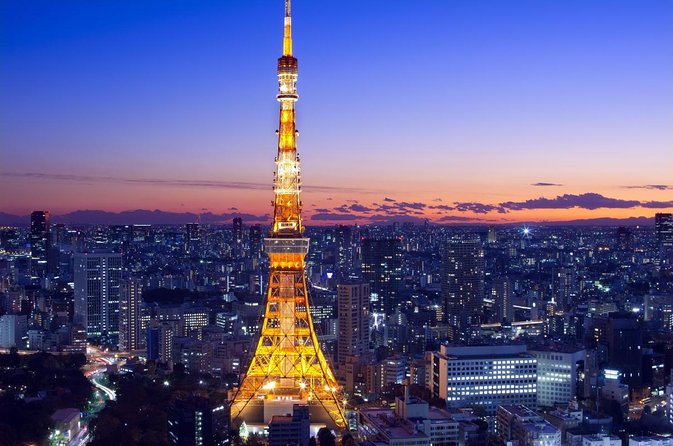
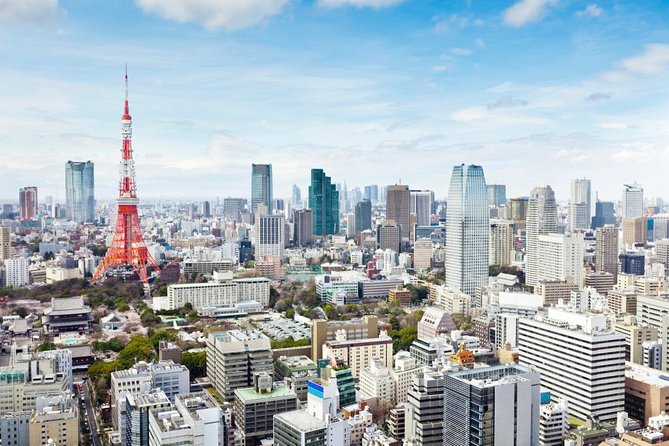
Tokyo Tower reaches 332.9 meters and offers a classic view over the city from its observation decks. The tour includes access only up to the main deck, not the top deck, and the admission fee is not included.
That distinction is worth checking before you book. If Tokyo Tower is your priority, ask the guide to plan enough time for entry, security, elevators, and the view. A 30-minute listing for the stop does not mean you have unlimited time there.
Other attractions with separate admission include Shinjuku Gyoen, Koishikawa Korakuen, Hama Rikyu, Rikugien, Tokyo National Museum, and Tokyo Tower. Transportation, lunch, and personal purchases are also extra.
Because the route is on foot and by public transport, you should budget for train or subway fares. The guide can help you use the system, but the tour price does not cover your transportation.
The Guide Makes or Breaks the Experience
The company assigns a licensed local English-speaking guide, but you cannot select a specific person based on the information provided. Guides who have led this experience include Seizo, Julie, Taku, Koba, Toru Higaki, Yusuke, Katsu, Bruce, Koji, Michio, Naoko, Masa, Ken, Hideki, Yoshihiro, Takako, and others.
The strongest part of the guiding service is practical help. Guides have assisted with train routes, station navigation, Suica cards, Shinkansen tickets, hotel directions, food choices, and avoiding stairs. That can be more useful than a long lecture, especially on your first day.
English ability may vary by guide. Most feedback is highly positive, but there are also clear complaints about guides being difficult to understand. If detailed spoken explanation is essential for your group, contact the operator before booking and explain your needs.
The overall rating is 4.9 from 1,396 ratings, with 98 percent recommending the experience. Those figures suggest a strong service, but they do not remove the need to choose a sensible route or communicate clearly before the tour.
Who Should Book This Private Tour?
I would recommend it to:
- First-time visitors who feel uneasy about Tokyo’s train system
- Families that need a flexible pace
- Older participants who want help with stairs and transfers
- Couples who prefer a private guide over a large group
- Visitors with only one free half-day
- Repeat visitors seeking neighborhoods such as Nezu, Shibamata, or Gotokuji
- Anyone who wants help combining sightseeing with practical tasks
I would be more cautious if you want a private car, long museum visits, a fixed all-inclusive price, or a full-day tour. This is not a chauffeured sightseeing service. It is a walking introduction with public transport and a guide who adjusts the day to your priorities.
Booking Advice for Getting the Best Four Hours
Before the meeting, choose your top two sights and one backup. Tell the guide whether you care most about temples, gardens, food, pop culture, shopping, history, or transport practice.
Keep the route geographically sensible. Meiji Jingu, Yoyogi Park, Harajuku, and Shibuya make a natural group. Asakusa and Tokyo National Museum can work together. Tsukiji and Hama Rikyu are more compatible than Tsukiji and Shibamata.
Wear comfortable shoes and expect real walking. Pickup is on foot within a designated area, and there is no private vehicle. Most people can participate, and service animals are allowed, but you should mention mobility concerns early.
The tour date can be changed up to two days before the experience, subject to guide availability. For a full refund, cancel at least 24 hours before the start time. Changes or cancellations inside that window are not accepted.
Should You Book the Tokyo Private Tour?
Book it if you want a flexible first look at Tokyo and value a guide who can teach you the rail system as well as explain the sights. The strongest plan is two nearby areas, such as Meiji Jingu and Shibuya, or Asakusa and the Imperial Palace area if transport time is carefully managed.
At $109.43 per person, the price is fair for a private four-hour service, particularly for a small group that needs help with navigation or pacing. It is less compelling if you already know Tokyo’s trains and only want quick photo stops.
Choose your priorities, keep the route tight, and treat the guide as both a local interpreter and a transit coach. That is where this experience earns its keep.
FAQ
How long is the Tokyo private tour?
The tour lasts approximately four hours.
Is the tour private?
Yes. Only your group participates, and multiple tour groups cannot be combined.
How many places can I choose?
The tour includes a customizable plan based on two or three sites from the listed choices.
Is hotel pickup included?
Pickup is offered on foot within a designated area of Tokyo. There is no private vehicle.
Is transportation included in the price?
No. Transportation fees are not included, although the guide can help you navigate Tokyo’s public-transport system.
Are entrance fees included?
No. Entrance fees are generally separate. The listed information specifically excludes admission to places such as Shinjuku Gyoen, Koishikawa Korakuen, Hama Rikyu, Rikugien, Tokyo National Museum, and Tokyo Tower.
Can I enter the Imperial Palace?
No. The tour does not include access to the inside of the Imperial Palace. The route visits the former Edo Castle site and surrounding grounds.
Does the Tokyo Tower visit include the top deck?
No. Access is limited to the main deck. The top deck is not included.
Can I cancel for a full refund?
Yes, if you cancel at least 24 hours before the experience start time. Cancellations or changes made less than 24 hours in advance are not accepted and are not refunded.
Just added around Tokyo
- Private Arrival Transfer : Narita International Airport to Central Tokyo City★ 4.5 · 12 reviews
- Narita Airport(NRT): Private Transfer to Tokyo/Yokohama 1-9pax★ 5.0 · 47 reviews
- Private Transfer from Narita Airport to Yokohama Port and City★ 4.5 · 17 reviews
- [Narita Airport Terminals 1, 2] 40-60km Sawara Itako Historic Bike Tour★ 5.0 · 13 reviews
- 3 Day Japan Highlights Tour: Tokyo, Mt.Fuji, Nara, Kyoto, Osaka★ 5.0 · 22 reviews
- Small Town in the Big City: Tasting Tokyo’s Kichijoji★ 5.0 · 195 reviews
- Small Town in the Big City: Tasting Tokyo’s Kichijoji★ 5.0 · 16 reviews
- The 10 Tastings of Tokyo With Locals: Private Street Food Tour★ 5.0 · 48 reviews
Tokyo Tours, compared.

Mt Fuji and Hakone 1-Day Bus Tour Return by Bullet Train
Read our review →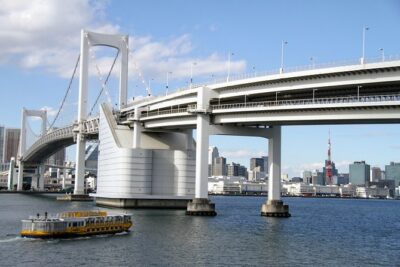
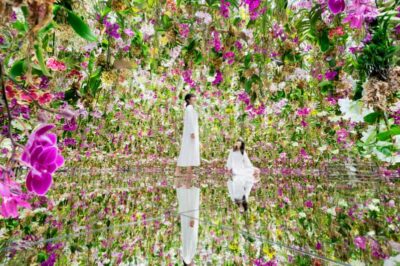
teamLab Planets TOKYO Digital Art Museum Entry Ticket
Read our review →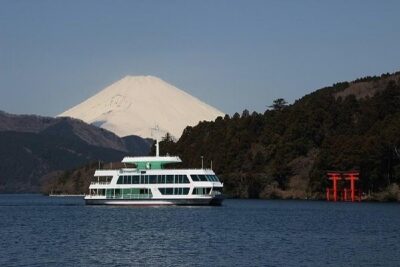
Mt Fuji & Hakone Cruise, Drum Show Bullet Train 1 Day from Tokyo
Read our review →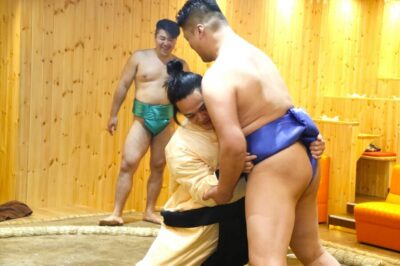
Sumo Show Experience with Chicken Hot Pot and a Photo
Read our review →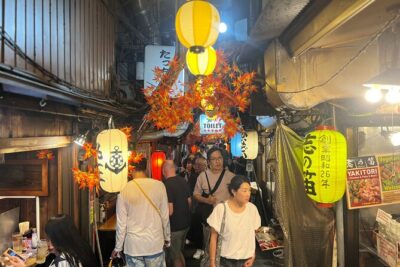
Shinjuku Food Tour (13 Dishes at 4 Local Eateries)
Read our review →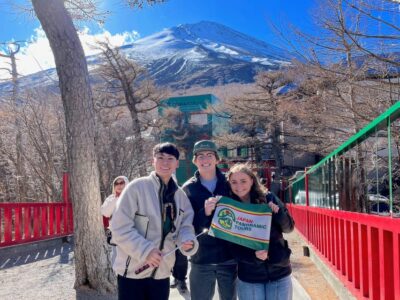
Tokyo Mt Fuji 5th St & Hakone Cruise Bus Tour w/Bullet Train
Read our review →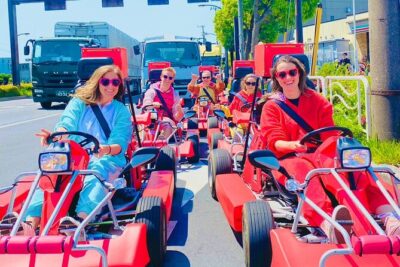
Flagship 2-Hours Official Street Go-Kart Tour – Tokyo Bay Shop
Read our review →Browse the lists this tour appears in