
Reviewed · TOKYO TOURS
Small Town in the Big City: Tasting Tokyo’s Kichijoji
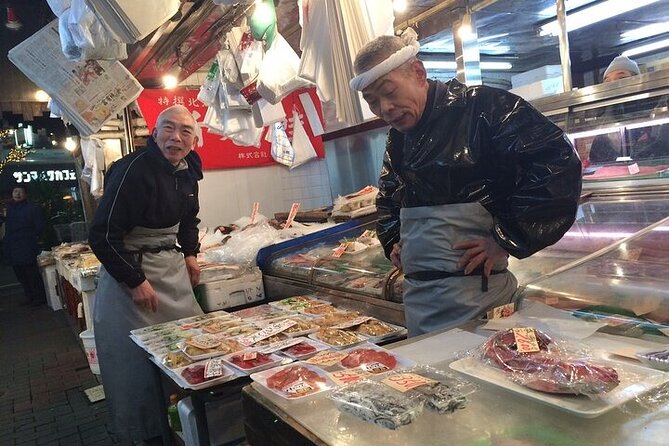
Kichijoji gives you a useful change of pace from Tokyo’s grand sights. This six-hour food walk focuses on one neighborhood, moving from a polished department-store food hall to old-school yakitori, street-side octopus balls, and a three-generation senbei shop. The small group, capped at six, should make it easier to ask questions and keep the pace personal.
I like the strong mix of food settings, especially the contrast between carefully presented sushi and casual skewers eaten near the shopping streets. I also like the family connection at the rice-cracker maker, a detail that gives the tasting more human weight than a simple parade of samples. Guide Phoebe’s patience and enthusiasm are singled out as major strengths.
The main drawback is the price: $195 per person is a serious spend for a neighborhood food walk. You also need about six hours and must make your own way to Kichijoji Station, though lunch, snacks, coffee or tea, bottled water, and tastings are included.
Key points to know before booking
- Up to six people: The small group suits you if you want room for questions and a less hurried food walk.
- Several sides of Japanese food: Expect department-store specialties, sushi, yakitori, octopus balls, street food, and senbei.
- Guide Phoebe: Her patient, enthusiastic style is a strong part of the experience.
- Kichijoji focus: You spend the day getting to know one neighborhood rather than racing across Tokyo.
- Six hours with food included: Lunch, snacks, coffee or tea, and bottled water are covered, which helps explain part of the cost.
- Book ahead: This experience is booked about 83 days in advance on average, so late planners should check availability early.
Why Kichijoji makes a good food base
Tokyo can make food hunting feel like a full-time job. The city is enormous, and its best eating often hides behind small doors, inside station buildings, or along ordinary shopping streets. A focused neighborhood tour solves that problem by letting you spend enough time in one place to notice how people actually shop and eat.
Kichijoji is in Musashino, west of central Tokyo. This experience treats it as a small town within the capital, using the neighborhood’s food shops and casual dining spots as the main subject. You are not simply collecting famous dishes. You are seeing how Japanese food appears in several forms, from refined department-store displays to quick bites bought on the street.
That range is the tour’s central idea. Japan’s food culture is not limited to sushi counters or formal meals. Pickles, fruit, packaged snacks, rice crackers, skewers, and prepared foods all matter. I like that this walk makes room for those everyday foods, since they often tell you more about local habits than one expensive restaurant meal.
The experience lasts about six hours. That is long enough for a proper lunch and a generous set of tastings, but it is also a substantial block of your Tokyo schedule. If you want a quick two-hour snack outing, this is not the right fit. If you enjoy learning through food and prefer a slower neighborhood visit, the length works in its favor.
More food tours in Tokyo:
- Tokyo: Shinjuku Food Tour (13 Dishes at 4 Local Eateries)
★ 5.0 · 6,603 reviews - Tokyo Tsukiji Fish Market Food and Culture Walking Tour
★ 5.0 · 3,184 reviews - Tokyo: Shinjuku Food Tour (15 Dishes and 4 Eateries)
★ 4.9 · 2,033 reviews
Starting at the department-store food hall
The food walk begins at a depachika, one of Tokyo’s famous department-store food halls. These underground or lower-level food floors are useful places to see the high standards applied to prepared food in Japan. They bring together traditional products and newer food trends in a polished setting.
Here you can expect to pass displays of highly prized pickles, carefully presented fruit, and Japanese snack foods. The point is not only to taste. You also get a look at how food is packaged, presented, and sold when appearance matters almost as much as flavor.
The fruit section is especially interesting because premium fruit has a place in Japanese gift culture and department-store shopping. Pickles show another side of the cuisine, bringing sharp, salty, and fermented flavors to the table. Then the snack aisle shifts the mood toward familiar Japanese junk food.
I appreciate this opening because it gives you a foundation before the tour moves outdoors. You see the polished side of Japanese food retail first, then compare it with the more casual shops and stalls later in the day. That contrast helps you understand that Japanese cuisine is not one fixed style.
The group then reaches a sushi bar described as a local favorite. The available information does not specify the exact sushi selection, so you should think of this as a tasting stop rather than a full sushi lesson or elaborate omakase meal. Still, it adds a classic Japanese food to a day that also includes humble snacks and family-made crackers.
Sushi, yakitori, and the daily shopping streets
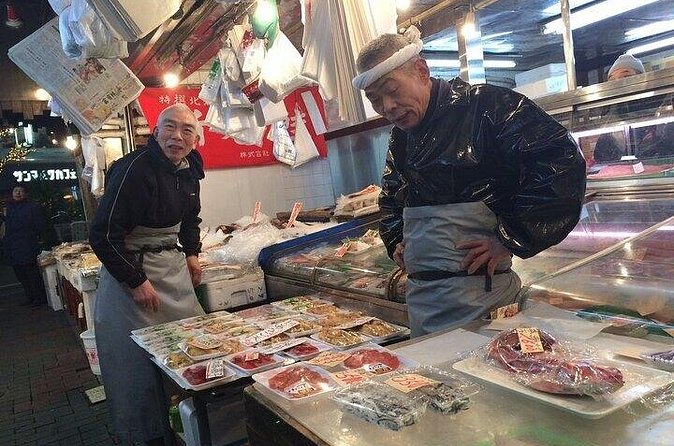
From the food hall, the experience continues along Kichijoji’s shotengai, or covered shopping street. These streets are built for daily life, with shops and food counters serving local needs rather than existing only for sightseeing.
You can expect to see how people shop for ordinary ingredients and ready-to-eat food. The tour also explains basic elements of Japanese cuisine while you taste them. That practical approach should help you place each dish in context instead of treating every sample as an isolated novelty.
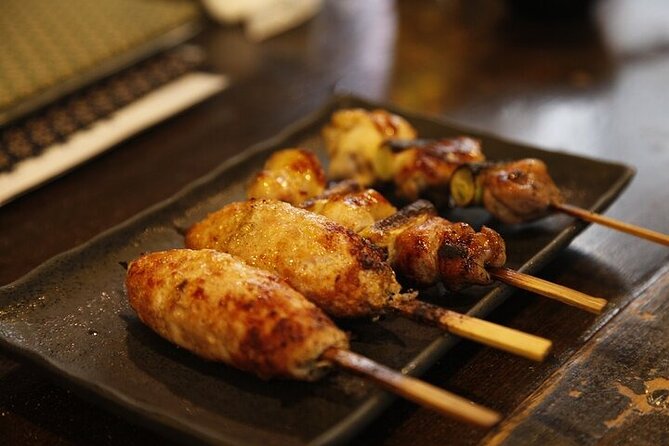
Yakitori is one of the clearest examples. These grilled chicken skewers are casual, direct, and closely tied to neighborhood eating. An old-school yakitori stop gives the day a different feel from the department-store sushi bar. You are moving from neat presentation to food associated with quick meals and informal drinking spots.
The tour also includes octopus balls prepared and served street-side. This is a useful reminder that Japanese street food has its own texture and rhythm. You may find the soft interior and hot filling require a little patience, so do not rush the first bite. The experience is designed around tasting foods where they are made and sold, not simply receiving a plate in a formal dining room.
The wording of the experience also points to avant-garde taverns and lively food stands. The exact businesses and dishes can vary, so you should not book this expecting a fixed restaurant crawl with every stop guaranteed in identical form. The value is in the range of food environments within Kichijoji.
The three-generation senbei maker
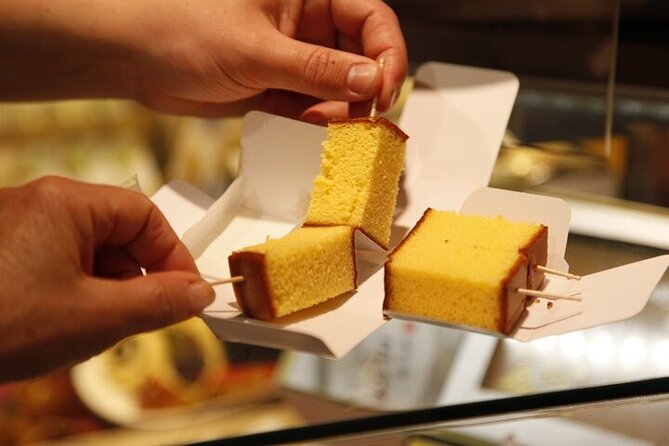
The most distinctive stop is the meeting with three generations of a family that makes artisanal senbei. Senbei are Japanese rice crackers, but that plain description does not capture their range. They can be crisp, savory, sweet, soy-seasoned, or shaped for different occasions.
A family-run maker adds something that a mass-produced snack cannot. You get a direct link between the food and the people who have continued making it. The generational detail matters because it turns a small tasting into a look at continuity, craft, and local business.
This is also the kind of stop that can become a highlight for people who already know Tokyo’s headline foods. Sushi and yakitori are essential parts of the city’s eating culture, but a traditional rice cracker maker offers a less obvious story. It gives you a souvenir idea, too, since senbei are easy to carry compared with many fresh foods.
One person who may particularly enjoy this experience is Phoebe, the guide praised for her patience and enthusiasm. Those qualities matter on a food tour with many small tastings. You may have questions about ingredients, preparation, or how a food fits into daily Japanese meals, and a patient guide makes those questions easier to ask.
A few more Tokyo half-days to weigh up
- Mt Fuji and Hakone 1-Day Bus Tour Return by Bullet Train
★ 5.0 · 26,383 reviews - 1-Day Tokyo Bus Tour
★ 5.0 · 14,250 reviews - Tokyo: TOKYO SKYTREE® Admission ticket
★ 4.5 · 11,192 reviews - Tokyo: teamLab Planets TOKYO Digital Art Museum Entry Ticket
★ 4.6 · 9,779 reviews
Inokashira Onshi Park and the neighborhood setting
Inokashira Onshi Park is included as a stop, and the tour’s listed route gives the walk about four hours of activity in and around Kichijoji. The supplied details focus much more heavily on food shops, shopping streets, and tastings than on a specific park program.
That means you should see the park as part of the neighborhood setting rather than book this as a dedicated park tour. Its inclusion helps break up the food stops and gives the day a broader sense of place. You are not spending all six hours inside restaurants or stores.
The name Kichijoji appears as both the central neighborhood and the starting point for the experience. The meeting point is Kichijoji Station at 2 Chome-1 Kichijoji Minamicho, Musashino, Tokyo 180-0003. Since private transportation is not included, you need to arrange your own way to the station.
The activity ends back at the meeting point. That makes the return simple and lets you continue exploring Kichijoji afterward, though the tour’s six-hour duration may leave you ready for a quieter evening.
What the $195 price really covers
At $195 per person, this is not a budget food crawl. The price makes the most sense if you place a value on access, explanation, and a small group rather than on the raw amount of food alone.
You are paying for about six hours of guided time, several types of tastings, and a group limited to six people. Lunch is included, along with snacks, bottled water, and coffee or tea. Those inclusions reduce the need to buy a separate meal during the walk.
The food range is another part of the value. A department-store food hall, sushi, yakitori, octopus balls, senbei, and other street foods would take effort to connect on your own. You could spend less by eating independently, but you would need to research the stops, navigate the neighborhood, decide what to order, and find ways to understand what you are tasting.
I would consider the price fair for someone who wants a guided food lesson with personal attention. I would hesitate if your priority is simply eating as much as possible for the lowest cost. The tour is better understood as a neighborhood experience with food attached, not an all-you-can-eat event.
The excellent 5 rating from 195 reviews and a 99 percent recommendation rate support the idea that the experience has been consistently well received. The strongest praise centers on the guide’s personality and the variety of food, especially the sushi and family-owned senbei business. That is useful because it points to what you are really buying: a thoughtful host and access to small details.
Group size, timing, and practical planning
A maximum of six people is one of the most important details here. Small food shops and narrow tasting counters are easier to manage with a compact group. You should also have more chance to hear Phoebe and ask questions than you would on a large bus-style tour.
The six-hour timing calls for comfortable shoes and a sensible approach to eating. You will be sampling throughout the day, so you do not need a large breakfast. At the same time, do not assume every stop will be a full serving. The included lunch helps, but the experience is still built around a sequence of tastings.
A mobile ticket is provided, and confirmation arrives when you book. The meeting point is near public transportation, and most people can participate. The information does not give a detailed accessibility assessment, so if you have specific mobility needs, confirm the route directly before booking.
The experience requires good weather. If poor weather causes cancellation, you are offered another date or a full refund. The tour also requires a minimum number of people, so it can be canceled if that number is not reached, with a different date, another experience, or a full refund offered.
You can cancel for a full refund up to 24 hours before the start time. Changes or cancellations made inside that window are not accepted for a refund. Since the tour is booked about 83 days ahead on average, I would check dates early, especially if your Tokyo schedule is tight.
Who will enjoy this Kichijoji food walk
I would recommend this experience to you if you like learning the story behind ordinary foods. The strongest moments are likely to be the contrasts: premium department-store fruit beside Japanese snack foods, sushi beside yakitori, and street food beside a family-run senbei maker.
It is also a good fit if you want Tokyo beyond the major districts. Kichijoji gives the day a clear local focus, and the shopping streets let you watch daily routines rather than simply pass between famous landmarks.
Families, couples, and solo visitors who enjoy food conversation should all find the small group appealing. The tour may also work well early in a Tokyo visit, since it introduces basic Japanese food ideas and gives you a better sense of what to look for later.
I would be more cautious if you have strict dietary restrictions, since the provided information does not list substitutions or a menu in advance. I would also think twice if you dislike walking, prefer a short activity, or want a tour built around high-end sushi alone.
Should you book Small Town in the Big City?
Book it if you want a carefully guided look at one Tokyo neighborhood and enjoy trying both famous and everyday foods. The six-person limit, included lunch, and wide selection of tastings make the experience more substantial than a quick sampling walk.
The strongest reason to choose it is the combination of Phoebe’s warm guiding style and the food variety. Sushi may draw you in, but the yakitori, octopus balls, and three-generation senbei maker give the day its character.
Skip it if $195 feels too high for food you could buy independently, or if you have only a few hours in Tokyo. For everyone else, this is a smart choice when you want Kichijoji to feel like a place where people live, shop, snack, and eat, not just another name on a sightseeing list.
FAQ
Where does the tour begin?
The tour begins at Kichijoji Station, located at 2 Chome-1 Kichijoji Minamicho, Musashino, Tokyo 180-0003, Japan.
Where does the tour end?
The activity ends back at the meeting point.
How long does the experience last?
The tour lasts about six hours.
How many people can join?
The group has a maximum of six participants.
What food and drinks are included?
Lunch, snacks, coffee or tea, and bottled water are included.
Is private transportation included?
No. Private transportation is not included, so you must make your own way to the meeting point.
Who provides the experience?
The experience is provided by Culinary Backstreets Walks.
What happens if the tour is canceled because of bad weather?
You are offered a different date or a full refund if poor weather causes the cancellation. A different date, another experience, or a full refund is also offered if the minimum number of participants is not reached.
Just added around Tokyo
- Private Arrival Transfer : Narita International Airport to Central Tokyo City★ 4.5 · 12 reviews
- Narita Airport(NRT): Private Transfer to Tokyo/Yokohama 1-9pax★ 5.0 · 47 reviews
- Private Transfer from Narita Airport to Yokohama Port and City★ 4.5 · 17 reviews
- [Narita Airport Terminals 1, 2] 40-60km Sawara Itako Historic Bike Tour★ 5.0 · 13 reviews
- 3 Day Japan Highlights Tour: Tokyo, Mt.Fuji, Nara, Kyoto, Osaka★ 5.0 · 22 reviews
- Small Town in the Big City: Tasting Tokyo’s Kichijoji★ 5.0 · 16 reviews
- The 10 Tastings of Tokyo With Locals: Private Street Food Tour★ 5.0 · 48 reviews
- Explore Kichijoji: Walk Through One of Tokyo’s Beloved Districts★ 5.0 · 21 reviews
Tokyo Tours, compared.

Mt Fuji and Hakone 1-Day Bus Tour Return by Bullet Train
Read our review →

teamLab Planets TOKYO Digital Art Museum Entry Ticket
Read our review →
Mt Fuji & Hakone Cruise, Drum Show Bullet Train 1 Day from Tokyo
Read our review →
Sumo Show Experience with Chicken Hot Pot and a Photo
Read our review →
Shinjuku Food Tour (13 Dishes at 4 Local Eateries)
Read our review →
Tokyo Mt Fuji 5th St & Hakone Cruise Bus Tour w/Bullet Train
Read our review →
Flagship 2-Hours Official Street Go-Kart Tour – Tokyo Bay Shop
Read our review →Browse the lists this tour appears in