
Reviewed · TOKYO TOURS
3 Day Japan Highlights Tour: Tokyo, Mt.Fuji, Nara, Kyoto, Osaka
The clever idea here is to use one short road trip to connect Japan’s big sights with places most first-time visitors miss. In three days, you move from the Great Buddha of Kamakura and Lake Ashi to Mt. Fuji, Nara’s deer, Kyoto’s temples, and Osaka’s Dotonbori district.
I like the small-group format, capped at 23 people, and the fact that an English-speaking guide handles the long transfers. I also like the route’s mix of famous sights and local stops, including tea country, a thatched-roof village, a volcanic valley, and a shrine in a cedar forest.
The catch is simple: this is a whirlwind tour. You will spend plenty of time in the vehicle, and weather can hide Mt. Fuji. The price also excludes most admission fees, lunches, dinners, and the optional tea ceremony, so budget beyond the advertised $1,310.55 per person.
Key points to know before booking
- Kamakura starts the journey with two major temples, the Great Buddha and Hasedera, plus time on Enoshima Island.
- Hakone packs in a ropeway, sulfur valley, Lake Ashi cruise, and shrine, with two major rides costing extra.
- Mt. Fuji viewing depends on clear weather, but the route includes several viewing points and countryside stops.
- Day three is especially full, combining Nara, two Kyoto temple areas, Arashiyama, Fushimi Inari, and Osaka.
- Guide Matt has shown flexibility, adjusting the full route around particular interests when time allows.
- The tour works best for first-time visitors who value broad coverage more than slow, detailed sightseeing.
A fast route from Narita to Osaka
At $1,310.55 per person, this is not a cheap three-day excursion. Its value comes from what is bundled: an air-conditioned vehicle, WiFi on board, road tolls, parking, two breakfasts, three-star accommodation, and an English-speaking guide.
You are also paying to avoid the work of arranging a complicated one-way route. Rail travel in Japan is excellent, but this trip reaches small villages, viewpoints, caves, shrine forests, and lakeside stops that are less convenient by train. For a short visit, that can make the cost easier to justify.
Still, keep your expectations straight. This is not three leisurely days based in one city. You will cover a large stretch of Japan, and several stops last only 15 to 40 minutes. The tour is best seen as an orientation to the country, not a slow study of each region.
The maximum group size is 23. That is small enough to feel more personal than a large coach trip, though it is still large enough for departures, meals, and temple visits to take time. Pickup is offered, with the listed starting point at Narita Airport Terminal 2 and 3 Station. The experience ends in a different location, in the Osaka area according to the route, so check the exact drop-off details before you book onward transport.
The tour is commonly booked well ahead, around 115 days in advance. That suggests you should not leave it until the last minute if your dates are fixed.
A few more Tokyo half-days to weigh up
- Hiroshima:Visit Tourist Pass(1, 2, 3day and 3day middlearea)
★ 4.0 · 98 reviews
Day one: Kamakura’s Buddha, Enoshima, and Hakone
The first day follows the coast toward Kamakura, Japan’s old capital. Your opening stop is Kotoku-in, home to the Great Buddha, an 11-meter bronze statue cast in 1252. Thirty minutes is enough to see the statue and grounds, but not enough for a slow visit.
Hasedera adds a different mood. The temple contains a nine-meter wooden figure of Kannon, the goddess of mercy, along with gardens, ocean views, and an underground passage. The visit lasts about 40 minutes, so choose your priorities quickly. I would give the gardens and sea view more attention than trying to inspect every corner.
Enoshima Island brings a welcome change from temple grounds. You have about an hour to see part of the shrine complex, watch the surf, visit sea caves, or stop for seafood. That hour is short, especially if you want lunch, so you will probably need to choose one main activity rather than attempt the whole island.
Lunch and dinner are not included. That gives you freedom to try regional food, but it also means you should not assume every meal is arranged. The tour specifically mentions tasting local specialties along the way, yet meal costs remain your responsibility.
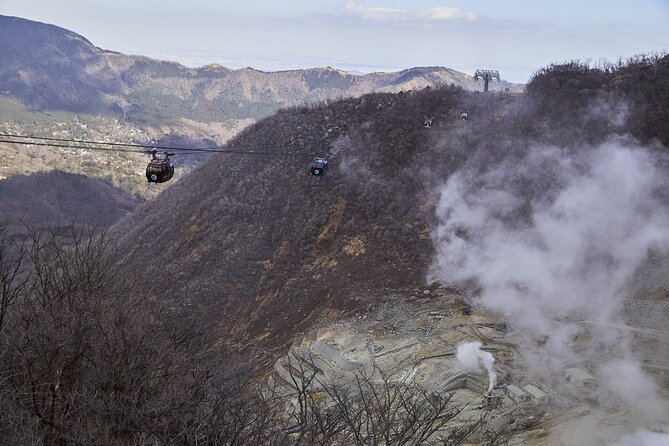
Hakone supplies the day’s most dramatic transport. The ropeway climbs above the volcanic area, with a foot bath and mountain views before the gondola ride down. The listed admission is 2,000 yen, not included in the tour price.
At Owakudani, or Hell Valley, you stop beside sulfur steam vents rising from the crater area. The visit lasts only 15 minutes. You can try a kuro-tamago, a black egg boiled in the sulfur springs, but this is a quick photo and snack stop rather than a long walk.
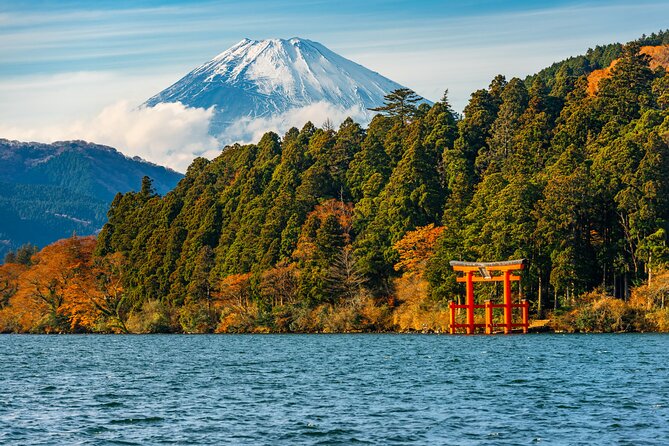
Next comes a one-hour cruise on Lake Ashi aboard the Hakone Pirate Ship. The ship crosses the crater lake, and on clear days you may see Mt. Fuji. The admission cost is 1,700 yen. The cruise is one of the route’s better uses of time because it lets you rest while still seeing the area.
Hakone Shrine follows, with a forested shrine complex and the well-known torii gate on the water. You get about 30 minutes. The massive cedar trees give the stop a calm feel, though the schedule may not allow time for every part of the shrine grounds.
The final drive uses the Lake Ashi Skyline, with views toward the Pacific, Lake Ashi, and Mt. Fuji when conditions cooperate. Deer and raccoon dogs may be spotted from the road, but wildlife sightings are not guaranteed.
Day two: villages and viewpoints around Mt. Fuji
Day two is built around Mt. Fuji, but the route wisely includes several worthwhile stops even if clouds cover the peak. You begin near Fuji with local specialties and views of tea plantations. This is a small stop, only about 20 minutes, but it gives you a look at one of Japan’s best-known agricultural regions.
Oshino Hakkai is more substantial. The folk village has eight clear ponds and shops selling local foods and souvenirs. You have an hour here, enough to walk around and sample something, though the setting can feel more commercial than the rural appearance first suggests.
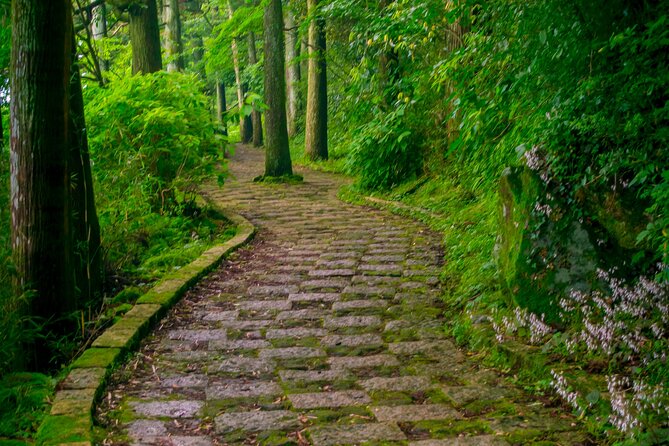
Kitaguchi Hongu Fuji Sengen Jinja offers a quieter contrast. The shrine sits in a cedar forest at Mt. Fuji’s foot and traditionally served as a starting point for climbers. You get 30 minutes, which should cover the main approach and shrine area.
At Oishi Park, you have a short stop beside Lake Kawaguchi. Clear mornings can bring some of the best Mt. Fuji views on the route. This is where weather matters most. If the mountain is hidden, the lake and park still provide a pleasant break, but the famous view may not appear.
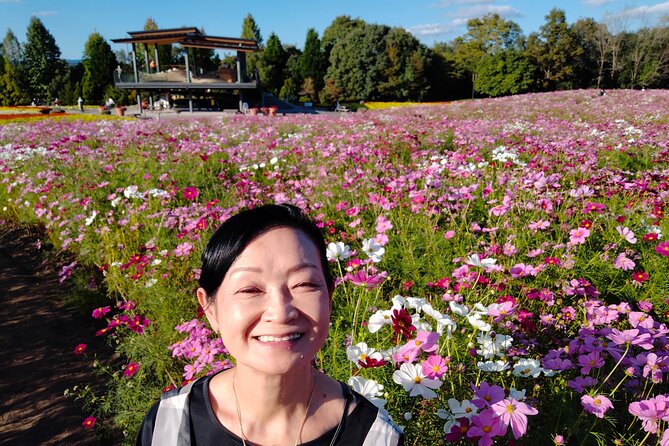
Saiko Iyashi no Sato Nemba is one of the tour’s more distinctive stops. Its thatched-roof houses recreate a traditional village, and you can dress in kimono or samurai armor. The visit lasts an hour, with a 500-yen admission fee not included.
The experience is not just about taking photographs. It gives you a chance to see rural architecture and try on traditional clothing, something the larger temples and viewpoints do not offer. If you are traveling with children, this may be one of the day’s easiest places to keep them interested.
Fugaku Wind Cave takes you below the surface into lava tubes formed near Mt. Fuji. The natural cave stays cold enough to hold ice for much of the year. Admission is 300 yen, and the visit lasts around 30 minutes. Wear sensible shoes and take care on the uneven ground.
Aokigahara Forest receives only a ten-minute walking stop. That is enough for a brief look at the forest floor and trees, but not a full forest hike. The area has a serious reputation, and the schedule treats it as a short nature stop rather than a major attraction.
Shiraito Falls closes the Fuji portion of the day. A short walk leads to two broad waterfalls, with local snacks nearby. You get about 40 minutes. This is a good counterpoint to the mountain views, especially if Mt. Fuji itself stays behind the clouds.
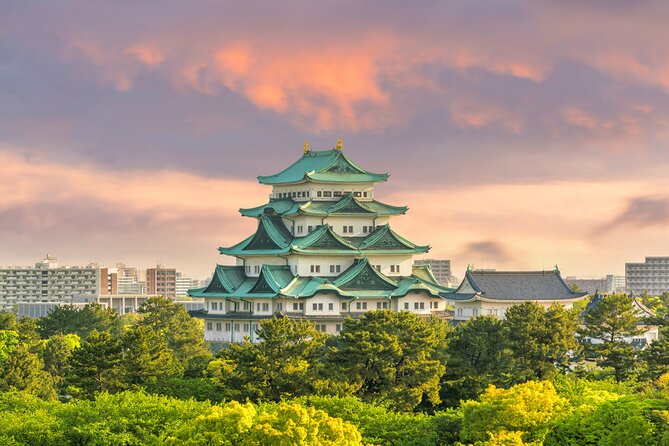
The day ends in Nagoya’s Sakae district, where you have about an hour to explore shops and restaurants. That is enough for a taste of the evening scene, not a proper visit to Nagoya. If you want a full look at the city, you would need extra time before or after the tour.
Day three: Nara deer and Kyoto’s essential temples
Day three may be the most demanding. It begins in Nara Park, where you take a guided two-hour walk among the famous deer. The animals are used to people and can be very forward, so keep food and belongings under control and follow your guide’s instructions.
Todaiji is the main cultural stop. Founded in 738, it houses a huge bronze Buddha inside one of the world’s largest wooden temple buildings. The admission fee is 800 yen, and the planned visit lasts one hour.
Nara Park and Todaiji work well together. The park gives you open space and an unusual animal encounter, while Todaiji delivers the grand religious architecture. Two hours in the park plus one hour at the temple is a useful amount of time, though you will not see every corner of Nara.
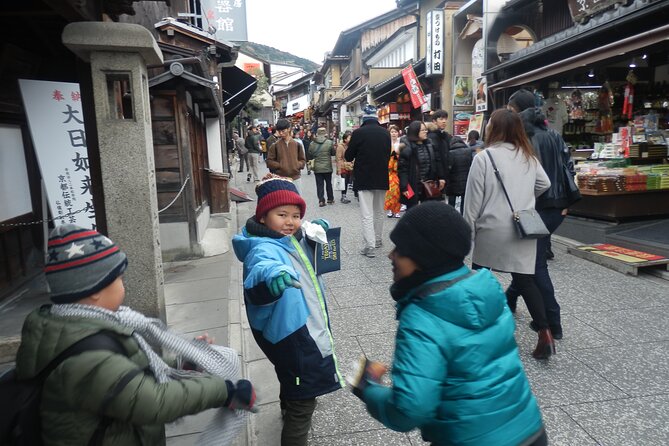
Kyoto begins at Kiyomizu-dera, a World Heritage temple with traditional shops along the approach. The route is planned to avoid much of the worst crowding, but Kyoto’s major sights are rarely quiet. You have one hour, so focus on the temple views and the nearby lanes rather than trying to browse every shop.
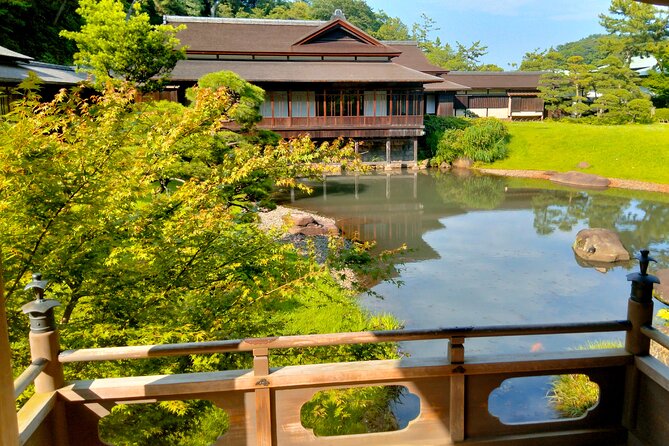
Entoku-in provides a smaller, more intimate temple setting. It was the family home and garden of Nene, Toyotomi Hideyoshi’s wife, built in 1605. The visit lasts about 40 minutes. A short tea ceremony is available for an additional 1,300 yen.
That tea stop may be worth adding if you want cultural context rather than another quick photograph. It is optional, so you can keep the cost down or use the time for the garden.
Arashiyama’s famous bamboo forest receives about an hour. The grove is photogenic, but it is also one of Kyoto’s most crowded places. The tour offers a less crowded bamboo grove at Kotoku-in as an alternative if the schedule is tight. That flexibility is useful, since a packed bamboo path can be less peaceful than the photographs suggest.
Fushimi Inari-taisha is the final Kyoto stop. Its orange torii gates create a long tunnel up the mountain, and the shrine dates in its present main structure to 1499, with roots as a rice and agriculture shrine. Forty minutes lets you see the lower gates and get a feel for the site, but not walk far up the mountain.
That distinction matters. Fushimi Inari can occupy half a day if you hike well beyond the main entrance. Here, treat it as a focused stop. You will see the signature gates, but you will not experience the full mountain route.
The final stop is Osaka’s Dotonbori district. You have an hour to explore its back alleys, signs, shops, and restaurants. Dinner is not included, so this is the natural place to buy your own meal. It also gives the tour a lively finish after three days of temples, shrines, lakes, and countryside.
Same base, a completely different sort of day:
- Mt Fuji and Hakone 1-Day Bus Tour Return by Bullet Train
★ 5.0 · 26,383 reviews - 1-Day Tokyo Bus Tour
★ 5.0 · 14,250 reviews - Tokyo: TOKYO SKYTREE® Admission ticket
★ 4.5 · 11,192 reviews - Tokyo: teamLab Planets TOKYO Digital Art Museum Entry Ticket
★ 4.6 · 9,779 reviews
What guide support adds to a packed schedule
The tour’s guide is one of its most important features. Matt is specifically associated with the experience, and the available feedback describes him as flexible when guests have particular interests. That matters here because the schedule contains more places than most people could manage independently in three days.
A good guide can explain what you are seeing, point out the most worthwhile part of a large temple, and keep a group moving when a stop is short. The tour also allows tailoring around your interests, although the route and timing mean that not every request can fit.
Do not expect a private tour. The group can reach 23 people, and the guide must balance different walking speeds and priorities. Still, the combination of a small group and vehicle transport gives you more support than handling this route alone.
The included WiFi is useful during long drives, especially for checking maps, translating menus, or confirming your next hotel. Parking fees and road tolls are covered, which removes two costs that can add up on a long road journey.
How much extra money should you plan?
The advertised price does not include the main optional and admission charges. Known fees include:
- Hakone Ropeway: 2,000 yen
- Hakone Pirate Ship: 1,700 yen
- Saiko Iyashi no Sato Nemba: 500 yen
- Fugaku Wind Cave: 300 yen
- Todaiji: 800 yen
- Kiyomizu-dera: 500 yen
- Entoku-in tea ceremony: 1,300 yen, optional
That is up to 7,100 yen if you choose the tea ceremony, excluding food and drinks. Not every stop requires payment, and some admissions are listed as free, but you should carry enough yen for tickets, snacks, and meals.
The included two breakfasts and three-star accommodation simplify the trip, but the description does not provide hotel names or room details. If you care strongly about hotel location or amenities, ask before booking.
Who will enjoy this three-day Japan tour?
I would recommend it to a first-time Japan visitor with limited time who wants to connect Tokyo’s wider region with Osaka without changing trains and hotels every night. It is also a strong fit for families and mixed-age groups because most travelers can participate and the route can be tailored.
It suits people who enjoy variety: temples in the morning, a lake cruise later, a village the next day, and street food in Osaka at night. The English-speaking guide and onboard WiFi make the long route easier to manage.
I would hesitate if you want slow photography, long temple visits, serious hiking, or several hours in each city. You will see many highlights, but some stops are brief by necessity. Mt. Fuji is another risk. Clear views are specifically promised only on clear days, and no itinerary can control the clouds.
The cancellation terms are worth noting before payment. Cancel at least six full days before the start for a full refund. Cancellations two to six days ahead receive 50 percent, while cancellations within two days are not refunded.
Should you book this route from Narita to Osaka?
Book it if your main goal is maximum regional coverage in minimum time. The route reaches Kamakura, Hakone, Mt. Fuji, Nara, Kyoto, and Osaka, while adding smaller places such as Enoshima, Oshino Hakkai, Saiko Iyashi no Sato Nemba, and Shiraito Falls.
Skip it if three days in Japan can be expanded into a week. With more time, you could visit Kyoto and Nara at a calmer pace, spend longer around Mt. Fuji, and explore Nagoya properly.
At this price, the tour makes the most sense when you value private road transport, a guide, included lodging, and a one-way route more than independent flexibility. Bring extra money for meals and admissions, keep your schedule open for weather, and accept that this is a fast introduction rather than a restful holiday.
FAQ
Where does the tour start?
The listed starting point is Narita Airport Terminal 2 and 3 Station in Narita, Chiba. Pickup is offered, and the overview also says you can start from a hotel or port of entry in Tokyo or Narita.
Where does the tour end?
The activity ends in a different location from the starting point. The route finishes in Osaka after time in Dotonbori, but you should check the exact end point details before arranging onward travel.
How long is the tour?
The tour lasts approximately three days.
How large is the group?
The maximum group size is 23 travelers.
Is an English-speaking guide included?
Yes. The tour includes an English-speaking guide. Matt is the guide specifically associated with the experience information, and the route may be adjusted around your interests.
What is included in the price?
The price includes WiFi on board, an air-conditioned vehicle, parking fees, road tolls, three-star accommodation, and two breakfasts.
Are meals and attraction tickets included?
Lunch and dinner are not included. Several attraction fees are also separate, including the Hakone Ropeway, Hakone Pirate Ship, Todaiji, Kiyomizu-dera, Saiko Iyashi no Sato Nemba, and Fugaku Wind Cave. The tea ceremony at Entoku-in costs an additional 1,300 yen.
Can I cancel the booking for a refund?
You can receive a full refund by canceling at least six full days before the experience begins. Cancellation two to six days ahead receives a 50 percent refund, and cancellation within two days receives no refund.
Just added around Tokyo
- Private Arrival Transfer : Narita International Airport to Central Tokyo City★ 4.5 · 12 reviews
- Narita Airport(NRT): Private Transfer to Tokyo/Yokohama 1-9pax★ 5.0 · 47 reviews
- Private Transfer from Narita Airport to Yokohama Port and City★ 4.5 · 17 reviews
- [Narita Airport Terminals 1, 2] 40-60km Sawara Itako Historic Bike Tour★ 5.0 · 13 reviews
- Small Town in the Big City: Tasting Tokyo’s Kichijoji★ 5.0 · 16 reviews
- The 10 Tastings of Tokyo With Locals: Private Street Food Tour★ 5.0 · 48 reviews
- Small Town in the Big City: Tasting Tokyo’s Kichijoji★ 5.0 · 195 reviews
- Explore Kichijoji: Walk Through One of Tokyo’s Beloved Districts★ 5.0 · 21 reviews
Tokyo Tours, compared.

Mt Fuji and Hakone 1-Day Bus Tour Return by Bullet Train
Read our review →

teamLab Planets TOKYO Digital Art Museum Entry Ticket
Read our review →
Mt Fuji & Hakone Cruise, Drum Show Bullet Train 1 Day from Tokyo
Read our review →
Sumo Show Experience with Chicken Hot Pot and a Photo
Read our review →
Shinjuku Food Tour (13 Dishes at 4 Local Eateries)
Read our review →
Tokyo Mt Fuji 5th St & Hakone Cruise Bus Tour w/Bullet Train
Read our review →