Reviewed · TOKYO TOURS
Tokyo: TOKYO SKYTREE® Admission ticket
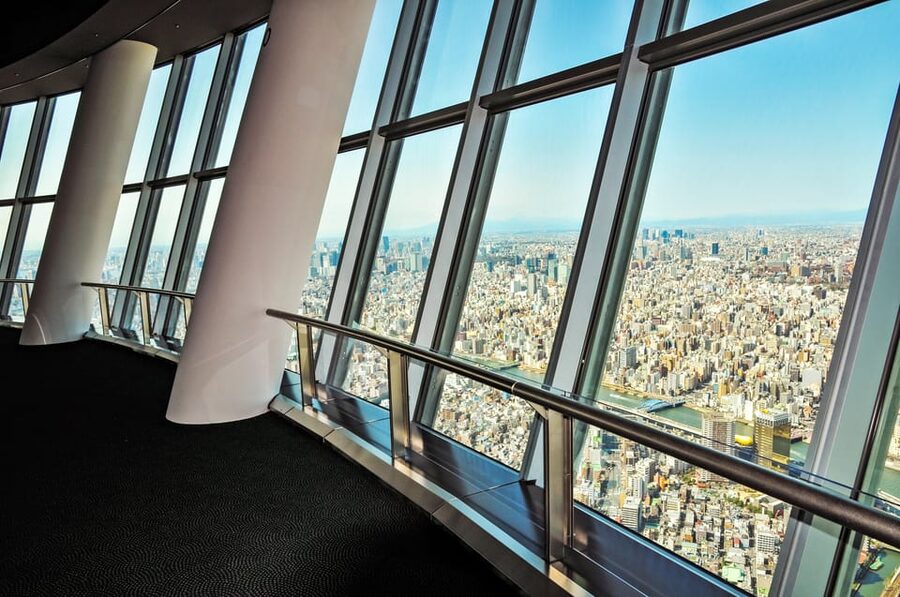
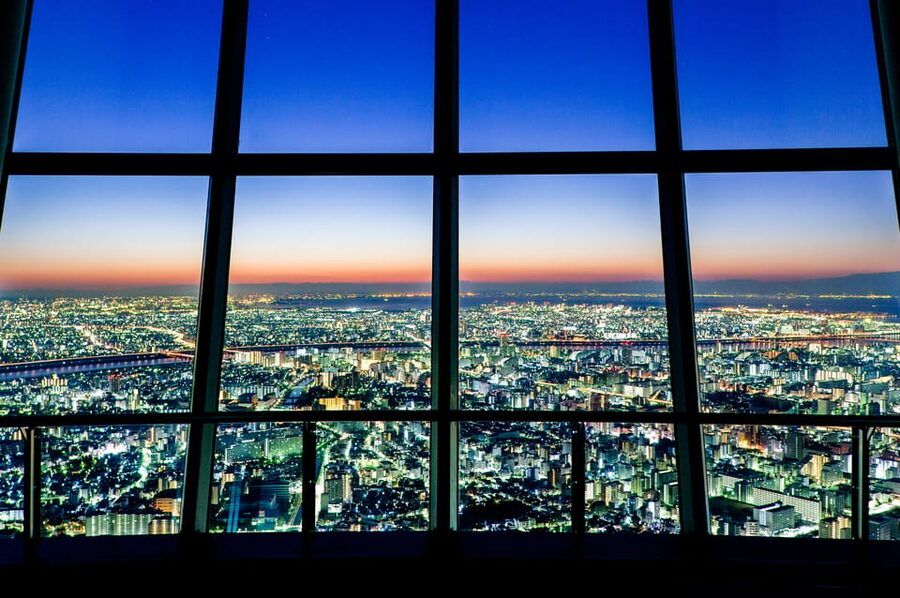
Tokyo Skytree gives you the best bird’s-eye lesson in just how huge Tokyo is. From the 350-meter Tembo Deck, the Sumida River, Tokyo Bay, Tokyo Tower, Tokyo Dome, and distant Mount Fuji spread out in every direction. At night, the city turns into a field of lights. On a clear day, Fuji may steal the show.
I like the fast, remarkably smooth elevator ride and the helpful staff who keep the route easy to follow. I also like the choice between the lower deck and the 450-meter Tembo Galleria, so you can match the ticket to your budget. The catch is weather: clouds or haze can wipe out the grandest views, and sunset can bring long waits for elevators.
Key points
- 350-meter Tembo Deck: Enjoy wide windows and 360-degree views across Tokyo from the main observation level.
- 450-meter Tembo Galleria: Walk the gently sloping spiral skywalk for higher views and a stronger sense of height.
- Floor 340 glass section: Look directly down through a section of glass flooring, though the area is fairly small.
- Sunset and night views: A late-afternoon entry can give you daylight, sunset, and Tokyo’s lights in one visit.
- Easy voucher collection: Exchange your voucher at the ticket counter or self-service station on the 4th floor.
- Tokyo Solamachi afterward: Continue downstairs to a large shopping and dining complex with about 300 shops, restaurants, and a planetarium.
Why Tokyo Skytree changes your view of the city
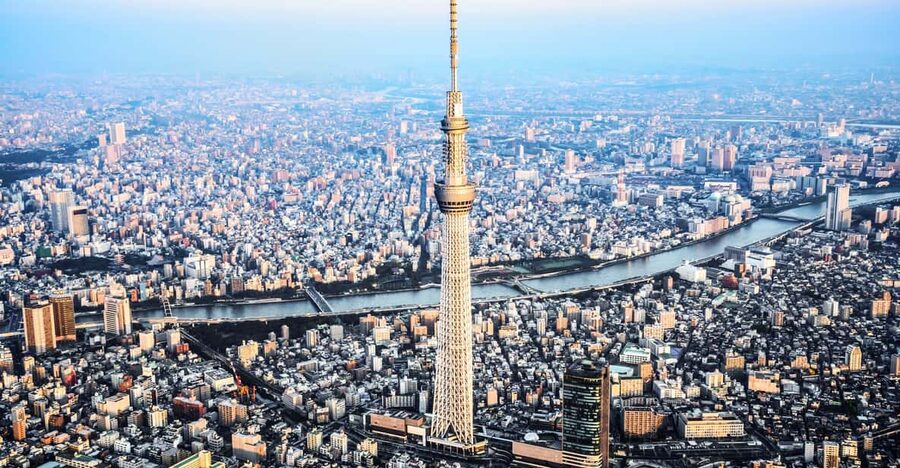
Tokyo can feel like a collection of separate districts. From the ground, Asakusa, Ueno, Shinjuku, Tokyo Bay, and the eastern suburbs each seem to have their own identity. From Skytree, the divisions fade. You see one enormous city spreading far beyond the center.
That sense of scale is the main reason to come. The view is not just a pretty backdrop for photos. It helps you understand Tokyo’s size, its dense neighborhoods, and the way the Sumida River cuts through the eastern side of the city.
The tower is Japan’s tallest, and the observation areas give you a full circle of windows rather than one fixed viewpoint. Interactive displays help identify landmarks, which is useful when the city below looks like a giant grid of buildings and roads.
On a clear day, look for Mount Fuji toward the horizon. Fuji is never guaranteed, and haze is common, but seeing its outline from the tower can be the high point of the visit. Several visitors found that the lower deck offered a clearer view when the air became hazier higher up, so do not assume the 450-meter level will always have the best visibility.
A few more Tokyo half-days to weigh up
- Mt Fuji and Hakone 1-Day Bus Tour Return by Bullet Train
★ 5.0 · 26,383 reviews - 1-Day Tokyo Bus Tour
★ 5.0 · 14,250 reviews - Tokyo: teamLab Planets TOKYO Digital Art Museum Entry Ticket
★ 4.6 · 9,779 reviews
Arriving on the 4th floor

The first practical challenge is finding the entrance. Tokyo Skytree Town is a large complex, and the ticket collection point is on the 4th floor of Tokyo Skytree, not at a separate nearby address. Give yourself time to get your bearings, especially if you are arriving during a busy period.
You exchange your voucher at the ticket counter or use the self-service machine with the QR code, then proceed toward the elevators. The ticket includes the Tembo Deck. Access to the Tembo Galleria depends on the option you purchase, so check carefully before booking. One visitor bought only the lower level without realizing that the upper gallery was separate.
The advance ticket is useful because it can save you from the ticket-buying queue and may help you get the time you want. It does not mean every part of the visit is queue-free. You may still wait for the elevator going up, the elevator to the upper gallery, and the return trip down.
The attraction is well organized, with staff directing people through each step. English and Japanese support are available, though some safety announcements may not be given in English. The process is still fairly easy to follow, and staff are regularly praised for being polite and helpful.
Your voucher may show a timed entry. Some people have been allowed in earlier or later than their selected time, but you should not count on that. The safest plan is to arrive for the time printed on your booking, especially if you want sunset.
The elevator ride to 350 meters
The elevator is part of the attraction. It carries you from the 4th floor to the Tembo Deck at 350 meters, or about 1,150 feet. The ride is quick and notably smooth, which matters if you dislike heights or worry about the sensation of a tall tower moving in the wind.
Once you arrive, you enter a large circular viewing area with windows on all sides. You can walk around the deck and compare different parts of Tokyo without needing to choose one favored direction.
Take your time here before rushing higher. The lower deck can offer the most practical view of familiar landmarks, and several people found it clearer than the upper level when haze increased at 450 meters. The displays around the deck help you identify sights such as Tokyo Tower, Tokyo Dome, Tokyo Bay, and the Sumida River.
The deck can get busy, especially around sunset, but the circular layout spreads people out. At crowded times, you may need patience to claim a front-row window position. The best approach is to walk around first, then return to the direction you care about most.
Choosing the 450-meter Tembo Galleria
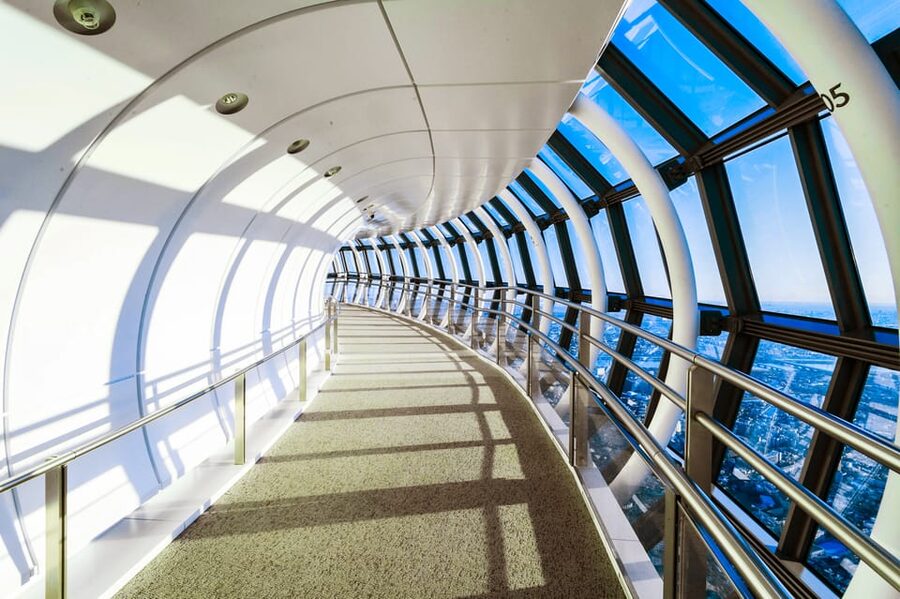
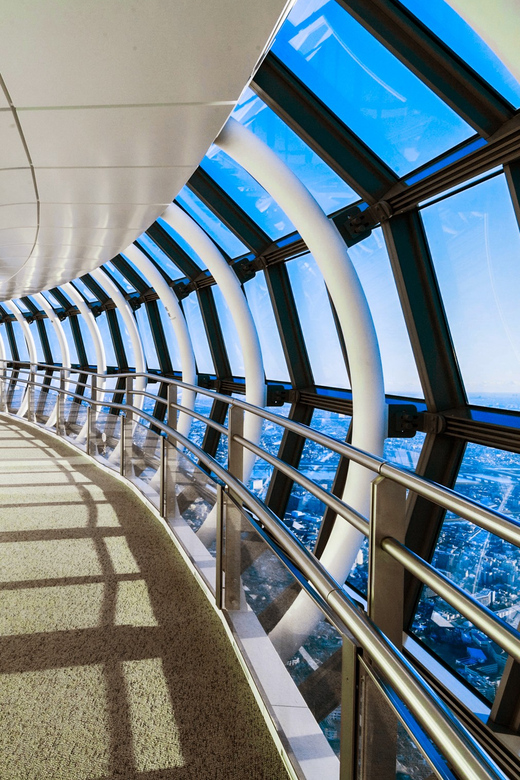
The upper option takes you to the Tembo Galleria at 450 meters, or roughly 1,475 feet. You ride another elevator from the main deck, then follow a long, sloping spiral ramp around the tower.
This is different from simply stepping onto a higher floor. The ramp gives you a changing view as you walk, with Tokyo shifting below you from one angle to the next. You can look outward across the city and downward toward the dense blocks around the tower.
I think the upper level is worth considering if this is a special Tokyo visit, if you enjoy architecture and engineering, or if you want the strongest sense of height. It can also be less crowded than the lower deck at some times, which helps with photographs.
The case against it is value. The basic view remains much the same, and the extra height does not guarantee better visibility. If clouds or haze sit over Tokyo, you may pay more for a view that is actually less clear. For a first visit at night or around sunset, the upper gallery adds a memorable walk. For a quick daytime stop on a tight budget, the 350-meter deck may be enough.
Same base, a completely different sort of day:
- Mt Fuji & Hakone Cruise, Drum Show Bullet Train 1 Day from Tokyo
★ 4.0 · 7,413 reviews - Tokyo: Sumo Show Experience with Chicken Hot Pot and a Photo
★ 4.8 · 6,678 reviews - Tokyo: Shinjuku Food Tour (13 Dishes at 4 Local Eateries)
★ 5.0 · 6,603 reviews - Tokyo Mt Fuji 5th St & Hakone Cruise Bus Tour w/Bullet Train
★ 4.4 · 5,024 reviews
Floor 340 and the glass flooring
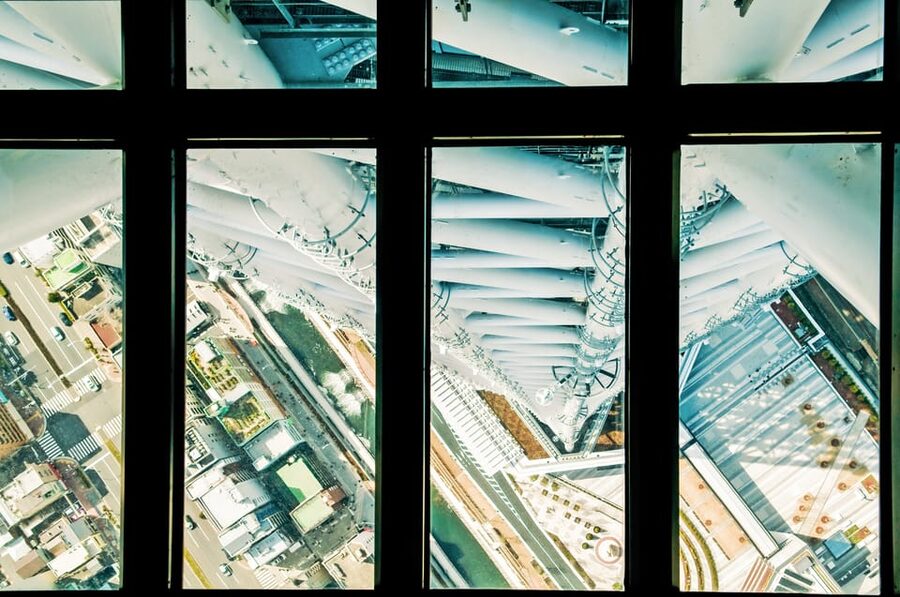
On the way back down, stop at Floor 340 for the glass floor. A sturdy glass section lets you look straight down toward the ground. It is a simple idea, but it gives the visit a short burst of physical excitement after the broad city views.
Keep your expectations sensible. The glass area is not a huge room or a long transparent walkway. It is a small section, and its appeal depends on how comfortable you are standing above the city. It can be a fun photo stop for families and children, while people who dislike heights can simply walk past it.
One practical point: the glass can look less impressive if it needs polishing or if a crowd gathers around it. Treat it as a brief extra, not the main reason to buy the ticket.
Cafés with a view at Floors 350 and 340
The Tembo Deck has two Skytree Café locations. Skytree Café 350 is Japan’s highest café, and it offers drinks and light snacks while you stand and look over Tokyo. It is suited to a quick pause between viewing areas.
Skytree Café 340 has seating for 64 people and offers a more settled break. If you want to sit with a drink and let the city slowly change below you, this is the better choice. Seating may depend on demand, so do not build your whole schedule around getting a table.
The café is not necessary for a good visit. You can easily spend your time at the windows and move on. Still, a drink can make the tower feel less like a quick photo stop and more like a place to pause and take in Tokyo’s scale.
The best time to visit
Late afternoon is the most rewarding time if you can tolerate a busier period. A 4:30 pm entry, for example, can give you daylight, the changing colors of sunset, and the city lighting up after dark. You will need to check the actual sunset time for your date, since the ideal entry changes through the year.
Sunset is also the most popular period. Expect more people and possible waits for the elevators. One visit around sunset involved long waits going up and down, yet the clear view of Mount Fuji and the evening colors made the effort worthwhile.
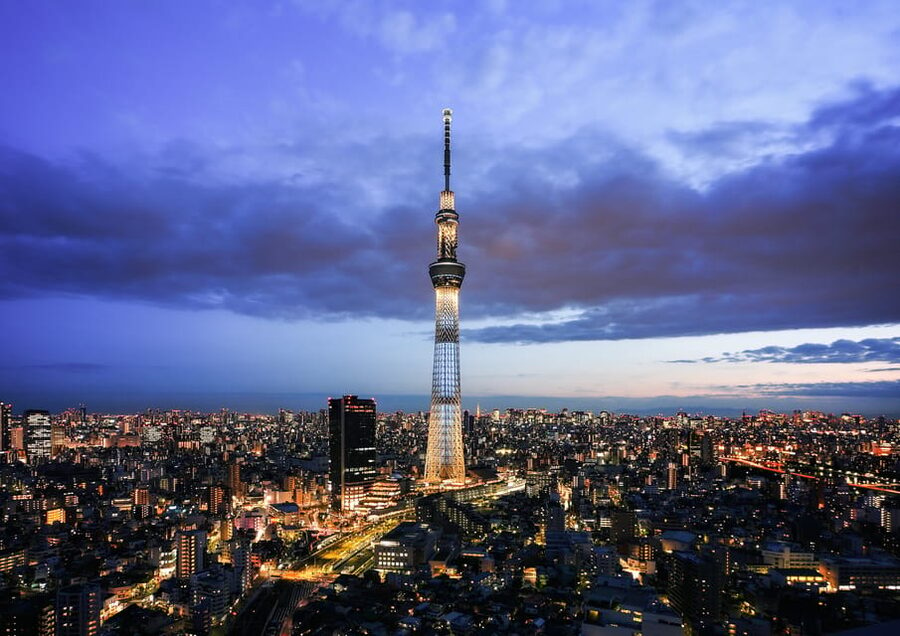
Night is a strong alternative. At around 6:30 pm or 8:30 pm, Tokyo’s streets and buildings glow in every direction. The view feels less about individual landmarks and more about the sheer spread of the city. If you want open viewing space and fewer people, a later evening visit may work better, subject to the available times.
Morning can be a smart choice for a calmer experience. A Saturday visit around 9:30 am had no line at the deck and little crowding, with enough time for photos and the landmark displays. Morning visibility still depends on weather, but the quieter pace is a real advantage.
Weather matters more than the ticket price
Tokyo Skytree cannot control the view from the top. Clouds, mist, and haze may leave you looking at white sky instead of the city. One person arrived hoping for distant views and saw almost nothing because of cloud cover, while another watched the sky clear after arriving.
Check the forecast before you go, but do not expect a perfect prediction. If you have flexible plans, choose the clearer day. The tower can still be interesting in poor weather because of the structure, elevators, cafés, and displays, but the main value of the ticket is the view.
If Fuji is a priority, choose the clearest available day and consider morning or a period around sunset when the horizon may be especially photogenic. There is no guarantee, so treat Fuji as a bonus rather than the purpose of the ticket.
What the $13 ticket is worth
At about $13 per person, the basic admission is reasonably priced for a major Tokyo landmark, especially if you spend one to two hours viewing the city. You are paying for the tower, the elevator ride, the circular deck, the displays, and the chance to see Tokyo from a height that free city viewpoints cannot match.
The comparison changes if you are only interested in a panoramic photo of Tokyo. Free observation areas elsewhere in the city can provide a different kind of view, including the chance to photograph Skytree itself. Skytree also cannot show you the tower in the skyline while you are standing on it.
For many people, the upper gallery is worth the added cost because the sloping skywalk gives you another experience, not just another window. If your budget is tight, the 350-meter deck delivers the main reward. Read the ticket options closely so you do not accidentally buy the lower level when you wanted both.
Allow time for Tokyo Solamachi
Tokyo Skytree sits within Tokyo Skytree Town, and the visit does not have to end at the observation decks. Tokyo Solamachi below has about 300 shops and restaurants, plus a planetarium.
This makes Skytree easy to pair with a meal. The lower food court offers plenty of choices, so you do not need to settle for a snack at the tower café. You can visit the decks first, then eat downstairs while the tower lights up outside.
The surrounding area also adds to the outing. The entrance stairs and nearby lights can be especially attractive in the evening, and Asakusa and the Sumida area are close enough to make the tower part of a wider eastern Tokyo visit.
Who will enjoy this experience most
You should consider Tokyo Skytree if you want a clear sense of the city’s size, enjoy modern engineering, or need a high-impact first-day activity. It works well for families, photographers, architecture fans, and anyone who wants both daytime and nighttime views.
The glass floor adds a small thrill for children and confident visitors. The elevators are fast and smooth, which helps if you are nervous about heights. The upper gallery suits people who want to walk through the view rather than simply stand at a window.
You may want to skip it if high viewpoints make you uncomfortable, if the forecast is poor and your schedule cannot change, or if you mainly want a free city panorama. You should also allow extra time at busy periods, since the advance ticket does not remove every queue.
FAQ
What does the Tokyo Skytree ticket include?
The ticket includes admission to the Tembo Deck at 350 meters. Admission to the Tembo Galleria at 450 meters is included only if you select that option.
Where do I exchange the voucher?
Exchange your voucher at the ticket counter or self-service station on the 4th floor of Tokyo Skytree. The listed coordinates are 35.7100627, 139.8107004.
How long is the ticket valid?
The activity is valid for one day. You need to check availability for the available starting times.
Can I see Mount Fuji from Tokyo Skytree?
You may see Mount Fuji on a clear day, but visibility is not guaranteed. Clouds, mist, and haze can block the horizon, and the lower deck may sometimes be clearer than the 450-meter level.
Is the glass floor included?
Yes. The glass flooring is located on Floor 340 and can be visited during your route back down. It is a small section where you can look toward the ground below.
Are food and shopping available after the visit?
Yes. Tokyo Solamachi in Tokyo Skytree Town has about 300 shops and restaurants, along with a planetarium. The tower also has Skytree Café locations on Floors 350 and 340.
Should you book Tokyo Skytree?
I would book it if you want one of Tokyo’s strongest city views and can choose a day with decent visibility. The basic ticket gives you plenty, while the upper gallery is a good add-on for sunset, night visits, and anyone who enjoys the physical experience of the spiral skywalk.
Choose a morning slot for a quieter visit, late afternoon for daylight and sunset, or later evening for glowing city views and a better chance of room around the windows. Just remember that the ticket skips much of the ticket-selling hassle, not every elevator queue. If the weather is clear, the $13 admission is an easy value.
Just added around Tokyo
- Private Arrival Transfer : Narita International Airport to Central Tokyo City★ 4.5 · 12 reviews
- Narita Airport(NRT): Private Transfer to Tokyo/Yokohama 1-9pax★ 5.0 · 47 reviews
- Private Transfer from Narita Airport to Yokohama Port and City★ 4.5 · 17 reviews
- 3 Day Japan Highlights Tour: Tokyo, Mt.Fuji, Nara, Kyoto, Osaka★ 5.0 · 22 reviews
- [Narita Airport Terminals 1, 2] 40-60km Sawara Itako Historic Bike Tour★ 5.0 · 13 reviews
- Small Town in the Big City: Tasting Tokyo’s Kichijoji★ 5.0 · 195 reviews
- Small Town in the Big City: Tasting Tokyo’s Kichijoji★ 5.0 · 16 reviews
- The 10 Tastings of Tokyo With Locals: Private Street Food Tour★ 5.0 · 48 reviews
Tokyo Tours, compared.

Mt Fuji and Hakone 1-Day Bus Tour Return by Bullet Train
Read our review →
teamLab Planets TOKYO Digital Art Museum Entry Ticket
Read our review →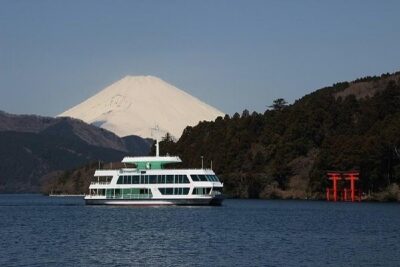
Mt Fuji & Hakone Cruise, Drum Show Bullet Train 1 Day from Tokyo
Read our review →
Sumo Show Experience with Chicken Hot Pot and a Photo
Read our review →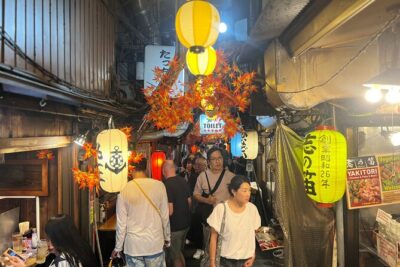
Shinjuku Food Tour (13 Dishes at 4 Local Eateries)
Read our review →
Tokyo Mt Fuji 5th St & Hakone Cruise Bus Tour w/Bullet Train
Read our review →