
Reviewed · KYOTO TOURS
Kyoto 6hr Private Tour with Government-Licensed Guide
Kyoto is too spread out to understand in six hours by simply ticking sights off a map. This private Kyoto tour solves that problem by giving you a guide who can shape the day around three or four places, then lead you between them by train, subway, bus, and on foot. The best part is the local rhythm: you are not sealed inside a private coach.
I like the one-to-one planning and the chance to ask questions as the day unfolds. I also like how guides such as Yuka, Yuji, Rie, Kiyoshi, and Kazuhiko Goto have adjusted routes for families, seniors, food interests, and first-time visitors. The trade-off is speed. The tour lists dozens of possible sites, but six hours is enough for only a few, and admission fees, lunch, and transport costs are extra.
Key points to know before booking
- Choose three or four places: The long list is a menu, not a promise to see everything.
- Travel like a local: Public transportation and walking replace a private vehicle.
- Expect a truly private day: Only your own group takes part.
- Guiding makes the difference: English-speaking guides explain religious customs, Japanese history, and daily life.
- Plan the route early: The operator asks you to reserve at least two weeks ahead.
- Budget beyond the tour fee: Temple admissions, personal spending, lunch, and transport are not included.
What six hours in Kyoto can realistically cover
The price is listed at $155.86 per person. That is not a bargain if you only want to be dropped at two famous temples and left alone. It becomes better value when you consider the planning, route choices, translation help, and time saved figuring out Kyoto’s public transport system.
A private guide can also make the day fit your group. A family with teenagers may want Kinkaku-ji, Ryoan-ji, and Arashiyama. A first-time visitor may prefer Fushimi Inari, Kiyomizu-dera, and Gion. Someone interested in imperial Japan could choose Nijo Castle, the Imperial Palace, and a garden or temple nearby.
The important point is to decide what kind of day you want before you arrive. Six hours sounds generous, but Kyoto’s sights are scattered across the city. Fushimi Inari is in the southeast, Kinkaku-ji is in the northwest, and Arashiyama is farther west. Trying to combine all three with several indoor visits would leave you rushing from one stop to the next.
The strongest experience comes from treating this as a focused introduction, not a complete survey of Kyoto.
More Licensed Guide Tours in Kyoto
- Kyoto 4hr Private Tour with Government-Licensed Guide
★ 5.0 · 629 reviews - Kyoto: Private Tour with Local Licensed Guide
★ 4.8 · 463 reviews - Private Kyoto Tour with Licensed Guide & Vehicle (Max 15 persons)
★ 5.0 · 417 reviews
Fushimi Inari and southern Kyoto
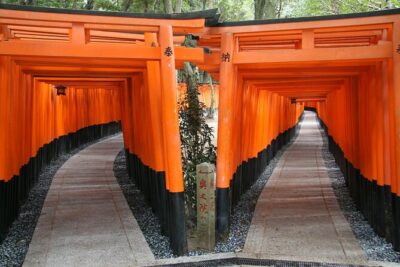
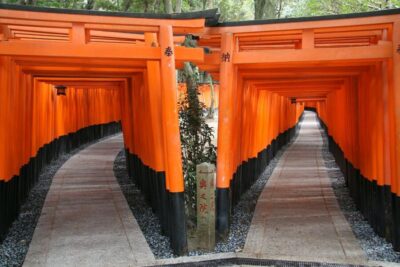
Fushimi Inari-taisha is one of Kyoto’s essential stops. Its orange-red torii gates form long corridors up Mount Inari, and the shrine gives your guide plenty to explain about Shinto practice, symbols, and local history. Admission is free.
You do not need to walk the entire mountain route to understand why the shrine is famous. Your guide can help you decide how far to go within the time available. The lower gates are usually the most recognizable, while farther paths offer a quieter feel but require more walking.
Fushimi Inari works well as an early stop because it gives you an immediate sense of Kyoto’s religious culture. It can also be paired with Tofuku-ji, a major Zen temple nearby, or Sanjusangendo, famous for its 1,001 statues of Kannon. These combinations keep travel time more sensible than crossing the whole city.
Toji Temple is another possible southern Kyoto choice. Its origins reach back to the early Heian period, soon after Kyoto became the capital. The temple is free to enter in the basic listing, though some areas may have separate charges. If you want Buddhist art and large temple buildings rather than a mountain shrine, Toji may suit you better.
Kiyomizu-dera, Higashiyama, and Gion
Kiyomizu-dera is among Kyoto’s most popular temples, and for good reason. The temple sits above the Higashiyama streets, giving you an attractive city view and a strong sense of old Kyoto. The main grounds require an admission fee, which is not included.
The surrounding Higashiyama district is part of the experience. Sloping lanes, older buildings, shops, and traditional streets connect the temple with the wider historic quarter. Your guide can explain what you are seeing instead of leaving you to guess which places are religious sites, shops, or private homes.
This area is a fine choice for a first visit, but it is also the part of the city most likely to feel crowded and tiring. You will spend much of the time walking uphill or over uneven streets. If anyone in your group has limited stamina, tell the guide early and build in fewer stops.
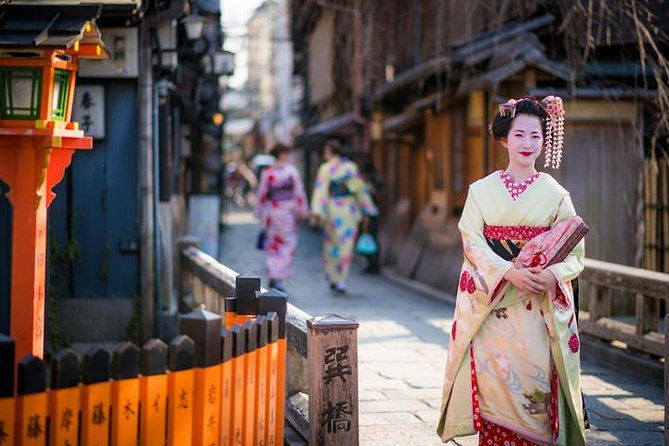
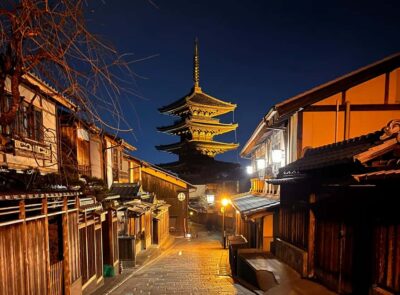
Gion adds a different side of Kyoto. Its narrow lanes and traditional architecture make it one of the city’s most atmospheric districts. It is associated with geisha culture, but you should approach it as a living neighborhood rather than a stage set. A guide can help you move respectfully through the area and point out details you might miss alone.
Kennin-ji, close to Gion and Hanamikoji Street, is another useful option. Its grounds are spacious, and its dry gardens offer a calmer break from the lanes outside. If your main interests are gardens, Buddhist art, and traditional architecture, Kennin-ji may be a better use of time than adding another distant temple.
Nijo Castle and the Imperial Palace
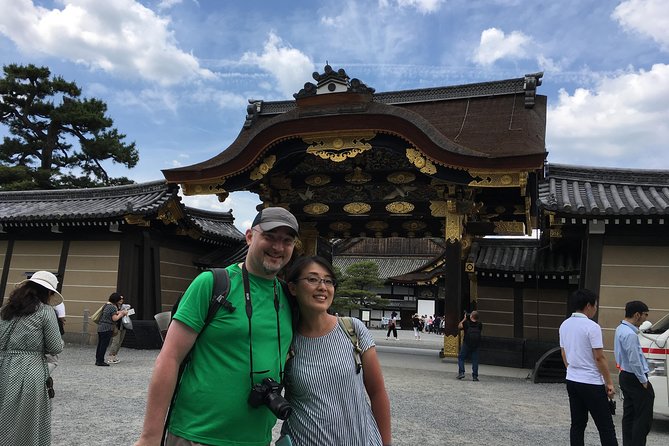
Nijo Castle offers a direct connection to the shogun era. Its ornate design was meant to display the power of Tokugawa Ieyasu, and the castle interiors help explain how political authority worked in Japan before the modern period.
Admission is extra. The visit is especially useful with a guide because the architecture, rooms, and decorative details are tied to political ceremony. Without context, you may see beautiful woodwork and painted panels but miss why the building was made that way.
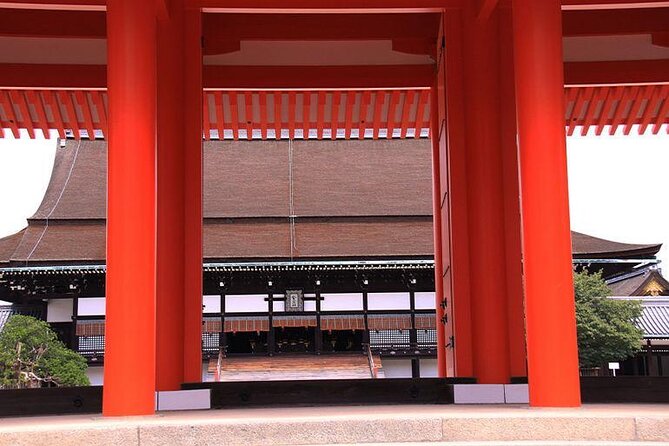
The Kyoto Imperial Palace presents a different chapter. It was the home of Japan’s Imperial Family until 1868, when the emperor and capital moved to Tokyo. The palace grounds are spacious, and admission is listed as not included.
I would not automatically combine Nijo Castle and the Imperial Palace with faraway western Kyoto. They make a sensible pair for visitors interested in court life, shoguns, and the city’s role as Japan’s capital. Add Nishiki Market if food and everyday shopping matter more to you than another formal building.
More licensed-guide days in Kyoto:
- Nara 8hr Private Tour – Kyoto DEP. with Licensed Guide
★ 5.0 · 115 reviews - Kyoto 8hr Private Tour with Government-Licensed Guide
★ 5.0 · 51 reviews - Kyoto Arashiyama & Sagano Bamboo Private Tour with Government-Licensed Guide
★ 5.0 · 49 reviews - Kyoto Early Morning Private Tour with Government-Licensed Guide
★ 5.0 · 23 reviews
Nishiki Market, Pontocho, and eating breaks
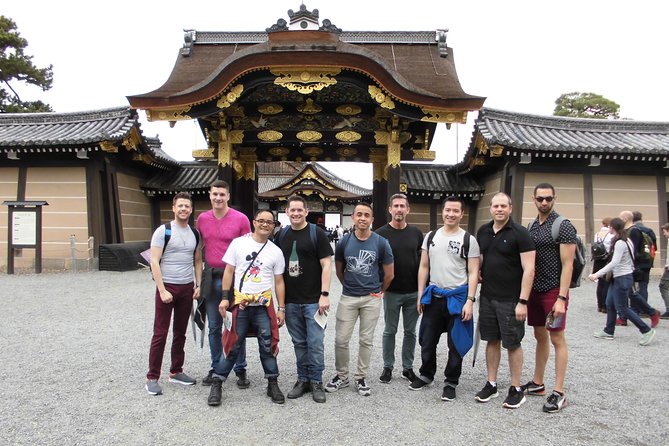
Nishiki Market is a narrow, five-block shopping street known as Kyoto’s Kitchen. More than one hundred shops and restaurants sell food and local goods. Entry to the street is free, but you will want cash or a card for anything you buy.
This is not simply a place to rush through while taking photographs. I would use your guide to ask what unfamiliar foods are, how market etiquette works, and which items make sense as a small snack or souvenir. The market can be crowded, so stay close to your guide and do not stop in the middle of a narrow passage.
Pontocho, one block west of the Kamogawa River, is another possible stop. Its narrow alley is lined with restaurants and is most atmospheric later in the day. The tour does not include lunch, so you should discuss meal timing when planning the route. One negative experience described an eight-hour day with no lunch, a useful warning to state clearly that you want a meal break.
Several guides are praised for food advice. Kaeko gave restaurant and shopping suggestions, while Noriko helped with places to eat. That kind of practical local help can be worth as much as another temple, especially if this is your first day in Kyoto.
Northern Kyoto: Kinkaku-ji, Ryoan-ji, and Ninna-ji
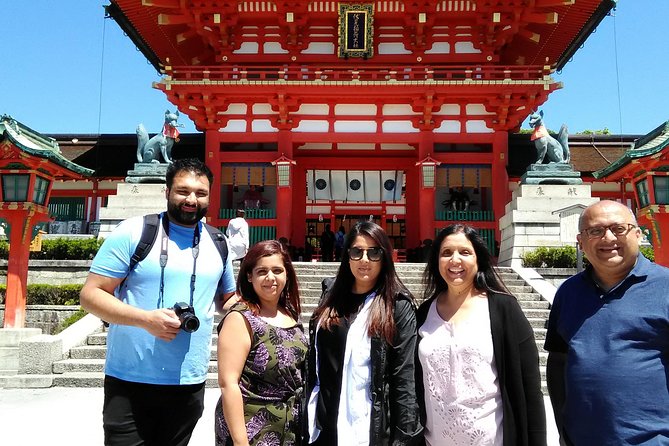
Kinkaku-ji, the Golden Pavilion, is one of Kyoto’s most photographed sights. The upper two floors are covered in gold leaf, and the building reflects in the pond beside it. Admission is extra.
You should expect a popular stop rather than a quiet one. The usual route through the grounds is designed for a steady flow of people, so your guide’s value lies in explaining the pavilion’s past and helping you make sense of what you are seeing.
Ryoan-ji is a good contrast. Its famous rock garden is spare and meditative, with fifteen stones arranged across pale gravel. Admission is extra. The site rewards a slower look, although six hours may not allow much time to sit and contemplate if you are also visiting Kinkaku-ji and Arashiyama.
Ninna-ji is a World Heritage temple and the head temple of the Omuro School of Shingon Buddhism. It offers broad grounds and a different style of Buddhist architecture. Daitoku-ji and Myoshin-ji are also possible for visitors who want large temple complexes with multiple subtemples.
A strong northern route is Kinkaku-ji and Ryoan-ji, perhaps followed by Arashiyama if transport timing works. One family chose Kinkaku-ji, Ryoan-ji, and Arashiyama and especially valued Kinkaku-ji. That combination gives you a famous pavilion, a spare Zen garden, and western Kyoto’s wooded temple district.
Arashiyama and the bamboo paths
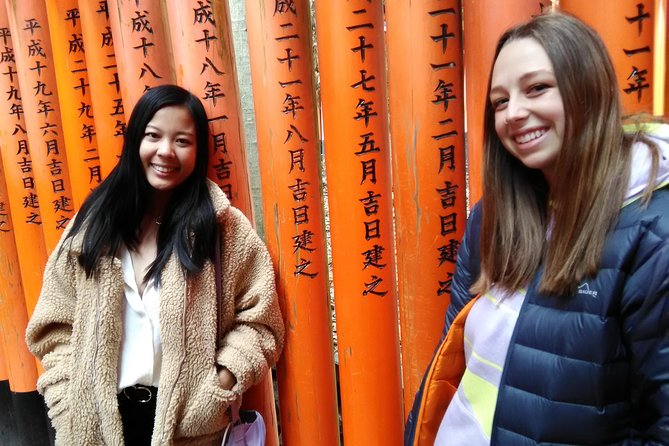
Arashiyama is a popular western Kyoto district with temples, gardens, river views, and the famous bamboo groves. The Togetsukyo Bridge is the area’s best-known landmark, crossing the river in a setting that has attracted visitors since the Heian period.
The bamboo paths are pleasant, but they are not a private wilderness. You may find them crowded, particularly at busy times. Still, the tall green stalks and narrow walking route make this a memorable stop, especially when a light breeze moves through the grove.
Tenryu-ji is Arashiyama’s main temple and a World Heritage site. Its garden and temple buildings give you a fuller experience than the bamboo path alone, but admission is extra. Okochi Sanso Garden, the former villa of actor Okochi Denjiro, is another paid option at the back of the bamboo grove.
Jojakko-ji, Nisonin, Gio-ji, Adashino Nenbutsuji, and Otagi Nenbutsu-ji offer quieter alternatives. Otagi Nenbutsu-ji is known for 1,200 stone figures, each with a different expression. These places are more suitable if you want moss, wooded paths, and smaller temples instead of only Kyoto’s headline sights.
The drawback is distance. Arashiyama can consume much of a six-hour day once transport and walking are counted. Choose it because you want western Kyoto, not because you expect to squeeze it in after a grand tour of the entire city.
Northern mountains, Uji, and special-interest routes
The tour can reach places beyond central Kyoto, but the route must be planned carefully. Shugakuin Imperial Villa, managed by the Imperial Household Agency, includes upper, middle, and lower villa areas. It is a strong choice for garden and imperial architecture fans, though admission is extra.
Kibune and Kurama offer forested mountain scenery north of the city. Kurama is known for Kurama-dera and its hot spring. These locations give you a quieter side of Kyoto, but they are not sensible additions to a route that already includes Fushimi Inari, Kiyomizu-dera, and Arashiyama.
Byodoin Temple is in Uji, outside central Kyoto, so extra travel time is expected. Its Phoenix Hall is a National Treasure and part of a World Heritage site. One carefully planned day combined Byodoin with Fushimi Inari and Nijo Castle, showing that a mixed route can work when the guide plans it in advance.
Katsura Imperial Villa is another specialist choice, valued for Japanese architecture and garden design. It should be selected for a particular interest, not added casually to a list of famous sites.
How the guides shape the day
The guide is the heart of this experience. The strongest feedback centers on preparation, clear English, pacing, and flexibility. Kazuo communicated through WhatsApp before the tour and suggested a rough route. Yuka contacted the group early, asked about interests, and helped shape the day. Rie planned each stop and answered questions in clear English.
Families also found the format useful. Emi adjusted the day for a mother, brother, and other family members. Akira used photographs and diagrams while keeping a comfortable pace for an older couple. Yasu tailored the schedule for a family with limited time, while Ken was praised for matching the group’s pace.
The guide quality can vary, as it can with any agency assigning several licensed guides. One poor experience involved losing track of the group, weak English, and no lunch break. I would reduce that risk by giving your guide a written route, naming your must-see sites, stating your walking limits, and confirming when you want to eat.
The tour includes a licensed local English-speaking guide, but not a private vehicle. Pickup and drop-off are on foot within a designated Kyoto area. This is a walking tour, so comfortable shoes and a realistic pace matter.
Who gets the best value from this Kyoto tour
I would choose this tour for a first day in Kyoto, a short stay, a family group, or anyone uneasy about public transport. It is also useful if you want cultural explanations rather than simply collecting photographs.
It suits older visitors if you agree on a moderate pace. It suits families if you keep the route focused. It suits returning visitors if you use the flexibility to visit places you missed on an earlier trip.
I would not choose it if you want a slow temple day with long periods of quiet. I also would not book it expecting all thirty-five listed places. The operator says three to four sites, and that is the realistic limit.
The tour has a 4.9 rating from 1,369 ratings, with 98 percent recommending it. Those figures suggest a strong overall record, but the individual guide matters greatly. Requesting a particular guide may not be guaranteed, yet names such as Yuka, Rie, Kiyoshi, Yuji, Kaeko, Kazuhiko Goto, and Yasu give you useful examples of the style and experience to seek.
Should you book it?
Book this Kyoto private tour if you want a flexible introduction and value a human guide who can explain temples, shrines, transport, food, and customs in plain English. It is particularly good when your group has different ages or interests.
Before paying, decide on three or four priorities and ask for a route that limits backtracking. Add the cost of admissions, lunch, personal spending, and public transport. If you plan carefully and accept a brisk six-hour pace, the $155.86 price can buy a very useful first look at Kyoto. If you want depth at one or two sites, book a shorter, slower experience instead.
FAQ
How long is the Kyoto private tour?
The experience lasts approximately six hours.
How many places can I visit?
The tour includes a customizable plan covering three to four sites from the available choices.
Is the tour private?
Yes. Only your own group participates, and separate tour groups cannot be combined.
Is transportation included?
A private vehicle is not included. You meet the guide on foot, and the tour uses public transportation and walking.
Are entrance fees included?
No. Admission fees for places such as Kiyomizu-dera, Nijo Castle, Kinkaku-ji, Ryoan-ji, and other paid sites are extra.
Is lunch included?
No. Lunch is not included, so you should discuss a meal break when planning your route.
Is an English-speaking guide provided?
Yes. The experience includes a licensed local English-speaking guide.
What is the cancellation policy?
You can cancel at least 24 hours before the start time for a full refund. Cancellations or changes made less than 24 hours before the start time are not accepted for a refund.
Just added around Kyoto
- Kyoto: Zen Meditation at a Private Temple with a Monk★ 5.0 · 25 reviews
- Kyoto: Gion Geisha District & Sake-in-Hand Walking Tour★ 5.0 · 37 reviews
- Private Pewter Sake Cup Experience with a Kyoto Artisan★ 5.0 · 31 reviews
- Your Private Vacation Photography Session In Kyoto★ 5.0 · 110 reviews
- Private Guided Traditional Buddhist Cooking in Japan★ 5.0 · 16 reviews
- Kyoto Wagashi(Japanese sweets) Cooking Class near Fushimiinari★ 5.0 · 60 reviews
- Traditional Japanese Music show & Experience Tour in Kyoto★ 5.0 · 57 reviews
- Kyoto:Family-Friendly Kimono & Yukata Experience at WARGO★ 5.0 · 147 reviews
Kyoto Tours, compared.
Fushimi Inari, Kinkakuji, Bamboo Grove 1 Day Bus Tour
Read our review →
Tea Ceremony in a Traditional Tea House in Kiyomizu
Read our review →
Kyoto Geisha Walking Tour: Gion District & Hidden Gems
Read our review →
Gion Magical Night Walking Tour with Geisha Trivia
Read our review →
Gion Geisha District Walking Tour – Stories of Geisha
Read our review →Browse the lists this tour appears in