
Reviewed · BAMBOO GROVE TOURS
Kyoto Arashiyama & Sagano Bamboo Private Tour with Government-Licensed Guide
Arashiyama is at its best when you move beyond the famous bamboo lane. This private tour pairs that postcard view with Togetsukyo Bridge, mossy hillside temples, imperial gardens, and quieter corners of Sagano. A licensed guide handles the route and explains the customs, stories, and details you would likely miss alone.
I like the private format, which lets you ask questions and set a pace that works for your group. I also like the chance to shape the day around your interests, perhaps choosing Tenryuji and the bamboo grove, or trading one crowded sight for Gioji, Nisonin, or Otagi Nenbutsu-ji.
The main caution is the tour description’s long list of possible stops. You will visit only three or four sites in about six hours, not every place named. Entrance fees, local transport for you and the guide, and lunch are extra, so the final cost can rise beyond the advertised $157.82 per person.
Key points to know before you book
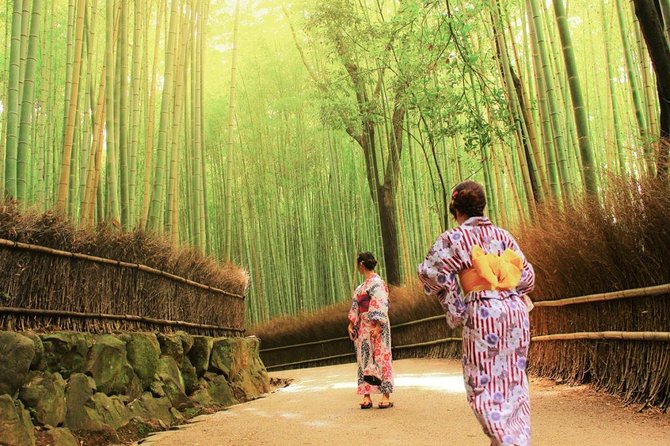
- The bamboo grove is only one part of the day: Add major temples, imperial gardens, or quieter Sagano sites.
- Your guide matters: Guides including Kazuo, Kazz, Tomo, Ken, Satoko, Shoji, and Ted have been assigned to past departures.
- Three or four sites is realistic: The full list is a menu of options, not a promise to see them all.
- You pay the practical extras: Entry fees, meals, and transportation for both you and your guide are not included.
- Crowds affect Arashiyama: Autumn foliage and cherry blossom periods are beautiful but can bring packed paths and slippery footing.
- This is a walking day: Pickup and drop-off are on foot, and the tour does not include a private vehicle.
Why a private guide helps in Arashiyama
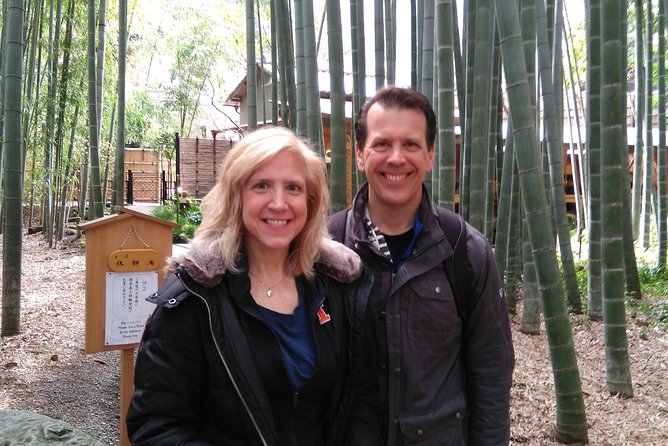
Arashiyama has an odd split personality. Its bamboo grove and Togetsukyo Bridge are among Kyoto’s most photographed sights, yet the same district opens into quiet temple lanes and wooded hills just a few minutes away.
That contrast is the real reason to book a guide. You are not simply being taken to the bamboo forest, checked off a list, and returned to town. You can ask for a slower pace, request a temple with fewer people, or focus on gardens, Buddhist art, local food, or family-friendly stops.
The private arrangement also helps with small but important choices. Guides have adjusted routes for hot weather, rain, injuries, children, and personal interests. One guide provided a one-page introduction to Kyoto’s past, while another helped a guest locate a local artist. These are the useful touches that can make a six-hour day feel personal rather than packaged.
Before the tour, discuss your priorities clearly. The operator describes the experience as a customizable visit to three or four sites. That means you should not assume the guide can cover Arashiyama, Sagano, northern mountain towns, and imperial villas in one outing.
More Licensed Guide Tours in Kyoto
- Kyoto 6hr Private Tour with Government-Licensed Guide
★ 5.0 · 1,369 reviews - Kyoto 4hr Private Tour with Government-Licensed Guide
★ 5.0 · 629 reviews - Kyoto: Private Tour with Local Licensed Guide
★ 4.8 · 463 reviews
Togetsukyo Bridge and the first view of Arashiyama
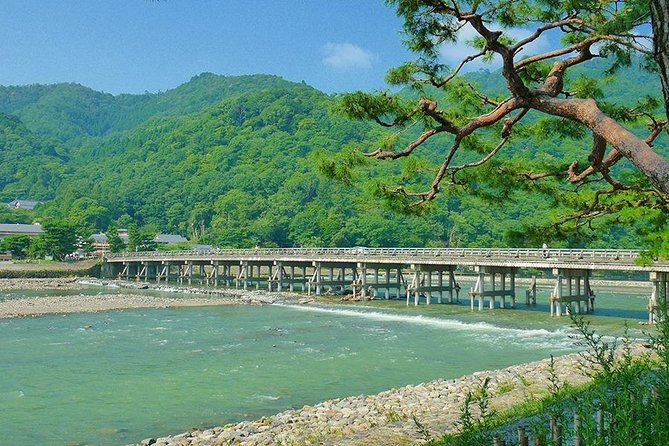
Togetsukyo Bridge is the natural place to begin. Its name means Moon Crossing Bridge, and its most appealing feature is not the bridge alone, but the way it frames the wooded hills behind the river.
The bridge dates back to the Heian Period, from 794 to 1185, though the current structure was rebuilt in the 1930s. A riverside park beside it has cherry trees, and the surrounding streets hold small shops, restaurants, and places to pause for a snack.
You will probably spend only a short time here, since the bridge is a viewpoint rather than a full attraction. Still, it gives you a useful sense of Arashiyama’s geography. The river, hills, temple zone, bamboo grove, and commercial streets all meet within a compact area.
Walking through Bamboo Forest Street
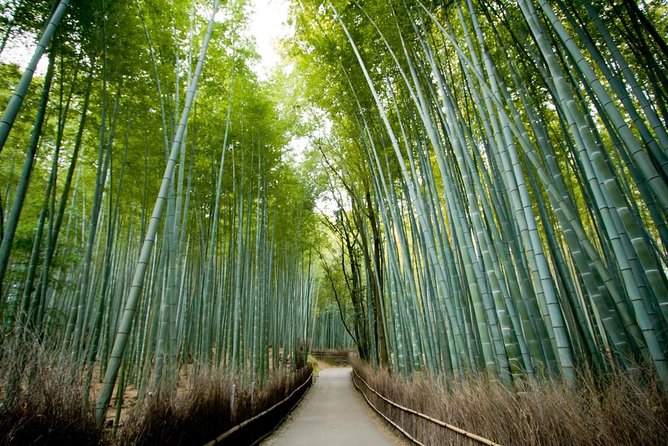
The bamboo grove is the required classic. Its narrow paths pass between tall green stalks that sway when the wind moves through them. The effect is especially pleasant in light weather, though the most famous section can be crowded.
A guide adds context by explaining how bamboo has long been used in local workshops for baskets, cups, boxes, and mats. That turns a quick photo stop into a look at a living craft tradition.
Keep your expectations sensible. The grove itself can be seen fairly quickly, and one past assessment found that the bamboo was lovely but not enough to fill a full tour. The value comes from pairing it with temples, gardens, neighborhood lanes, and local advice.
If you want the best chance of a calmer walk, tell your guide that crowd avoidance matters. Guides such as Tomo and Bell have adjusted routes to find quieter places and reduce time in the most congested areas. No route can remove the crowds completely during peak autumn color or cherry blossom season, but local knowledge can help.
Tenryuji and the best-known temple stop
Tenryuji is the major temple in Arashiyama and a sensible choice for a first visit. Founded in 1339, it is one of Kyoto’s five great Zen temples and a UNESCO World Heritage site.
The temple buildings are only part of the appeal. Its gardens provide walking paths and a calmer way to view the surrounding hills. A guide can explain the Zen setting and the connection between the buildings, pond, rocks, trees, and borrowed mountain scenery.
Tenryuji is also practical because it fits naturally with the bamboo grove. You can combine two of Arashiyama’s essential sights without spending the day crossing Kyoto. The drawback is popularity. The temple and the approach to the bamboo grove can be very busy, particularly in November and during spring blossom season.
More licensed-guide days in Kyoto:
- Private Kyoto Tour with Licensed Guide & Vehicle (Max 15 persons)
★ 5.0 · 417 reviews - Nara 8hr Private Tour – Kyoto DEP. with Licensed Guide
★ 5.0 · 115 reviews - Kyoto 8hr Private Tour with Government-Licensed Guide
★ 5.0 · 51 reviews - Kyoto Early Morning Private Tour with Government-Licensed Guide
★ 5.0 · 23 reviews
Jojakkoji, Nisonin, and Gioji for a quieter Arashiyama
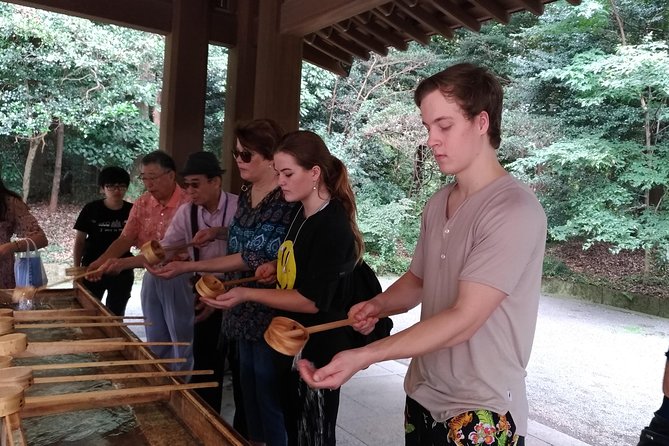
If your preference is for atmosphere over famous names, ask about the smaller hillside temples.
Jojakkoji Temple dates from 1596 and has modest buildings, moss, maple trees, and stairways leading to views over Kyoto. It feels quieter and less formal than the district’s biggest temple, though the climb requires care.
Nisonin, founded in the mid ninth century, has a broader approach and somewhat larger buildings. Trees shade the path, and the upper grounds offer city views. It is a good choice if you want a traditional temple setting without making the bamboo grove the entire focus.
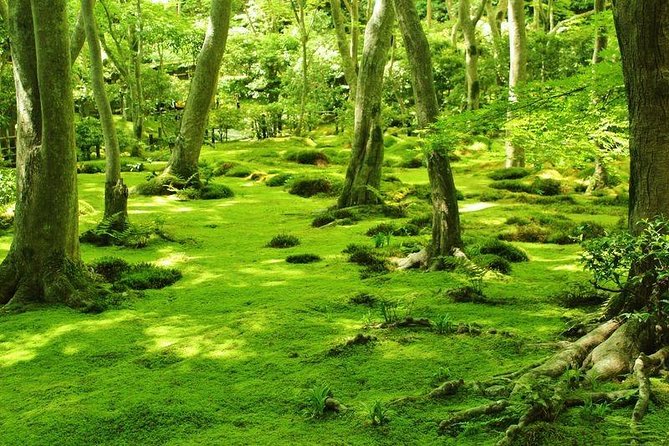
Gioji is smaller still. Its moss garden sits beneath tall maple trees, and its thatched gate and main hall give it a distinct rural feel. The round window in the hall looks into the garden, a small detail worth taking time to see.
These three sites are not interchangeable. Jojakkoji gives you views and hillside scenery. Nisonin offers a longer, tree-lined approach. Gioji is the best pick for moss, shade, and quiet. In wet weather, the steps and paths can become slippery, so wear shoes with a firm grip.
Adashino Nenbutsu-ji and Otagi Nenbutsu-ji
Sagano becomes more reflective as you walk north toward the preserved Saga-Toriimoto Street.
Adashino Nenbutsu-ji was founded in the early ninth century. Its grounds contain hundreds of stone figures placed for the souls of the dead, and a short bamboo path lies behind the temple. The setting is more solemn than the main Arashiyama grove, so it may not suit children who want a playful sightseeing stop.
Otagi Nenbutsu-ji is another ten-minute walk north. It is known for about 1,200 stone rakan figures, each with a different expression. The figures were created during the 1980s and early 1990s, so this is not an ancient sculpture field in the usual sense. Their individuality is the point, and the temple is spread across a wooded mountain slope.
These temples take more time and walking than the central Arashiyama sights. Choose them if you want a less polished, more unusual side of the district. They work especially well for people who have already seen Kyoto’s headline temples.
Okochi Sanso Garden behind the bamboo grove
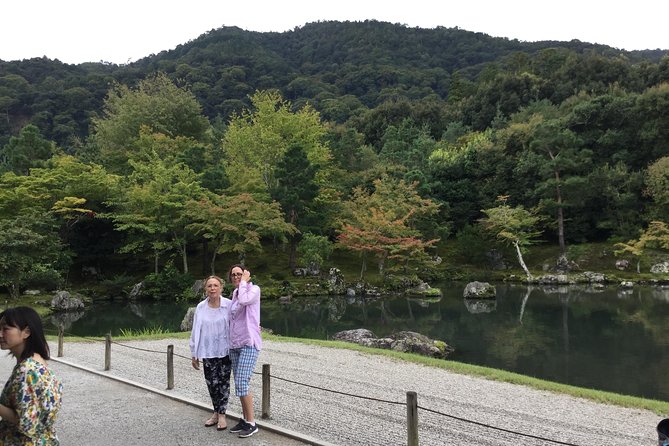
Okochi Sanso was the former villa of actor Okochi Denjiro, who lived from 1896 to 1962. It includes gardens, tea houses, gates, and living quarters tucked behind the bamboo paths.
The buildings can be viewed only from outside. That limitation is important if you want to tour an interior villa, but the gardens give the stop its appeal. This is a good add-on after the bamboo grove, especially if you want a more composed garden setting and a break from the central crowds.
Because the tour includes only three or four selected sites, Okochi Sanso may compete with Tenryuji or a hillside temple. Ask your guide to help you choose based on your interests rather than trying to collect every famous name.
Imperial villas, mountain temples, and the limits of the six-hour day
The suggested sights also include places that are not practical additions to a normal Arashiyama walking route.
Katsura Imperial Villa is one of Japan’s finest examples of garden and architectural design. Its present form was completed in 1645 for the Katsura branch of the imperial family. Visits require joining a scheduled tour. The route circles a central pond, palace buildings are viewed from outside, and photography is allowed only at designated points. English tours are available.
Shugakuin Imperial Villa, built between 1655 and 1659, has Lower, Middle, and Upper Villa areas, with gardens and traditional imperial buildings. Farmland around the villa is still leased to local farmers. Both imperial villas are worthwhile, but they need planning and are not casual walk-in stops.
Kurama-dera lies in Kyoto’s northern mountains, less than an hour from the city center. Nearby Kurama Onsen has indoor and outdoor baths, with day-use prices of 2,500 yen for all baths or 1,000 yen for the outdoor bath. These fees are separate, and the area is far from central Arashiyama.
Yoshimine-dera sits in Kyoto’s western mountains and climbs along a hillside with views toward the city. It began as a retreat in 1029, was destroyed during the Onin War, and rebuilt in 1621. Its spacious grounds are attractive, but this is another mountain excursion rather than a quick stop near the bamboo grove.
Kibune River and Kifune Shrine are also in the northern mountains. Kifune Shrine honors the god of water and rain, and its water-revealed fortunes are a distinctive feature. The inner sanctuary lies about one kilometer farther up the valley. Again, it is a fine destination, but not something you should expect to combine casually with several Arashiyama temples.
The practical lesson is simple: treat the long list as a set of possible themes. A six-hour day should focus on Arashiyama and Sagano, or on a carefully planned imperial or mountain route. It cannot realistically give every district equal attention.
Daikakuji and the old imperial connection
Daikakuji is one of Sagano’s most important historical sites. It began as the detached palace of Emperor Saga in the early 800s and became a temple in 876. It later served as a base for retired emperors, and peace talks held here helped reunite the Northern and Southern Imperial Courts after decades of civil war.
The temple belongs to the Shingon Buddhist tradition. Along with its main buildings, you can see a large pond and a pagoda. The old palace connection gives Daikakuji a different mood from the smaller forest temples, with more emphasis on court life and political history.
The supplied schedule names Daikakuji twice, just as it names Katsura Imperial Villa twice. Read that as duplicated information, not as two separate visits. Your guide should confirm the actual plan before the day begins.
What the $157.82 price really buys
At $157.82 per person, this is not the cheapest way to see the bamboo grove. You can reach Arashiyama independently and pay only for the places you enter.
The price begins to make more sense for a group that values direction, interpretation, and flexibility. A private guide can save you from spending time planning connections between sites, and you have someone to answer questions about Kyoto’s history and Japanese culture. The cost is also easier to justify when shared by several people, though the exact group discount is not stated.
You still need to budget for entrance fees and transportation for both you and the guide. Lunch is also your responsibility. There is no private vehicle, so the tour is primarily on foot and uses public transportation or other local transport when needed.
Past guides have recommended local food and helped with lunch breaks. One suggestion was a beef bento restaurant near Rilakkuma, with a warning to avoid the lunch rush because lines can grow. Treat that as useful local guidance, not as a meal included in the price.
Pace, crowds, weather, and physical effort
Six hours is a long walking period, especially on temple paths and hills. One guide adjusted the pace for a person with old injuries, while another led a family through the monkey park, bamboo forest, and a scenic train ride. The precise route can change, but you should tell the operator about mobility concerns before the tour.
Summer can be hot and humid. Autumn brings beautiful color but also dense crowds, wet steps, and slippery hillsides when it rains. The bamboo grove can still be attractive in rain, but comfortable shoes and a light rain layer are sensible.
The experience requires good weather. If poor weather causes cancellation, you can receive another date or a full refund. You can cancel for a full refund up to 24 hours before the start time. Changes or cancellations inside that window are not accepted and are not refunded.
Pickup and drop-off are on foot, not by private car. The meeting point is in Kyoto, and the activity is near public transportation. Service animals are allowed, and most people can take part, but the hills, stairs, and six-hour duration deserve honest consideration.
Who should book this Arashiyama private tour
I would choose this experience if you want more than a quick bamboo photo and prefer a flexible day with a local guide. It suits families, couples, and small groups with different interests because the route can be adjusted around temples, gardens, food, history, and walking speed.
It is also a good choice for a first visit to Kyoto when you do not want to spend an evening mapping train lines and temple entrances. Guides such as Kazuo, Kazz, Tomo, Ken, Satoko, Shoji, and Ted have each brought different strengths, from history and local food to patience and crowd avoidance. You cannot necessarily request a particular guide, so the quality of the individual match may vary.
I would skip it if you only want the bamboo grove, dislike walking, or expect a private car and all admission costs to be included. Independent sightseeing will cost less for a very focused visit. The private tour earns its price when the guide’s judgment and flexibility matter to you.
FAQ
How long is the Kyoto Arashiyama and Sagano private tour?
The tour lasts approximately six hours.
How many places will I visit?
The tour is customizable and includes three to four sites selected from the possible attractions. The full list of sights is not covered in one tour.
Is the tour private?
Yes. Only your group participates in the activity.
Is an English-speaking guide included?
Yes. A licensed local English-speaking guide is included.
Is hotel pickup included?
A meeting with the guide takes place in Kyoto, but pickup and drop-off are on foot. The tour does not include a private vehicle.
Are entrance fees included?
No. You pay entrance fees yourself. Transportation costs for you and your guide are also excluded.
Is lunch included?
No. Lunch is not included, and you pay for your own meal and personal expenses.
What happens if the weather is poor?
The experience requires good weather. If it is canceled because of poor weather, you will be offered a different date or a full refund. You can also cancel up to 24 hours before the start time for a full refund.
Should you book it?
Book this tour if you want Arashiyama explained, not just photographed. Tell the guide your top priorities, keep the route to three or four sensible stops, and allow extra money for transport and temple admission.
For the best balance, I would pair the bamboo grove with Tenryuji and one quieter site such as Gioji, Jojakkoji, or Otagi Nenbutsu-ji. That plan gives you Kyoto’s famous view, a major temple, and a more peaceful local side of Sagano without turning six hours into a race.
More Bamboo Grove Walks
- Kyoto: Fushimi Inari, Kinkakuji, Bamboo Grove 1 Day Bus Tour
★ 4.8 · 4,316 reviews - Osaka/Kyoto:Kinkakuji,Arashiyama,FushimiInariShrine,NaraPark
★ 4.1 · 1,596 reviews - Kyoto/Osaka: Nara, Fushimi Inari Taisha, Arashiyama Bus Tour
★ 4.7 · 1,275 reviews - Kyoto Arashiyama Walking Tour: Bamboo, Monkeys, Gardens & Secrets
★ 5.0 · 1,216 reviews
Just added around Kyoto
- Kyoto: Zen Meditation at a Private Temple with a Monk★ 5.0 · 25 reviews
- Kyoto: Gion Geisha District & Sake-in-Hand Walking Tour★ 5.0 · 37 reviews
- Private Pewter Sake Cup Experience with a Kyoto Artisan★ 5.0 · 31 reviews
- Your Private Vacation Photography Session In Kyoto★ 5.0 · 110 reviews
- Private Guided Traditional Buddhist Cooking in Japan★ 5.0 · 16 reviews
- Kyoto Wagashi(Japanese sweets) Cooking Class near Fushimiinari★ 5.0 · 60 reviews
- Traditional Japanese Music show & Experience Tour in Kyoto★ 5.0 · 57 reviews
- Kyoto:Family-Friendly Kimono & Yukata Experience at WARGO★ 5.0 · 147 reviews
Bamboo Grove Tours, compared.

Fushimi Inari, Kinkakuji, Bamboo Grove 1 Day Bus Tour
Read our review →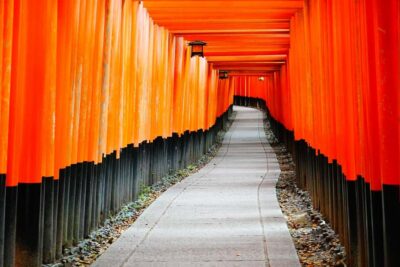
Osaka/Kyoto:Kinkakuji,Arashiyama,FushimiInariShrine,NaraPark
Read our review →
Kyoto/Osaka: Nara, Fushimi Inari Taisha, Arashiyama Bus Tour
Read our review →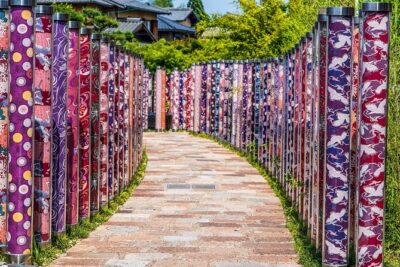
Kyoto Arashiyama Walking Tour: Bamboo, Monkeys, Gardens & Secrets
Read our review →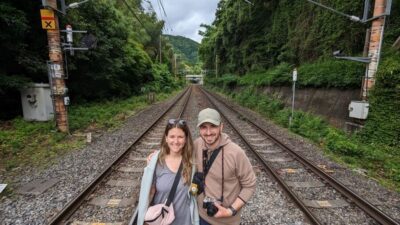
Arashiyama Bamboo, Temple, Monkeys, or Secret Sake Brewery
Read our review →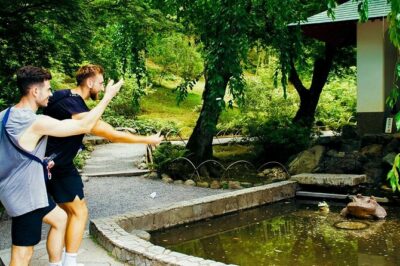
Arashiyama Bamboo Forest, Monkeys, Matcha & Temple Tour
Read our review →
Osaka/Kyoto: Arashiyama, Nara & Fushimi Inari Shrine w/Lunch
Read our review →
Nijo, Kinkaku-ji, Arashiyama, Kiyomizu & Fushimi Inari
Read our review →Browse the lists this tour appears in