
Reviewed · FUSHIMI INARI TOURS
Kyoto/Osaka: Nara, Fushimi Inari Taisha, Arashiyama Bus Tour
Nara’s free-roaming deer, Fushimi Inari’s endless red gates, and Arashiyama’s bamboo forest make a powerful first taste of Japan. This tour links all three in one long day, with an English or Chinese-speaking guide and an air-conditioned bus doing the hard work between them.
I like the strong mix of temples, wildlife, and scenery, and I like that you get free time rather than being marched from one photo stop to the next. The bus also saves you from piecing together several train and bus journeys. The tradeoff is simple: three major areas in one day means you will sample each place, not explore it at leisure.
Key things to know before booking
- Nara Park puts you close to sacred deer: Buy shika senbei crackers and expect the deer to approach quickly once they spot them.
- Fushimi Inari is more than a photo stop: You can walk through the first section of its famous torii gate path, though the full mountain route takes much longer.
- Arashiyama gives you the longest break: The two-and-a-half-hour area visit leaves room for bamboo, shrines, food, shopping, or an optional temple visit.
- The schedule is brisk but organized: Guides such as Amy, Willa, Christine, and Fiona are repeatedly praised for clear meeting instructions and keeping the group on time.
- The $52 price is strong for transport: Parking, fuel, taxes, and handling charges are included, but food, drinks, and Tenryu-ji’s admission cost extra.
- Expect plenty of walking: Comfortable shoes matter, and the tour is not suitable for wheelchair users or people with mobility impairments.
Why this three-stop route works
Kyoto and Nara are easy to enjoy but not always easy to combine. Nara lies east of Osaka, Fushimi Inari is south of central Kyoto, and Arashiyama sits on Kyoto’s western side. Public transport can handle the journey, but you would need to plan connections, watch the clock, and get back to your starting city.
This tour takes a straightforward sightseeing approach. You meet in Osaka at Harimaya Nippombashi 1-chome or in Kyoto at the sunken garden beside Kyoto Station’s Hachijo Entrance. The bus then carries you through a full day of Japan’s best-known sights before returning you to Kyoto or Osaka.
The vehicle is air-conditioned, and the driver handles parking and city traffic. That matters most at Arashiyama and Fushimi Inari, where roads and stations can feel confusing during busy periods. Your guide also gives instructions before each stop, including where and when to meet back at the bus.
The current rating is 4.7 out of 5 from 1,275 ratings. The strongest praise goes to the guides’ organization, humor, warmth, and ability to keep a large group together. Amy, sometimes called Happy Bunny, is singled out for clear explanations, good timing, and thoughtful help. Willa, Christine, Fiona, Laura, and Frederick also receive repeated praise for friendliness and practical advice. Your guide will vary, but the pattern is clear: the human side of the day is one of its main strengths.
More ways to walk Fushimi Inari:
- Kyoto: Fushimi Inari, Kinkakuji, Bamboo Grove 1 Day Bus Tour
★ 4.8 · 4,316 reviews - Fushimi Inari Hidden Hiking Tour (Private Option Available)
★ 5.0 · 1,750 reviews - Osaka/Kyoto: Arashiyama, Nara & Fushimi Inari Shrine w/Lunch
★ 4.4 · 754 reviews
Nara Park and the fast-moving deer
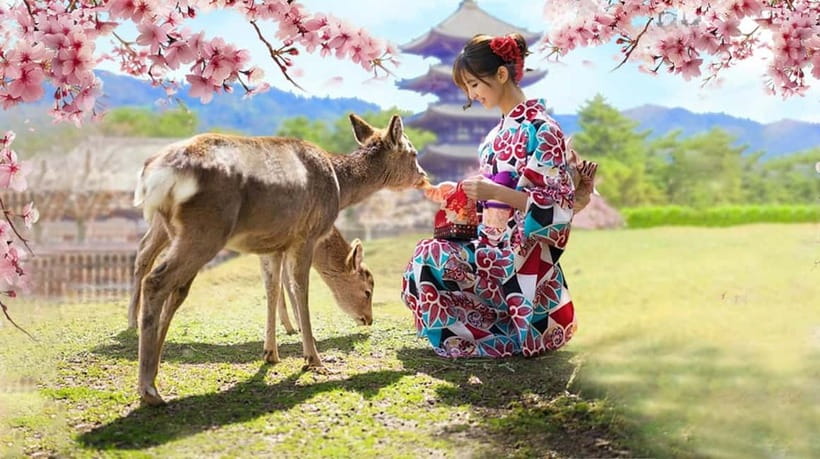
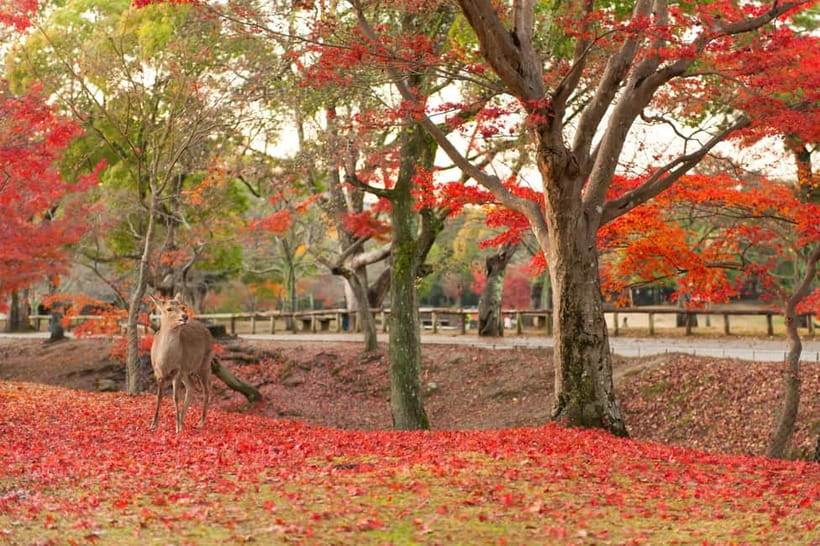
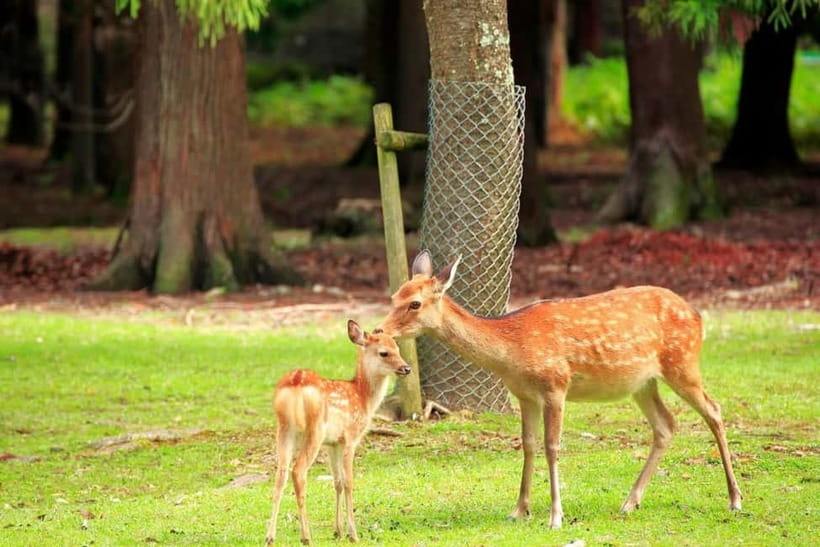
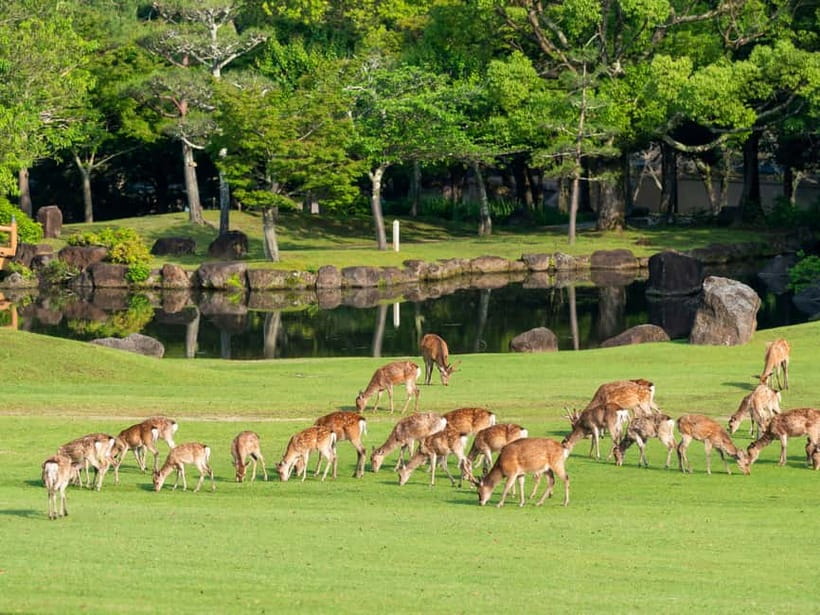
Your first major stop is Nara Park, with about an hour to walk around and meet its famous deer. These animals are treated as divine messengers in local tradition, and they move freely through the park rather than staying behind fences.
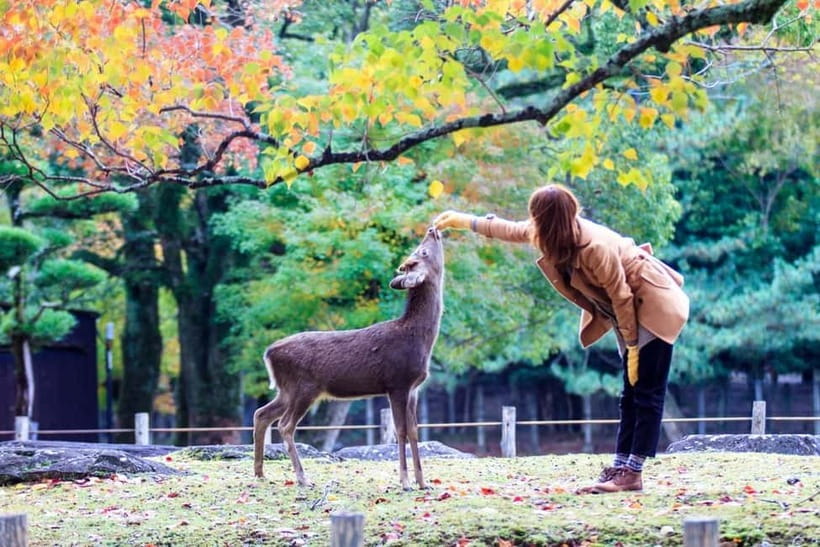
The best-known activity is feeding them shika senbei, round rice crackers sold around the park. Hold one out and you may have a deer bow its head, shuffle closer, or follow you for more. It is a fun photo opportunity, but keep the crackers moving and finish them promptly. A deer that sees you still holding food may remain very interested.
Nara is especially good for families and first-time visitors who want an immediate, hands-on experience. You are not just looking at a shrine from a distance. You are walking among animals that have become part of the place’s identity.
The one-hour stop is enough for deer, photos, and a short look around. It is not enough for a full visit to every major temple in Nara. If you want to spend serious time at Todai-ji or explore the wider park, you should plan a separate day.
Nara can also feel very tourist-focused around the crackers and deer feeding areas. That does not make the stop poor, but it helps to set your expectations. The value here is the unusual encounter and the easy introduction to Nara, not a quiet day of temple study.
Fushimi Inari and the vermilion gate tunnel
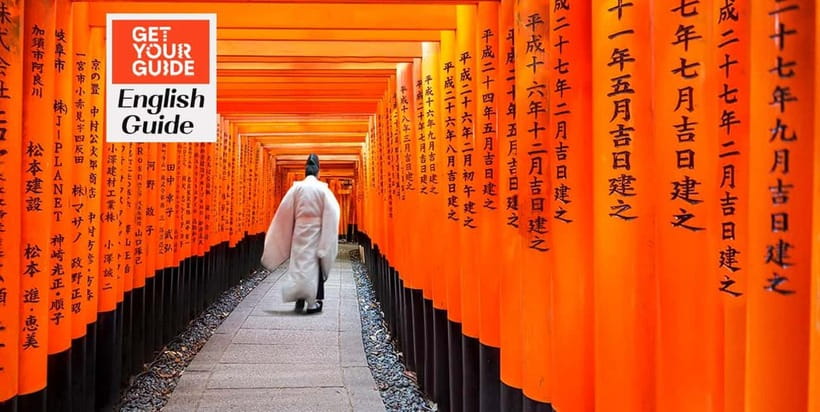
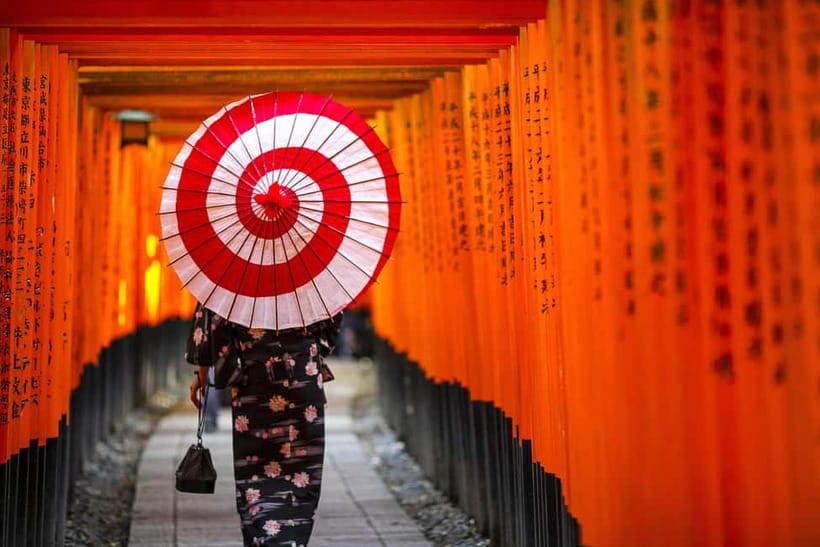
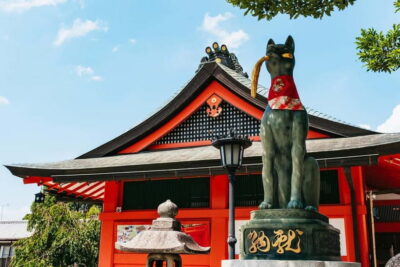
Next comes Fushimi Inari Taisha, one of Kyoto’s most recognizable shrines. The visit lasts about 70 minutes, giving you time to enter the shrine grounds and walk through the first section of its torii gates.
The gates are called torii, and they mark the boundary between ordinary space and sacred ground. At Fushimi Inari, thousands of them form long passages up Mount Inari. The bright vermilion color, repeating shadows, and narrow uphill paths create an atmosphere unlike any other stop on this tour.
Fushimi Inari honors Inari, a Shinto deity linked with rice, business, and prosperity. Many of the torii were donated by individuals and companies hoping for success. That gives the gates a practical human story as well as a religious one.
You do not need to climb the entire mountain to enjoy the shrine. The tour’s time limit makes the lower gate paths the realistic target. Walk at a steady pace, take your photos, and keep an eye on the time. The farther uphill you go, the more likely you are to spend the return journey watching the clock.
This stop is best for people who enjoy walking and visual detail. It is less suitable if you want a slow, reflective shrine visit with long pauses. Still, Fushimi Inari is often the highlight for visitors who prefer striking architecture and a little exertion.
Your guide may also point out its links to popular films and anime, including Memoirs of a Geisha and Detective Conan. Those references can add context, but the gates are impressive enough without them.
Arashiyama gives you room to choose
Arashiyama receives the largest block of time, about two and a half hours in the fuller schedule. The stop is described as a mix of guided orientation and self-guided exploration, which is exactly what this area needs. You get a starting point, then decide how to use your time.
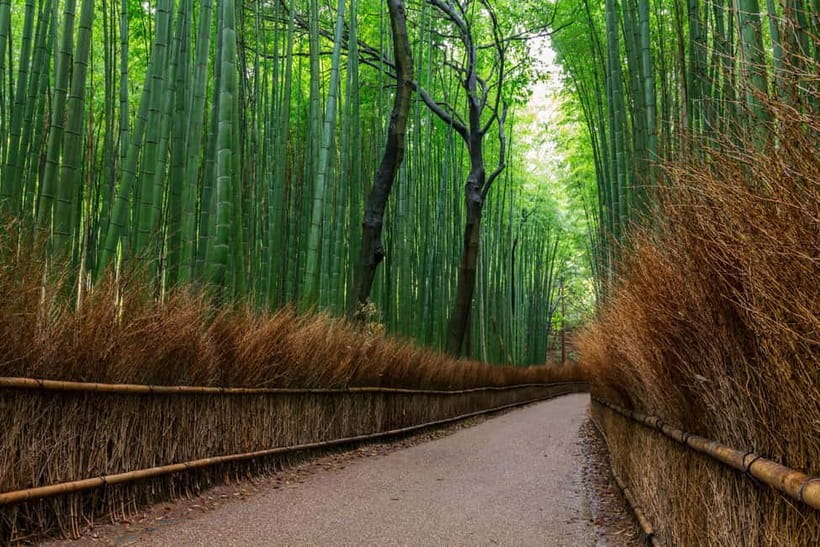
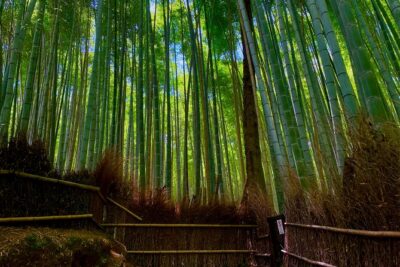
The famous bamboo forest is the obvious first choice. Tall bamboo stalks line a narrow walking route, with filtered light and a calm feel that contrasts sharply with the crowded city. The main path is not enormous, so you may finish it quickly, especially if you stop only for photos.
That is why the extra time matters. After the bamboo, you can visit Nonomiya Shrine, walk toward Togetsukyo Bridge, enter Tenryu-ji, browse the shops, or stop for food. You might also choose the monkey park, an option noted by one family using the free time in Arashiyama. The tour does not include a separate monkey park visit, so check your map and time carefully if you choose it.
The official stop breakdown lists about 1.5 hours for Arashiyama itself, plus separate short visits to the bamboo forest, Nonomiya Shrine, Togetsukyo Bridge, and Kimono Forest. In practice, the available time can shift with traffic and the guide’s route. Listen closely to your meeting instructions.
More Arashiyama and bamboo walks:
- Osaka/Kyoto:Kinkakuji,Arashiyama,FushimiInariShrine,NaraPark
★ 4.1 · 1,596 reviews - Kyoto Arashiyama Walking Tour: Bamboo, Monkeys, Gardens & Secrets
★ 5.0 · 1,216 reviews - Arashiyama Bamboo, Temple, Monkeys, or Secret Sake Brewery
★ 4.8 · 886 reviews - Kyoto: Arashiyama Bamboo Forest, Monkeys, Matcha & Temple Tour
★ 5.0 · 759 reviews
Nonomiya Shrine and the old bamboo setting
Nonomiya Shrine sits within the Arashiyama bamboo area and dates back more than 1,000 years to the Heian period. It is associated with love and academic success, making it a popular pause for people seeking good fortune in relationships or study.
Its most distinctive feature is the Kuroki torii, an unpainted wooden gate. Most torii you see at major shrines are painted, so the plain dark wood feels quiet and unusual.
The shrine is small, and the scheduled visit is about 15 minutes. That is enough to see the gate, offer a prayer, and take in the setting without turning the stop into a formal temple visit. I like this brief pause because it adds meaning to the bamboo walk. You get more than a famous background for photos.
Tenryu-ji, an optional temple visit
Tenryu-ji is a UNESCO World Heritage Site and one of Arashiyama’s important Zen temples. Admission is not included, so you decide if its garden and buildings are worth the extra cost.
The main draw is the Sogenchi Garden, which uses the surrounding hills as borrowed scenery. This traditional Japanese garden is designed to look balanced from fixed viewing points, with water, stones, plants, and distant scenery working together.
Tenryu-ji is the best choice if you want a calmer, more formal cultural stop in Arashiyama. It is also the stop most likely to create a time problem if you linger. You still need to reach the bus meeting point on schedule, so ask your guide how much time you have before paying to enter.
If you are more interested in food, shopping, or the bridge, skip the admission and use the time elsewhere. The tour gives you choices, but it cannot give you enough time for every Arashiyama attraction.
Togetsukyo Bridge, Kimono Forest, and a short rest
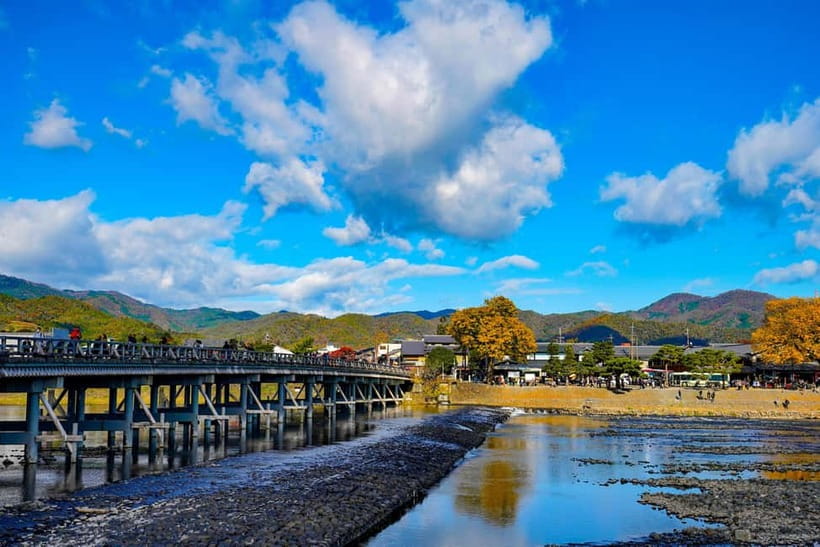
Togetsukyo Bridge is Arashiyama’s classic viewpoint. From the bridge, you can look along the river toward the surrounding hills and watch rickshaws pass by. The scheduled stop is about 15 minutes, enough for a walk across part of the bridge and a few photos.
The bridge is not a major historic interior site, so its appeal is visual. It helps you understand why Arashiyama became one of Kyoto’s favorite scenic areas.
Kimono Forest offers a different mood. At Arashiyama Station, about 600 pillars are covered in colorful Kyo-Yuzen textile patterns. This is a modern art installation rather than an ancient monument, and it makes a quick, playful photo stop.
The station also has a footbath where you can rest your feet. The cost is not listed in the tour details, so ask locally before using it. You will have to manage the timing yourself, since the bus will not wait for a long soak.
Arashiyama also has street food, restaurants, souvenir shops, the Rilakkuma Tea House, and other small diversions. With only a limited break, choose one or two priorities before you arrive. Trying to do everything will make the stop feel rushed.
What the $52 tour includes
At $52 per person, this is good value if you are starting in Osaka and want to see Kyoto and Nara without arranging several transfers. The price includes the English-speaking guide, air-conditioned transport, taxes, parking fees, fuel, and handling charges.
That bundle matters. A self-guided day may cost less in some situations, especially if you already understand the train system and are traveling as a small group. But the tour removes the need to find parking, compare routes, and judge how long each transfer will take.
You still pay for food, drinks, personal purchases, deer crackers, and optional entry to Tenryu-ji. Bring water and some cash or a payment card for these extras.
The bus also lets you rest between stops. Several guides are praised for allowing passengers to nap, then waking them gently before arrival. That small detail matters after an early start and a full day on foot.
Timing, comfort, and the fine print
The day begins at 8:00 a.m. from Osaka or 9:00 a.m. from Kyoto, then runs for about 9 to 10 hours. Arrive 10 to 15 minutes early. The bus leaves on time, and late arrivals risk missing the group.
Traffic and weather can change the order of the stops and the return time. Do not schedule a tight dinner reservation, airport transfer, or evening show immediately after the tour.
You should wear comfortable shoes and clothes, carry water, and bring an umbrella. The route includes shrine paths, bridge walks, bamboo lanes, and general sightseeing on foot.
The experience is not suitable for wheelchair users or people with mobility impairments. If you are bringing an infant, stroller, or large luggage, state that when booking because Japanese traffic rules count babies as passengers. People who are pregnant or aged 70 and above must sign a travel waiver on arrival.
When booking, tell the operator if you want to finish in Osaka or Kyoto. If you do not specify, the return point defaults to the same place where you started.
Free cancellation is available up to 24 hours before departure, and you can reserve now and pay later. Those options are useful when your Japan schedule is still changing.
Who should book this day trip?
I would choose this tour for a first visit to the Kansai region, especially if you are based in Osaka and want a simple day in Kyoto and Nara. It suits you if you value seeing several famous places, clear directions, and a guide who can explain customs and history along the way.
It also works well for solo visitors. The operator may seat solo passengers with other solo participants, which can make the day feel more social. Guides such as Amy, Willa, Christine, and Fiona are praised for helping people stay informed and included.
Families can enjoy the deer and the easy bus transport, though young children still need to handle a long day. The schedule is full, and there is walking at every stop.
I would not book it if you prefer to spend half a day at one temple, climb all of Mount Inari, or explore Arashiyama at your own speed. Independent sightseeing gives you more control, especially if you already know Kyoto’s transport system.
Should you book it?
Book this tour if your priority is efficient sightseeing with low transport stress. For $52, you get three major areas, a guide, and a vehicle that handles the awkward links between Osaka, Nara, and Kyoto.
Skip it if your ideal day means lingering, eating slowly, or studying one shrine in detail. The route is a sampler, but it is a very useful one. You will see the deer, red gates, bamboo, bridge, shrine, and optional temple in a single well-managed day, then decide which place deserves a longer return visit.
FAQ
Where does the tour start?
You can start at Harimaya Nippombashi 1-chome in Osaka or at the sunken garden in Kyoto Station’s Hachijo Entrance Square. The exact meeting point depends on the option you book.
Where does the tour finish?
You can finish in Osaka or Kyoto. You should tell the operator your preferred drop-off location when you make your reservation. Without that instruction, the default is the same point as pickup.
How long does the experience last?
The full day lasts about 9 to 10 hours. The schedule can change because of traffic, weather, or other unforeseen conditions.
What languages are available?
Live guiding is available in English and Chinese.
Is transportation included?
Yes. The tour includes an air-conditioned vehicle, an English-speaking guide, taxes, parking fees, fuel, and handling charges.
Are meals included?
No. Food and drinks are not included, so bring water and plan to buy meals or snacks during free time, especially in Arashiyama.
Is Tenryu-ji Temple included in the price?
No. Tenryu-ji is an optional visit, and its admission fee is extra.
What should I bring?
Wear comfortable shoes and clothes, bring water, and carry an umbrella. You should also arrive at the meeting point 10 to 15 minutes before departure.
Can wheelchair users join the tour?
No. The activity is not suitable for wheelchair users or people with mobility impairments. If you are bringing an infant, stroller, or large luggage, provide that information when booking.
Just added around Kyoto
- Kyoto: Zen Meditation at a Private Temple with a Monk★ 5.0 · 25 reviews
- Kyoto: Gion Geisha District & Sake-in-Hand Walking Tour★ 5.0 · 37 reviews
- Private Pewter Sake Cup Experience with a Kyoto Artisan★ 5.0 · 31 reviews
- Your Private Vacation Photography Session In Kyoto★ 5.0 · 110 reviews
- Private Guided Traditional Buddhist Cooking in Japan★ 5.0 · 16 reviews
- Kyoto Wagashi(Japanese sweets) Cooking Class near Fushimiinari★ 5.0 · 60 reviews
- Traditional Japanese Music show & Experience Tour in Kyoto★ 5.0 · 57 reviews
- Kyoto:Family-Friendly Kimono & Yukata Experience at WARGO★ 5.0 · 147 reviews
Fushimi Inari Tours, compared.
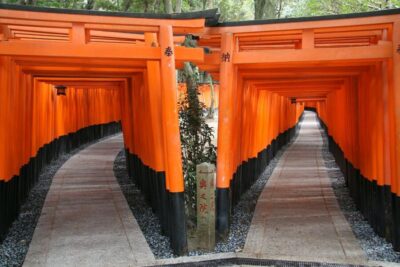
Fushimi Inari, Kinkakuji, Bamboo Grove 1 Day Bus Tour
Read our review →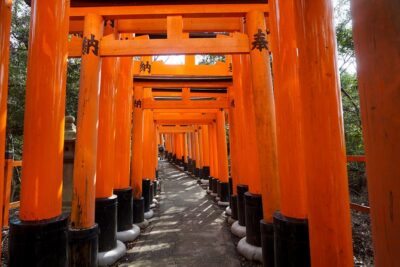
Fushimi Inari Hidden Hiking Tour (Private Option Available)
Read our review →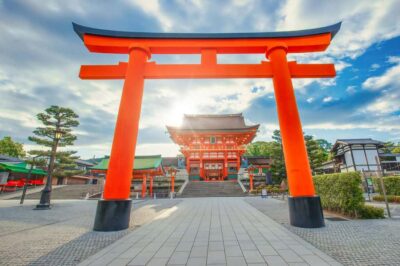
Osaka/Kyoto: Arashiyama, Nara & Fushimi Inari Shrine w/Lunch
Read our review →
Nijo Castle, Kiyomizu & Fushimi Inari Guided Tour
Read our review →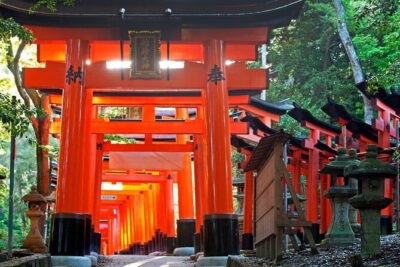
Nijo, Kinkaku-ji, Arashiyama, Kiyomizu & Fushimi Inari
Read our review →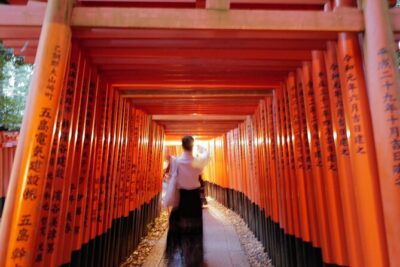
Kyoto Early Bird English Tour: Fushimi-Inari and Arashiyama
Read our review →Browse the lists this tour appears in