
Reviewed · FUSHIMI INARI TOURS
Kyoto: Nijo, Kinkaku-ji, Arashiyama, Kiyomizu & Fushimi Inari
Kyoto packs a lot into a small area, but its famous sights are not arranged for an easy walking day. This 10-hour-45-minute bus tour links Arashiyama, the Golden Pavilion, Nijo Castle, Kiyomizu-dera, and Fushimi Inari in one ambitious sweep. Guides such as Paula, Cesar, Ángeles, Alan, and Pastor have been praised for keeping the day moving while still allowing time to wander.
I like the early start at 7 a.m., which gives you a better shot at enjoying the Bamboo Grove before it fills up. I also like the choice of ticket and lunch packages, since you can pay for only the level of convenience you want. The catch is simple: this is a very full day, and summer heat, long walks, traffic, and bilingual commentary can make it tiring.
Key points to know before booking
- Six major Kyoto stops in one day: Arashiyama, Kinkaku-ji, Nijo Castle, Kiyomizu-dera, and Fushimi Inari are all included in the route.
- Early access to Arashiyama: You reach the Bamboo Grove first, before the crowds are at their thickest.
- Optional tickets and lunch: Choose a basic package or pay more for admissions and a premium lunch option.
- Bilingual guiding: The guide speaks English and Spanish, so commentary may be repeated in two languages.
- A small-to-medium group: The maximum is 30 people, with transport from Hotel Keihan Kyoto Grande.
- A demanding schedule: Expect heat, stairs, walking, and a late return to the meeting point.
Why this Kyoto bus route can save your day
I see this tour as a sightseeing shortcut. Kyoto’s major sights are spread across the city, and arranging them independently means working out buses, train connections, admission lines, and opening times. Here, you board once and let the driver handle the long transfers.
That convenience matters most if you have only a day in Kyoto. You will not see each place in depth, but you will get a useful first look at the city’s major monuments and religious sites. The route also gives you a guide to explain what you are seeing, instead of leaving you to decode every temple and castle on your own.
The day begins at Hotel Keihan Kyoto Grande, near Kyoto Station, at 7 a.m. The tour ends back at the same meeting point. The group can reach up to 30 people, large enough that you need to stay alert for meeting times, but still more manageable than a huge coach group.
The main tradeoff is pace. You are not choosing a slow temple day with long periods for quiet reflection. You are choosing coverage. I would book it for a first visit, a short stay, or a day when you want someone else to solve Kyoto’s transport puzzle.
More ways to walk Fushimi Inari:
- Kyoto: Fushimi Inari, Kinkakuji, Bamboo Grove 1 Day Bus Tour
★ 4.8 · 4,316 reviews - Fushimi Inari Hidden Hiking Tour (Private Option Available)
★ 5.0 · 1,750 reviews - Kyoto/Osaka: Nara, Fushimi Inari Taisha, Arashiyama Bus Tour
★ 4.7 · 1,275 reviews
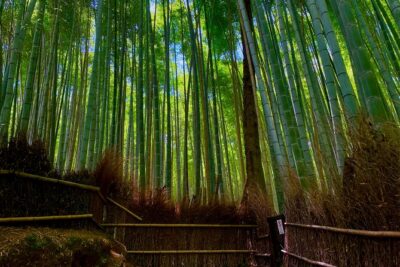
Arashiyama Bamboo Grove before the crowds
The first transfer takes about 40 minutes, followed by roughly 1 hour and 20 minutes at Arashiyama Bamboo Forest. This is a smart place to begin. The tall bamboo stalks are most photogenic when the paths are calmer, and the early timing gives you a better chance at pictures without a solid wall of people in every frame.
The grove itself is a short, atmospheric walk rather than a full morning of sightseeing. You will stroll beneath the bamboo, take photographs, and follow the guide’s instructions about where and when to meet. The supplied schedule does not include admission for this stop.
Keep your expectations in check. The Bamboo Grove is beautiful, but it is not an all-day attraction. The route may feel less satisfying if you hoped to spend hours visiting every temple and garden in Arashiyama. One poor experience described the area as disappointing because nearby temples were not open at that point in the morning. I would treat the grove as a quick visual introduction, not as a complete tour of Arashiyama.
Wear shoes that are comfortable for walking. In hot weather, carry water from the start. One particularly hot day left the group sweaty and uncomfortable, and the practical lesson is clear: do not assume the bus will solve every hydration problem for you.
Kinkaku-ji, Kyoto’s Golden Pavilion
After Arashiyama, the bus ride to Kinkaku-ji takes about 30 minutes. You receive 45 minutes at the Golden Pavilion, but entry depends on the package you choose. If you select an option without attraction tickets, you need to pay for admission yourself before entering.
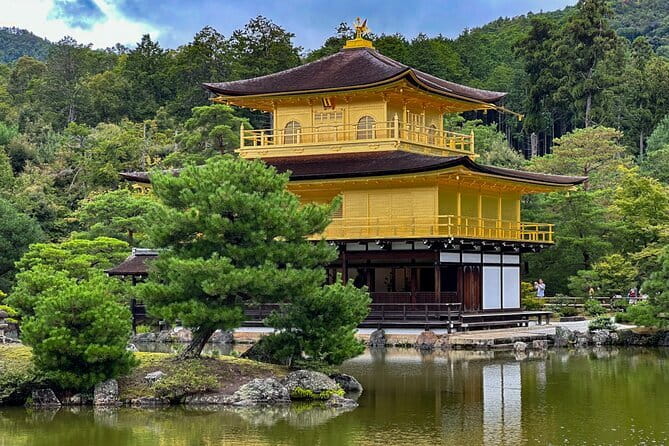
Kinkaku-ji is one of Kyoto’s most recognizable sights. Its gold-covered upper levels reflect in the pond, creating the classic image seen in guidebooks and postcards. The grounds give you a clear route for viewing the pavilion and its gardens, but 45 minutes is a brisk visit.
I like this short stop because the pavilion is a strong visual highlight. I would not expect a long, quiet garden walk, though. The schedule is built around seeing the main view, taking photos, and moving on.
Check your booking choice carefully before departure. The tour description lists admission to the Golden Pavilion only when that option is selected. This is one of the places where a low headline price can become less simple if you assume every entrance fee is already covered.
Nijo Castle and the shogun’s Kyoto

The next stop is Nijo Castle, with about 1 hour and 30 minutes allocated for the visit. The bus transfer from Kinkaku-ji takes about 30 minutes. As with Kinkaku-ji, entry is included only in packages that contain the admission ticket.
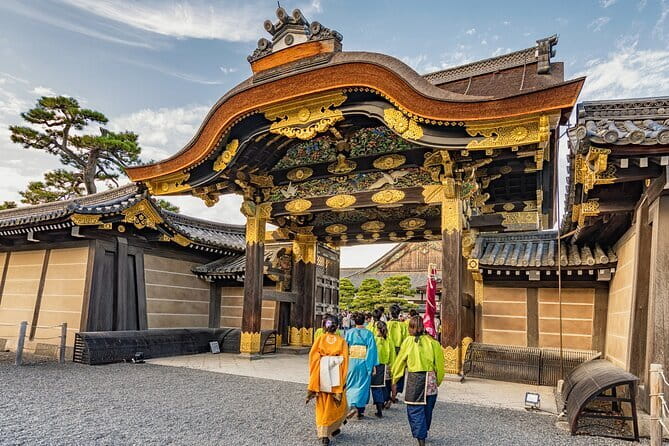
Nijo Castle gives the day a useful change of tone. After bamboo and temple gardens, you move into a formal castle complex with grand interiors, decorative details, and spacious grounds. It is a place where political Kyoto comes into view, rather than only religious Kyoto.
The longer stop makes sense here. You have time to see the castle and walk through the gardens without reducing the visit to one photograph. Still, the schedule is fixed, so you should watch the time and return to the bus promptly.
If you enjoy architecture and Japanese history, Nijo Castle may be one of the most rewarding stops. If your priority is only temples and scenic views, it may feel less immediately dramatic than Kinkaku-ji or Fushimi Inari. I like having it in the route because it keeps the day from becoming five versions of the same temple visit.
More Arashiyama and bamboo walks:
- Osaka/Kyoto:Kinkakuji,Arashiyama,FushimiInariShrine,NaraPark
★ 4.1 · 1,596 reviews - Kyoto Arashiyama Walking Tour: Bamboo, Monkeys, Gardens & Secrets
★ 5.0 · 1,216 reviews - Arashiyama Bamboo, Temple, Monkeys, or Secret Sake Brewery
★ 4.8 · 886 reviews - Kyoto: Arashiyama Bamboo Forest, Monkeys, Matcha & Temple Tour
★ 5.0 · 759 reviews
Kiyomizu-dera and the hillside streets
The bus ride to Kiyomizu-dera takes about 30 minutes, followed by as much as 2 hours and 30 minutes in the area. This is the longest scheduled stop, and it gives you room to see the temple, enjoy the hillside setting, and move at a less frantic pace.
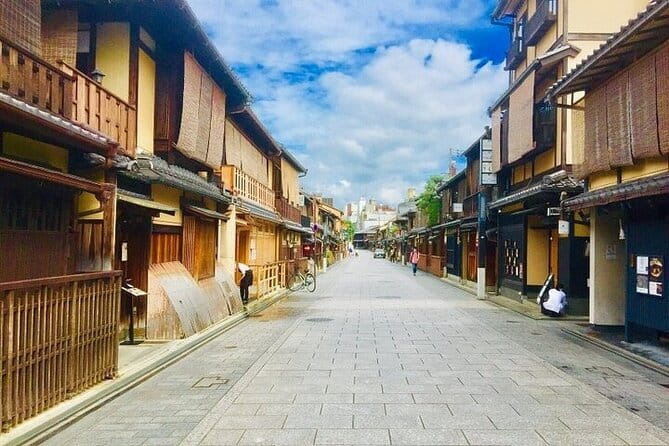
Kiyomizu-dera sits above Kyoto and is known for its broad views over the city. The approach is part of the experience, with a hillside route that can be busy and physically demanding. You should expect walking, slopes, and potentially warm conditions, especially in summer.
Admission is included only if you select the appropriate ticket package. The basic option does not automatically cover it. This is another reason to compare the package details rather than choosing by the lowest price alone.
The long window is welcome, but it can also be the point when fatigue catches up with you. The day began early, and you have already visited several sites. One useful response is to divide the time sensibly: see the main temple area first, then use the remaining minutes for views, streets, or a rest.
The tour does not promise a preselected restaurant unless you choose the premium package with lunch. If food matters to you, verify exactly what is included before booking. A planned meal can make a long day easier, while an unplanned meal may leave you spending valuable sightseeing time looking for a place to eat.
Fushimi Inari’s endless red gates

The final major stop is Fushimi Inari Taisha, with about 1 hour and 30 minutes available after a roughly 30-minute bus ride from Kiyomizu-dera. There is no admission fee for this shrine.
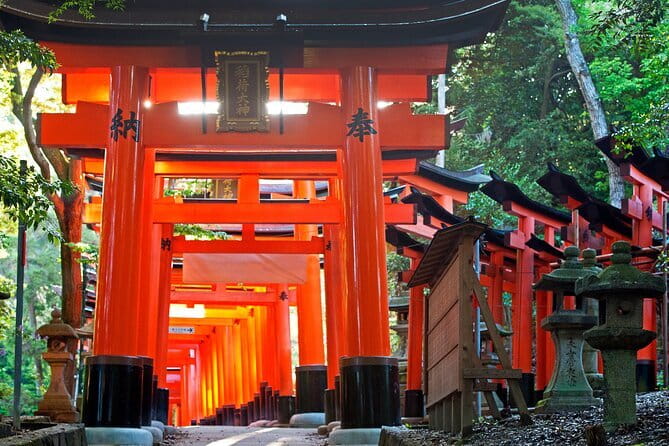
Fushimi Inari is famous for its long lines of vermilion torii gates climbing the wooded mountain. You do not need to walk the entire route to understand why it is special. Even a short walk beneath the first gates gives you the visual experience that draws people here.
The practical question is how far you should go. With only 90 minutes, you need to choose between a short, relaxed visit and a more energetic uphill walk. The route becomes more demanding as it climbs, so save some energy for this final stop.
I like ending here because the shrine feels different from the day’s earlier sites. The repeated gates create a strong sense of movement and rhythm, and the visit is less about one central building than about the path itself. Just remember that this is not a flat photo stop if you decide to walk uphill.
The guide makes or breaks the long day
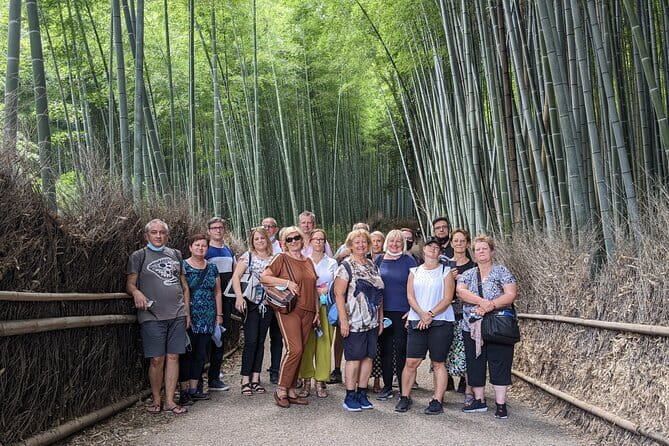
The strongest part of the experience is likely to be the guide. Several named guides, including Ángeles, Cesar, Paula, Alan, and Pastor, have received praise for clear organization, energy, historical explanation, and a good balance between commentary and free time.
That balance is important. You want enough explanation to understand Kyoto, but you also need time to take your own photos, walk at your own pace, and enjoy the sites without a running lecture. Paula, in particular, was noted for giving useful information while allowing independent exploration.
The tour is bilingual in English and Spanish. This opens the booking to more people, but it also means the guide may repeat information in both languages. If you speak English only, you may find the commentary slower than on an English-only tour. One poor experience specifically found the repeated bilingual delivery hard to follow.
Guide quality can vary from day to day. One complaint described a guide leaving people behind and not repeating information clearly. I would stay close to the group, listen carefully for meeting instructions, and speak up at once if you cannot hear. On a long route with several bus departures, missing one instruction creates avoidable stress.
Is $51.80 a good value?
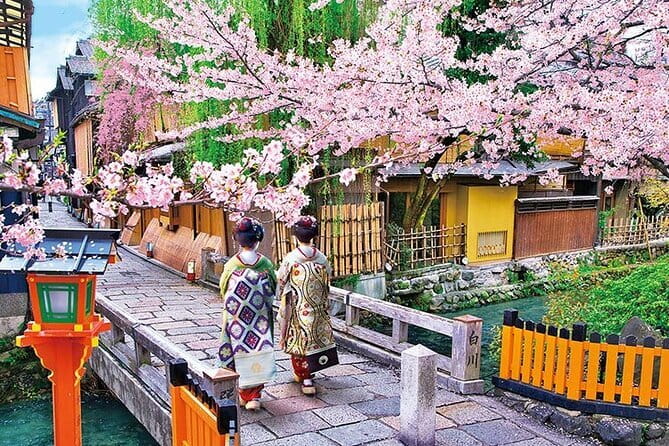
At $51.80 per person, the tour is priced as a transport-and-sightseeing solution rather than a luxury experience. The value is strongest when you want to see many major sites in one day and do not want to plan the connections yourself.
The price becomes more attractive if you choose a package that includes the Golden Pavilion, Nijo Castle, Kiyomizu-dera, and lunch. It becomes harder to judge if you select the cheapest option and then add several entrance fees and a meal during the day.
I would compare the packages in this order:
- Basic transport and guiding, if you already know the sites and want the bus connection.
- Ticket-inclusive package, if you want a simpler day with fewer payment decisions.
- Premium option with lunch, if you value a planned meal and do not want to search for food during the busiest part of the day.
The tour has been booked more than five times in the past week and carries a 4.9 rating from 699 reviews, with 97 percent recommending it. Those figures suggest strong overall satisfaction, but they do not erase the clear limitations: heat, fatigue, bilingual commentary, and a tightly timed route.
Who should book this 10-hour-45-minute tour?
I would recommend it to you if this is your first Kyoto visit and you have limited time. It also suits anyone who prefers a guide, wants transportation arranged, or feels uneasy trying to connect Arashiyama, northern Kyoto, eastern Kyoto, and Fushimi Inari in one day.
It is a good match for independent-minded people who still want structure. At each stop, you receive some context and then time to explore on your own. The day is not a private tour, but it is not a nonstop lecture either.
I would think twice if you want quiet temple time, flexible meals, or long visits at one or two places. Families with very young children should also consider the pace. A crowded bus, long day, heat, stairs, and several walks can be a lot. One experience was made harder by children crying on the bus, which also made the guide difficult to hear.
Pack water, wear good walking shoes, bring sun protection in hot weather, and keep your phone charged for the mobile ticket and meeting information. The route can change because of weather, traffic, road closures, or other conditions, so keep the rest of your evening flexible.
Should you book it?
Book this tour if your goal is to see Kyoto’s greatest hits in one day. The route is efficient, the $51.80 starting price can be fair, and a strong guide such as Paula, Cesar, or Ángeles can add useful context to places that might otherwise blur together.
Skip it if you prefer to set your own pace or if bilingual commentary will frustrate you. For most first-time visitors with a short stay, though, this is a practical way to cover a remarkable amount of ground. Choose the ticket and lunch package with care, start rested, and accept that the reward for broad coverage is a long, active day.
FAQ
Where does the Kyoto tour start and finish?
The tour starts and ends at Hotel Keihan Kyoto Grande, located at 31 Higashikujō Nishisannōchō, Minami Ward, Kyoto 601-8003. The start time is 7 a.m.
How long does the tour last?
The experience lasts approximately 10 hours and 45 minutes, including transfers between the meeting point and the sightseeing stops.
Are attraction tickets included?
Tickets depend on the package you select. Admission to Kinkaku-ji, Nijo Castle, and Kiyomizu-dera is included only when you choose an option that contains those tickets. Arashiyama Bamboo Forest and Fushimi Inari Taisha do not require an included admission ticket in the tour details.
Is lunch included?
Lunch is included only with the Premium option. It is not included in the other packages.
Is the tour conducted in English?
The tour has a bilingual English and Spanish guide. Commentary may therefore be given in both languages.
Can I cancel the booking?
You can cancel for a full refund if you do so at least 24 hours before the experience start time. Cancellations or changes made less than 24 hours before the start time are not accepted for a refund.
Just added around Kyoto
- Kyoto: Zen Meditation at a Private Temple with a Monk★ 5.0 · 25 reviews
- Kyoto: Gion Geisha District & Sake-in-Hand Walking Tour★ 5.0 · 37 reviews
- Private Pewter Sake Cup Experience with a Kyoto Artisan★ 5.0 · 31 reviews
- Your Private Vacation Photography Session In Kyoto★ 5.0 · 110 reviews
- Private Guided Traditional Buddhist Cooking in Japan★ 5.0 · 16 reviews
- Kyoto Wagashi(Japanese sweets) Cooking Class near Fushimiinari★ 5.0 · 60 reviews
- Traditional Japanese Music show & Experience Tour in Kyoto★ 5.0 · 57 reviews
- Kyoto:Family-Friendly Kimono & Yukata Experience at WARGO★ 5.0 · 147 reviews
Fushimi Inari Tours, compared.
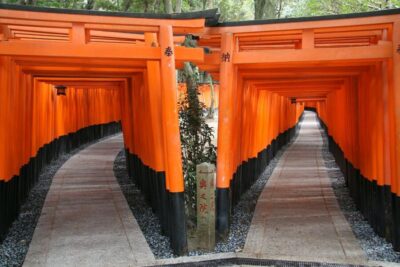
Fushimi Inari, Kinkakuji, Bamboo Grove 1 Day Bus Tour
Read our review →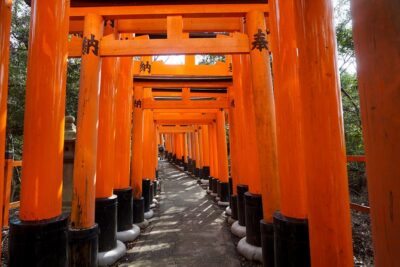
Fushimi Inari Hidden Hiking Tour (Private Option Available)
Read our review →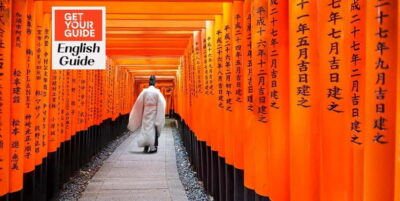
Kyoto/Osaka: Nara, Fushimi Inari Taisha, Arashiyama Bus Tour
Read our review →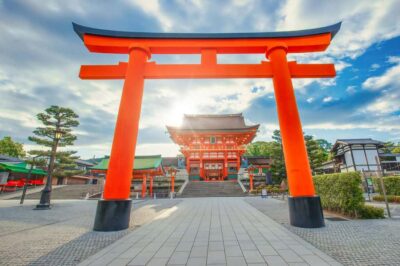
Osaka/Kyoto: Arashiyama, Nara & Fushimi Inari Shrine w/Lunch
Read our review →
Nijo Castle, Kiyomizu & Fushimi Inari Guided Tour
Read our review →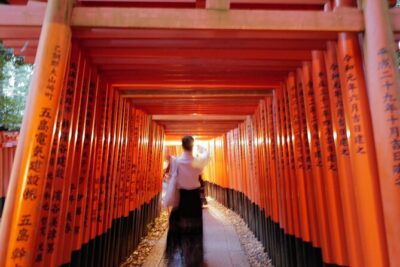
Kyoto Early Bird English Tour: Fushimi-Inari and Arashiyama
Read our review →Browse the lists this tour appears in