
Reviewed · KYOTO TOURS
Kyoto Wagashi(Japanese sweets) Cooking Class near Fushimiinari
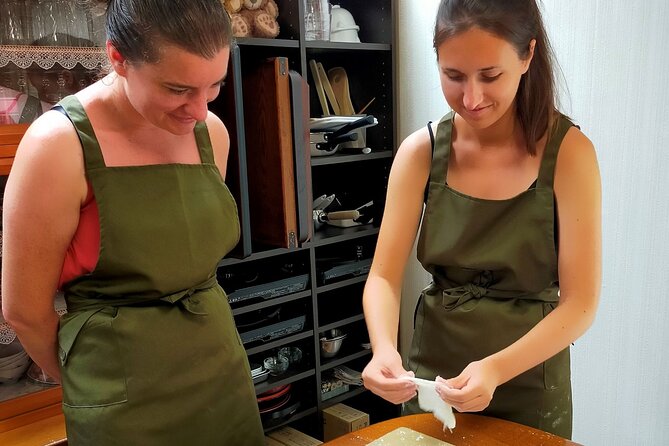
The most appealing part of this Kyoto class is its setting: you enter a traditional Japanese home, sit in a tatami room, and learn to make three wagashi sweets rather than simply buying them in a shop. Miho’s small classes keep the lesson personal, with a maximum of six people and plenty of room for questions.
I like the mix of hands-on cooking and quiet tea time, and I like that you leave with recipes you can use at home. The black sesame sweet and mitarashi dango have been particular hits, while families have found the class easygoing and well organized. The main consideration is that the lesson is conducted in English, so you should be comfortable following spoken instructions in that language.
Key points to know before booking
- Traditional home near Fushimi Inari: The class takes place at 38-4 Fukakusa Watamoricho in Kyoto’s Fushimi Ward, close to public transportation.
- Three sweets in one lesson: You prepare about three kinds of wagashi, with demonstrations before you begin.
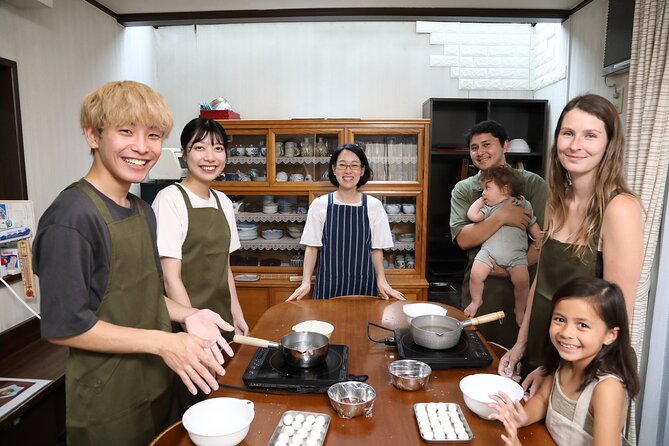
- Small groups of six or fewer: This gives you a better chance to ask questions and receive help with delicate techniques.
- Tea and garden view included: You finish your sweets with matcha, coffee, or tea in a traditional Japanese room.
- Recipes go home with you: The class is useful beyond Kyoto because you receive the recipes for the sweets you prepare.
- Dietary needs can be accommodated: Vegetarians and vegans are welcome, but you need to share restrictions in advance.
A quiet introduction to wagashi near Fushimi Inari
Many visitors come to the Fushimi Inari area for the famous torii gates, then move on quickly. This class gives you a different reason to spend time in the neighborhood. Instead of another fast sightseeing stop, you settle into an authentic Japanese-style house and take part in a food tradition that is closely tied to tea, seasons, family gatherings, and celebration.
Wagashi means Japanese sweets, but the term covers much more than candy. These treats can involve rice flour, sweet bean paste, sesame, syrup, and careful shaping. Some are familiar from Japanese anime or manga, which gives the class extra appeal if you have wondered how those neat, colorful sweets are actually made.
The experience lasts about two and a half hours. That is long enough to learn several methods without turning the class into a full-day commitment. You do not need to give up an entire afternoon of sightseeing, yet you still have time to cook, eat, ask questions, and enjoy the room.
The class is led by Miho, a friendly instructor who also works as a licensed guide interpreter. The teaching is in English, and the format is designed to make the process clear before you start working on your own. If you arrive alone, the group size still makes it easy to take part. If you arrive with family or friends, you can prepare sweets together.
More cooking classes in Kyoto:
- Ramen Cooking Class at Ramen Factory in Kyoto
★ 5.0 · 1,937 reviews - Kyoto: Ramen Cooking Class at a Ramen Factory with Souvenir
★ 4.9 · 532 reviews - Kyoto: Ramen, Gyoza, and Onigiri Cooking Class
★ 5.0 · 445 reviews
What happens when you arrive
The meeting point is 38-4 Fukakusa Watamoricho, in Kyoto’s Fushimi Ward. The location is near public transportation, but hotel pickup and drop-off are not included. Plan to make your own way there and allow enough time to locate the house without rushing.
Once inside, you begin by relaxing in a traditional Japanese room. This opening matters because it sets the tone. You are not standing at a counter in a busy commercial kitchen. You are being welcomed into a home-style setting, with Japanese rooms and a garden view that give the lesson a sense of place.
The class is intentionally small, with no more than six participants. A small group is especially helpful for wagashi because the work can involve hand shaping and precise timing. You can watch Miho’s demonstration closely, then try the technique yourself rather than waiting behind a large crowd.
This format also works well for mixed-age groups. Teenagers can take an active role, and adults do not need advanced cooking skills. The atmosphere is relaxed rather than formal, so mistakes become part of the fun instead of a source of pressure.
Making three different wagashi sweets
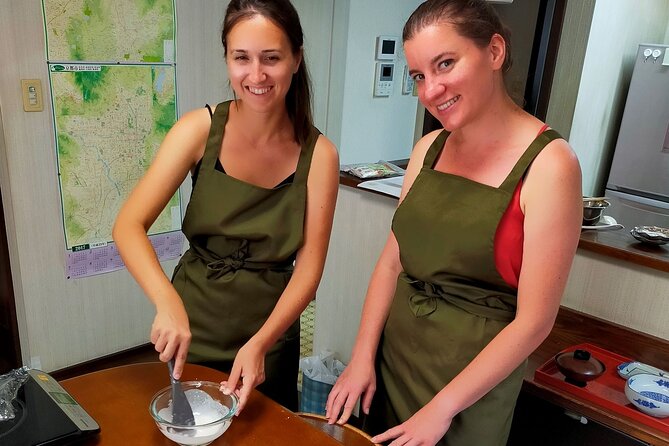
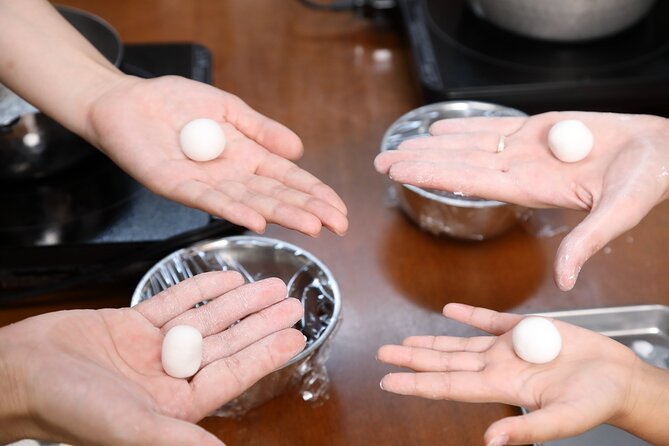
After the introduction, you prepare about three types of Japanese sweets, either independently or with a partner. Miho demonstrates each process first, then you follow along. This is the right approach for beginners because wagashi techniques are not always obvious from a written recipe.
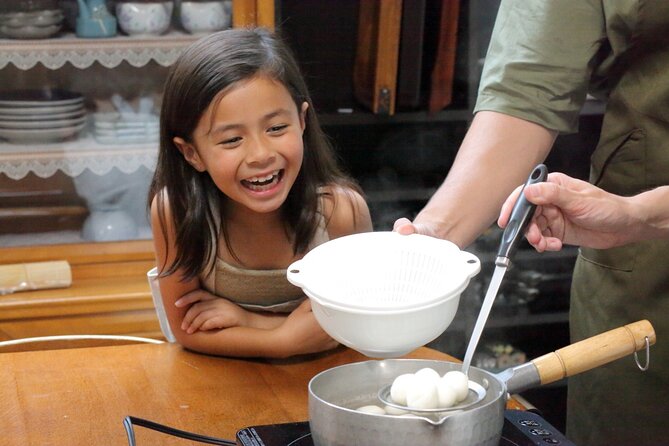
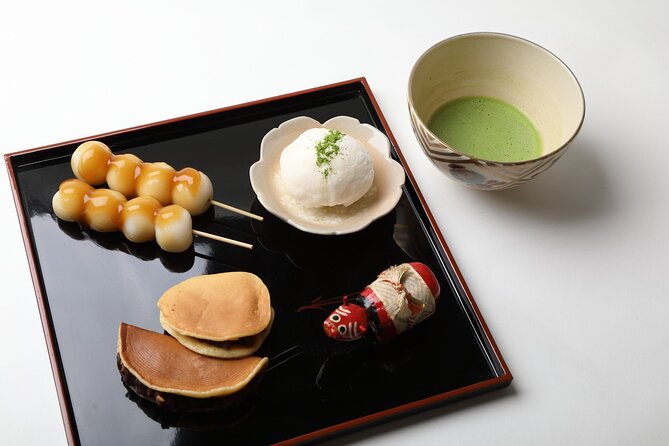
The exact balance of recipes may vary, but the class includes sweets such as mitarashi dango and a black sesame-based treat. Mitarashi dango is made with dumpling-like rice cakes and a sweet soy-based glaze. It offers a useful lesson in texture and sauce, and it is a good example of a Japanese sweet that balances sugar with a savory note.
The black sesame sweet has become a favorite for some participants. Its nutty flavor is different from the soft sweetness many people expect from Japanese desserts. If you enjoy sesame, this may be the most memorable bite of the session, and the recipe gives you a way to try making it again for friends and family.
You also learn that wagashi is not just about following measurements. Texture matters. The dough must be handled properly, the ingredients need to be combined at the right stage, and the finished sweet should look pleasing as well as taste good. The instructor’s demonstration helps you see these details in action.
Do not expect the speed or precision of a professional pastry kitchen. This is a practical lesson for visitors, not a certification course. You will likely spend more time handling ingredients and learning basic methods than producing perfectly uniform sweets. That is part of the value. You gain a better sense of the work behind sweets that can look almost too tidy to have been shaped by hand.
Why the small group makes a difference
The limit of six people is one of the strongest features of the class. In a large cooking workshop, you might see a demonstration from a distance, then struggle to get help when your mixture feels wrong. Here, the instructor can keep an eye on each person or pair.
That matters for families in particular. Different people can work at different speeds, and the class does not need to stop for a large crowd. Teenagers can take on the hands-on steps, while parents can join in without worrying about making every move perfectly.
The class also suits solo visitors. You are not expected to arrive with a partner, and a group of six or fewer gives you a natural setting for conversation. The activity has a social side, but it is not built around forced introductions or a noisy group atmosphere.
I would choose this format over a large workshop if your goal is to understand what you are doing. You pay more than you would for a simple sweets tasting, but you receive direct instruction, ingredients, a full cooking session, and recipes to take home.
A few more Kyoto half-days to weigh up
- Kyoto: Japanese Traditional Sweets Making and Tea Ceremony
★ 4.4 · 314 reviews - Kyoto: Wagashi (Japanese sweets) Cooking near Fushimiinari
★ 5.0 · 40 reviews - Kyoto: Traditional Tea Ceremony with Matcha & Sweets in Gion
★ 4.9 · 27 reviews - Japanese Traditional Sweets ”Nerikiri” making
★ 4.3 · 17 reviews
Matcha, sweets, and a Japanese garden view
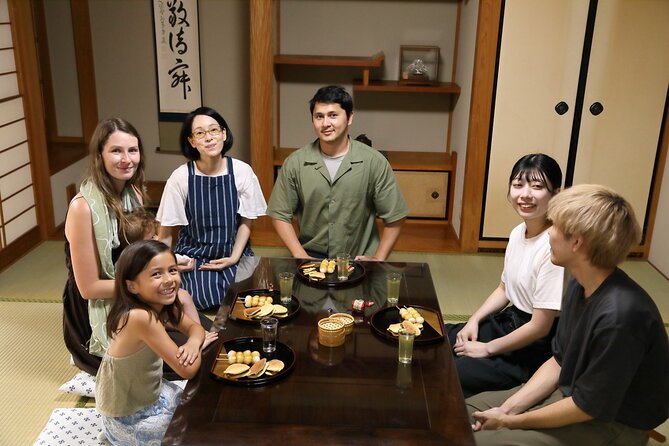
Once the cooking is complete, you sit down with the other participants and eat what you made. This final part takes place in the traditional room, with a garden view, and includes matcha along with coffee or tea.
The tea time is more than a snack break. It gives you a chance to see the sweets as part of a wider Japanese custom. Wagashi is often served with tea because the sweetness balances the bitter edge of matcha. After making the desserts yourself, you also notice their texture and flavor in a more direct way.
The garden view adds a calm finish, especially if you have spent the day walking through Kyoto. You are not being rushed out as soon as the last dish is done. The meal and conversation provide a natural pause before you return to the city.
Keep your expectations practical. This is not presented as a formal tea ceremony, and the main focus is cooking wagashi. Still, the traditional room and tea service make the ending feel more connected to Japanese daily culture than eating the sweets at a modern café would.
The teaching style and language
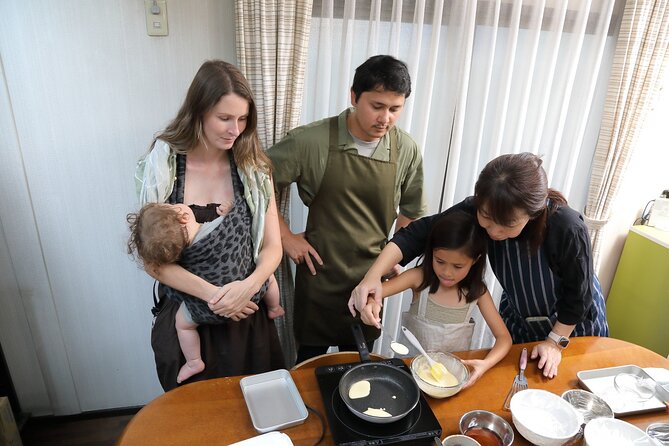
The instructors are licensed guide interpreters, and the lesson is conducted entirely in English. That is useful if you want more than a silent demonstration. You can ask about ingredients, methods, and the role of different sweets in Japanese food culture.
The teaching style is friendly and relaxed. The class is organized enough to keep the session moving, but it does not appear designed to make you feel tested. If your sweets come out uneven or your first attempt does not look like the demonstration, you can still enjoy the process.
English is the working language, so you should be ready to listen to instructions and follow a demonstration in English. The experience is described as suitable for English and non-English speakers, but the stated class language is English. If someone in your party has limited English, contact the provider before booking to confirm that the format will work for them.
Value at $79.26 per person
At $79.26 per person, this is not the cheapest way to eat Japanese sweets. If you only want to taste wagashi, a shop or café will cost less and take less time.
The price makes more sense if you count the full package: about two and a half hours, an English-speaking instructor, all ingredients and seasonings, tea or coffee, a traditional home setting, and recipes for three sweets. You are paying for an activity, not just food. The small group also gives the class more personal attention than a mass-market workshop.
I see the best value for visitors who want a cultural activity with a clear result. You make something, eat it, and bring the recipes home. That last part is useful because Japanese cooking classes can otherwise become pleasant memories with no practical follow-up.
The class is also a reasonable choice for repeat visitors to Kyoto. You may already have seen temples, shrines, and markets. A home-based food lesson offers a different view of the city without requiring a long trip outside central Kyoto.
The price is harder to justify if you dislike sweets, prefer a fast-paced activity, or want a broad Japanese cooking lesson that includes savory dishes. This class focuses on wagashi, so anyone hoping to prepare ramen, sushi, or a full meal should choose another type of class.
Dietary needs and family suitability
Vegetarians are welcome, and the class is vegan friendly. You need to tell the provider about dietary restrictions in advance, rather than assuming they can be handled at the last minute.
That advance notice is important because Japanese sweets can include ingredients you may not expect. A clear request before the class gives the instructor time to plan suitable ingredients and explain any changes.
Families are a strong match for this activity. The session offers enough structure to keep teenagers involved, yet it remains relaxed enough for parents who are not confident cooks. The shared preparation and final tasting also give families something to do together rather than simply watching a guide.
Solo participants can fit in well too. The small group means you are not lost in a crowd, and the cooking itself gives you an easy way to interact with others.
Timing your visit around Fushimi Inari
The address places you in the Fushimi area, near the Fushimi Inari sightseeing district. You can pair the class with other plans in the neighborhood, but leave enough time between activities to travel to the meeting point and find the house.
Because the class ends back at the starting point, you do not need to arrange a separate return transfer. You will need to handle your own transportation both before and after the lesson.
The class takes approximately two hours and thirty minutes, so check the start time carefully when planning your day. It works best as a planned part of your schedule rather than something you squeeze in between two tightly timed attractions.
The experience requires good weather, and poor conditions can lead to a date change or full refund. The policy allows free cancellation up to 24 hours before the start time. If you cancel later than that, or request changes within 24 hours, a refund is not provided.
Who should book this wagashi class
I would recommend this activity to you if you want a hands-on taste of Japanese culture and prefer a small, personal class. It is especially suited to:
- Families looking for a shared activity near Fushimi Inari
- Solo visitors who enjoy meeting people through food
- Anyone curious about sweets seen in Japanese anime or manga
- Vegetarians and vegans who notify the provider ahead of time
- Visitors who want recipes they can recreate at home
- People who appreciate a quiet traditional setting rather than a busy cooking studio
I would think twice if you are not interested in sweet foods, need a class in another language, or have a very tight sightseeing schedule. The class is focused and enjoyable, but it is not a general survey of Japanese cuisine.
FAQ
How long does the Kyoto wagashi cooking class last?
The class lasts approximately two hours and thirty minutes.
Where does the class meet?
The meeting point is 38-4 Fukakusa Watamoricho, Fushimi Ward, Kyoto, 612-0022, Japan. The activity ends back at the same meeting point.
How many people can join the class?
The group has a maximum of six participants.
Is the class taught in English?
Yes. The class is conducted entirely in English, and the instructors are licensed guide interpreters.
Are vegetarian and vegan participants welcome?
Yes. Vegetarians are welcome, and vegan-friendly arrangements are available. You should tell the provider about dietary restrictions in advance.
What is included in the price?
The price includes all cooking ingredients and seasonings, an English-speaking instructor, fees and taxes, and coffee or tea. Hotel pickup, hotel drop-off, and gratuity are not included.
Should you book it?
Book this class if you want to slow down near Fushimi Inari, work with your hands, and learn sweets you can make again at home. The strongest reasons are the six-person limit, Miho’s friendly instruction, the traditional home setting, and the chance to finish with your own wagashi and matcha.
Skip it if you want a savory cooking lesson or only a quick dessert tasting. At $79.26, the value comes from the instruction, recipes, small group, and setting. For the right visitor, it is a pleasant and practical way to add a little Japanese home life to a Kyoto itinerary.
More Workshops in Kyoto
- Kyoto: 45-Minute Tea Ceremony Lesson Experience
★ 4.3 · 2,378 reviews - Kyoto : Chopsticks Making Workshop in Gion with Engraving Option
★ 5.0 · 958 reviews - Kyoto: Samurai Sword Class by Experts in Traditional Arts
★ 4.9 · 657 reviews - Ninja 1-hour Hands-on Lesson by Japanese master in Kyoto -Entry
★ 5.0 · 489 reviews
Just added around Kyoto
- Kyoto: Zen Meditation at a Private Temple with a Monk★ 5.0 · 25 reviews
- Kyoto: Gion Geisha District & Sake-in-Hand Walking Tour★ 5.0 · 37 reviews
- Private Pewter Sake Cup Experience with a Kyoto Artisan★ 5.0 · 31 reviews
- Your Private Vacation Photography Session In Kyoto★ 5.0 · 110 reviews
- Private Guided Traditional Buddhist Cooking in Japan★ 5.0 · 16 reviews
- Traditional Japanese Music show & Experience Tour in Kyoto★ 5.0 · 57 reviews
- Kyoto:Family-Friendly Kimono & Yukata Experience at WARGO★ 5.0 · 147 reviews
- Private Cooking Class Udon in Kyoto Japan★ 5.0 · 23 reviews
Kyoto Tours, compared.


Fushimi Inari, Kinkakuji, Bamboo Grove 1 Day Bus Tour
Read our review →
Tea Ceremony in a Traditional Tea House in Kiyomizu
Read our review →
Kyoto Geisha Walking Tour: Gion District & Hidden Gems
Read our review →

Gion Magical Night Walking Tour with Geisha Trivia
Read our review →

Gion Geisha District Walking Tour – Stories of Geisha
Read our review →Browse the lists this tour appears in