
Reviewed · KYOTO TOURS
Kyoto: Gion Geisha District Walking Tour – Stories of Geisha
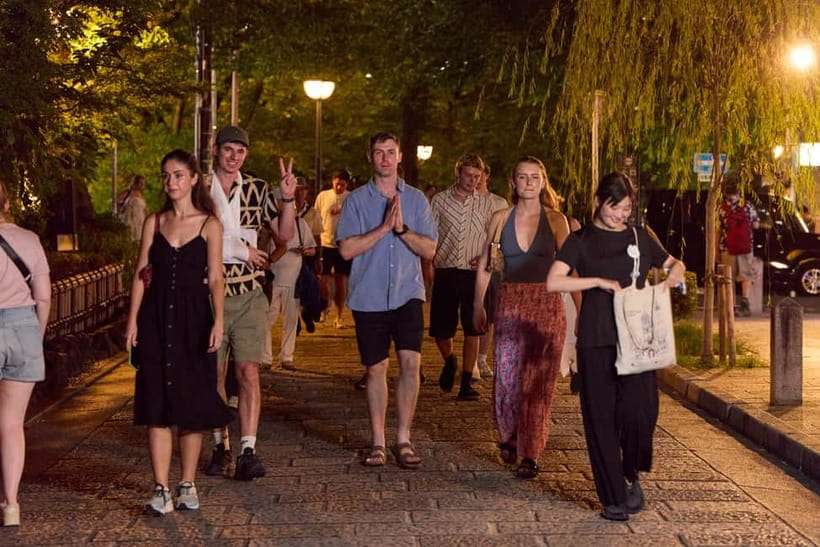
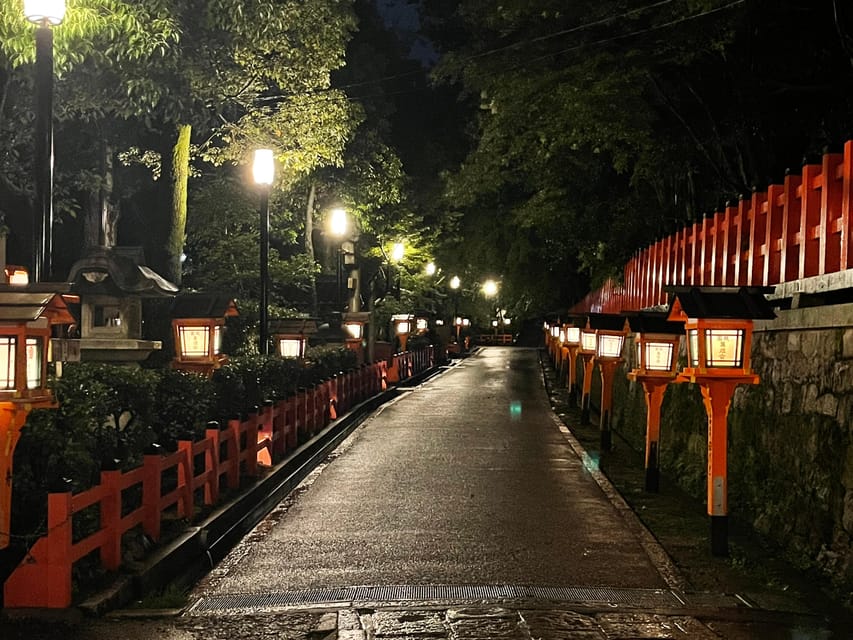
Kyoto’s geisha districts are best understood after sunset, when lanterns glow outside old wooden teahouses and maiko hurry between appointments. This two-hour walk takes you through Pontocho Alley and Gion, pairing atmospheric streets with clear explanations of geiko and maiko life. I like the way it connects living traditions to places you can actually see, and I like that guides such as Yuki, Nami, Deborah, and Manuel make plenty of room for questions. The main caution is simple: seeing a geiko or maiko is possible, not promised, and darkness can make some details harder to see.
At $20 per person, the tour is a strong-value introduction to Kyoto’s traditional entertainment districts. It is an easy way to get your bearings, but it is not a private encounter or a performance, and the route ends away from the starting point.
Key points to know before you go
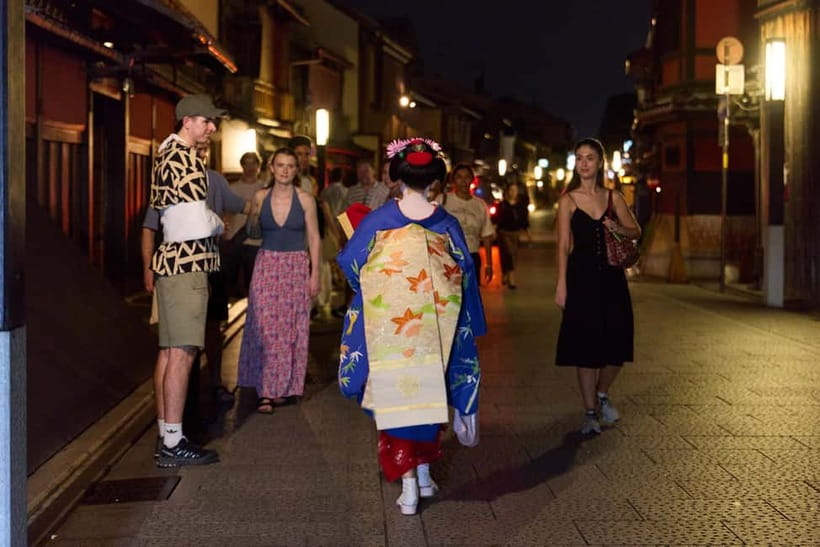
- Nighttime atmosphere: See Pontocho and Gion when lanterns and teahouses give the old streets their most appealing look.
- Two famous districts: Walk through Pontocho Alley, cross the river, and continue into Kyoto’s best-known geisha quarter.
- Living culture, not a staged show: Learn how geiko and maiko train and work, with a chance to see them heading to appointments.
- Guides with different strengths: Yuki is praised for local pride and warmth, while Nami, Deborah, Manuel, and others are noted for clear, engaging explanations.
- Good value at $20: Two hours with a local guide costs little compared with a formal cultural performance or private tour.
- A few practical limits: Children under 10 are not accepted, and the walk may feel less rewarding in poor weather or if you want guaranteed sightings.
Why a night walk works so well in Gion
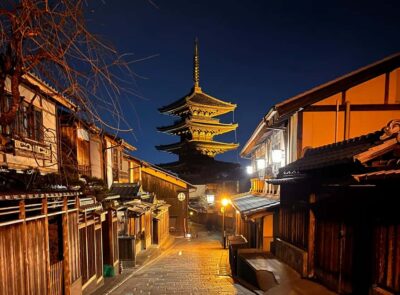
Gion can feel like a stage set during the day, with handsome wooden facades and narrow lanes drawing plenty of cameras. At night, the purpose of the district becomes easier to understand. Restaurants open their doors, lanterns mark the entrances to teahouses, and the streets fill with people working in the traditional entertainment business.
That does not mean you get to enter private clubs or watch a geiko prepare for an appointment. The value is in learning how to read the area. Your guide explains the difference between geiko, the term generally used for geisha in Kyoto, and maiko, apprentices who are still in training. You also hear about their clothing, makeup, hairstyles, etiquette, study, and demanding path toward professional work.
I especially like this approach because it treats geisha culture as a profession with discipline and structure, rather than as a costume spectacle. The guides also place it within ordinary Kyoto life, explaining local customs and the way the teahouse districts function.
The tour is conducted in English or Spanish. The exact guide varies, but the names appearing most often in the feedback include Yuki, Nami, Deborah, Manuel, Yukari, Kenji, Michael, Adrian, Shin, Melanie, Akari, and Manny. That matters because the guide supplies much of the experience. Several people specifically praised Yuki’s respect for Kyoto, Nami’s careful pacing, Deborah’s use of photographs, and Manuel’s ability to make complex material entertaining.
More geisha-district evenings:
- Kyoto Geisha Walking Tour: Gion District & Hidden Gems
★ 4.7 · 3,273 reviews - Kyoto: Gion Magical Night Walking Tour with Geisha Trivia
★ 4.9 · 2,393 reviews - Best of Kyoto: Gion, Geisha, Pagodas & Cobblestones
★ 4.9 · 2,058 reviews
Meeting at Ben’s Cookies Kyoto Shijo
The walk begins in front of Ben’s Cookies Kyoto Shijo, where your guide holds a sign board. This is a central meeting place, but you should allow time to locate the shop and arrive before the scheduled start. The tour does not begin in Gion itself, so you first walk toward the traditional districts with your guide.
That opening section is useful. Instead of dropping you into a maze of lanes with no context, the guide can begin explaining what you are about to see. A short introductory talk is listed at the start of the route, and the overall pace is described as comfortable rather than rushed.
Bring water and wear shoes suited to walking on ordinary city streets. The route takes about two hours, with several stops for explanations and photographs. It is not described as strenuous, but you should still expect to be on your feet for the full outing.
Pontocho Alley and its discreet doors
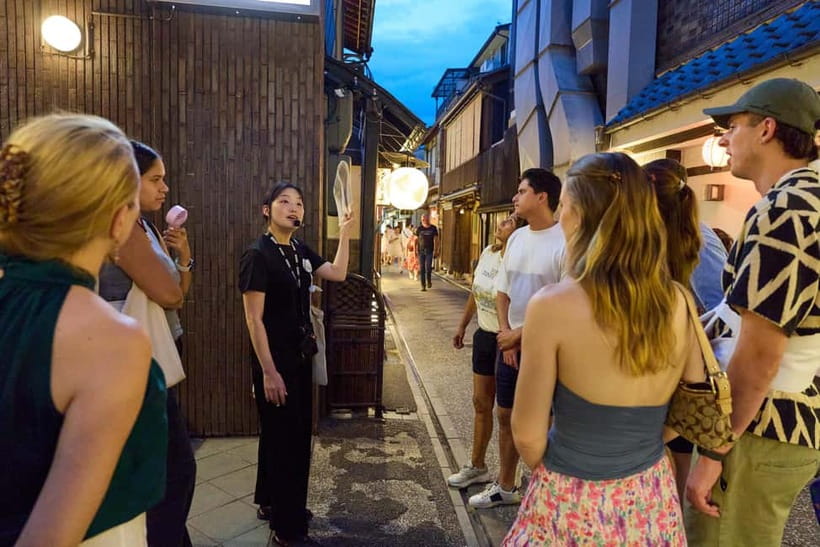
Pontocho Alley is one of Kyoto’s best-known traditional streets. It runs as a narrow passage lined with Japanese restaurants, teahouses, and elite clubs. From the outside, many doors reveal very little, which is part of the point. This is a district built around privacy, introductions, and long-standing relationships rather than casual drop-in sightseeing.
Your guide spends about 15 minutes here, pointing out the street’s design and explaining how it relates to Kyoto’s entertainment culture. You will not be browsing a row of tourist shops or stopping for a tasting. This is a walking and storytelling tour, so the interest comes from the setting and the explanation.
Pontocho is also a useful contrast with Gion. The two districts share links to geiko and maiko culture, yet each has its own feel. Walking through both helps you see that Kyoto’s traditional entertainment quarter is not one single attraction. It is a network of streets, restaurants, teahouses, performers, apprentices, and regular customers.
Keep your camera ready, but be restrained. The tour’s purpose is to help you observe respectfully. A geiko or maiko may pass through on the way to an appointment, but stopping someone, touching clothing, or blocking a lane would be inappropriate. The guide can help you understand what you are seeing without turning a working person into a photo prop.
Izumo-no-Okuni and the origins of kabuki
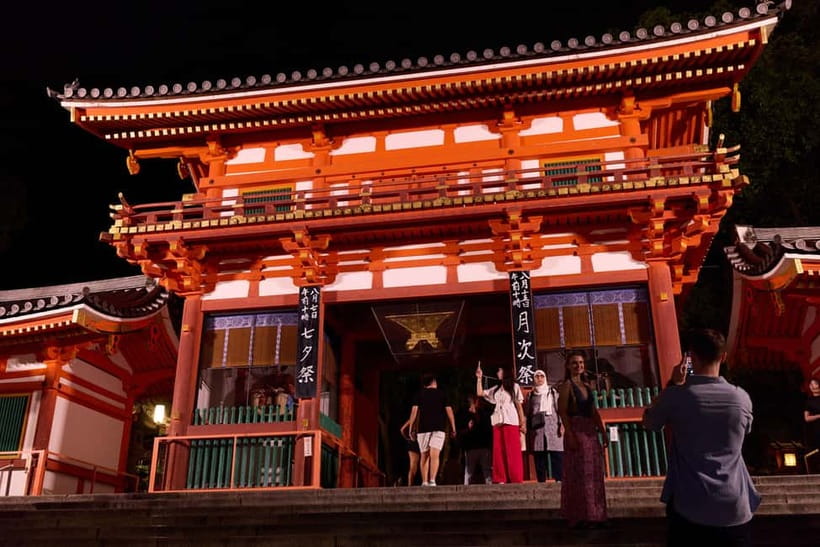
After Pontocho, the walk crosses the river and pauses at the statue of Izumo-no-Okuni. The stop lasts about 15 minutes and adds a welcome layer to the evening.
Izumo-no-Okuni is associated with the invention of kabuki, one of Japan’s major theatrical traditions. The statue gives your guide a clear place to explain how performance, dance, music, and entertainment developed in Kyoto. It also shows that the area’s cultural story is broader than geisha alone.
This is one of the more useful stops for anyone who arrives knowing only the popular image of a geisha. Kyoto’s entertainment districts grew from several forms of performance and hospitality. Learning about kabuki helps you place geiko and maiko within a larger Japanese arts tradition.
The stop is brief, so do not expect a full lecture on kabuki. Instead, think of it as a bridge between the riverfront and Gion. The guide uses a visible landmark to connect the streets you are walking through with the performing arts that shaped them.
More walking tours in Kyoto:
- Night Walk in Gion: Kyoto’s Geisha District
★ 4.5 · 2,003 reviews - Kyoto Gion Geisha District Walking Tour – The Stories of Geisha
★ 5.0 · 1,441 reviews - Nishiki Market Brunch Walking Tour (7 Tastings + Brunch)
★ 5.0 · 1,355 reviews - Kyoto Arashiyama Walking Tour: Bamboo, Monkeys, Gardens & Secrets
★ 5.0 · 1,216 reviews
Entering Gion through old wooden streets
The main portion of the tour takes place in Gion, for roughly 30 minutes before the stops at Yasaka Shrine, Gion Corner, and Hanamikoji Street. Gion is Kyoto’s most famous geisha district, and its narrow lanes are the part of the walk most people anticipate.
The old wooden buildings are not simply attractive backdrops. Their design reflects the discreet character of the area. Small entrances, screened windows, dark timber, and subdued signs create a sharp contrast with modern commercial streets elsewhere in Kyoto.
Your guide points out important locations and explains how geiko and maiko fit into the district’s working rhythm. You learn about training, professional expectations, and the traditions that continue today. The subject can easily be treated as a fantasy, but the strongest guides keep bringing it back to work, practice, ceremony, and cultural responsibility.
The walk also gives you a chance to ask questions. That is important because visitors often arrive with mixed ideas shaped by films, books, and general references to geisha. A good guide can clarify what is specific to Kyoto, what applies to geiko and maiko, and what belongs more to popular imagination.
Some guides use photographs to explain hairstyles, clothing, and stages of training. Deborah received particular praise for making her explanations vivid with visual aids. Nami was noted for checking that everyone was keeping up and had time to ask questions. Those small habits help in a street-based tour, where it is easy for a group to spread out or miss a point.
Yasaka Shrine, a welcome pause in the route
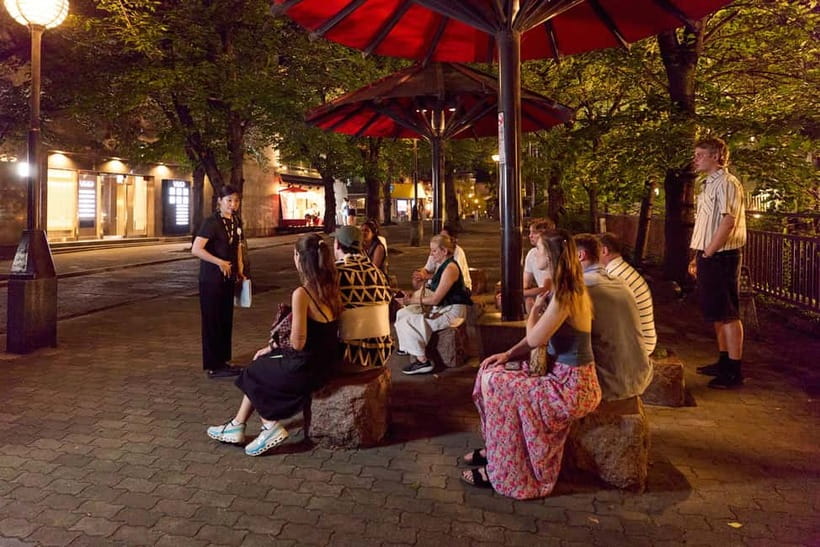
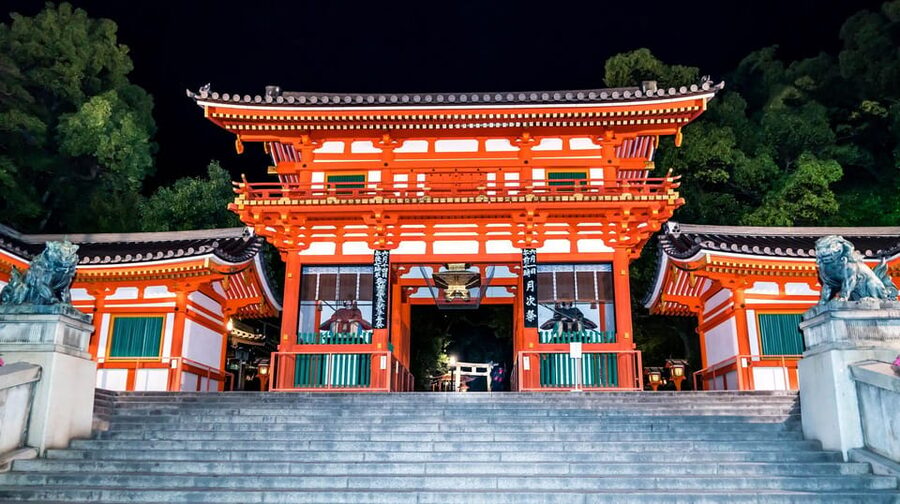
Yasaka Shrine receives about 25 minutes, making it the longest individual stop. This gives you time to see one of Gion’s major landmarks while connecting the shrine to the surrounding district.
The shrine is not presented as a separate religious tour. Rather, it helps explain the setting in which traditional Kyoto culture developed. Your guide can discuss local customs and the relationship between famous streets, neighborhood identity, and long-standing ceremonies.
A shrine stop also breaks up the narrow-lane walking. You get a more open place to pause, listen, and take photographs. If the weather is poor, this kind of stop can be especially helpful, since the guide may adjust where the group stands. One person specifically appreciated a guide finding sheltered spots during rain.
The evening timing has both advantages and limits here. Lantern-lit streets and the quieter mood can make Gion feel atmospheric, but you may see less architectural detail than you would in daylight. One practical suggestion is to visit Gion during the day on your own if you want to study buildings closely, then use this tour for the evening stories and cultural setting.
Gion Corner and the idea of performance
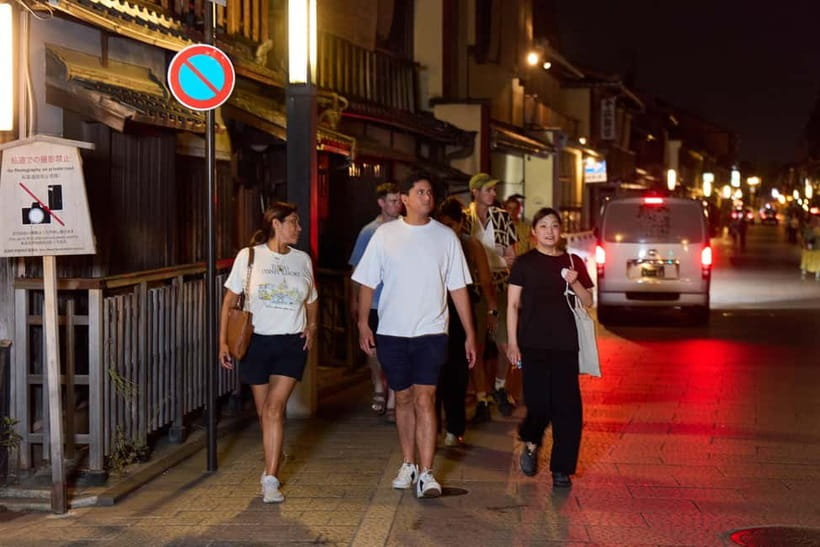
The route includes about 10 minutes at Gion Corner. The supplied details do not promise admission to a show, so you should treat this as a guided visit to the location rather than a performance ticket.
That distinction matters. If you are hoping to watch a complete geiko or maiko program, this $20 walk is not the right substitute for a formal theater experience. Here, the guide helps you understand the role of performance within Kyoto’s traditional arts and points out a place associated with that public presentation.
For many people, this short stop works best as a reminder that geiko and maiko are trained artists. Their work includes dance, music, conversation, ceremony, and hospitality. It is not simply about clothing or makeup, and the guide’s explanation helps keep the evening grounded in that reality.
Hanamikoji Street and the chance to see maiko
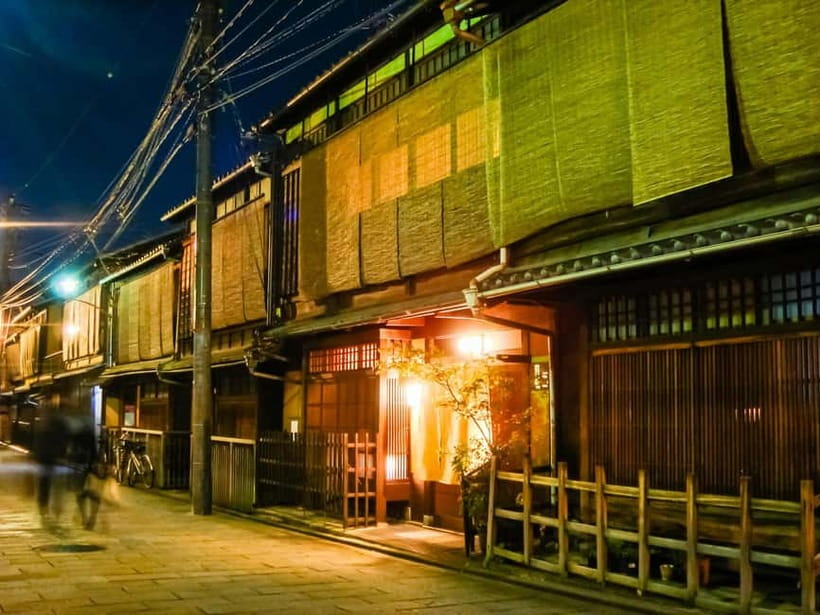
Hanamikoji Street is the final listed stop and receives about 15 minutes. It is one of the most recognizable streets in Gion, with traditional facades and narrow passages leading toward private establishments.
This is also where you may see geiko or maiko traveling to appointments. Several people were lucky enough to spot a maiko, and one person saw geiko rather than maiko. Those moments can be exciting, but they depend on timing and chance. The tour cannot guarantee that anyone will appear during your two-hour walk.
Your guide’s role here is particularly valuable. A local guide can help you identify what you are seeing and remind the group how to behave. You should keep moving, avoid crowding the person, and follow any local instructions. The respectful experience is not just a matter of good manners. It protects the district’s working culture and helps prevent the kind of intrusive behavior that has troubled Gion in recent years.
The route ends in this area rather than returning to Ben’s Cookies Kyoto Shijo. One person found the return journey easy enough but had not realized the tour finished elsewhere. Plan for that final location, especially if you have dinner reservations or a train to catch.
What the $20 price really buys you
At $20, this is an inexpensive guided introduction to two of Kyoto’s most interesting districts. You are paying for a local guide, two hours of organized walking, and the ability to ask questions as the setting unfolds around you.
You are not paying for food, drinks, entry to a private teahouse, a guaranteed geisha meeting, or a formal performance. The price is attractive precisely because the tour stays focused. If you want context before exploring Gion independently, it offers a lot for a small outlay.
I would be cautious about booking it solely for photographs of maiko. Sightings are uncertain, and poor weather or seasonal timing can reduce what you see. Book it for the explanations first, then regard an encounter on the street as a bonus.
The experience appears to work especially well in small groups, though the size can vary. One group had six people, while another described a group of about 13. A smaller group makes it easier to hear and ask questions, but even a larger group can work if the guide manages the pace well.
Which guide style may suit you
Because the guide changes, the tone may change too. The strongest pattern is clear: guides are warm, flexible, and willing to adjust their explanations to the group.
Yuki is repeatedly described as friendly, enthusiastic, and proud of Kyoto. His local perspective can be a good fit if you want a sense of place alongside the geisha subject. Nami is a strong choice for travelers who appreciate a careful pace and frequent checks that everyone is following.
Deborah is praised for her enthusiasm, photographs, humor, and ability to tell stories. Manuel is described as engaging and clear, while Yukari receives high marks for making the walk casual and fun. Kenji is noted for a well-paced route and useful background information.
You may not be able to choose your guide when booking, so do not assume a particular person will lead your tour. Still, the range of guide styles suggests the experience does not depend on one individual alone.
Who should book this walk
I would recommend this tour to first-time Kyoto visitors who want a framework for understanding Gion before exploring it independently. It is also a good fit for anyone curious about Japanese arts, local customs, and the difference between geiko and maiko.
The two-hour length works well early in a Kyoto stay. You gain background that can make later visits to Gion, Pontocho, shrines, and traditional performances more meaningful. Several guides also offer practical suggestions about what else to do with limited time in the city.
The walk is not suitable for children under 10. It may also disappoint you if you need guaranteed access to a geisha performance, an indoor activity, or a private meeting.
Bring water, expect to walk, and prepare for changing weather. Alcohol and drugs are not allowed. Free cancellation is available up to 24 hours before the start, and you can reserve now and pay later, which helps if your Kyoto schedule is still shifting.
Should you book the Gion Geisha District Walking Tour?
Book it if you want a respectful, affordable introduction to Kyoto’s geiko and maiko traditions, with real streets and working districts as your classroom. The guide’s stories are the heart of the experience, and the chance to see a maiko or geiko adds excitement without being the sole reason to go.
Skip it if you want a guaranteed show, food tasting, or entry into private teahouses. Also think twice if you prefer daytime sightseeing, since some details disappear after dark.
For most visitors, I would schedule it near the start of a Kyoto stay. At $20, two hours is a modest investment, and the combination of Pontocho, the Izumo-no-Okuni statue, Yasaka Shrine, Gion Corner, and Hanamikoji gives you a useful introduction to one of Japan’s most distinctive cultural districts.
FAQ
Where does the tour meet?
Meet your guide in front of the Ben’s Cookies Kyoto Shijo shop. The guide will be holding a sign board.
How long does the walking tour last?
The tour lasts two hours.
What languages are available?
The tour is offered with a live guide in English or Spanish.
How much does the tour cost?
The listed price is $20 per person.
Will I definitely see a geiko or maiko?
No. You may encounter geiko or maiko traveling to appointments, but sightings are not guaranteed.
Does the tour include a geisha performance?
No performance is included in the stated inclusions. The tour includes a walking tour and a local guide.
What places does the route cover?
The route includes Pontocho Alley, the statue of Izumo-no-Okuni, Gion, Yasaka Shrine, Gion Corner, and Hanamikoji Street.
Can children join the tour?
Children under 10 are not accepted.
What should I bring, and can I cancel?
Bring water. Alcohol and drugs are not allowed. You can cancel up to 24 hours in advance for a full refund, and you can reserve now and pay later.
Just added around Kyoto
- Kyoto: Zen Meditation at a Private Temple with a Monk★ 5.0 · 25 reviews
- Kyoto: Gion Geisha District & Sake-in-Hand Walking Tour★ 5.0 · 37 reviews
- Private Pewter Sake Cup Experience with a Kyoto Artisan★ 5.0 · 31 reviews
- Your Private Vacation Photography Session In Kyoto★ 5.0 · 110 reviews
- Private Guided Traditional Buddhist Cooking in Japan★ 5.0 · 16 reviews
- Kyoto Wagashi(Japanese sweets) Cooking Class near Fushimiinari★ 5.0 · 60 reviews
- Traditional Japanese Music show & Experience Tour in Kyoto★ 5.0 · 57 reviews
- Kyoto:Family-Friendly Kimono & Yukata Experience at WARGO★ 5.0 · 147 reviews
Kyoto Tours, compared.
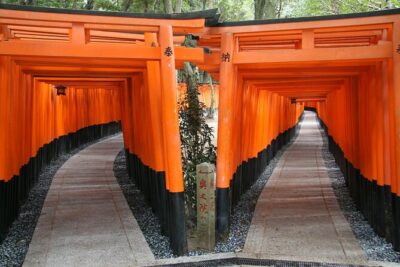
Fushimi Inari, Kinkakuji, Bamboo Grove 1 Day Bus Tour
Read our review →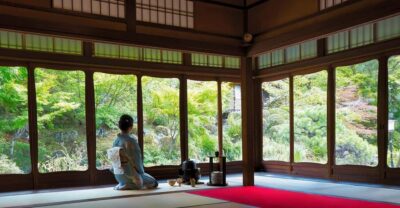
Tea Ceremony in a Traditional Tea House in Kiyomizu
Read our review →
Kyoto Geisha Walking Tour: Gion District & Hidden Gems
Read our review →
Gion Magical Night Walking Tour with Geisha Trivia
Read our review →

Best of Kyoto: Gion, Geisha, Pagodas & Cobblestones
Read our review →Browse the lists this tour appears in