
Reviewed · KYOTO TOURS
Kyoto Gion Geisha District Walking Tour – The Stories of Geisha
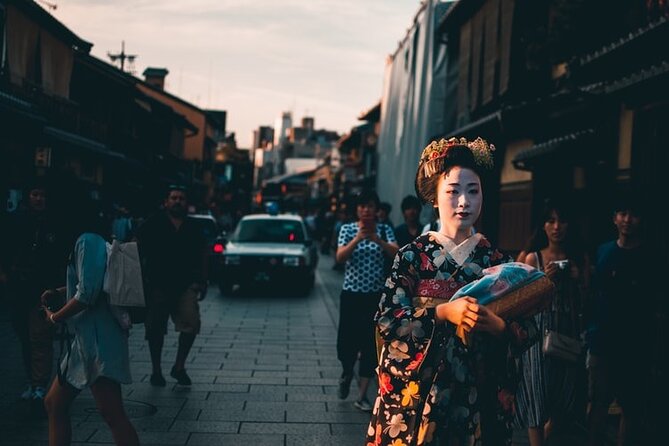
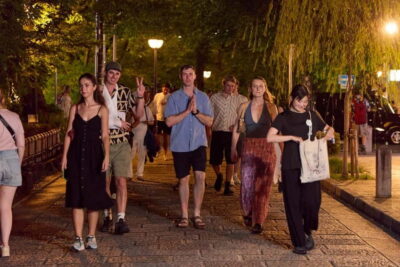
Gion changes character after sunset. Lanterns glow along old streets, tea houses close their doors to ordinary passersby, and geiko and maiko may be heading to evening appointments. This two-hour walking tour gives you the cultural background needed to understand what you are seeing, rather than leaving you to wander past attractive wooden buildings without context.
I like the small maximum group of 15, which makes it easier to hear the guide and ask questions. I also like the timing: evening light and fewer daytime crowds suit Gion far better than a rushed midday visit. The main consideration is the weather. You will be outdoors for most of the tour, and winter evenings can feel very cold, so bring a proper coat and comfortable shoes.
Key points to know before you book
- Gion after dark: See the district under lanterns and evening lights, when its traditional streets feel most atmospheric.
- Clear cultural background: Learn the difference between geiko and maiko, and how Kyoto’s flower towns developed.
- Several strong guides: Guides named Ben, Shin, Deborah, Melanie, Nami, Kenji, Manny, Tommy, and others have led praised departures.
- Compact two-hour route: The walk includes the Izumo-no-Okuni statue, Minamiza, Tatsumi Bridge, Hanamikoji Street, Gion Corner, and Yasaka Shrine.
- Good value at $25: The fee covers the guide and all listed admission costs, with no extra ticket charge for the stops.
- A walking tour, not a guaranteed geisha sighting: You may see geiko or maiko traveling to appointments, but the focus is the stories and setting.
Why Gion makes more sense after sunset
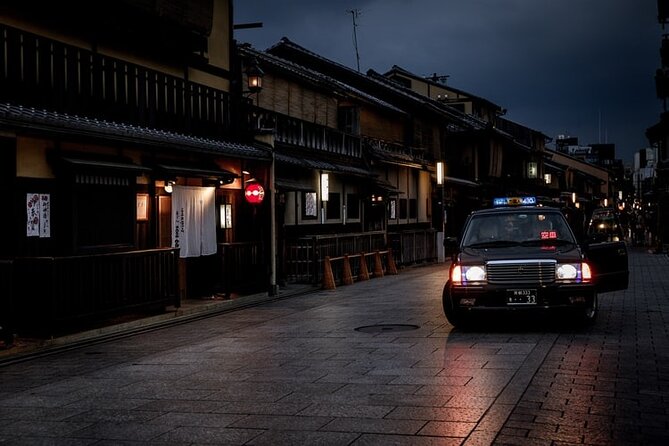
Gion is easy to admire and surprisingly hard to understand. In daylight, the district can be crowded with people taking pictures of machiya houses, narrow lanes, and decorated entrances. After dark, the pace slows, and the tour can focus on the meaning behind those details.
The important point is that this is not simply a hunt for a geisha sighting. Geiko and maiko are working artists, and their appearances in the streets are incidental. You might see one making her way to an appointment, but there is no promise of that. The more dependable experience is learning how the district functions and why its streets look the way they do.
Your guide supplies the missing pieces. Names such as Ben, Shin, Deborah, Melanie, Nami, Kenji, and Manny appear among the guides associated with this experience. The strongest praise centers on clear explanations, personal stories, and the ability to answer questions about both geisha culture and Japan more broadly.
I especially like that the subject is treated as a living tradition. You learn about geiko and maiko, the history of entertainment in Japan, and the codes associated with Kyoto’s flower towns. That makes the walk useful even if you do not spot anyone in traditional dress.
More geisha-district evenings:
- Kyoto Geisha Walking Tour: Gion District & Hidden Gems
★ 4.7 · 3,273 reviews - Kyoto: Gion Magical Night Walking Tour with Geisha Trivia
★ 4.9 · 2,393 reviews - Kyoto: Gion Geisha District Walking Tour – Stories of Geisha
★ 4.7 · 2,187 reviews
Starting near Shijo and the Izumo-no-Okuni statue
The meeting point is Ben’s Cookies Kyoto Shijo, at 89 Shinchō in Shimogyo Ward. From there, the route moves toward the Gion area and begins with the Statue of Izumo-no-Okuni.
Okuni is remembered as the founder of Kabuki theater, and the bronze statue gives the guide a natural way to explain how performance culture shaped Kyoto. This is a short stop, about 10 minutes, but it adds useful context. Geisha culture did not develop in isolation. It belongs to a wider story of theater, music, dance, costume, and paid entertainment.
The statue is also a practical first stop because it helps place the evening in a larger cultural setting. You are not only looking at old streets. You are tracing the development of Japanese performance from a public theater tradition toward the private entertainment quarters of Gion.
The tour lists admission as free, and all fees and taxes are included in the $25 price. Bottled water is not included, so carry your own if you want a drink during the walk.
Minamiza and Kyoto’s theater tradition
The route also includes Minamiza, Kyoto’s historic Kabuki theater. Kabuki is known for dramatic storytelling, elaborate costumes, and stylized performance. Even from outside, Minamiza helps explain why this part of Kyoto has long been linked with entertainment.
This stop is valuable for visitors who know geisha mainly through photographs. It shows that the wider culture includes formal stage arts as well as private music and dance performances. A guide can connect the theater to the traditions you will hear about later in the tea-house districts.
The available timing gives about 10 minutes to the nearby statue and similar short stops. That tells you what kind of tour this is. You get a well-paced introduction rather than an extended theater visit or an indoor performance. If you want to see Kabuki on stage, you would need a separate ticket and experience. This walk provides background, not a show.
Tatsumi Bridge and the Gion Shinbashi lanes
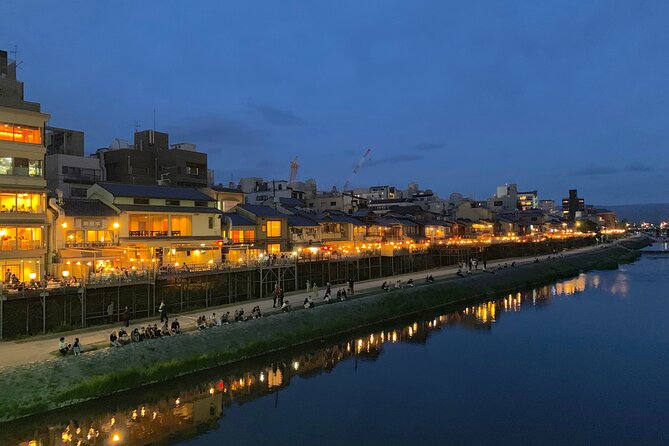
Tatsumi Bridge is one of the prettiest points on the route. It sits in the Gion Shinbashi area, known for traditional tea houses, narrow streets, and preserved architecture. The setting is especially attractive at night, when the old buildings and soft lighting create the mood people usually hope to find in Gion.
Here, your guide can point out buildings that might look ordinary at first glance but carry meaning within the geisha districts. One of the most useful parts of the tour is learning to notice these quiet clues. Without explanation, you may see only a row of attractive facades. With context, you begin to understand how the neighborhood is organized and why certain streets matter.
The bridge stop lasts about 10 minutes. That is enough for photographs and an explanation, but not so long that the group blocks a narrow lane. Bring shoes you can walk in comfortably. The route is not described as strenuous, and most people can take part, but it does involve a fair amount of walking over two hours.
More walking tours in Kyoto:
- Night Walk in Gion: Kyoto’s Geisha District
★ 4.5 · 2,003 reviews - Nishiki Market Brunch Walking Tour (7 Tastings + Brunch)
★ 5.0 · 1,355 reviews - Kyoto Arashiyama Walking Tour: Bamboo, Monkeys, Gardens & Secrets
★ 5.0 · 1,216 reviews - Kyoto Gion: 2-Hour Geisha Culture & History Walking Tour
★ 5.0 · 1,186 reviews
Hanamikoji Street, the most recognizable stretch
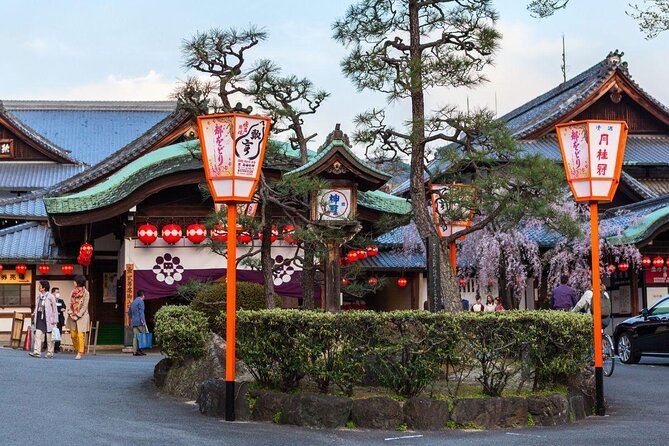
Hanamikoji Street is likely to be the visual centerpiece of the walk. Its traditional machiya houses, restaurants, and tea houses give you the classic Gion scene. In the evening, the street has a quieter character than it does at peak daytime hours, though it remains a working neighborhood rather than a museum set.
This is where the guide’s explanations matter most. The buildings may appear closed or private, and many of the important places are intentionally discreet. The tour helps you understand the difference between a public restaurant, a theater, and a private tea house where geiko and maiko entertain clients.
The tour’s descriptions refer to geisha making their way to appointments after dark. Treat this as a possibility, not the main product. You are paying for the guided walk and cultural explanation, not guaranteed access to performers. That distinction makes the tour a more respectful and realistic choice.
Hanamikoji is also the place where crowd conditions can affect the experience. The evening departure helps avoid the largest daytime groups, but Gion is popular for good reason. Stay close to the guide so you do not miss explanations in narrow or busy sections.
Gion Corner and the arts behind the image
Gion Corner is a cultural center and performance venue offering a condensed look at traditional Japanese arts. The route includes it as a point of cultural reference, though the walking tour itself is not described as including a performance ticket.
That distinction is worth noting. If you have already booked a geisha performance or cultural presentation, this tour can provide the background that makes it easier to follow. One person who had arranged a separate geisha cultural experience still found the walking tour useful for understanding the wider setting.
I like this part of the route because it broadens the subject beyond the familiar image of a woman in kimono. The evening arts of Kyoto involve music, dance, theater, and strict professional training. The guide can connect those traditions to the streets around you without turning the walk into a museum lecture.
The route description gives several stops around 10 minutes each, so expect an overview rather than a long visit inside every attraction. That is a strength if you want a short evening activity. It is a limitation if you prefer detailed access to buildings or formal demonstrations.
Ending at Yasaka Shrine
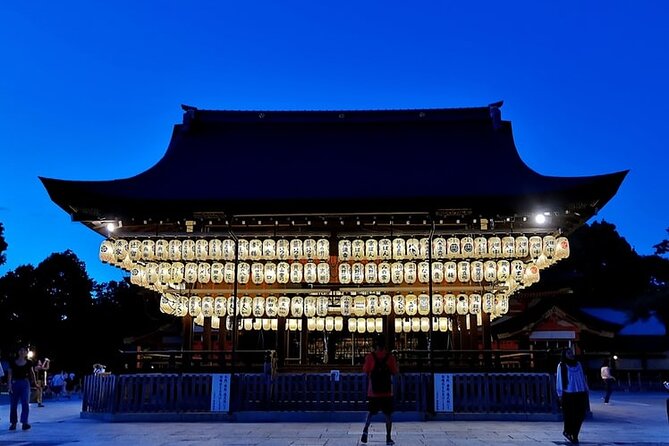
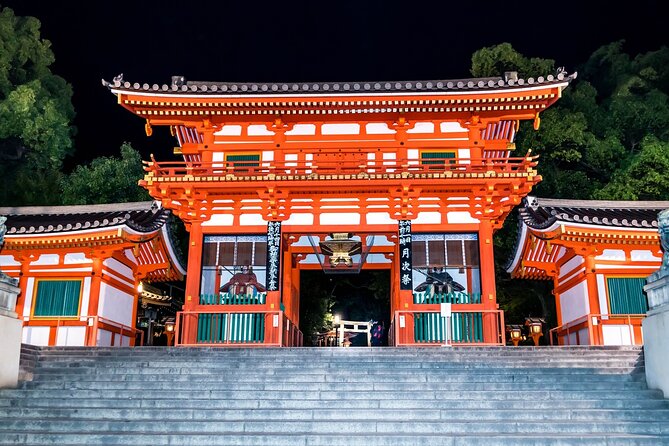
The walk finishes at Yasaka Shrine, also called Yasaka Jinja or Gion Shrine. This is one of Kyoto’s best-known Shinto shrines and a fitting end point because of its close connection with the Gion district.
Yasaka Shrine gives the evening a different tone. The tour begins with theater and entertainment history, then moves through the flower-town streets, and finishes at a major religious site. That contrast helps you see that Gion is not only about geisha culture. It is part of a larger Kyoto neighborhood where ritual, commerce, performance, and daily life overlap.
The end point is at 625 Gionmachi Kitagawa in Higashiyama Ward. Since the tour does not return to the starting point, note the route before booking dinner or evening transportation. Yasaka Shrine is near public transportation, according to the activity information, which makes the finish convenient.
What the $25 price really buys you
At $25 per person, this is a modestly priced introduction to one of Kyoto’s most complicated cultural subjects. The fee covers all listed fees and taxes, and the main value is the guide’s interpretation of places you could technically visit on your own.
You can walk through Gion for free. What you cannot easily get for free is a coherent explanation of the district’s customs, working traditions, and history. Several guides, including Ben, Shin, Kenji, Nami, Melanie, and Deborah, are described as friendly, clear, and able to connect small details with the larger story.
The value is strongest if you are visiting Gion for the first time. You will leave with a better sense of what you are looking at, and the information can improve later visits to the district. Families with teenagers and young adults can take part, and the short length makes it easier to fit around a full Kyoto day.
The value is weaker if you expect an exclusive backstage visit, a geisha performance, or guaranteed encounters with geiko and maiko. None of those are promised. This is a cultural orientation and evening walk.
Group size, weather, and practical comfort
The maximum group size is 15. That is not a private tour, but it is small enough for a guide to answer questions and keep the group together. The experience is offered with a mobile ticket, and confirmation is received at booking.
The activity is near public transportation, and most people can participate. Service animals are allowed. The supplied information does not describe a fully step-free route, exact distances, or seating during the walk, so anyone with specific mobility needs should confirm those details before booking.
Weather matters. The experience requires good weather, and a departure can be canceled if conditions are poor. In that case, you are offered another date or a full refund. For your own comfort, check the forecast and dress for the season. Winter can be particularly cold, as the entire experience takes place outdoors.
You may cancel for a full refund up to 24 hours before the start time. Cancellations or changes inside that period are not refunded or accepted. That policy is standard enough, but it matters if your Kyoto schedule is still shifting.
Who will get the most from this walk
I would choose this tour early in a Kyoto stay if you want a quick cultural foundation. The route introduces Gion, Pontocho, Kyoto by night, theater traditions, and geiko and maiko culture in a single evening.
It suits you particularly well if:
- You are visiting Gion for the first time.
- You want history and explanation rather than only photographs.
- You prefer an evening activity under lantern light.
- You need a tour shorter than a full half-day.
- You are traveling with older children, teenagers, or young adults.
- You have already booked a cultural performance and want more local context.
I would look elsewhere if you want a private guide, extensive indoor access, or a guaranteed geisha encounter. I would also avoid booking it on a night when you do not want to walk outside for two hours.
Should you book the Gion Geisha District Walking Tour?
Yes, if you see Gion as more than a photo stop. For $25, the tour offers a useful introduction to the district’s streets, theater connections, and working geiko and maiko traditions. The small group and evening timing are the two strongest features.
Book it near the start of your Kyoto visit, wear warm layers when needed, and arrive ready to walk. Keep your expectations realistic: the reward is the guide’s explanation and the atmosphere of Gion after dark, not a guaranteed sighting or performance. If that sounds like the experience you want, this is an easy-value choice.
FAQ
How long is the Kyoto Gion Geisha District Walking Tour?
The tour lasts approximately two hours.
What is the price per person?
The listed price is $25 per person.
What is the maximum group size?
The group can include a maximum of 15 participants.
Where does the tour start?
The meeting point is Ben’s Cookies Kyoto Shijo, 89 Shinchō, Shimogyo Ward, Kyoto, 600-8001, Japan.
Where does the tour end?
The tour ends at Yasaka Shrine, 625 Gionmachi Kitagawa, Higashiyama Ward, Kyoto, 605-0073, Japan.
Which places are included on the walking route?
The route includes the Statue of Izumo-no-Okuni, Minamiza, Tatsumi Bridge, Hanamikoji Street, Gion Corner, and Yasaka Shrine.
Does the price include admission fees?
Yes. All listed fees and taxes are included. Bottled water is not included.
Could I see a geiko or maiko during the walk?
You may see geiko or maiko traveling to evening appointments, but the experience does not guarantee a sighting.
Is the tour available with a mobile ticket?
Yes. A mobile ticket is available, and confirmation is received when you book.
What is the cancellation policy?
You can cancel at least 24 hours before the start time for a full refund. Cancellations and changes made less than 24 hours before the start time are not accepted or refunded. If poor weather causes the provider to cancel, you are offered another date or a full refund.
Just added around Kyoto
- Kyoto: Zen Meditation at a Private Temple with a Monk★ 5.0 · 25 reviews
- Kyoto: Gion Geisha District & Sake-in-Hand Walking Tour★ 5.0 · 37 reviews
- Private Pewter Sake Cup Experience with a Kyoto Artisan★ 5.0 · 31 reviews
- Your Private Vacation Photography Session In Kyoto★ 5.0 · 110 reviews
- Private Guided Traditional Buddhist Cooking in Japan★ 5.0 · 16 reviews
- Kyoto Wagashi(Japanese sweets) Cooking Class near Fushimiinari★ 5.0 · 60 reviews
- Traditional Japanese Music show & Experience Tour in Kyoto★ 5.0 · 57 reviews
- Kyoto:Family-Friendly Kimono & Yukata Experience at WARGO★ 5.0 · 147 reviews
Kyoto Tours, compared.
Fushimi Inari, Kinkakuji, Bamboo Grove 1 Day Bus Tour
Read our review →
Tea Ceremony in a Traditional Tea House in Kiyomizu
Read our review →
Kyoto Geisha Walking Tour: Gion District & Hidden Gems
Read our review →
Gion Magical Night Walking Tour with Geisha Trivia
Read our review →
Gion Geisha District Walking Tour – Stories of Geisha
Read our review →Browse the lists this tour appears in