
Reviewed · KYOTO TOURS
Night Walk in Gion: Kyoto’s Geisha District
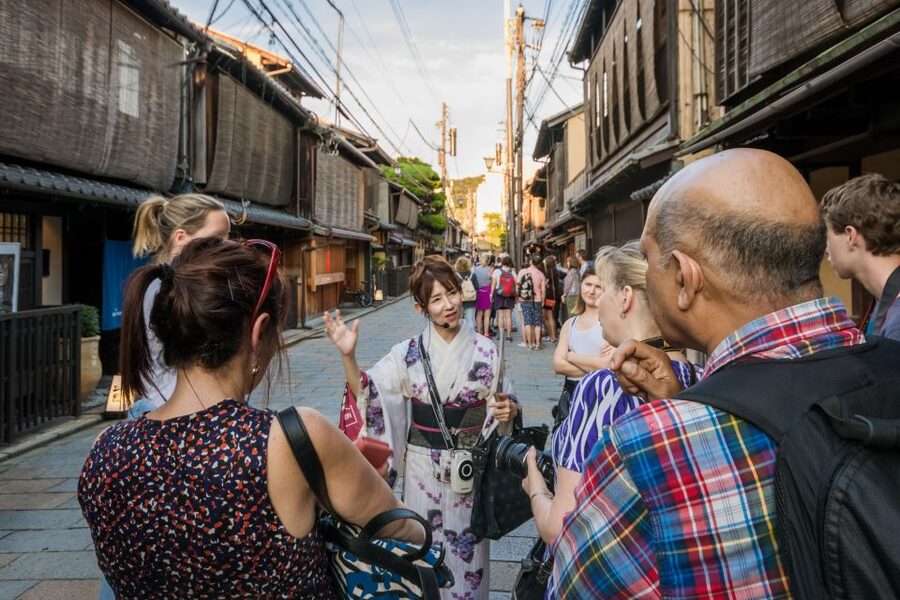
Gion after dark is not just a pretty Kyoto backdrop. It is a working district where geiko and maiko move between boarding houses and evening appointments. This walk gives you the cultural context to understand what you are seeing, rather than sending you off with only a few postcard photographs.
I especially like the respectful approach and the chance to hear practical details about kimono, hairstyles, training, tea house customs, and daily routines. Guides such as Mia, Mie, Chako, and Mai have been praised for their humor, English, and personal connection to the district. The main consideration is simple: seeing a geiko or maiko is possible, not promised, and photography or video may be restricted.
Key points to know before you book
- Meet beside Gion Shijo Station: The walk begins in front of Gion Omoide Museum, connected to the Izutsu Yatsuhashi pastry shop.
- Expect 100 minutes, or close to two hours: The advertised duration is 100 minutes, while the tour description refers to a two-hour guided walk.
- Learn the difference between geiko and maiko: Your guide explains clothing, makeup, hair, training, work, and social customs.
- Nighttime Gion feels more atmospheric: The route includes classic streets, a beautiful stream, tea house areas, and scenes associated with Memoirs of a Geisha.
- Sightings are a bonus, not the product: You might see several geiko and maiko, but the tour remains worthwhile when the streets are quiet.
- Respect matters: You cannot record video, and guides may ask you to observe quietly and avoid intrusive photography.
Why Gion is best understood after sunset
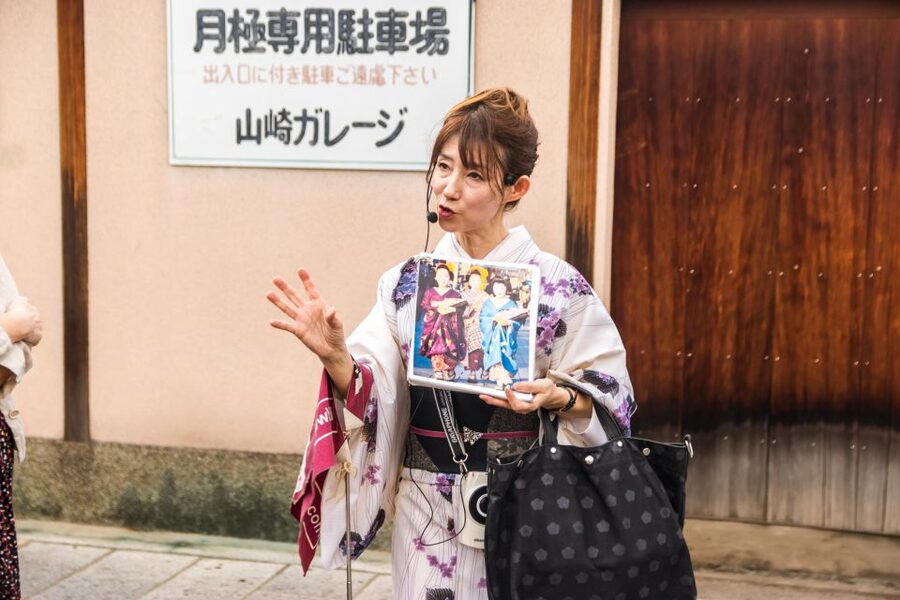
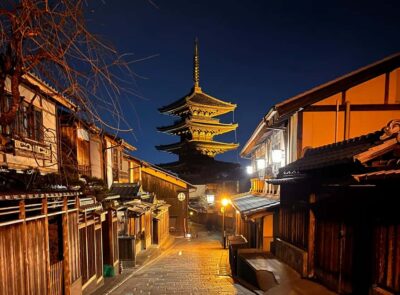
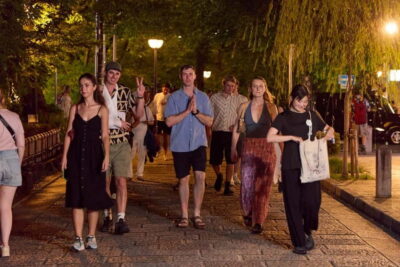
Gion can look like a film set in daylight, with wooden facades, narrow lanes, lanterns, and the small stream running through the district. At night, the mood changes. The streets grow quieter, lights glow from tea houses, and you begin to see why this remains one of Kyoto’s most closely watched neighborhoods.
The important point is that Gion is not a theme park. It is a place where people work, meet clients, and go about their evening duties. A guide helps you read the district properly. You learn which buildings are tea houses, how to recognize the signs of a working entertainment quarter, and why visitors need to keep a respectful distance.
I like that the walk does not treat geiko and maiko as costumes waiting for tourist photographs. The guide explains them as trained artists and working professionals within Kyoto’s traditional entertainment culture. That distinction makes the evening more thoughtful and much less awkward.
The route begins in front of Gion Omoide Museum, connected to the Izutsu Yatsuhashi pastry shop near Gion Shijo Station. This is a practical meeting place, but allow time to find it. Gion’s lanes can be confusing, especially after dark, and the museum and pastry shop names are more useful than simply searching for a street corner.
More geisha-district evenings:
- Kyoto Geisha Walking Tour: Gion District & Hidden Gems
★ 4.7 · 3,273 reviews - Kyoto: Gion Magical Night Walking Tour with Geisha Trivia
★ 4.9 · 2,393 reviews - Kyoto: Gion Geisha District Walking Tour – Stories of Geisha
★ 4.7 · 2,187 reviews
Starting near Gion Shijo Station
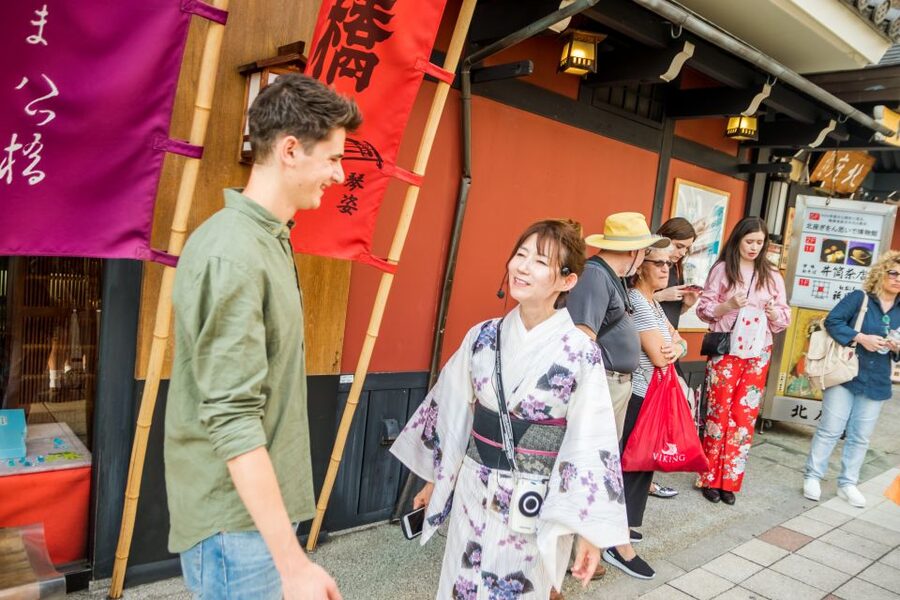
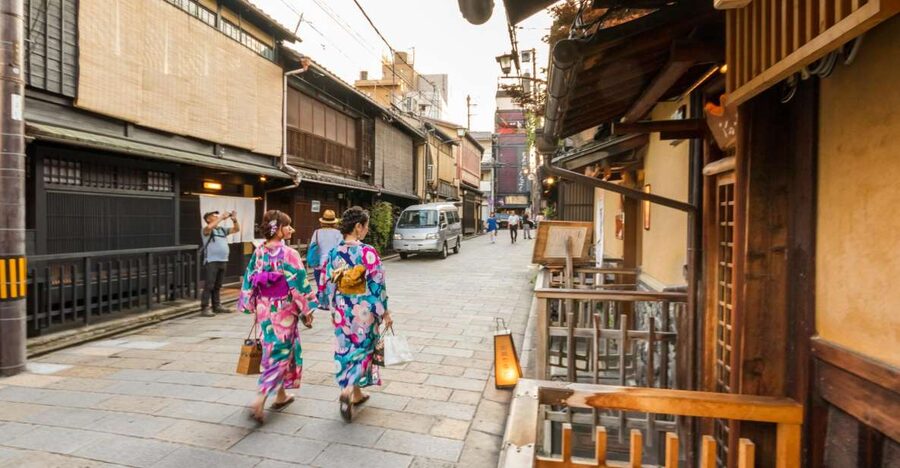
At the meeting point, you join a licensed English-speaking guide. The guide is the key part of this experience, since the streets themselves are open to everyone. Names that have received especially warm praise include Mia, Mie, Chako, Miya, Mai, and Toko, though your guide depends on the departure.
The strongest guides combine facts with stories and keep the pace lively. Mie, for example, has been praised for bringing photographs and visual aids to explain details that are hard to understand from a quick street view. Chako has been described as patient with questions and passionate about Gion. Mia is often noted for humor, clear explanations, and familiarity with the people and customs of the district.
That personal style matters. A dry lecture about kimono can lose a family in ten minutes. A guide who can explain a hairstyle, a greeting, or a tea house rule with a little humor makes the information stick. Several families found that children who were unsure about the topic at first became interested as the walk went on.
The walk is conducted in English. You should feel comfortable asking questions, particularly if you are trying to understand terms such as geiko, maiko, okiya, or tea house. The supplied details do not promise a particular group size, though one especially positive account describes a small group compared with other tours in the area.
Along the stream and classic Gion lanes
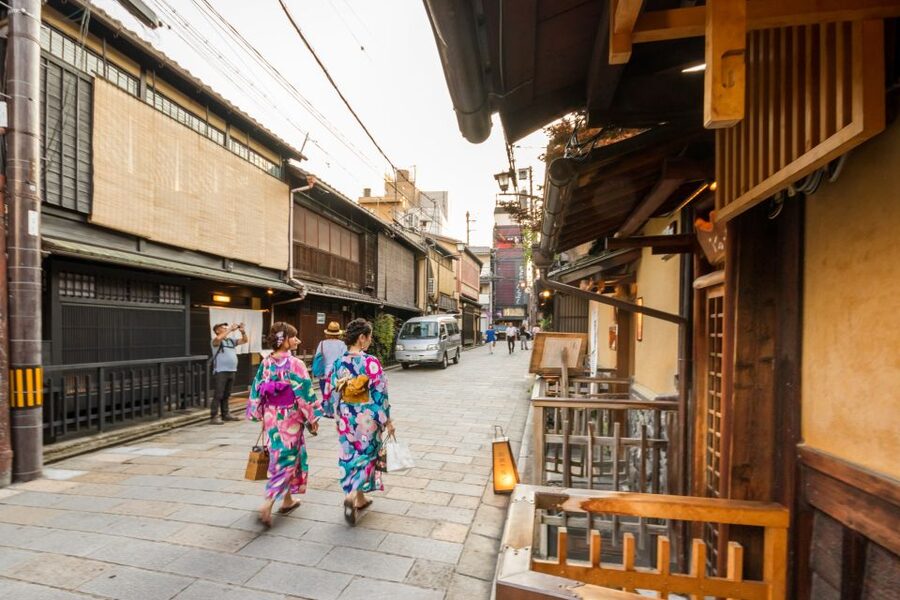
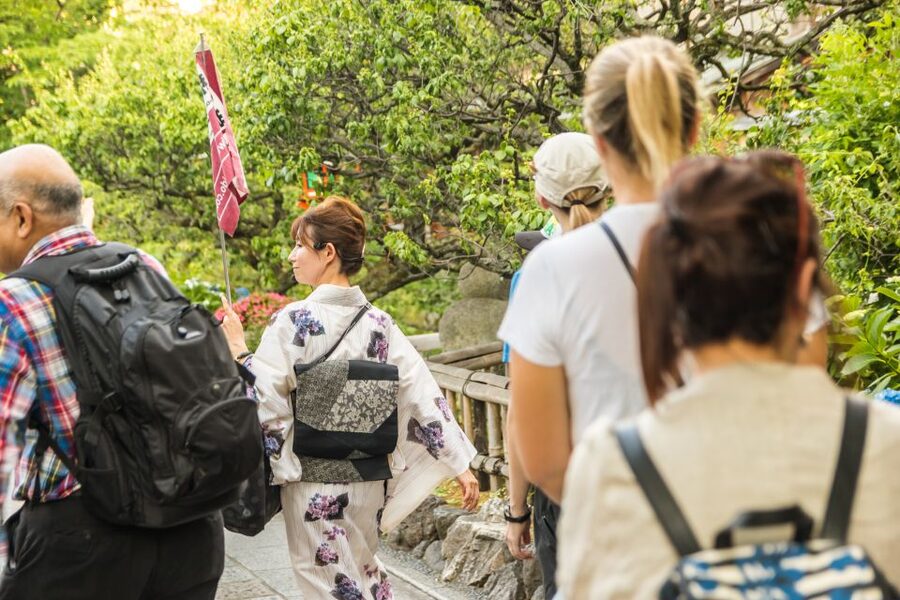
The early part of the route takes you through classic Gion streets and beside a beautiful stream. This is the scenic portion, and it is also where the guide begins to connect the architecture with Kyoto’s entertainment districts.
The stream and narrow lanes provide the visual appeal many people expect from Gion. You may recognize settings associated with Memoirs of a Geisha, although the walk is about the real district rather than the film. I would treat the movie connection as a point of reference, not as the main reason to book.
Your guide explains how the neighborhood developed and how tea house culture works. You hear about the difference between an ordinary place serving tea and a formal tea house connected to geiko and maiko entertainment. One guide even showed visitors how to distinguish a Tea House from a tea house, a small distinction that makes more sense once you are standing in front of the buildings.
This part of the tour rewards attention. Look beyond the lanterns and wooden fronts. Notice that some entrances are deliberately discreet, and that the district’s privacy is part of its function. The guide can point out details you would probably walk past on your own, including signs, building styles, and less crowded corners.
The route is a walking tour, not a sightseeing bus with frequent stops. You need to be comfortable walking for about 100 minutes on city streets. The experience is not suitable for people with mobility impairments, and hotel pickup or transportation to the meeting point is not included.
Understanding geiko, maiko, and their working lives
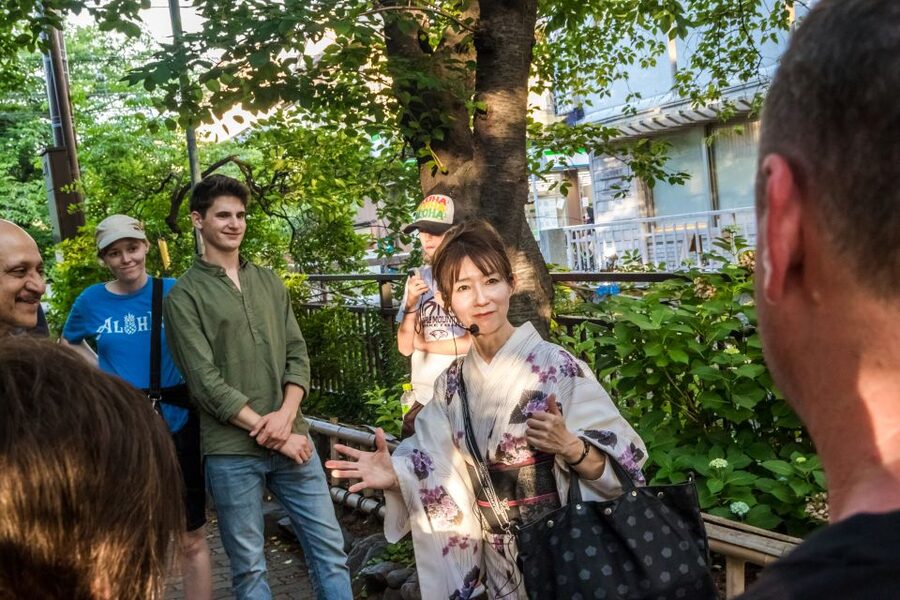
The central subject is the difference between geiko and maiko. In Kyoto, geiko are professional entertainers trained in traditional arts, while maiko are apprentices. Your guide covers their training, hairstyles, kimono, rules, work routines, and daily lives.
This explanation helps correct several common misunderstandings. Geiko and maiko are not simply people dressed up for a photo opportunity, and their work involves much more than appearing in a picturesque street. The guide places their clothing, makeup, music, conversation, and formal behavior within the wider culture of Kyoto.
You may learn why a maiko’s appearance differs from a geiko’s, how hairstyles and ornaments change, and what the clothing can tell you. The precise level of detail depends on the guide, but the most praised guides bring photographs or charts to make these differences clear.
The discussion also covers boarding houses, often called okiya, and the relationship between those houses and tea house appointments. You will not be taken inside a boarding house. That boundary is important. These are private homes and workplaces, not attractions open for inspection.
I consider this one of the tour’s best features. You leave with a better sense of the people behind the clothing. You also gain context for encounters on the street, which is useful if you later see a maiko crossing a road or entering a vehicle elsewhere in Kyoto.
More walking tours in Kyoto:
- Kyoto Gion Geisha District Walking Tour – The Stories of Geisha
★ 5.0 · 1,441 reviews - Nishiki Market Brunch Walking Tour (7 Tastings + Brunch)
★ 5.0 · 1,355 reviews - Kyoto Arashiyama Walking Tour: Bamboo, Monkeys, Gardens & Secrets
★ 5.0 · 1,216 reviews - Kyoto Gion: 2-Hour Geisha Culture & History Walking Tour
★ 5.0 · 1,186 reviews
The chance to see geiko or maiko in Gion
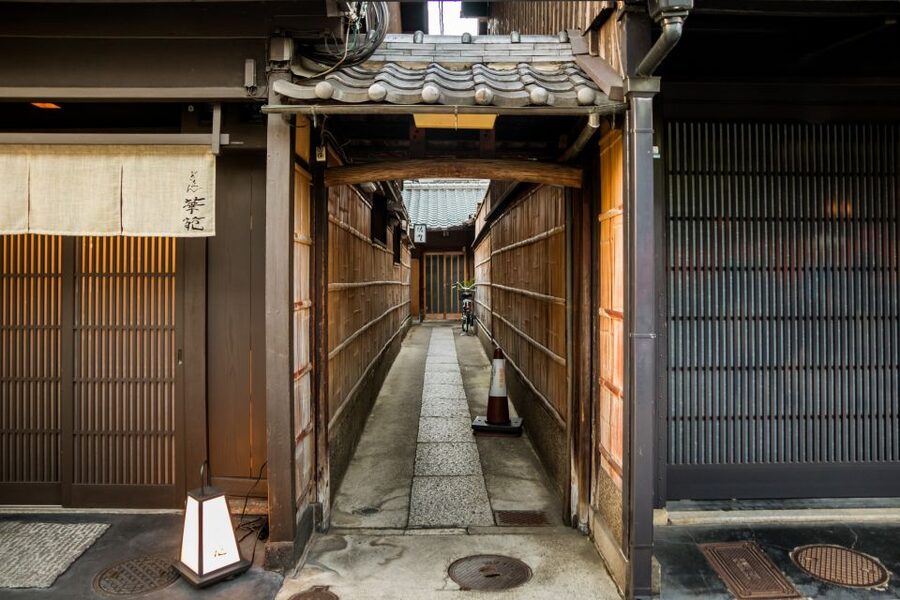
Many people book this walk hoping to see geiko or maiko. That can happen, sometimes several times in one evening. Accounts describe groups seeing four maiko and one geiko, six maiko and one geiko, or more than eight people connected with the district. Other evenings may be much quieter.
The guide’s local awareness can improve your chances. Some guides know where appointments are likely to take place and can lead you toward less crowded areas. A few guides are personally familiar with geiko and maiko, which can create a brief, natural greeting when circumstances allow.
Still, you should not buy this tour as a guaranteed sighting. Schedules change, weather matters, and the people you hope to see are working. If no one appears, the guide still has plenty to explain about Gion’s streets and culture.
The best attitude is to treat an encounter as a bonus. If you do see someone, stay with the group and follow the guide’s instructions. Do not block the pavement, chase anyone, touch clothing, or call out for attention. You may be asked to greet quietly, bow, and observe without intrusion.
Video recording is not allowed. Photography rules may be explained on the night, and some guides ask visitors not to photograph geiko or maiko at all. I think that is a fair trade for seeing the district as a real workplace rather than helping turn it into a photo queue.
A respectful tour in a crowded part of Kyoto
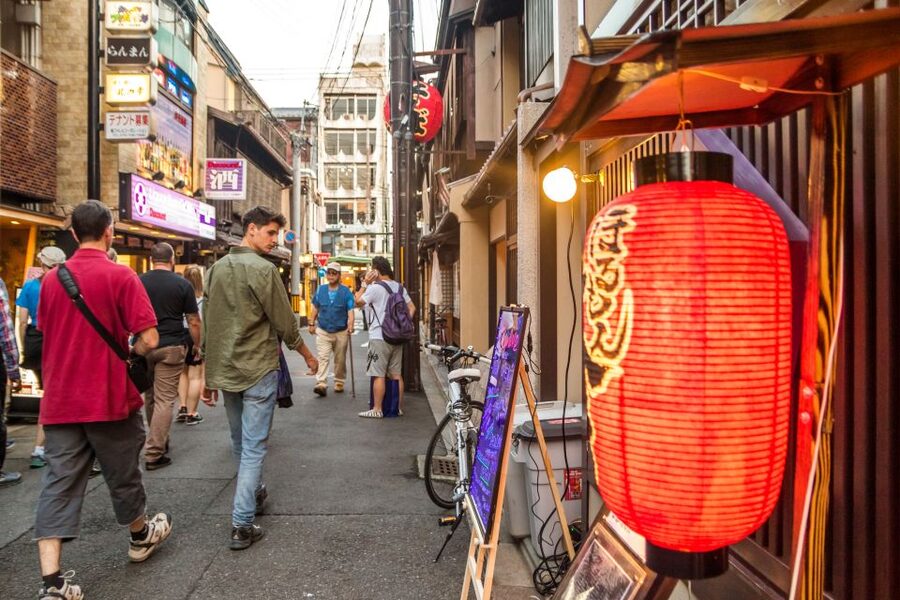
Gion has struggled with tourist behavior, so the tone of the guide matters as much as the route. The best guides make etiquette clear without scolding you. You learn to keep moving, give people room, and avoid treating a passing maiko like a celebrity on a red carpet.
One guide reportedly kept the group away from geiko and maiko to protect their privacy. That may disappoint someone expecting a close look, but it is also the responsible choice. A respectful tour sometimes means seeing less clearly and learning more.
The walk can also reveal quieter spots away from the busiest streets. Several guides have been praised for choosing scenic areas with fewer crowds. That improves the experience in two ways: you can hear the explanation, and you are less likely to become part of the very tourist congestion that makes Gion difficult for residents.
This is not a performance staged for the group. Your guide may use humor, photographs, local expressions, or personal stories, but the people you see are not there to entertain you. That difference gives the evening more value than a simple photo hunt.
What the $21 price really gets you
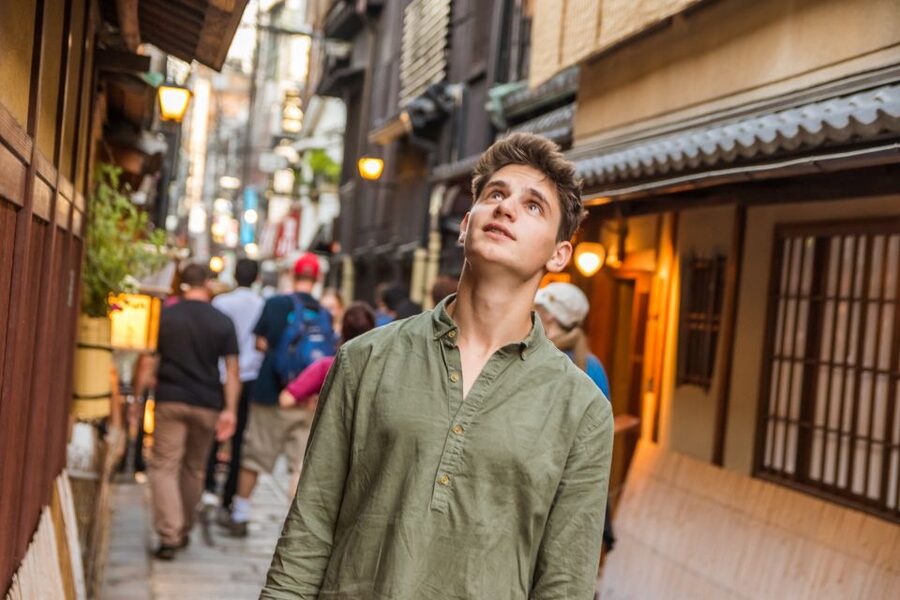
At $21 per person, this is an inexpensive guided introduction to one of Kyoto’s most misunderstood districts. The fee covers the professional English-speaking guide. It does not cover transportation, hotel pickup, or drop-off.
I see the price as good value if you are curious about geiko and maiko culture but do not know how to approach Gion on your own. A self-guided walk will show you beautiful streets, but it will not explain the rules, training, tea house system, or the clues that distinguish one kind of building from another.
The value depends on your expectations. If you only want guaranteed close-up photographs, this is the wrong purchase. If you want a cultural explanation, a nighttime walk, and a chance to see the district working, the cost is modest.
The long history of the walk also gives the format some staying power. It has been offered since 2007 and has welcomed more than 100,000 people. That does not guarantee that every guide or departure will suit you, but it suggests an established operation rather than a one-off street stroll.
You can reserve now and pay later, which helps if your Kyoto plans are still shifting. Cancellation is free up to 24 hours before the activity for a full refund. For children, bring valid identification if you want to receive the child discount.
Who will enjoy this walk most
I would choose this tour for a first visit to Kyoto, especially if you are staying near central Kyoto and can reach Gion Shijo Station easily. It works well as an evening introduction before dinner, since the route shows you the district without taking an entire day.
It also suits visitors who have already seen Gion in daylight and want a different mood. The nighttime light, quiet stream, and movement between tea houses give familiar streets a new character.
Families can enjoy it too. Several accounts describe children staying engaged because the guides used humor and clear stories. A stroller has worked for at least one group, though the official information says the activity is not suitable for people with mobility impairments. I would ask about your specific needs before booking rather than assume every street section will be easy.
You should think twice if you dislike walking, need guaranteed seating, or want a private experience. You should also avoid it if your main goal is entering a boarding house or tea house. Those places are private, and the walk stays on public streets.
Practical tips for a smoother evening
Arrive at the meeting point early enough to identify the museum and pastry shop. Gion’s lanes are easy to confuse, and a late arrival can be stressful when the group is preparing to leave.
Wear comfortable shoes and dress for the forecast. The route is outdoors, and one group completed it in heavy rain with the guide continuing to explain the district and keep everyone together. Rain will not erase the atmosphere, but it can make the pavement slippery and the wait for sightings less pleasant.
Bring questions. Ask about hairstyles, tea house etiquette, training, daily life, or the difference between geiko and maiko. The guide’s answers are where much of the value lies, and several guides have been especially good at handling small, detailed questions.
Keep your phone ready for maps and the meeting point, but not for video recording. If you see a geiko or maiko, watch your surroundings first. A quiet, brief observation is more appropriate than stopping the entire pavement.
If a child is receiving a discount, carry valid identification. Remember that the $21 price does not include transportation, so plan your route to Gion Shijo Station before the start time.
Should you book Night Walk in Gion?
Book it if you want cultural context and respectful street-level access to Gion for a reasonable price. The best part is not a guaranteed sighting. It is learning how to interpret the district, understand geiko and maiko life, and behave properly when you happen to see them.
I would be comfortable recommending it to first-time Kyoto visitors, families with curious children, and anyone who wants more than a quick stroll past wooden buildings. The strongest guides, including Mia, Mie, Chako, Mai, and Toko, bring warmth, humor, and detailed local explanation to the walk.
Skip it if you need a private tour, indoor access, or guaranteed photographs. For everyone else, the 100-minute evening route offers a useful, low-cost introduction to Gion, with the possibility of a memorable encounter handled in the right spirit.
FAQ
Where does the Gion night walk meet?
The meeting point is in front of Gion Omoide Museum, which is connected to the Izutsu Yatsuhashi pastry shop. The location is near Gion Shijo Station. The coordinates are 35.0044519, 135.7723814.
How long does the activity last?
The stated duration is 100 minutes. The activity description also refers to a two-hour guided walk, so you should allow roughly 100 minutes to two hours.
What does the $21 price include?
The price includes a professional English-speaking guide. Transportation to or from attractions and hotel pickup or drop-off are not included.
Is the tour conducted in English?
Yes. The tour has a live, licensed English-speaking guide.
Can I see a geiko or maiko?
You might see geiko or maiko walking through Gion, sometimes several in one evening, but sightings are not guaranteed.
Can I record video during the walk?
No. Video recording is not allowed.
Can I enter a geisha boarding house or tea house?
No access to a boarding house or tea house is included. The tour takes place on the streets of Gion and explains the culture and buildings from outside.
Is hotel pickup available?
No. You need to make your own way to the meeting point, and hotel pickup and drop-off are not included.
Can I cancel for a full refund?
Yes. You can cancel up to 24 hours in advance for a full refund.
Is the walk suitable for people with mobility impairments?
The activity is not suitable for people with mobility impairments. It is a walking tour through the streets of Gion.
Is there a child discount?
A child discount is available, but you must present valid identification to receive it.
More Evenings Out in Kyoto
- Kyoto Night Foodie Tour in Gion (9+ dishes + 6 Sake tastings)
★ 5.0 · 1,762 reviews - Kyoto Gion Night Walk & Geisha District Guided Tour
★ 5.0 · 786 reviews - Kyoto Ghost Tour: Dark Tales, Urban Legends, Bamboo Forest Night
★ 5.0 · 625 reviews - Kyoto Bar Hopping Night Tour
★ 5.0 · 613 reviews
Just added around Kyoto
- Kyoto: Zen Meditation at a Private Temple with a Monk★ 5.0 · 25 reviews
- Kyoto: Gion Geisha District & Sake-in-Hand Walking Tour★ 5.0 · 37 reviews
- Private Pewter Sake Cup Experience with a Kyoto Artisan★ 5.0 · 31 reviews
- Your Private Vacation Photography Session In Kyoto★ 5.0 · 110 reviews
- Private Guided Traditional Buddhist Cooking in Japan★ 5.0 · 16 reviews
- Kyoto Wagashi(Japanese sweets) Cooking Class near Fushimiinari★ 5.0 · 60 reviews
- Traditional Japanese Music show & Experience Tour in Kyoto★ 5.0 · 57 reviews
- Kyoto:Family-Friendly Kimono & Yukata Experience at WARGO★ 5.0 · 147 reviews
Kyoto Tours, compared.
Fushimi Inari, Kinkakuji, Bamboo Grove 1 Day Bus Tour
Read our review →
Tea Ceremony in a Traditional Tea House in Kiyomizu
Read our review →
Kyoto Geisha Walking Tour: Gion District & Hidden Gems
Read our review →
Gion Magical Night Walking Tour with Geisha Trivia
Read our review →
Gion Geisha District Walking Tour – Stories of Geisha
Read our review →Browse the lists this tour appears in