
Reviewed · FUSHIMI INARI TOURS
Kyoto: Fushimi Inari, Kinkakuji, Bamboo Grove 1 Day Bus Tour
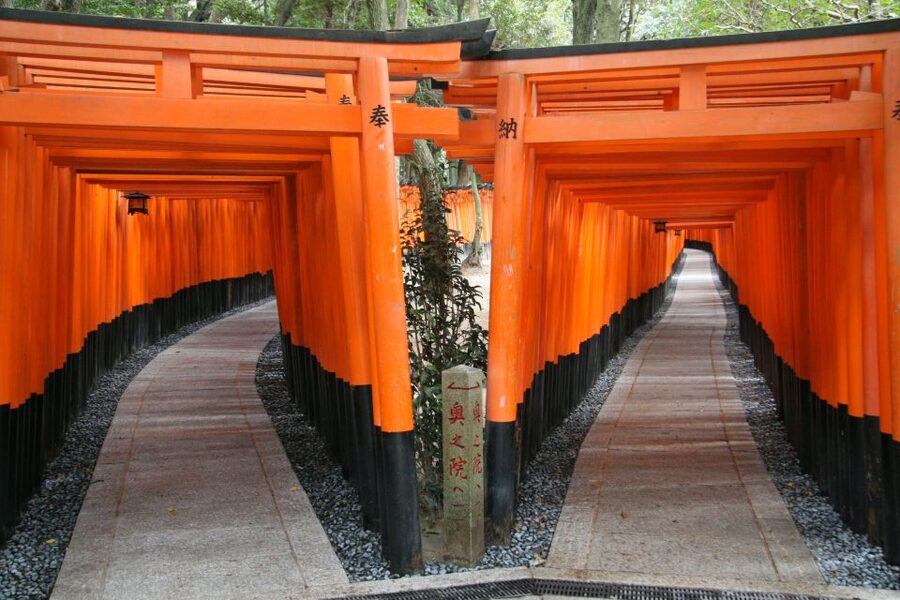
The most memorable part of this Kyoto day is the final visit to Fushimi Inari, where you walk beneath row after row of vermilion torii gates. Earlier, the same coach carries you from Kiyomizu-dera and Sanjusangen-do to Arashiyama, Kinkaku-ji, and several other major sights.
I like two things right away: the efficient route saves you from piecing together Kyoto’s spread-out temples by train and bus, and the English-speaking guides add context instead of leaving you to stare at buildings without a clue. Guides such as Den, At-Chan, Sakura, Tommy, and Ciel have earned especially warm praise for their energy, clear explanations, and help with photos.
The trade-off is simple: this is a full day with a lot of walking, stairs, hills, and fixed departure times. You will see far more than you could easily manage alone, but you will not have hours to linger at any one temple.
Key points to know before booking
- Seven major Kyoto sights in about nine hours: The route includes Kiyomizu-dera, Sanjusangen-do, Arashiyama, the Sagano Bamboo Forest, Tenryuji, Kinkaku-ji, and Fushimi Inari.
- Three World Heritage temples: Entry tickets are included for Kiyomizu-dera, Tenryuji, and Kinkaku-ji, along with Sanjusangen-do.
- Fushimi Inari comes late: Save some energy for the torii gates, reached after a full day of sightseeing.
- Lunch is optional: The Japanese buffet includes vegetarian dishes, but it does not cater to Muslim, allergy, lactose-free, or gluten-free diets.
- Comfortable transport matters: The air-conditioned coach has Wi-Fi, regular ventilation, and antibacterial treatment.
- This suits short stays best: It is a practical way to cover Kyoto’s famous eastern and western sights when you have only one day.
Why this Kyoto coach tour works for a short stay
Kyoto is not difficult to visit, but its famous sights are scattered across a wide area. Kiyomizu-dera is in the eastern hills, Arashiyama sits on the western edge, Kinkaku-ji is farther north, and Fushimi Inari is south of central Kyoto. Connecting all of these by public transport in one day takes planning, transfers, and patience.
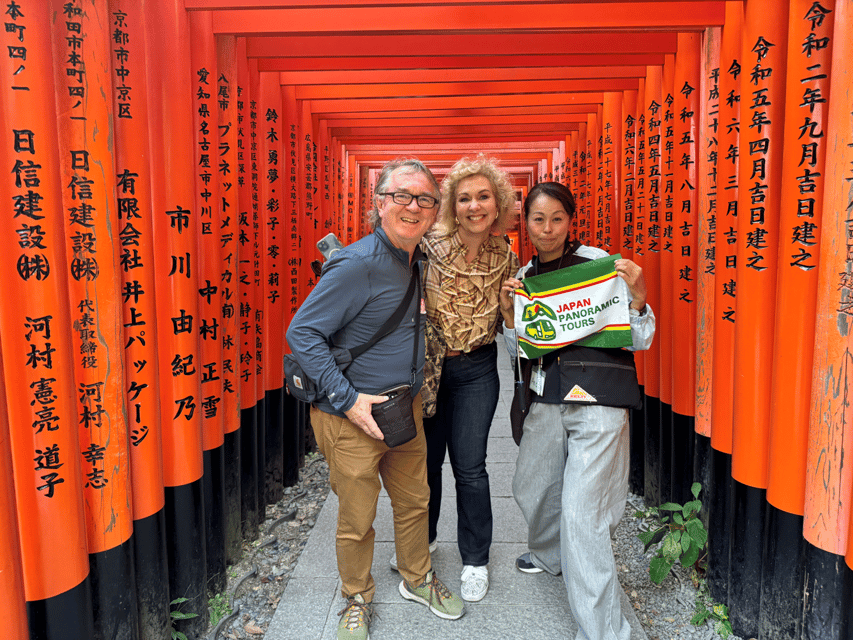
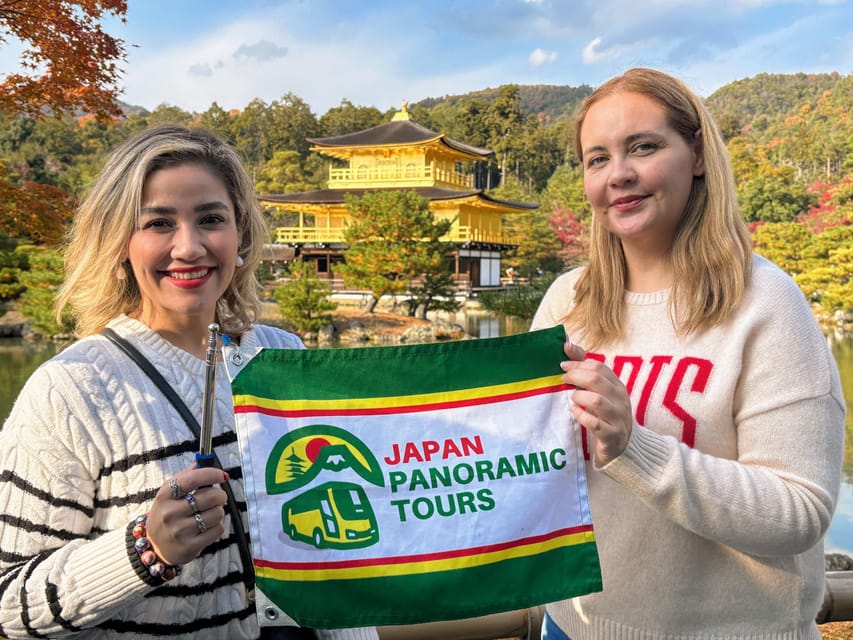
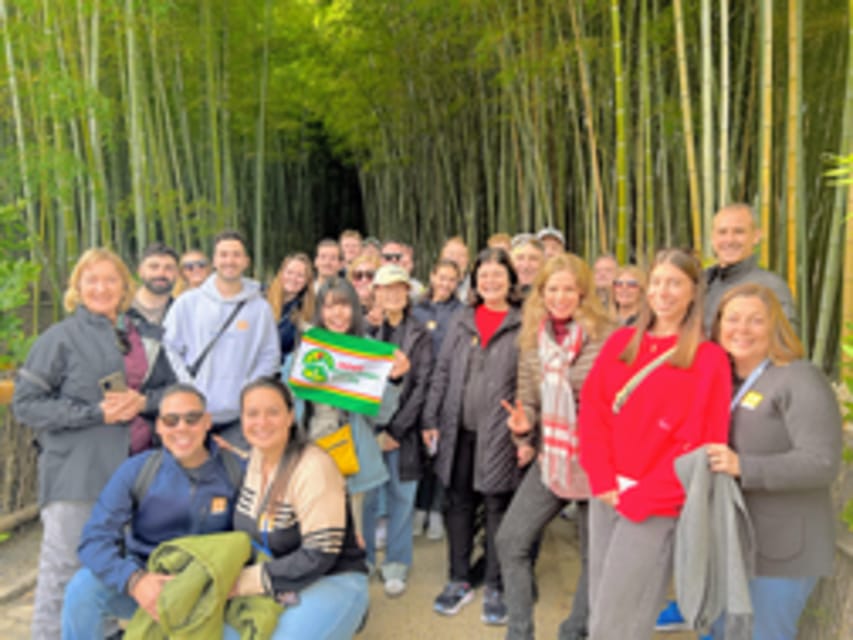
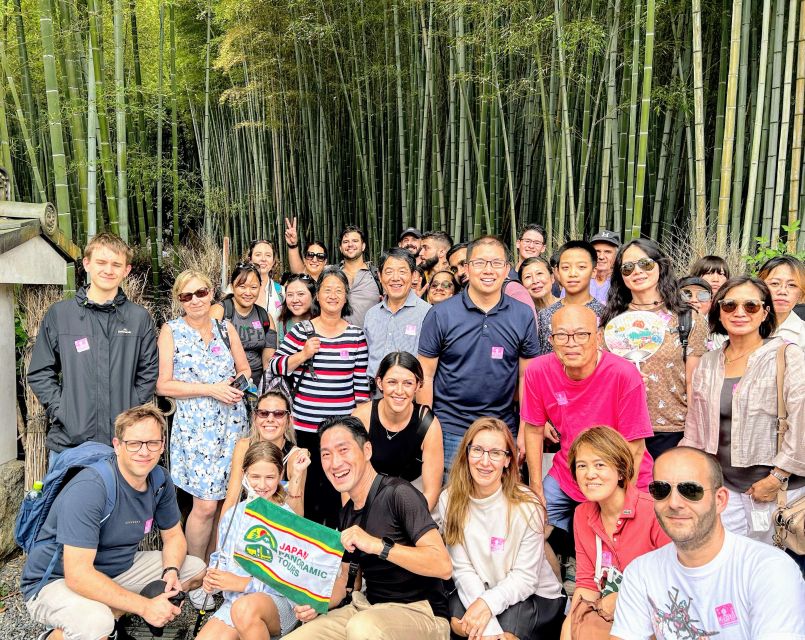
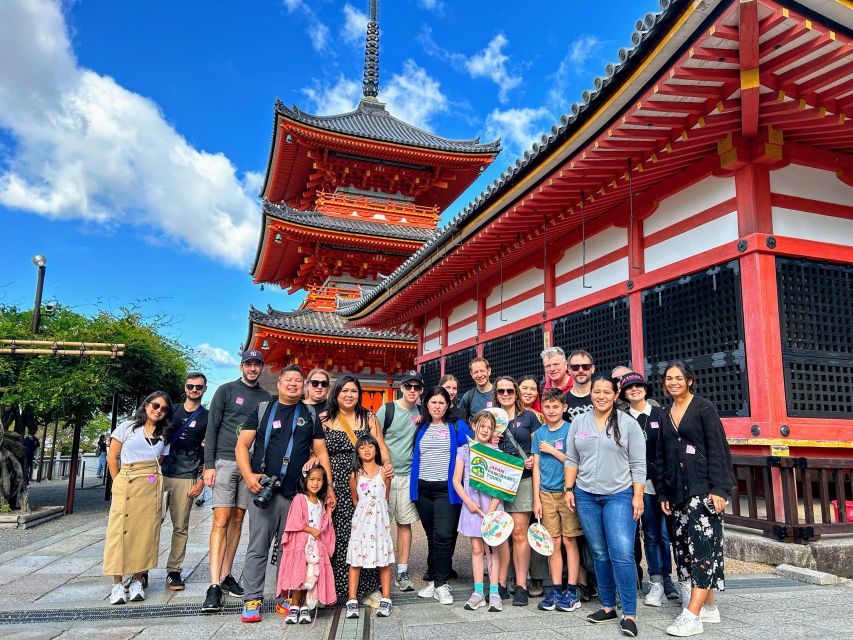
This tour removes most of that work. You meet in front of Tully’s Coffee at Kyoto Avanti, close to Kyoto Station, check in at 7:50 AM, and leave at 8:00. Look for the green and white Japan Panoramic Tours flag. There is no hotel pickup, so you need to reach the meeting point on time. Late arrivals and no-shows are not refunded.
I see the price of $122 per person as reasonable if you plan to visit most of these places anyway. Admission fees for four temples are included, as is transportation between distant areas and a guide. You are paying for saved time as much as for the bus seat.
The value drops if you prefer slow temple visits, quiet lanes, or spontaneous meals. In that case, a self-guided day may suit you better. The tour is built around coverage, not long stretches of free time.
More ways to walk Fushimi Inari:
- Fushimi Inari Hidden Hiking Tour (Private Option Available)
★ 5.0 · 1,750 reviews - Kyoto/Osaka: Nara, Fushimi Inari Taisha, Arashiyama Bus Tour
★ 4.7 · 1,275 reviews - Osaka/Kyoto: Arashiyama, Nara & Fushimi Inari Shrine w/Lunch
★ 4.4 · 754 reviews
Kiyomizu-dera and the view from the wooden terrace
Kiyomizu-dera is the first major stop, with about one hour to explore. The temple reportedly dates to 778 and is one of Kyoto’s essential sights. Its large wooden terrace gives you a broad view over the city and surrounding hills.
The approach involves stairs and an uphill walk, so wear shoes with a good grip. The temple grounds are rewarding even when you do not have time to inspect every corner. You can take in the old buildings, wooded setting, and city view before the group moves on.
Starting here is sensible. You see one of Kyoto’s best-known temples while your legs are still fresh, and the morning light can be pleasant for photographs. Still, one hour goes quickly. I would decide in advance if your priority is the terrace, the main halls, or a quick look around the temple approach.
Your guide may point out details about the temple’s construction, religious role, and local customs. This is where a good guide makes a real difference. Den, At-Chan, Sakura, and other guides have been praised for explaining cultural details clearly and keeping the group moving without making the stop feel cold or mechanical.
Sanjusangen-do and its extraordinary wooden hall
The next stop is Sanjusangen-do, officially known as Rengeo-in, with about 40 minutes inside. Its name refers to 33 spaces in the main hall, created by the columns that divide the building. The hall is also described as Japan’s longest wooden structure.
The main attraction is the line of Kannon statues inside. You cannot treat this as a quick outdoor photo stop, since the appeal is the interior and its scale. The visit offers a different kind of experience from Kiyomizu-dera: less about a city view and more about a powerful religious collection in a long, quiet wooden space.
I like this pairing because the two temples do not feel identical. Kiyomizu-dera gives you architecture, height, and scenery. Sanjusangen-do gives you a focused look at Buddhist art and temple design.
Forty minutes is enough for the central experience, but not for a leisurely inspection of every detail. Follow the guide’s instructions carefully, since temple interiors often require respectful behavior and may limit photography. The provided audio guidance can help if you want extra language support beyond the live English commentary.
Arashiyama lunch beside Togetsukyo Bridge
The coach then crosses to Arashiyama, where lunch is scheduled for about 50 minutes. The meal is a Japanese buffet using seasonal ingredients, served while you look toward Togetsukyo Bridge, Arashiyama’s central landmark.
The setting is a useful part of the stop. Arashiyama has shops, restaurants, and sights close to the bridge, so you get a small taste of the district instead of eating beside a highway. Some people will enjoy the chance to sample several dishes without making a restaurant decision. Vegetarian dishes are available.
I would think carefully about selecting the lunch option. The buffet is convenient and several people have enjoyed it, but one account noted that some dishes were cold and did not seem freshly prepared. More important, the meal is not suitable for Muslim-friendly, allergy-friendly, lactose-free, or gluten-free requirements. If you have a serious allergy, choose the tour without lunch.
Without lunch, you can bring food or use the free time in Arashiyama to buy something yourself. That option gives you more control, though 50 minutes is not a long window if you also want to browse near the bridge.
More Arashiyama and bamboo walks:
- Osaka/Kyoto:Kinkakuji,Arashiyama,FushimiInariShrine,NaraPark
★ 4.1 · 1,596 reviews - Kyoto Arashiyama Walking Tour: Bamboo, Monkeys, Gardens & Secrets
★ 5.0 · 1,216 reviews - Arashiyama Bamboo, Temple, Monkeys, or Secret Sake Brewery
★ 4.8 · 886 reviews - Kyoto: Arashiyama Bamboo Forest, Monkeys, Matcha & Temple Tour
★ 5.0 · 759 reviews
Sagano Bamboo Forest in a short green corridor
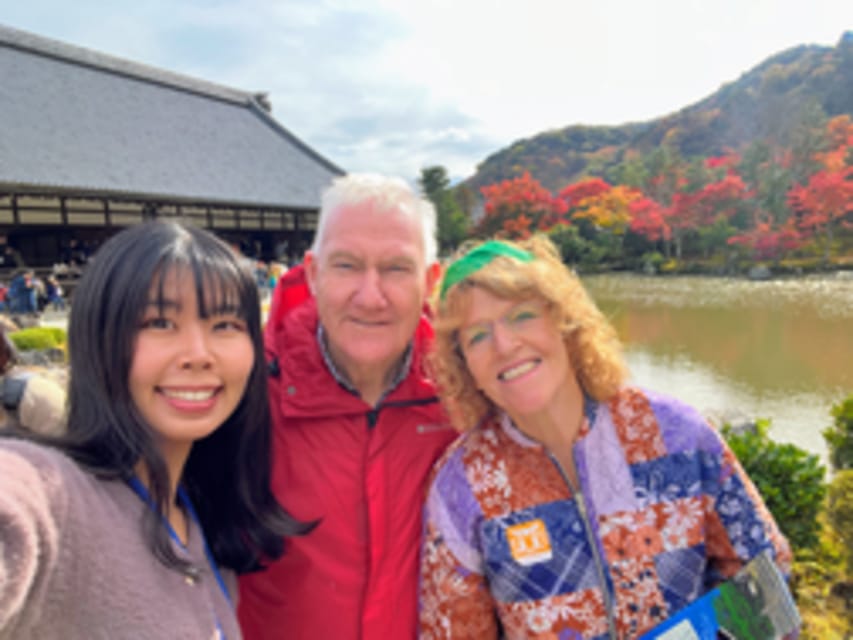
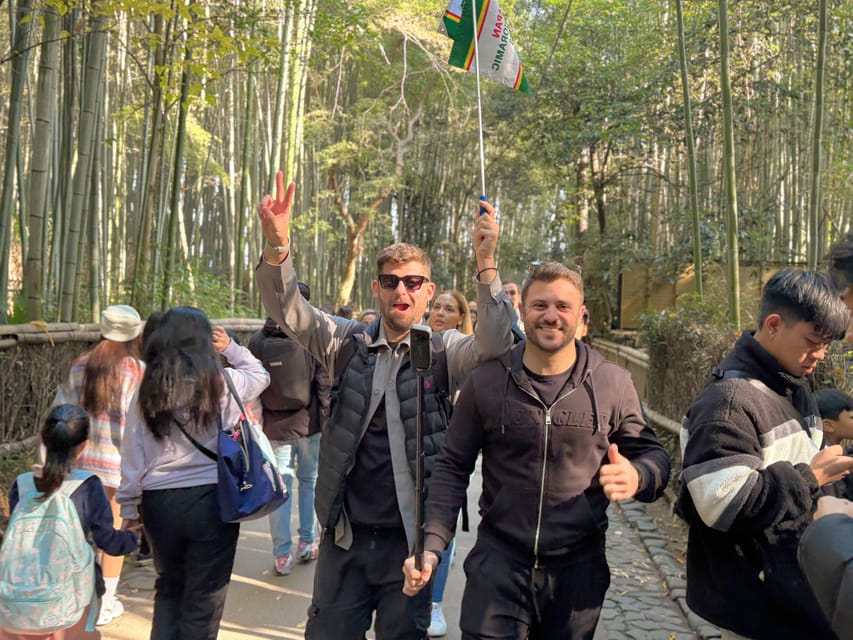
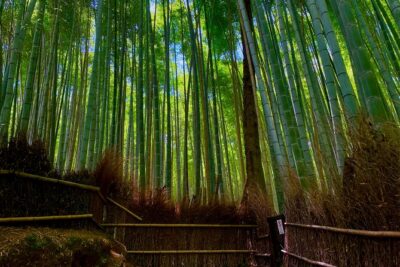
After lunch, you walk through the Sagano Bamboo Forest for about 20 minutes. Tall bamboo rises on both sides of the path, creating the green corridor that appears in so many Kyoto photographs. When the wind moves through the stalks, the sound and motion give the place its special charm.
The short visit is enough to walk through the main section and take pictures. It is not enough for an extended wander through every path in the area. Keep that in mind if the bamboo grove is your main reason for booking.
This stop can also be crowded, and a group tour cannot control how many people are on the path. Your guide can help you reach the right area and keep the schedule clear, but you should not expect a private, silent forest walk.
I would treat the bamboo as one atmospheric piece of the day rather than the whole event. The tour’s strength is the contrast between this narrow grove, the open view from Kiyomizu-dera, the reflective pond at Kinkaku-ji, and the torii tunnels at Fushimi Inari.
Tenryuji’s gardens after the bamboo
Tenryuji is next, with about 30 minutes and an included entry ticket. The temple is another World Heritage site, and its Japanese garden provides a calmer counterpoint to the bamboo path.
The garden is the reason to pay attention here. You can see carefully arranged planting, water, stones, and seasonal changes in a setting tied to one of Kyoto’s major Zen temples. The allotted time lets you get a clear impression, but you will need to keep moving.
The order of the Arashiyama section makes practical sense. You eat near the bridge, walk the bamboo path, then visit Tenryuji, so you avoid repeatedly crossing the same area. The drawback is that lunch, bamboo, and temple gardens all compete for less than two hours.
If gardens are your passion, you may wish for more time. If you have only one day, this visit gives you a useful introduction without requiring another separate trip to western Kyoto.
Kinkaku-ji and the Golden Temple reflection
The coach then heads to Kinkaku-ji, also called Rokuon-ji or the Golden Temple. You have about 40 minutes, with admission included. The famous gold-covered pavilion is set beside a pond, where its reflection creates the image most people associate with the temple.
This is a straightforward stop. You follow the visitor route, see the pavilion from the main viewing area, and continue through part of the grounds. The visual impact is immediate, but the visit is not designed for a long, private examination.
I like having Kinkaku-ji later in the afternoon because it breaks up the garden and forest visits with one very bold architectural sight. Yet the grounds can feel busy, and the route is controlled. If you want to sit quietly by the pond or study every garden feature, the schedule may feel tight.
The coach passes by Nijo Castle rather than stopping there. That detail matters. You will get a glimpse of another major Kyoto landmark, but Nijo Castle is not included as a visit or entry. Do not book this tour expecting a castle tour.
Fushimi Inari and thousands of red torii gates
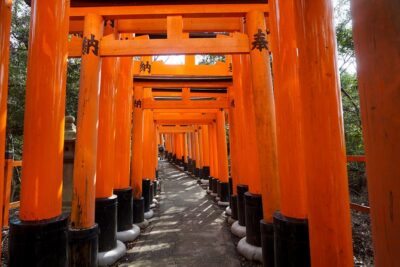
The final major stop is Fushimi Inari Taisha, with about one hour to walk beneath the famous torii gates. This is the tour’s most distinctive experience. The gates form long passages up the wooded slope, creating a changing rhythm of red pillars, shadows, and narrow paths.
You do not need to reach the highest point to understand why Fushimi Inari is so memorable. Even a shorter walk takes you beyond the first shrine buildings and into the torii tunnels. The one-hour stop gives you time to explore, but the uphill route means you should pace yourself.
This is also where tired legs become a real factor. You have already walked at Kiyomizu-dera, Arashiyama, the bamboo grove, Tenryuji, and Kinkaku-ji. Comfortable shoes are not a suggestion here. They are the right equipment for the day.
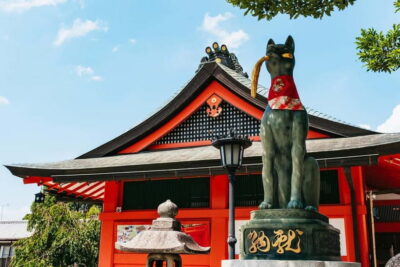
Fushimi Inari is a shrine, not a temple, and the torii gates have been donated by individuals and businesses. Your guide may explain the meaning of the shrine and the gates, while the multilingual audio system offers commentary in Spanish, French, Italian, German, Portuguese, and Ukrainian. The live guide speaks English.
Arriving here late has one advantage: you finish with the most visually unusual stop. The disadvantage is that you cannot simply leave whenever you want. Keep an eye on the meeting time and make sure you know where the bus will collect the group.
The guide and the comfort of the bus
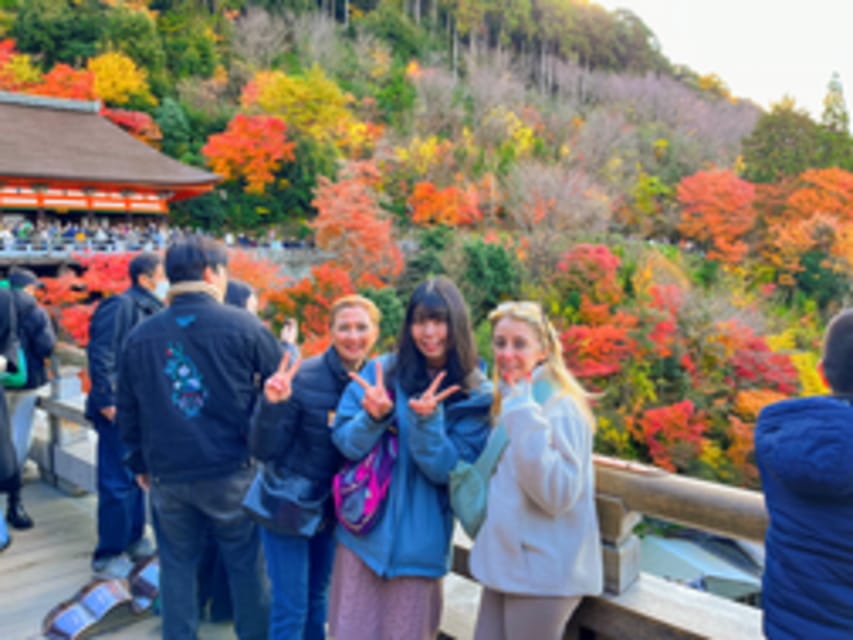
The guides are a major part of the experience. Names frequently associated with especially warm, energetic service include Den, At-Chan, Sakura, Tommy, Ciel, Nagomi, Mai, Hiroko, Samurai, and Nanari. Your assigned guide may be different, but the tour is designed around live English commentary, with audio headsets for several other languages.
A strong guide can turn a crowded temple day into a coherent story. Several guides have helped solo visitors with photos, taught simple Japanese words, offered city tips, and used pictures or humor during bus rides. Families with preteens have also found the timing manageable, though the day remains active.
The coach is air-conditioned, has free Wi-Fi, and is regularly ventilated. It is also described as receiving antibacterial treatment. That matters because the route includes long transfers between Kyoto’s eastern, western, northern, and southern areas.
You should still expect a group setting. The bus cannot avoid traffic, and the itinerary order can change because of traffic, weather, closures, or operational needs. If a site closes, an alternative may be used. The tour is generally punctual, but a nine-hour route with many stops requires everyone to return to the coach on time.
Who should book this one-day Kyoto tour
I would choose this tour if you have one full day in Kyoto and want to see the city’s major symbols without managing several complicated connections. It also suits first-time visitors who want a guide to explain temple customs, Japanese history, and the difference between a shrine and a temple.
Families can benefit from the clear structure, included admissions, and air-conditioned transport. Solo visitors may appreciate help with photographs and the company of a guide. The multilingual audio option is useful for people who want to follow the explanations in French, Italian, Spanish, German, Portuguese, or Ukrainian.
I would hesitate if you use a wheelchair or have significant mobility limits. The tour is not suitable for wheelchair users or people with mobility impairments, and the day includes stairs and hills.
I would also think twice if your ideal Kyoto day means lingering in one temple garden, eating at a particular restaurant, or spending hours photographing bamboo. This is a highlights tour. It gives you breadth, not complete freedom.
Cancellation is free up to 24 hours before departure, and you can reserve now and pay later. Any extras are cheaper when selected in advance rather than added on the day.
Should you book the $122 Kyoto tour?
Book it if your priority is seeing Kyoto’s headline sights efficiently. The combination of four included temple entries, coach transport, lunch optionality, live guidance, and a full route across the city makes the price fair for a packed first visit.
The strongest reasons to book are the difficult-to-link geography and the quality of the guide assigned to your group. Guides such as At-Chan, Den, Sakura, and Tommy have been praised for warmth, clear English, historical detail, patience, and help with photos. That personal touch matters when the schedule is tight.
Skip it if you want a slow, self-directed day or have strict dietary needs unless you choose the no-lunch option. Bring water, wear proper walking shoes, arrive at Tully’s Coffee by 7:50 AM, and save enough energy for Fushimi Inari. For a first look at Kyoto in one day, this is a practical and well-priced way to cover a lot of ground.
FAQ
How long does the Kyoto bus tour last?
The tour lasts about 510 minutes, or roughly nine hours. It departs at 8:00 AM and returns to the Tully’s Coffee meeting point near Kyoto Station.
Where does the tour start?
The meeting point is in front of Tully’s Coffee at Kyoto Avanti, 31 Higashikujo Nishisannocho, Minami Ward, Kyoto. Check-in is at 7:50 AM, and departure is at 8:00 AM.
Which places does the tour visit?
The tour visits Kiyomizu-dera, Sanjusangen-do, Arashiyama, the Sagano Bamboo Forest, Tenryuji Temple, Kinkaku-ji, and Fushimi Inari Taisha Shrine. It passes by Nijo Castle without stopping.
Are entrance fees included?
Entry tickets are included for Kiyomizu-dera, Tenryuji Temple, Kinkaku-ji, and Sanjusangen-do.
Is lunch included?
Lunch is included only if you select the lunch option. The meal is a Japanese buffet with vegetarian dishes.
Can the tour accommodate food allergies?
The lunch does not provide Muslim-friendly, allergy-friendly, lactose-free, or gluten-free dishes. If you have a serious allergy, choose the option without lunch and bring your own food or buy lunch in Arashiyama.
What languages are available?
The live guide speaks English. Audio guidance is available in Spanish, French, Italian, German, Portuguese, and Ukrainian.
Is the tour suitable for wheelchair users?
No. The tour is not suitable for wheelchair users or people with mobility impairments. You will also need to walk up stairs and hills.
What should I bring?
Bring comfortable walking shoes. Pets are not allowed on the tour.
More 1-Day Tours in Kyoto
- PERFECT KYOTO 1-Day Bus Tour
★ 5.0 · 13,518 reviews - 10 Must-see Spots in Kyoto One Day Private Tour (up to 7 people)
★ 5.0 · 1,108 reviews - Kyoto 1 Day Tour from Kyoto
★ 4.0 · 582 reviews - Kyoto and Nara Day Trip from Kyoto
★ 4.5 · 445 reviews
Just added around Kyoto
- Kyoto: Zen Meditation at a Private Temple with a Monk★ 5.0 · 25 reviews
- Kyoto: Gion Geisha District & Sake-in-Hand Walking Tour★ 5.0 · 37 reviews
- Private Pewter Sake Cup Experience with a Kyoto Artisan★ 5.0 · 31 reviews
- Your Private Vacation Photography Session In Kyoto★ 5.0 · 110 reviews
- Private Guided Traditional Buddhist Cooking in Japan★ 5.0 · 16 reviews
- Kyoto Wagashi(Japanese sweets) Cooking Class near Fushimiinari★ 5.0 · 60 reviews
- Traditional Japanese Music show & Experience Tour in Kyoto★ 5.0 · 57 reviews
- Kyoto:Family-Friendly Kimono & Yukata Experience at WARGO★ 5.0 · 147 reviews
Fushimi Inari Tours, compared.
Fushimi Inari Hidden Hiking Tour (Private Option Available)
Read our review →
Kyoto/Osaka: Nara, Fushimi Inari Taisha, Arashiyama Bus Tour
Read our review →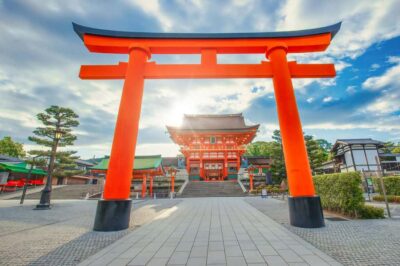
Osaka/Kyoto: Arashiyama, Nara & Fushimi Inari Shrine w/Lunch
Read our review →
Nijo Castle, Kiyomizu & Fushimi Inari Guided Tour
Read our review →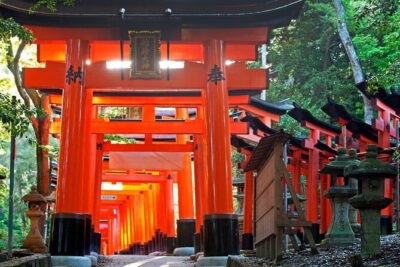
Nijo, Kinkaku-ji, Arashiyama, Kiyomizu & Fushimi Inari
Read our review →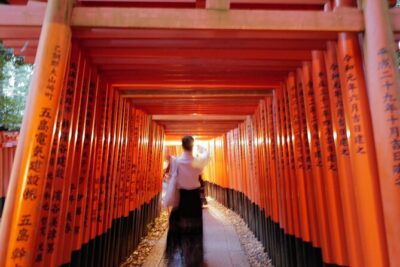
Kyoto Early Bird English Tour: Fushimi-Inari and Arashiyama
Read our review →Browse the lists this tour appears in