
Reviewed · KYOTO TOURS
PERFECT KYOTO 1-Day Bus Tour
Kyoto’s biggest challenge is distance. Its famous temples and shrines sit across a wide area, and this one-day bus tour links six major sights without asking you to master several train and bus routes. You will see Kiyomizu-dera, the Golden Pavilion, Arashiyama’s bamboo path, and Fushimi Inari in one long sweep.
I like the efficient route and the human touch from guides such as Sakura, Mai, At-Chan, and Nagomi, who keep the day moving with stories, humor, and useful Japanese words. I also like that admission to four temples is covered and the air-conditioned coach gives your feet a break between stops. The tradeoff is simple: this is a fast introduction, not a slow temple day. Crowds, stairs, hills, and short visits can leave you wishing for more time.
Key points to know before booking
- Seven major Kyoto sights in one day: Visit Kiyomizu-dera, Sanjusangendo, Arashiyama, the Bamboo Forest, Tenryu-ji, Kinkaku-ji, and Fushimi Inari.
- A strong choice for a short stay: The route is useful if you have only a few days in Kyoto or do not want to plan several local connections.
- English guide plus audio support: A professional English-speaking guide leads the group, with onboard audio available in English, Spanish, French, Italian, German, Portuguese, and Ukrainian.
- Lunch is optional: Choose the Japanese-style buffet in advance, or eat independently during the Arashiyama break.
- Expect a full physical day: You will walk on hills, climb stairs, remove shoes at some temples, and keep to a fixed schedule.
- A group of up to 42 people: The bus is comfortable, but this is not a private or intimate tour.
Why this Kyoto bus tour works
At $129.25 per person, the tour asks you to pay for convenience as much as sightseeing. Kyoto’s major attractions are spread between the eastern hills, northern temple district, western Arashiyama area, and southern Fushimi district. Going alone is possible, but fitting all these places into one day takes careful timing and several transport changes.
Here, the coach, guide, entry tickets, and route are arranged for you. That matters most if you are visiting Kyoto for the first time, traveling with family, or arriving with limited energy for trip planning. The tour usually runs for about eight to nine hours, beginning at 7:50 am and returning to the same meeting point near Kyoto Station.
I would not call this a relaxed day. It is a greatest-hits tour, with time measured in minutes rather than hours. But if your goal is to see the famous sights and decide where you want to return later, the format makes good sense.
The coach includes WiFi and air conditioning. The group can reach as many as 42 people, so you need to listen carefully for meeting instructions and return on time at every stop. The operation is clearly built around keeping a large group together.
A few more Kyoto half-days to weigh up
- Kyoto: Fushimi Inari, Kinkakuji, Bamboo Grove 1 Day Bus Tour
★ 4.8 · 4,316 reviews - 10 Must-see Spots in Kyoto One Day Private Tour (up to 7 people)
★ 5.0 · 1,108 reviews - Kyoto 1 Day Tour from Kyoto
★ 4.0 · 582 reviews
Meeting near Kyoto Station at 7:50 am
The day begins at Tully’s Coffee in Kyoto Avanti, at the south side of Kyoto Station area. The meeting point is near public transportation, but hotel pickup and drop-off are not included. Plan extra time to find the coffee shop, especially if you are unfamiliar with the large station complex.
Arrive early. If you miss the departure, you cannot join the tour later in the day. That strict rule is understandable with a fixed route, but it leaves no room for a slow breakfast or a last-minute train delay.
Bring water and a few snacks. The schedule is busy, and the lunch break is not until Arashiyama. Comfortable shoes matter more than stylish ones. You will walk over temple grounds, climb at Kiyomizu-dera, and cover uneven paths around the shrines.
Kiyomizu-dera and the eastern hills

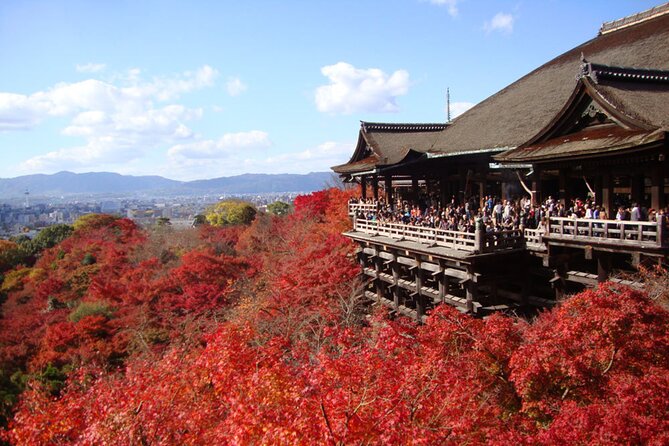
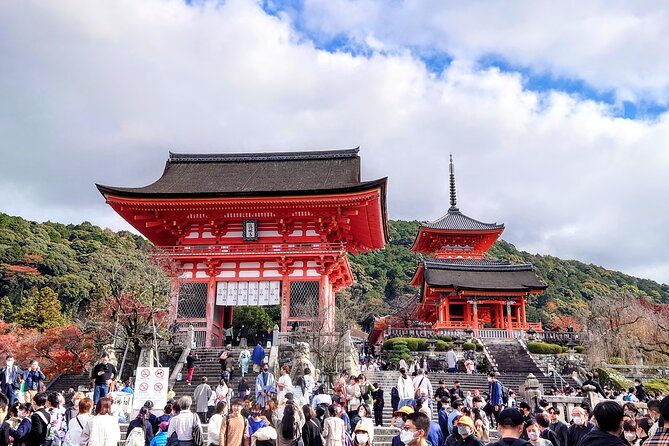
The first major stop is Kiyomizu-dera, one of Kyoto’s best-known temples and a UNESCO World Heritage site. The temple sits on a hill, giving you broad views over Kyoto and the surrounding area.
You have about one hour here, including the walk from the coach and the return to the meeting point. That sounds generous until you factor in stairs, crowds, photos, and the size of the temple grounds. Keep an eye on the time rather than wandering too far from the guide’s route.
This is one of the more physically demanding stops. The tour information specifically warns about hills and stairs, and this is where you will feel them first. The payoff is a classic Kyoto view and a striking wooden temple setting.
Kiyomizu-dera can be crowded, especially during popular seasons and school outings. The morning start may help, but you should not expect solitude. I would focus on the main temple, the view, and the atmosphere rather than trying to see every corner.
Sanjusangendo’s long hall of statues
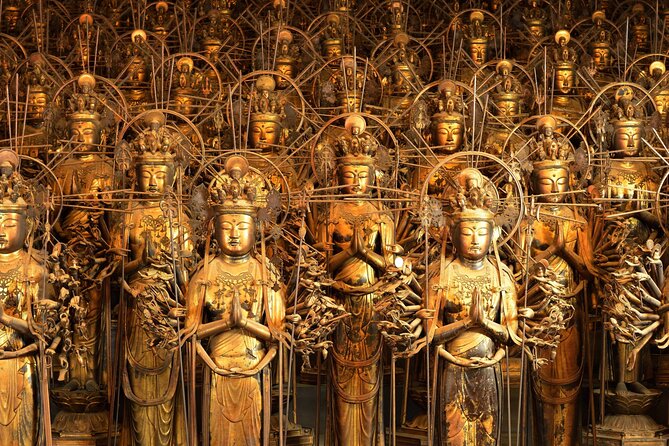
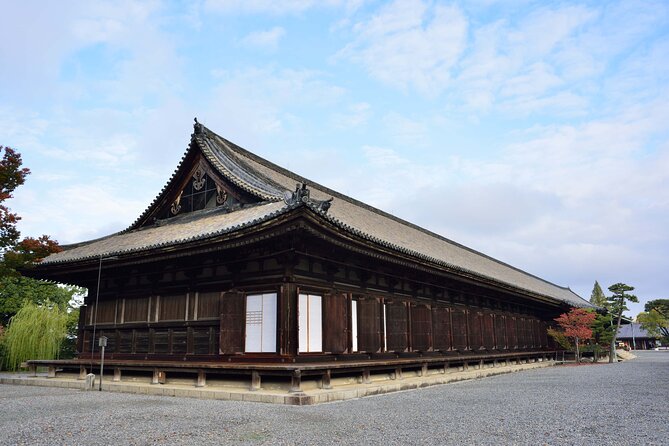
The next stop, Sanjusangendo Temple, lasts about 40 minutes. Its main hall is known for its rows of one thousand Senju Kannon statues, creating a very different experience from Kiyomizu-dera’s open hilltop setting.
This stop rewards close attention rather than speed. The interior is the main event, and the rows of statues give the hall a powerful sense of order and scale. You will also need to remove your shoes in temple buildings, so expect cool floors and dress with that in mind.
The visit is short, but that may be enough for this focused attraction. You are not trying to cover a sprawling site. You go in, take in the statues, listen to the guide, and continue.
Same base, a completely different sort of day:
- Kyoto: Tea Ceremony in a Traditional Tea House in Kiyomizu
★ 4.9 · 3,519 reviews - Kyoto Geisha Walking Tour: Gion District & Hidden Gems
★ 4.7 · 3,273 reviews - Kyoto: Tea Ceremony Ju-An at Jotokuji Temple
★ 4.9 · 3,207 reviews - Kyoto: Gion Magical Night Walking Tour with Geisha Trivia
★ 4.9 · 2,393 reviews
Arashiyama lunch and a short pause

The coach then heads to Arashiyama, Kyoto’s western district known for its bamboo path and temple gardens. The scheduled lunch break lasts about 50 minutes.
If you select the lunch option, you receive a Japanese-style buffet with local foods and seasonal dishes. The menu is the same for vegetarians, which may work well for some people but offers less choice for anyone hoping for a more specialized vegetarian meal. The lunch restaurant can change for operational reasons.
The buffet has received mixed practical feedback, so I would treat it as a convenience rather than a central reason to book. Some dishes may not be kept hot enough for your liking. If you skip the lunch option, you can use the break to find food in Arashiyama, but you must be very careful about the group’s return time.
Adding lunch on the day costs more, listed as 3,000 yen, so decide in advance. If you have dietary concerns, read the meal details closely and plan a backup snack.
Arashiyama itself deserves more than 50 minutes. The district has shops, restaurants, temple grounds, and the bamboo path, but this tour gives you only a quick taste. That is the central compromise of the whole day: you gain range and lose freedom.
Walking the Bamboo Forest Trail

The Bamboo Forest visit lasts about 20 minutes. You walk along the famous path toward Tenryu-ji Temple, with tall green bamboo rising on both sides.
This is a photo stop, and you will have time for memorable pictures if you keep moving. It is not enough time to roam widely or wait for a completely empty stretch of path. The area can be crowded, and the narrow route means the group needs to stay together.
I like the way this stop connects naturally with Tenryu-ji. You do not spend the morning crossing back and forth. You get a short walk through one of Kyoto’s signature sights, then continue into a historic temple garden.
Tenryu-ji’s 700-year garden
Tenryu-ji is another UNESCO World Heritage site, with an admission ticket included. You have roughly 30 minutes to see its traditional garden and temple setting.
The garden design has remained largely unchanged for more than 700 years, and the scenery shifts with the seasons. This is one of the stops where a return visit could reward you. The organized tour gives you the basic view, but a longer visit would allow time to sit, look closely, and follow more of the garden paths.
The 30-minute visit is enough to understand why Tenryu-ji matters, but not enough for a leisurely garden outing. Stay near the guide and note anything you would like to revisit later.
Kinkaku-ji, Kyoto’s Golden Pavilion
Kinkaku-ji, also called the Golden Pavilion, is often the visual high point of the day. The pavilion is covered in gold leaf and reflects over a pond in a carefully arranged temple garden.
The tour allows about 40 minutes, with entry included. You follow the permitted route around the grounds, stop for photos, and hear commentary before returning to the coach. The pavilion is highly photogenic, but the visit is not a private viewing. Crowds can make the path feel more like a moving line than a quiet garden walk.
This stop suits first-time visitors who want the famous image of Kyoto without working out the local bus route. If you care most about gardens, architecture, or photography, you may want to come back independently for more time.
Passing Nijo Castle on the return route
The bus passes Nijo Castle on the return journey. You do not enter, but the guide provides commentary about its place in Japanese political history, including the return of political power from the Tokugawa shogunate to the emperor.
Think of this as a useful glimpse rather than a full sightseeing stop. You will not have time to explore the castle grounds or interiors. Still, the passing commentary helps connect Kyoto’s temples and shrines with the city’s role in national history.
Fushimi Inari and the thousand torii gates
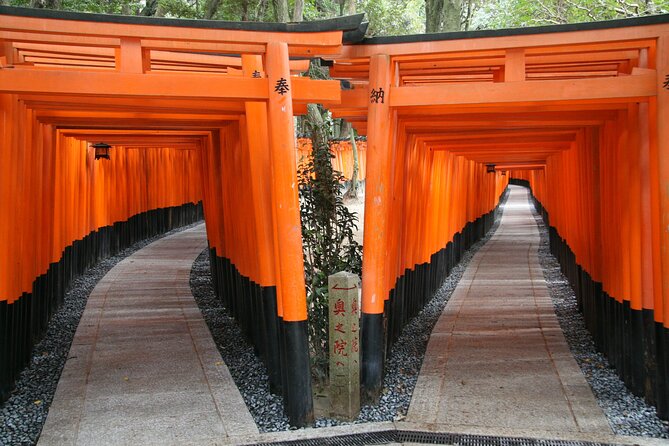
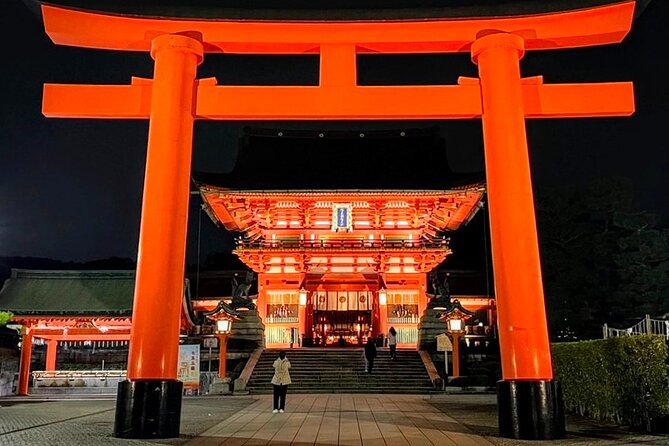
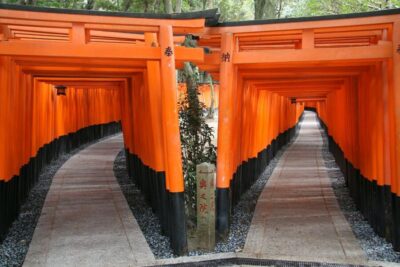
The final major stop is Fushimi Inari-taisha Shrine, with about one hour to explore. Its famous vermilion torii gates form long paths up the hillside, creating one of Kyoto’s most recognizable scenes.
You can walk through part of the gate route, take photos, and visit the shrine area. An hour will not take you to the top of the mountain, so set your expectations accordingly. The best approach is to walk at a steady pace, enjoy the first stretches of gates, and turn back with enough time to meet the group.
Fushimi Inari is popular for good reason, but it can also be crowded. The shrine requires walking, and the uphill route becomes more demanding the farther you go. If you are tired by late afternoon, stay close to the lower section rather than trying to race uphill.
This final stop has a nice contrast with the Golden Pavilion. Kinkaku-ji gives you a polished temple view, while Fushimi Inari lets you move through a living religious site with a stronger sense of motion and ritual.
What the guides add to the day
The guide can make or break a schedule this tight. You do not have long at each place, so clear meeting instructions and concise explanations matter.
Guides named in the tour feedback include Sakura, Mai, At-Chan, Nagomi, Hiroko, Harry, and Nanami. The strongest praise centers on guides who keep people together, explain the sites in clear English, add humor, and teach small Japanese words and numbers. At-Chan is noted for energy and humor, while Mai is praised for her upbeat manner. Sakura is described as especially clear and engaging.
English ability can vary by guide. One account found it difficult to understand a guide’s speech, particularly from the back of the bus. If the guide’s explanation matters greatly to you, sit where you can hear clearly and use the multilingual audio guidance when needed.
The bus audio is available in English, Spanish, French, Italian, German, Portuguese, and Ukrainian. That is useful support, though it is not the same as having a guide answer every question in your language.
Is $129.25 good value?
The price is fair if you place a high value on time and convenience. Four temple admissions are included: Kiyomizu-dera, Sanjusangendo, Tenryu-ji, and Kinkaku-ji. You also receive transport between distant districts, a guide, WiFi, and the organized schedule.
The value is weaker if you are comfortable using Kyoto’s public transportation and want to spend half a day at one temple or neighborhood. Independent sightseeing may cost less, but it demands more planning and gives you less protection from missed connections.
Lunch changes the calculation. The buffet is optional, and the quality may not suit everyone. I would choose it for ease, not because it is a special food experience. If you prefer to control what you eat, skip the add-on and use the Arashiyama break carefully.
Who should book this tour?
I would recommend it to first-time Kyoto visitors with only one open day, families who want transport handled, and anyone who wants the famous sights without building a route from scratch. It is also useful after a tiring stretch of travel, when another day of train maps and bus stops sounds unappealing.
It suits people with moderate fitness who can walk for much of the day. Older children and active older adults may manage well, but the group pace is fixed and the first temple includes stairs and hills.
I would not choose it for a slow cultural trip, travelers who dislike crowds, or anyone who wants long periods of quiet at each temple. It is also a poor fit if you cannot walk long distances or are likely to arrive late.
Traffic, weather, closures, and operating conditions can change the order or remove a stop. An alternative site or compensation gift may be offered depending on the situation, but refunds are not provided for those changes. Free cancellation is available up to 24 hours before the start time, which gives you some booking flexibility.
Should you book the Perfect Kyoto 1-Day Bus Tour?
Book it if your priority is coverage. You will see the main Kyoto images in one carefully packed day, with admission fees and transport arranged. The guides, especially Sakura, Mai, and At-Chan, can add warmth and useful context to what could otherwise feel like a series of rushed photo stops.
Skip it if your priority is depth. Kyoto rewards slow wandering, and this tour gives you only brief visits at places that deserve much longer. For many people, the best plan is to use this as a first look, then return independently to the one or two sites that capture your attention.
FAQ
How long does the Kyoto bus tour last?
The tour lasts approximately eight to nine hours. It begins at 7:50 am and ends back at the original meeting point near Kyoto Station.
Where does the tour start and finish?
The meeting point is Tully’s Coffee at Kyoto Avanti, near Kyoto Station. The tour ends at the same meeting point. Hotel pickup and drop-off are not included.
Is lunch included?
Lunch is included only if you select the lunch option. The meal is a Japanese-style buffet with local and seasonal foods. If you add lunch on the day, the charge is higher at 3,000 yen.
Which attractions include admission?
Admission is included for Kiyomizu-dera, Sanjusangendo Temple, Tenryu-ji Temple, and Kinkaku-ji Temple. The Bamboo Forest, Arashiyama area, and Fushimi Inari visit do not list a separate admission charge.
Is the tour available in languages other than English?
A professional English-speaking guide attends the tour. Multilingual audio guidance is available on the bus in English, Spanish, French, Italian, German, Portuguese, and Ukrainian.
How much walking is involved?
The tour includes substantial walking, stairs, and hills at some locations. A moderate level of physical fitness is required, and the activity is not recommended if you cannot walk long distances.
What happens if I arrive late or a site closes?
You cannot join the tour midway if you miss the start time. The route may change because of traffic, weather, closures, or operating conditions, and an alternative site may be used. Refunds are not given for these changes.
Just added around Kyoto
- Kyoto: Zen Meditation at a Private Temple with a Monk★ 5.0 · 25 reviews
- Kyoto: Gion Geisha District & Sake-in-Hand Walking Tour★ 5.0 · 37 reviews
- Private Pewter Sake Cup Experience with a Kyoto Artisan★ 5.0 · 31 reviews
- Your Private Vacation Photography Session In Kyoto★ 5.0 · 110 reviews
- Private Guided Traditional Buddhist Cooking in Japan★ 5.0 · 16 reviews
- Kyoto Wagashi(Japanese sweets) Cooking Class near Fushimiinari★ 5.0 · 60 reviews
- Traditional Japanese Music show & Experience Tour in Kyoto★ 5.0 · 57 reviews
- Kyoto:Family-Friendly Kimono & Yukata Experience at WARGO★ 5.0 · 147 reviews
Kyoto Tours, compared.
Fushimi Inari, Kinkakuji, Bamboo Grove 1 Day Bus Tour
Read our review →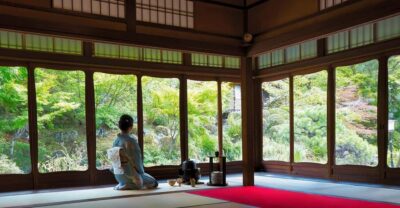
Tea Ceremony in a Traditional Tea House in Kiyomizu
Read our review →
Kyoto Geisha Walking Tour: Gion District & Hidden Gems
Read our review →
Gion Magical Night Walking Tour with Geisha Trivia
Read our review →
Gion Geisha District Walking Tour – Stories of Geisha
Read our review →
Best of Kyoto: Gion, Geisha, Pagodas & Cobblestones
Read our review →Browse the lists this tour appears in