
Reviewed · KYOTO TOURS
Kyoto: Tea Ceremony in a Traditional Tea House in Kiyomizu
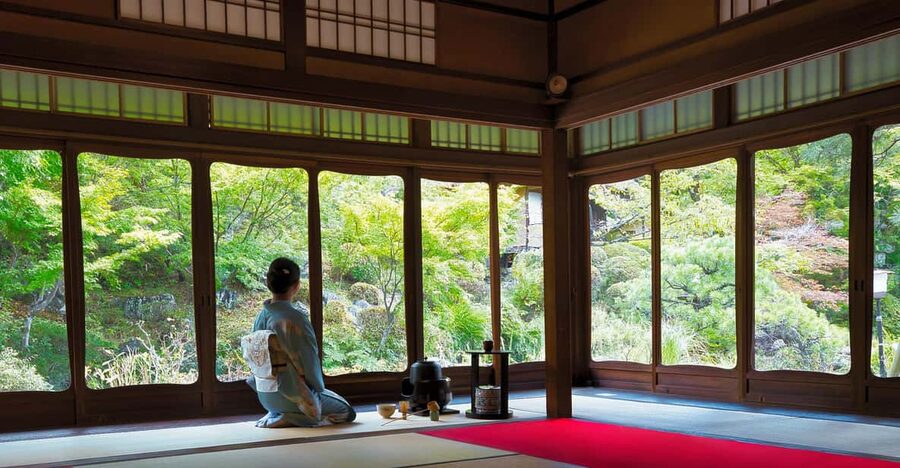
Kyoto’s most memorable quiet moment may be found just off busy Sannenzaka, where a tea master performs the ceremony beside a garden designed by Ogawa Jihei VII. In 45 minutes, you learn the meaning behind the ritual, watch matcha prepared with care, and make your own bowl.
I especially like the garden view and the chance to prepare your own tea rather than only watch a demonstration. The English instruction is clear, and hosts such as May have helped make the ceremony easy to follow. The main consideration is price: at $49 per person, this is not a bargain activity, and the short session will not cover every detail of tea culture. Kimono rental is also not included.
Key points to know before booking
- A peaceful garden behind Sannenzaka: The tea house sits close to Kiyomizu-Dera but feels removed from the busy street once you pass through its gates.
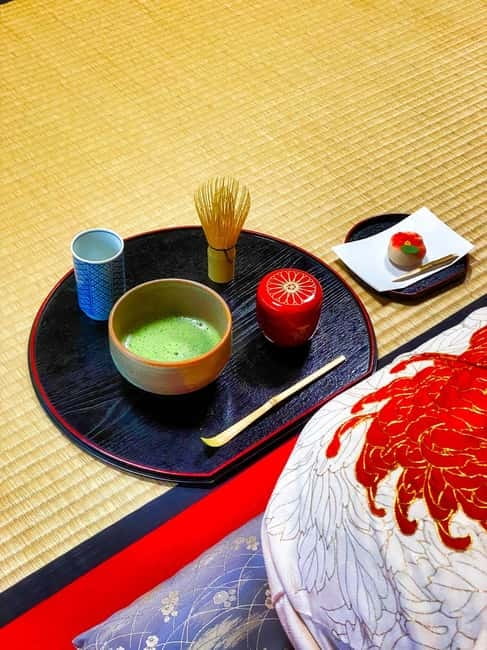
- Two cups of matcha: You receive tea prepared during the ceremony and make a second cup yourself.
- A 500-year tradition explained in English: The introduction gives useful context before the formal demonstration.
- A skilled tea master demonstration: Watch the precise movements, then copy the basic method with your own whisk.
- A traditional sweet and photo included: The sweet balances matcha’s bitterness, and a group photo gives you a simple keepsake.
- A 45-minute format: This works well between sightseeing stops, though it offers an introduction rather than a full study of tea ceremony.
A calm tea house just off crowded Sannenzaka
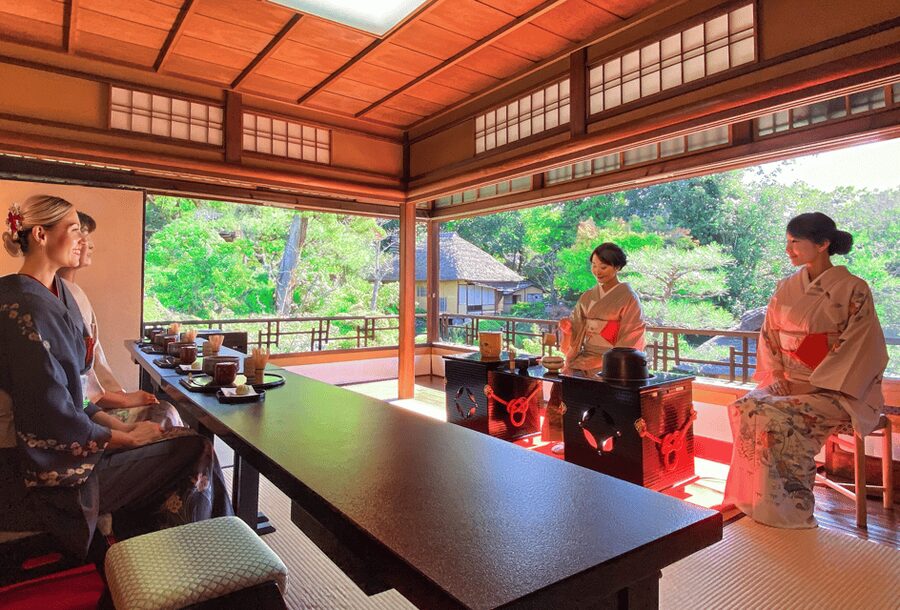
The setting does much of the work here. Sannenzaka is one of Kyoto’s busiest sightseeing lanes, lined with old-style buildings, souvenir shops, and visitors heading toward Kiyomizu-Dera. Yet the tea house is reached through a large gate and a short lane, with a Japanese garden visible beyond the entrance.
That change in mood is the point. You leave the noise of the street, pass through the gate, and enter a traditional setting with a view of carefully arranged greenery. The garden was created by Ogawa Jihei VII, a famous Japanese garden designer, which gives the location more substance than a simple room hired for a cultural demonstration.
I would not book this only for the tea. I would book it for the combination of place, ritual, and participation. The garden gives you something to look at while you listen, and the traditional room helps the ceremony feel connected to Kyoto rather than presented in a generic classroom.
The tea house is close to Kiyomizu-Dera, so it fits neatly into a morning or afternoon in the Higashiyama district. Plan a little extra time to find the entrance. You will not be walking straight from a large, obvious ticket office.
More Tea Ceremonies in Kyoto
- Kyoto: Tea Ceremony Ju-An at Jotokuji Temple
★ 4.9 · 3,207 reviews - Kyoto: 45-Minute Tea Ceremony Lesson Experience
★ 4.3 · 2,378 reviews - Kyoto: Table-Style Tea Ceremony at a Kyo-Machiya
★ 4.9 · 1,211 reviews
Finding Sakaguchian near Kiyomizu-Dera
The meeting point is on Sanneizaka, near Kiyomizu-Dera Temple. Walk down Sanneizaka for about 50 meters and look for a large gate on the right. You can see the Japanese garden from this gate.
After entering, go straight for about 10 meters. Then pass through the white gate on the left to reach Sakaguchian. A useful visual clue is the long lane with lanterns leading inward. The entrance is set back from the main street, so do not assume the tea house will have a large sign facing the crowds.
If you take a cab, ask the driver to head toward Kodaiji Temple and get out at the intersection of Sanneizaka and Ishin-no-michi. The Japanese address is Kyoto-shi Higashiyama-ku Kiyomizu 3-334. Since the activity does not permit large bags or luggage, leave suitcases at your accommodation or another suitable storage point before arriving.
This is one of those Kyoto meeting points where a screenshot of the directions is worth having. The approach is simple once you see the gate, but the busy street and multiple traditional entrances can slow you down.
The opening talk and the 500-year story
Once inside, an English-speaking host welcomes you and introduces the garden and tea house. The first part is brief, which suits the 45-minute schedule, but it gives the ceremony a useful frame.
You learn about the roughly 500-year history of the tea ceremony and the ideas behind its careful movements. This matters because the ritual can otherwise look like a series of formal gestures without a clear purpose. The introduction helps you understand that the pace, placement of the utensils, and manner of serving are part of a larger tradition.
The explanations are aimed at visitors who may know little about matcha. You do not need prior knowledge or Japanese language skills. Several people have found the English guidance easy to follow, warm, and entertaining, while one person wished the history section had been longer. That is a fair reading of the format: you receive an accessible introduction, not a scholarly lecture.
The host may also explain how tea masters train and why the ceremony values attention, respect, and calm. Those details make the experience more than a tasting. You begin to see why such a simple bowl of tea can carry so much ceremony.
Watching the tea master work
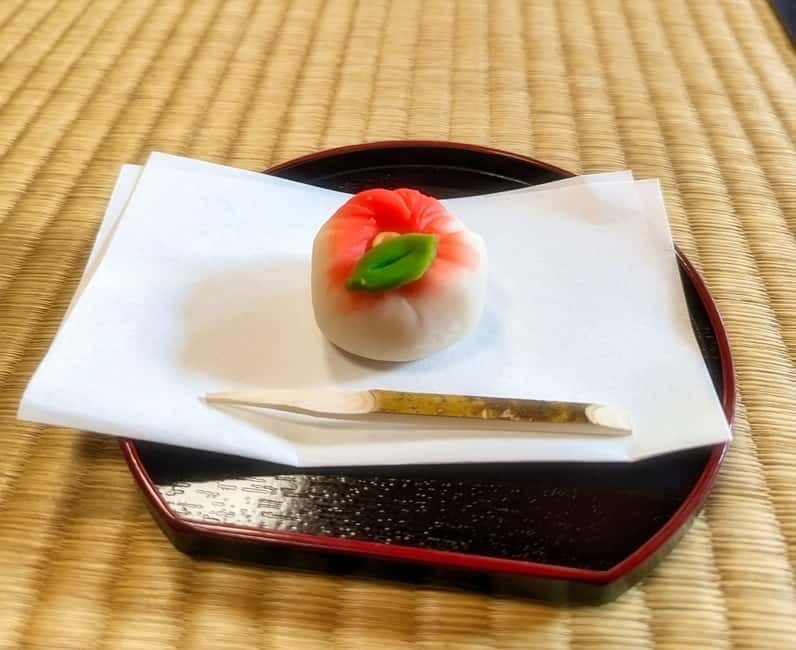
The central performance comes next. A tea master prepares matcha in the traditional style, with each movement performed slowly and deliberately.
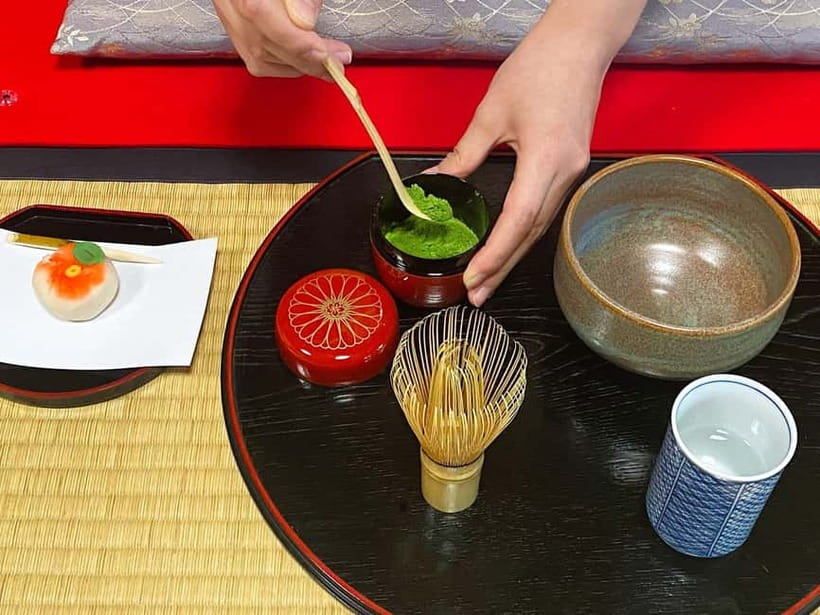
This is the part to watch closely. The charm is not just in the final green tea. It is in the measured handling of the bowl, whisk, scoop, and hot water. The demonstration shows the difference between quickly stirring a powdered drink at home and preparing tea as a formal act.
You will also notice the visual quality of the performance. The tea master’s movements are graceful and practiced, and the traditional room and garden give the demonstration a strong backdrop. Several people have singled out the tea master’s skill and the beauty of the performance as the most striking part of the session.
You are expected to pay attention and remain respectful while the ceremony is underway. Do not walk around or treat the demonstration like a casual stage show. The setting is intimate, and movement can distract from the ritual for everyone in the room.
At the same time, this is presented for an English-speaking audience. You can ask questions, and the tea master or host can explain what you are seeing. That makes the session approachable even if formal Japanese ceremony feels unfamiliar.
Same base, a completely different sort of day:
- PERFECT KYOTO 1-Day Bus Tour
★ 5.0 · 13,518 reviews - Kyoto: Fushimi Inari, Kinkakuji, Bamboo Grove 1 Day Bus Tour
★ 4.8 · 4,316 reviews - Kyoto Geisha Walking Tour: Gion District & Hidden Gems
★ 4.7 · 3,273 reviews - Kyoto: Gion Magical Night Walking Tour with Geisha Trivia
★ 4.9 · 2,393 reviews
Making your own bowl of matcha
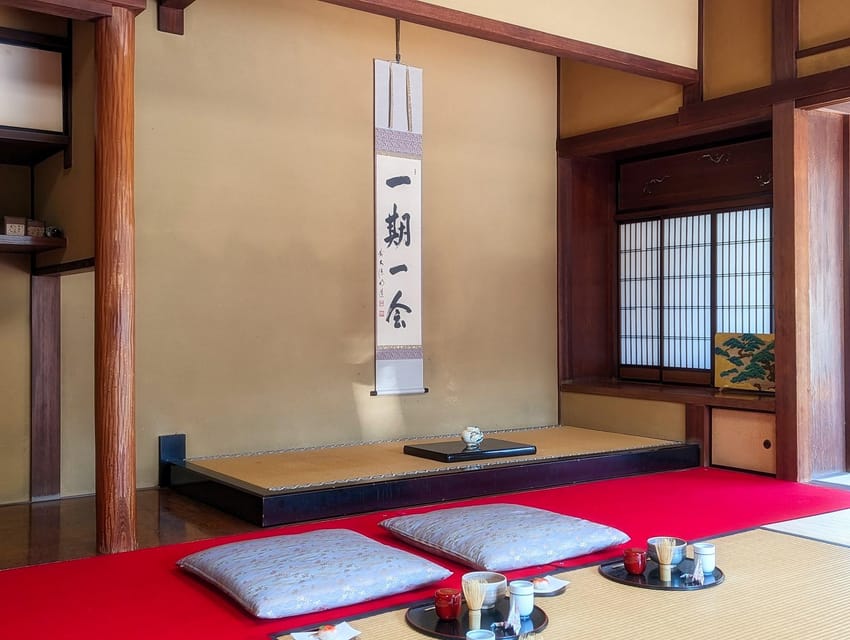
After watching the demonstration, you prepare your own matcha. This hands-on step is one of the best reasons to choose this experience over a simple cultural show.
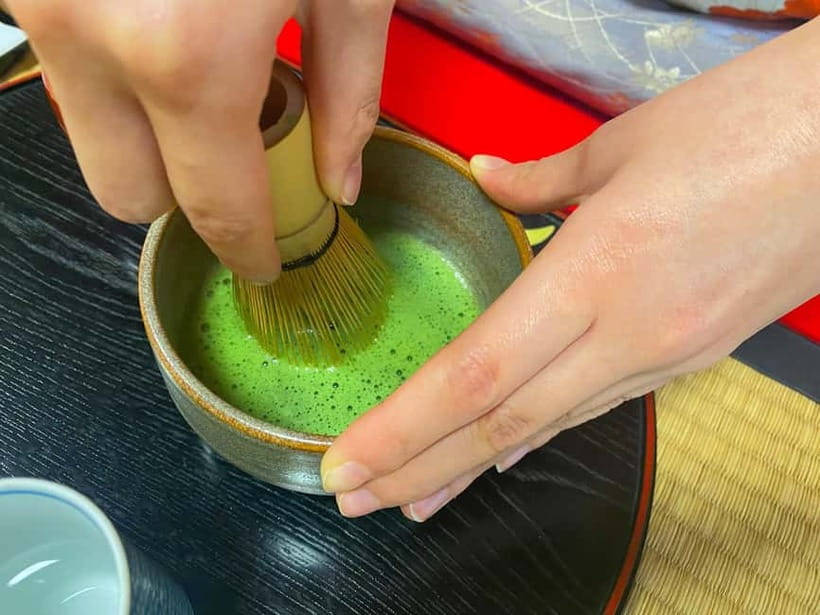
You learn the basic method for brewing the tea, including how to use the bamboo whisk and how to create the right texture. The exact motions may look easy when the tea master performs them. Your own attempt gives you a better appreciation for the years of practice behind the graceful demonstration.
The activity includes two cups of matcha. One is prepared as part of the ceremony, and the other is your own freshly whisked tea. You can taste the difference between a professional preparation and your first attempt, though the instruction is designed to help you produce a pleasant bowl.
Matcha can be bitter, especially if you are used to sweetened tea drinks. A traditional Japanese sweet is served with the ceremony, and its sweetness helps balance the tea. If you are unsure about matcha, this is a friendly way to try it because you are not simply handed a strong cup and left to figure it out.
Some people arrive already fond of matcha. Others discover that a carefully prepared bowl is smoother and less bitter than expected. Either way, the practical lesson gives you something to remember and perhaps repeat at home.
A garden view that changes the mood
The garden deserves its own attention. You do not merely pass it on the way into the tea house. You sit with it as part of the experience.
The view adds a quiet visual focus while you listen and drink. Depending on the season, the garden may offer different colors and textures, but the important feature is its carefully arranged, peaceful character. It helps the ceremony feel slower than the street outside.
This contrast has been one of the most praised parts of the activity. The location is near a major attraction, yet the tea house feels calm once you enter. That makes the session a useful pause in a packed Higashiyama itinerary.
I like this balance. You do not need to travel to a remote temple or spend half a day at a formal retreat to experience a traditional setting. You can reach the tea house during a visit to Kiyomizu-Dera and enjoy a short period of stillness before returning to Kyoto’s busy lanes.
Do keep your expectations sensible. The garden is a beautiful setting viewed from the tea house, not a long garden tour. The activity focuses on the tea ceremony, so you should not book it expecting extensive instruction in Japanese garden design.
The photo and what is included
At the end, you can pose for a photo with your group, using the garden as the background. It is a small touch, but useful if you want a record of the experience without interrupting the ceremony to take pictures yourself.
The $49 price includes the tea ceremony, two cups of matcha, a traditional Japanese sweet, and the photo. It does not include kimono rental. That last point matters because many promotional images of tea ceremonies feature visitors in formal dress. Here, you should arrive in your regular sightseeing clothes unless you arrange clothing separately.
Is the price good value? I think it depends on what you want. For $49, you receive a guided cultural activity in a traditional tea house, two tastings, personal participation, an English explanation, and a notable garden setting. That is reasonable if this is one of the cultural highlights you have been hoping to add to your Kyoto visit.
It is less compelling if you only want a quick cup of matcha. Kyoto has many places to drink tea for much less. You are paying for the instruction, performance, setting, and chance to take part in the preparation.
The 45-minute length also affects the value. It is easy to fit into a busy day, but the session cannot explore every school, utensil, historical period, and rule of tea ceremony. Think of it as a well-structured introduction.
Who will enjoy this Kyoto tea ceremony
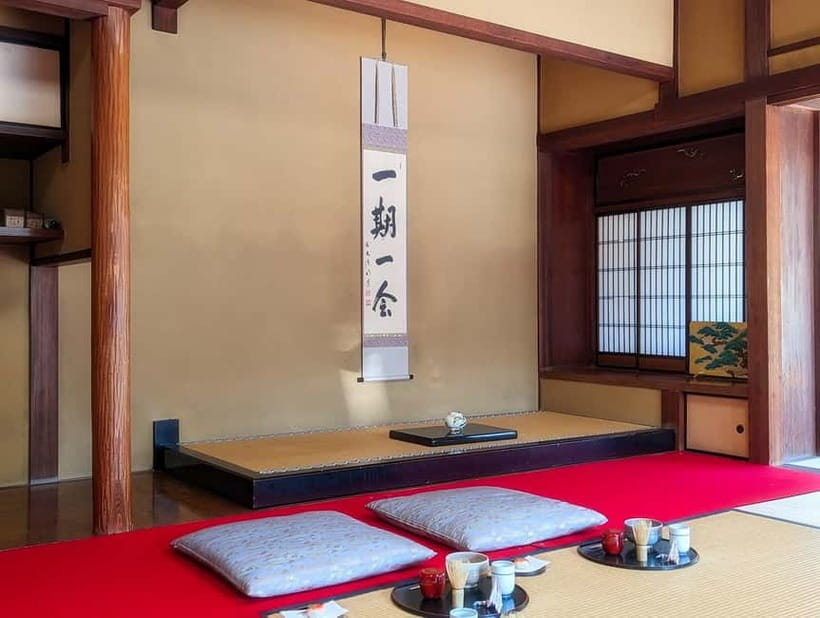
This experience suits first-time visitors who want a clear introduction to Japanese tea culture without committing to a long formal lesson. The English instruction makes it practical for international visitors, and the hosts explain the steps in a welcoming way.
It also works well for couples. Preparing tea together gives you something to do, while the garden and quiet room create a slower moment in the middle of sightseeing. The photo at the end is a pleasant keepsake without making the activity feel like a photo session.
Families can consider it too, but children must be at least 7 years old. Children aged 9 and 13 have enjoyed the activity, and the hands-on matcha preparation gives younger participants a way to stay involved. Very young children may find the formal demonstration difficult to sit through, and the age limit rules them out anyway.
This is also a good choice for anyone who likes history, craft, food, or design. You see how the tools are used, learn why the sequence matters, and taste the result. If you prefer fast-moving attractions, a quiet ceremony may feel slow, but that slowness is the central feature rather than a flaw.
Timing, weather, and practical limits
The session lasts 45 minutes, with several possible starting times depending on availability. That makes it a smart addition between Kiyomizu-Dera and other Higashiyama sights.
Arrive with enough time to find the gate. The activity is held rain or shine, so weather does not cancel the ceremony. Rain may change the view and the walk along Sannenzaka, but the tea house remains the destination.
Leave large bags and luggage behind. The restriction is simple but important if you are moving between hotels or arriving from the train station. Regular sightseeing bags may still need to be kept small, so pack lightly.
You can cancel up to 24 hours before the start time for a full refund, and the reserve now, pay later option allows you to hold a place without paying immediately. These terms are useful when your Kyoto schedule is still shifting, though you should check the available starting time before building the rest of your day around it.
Should you book it?
Book this tea ceremony if you want a focused, peaceful cultural experience in a traditional setting. The garden, graceful demonstration, clear English explanations, and chance to whisk your own matcha create a satisfying introduction to one of Japan’s best-known traditions.
I would especially recommend it during a first Kyoto visit, for couples, for families with children aged 7 and older, and for anyone who wants a quiet break near Kiyomizu-Dera. The setting feels special without demanding a full day.
Skip it if your main goal is simply to drink matcha cheaply, or if you expect to wear a kimono or study the ceremony in great depth. At $49, it is best understood as a cultural lesson and performance with tea, not just a beverage stop.
FAQ
How long does the Kyoto tea ceremony last?
The experience lasts 45 minutes.
How much does the tea ceremony cost?
The listed price is $49 per person.
What is included in the price?
The price includes the tea ceremony, two cups of matcha, traditional Japanese sweets, and a photo.
Is kimono rental included?
No. Kimono rental is not included.
Is the activity conducted in English?
Yes. The instructor language is English.
Where is the meeting point?
The tea house is in Sannenzaka near Kiyomizu-Dera Temple. Walk about 50 meters down Sanneizaka, enter the large gate on the right, continue about 10 meters, and use the white gate on the left to find Sakaguchian.
Can children take part?
Children must be at least 7 years old.
Can I bring luggage or a large bag?
No. Luggage and large bags are not allowed.
Does the ceremony operate in bad weather?
Yes. The activity takes place rain or shine.
Just added around Kyoto
- Kyoto: Zen Meditation at a Private Temple with a Monk★ 5.0 · 25 reviews
- Kyoto: Gion Geisha District & Sake-in-Hand Walking Tour★ 5.0 · 37 reviews
- Private Pewter Sake Cup Experience with a Kyoto Artisan★ 5.0 · 31 reviews
- Your Private Vacation Photography Session In Kyoto★ 5.0 · 110 reviews
- Private Guided Traditional Buddhist Cooking in Japan★ 5.0 · 16 reviews
- Kyoto Wagashi(Japanese sweets) Cooking Class near Fushimiinari★ 5.0 · 60 reviews
- Traditional Japanese Music show & Experience Tour in Kyoto★ 5.0 · 57 reviews
- Kyoto:Family-Friendly Kimono & Yukata Experience at WARGO★ 5.0 · 147 reviews
Kyoto Tours, compared.
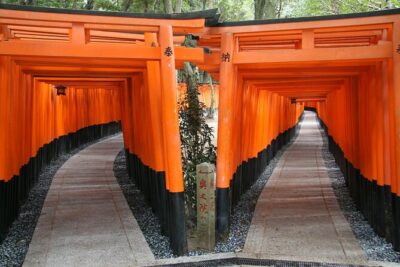
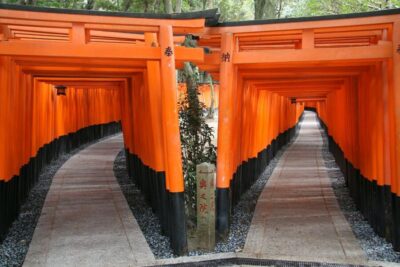
Fushimi Inari, Kinkakuji, Bamboo Grove 1 Day Bus Tour
Read our review →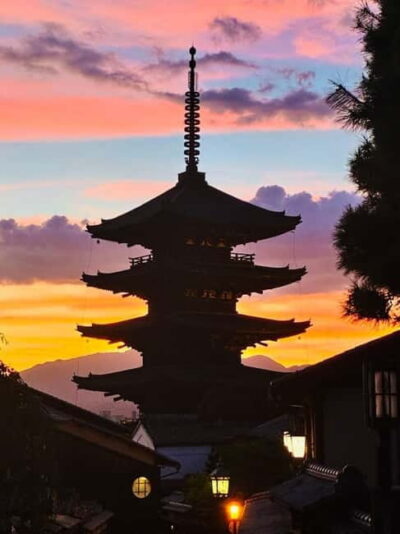
Kyoto Geisha Walking Tour: Gion District & Hidden Gems
Read our review →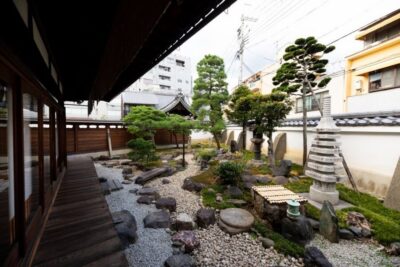
Gion Magical Night Walking Tour with Geisha Trivia
Read our review →
Gion Geisha District Walking Tour – Stories of Geisha
Read our review →
Best of Kyoto: Gion, Geisha, Pagodas & Cobblestones
Read our review →Browse the lists this tour appears in