
Reviewed · KYOTO TOURS
Kyoto: Table-Style Tea Ceremony at a Kyo-Machiya
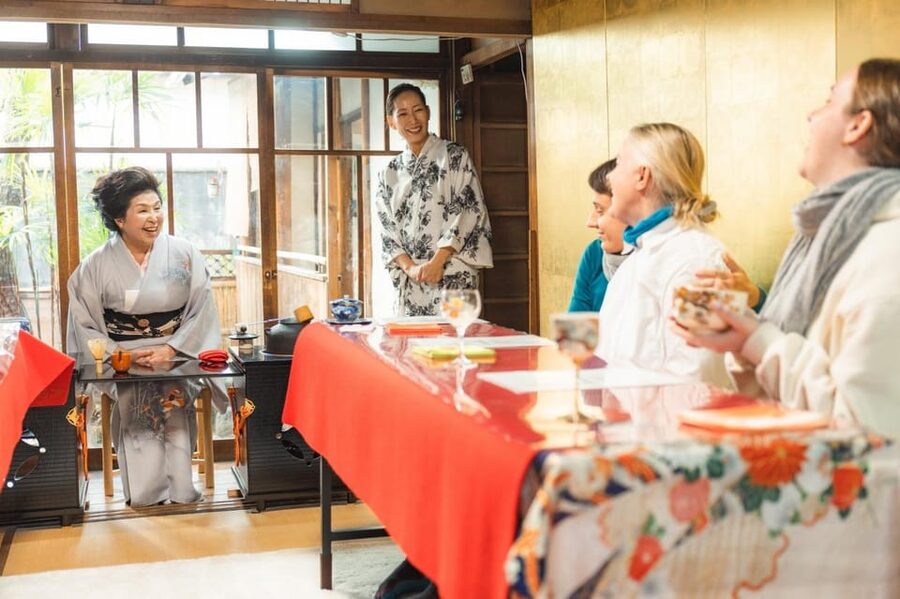
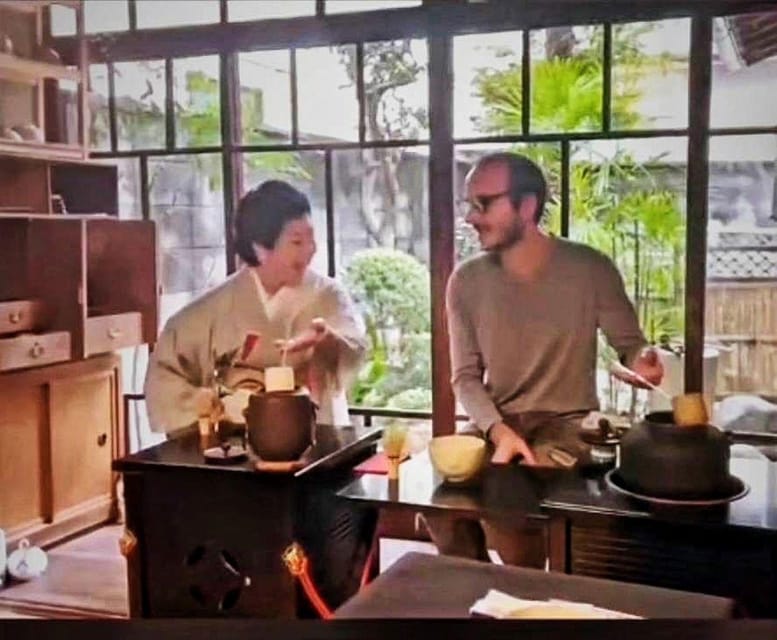
A tea ceremony usually brings to mind knees folded on a tatami mat. Here, you sit at a table and chair, which makes the 90-minute experience far easier for many visitors. Inside a 100-year-old Kyo-Machiya, English-speaking guides explain the ceremony, serve sweets and tea, and let you prepare your own matcha.
I especially like the chance to walk through a real old townhouse, with its garden, Buddhist and Shinto altars, and antiques. The calligraphy keepsake is another fine touch. The main consideration is location: Fushimi is about 20 to 25 minutes from central Kyoto, and the kimono option requires arriving 30 minutes early.
Key points at a glance
- Chair seating instead of floor seating: You can focus on the ceremony without worrying about stiff knees or difficult posture.
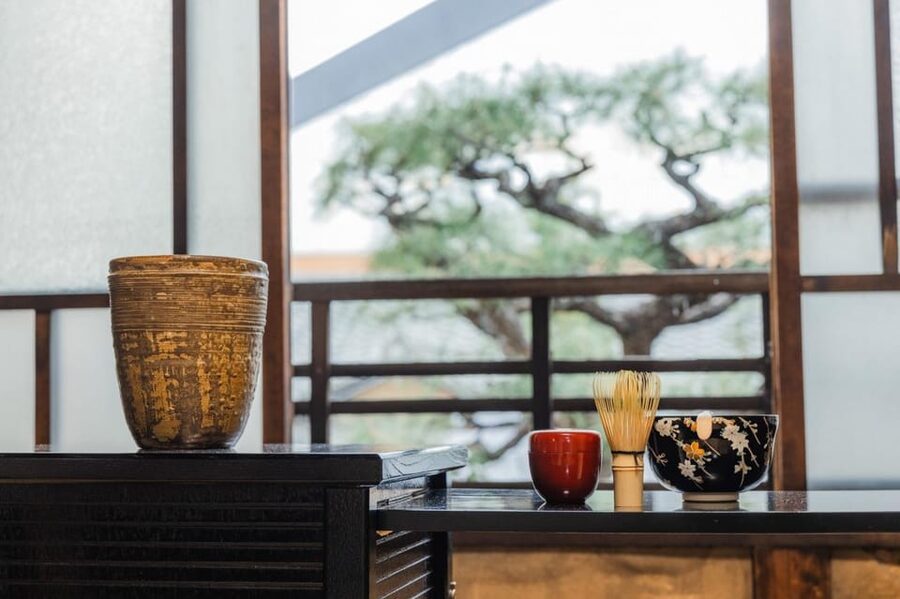
- A working matcha lesson: Use a bamboo whisk to make a creamy, frothy bowl of thick tea.
- A 100-year-old Kyo-Machiya: See a traditional home with a garden, old altars, antiques, and the atmosphere of everyday Kyoto.
- More than tea: The session can include calligraphy, flower arranging, sweets, sake, and Japanese customs.
- A useful southern Kyoto base: Pair it with Fushimi Inari, Fushimi’s sake district, Uji, Osaka, or Nara.
- Kimono photos and personal touches: The optional outfit adds dressing assistance, garden photos, and a Japanese name written on a scroll or envelope.
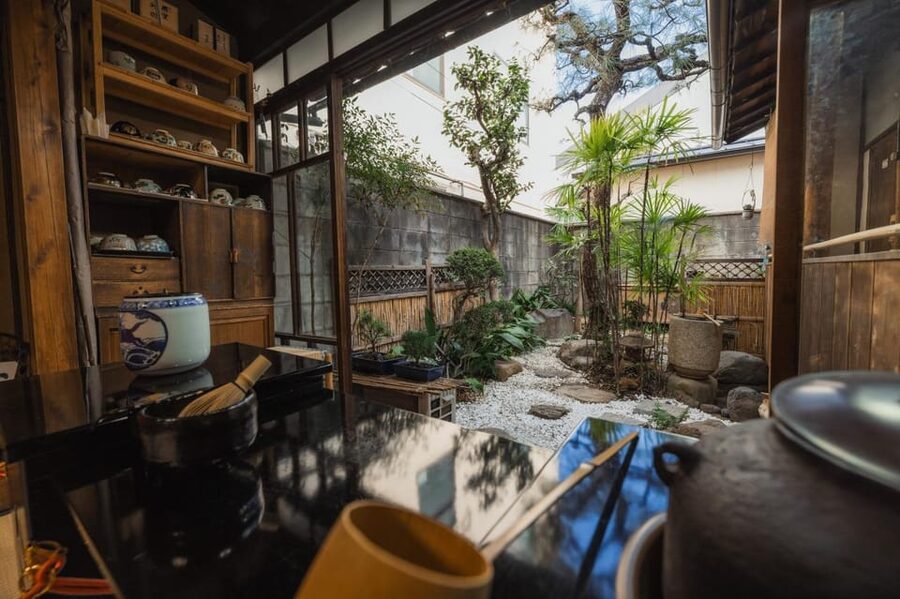
Entering a 100-year-old Kyo-Machiya
The experience takes place in Fushimi, in southern Kyoto, rather than beside the city’s most famous central temples. That extra train ride is part of the appeal. Fushimi is a historic district associated with sake, shopping arcades, casual restaurants, and the town developed under Toyotomi Hideyoshi.
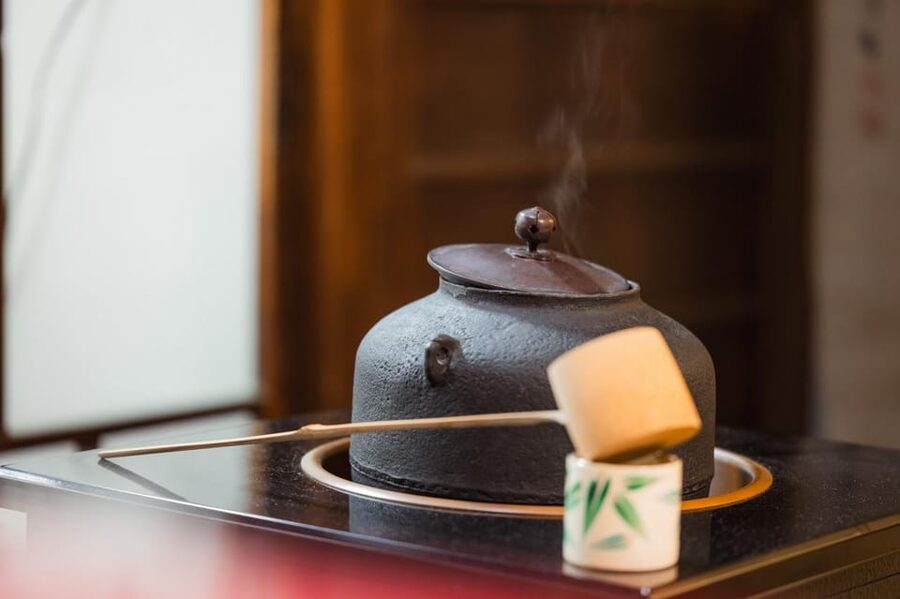
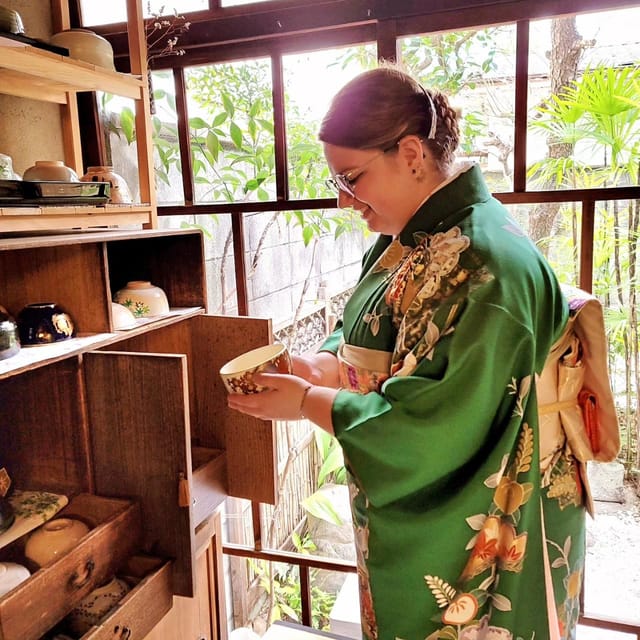
Look for an old townhouse with a blue curtain. Guides wearing kimono wait near the entrance. The building may look modest from the street, but the interior gives you the setting that makes this activity work: old wood, traditional rooms, a garden, household altars, and antique objects.
I like that you are not simply placed in a decorated room for a quick photo. You can stroll through the townhouse and see details connected with domestic religious life, including Buddhist and Shinto altars. These small features help explain how Japanese culture often brings several traditions into one home.
The garden also plays a part before the tea begins. You learn how to purify yourself at a stone basin, following a custom associated with entering a shrine or a formal tea setting. It is a simple act, but it gives the ceremony a clear beginning and helps you understand that tea is about conduct and attention, not just drinking powdered tea.
More Tea Ceremonies in Kyoto
- Kyoto: Tea Ceremony in a Traditional Tea House in Kiyomizu
★ 4.9 · 3,519 reviews - Kyoto: Tea Ceremony Ju-An at Jotokuji Temple
★ 4.9 · 3,207 reviews - Kyoto: 45-Minute Tea Ceremony Lesson Experience
★ 4.3 · 2,378 reviews
Why chair seating changes the tea ceremony
The practical selling point is simple: you do not need to sit on the floor. The ceremony uses tables and chairs, so you can watch the movements, handle the utensils, and take part without the strain of kneeling or sitting cross-legged.
That makes this a good choice for families, older visitors, people with limited flexibility, and anyone who wants cultural context without committing to a highly formal floor-based ceremony. One participant with a leg injury received extra patience on the stairs, but the site is still not suitable for wheelchair users. The historic townhouse has stairs, so anyone with mobility concerns should think carefully before booking.
Chair seating does not remove the manners. You still learn how to behave, how to receive the bowl, and how to appreciate the tea and sweets. The guides explain the meaning behind the movements rather than expecting you to memorize a long list of rules.
The English instruction is a major help. The session uses spoken explanations and PowerPoint presentations to cover the development of tea ceremony in Japan, its spirit, and its manners. You can ask questions as you go, and the activity is conducted in English.
The 90-minute program, step by step
The exact order can vary, especially if you choose the kimono option, but you should expect a compact sequence of cultural activities rather than one long demonstration.
A welcome drink and a look around
The visit begins with hospitality. Depending on the arrangement, you may receive sake, juice, Japanese tea, or another welcome drink. This gives you time to settle in and meet the guides before the more formal tea service.
If you arrive early, the hosts may show you around the townhouse. Take that opportunity. The house is one of the main reasons to choose this experience over a basic tea tasting in a modern venue.
Same base, a completely different sort of day:
- PERFECT KYOTO 1-Day Bus Tour
★ 5.0 · 13,518 reviews - Kyoto: Fushimi Inari, Kinkakuji, Bamboo Grove 1 Day Bus Tour
★ 4.8 · 4,316 reviews - Kyoto Geisha Walking Tour: Gion District & Hidden Gems
★ 4.7 · 3,273 reviews - Kyoto: Gion Magical Night Walking Tour with Geisha Trivia
★ 4.9 · 2,393 reviews
A short lesson on tea ceremony
The presentation gives you the essential background. You learn how tea ceremony developed in Japan and why small gestures, placement of utensils, and quiet attention matter.
This part is useful for first-time visitors because it provides a frame for everything that follows. Without it, whisking matcha can feel like a craft demonstration. With it, you see how preparation, hospitality, seasonality, and manners fit together.
The guides also demonstrate the ceremony. Watch the details, but do not worry about copying every movement perfectly. The teaching is designed for an English-speaking audience and includes clear instructions for your own turn.
Sweets before the tea
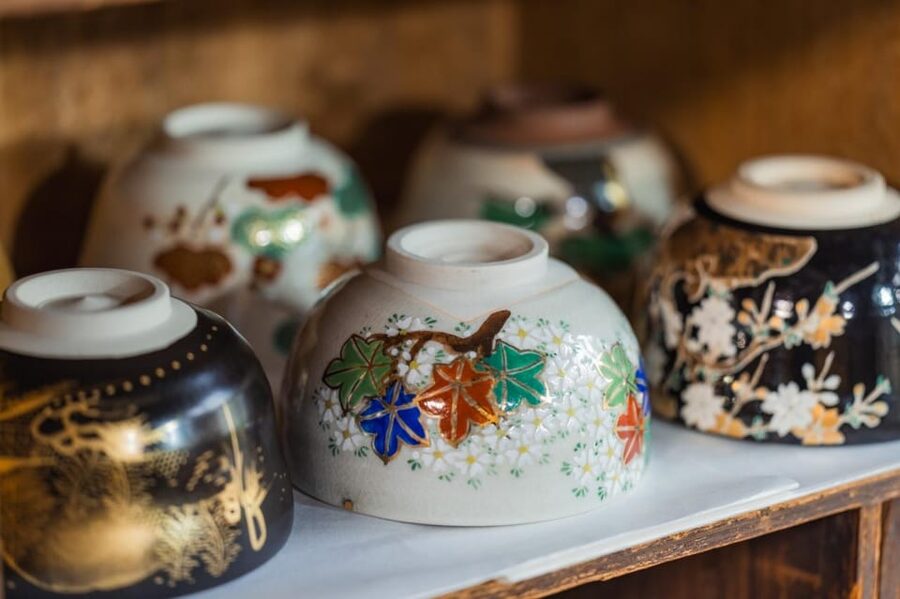
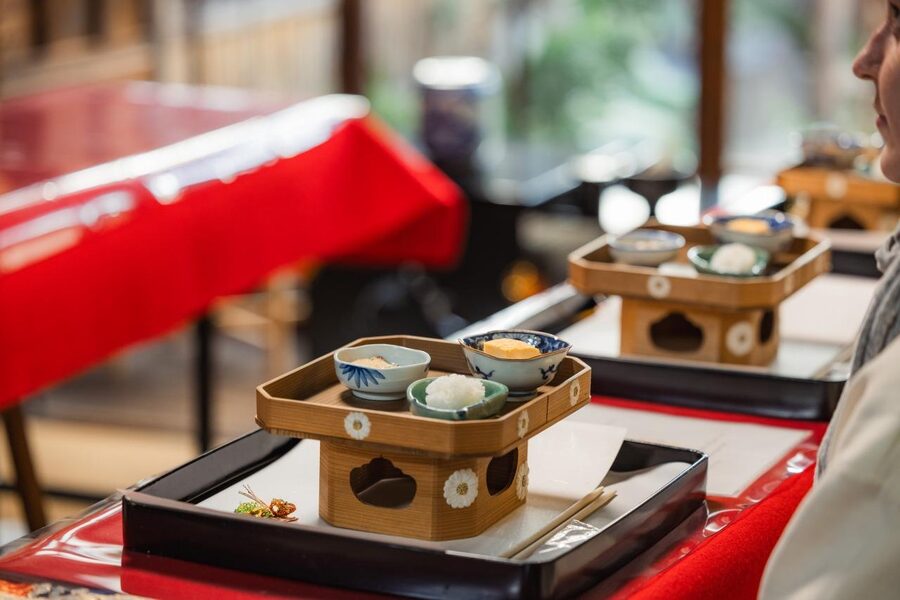
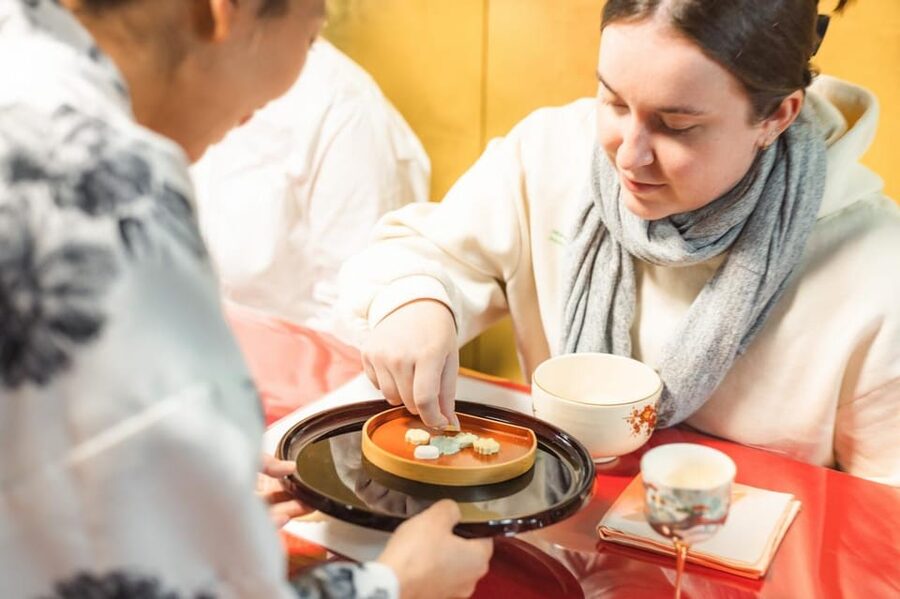
Traditional sweets accompany the tea ceremony. Their sweetness prepares your palate for matcha’s strong, grassy taste.
This pairing is not just a snack break. It shows the balance built into the tea service. The sweet softens the bitterness of the tea, while the tea keeps the dessert from becoming cloying.
Making your own frothy matcha
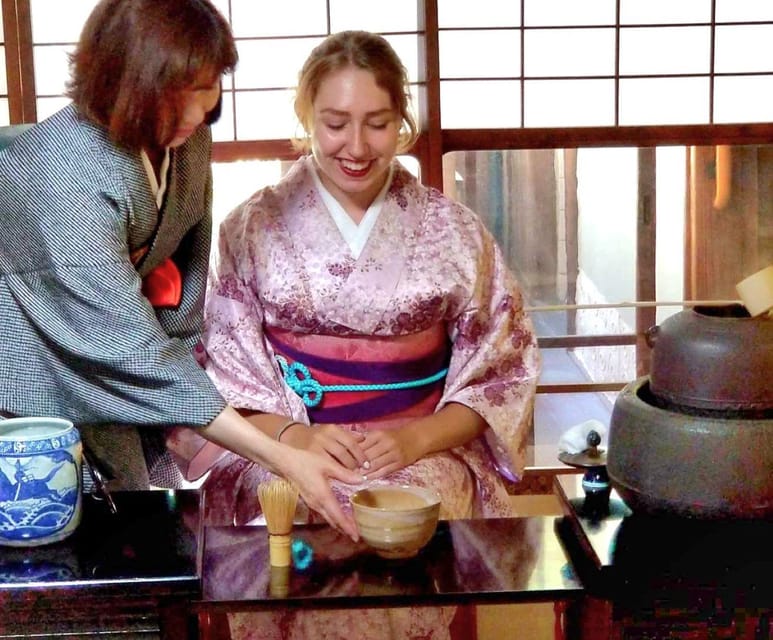
This is the hands-on center of the activity. You use a bamboo whisk to prepare matcha and learn how to create a creamy, frothy surface.
The experience also includes latte art using thick tea. That playful element makes the session approachable, especially for children and teenagers, while still connecting to the traditional ingredient and technique.
You will probably appreciate having the guides demonstrate first. Matcha preparation looks easy until you try to produce a smooth foam. The point is not to make a perfect bowl on your first attempt. It is to understand the motion, the texture, and the care involved in preparing the drink.
If you enjoy matcha, there may be an opportunity to purchase matcha powder at the end. That is a useful extra, since you can try the technique again at home instead of leaving the lesson behind in Kyoto.
Kimono, garden photos, and cultural details
The kimono option adds a visual and practical layer to the visit. The staff help you choose from a selection of outfits and dress you before the ceremony. Several people found the dressing process a highlight in its own right, especially because the hosts took time to make the outfits look polished.
You also have time for photos in the garden and around the townhouse. Umbrellas, folding fans, and a katana are available as photo props. These are clearly staged elements, but they suit the setting and give families and couples something fun to do between the more instructional parts.
Arrive 30 minutes before the scheduled start if you reserve the kimono option. That extra time matters. Dressing should not be rushed, and arriving late could cut into the ceremony.
The kimono is not advised for pregnant visitors, for health and safety reasons. The activity itself is not suitable for wheelchair users, and the townhouse’s stairs may be difficult for anyone with a leg or balance problem. If you skip the kimono, you still receive the tea ceremony and other cultural activities.
Calligraphy and your Japanese name
Near the end, you write your name in Japanese. Depending on the activity arrangement, you may work with kanji or hiragana, and some sessions include hiragana, katakana, and kanji practice.
You receive your name written on a hanging scroll or envelope. This is more useful than a generic souvenir because it connects directly with your visit and gives you a small piece of Japanese writing to take home.
Calligraphy is also a good change of pace after the tea preparation. You move from watching controlled gestures to making your own marks with a brush. Do not expect perfect characters on the first try. The value is in learning how the writing is formed and seeing your name presented in a new script.
The activity works well for families because younger participants can stay involved. The program has enough variety that the session does not depend on everyone having a serious interest in tea.
Flower arranging and the spirit of hospitality
Flower arranging is included as part of the cultural program. The activity introduces another traditional art and adds a seasonal, visual element to the afternoon.
Along with the garden purification, tea manners, calligraphy, and flower work, the session gives you a broad introduction to Japanese customs. It is not a full professional tea-school lesson, and 90 minutes is too short for that. Think of it as a friendly cultural workshop that lets you try several related practices.
The strongest part of the teaching is the personal care from the hosts. The kimono dressing, tea instruction, calligraphy, and flower arranging all require hands-on help. The guides are described as patient, polite, warm, and comfortable speaking English. That matters in an activity built around small physical steps.
What the price includes at $45
At $45 per person, the base price is reasonable for a 90-minute private or small-group activity in a historic home. You receive more than a bowl of tea: a welcome drink, traditional sweets, a demonstration, your own matcha preparation, calligraphy, a written Japanese name, and flower arranging.
The value becomes stronger for visitors who want several cultural introductions but do not have time for separate bookings. You can try tea ceremony, writing, flowers, and traditional hospitality in one appointment.
The kimono option costs extra, though the supplied details do not give the additional price. If photos and dressing are important to you, it is likely the option worth comparing when you check availability. If your main goal is learning about matcha, the base session should still cover the central experience.
A 4.9 rating from 1,211 reviews points to unusually consistent satisfaction, especially with the hosts, clear English explanations, kimono assistance, and range of activities. I would still judge the booking by your needs: this is a guided introduction, not a silent, highly formal ceremony lasting several hours.
Getting to Fushimi from Kyoto
From Kintetsu Kyoto Station, take an express train for about 15 minutes to Kintetsu Momoyama-Goryo-mae Station. From Keihan Gion-Shijo Station, use the train to Fushimi-Momoyama Station.
From either station, walk west along the Otesuji shopping arcade. Turn right at Mizuho Bank or the Rakuten mobile shop. From JR Momoyama Station, head northwest, pass Gokogu Shrine on your right after about 300 meters, continue to the arcade, and turn at the same landmark.
The final walk is short, but allow time to find the blue-curtained townhouse. The arcade makes the approach easy to combine with lunch, snacks, or shopping.
The district is about 20 minutes by train from central Kyoto, depending on your departure point and connections. It is not a difficult detour, but it is not a central Kyoto walking tour either.
Pairing the ceremony with nearby sights
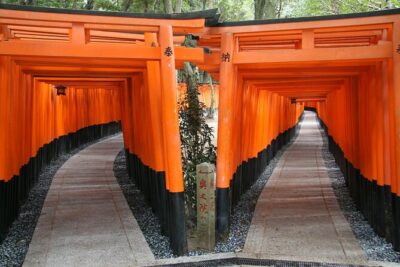
Fushimi makes sense as part of a larger day. Fushimi Inari Shrine is a natural pairing. The shrine is about 15 minutes by train from Keihan Fushimi Inari Station, so you can visit the torii gates before or after the townhouse session.
Uji is another good match. The tea-famous town is about 20 minutes away by train, making it possible to link a hands-on matcha activity with a place strongly associated with Japanese tea.
You can also eat and shop in Fushimi itself. The sake district gives you a reason to stay after the ceremony rather than race back to central Kyoto.
The location is especially convenient if your wider route includes Osaka or Nara. Osaka takes about 40 minutes by express train, while Nara takes about 50 minutes. Check your exact train route and activity time carefully, but the southern Kyoto setting can fit well into a broader Kansai itinerary.
Who should book this experience
I would choose this for a first tea ceremony, a family wanting an activity with several hands-on parts, or a couple looking for kimono photos in a traditional house. It also suits anyone who wants cultural instruction in English and prefers a relaxed format over strict floor seating.
The mix of activities is helpful for mixed-interest groups. One person can enjoy the history and tea preparation, another can focus on photography, and children can take part in calligraphy and flower arranging.
I would be more cautious if you want a deeply formal tea-school experience with long periods of quiet observation. The program is adapted for international visitors and includes props, photos, presentations, and several activities. That is a strength for most first-time visitors, but it is not the same as attending a specialist ceremony.
The stairs and lack of wheelchair suitability are important practical limits. Pregnant visitors should also skip the kimono option.
Booking details worth knowing
You can cancel up to 24 hours before the experience for a full refund, and the reserve-now, pay-later arrangement keeps your plans flexible. Starting times vary, so check availability before building your Fushimi Inari or Uji plans around the ceremony.
Private and small-group formats are available. A small group should give you more chances to ask questions and get help with the whisk, calligraphy, and kimono. If you choose the kimono option, select it carefully in the booking process and arrive 30 minutes early.
Should you book it?
Yes, if you want a welcoming and practical introduction to Japanese culture rather than tea alone. The chair seating, English instruction, old townhouse, matcha preparation, calligraphy, and optional kimono create a lot of substance for $45 before any kimono supplement.
The best reason to book is the setting and the hosts’ personal attention. The best reason to pause is the stairs and the distance from central Kyoto. Plan it with Fushimi Inari, Uji, or a meal in the sake district, and this becomes one of the more useful cultural stops in southern Kyoto.
FAQ
How long does the tea ceremony experience last?
The activity lasts 90 minutes. If you select the kimono option, arrive 30 minutes before the scheduled start for dressing.
Can I sit on a chair instead of the floor?
Yes. The tea ceremony uses tables and chairs, so you do not need to sit on the floor.
What language is the experience offered in?
The instructor and activity are offered in English.
Is a kimono included?
Kimono rental is included only if you select the kimono option. Pregnant visitors should not choose the kimono option for health and safety reasons.
What is included in the base activity?
The experience includes the tea ceremony, traditional sweets, a welcome drink such as sake or juice, matcha preparation, calligraphy, and a hanging scroll or envelope with your name in Japanese. Flower arranging is also included.
Can I take photos during the experience?
Yes. You can take photos and videos in the townhouse and garden. Umbrellas, folding fans, and a katana are available as photo props.
How do I reach the townhouse from Kyoto Station?
From Kintetsu Kyoto Station, take an express train for about 15 minutes to Kintetsu Momoyama-Goryo-mae Station. Walk west along Otesuji shopping arcade, then turn right at Mizuho Bank or the Rakuten mobile shop.
Is the activity wheelchair accessible?
No. The experience is not suitable for wheelchair users. The historic townhouse also includes stairs, so visitors with mobility concerns should consider this before booking.
Just added around Kyoto
- Kyoto: Zen Meditation at a Private Temple with a Monk★ 5.0 · 25 reviews
- Kyoto: Gion Geisha District & Sake-in-Hand Walking Tour★ 5.0 · 37 reviews
- Private Pewter Sake Cup Experience with a Kyoto Artisan★ 5.0 · 31 reviews
- Your Private Vacation Photography Session In Kyoto★ 5.0 · 110 reviews
- Private Guided Traditional Buddhist Cooking in Japan★ 5.0 · 16 reviews
- Kyoto Wagashi(Japanese sweets) Cooking Class near Fushimiinari★ 5.0 · 60 reviews
- Traditional Japanese Music show & Experience Tour in Kyoto★ 5.0 · 57 reviews
- Kyoto:Family-Friendly Kimono & Yukata Experience at WARGO★ 5.0 · 147 reviews
Kyoto Tours, compared.
Fushimi Inari, Kinkakuji, Bamboo Grove 1 Day Bus Tour
Read our review →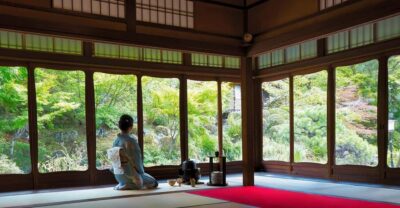
Tea Ceremony in a Traditional Tea House in Kiyomizu
Read our review →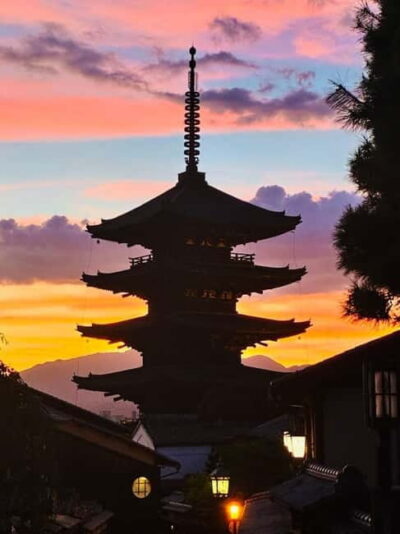
Kyoto Geisha Walking Tour: Gion District & Hidden Gems
Read our review →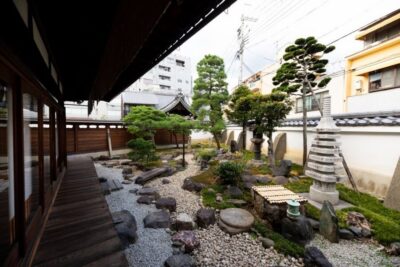
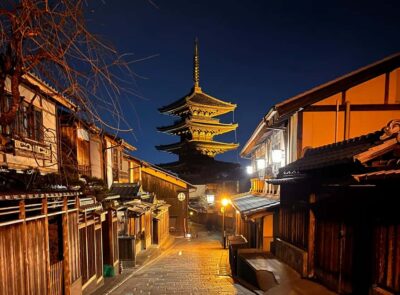
Gion Magical Night Walking Tour with Geisha Trivia
Read our review →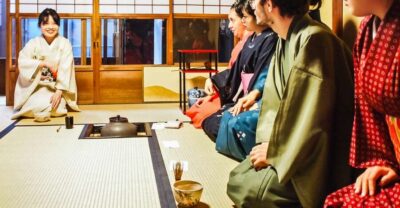
Gion Geisha District Walking Tour – Stories of Geisha
Read our review →Browse the lists this tour appears in