
Reviewed · KYOTO TOURS
Kyoto Gion: 2-Hour Geisha Culture & History Walking Tour
Gion’s appeal is not just its painted wooden facades or the chance to spot a geisha. It is the way a good guide helps you read the district: which lanes once served tea houses, how a maiko progresses toward becoming a geisha, and why the old buildings still matter. I like the mix of geisha culture and everyday Kyoto history, and I like that the route includes quiet backstreets rather than only the famous photo stops. The main consideration is pace: two hours covers a lot, and the walk can feel hard in hot weather, especially since there is no scheduled drink stop.
I also like the small-group limit of 15 people and the practical advice built into the walk. Guides including Soyo, Uta, Dan, Alex, Kenta, Ukyo, Oliver, and Naoya have been praised for clear English, storytelling, restaurant suggestions, and patience when people arrive late or take a wrong bus. A 5 to 6 p.m. start may improve your odds of seeing a geisha, while some shops and sites may be closing later in the evening.
Key points to know before you book
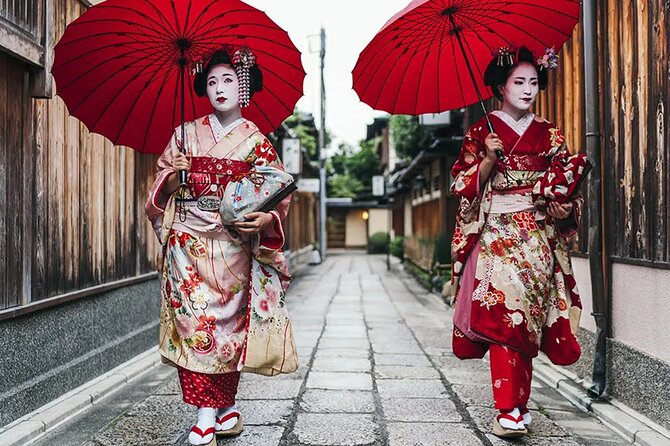
- Geisha culture explained with context: Learn about the training, dances, kimono work, hairstyles, and different roles of maiko and geisha.
- Seven varied stops in two hours: The route links Hanamikoji, Yasaka Shrine, Hokan-ji Temple, Pontocho, Gion Shirakawa, and Yasui-Konpiragu.
- A chance to see a geisha: Sightings are possible, not guaranteed, and timing around 5 to 6 p.m. may help.
- Old Kyoto beyond the main street: Quiet lanes and Edo-period wooden townhouses give the walk more depth than a photo stop alone.
- Useful local advice: Guides may point you toward restaurants, rooftop bars, and other places worth visiting during your stay.
- Good value at $23.88: For two hours with a local guide and a maximum of 15 people, the price is modest, though all admissions are listed as free.
Why a guided walk helps you understand Gion
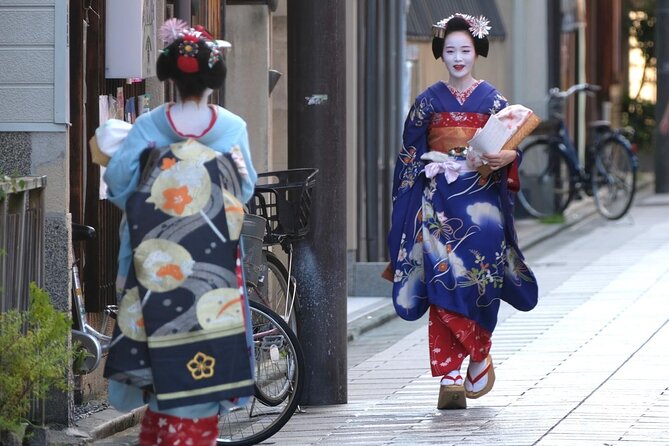
Gion can be easy to admire and hard to understand. You see lanterns, tiled roofs, wooden facades, and people in kimono, but without context, it can all blur into a postcard version of Kyoto. This walk gives you a framework for what you are seeing.
The focus is geisha culture, but the subject is handled through the district itself. You hear about the demanding training of geisha and maiko, the role of dance, and the skill behind traditional hairstyles and kimono. That matters because Gion is not simply a place where performers appear for photographs. It is a working cultural quarter with rules, customs, and a long connection to entertainment, hospitality, and craft.
A guide also helps you behave well. The possibility of seeing a geisha can make people forget that she is going to work, not posing for a tour group. The experience is at its best when you treat any sighting as a brief glimpse and keep a respectful distance.
The group size is capped at 15 people. That is not the same as a private walk, but it is small enough for the guide to keep the group together and answer questions. Guides such as Uta and Dan have been singled out for friendly, engaging explanations, while Naoya has been praised for patience and for helping ease the stress when someone arrived late after taking the wrong bus.
More geisha-district evenings:
- Kyoto Geisha Walking Tour: Gion District & Hidden Gems
★ 4.7 · 3,273 reviews - Kyoto: Gion Magical Night Walking Tour with Geisha Trivia
★ 4.9 · 2,393 reviews - Kyoto: Gion Geisha District Walking Tour – Stories of Geisha
★ 4.7 · 2,187 reviews
Hanamikoji Street and the world of geisha
Hanamikoji Street is the natural starting point for the cultural side of the walk. It is known as the heart of Gion, and the guide uses the street to explain the world behind the closed doors of the district’s tea houses.
You can expect about 15 minutes here. That is enough time to look at the street’s traditional frontage and hear about geisha training, graceful dance, kimono craftsmanship, and elaborate hair arrangements. The short stop works well as an introduction, though it does not allow for a long, detailed visit inside any one building.
This is also one of the places where you might see a geisha or maiko moving between appointments. Do not book this tour on the assumption that a sighting will happen. The walk can still be worthwhile without one, and the guide’s explanation gives the sighting meaning if you are lucky.
Timing matters. Several people have found that a start around 5 or 6 p.m. gives a better chance of seeing a geisha on the street. Evening light can also make the wooden facades more attractive, although late departures may run into closing times at shops and other stops.
Sannenzaka and Ninenzaka, Kyoto’s famous photo streets
The route then reaches Sannenzaka and Ninenzaka, two sloping lanes known for traditional buildings, small shops, and classic Kyoto views. The stop lasts about 15 minutes, so think of it as a quick orientation and photo pause rather than a full shopping visit.
The guide explains the local story that falling on the slope means you will die within two years, then separates the eerie rumor from the facts. That kind of small detail is useful because it turns a familiar photo location into a place with local stories instead of leaving you with only a pretty backdrop.
This part of the route can be crowded. You may have to pause often for other people, shop traffic, or groups taking pictures. The narrow streets are attractive, but they are not peaceful at every hour. A guide helps you move through them with purpose, though you should not expect much quiet here.
The stop is especially useful early in a Kyoto visit. You can return later if you want more time for shops and photos, already knowing what you are looking at and how the streets fit into the wider Gion area.
Yasaka Shrine, a 1,000-year-old place of worship
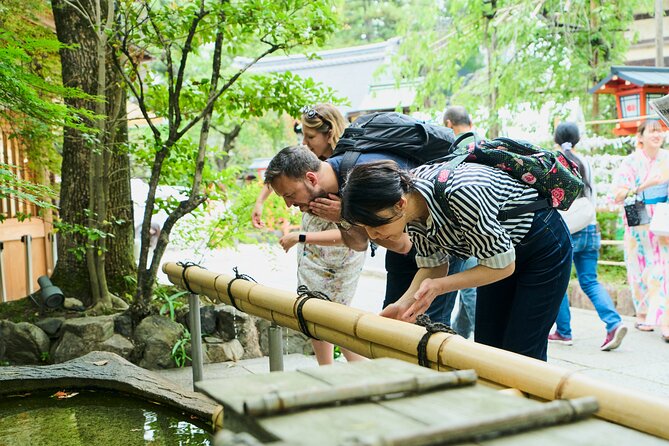
Yasaka Shrine receives about 20 minutes, making it one of the longer stops. The shrine is presented as a 1,000-year-old site, and it gives the walk a chance to move beyond entertainment culture into Shinto practice and Kyoto’s religious life.
You will have time to take in the grounds and ask questions about what you are seeing. The shrine is free to enter, so the tour price is not being used to cover a costly admission. Instead, you are paying for the guide’s interpretation and the convenience of linking several sites in one walk.
If you have never visited a Shinto shrine, this stop can help you feel less awkward about the basic customs of worship. The itinerary also includes Yasui-Konpiragu later, where you get another chance to see Shinto worship in a different setting.
The guide’s role is important here. A quick look at a shrine gate and a few buildings does not tell you much by itself. Guides including Kenta and Ukyo have also offered restaurant suggestions during the walk, so this is a good moment to ask practical questions about where to eat after the tour.
More history-led days in Kyoto:
- Kyoto Gion Historical Walking Tour
★ 5.0 · 188 reviews - Historical Kyoto E-Bike Tour
★ 5.0 · 181 reviews - Kyoto: Nijo Castle World Heritage Guided Tour with Admission
★ 5.0 · 128 reviews - Kyoto: Private 2.5 Hour Historical Walking Tour
★ 4.9 · 121 reviews
Hokan-ji Temple and the most photographed view
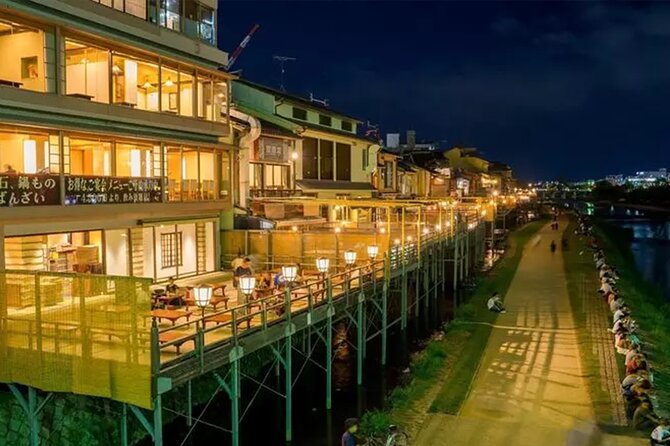
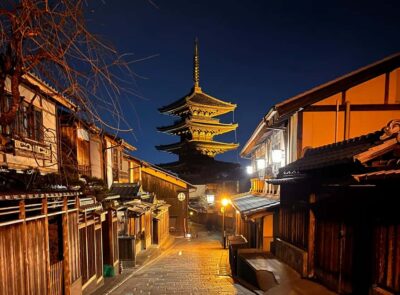
Hokan-ji Temple receives another 20-minute stop. Its five-story pagoda is one of Kyoto’s most recognizable sights, and the surrounding approach is often treated as one of the city’s best photo locations.
The value here is visual, but the guide helps you place the view in the old neighborhood around it. You see how the temple, sloping streets, and wooden buildings work together rather than treating the pagoda as an isolated landmark.
This is a good place to have your photo taken. Guides have been praised for helping with pictures during the walk, which is a small service but a useful one when you are traveling alone or with a group that wants everyone included.
Do not expect an extended temple visit. The schedule gives you time to look, listen, and photograph the setting, not to explore every corner. If Hokan-ji is high on your list, return on your own with more time after learning the basic layout.
Pontocho and a pause by the Kamogawa River
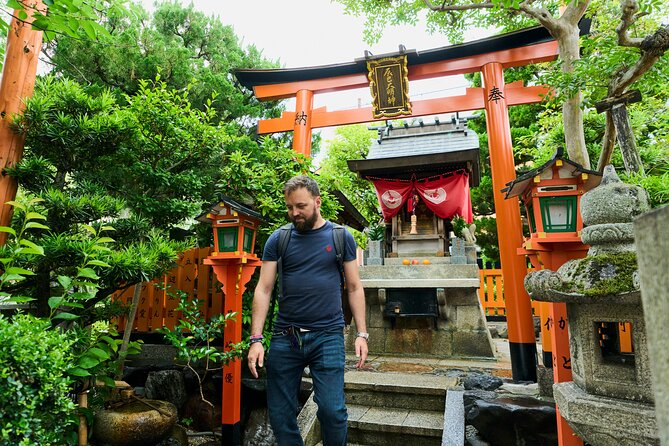
Pontocho is described as a historic gourmet street, with about 15 minutes included in the route. This narrow area is closely associated with restaurants and evening dining, so the stop has practical value as well as visual interest.
Your guide may point out places to eat or suggest rooftop bars. That advice can save you from choosing a restaurant at random in one of Kyoto’s more popular dining areas. You should still treat any suggestion as a starting point and check current opening times yourself.
The route also includes a local chill-out spot beside the Kamogawa River. The exact length of this pause is not specified, but it offers a change of mood after the busier streets. The river is a useful place to slow down, look across the water, and see how local life continues just beyond the tourist lanes.
This portion of the route helps balance the geisha focus. You are not spending the whole two hours looking for costumes and old facades. You are also seeing where people meet, eat, and relax in modern Kyoto.
Gion Shirakawa and Edo-period wooden townhouses
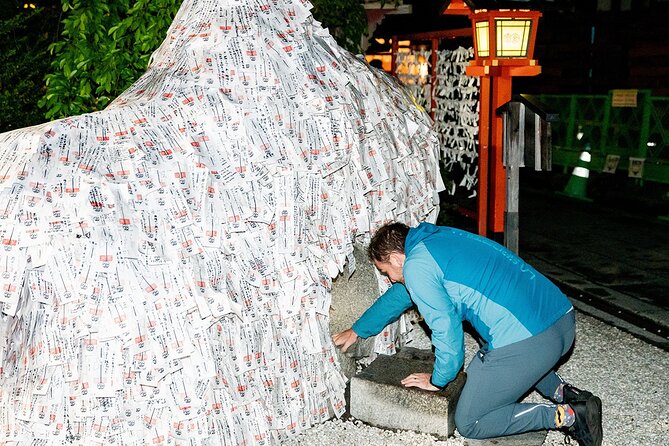
Gion Shirakawa receives about 20 minutes and is one of the strongest stops for old-town atmosphere. Here you see wooden townhouses associated with the Edo period, along with the quieter lanes that many people miss when they stay on Hanamikoji.
The guide explains the stories behind the buildings. That changes the way you look at a wooden facade. Instead of seeing only a preserved exterior, you begin to notice the narrow frontage, the careful materials, and the way the street holds onto an older form of Kyoto.
This is likely to be one of the calmer parts of the walk, though conditions vary by time and day. Sunset can be especially attractive here, according to the timing advice built into the experience. Low light gives the lanes a softer feel, but it also means you should pay attention to where you are walking.
Gion Shirakawa is also a good place to think about the limits of preservation. The old buildings are beautiful, but they are part of a living neighborhood. Keep voices low, avoid blocking doorways, and follow the guide’s lead about where to stop.
Yasui-Konpiragu and a final look at Shinto worship
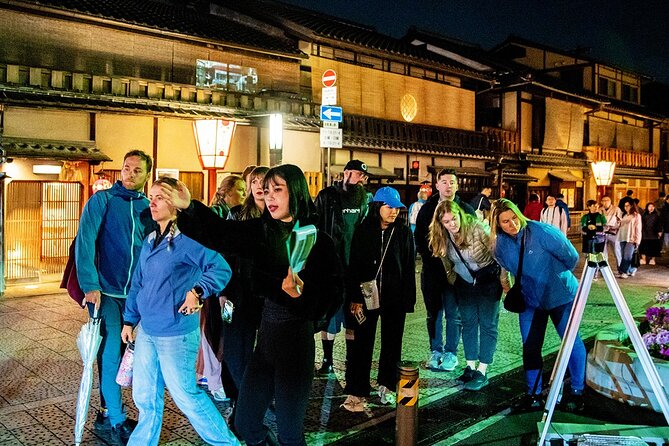
The final listed stop is Yasui-Konpiragu, with about 15 minutes devoted to Shinto worship. This gives the tour a clear ending because the route returns to religious practice after moving through entertainment streets, temples, restaurants, and residential lanes.
The stop is not presented as a long ceremony or a special performance. Instead, you get a chance to observe and learn about a place of worship. Your guide can explain what you are seeing and help you approach the site with the right level of respect.
After this, the activity ends back at the starting point. That is handy if you want to continue into Pontocho or find dinner nearby. It also means you do not have to work out a new route back to central Kyoto after dark.
What the $23.88 price really buys you
At $23.88 per person, this is a low-cost way to add structure to an evening in Kyoto. The sites themselves are listed with free admission, so the price is mainly for the guide, route planning, local explanation, and the ability to connect places that you might otherwise visit as disconnected stops.
I think the value is strongest for a first visit. If you walk through Gion alone, you can see the same streets, but you may miss the meaning behind the geisha district, the rumors around Sannenzaka, and the old townhouses. The guide turns two hours of wandering into a readable story.
The value is lower if you want long temple visits, extensive shopping time, or a guaranteed geisha encounter. This is a brisk introduction, not a private cultural seminar. The 15-person maximum helps, but the group still needs to keep moving.
A mobile ticket and a meeting point near public transportation make the start fairly simple. The tour begins at the McDonald’s by Shijo-ohashi Bridge, at 105-1 Hashimotocho, Shimogyo Ward. It returns to that meeting point, which makes the walk easy to combine with dinner or another central Kyoto plan.
Practical advice for a comfortable two hours
Wear shoes suited to walking on streets with slopes and uneven sections. The physical requirement is described as moderate, and the route covers several districts and stops in a short time.
Hot weather can make the walk feel demanding. One person found two hours manageable but wished there had been a drink stop. Bring water, especially if you are visiting in summer, since the schedule does not include a planned refreshment break.
An evening start around 5 or 6 p.m. may offer the best mix of atmosphere and geisha traffic. Sunset can make the streets especially attractive, but a later start may mean some businesses are closed. If restaurant suggestions matter to you, ask the guide before the tour ends.
The walk is suitable for people who want history, culture, photography, and local orientation in one short outing. It is less suitable if you dislike walking, need frequent seated breaks, or prefer a slow visit at one site.
Free cancellation is available when you cancel at least 24 hours before the start time. Changes or cancellations within 24 hours are not refunded, and poor weather may lead to a new date or a full refund.
Should you book the Gion walking tour?
I would book this tour if you want a compact, affordable introduction to Kyoto’s traditional districts and you value explanation as much as photographs. The strongest parts are the geisha background, the quieter lanes around Gion Shirakawa, the Edo-period townhouses, and the practical restaurant advice offered by guides such as Uta, Dan, Kenta, Ukyo, and Naoya.
Book for the cultural setting, not for a guaranteed geisha sighting. Choose an early evening time if available, carry water, and leave room in your schedule for dinner afterward. If you want a relaxed, highly detailed visit to every shrine and temple, plan separate visits. For a first look at Gion in two focused hours, this is a sensible use of both time and money.
FAQ
How long does the Gion walking tour last?
The tour lasts approximately two hours.
Where does the tour begin and end?
It begins at the McDonald’s by Shijo-ohashi Bridge, 105-1 Hashimotocho, Shimogyo Ward, Kyoto. The activity ends back at the same meeting point.
Can I see a real geisha during the tour?
You might see a geisha, but a sighting is not guaranteed. A start around 5 to 6 p.m. may give you a better chance.
What places are included?
The route includes Hanamikoji Street, Sannenzaka and Ninenzaka, Yasaka Shrine, Hokan-ji Temple, Pontocho, a spot beside the Kamogawa River, Gion Shirakawa, and Yasui-Konpiragu.
Is the tour physically demanding?
A moderate level of physical fitness is recommended. The walk covers several streets and sites in two hours, and hot weather can make it feel more tiring.
What happens if I need to cancel?
You receive a full refund if you cancel at least 24 hours before the start time. Cancellations or changes made within 24 hours are not refunded. If poor weather causes the tour to be canceled, you will be offered another date or a full refund.
More 2-Hour Experiences in Kyoto
- Ninja 2-hour Hands-on Lesson by Japanese master in Kyoto -Medium
★ 5.0 · 218 reviews - Kyoto: 2-Hour Maiko Makeover and Photo Studio Shoot
★ 4.7 · 122 reviews - Kyoto 2 Hours Genuine Kendo / Samurai Experience In Japan
★ 5.0 · 57 reviews - 2 Hour Night Walking Tour Throughout Gion with snack
★ 4.0 · 13 reviews
More Walking Tours in Kyoto
- Night Walk in Gion: Kyoto’s Geisha District
★ 4.5 · 2,003 reviews - Kyoto Gion Geisha District Walking Tour – The Stories of Geisha
★ 5.0 · 1,441 reviews - Nishiki Market Brunch Walking Tour (7 Tastings + Brunch)
★ 5.0 · 1,355 reviews - Kyoto Arashiyama Walking Tour: Bamboo, Monkeys, Gardens & Secrets
★ 5.0 · 1,216 reviews
Just added around Kyoto
- Kyoto: Zen Meditation at a Private Temple with a Monk★ 5.0 · 25 reviews
- Kyoto: Gion Geisha District & Sake-in-Hand Walking Tour★ 5.0 · 37 reviews
- Private Pewter Sake Cup Experience with a Kyoto Artisan★ 5.0 · 31 reviews
- Your Private Vacation Photography Session In Kyoto★ 5.0 · 110 reviews
- Private Guided Traditional Buddhist Cooking in Japan★ 5.0 · 16 reviews
- Kyoto Wagashi(Japanese sweets) Cooking Class near Fushimiinari★ 5.0 · 60 reviews
- Traditional Japanese Music show & Experience Tour in Kyoto★ 5.0 · 57 reviews
- Kyoto:Family-Friendly Kimono & Yukata Experience at WARGO★ 5.0 · 147 reviews
Kyoto Tours, compared.
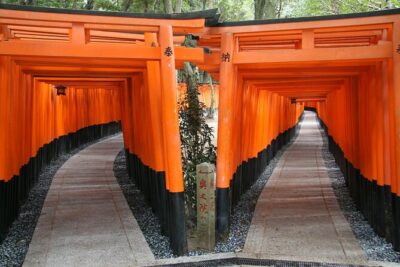
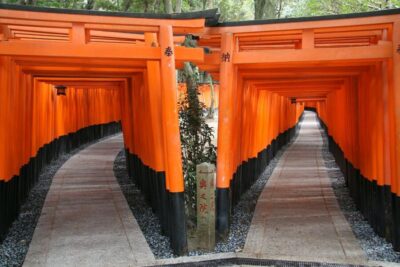
Fushimi Inari, Kinkakuji, Bamboo Grove 1 Day Bus Tour
Read our review →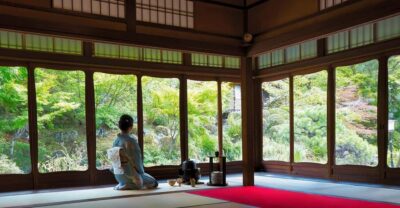
Tea Ceremony in a Traditional Tea House in Kiyomizu
Read our review →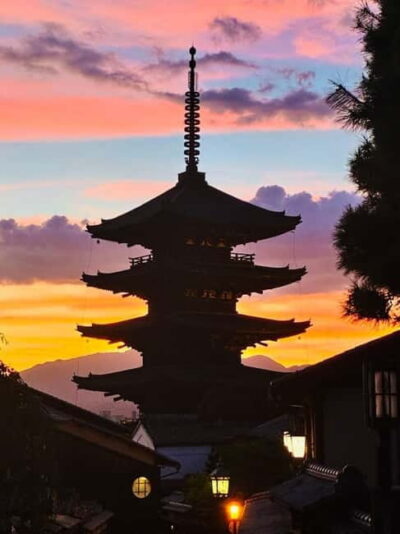
Kyoto Geisha Walking Tour: Gion District & Hidden Gems
Read our review →
Gion Magical Night Walking Tour with Geisha Trivia
Read our review →
Gion Geisha District Walking Tour – Stories of Geisha
Read our review →Browse the lists this tour appears in