
Reviewed · KYOTO TOURS
Ninja 2-hour Hands-on Lesson by Japanese master in Kyoto -Medium
Kyoto’s two-hour ninja lesson is part martial-arts class, part cultural lesson, and part very good family entertainment. A Japanese Sensei teaches in English, and the small group size, capped at six, gives you room to try the techniques rather than simply watch a demonstration. You dress in ninja clothing, learn Kuji-In meditation and ninja breathing, then work through weapons and movement skills.
I especially like the mix of serious instruction and playful fun. The class covers far more than sword poses, including ninja walking, rope techniques, shuriken, kunai, a sickle with chain, and blow darts. I also like that staff take photos and videos during the session and send them by email afterward. The main consideration is that two hours moves quickly, so you get a broad introduction rather than mastery of any one skill.
- Small class, maximum six: You get more direct attention than in a large demonstration.
- Full ninja outfit included: Clothing rental makes the lesson feel like an activity, not just a talk.
- Wide range of techniques: Try sword handling, kunai, shuriken, rope skills, ninja walking, meditation, and blow darts.
- English-speaking Japanese Sensei: Instruction includes demonstrations, explanations, and cultural ideas.
- Photos and videos may be sent afterward: Staff document the session with a professional camera.
- Easy two-hour format: The 10:00 am start leaves much of your Kyoto day free.
A Hands-On Start at Kyoto’s Ninja Dojo
The experience begins at NINJA DOJO and STORE KYOTO, at 528 Hakurakutenchō, 2F, in Kyoto’s Shimogyo Ward. You make your own way there, since hotel pickup and drop-off are not included. The location is near public transportation, and the class ends back at the same meeting point.
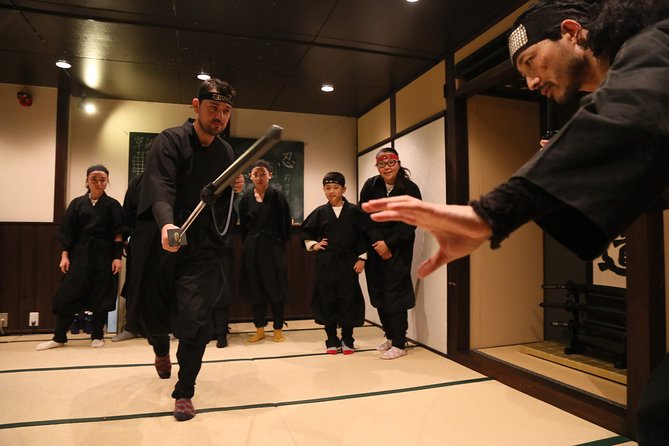
Plan to arrive about 15 minutes early. You’ll leave your shoes at the entrance, change into slippers, and go upstairs. Staff help you put on the dojo’s ninja clothing. This simple change matters more than you might expect: it gets children involved at once and gives adults permission to stop worrying about looking dignified for the next two hours.
Sho, one of the staff members mentioned by name during the welcome, helps set the tone. The instructors are described as patient, funny, and clear in English, which is useful when a movement or hand position needs to be shown several times. The teaching style seems designed for absolute beginners, not people already trained in martial arts.
The dojo also includes a store, so you can browse ninja-themed items before or after the lesson. Shopping is not the reason to book the class, but it gives you an easy way to take home a small reminder of the experience.
Meditation and Breathing Before the Weapons
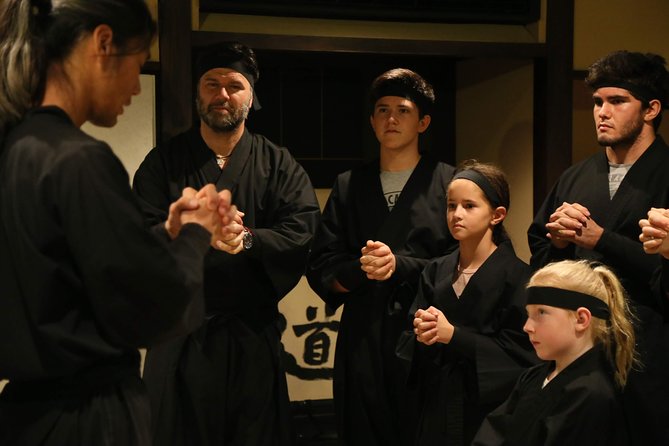
The lesson does not rush straight to sword practice. It begins with Kuji-In ninja meditation, along with ninja breathing. You learn hand signs and the basic idea behind this practice before moving into physical techniques.
That opening gives the activity more substance than a simple costume photo session. Ninja culture is often reduced to movie images, but the class presents a way of thinking as well as a set of tools. You will not become an expert in ninja philosophy in one morning, but starting with meditation makes the lesson feel more connected to discipline and focus.
The breathing section also helps you settle into the class. The instructors demonstrate each movement and explain it before asking you to try. This approach works well for families, solo visitors, couples, and adults who may not be especially flexible.
The lesson is labelled elementary level, but it includes five additional techniques beyond the entry-level material. That is a useful detail when you compare it with shorter or more basic ninja activities. You receive a broad introduction, with enough variety to keep the pace moving.
More Samurai and Ninja Experiences in Kyoto
- Kyoto Samurai Experience
★ 5.0 · 1,294 reviews - Kyoto: Kendo and Samurai Experience with Uniform and Gear
★ 4.9 · 815 reviews - Kyoto: Samurai Sword Class by Experts in Traditional Arts
★ 4.9 · 657 reviews
Learning to Walk Like a Ninja
Next comes ninja walking. This may sound simple, but it is one of the more memorable parts of the class because it asks you to rethink ordinary movement.
The instructor demonstrates the posture and footwork, then gives you a chance to practice. This is not presented as a fitness test. You do not need to arrive limber or athletic, and the class is accessible to adults as well as children. A middle-aged couple can take part without feeling out of place, while children get a movement exercise that feels like a game.
The walking lesson also helps connect the early meditation work with the later weapon practice. The class is not just a sequence of unrelated tricks. You move from awareness and breathing to quiet movement, then to handling tools with control.
A Look Inside the Ninja Trick House
The dojo includes an introduction to gimmicks and traps in a ninja trick house. This section gives you a glimpse of the clever devices linked with ninja stories and training spaces.
The provided details do not list every trap or explain how elaborate the house is, so you should think of this as an introductory demonstration rather than a full escape-room attraction. Its value is in showing how the ninja image involves stealth, misdirection, and practical problem solving, not only combat.
For children, this is likely one of the easiest sections to enjoy because it feels like a secret passage or puzzle. For adults interested in Japanese culture, it adds context to the weapons work and keeps the lesson from becoming a simple target-throwing session.
Sword Training, Kunai, and Shuriken
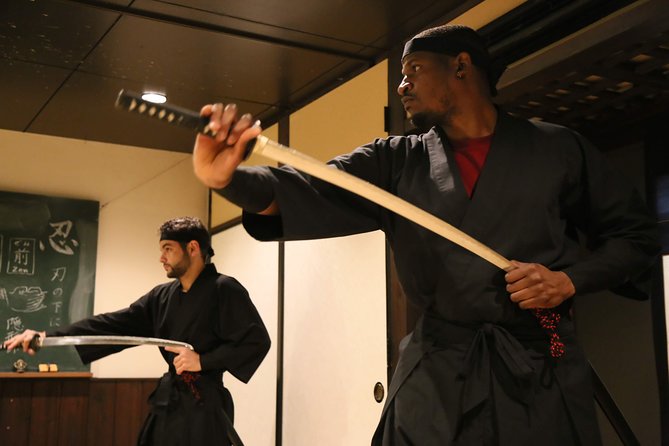
The central part of the lesson focuses on ninja weapons and how to use them. You receive instruction in ninja sword handling, then move on to smaller tools such as kunai, or dagger-style weapons.
The Sensei demonstrates the movements first and explains the technical points in English. You then get hands-on time. That difference is important. You are not merely posing beside a sword for a photograph. You practice the movements under instruction, at an elementary level suited to beginners.
The class also covers shuriken, or ninja stars, along with stick-type shuriken. You get to try the tools on targets, according to the experience details provided. The target work supplies a clear goal and makes the session engaging for both children and adults.
The equipment is one of the reasons the price feels reasonable. At $95.51 per person, this is not a cheap photo stop, but you receive clothing rental, admission, an English-speaking Japanese master, demonstrations, and practice with several different tools. The variety would be difficult to reproduce on your own during a Kyoto visit.
There is also a ninja sword with shuriken, which adds another layer to the lesson. The class gives you a sense of how different tools require different types of control. You should not expect advanced combat training, but you do get a lively introduction to several techniques in one sitting.
More samurai and ninja sessions in Kyoto:
- Skip the lines Basic Ticket at SAMURAI NINJA MUSEUM KYOTO
★ 4.5 · 632 reviews - Ninja 1-hour Hands-on Lesson by Japanese master in Kyoto -Entry
★ 5.0 · 489 reviews - Kyoto: Ninja Weapon Forging Experience
★ 4.8 · 478 reviews - Kyoto: Samurai Kenbu Traditional Sword Dancing Show
★ 4.5 · 426 reviews
Rope Skills and the Kusarigama
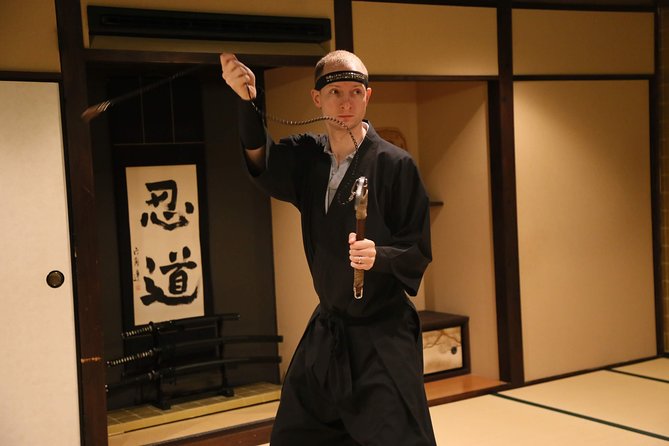
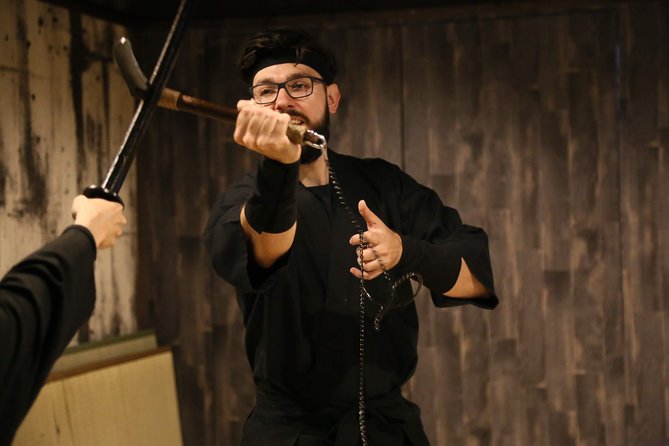
The program includes rope technique, kunai with rope, and kusarigama, a sickle with chain. These are unusual additions compared with a standard sword-focused activity.
The rope work shows that ninja training was not only about striking or throwing. It brings in restraint, movement, and handling a flexible tool. The kusarigama adds a dramatic visual element, though the session remains at an entry level and is taught under supervision.
This variety can make the class especially satisfying for older children and teenagers. Younger children can take part in much of the activity, but the most complex tools may appeal more to participants who can listen carefully and follow the instructor’s movements.
The class includes many separate techniques, so you should expect short lessons and practice periods rather than long repetitions. If you want to perfect sword form or study one weapon in detail, a specialized martial-arts course would be a better choice.
Blow Darts and the Final Ninja Moment
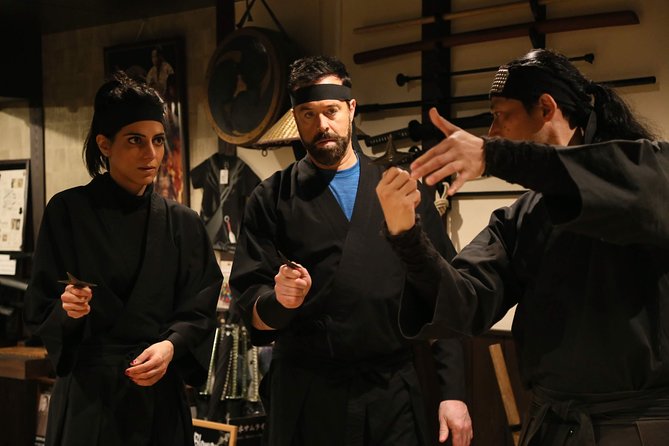
The final listed technique is the ninja blowgun, or blow darts. It gives the session a strong finish because it feels so different from sword handling and throwing stars.
You learn the basic use of the blowgun, then try it yourself. Like the shuriken practice, this turns the class into an active experience. You have a clear task, a new tool, and another chance to test your concentration.
The combination of sword, dagger, sickle and chain, rope, shuriken, and blow darts is the strongest part of the program. It offers enough change to hold a child’s attention, while the demonstrations and background make it worthwhile for adults who want more than a costume activity.
Staff also take photographs and videos during the lesson. The images are sent by email through Google Photos, sometimes on the same day. That is a useful extra, especially for solo visitors who would otherwise have few action photos of themselves in the dojo. You should still focus on the class rather than treating the camera work as the main attraction.
Why the Small Group Matters
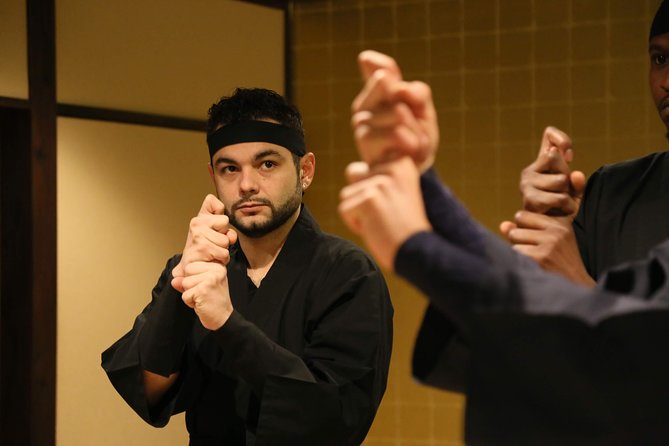
A maximum of six participants is one of the most important practical details. With a small group, the instructor can watch your form, correct basic movements, and give each person time with the equipment.
The size also helps families. Several children can take part with their parents without becoming lost in a crowd. The class has welcomed families with children from about five to seventeen, along with couples, solo visitors, and older adults.
Small groups can vary in energy, of course. You might share the lesson with a lively family or with adults who prefer a quieter pace. The instructor’s humor and patience help, but the experience is still partly shaped by the people booked for your time.
The class is recommended by all recorded ratings, with a five-star score from 218 reviews. That unusually strong response matches the program’s clear appeal: it is active, unusual, suitable for beginners, and easy to fit into a Kyoto itinerary. Still, the rating should not make you expect a professional martial-arts qualification. The informal idea of being ninja certified is part of the fun, not an official credential.
The $95.51 Price and the Two-Hour Value
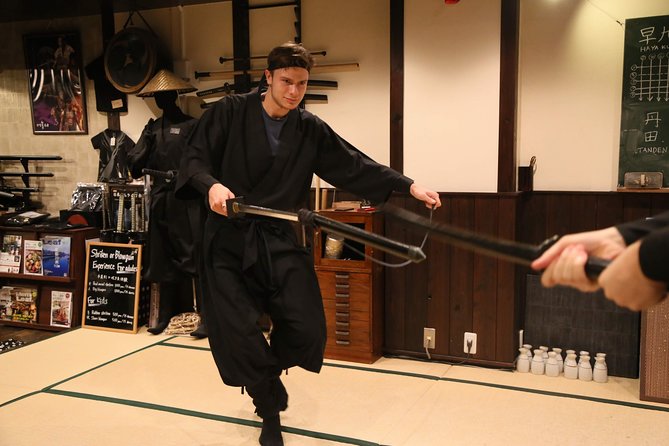
At $95.51 per person, the lesson sits above a basic museum admission or quick cultural demonstration. The value depends on how much you want to participate.
You are paying for two hours of guided instruction, clothing rental, admission, a small class, and access to a long list of techniques. You also receive the setting, the Sensei’s English explanations, and potentially a set of photos and videos after the class.
I think the cost makes the most sense for families and people who want one memorable activity rather than another passive sightseeing stop. Four family members will spend more than a solo visitor, but each person receives active time. For a solo visitor, the small group helps provide interaction without requiring you to arrange a private lesson.
The price is less convincing if you only want a few costume photographs. In that case, you may not use the full value of the instruction and weapon practice. It is also not the right purchase for someone seeking advanced martial-arts training, a long historical lecture, or a formal qualification.
When to Schedule It in Kyoto
The start time is 10:00 am, and the session lasts about two hours. That makes it easy to place before lunch and still leave the afternoon for temples, gardens, markets, or other Kyoto sights.
You should avoid scheduling it so tightly that you must rush across town afterward. The activity ends at the dojo, but you will need time to change out of the clothing, collect your belongings, and make your way to your next stop.
Mobile tickets are provided, and confirmation arrives at booking. Service animals are allowed, and most people can participate. The supplied information does not give a detailed clothing, height, or age restriction, so families with very young children should confirm any specific concern before booking.
Free cancellation is available up to 24 hours before the start time. Inside that window, changes are not accepted and the payment is not refunded. The activity can also be canceled if weather affects operation or if the minimum number of participants is not met, with a different date or a full refund offered.
Who Will Enjoy This Most
I would choose this lesson for families who want a shared activity in Kyoto. Children can dress up, move around, throw stars, and try blow darts, while adults receive enough explanation to keep the experience from feeling like a simple play session.
It also suits solo visitors. The group limit makes it easier to take part without feeling anonymous, and the staff photography is a real advantage if you want pictures of the activity.
Couples and groups of friends can enjoy it too, especially if you like hands-on cultural activities with a little theater. You do not need prior training, and the lesson is accessible even if you are not very flexible.
You may want to skip it if you dislike costumes, physical participation, or activity-based tours. It is also a poor match if your main goal is a detailed academic study of ninja history. The class includes cultural ideas and information, but its center is practical demonstration and fun.
Should You Book the Kyoto Ninja Lesson?
Book it if you want to do something rather than simply see something in Kyoto. The small group, English instruction, clothing rental, wide range of techniques, and photo follow-up create a well-rounded two-hour activity.
The strongest reason to go is the balance. You begin with meditation and breathing, learn movement, explore the trick house, then handle swords, kunai, rope tools, shuriken, and blow darts. The weakest point is also clear: the wide menu means each technique receives only an introduction.
For families, solo visitors, couples, and curious beginners, $95.51 is a fair price for an unusual Kyoto memory. Book it with enough time around the 10:00 am start, arrive early, and treat the ninja certification as a souvenir of the day rather than a professional title.
FAQ
Where does the ninja lesson take place?
The lesson takes place at NINJA DOJO and STORE KYOTO, 528 Hakurakutenchō, 2F, in Kyoto’s Shimogyo Ward, postal code 600-8422.
What time does the activity start?
The listed start time is 10:00 am.
How long does the ninja experience last?
The lesson lasts approximately two hours.
How many people can join the class?
The activity has a maximum of six participants.
Is the lesson taught in English?
Yes. A Japanese Sensei trained in ninja arts teaches the lesson in English.
Is ninja clothing included?
Yes. Ninja clothing rental during the training is included.
What techniques are covered?
The lesson includes Kuji-In meditation, ninja breathing, ninja walking, an introduction to ninja trick-house devices, sword training, kunai, kusarigama, rope technique, kunai with rope, shuriken, stick-type shuriken, ninja sword with shuriken, and blow darts.
Can I cancel for a refund?
You can cancel at least 24 hours before the start time for a full refund. Cancellations or changes made less than 24 hours before the activity are not accepted and are not refunded.
More 2-Hour Experiences in Kyoto
- Kyoto Gion: 2-Hour Geisha Culture & History Walking Tour
★ 5.0 · 1,186 reviews - Kyoto: 2-Hour Maiko Makeover and Photo Studio Shoot
★ 4.7 · 122 reviews - Kyoto 2 Hours Genuine Kendo / Samurai Experience In Japan
★ 5.0 · 57 reviews - 2 Hour Night Walking Tour Throughout Gion with snack
★ 4.0 · 13 reviews
More Workshops in Kyoto
- Kyoto: 45-Minute Tea Ceremony Lesson Experience
★ 4.3 · 2,378 reviews - Ramen Cooking Class at Ramen Factory in Kyoto
★ 5.0 · 1,937 reviews - Kyoto : Chopsticks Making Workshop in Gion with Engraving Option
★ 5.0 · 958 reviews - Kyoto: Ramen Cooking Class at a Ramen Factory with Souvenir
★ 4.9 · 532 reviews
Just added around Kyoto
- Kyoto: Zen Meditation at a Private Temple with a Monk★ 5.0 · 25 reviews
- Kyoto: Gion Geisha District & Sake-in-Hand Walking Tour★ 5.0 · 37 reviews
- Private Pewter Sake Cup Experience with a Kyoto Artisan★ 5.0 · 31 reviews
- Your Private Vacation Photography Session In Kyoto★ 5.0 · 110 reviews
- Private Guided Traditional Buddhist Cooking in Japan★ 5.0 · 16 reviews
- Kyoto Wagashi(Japanese sweets) Cooking Class near Fushimiinari★ 5.0 · 60 reviews
- Traditional Japanese Music show & Experience Tour in Kyoto★ 5.0 · 57 reviews
- Kyoto:Family-Friendly Kimono & Yukata Experience at WARGO★ 5.0 · 147 reviews
Kyoto Tours, compared.
Fushimi Inari, Kinkakuji, Bamboo Grove 1 Day Bus Tour
Read our review →
Tea Ceremony in a Traditional Tea House in Kiyomizu
Read our review →
Kyoto Geisha Walking Tour: Gion District & Hidden Gems
Read our review →

Gion Magical Night Walking Tour with Geisha Trivia
Read our review →
Gion Geisha District Walking Tour – Stories of Geisha
Read our review →Browse the lists this tour appears in