
Reviewed · KYOTO TOURS
Kyoto: 2-Hour Maiko Makeover and Photo Studio Shoot
The most memorable part of this Kyoto activity is the transformation itself. In about two hours, you go from bare-faced visitor to maiko, wearing a traditional kimono, wig, hair ornaments, and the distinctive white makeup associated with Kyoto’s apprentice geiko. The change happens at Yumeyakata Gojo Shop, with the photo studio just a one-minute walk away.
I like the authentic costumes, some of which were actually used by maiko, and the careful makeup details, including the unpainted two-stripe area at the back of the neck. I also like that the photo session takes place indoors, with air conditioning, rather than in heavy makeup and layered clothing on a hot Kyoto street. The main consideration is that this is a studio transformation, not a walking tour through Gion, and the activity is not suitable for pregnant women, wheelchair users, people with mobility or visual impairments, or anyone over 100 kilograms.
Key points to know before booking
- Traditional maiko transformation: Your makeup includes the white face, pink accents, red eye corners, red-tinted eyebrows, and vivid eyeliner.
- Authentic seasonal costumes: Choose from real maiko garments with patterns that often reflect the season.
- Former maiko guidance: Staff with maiko experience help with makeup, dressing, posing, and traditional movement.
- Five digital photos included: The final images make a lasting souvenir, while printed photos cost extra.
- Comfortable indoor setting: The studio has air conditioning, an important advantage when you are wearing heavy kimono layers.
- Adults only: The information gives both an under-18 and under-17 restriction, so treat this as an adult activity and confirm eligibility when booking.
From bare face to Kyoto maiko
You begin at the Yumeyakata Gojo Shop at your selected starting time. The studio is only about a one-minute walk away, so the meeting point is simple, but you should arrive at the shop itself rather than going straight to the photo studio.
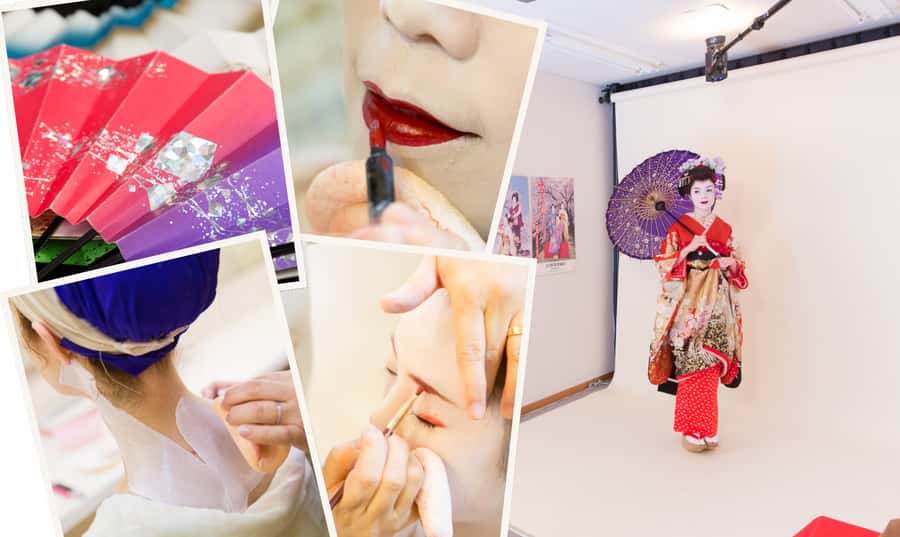
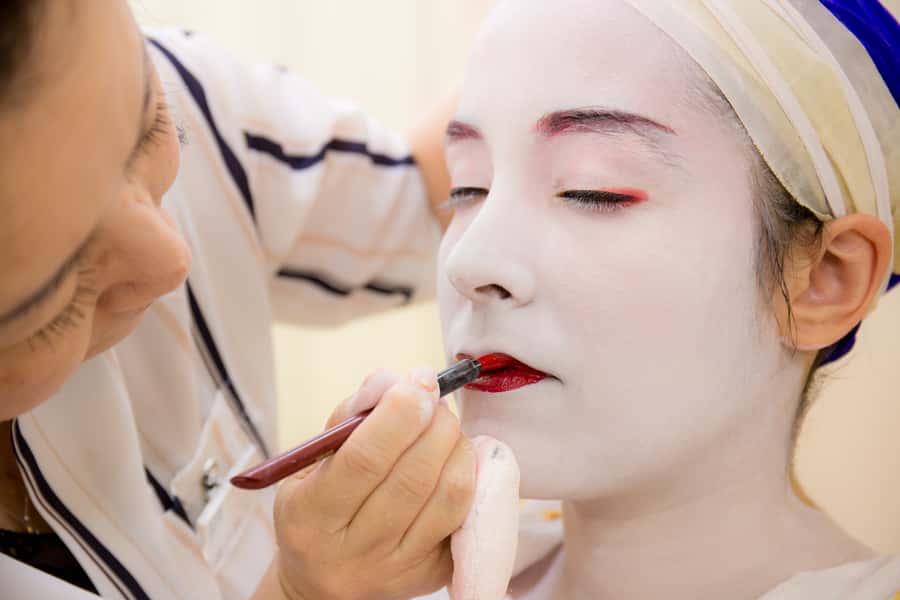
Your first job is to remove your own makeup. This matters because the maiko look depends on a clean, even base. A professional makeup artist then applies the traditional cosmetics used for maiko and geiko. The process is not a quick brush of white powder. It builds the face in several deliberate stages.
The white makeup creates the instantly recognizable maiko appearance. A section at the back of your neck remains bare in the traditional two-stripe style. This detail is easy to miss in photographs, but it is an important part of the look. It also gives the costume a more graceful finish than simply covering every bit of exposed skin.
The artist adds pink around the eyes and beside the nose for a soft, youthful expression. Red at the outer corners of the eyes has traditionally been associated with protection from evil. A touch of red goes into the eyebrows, and eyeliner sharpens the eyes. The effect is theatrical, but it is not random stage makeup. Each part serves a traditional purpose.
You should expect the makeup process to take time. That is a strength, not a flaw, if you want a convincing result. This activity is about the preparation as much as the final portrait.
More geisha-district evenings:
- Kyoto Geisha Walking Tour: Gion District & Hidden Gems
★ 4.7 · 3,273 reviews - Kyoto: Gion Magical Night Walking Tour with Geisha Trivia
★ 4.9 · 2,393 reviews - Kyoto: Gion Geisha District Walking Tour – Stories of Geisha
★ 4.7 · 2,187 reviews
Choosing a kimono with seasonal detail
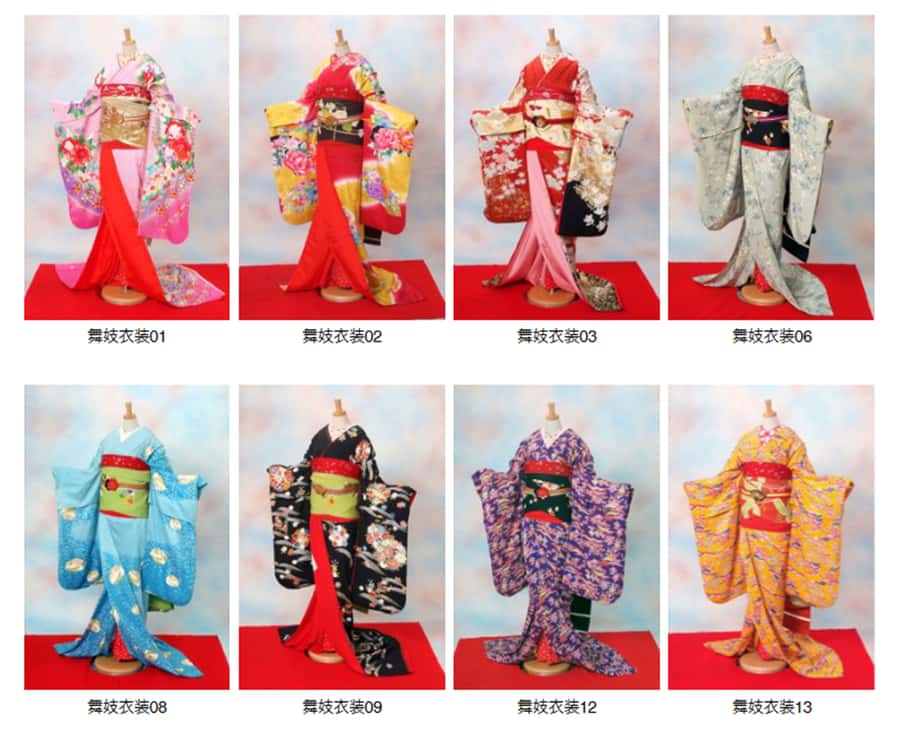
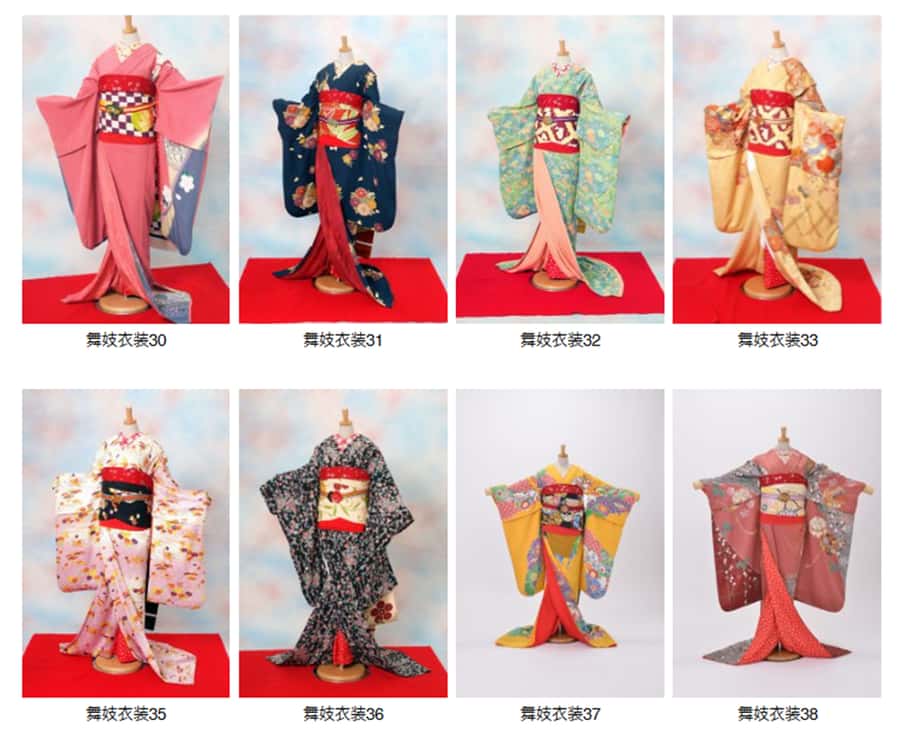
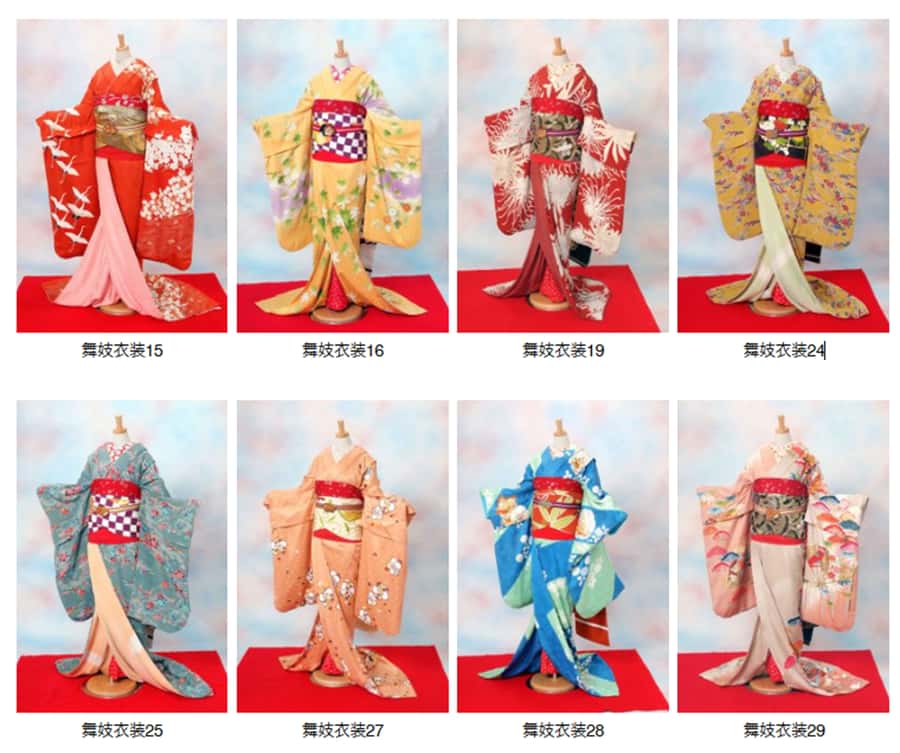
After or during the makeup preparation, you choose your maiko kimono from a range of colors and designs. The clothing is one of the strongest parts of the activity because the costumes are not generic rental robes. Yumeyakata keeps authentic garments that were used by real maiko.
Traditional maiko clothing changes with the seasons. You might find floral patterns that suit spring, summer, autumn, or winter, along with other classic Japanese designs. Ask the staff to explain the choices if you are unsure. A color that looks dramatic on a rack may photograph differently once the white makeup and large wig are added.
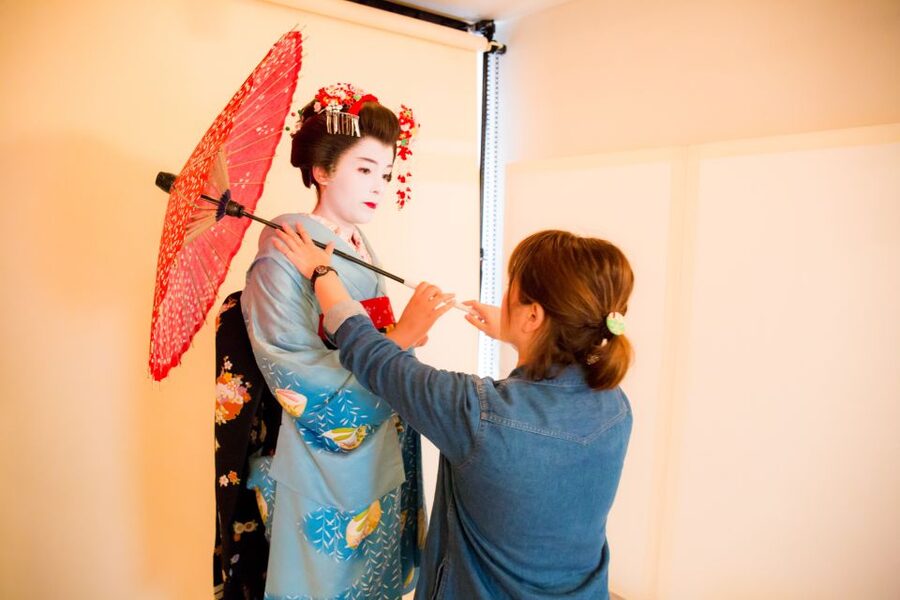
The dressing process also gives you a small lesson in how much structure sits beneath a kimono. Several layers and careful adjustments are needed before the outer garment looks right. The obi and other pieces must be placed securely, but the staff also work to keep you comfortable. One couple described the many steps as surprising, and that is a useful expectation to carry in. A kimono transformation is not a quick change of clothes.
The weight and tightness may take some getting used to. You will not be wearing ordinary walking clothes for the photo session, and this is not the time to plan a long day of sightseeing immediately afterward. The activity ends back at the meeting point, so you can change before continuing around Kyoto.
The wig and hair ornaments complete the illusion
Once the kimono and makeup are ready, the staff place a maiko wig and traditional hair accessories. The wig does much of the visual work. It changes the shape of your head and frames the face in a way that ordinary hair styling cannot easily reproduce.
The accessories add color and detail around the face. They also help the final photographs look like portraits rather than simple costume snapshots. You do not need to arrive with a special hairstyle because the wig is part of the package.
This is a good point to remember that you are dressing as a maiko, not a geiko. Maiko are apprentice female performing artists traditionally associated with Kyoto’s Gion area. They learn arts such as classical music, dance, games, and other forms of traditional entertainment. Their youthful makeup and costume differ from those of established geiko.
The difference appears in the makeup. Maiko traditionally use a youthful, cute style, while geiko use a more defined look with heavier attention to the eyebrows, eyeliner, and lipstick. Early in a maiko’s career, there is also a lipstick rule in which only the lower lip may be painted. The exact period varies by lodging house and entertainment district, so the studio may adapt the final appearance rather than follow one universal rule.
Learning to pose and move like a maiko
The photo session is not simply a matter of standing against a background and smiling. Staff guide you through maiko poses, hand positions, posture, and the way to walk in the costume.
That guidance is valuable because the kimono changes how you move. The clothing restricts your stride, and the wig and makeup make ordinary expressions feel different. A trained instructor can show you how to hold your shoulders, place your hands, and angle your face so the costume and makeup appear to their best advantage.
Yumeyakata’s staff includes former maiko who teach the details of the transformation and posing. That gives the activity a stronger connection to the tradition than a standard costume rental. You are still taking part in a staged photo experience, but the preparation is informed by people who understand the clothing and performance style.
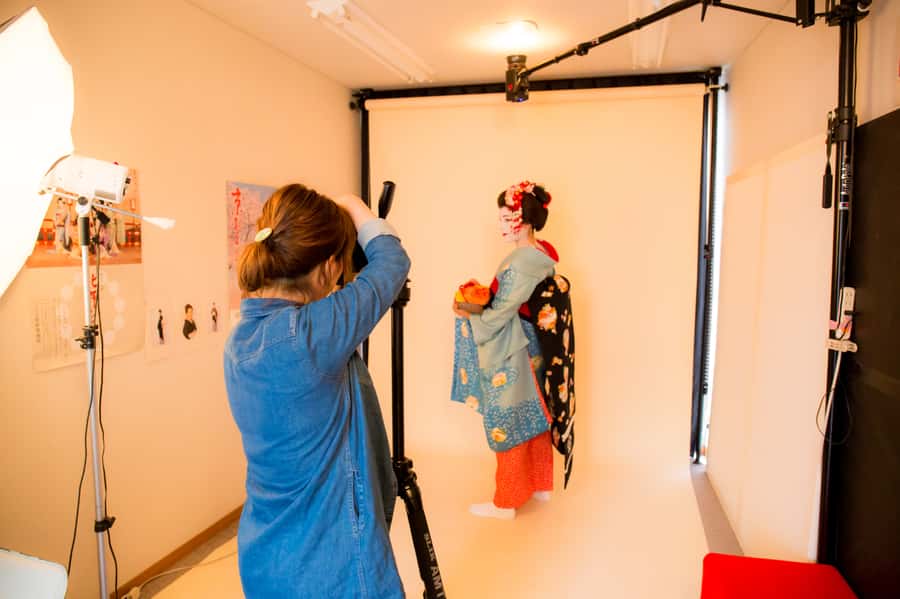
The staff also photograph you during parts of the makeover. Those informal images can help record the process, not just the finished portrait. If you want a very polished result, pay attention to the posing instructions rather than trying to invent your own style. The goal is a composed maiko portrait, not a modern fashion shoot.
A few more Kyoto half-days to weigh up
- Kyoto Gion: 2-Hour Geisha Culture & History Walking Tour
★ 5.0 · 1,186 reviews - Ninja 2-hour Hands-on Lesson by Japanese master in Kyoto -Medium
★ 5.0 · 218 reviews - Kyoto 2 Hours Genuine Kendo / Samurai Experience In Japan
★ 5.0 · 57 reviews - 2 Hour Night Walking Tour Throughout Gion with snack
★ 4.0 · 13 reviews
A professional studio, not a Gion street stroll
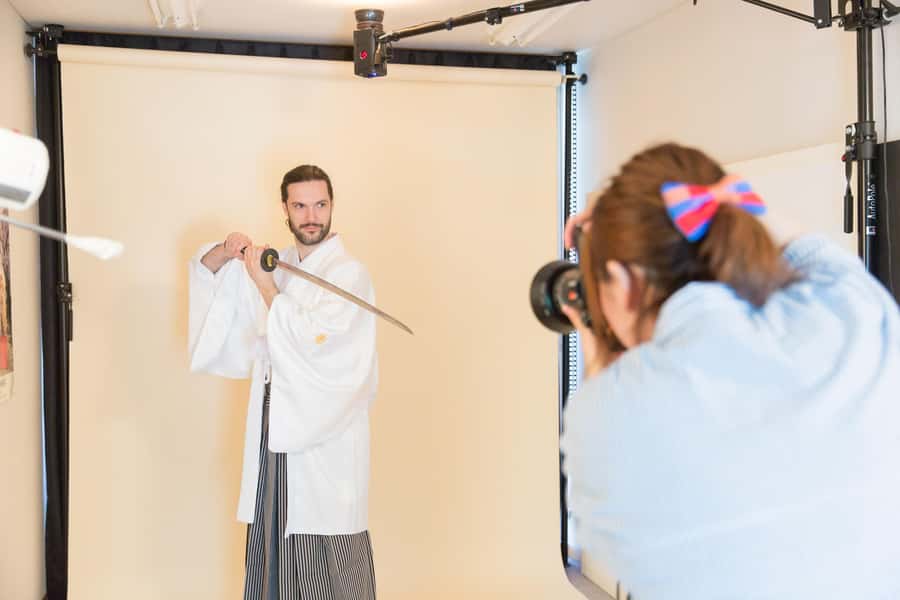
The photographs are taken indoors in a professional studio. Five digital images are included, giving you a useful set of finished souvenirs rather than one single file.
I see the indoor setting as a real advantage. Kyoto can be hot, humid, or cold depending on the season, and full white makeup plus a heavy kimono is not an ideal combination for wandering outside. One participant specifically appreciated the air conditioning during an April visit. Even mild weather can feel warm once you are dressed in several layers and wearing a wig.
The indoor arrangement also keeps the focus on the portrait. You do not have to manage traffic, curious passersby, uneven streets, or the practical problem of walking far in restrictive clothing. If your main goal is a strong photograph and a close look at the dressing process, the studio format works well.
On the other hand, you should not book this expecting a tour of Gion or a chance to perform as a maiko in public. The activity takes place at the shop and studio, and it ends where it begins. For street scenery, temple visits, and neighborhood exploration, you will need a separate Kyoto plan.
Professional cameras, video recording, and audio recording are not allowed. You also cannot bring a costume of your own, wear shoes indoors, smoke, bring pets, or use strong fragrances. These rules protect the studio setting and help keep makeup, costumes, and equipment in good condition.
What the $152 price covers
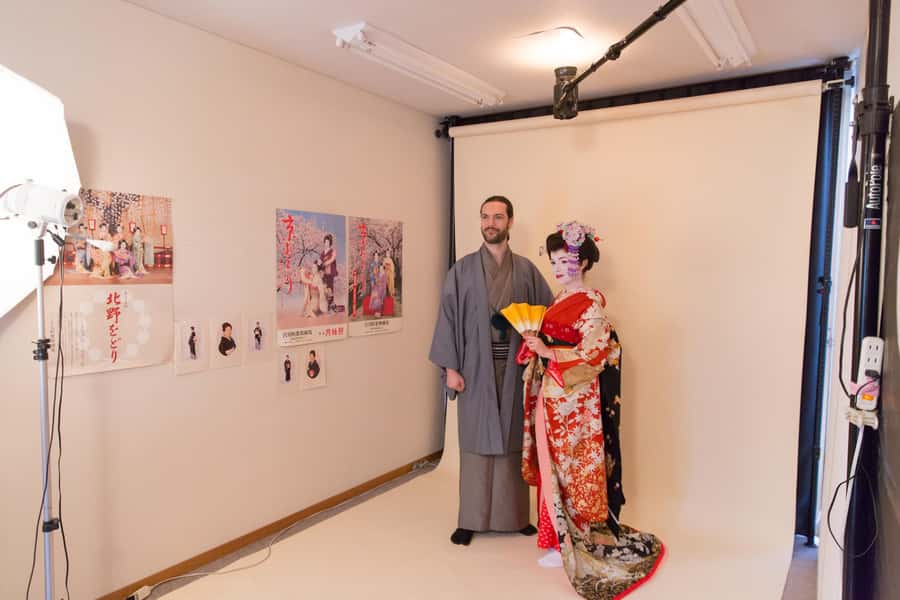
At $152 per person, this is not a cheap dress-up photograph. The price makes more sense when you consider what is bundled into the two hours:
- Maiko kimono rental
- Traditional maiko makeup
- Maiko wig and hair accessories
- Indoor studio session
- Five digital photographs
- Instruction on posing and walking
The cost also includes the work of professional dressers and makeup artists. A kimono requires more skill to put on properly than a simple robe, and the makeup has several specific elements. You are paying for the preparation, clothing, studio, staff time, and edited digital souvenirs in one package.
I consider it reasonable value if you want a polished portrait and a structured cultural activity. The five digital files are especially useful because you can save them, share them, and print them later. Printed photos are not included, so budget extra if you want physical copies.
There are also optional men’s costume add-ons, including a men’s kimono, samurai hakama, and montsuki hakama. The supplied information does not give separate prices for these additions, so check the current booking details before deciding.
Who will enjoy this most
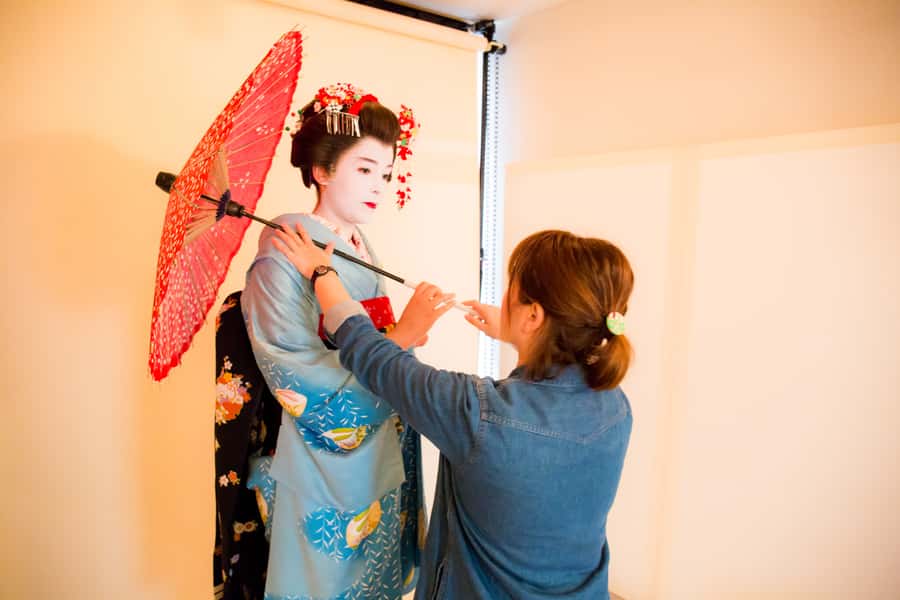
I would choose this activity if you want a hands-on introduction to Kyoto’s traditional performing arts and clothing. It suits solo visitors, couples, sisters, mothers and daughters, and anyone who values a distinctive souvenir over a standard sightseeing photograph.
It is also a good choice for people who feel shy about public costume experiences. The photo shoot takes place indoors, and the staff guide you through each stage. You do not have to know how to pose before arriving.
The experience is less suitable if you dislike makeup, tight clothing, wigs, or staged photographs. The white face and red details create a dramatic look, so this is not a subtle makeover. You should also allow time for the process and avoid scheduling an important meal or strenuous activity immediately afterward.
The age rules need attention. The information lists the activity as unsuitable for children under 18 and also separately says it is unsuitable for people under 17. Because those statements do not match perfectly, treat the experience as adults only and confirm the age requirement before paying.
The physical restrictions are firm. It is not suitable for pregnant women, wheelchair users, people with mobility impairments, or people with visual impairments. The listed maximum weight is 220 pounds, or 100 kilograms.
Practical planning for your appointment
You can reserve now and pay later, which helps if your Kyoto schedule is still changing. Cancellation is allowed up to 24 hours in advance for a full refund, according to the stated terms.
The available languages are English, Japanese, Chinese, Traditional Chinese, and Korean. That makes the makeup and costume instructions easier to follow, especially when you are learning specific poses.
Arrive ready to remove your makeup. Do not wear strong fragrance, and remember that shoes are not allowed indoors. Professional cameras and all video or audio recording are prohibited, so plan to use the studio’s photography service rather than bringing your own equipment.
Five digital images are included. Printed photos are not, and makeup after the transformation is not provided. If you have plans afterward, bring your own makeup supplies or plan to return to your accommodation to get ready again.
Is the maiko makeover worth booking?
I would book this for the careful transformation, authentic costumes, former maiko instruction, and professional indoor portraits. The strongest value comes from the complete process: makeup, dressing, wig, movement, posing, and five finished images.
I would skip it if you specifically want to walk through Gion dressed as a maiko or spend your two hours sightseeing outdoors. This is a studio portrait experience with cultural context, not a geisha district tour.
For an adult visitor who wants a memorable Kyoto keepsake and does not mind theatrical makeup or restrictive clothing, the $152 price is fair. Choose a suitable start time, arrive prepared for a detailed makeover, and let the staff guide the final look.
FAQ
Where does the maiko makeover begin?
You meet at the Yumeyakata Gojo Shop in Kyoto. The staff then guide you to the studio, which is about a one-minute walk away.
Where does the activity end?
The two-hour activity ends back at the Yumeyakata Gojo Shop meeting point.
How long does the experience last?
The makeover and studio photo session last about two hours.
What is included in the price?
The price includes a maiko kimono rental, traditional maiko makeup, a maiko wig, hair accessories, an indoor studio session, and five digital images.
Are printed photos included?
No. Five digital files are included, but printed photos are not.
Can I bring my own kimono?
No. Dressing up in your own kimono is not included, and wearing a costume is not allowed.
Can men take part?
Men can participate if they select an available add-on. The options listed are a men’s kimono, samurai hakama, or montsuki hakama.
Can I take video or use a professional camera?
No. Professional cameras, video recording, and audio recording are not allowed.
Is the activity suitable for children?
The supplied restrictions say the activity is not suitable for children under 18 and also list a restriction for people under 17. Confirm the current age requirement before booking.
Can I cancel the booking?
You can cancel up to 24 hours in advance for a full refund. You can also reserve and pay later, according to the stated booking terms.
Just added around Kyoto
- Kyoto: Zen Meditation at a Private Temple with a Monk★ 5.0 · 25 reviews
- Kyoto: Gion Geisha District & Sake-in-Hand Walking Tour★ 5.0 · 37 reviews
- Private Pewter Sake Cup Experience with a Kyoto Artisan★ 5.0 · 31 reviews
- Your Private Vacation Photography Session In Kyoto★ 5.0 · 110 reviews
- Private Guided Traditional Buddhist Cooking in Japan★ 5.0 · 16 reviews
- Kyoto Wagashi(Japanese sweets) Cooking Class near Fushimiinari★ 5.0 · 60 reviews
- Traditional Japanese Music show & Experience Tour in Kyoto★ 5.0 · 57 reviews
- Kyoto:Family-Friendly Kimono & Yukata Experience at WARGO★ 5.0 · 147 reviews
Kyoto Tours, compared.


Fushimi Inari, Kinkakuji, Bamboo Grove 1 Day Bus Tour
Read our review →
Tea Ceremony in a Traditional Tea House in Kiyomizu
Read our review →
Kyoto Geisha Walking Tour: Gion District & Hidden Gems
Read our review →

Gion Magical Night Walking Tour with Geisha Trivia
Read our review →

Gion Geisha District Walking Tour – Stories of Geisha
Read our review →Browse the lists this tour appears in