
Reviewed · KYOTO TOURS
Kyoto: Ramen Cooking Class at a Ramen Factory with Souvenir
Making ramen from a pile of flour is the heart of this Kyoto class. You punch, knead, fold the dough more than 100 times, turn it into noodles, season chicken, and choose a broth and sauce before eating the bowl you built. It is more hands-on than a standard cooking demonstration, yet simple enough for beginners and children.
I like the custom bowl, since you can mix miso, salt, and soy flavors and select toppings and condiments to suit your taste. I also like the practical finish: you receive the recipe by email, and the class includes a souvenir rather than leaving you with only a full stomach. The main consideration is the price, $127 per person, which is a serious lunch bill for a 90-minute activity.
Key points
- Make noodles from flour: Fold, punch, knead, drain, and shake your dough into fresh ramen noodles.
- Choose your flavor: Combine miso, salt, or soy with soup, oils, toppings, egg, and condiments.
- Cook chicken chashu: Prepare seasoned chicken rather than waiting for a long pork broth to cook.
- English instruction: Instructors including Sakura, Fuku, Akemi, Moeka, and Haruka keep the steps clear and lively.
- Take home useful souvenirs: Options have included a ramen bowl, printed photo, bandana, certificate, and other gifts.
- Easy station access: The basement venue is about five minutes from Demachiyanagi Keihan station.
Turning Flour into Ramen in 90 Minutes
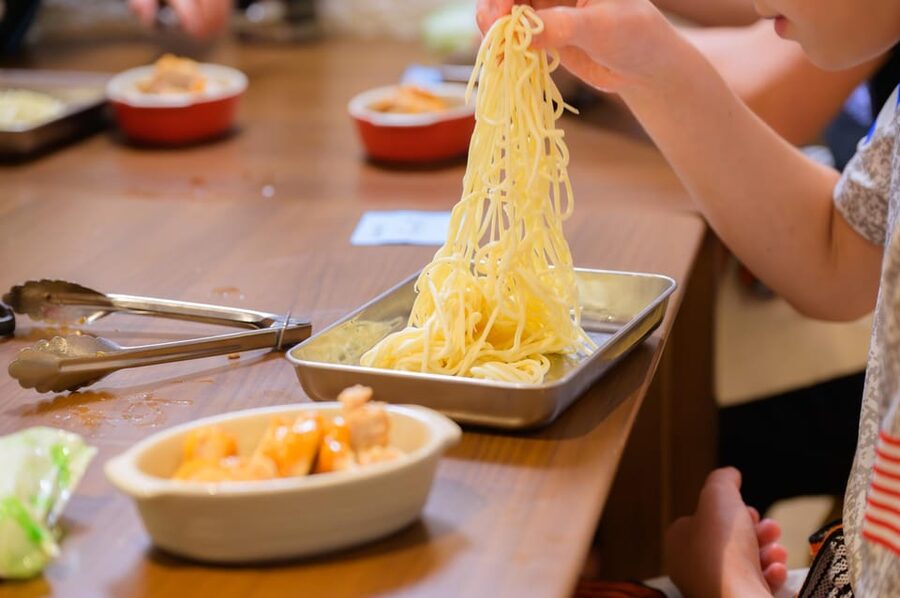
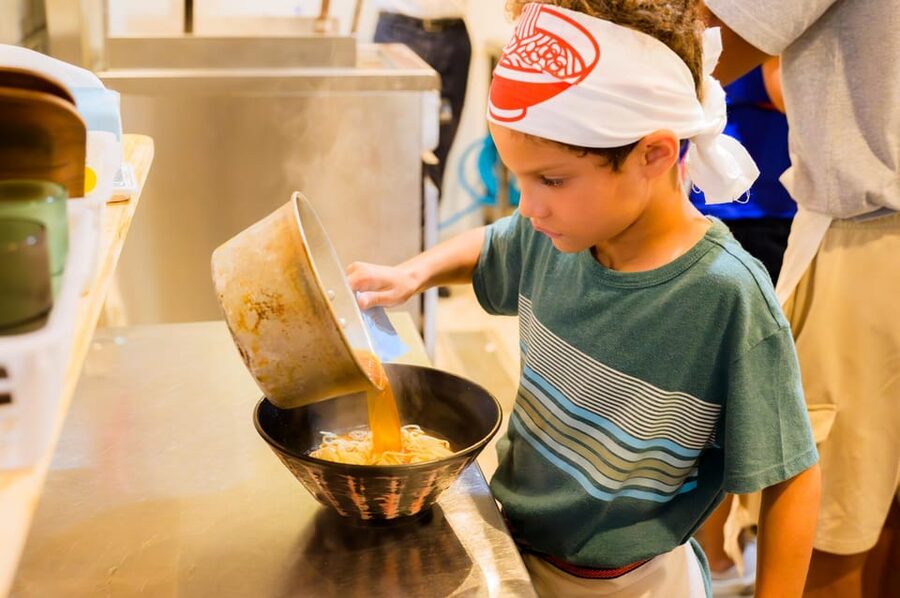
This is not a class where you sit at a counter and watch someone else do the work. You wear a ramen apron and headscarf, watch a short overview video, then follow the staff through each stage.
The schedule is tightly arranged. Traditional ramen broth can take days to prepare, so the class focuses on the parts you can make well within an hour and a half. You prepare chicken with seasonings, make the noodles, select the soup and sauce, then assemble the finished bowl.
That format gives you a real sense of the process without turning lunch into an all-day project. I especially like the balance between food instruction and light entertainment. Instructors such as Sakura, Fuku, Moeka, Akemi, and Haruka are described as energetic, funny, and clear in their teaching. The staff also helps with photos and videos, which is useful when your hands are covered in flour and you want a record of the noodle-making steps.
The class is designed for complete beginners. You do not need to arrive with cooking skills, and the instructions are broken into small jobs. The dough may take effort, especially for younger children, but help is available at each stage.
More cooking classes in Kyoto:
- Ramen Cooking Class at Ramen Factory in Kyoto
★ 5.0 · 1,937 reviews - Kyoto: Ramen, Gyoza, and Onigiri Cooking Class
★ 5.0 · 445 reviews - Kyoto: Japanese Washoku Bento Small Group Cooking Class
★ 5.0 · 380 reviews
The Noodle Making Is the Best Part
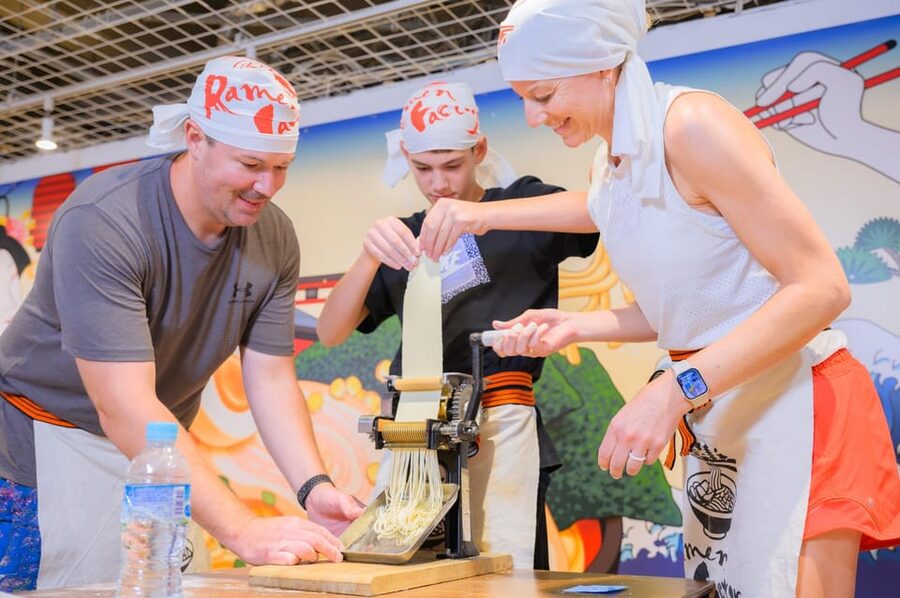
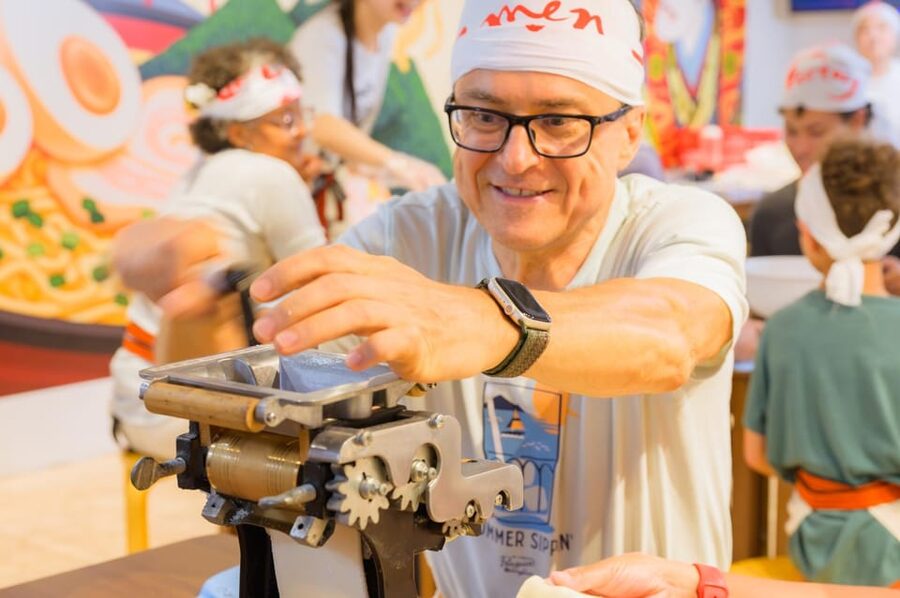
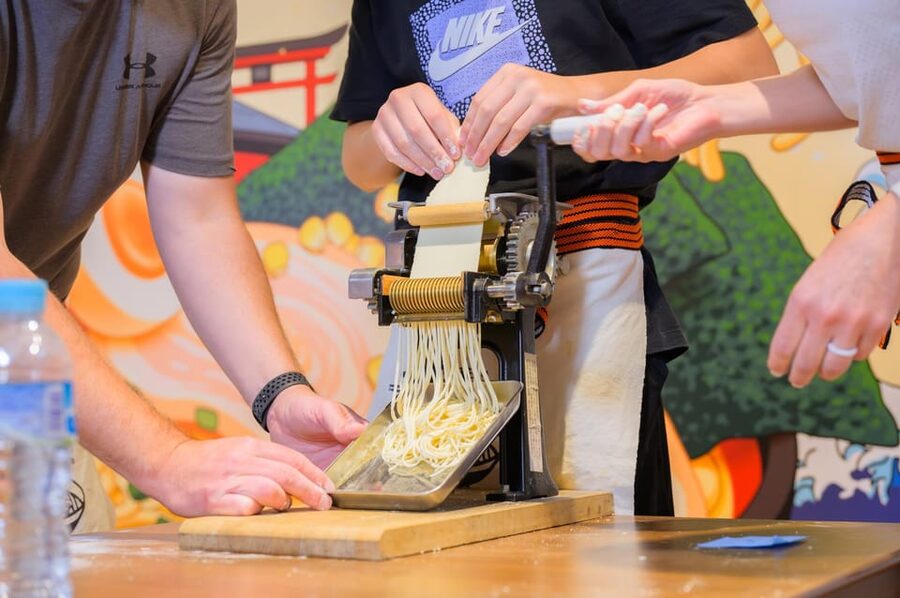
The most memorable task is turning flour and dough into noodles. You mix, punch, knead, fold, drain, and shake the dough until it becomes a usable noodle portion. The repeated folding, more than 100 times, gives you a better feel for the work behind a bowl that usually arrives at your table in minutes.
This is also the part most likely to create a few laughs. It is physical, messy in a mild way, and easy to understand once the instructor demonstrates it. You can see the dough change as you work it, which makes the final bowl feel like something you actually made rather than simply assembled.
The class does not pretend that you are learning every part of professional ramen production. Some preparation takes place ahead of time, since a full stock and certain ingredients need far longer than 90 minutes. Still, you handle the main visible parts of the meal and learn why noodle texture matters.
For families, couples, and solo visitors, the noodles provide a clear shared task. If you are alone, the staff can still guide you closely. One solo participant had a private lesson, and another solo visitor noted that the team helped arrange photos and videos throughout the class.
Building Your Bowl with Miso, Salt, or Soy
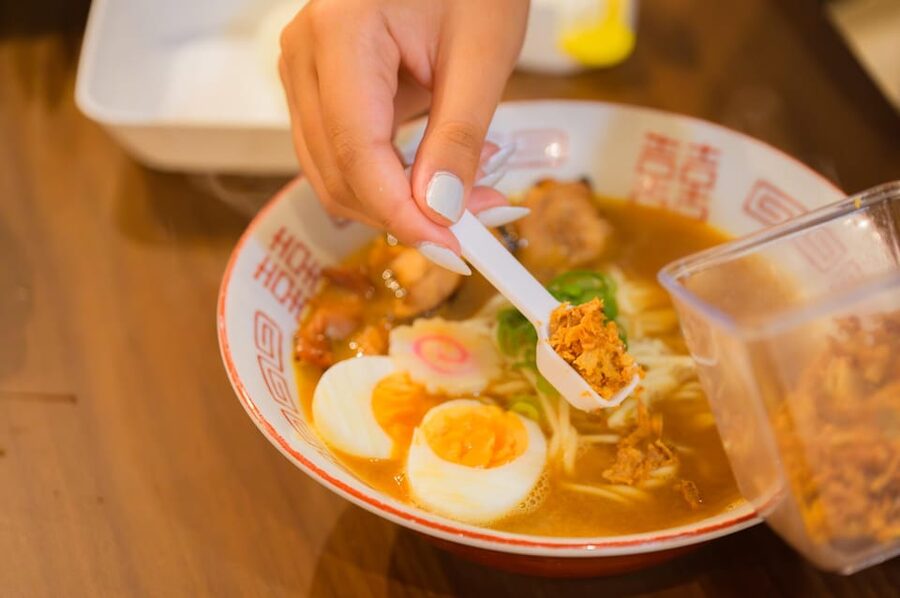
Once the noodles are ready, you choose the flavor direction for your bowl. The featured sauces are miso, salt, and soy, and you can mix them with the soup base and oils to create your preferred combination.
This choice is more useful than simply selecting one fixed recipe. You can make a stronger, saltier, or more savory bowl depending on your taste. The class also lets you place toppings, egg, and condiments yourself, so the finished ramen has a personal touch.
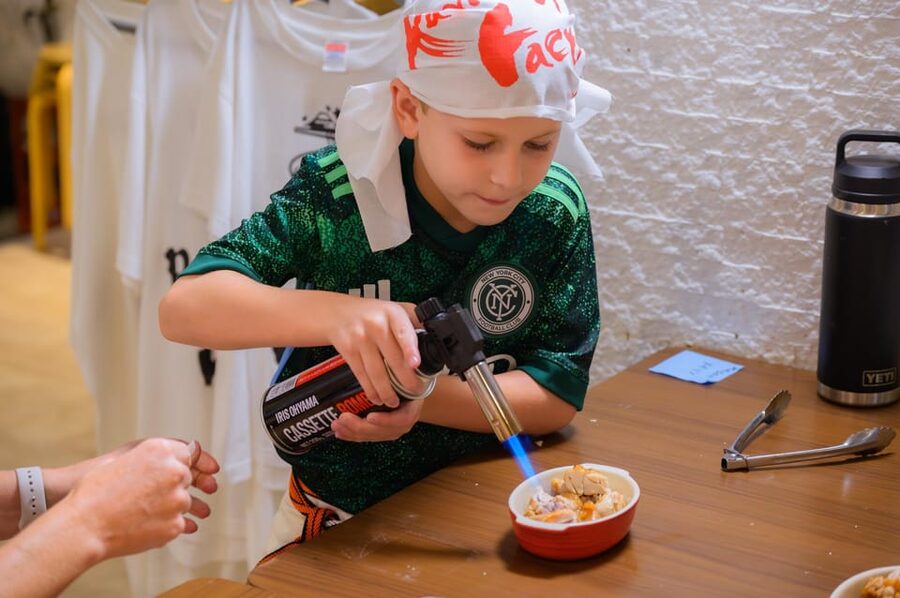
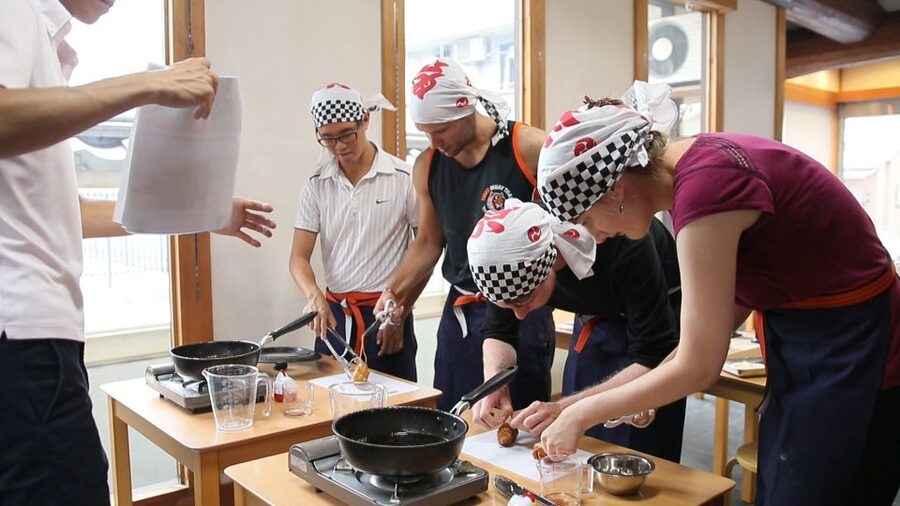
You prepare the chicken with seasonings before adding it to the bowl. The use of chicken chashu is a smart choice for a short class because it gives you a satisfying meat component without the long cooking time required for traditional pork preparations.
The final assembly is a small presentation exercise. You display the noodles, soup, chicken, egg, toppings, and condiments in your bowl, then take a moment to look back at the work before eating. The staff can help capture this stage in photos and videos, and several participants received a printed photo or certificate along with other keepsakes.
How Good Is the Finished Ramen?
The payoff is a hot bowl that you made yourself. The cooking class is lively, but the food is not treated as an afterthought. The ingredients are described as good quality, and the finished ramen has earned strong praise for flavor.
You should keep your expectations sensible. You are not preparing a slow-cooked restaurant stock from raw ingredients in an hour and a half. The class gives you a working introduction to noodles, seasoning, assembly, and flavor balance. It also shows you how much of ramen’s appeal comes from the relationship between noodle texture, soup, sauce, oil, and toppings.
The meal is filling enough to work as lunch or an early dinner. Drinks are not included, so bring money if you want something besides the ramen. Since transport is also not included, build the class into your own Kyoto day rather than treating it as a transfer or food tour.
One especially useful feature is the recipe sent by email. You can try the dish again at home, although some ingredients may be easier to find in Japan than elsewhere. At least you leave with a method and flavor combinations to guide your next attempt.
More hands-on workshops in Kyoto:
- Kyoto: 45-Minute Tea Ceremony Lesson Experience
★ 4.3 · 2,378 reviews - Kyoto : Chopsticks Making Workshop in Gion with Engraving Option
★ 5.0 · 958 reviews - Kyoto: Samurai Sword Class by Experts in Traditional Arts
★ 4.9 · 657 reviews - Ninja 1-hour Hands-on Lesson by Japanese master in Kyoto -Entry
★ 5.0 · 489 reviews
A Welcoming Class for Families and Solo Visitors
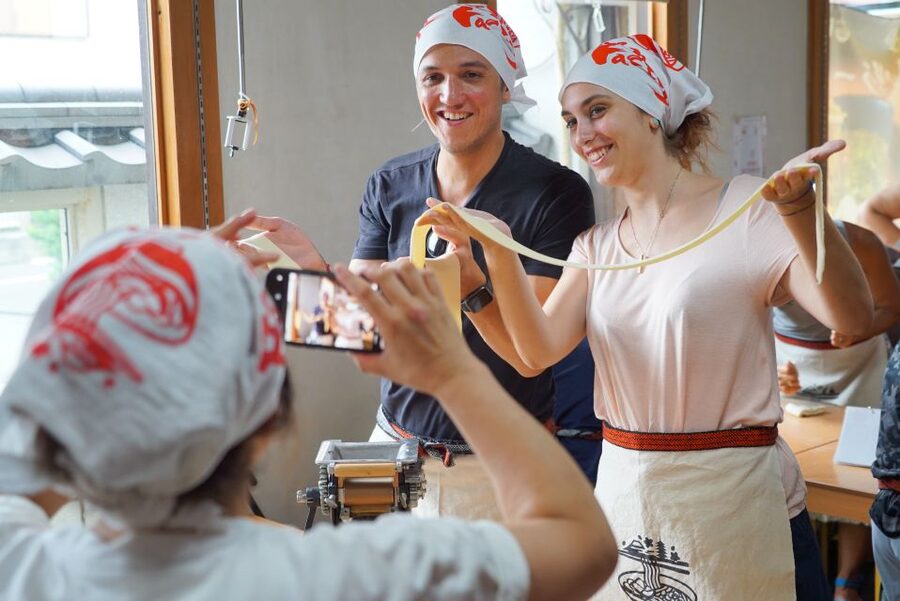
The atmosphere is one of the class’s strongest points. Staff members are not only giving instructions. They keep the pace moving, explain the jobs clearly, and make room for jokes and photos.
That matters because cooking with unfamiliar equipment can feel awkward at first. An instructor such as Fuku may turn the noodle process into a playful group activity, while Sakura and Akemi have been singled out for being warm and encouraging. The individual instructors may change, but English and Japanese are available.
Children can take part, though younger cooks may need more help with the dough. Teenagers and adults can handle the process more independently. The class also suits people who want an activity beyond temples and gardens, especially on a rainy day or during a busy sightseeing schedule.
It works well for couples because you can compare your noodle-making technique and create different bowls. It also works for solo visitors because staff are attentive and can help with photos. If your group includes different diets, contact the local supplier after booking. Vegetarian, pescatarian, vegan, tofu, and fish-broth accommodations have been arranged in individual cases, but you should not wait until arrival to request them.
Allergy information deserves the same advance notice. One participant had allergies confirmed and accommodated, but the supplied details make clear that dietary requests should be discussed with the provider ahead of time.
Finding Ramen Factory Near Demachiyanagi
The Ramen Factory is about a five-minute walk from Demachiyanagi station on the Keihan line. That makes it a practical side trip from nearby Kyoto sightseeing, though the exact route deserves attention.
The school is on the basement floor. When you arrive, take the staircase to the right of the supermarket and go down. The entrance is not always the same point shown by Google Maps, so do not rely only on the map pin.
A useful street-level clue is the supermarket and the bus stop. The staircase is on the street side behind the bus stop, according to one visitor’s directions. Give yourself a few extra minutes, especially if you have never used Demachiyanagi station before.
Because the class lasts 90 minutes, it is easy to fit into a morning or afternoon plan. I would avoid booking it so tightly against another timed attraction that a small navigation delay causes trouble. You will want to arrive calm, not flour-covered and rushing toward the next train.
Is $127 a Fair Price?
At $127 per person, this is not a budget lunch. You could eat ramen in Kyoto for far less, and the price makes more sense if you value the activity, instruction, food, and keepsakes as one package.
The fee includes the 90-minute chef course, the ramen you make, a selected souvenir, and the recipe sent by email. Depending on the session, the take-home items may include a ramen bowl, bandana, printed photo, certificate, or another choice from four souvenir options. Drinks cost extra.
I see the value in the full process. You are not paying only for a meal. You are paying for staff guidance, prepared ingredients and equipment, a structured cooking lesson, customization, and a finished dish. The recipe adds value for anyone who genuinely plans to make ramen again.
The price is easiest to justify for families, ramen fans, and people looking for a memorable Kyoto activity. It is harder to justify if you only want a quick bowl of noodles or are traveling on a tight food budget.
The flexible booking terms help. You can reserve and pay later, and cancellation is free up to 24 hours before the activity for a full refund. Check the available starting times before planning the rest of your day.
What to Bring and What to Expect
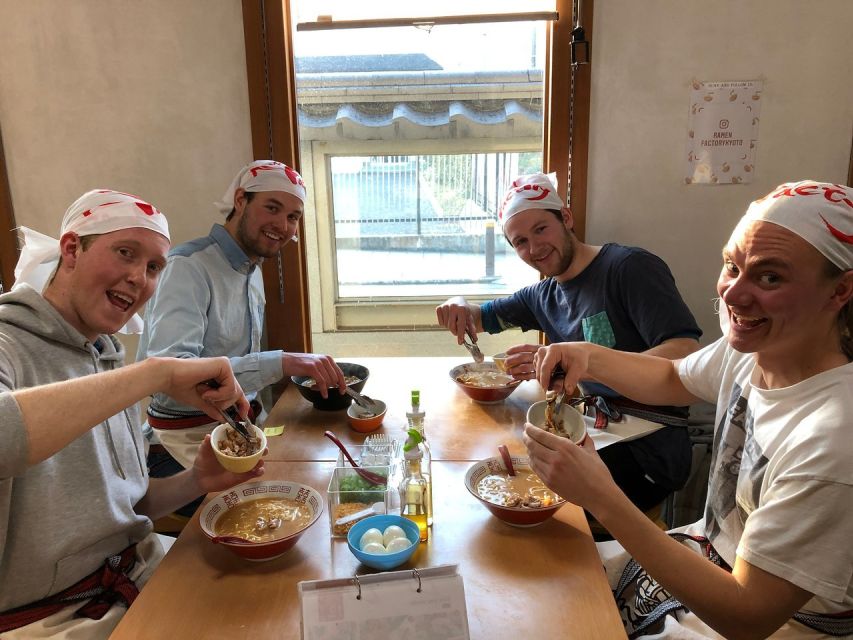
The class provides the cooking setup, apron, and headscarf. Wear something comfortable and suitable for a practical food activity. The supplied information does not specify special footwear or clothing rules, so you should not need professional kitchen gear.
Bring your phone if you want your own photos, but let the staff help with the important shots. Several instructors take photos and videos during the process, and the activity may also include professional filming, photography, or 360-degree camera recording for media and promotional use.
If you do not want to appear in that material, ask the provider about the policy before booking. The notice gives permission for images or video from the visit to be used worldwide in media coverage, on the website, or in advertising.
The souvenir choice is a nice final touch. It gives the class a physical reminder beyond the recipe email, and some items can help you continue the ramen habit at home. Ask what the current four choices are when you arrive, since the exact selection is not specified.
Who Should Book This Kyoto Cooking Class?
I would recommend it to you if you meet one or more of these descriptions:
- You love ramen and want to understand how noodles and flavor bases come together.
- You want a short, hands-on activity between Kyoto sights.
- You are traveling with children or teenagers who need more than a quiet cultural visit.
- You prefer making something over watching a demonstration.
- You want a food souvenir and a recipe you can use at home.
- You need an indoor plan that is social, practical, and filling.
I would pause before booking if you are mainly seeking a low-cost meal, a serious professional cooking qualification, or a slow lesson on every part of traditional ramen production. The class is built for fun and clear results, not for advanced culinary training.
It is also worth checking dietary arrangements in advance. The staff have handled several food preferences, but the provider asks you to make contact after booking if you need a special option.
Should You Book Ramen Factory Kyoto?
Yes, if you want an activity with a clear result. You will make noodles from flour, season chicken, choose among miso, salt, and soy flavors, assemble your bowl, eat it, and take home a souvenir and recipe.
The strongest reasons to book are the active noodle work, the friendly English instruction, and the freedom to shape your own ramen. The strongest reason to hesitate is the $127 cost, especially when compared with an ordinary Kyoto ramen lunch.
For a family, couple, solo food fan, or first-time cook, I think the class earns its place in a Kyoto itinerary. Just allow time to find the basement entrance, tell the supplier about dietary needs ahead of time, and remember that drinks are extra.
FAQ
How long does the ramen cooking class last?
The class lasts 90 minutes. Check the available starting times when booking.
How much does the Ramen Factory Kyoto class cost?
The listed price is $127 per person.
Where is Ramen Factory Kyoto located?
The venue is about a five-minute walk from Demachiyanagi station on the Keihan line. It is on the basement floor. Use the staircase to the right of the supermarket and go downstairs. The entrance may not match the Google Maps location exactly.
Which languages are available?
Instruction is available in English and Japanese.
Are dietary options available?
Dietary options may be available, including arrangements such as tofu or fish broth. Contact the local supplier after booking to request an option and discuss allergies or other needs.
What is included in the activity?
The price includes the 90-minute chef course, ramen making, and a selected souvenir. Transportation and drinks are not included. You also receive the full recipe by email for cooking ramen at home.
Just added around Kyoto
- Kyoto: Zen Meditation at a Private Temple with a Monk★ 5.0 · 25 reviews
- Kyoto: Gion Geisha District & Sake-in-Hand Walking Tour★ 5.0 · 37 reviews
- Private Pewter Sake Cup Experience with a Kyoto Artisan★ 5.0 · 31 reviews
- Your Private Vacation Photography Session In Kyoto★ 5.0 · 110 reviews
- Private Guided Traditional Buddhist Cooking in Japan★ 5.0 · 16 reviews
- Kyoto Wagashi(Japanese sweets) Cooking Class near Fushimiinari★ 5.0 · 60 reviews
- Kyoto:Family-Friendly Kimono & Yukata Experience at WARGO★ 5.0 · 147 reviews
- Private Cooking Class Udon in Kyoto Japan★ 5.0 · 23 reviews
Kyoto Tours, compared.
Fushimi Inari, Kinkakuji, Bamboo Grove 1 Day Bus Tour
Read our review →
Tea Ceremony in a Traditional Tea House in Kiyomizu
Read our review →
Kyoto Geisha Walking Tour: Gion District & Hidden Gems
Read our review →

Gion Magical Night Walking Tour with Geisha Trivia
Read our review →

Gion Geisha District Walking Tour – Stories of Geisha
Read our review →Browse the lists this tour appears in