

Reviewed · KYOTO TOURS
Ramen Cooking Class at Ramen Factory in Kyoto
Ramen Factory Kyoto turns lunch into a hands-on lesson. You knead dough, roll and press the noodles, season your soup, prepare toppings, and then eat the bowl you made. It is more than a cooking demonstration, but it is not a serious chef’s course either.
I like the friendly teaching and the chance to adjust flavors and toppings to your taste. I also like that the class ends with a proper meal, not just a few bites. The main consideration is price: at $131.32 per person, this is a costly bowl of ramen, so you should value the activity, instruction, and shared fun as much as the food.
Key points to know before booking
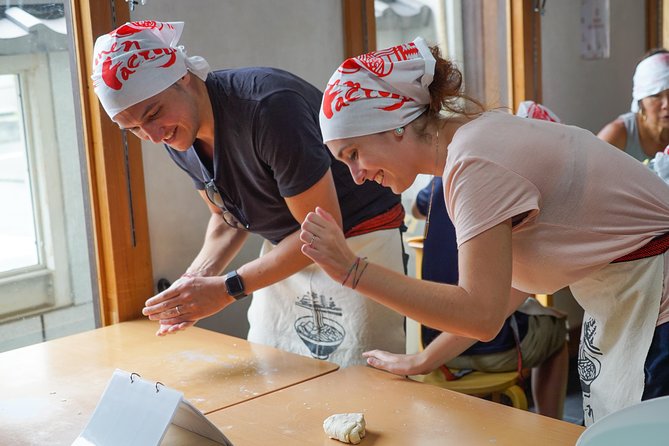
- Handmade noodles: Knead, roll, press, and prepare ramen noodles from scratch.
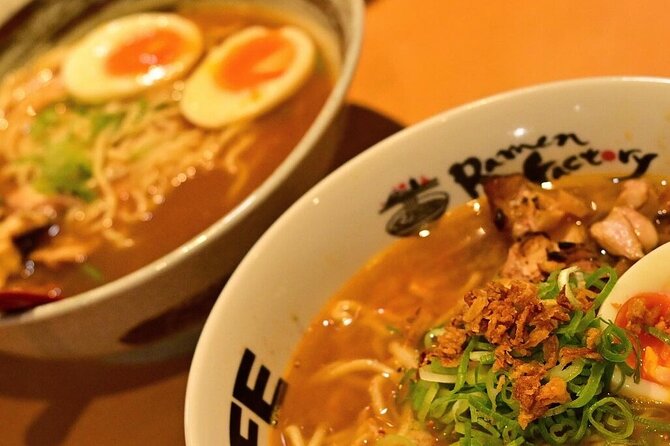
- Your own bowl: Select flavors and toppings, then enjoy the ramen you cooked.
- More than noodle making: Some sessions include tying chicken thigh, boiling it in broth, and charring it with a small torch.
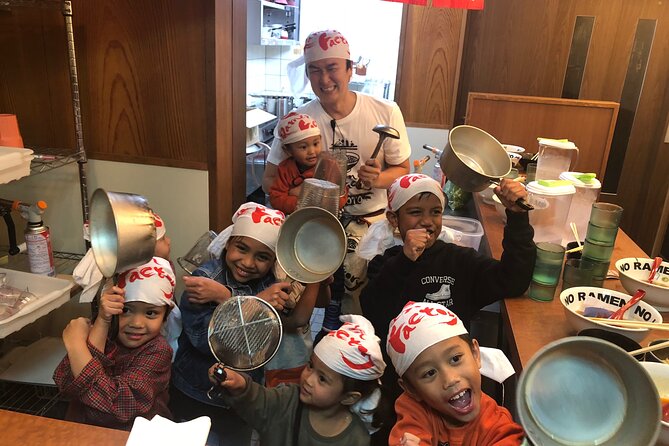
- Good for families: The short format, active tasks, and helpful instructors work well for children and groups.
- Dietary choices: Vegetarian and Halal options are available, with vegan preparation available by request.
- Convenient timing: Several start times make it possible to fit the class around Kyoto sightseeing.
What happens during the 90-minute ramen class
You make your own way to Ramen Factory Kyoto at Kajiichō 44714, BF1, in Kyoto’s Kamigyo Ward. The activity begins and ends at this meeting point, which is near public transportation. It is not a tour that collects you from a hotel, so allow time to find the entrance and arrive ready to start.
The class lasts about one hour and 30 minutes. That is a useful length for a busy Kyoto day. You get a real activity and meal without giving up half a day, though the short schedule also means the process is tightly organized.
The instructors guide you through each stage. Names that appear in the teaching team include Mahiro, Moeka, Haruka, Fuku, Reika, Akemi, Moe, and Hiro. The experience can feel different depending on who leads your session, but the teaching style is consistently described as friendly, funny, and easy to follow.
You begin with the dough. Rather than simply watching someone make noodles, you take part in kneading and working the mixture. You then roll or press the dough into noodles. Some descriptions of the class include pounding the handmade noodles, which adds a playful physical element and gives the process a little more energy than a standard cooking lesson.
This is the part children often enjoy most. It is active, visual, and forgiving. You do not need professional cooking skills, and the instructors are there to demonstrate and help. Still, do not expect the noodle-making to be effortless. One participant described it as harder than it looks, which is fair. The finished noodles may not be perfectly uniform, but that is part of the fun.
Next comes the soup. You choose from available flavors and seasonings, then mix your broth to suit your preference. This gives you a small lesson in how much the soup base shapes a ramen bowl. You can make choices that are personal rather than simply receiving one fixed recipe.
Toppings follow. The available selection can vary, but the class allows you to personalize the bowl with different toppings and meat or vegetable combinations. Some sessions include preparing chicken thigh by rolling and tying it, cooking it in broth, and finishing it with a small torch. That step adds a bit of kitchen theater, but it also gives you a better sense of how the protein is prepared before it reaches the bowl.
Once the noodles, soup, and toppings are ready, you assemble and cook your ramen. The instructions keep the pace moving, with the host showing the next step and helping when needed. You then sit down to eat the finished bowl as lunch.
That final meal matters. You are not preparing food for someone else to judge. You get to taste the result while the work is still fresh in your mind. The bowl may not be identical to restaurant ramen, but the connection between the work and the meal makes it more satisfying.
More cooking classes in Kyoto:
- Kyoto: Ramen Cooking Class at a Ramen Factory with Souvenir
★ 4.9 · 532 reviews - Kyoto: Ramen, Gyoza, and Onigiri Cooking Class
★ 5.0 · 445 reviews - Kyoto: Japanese Washoku Bento Small Group Cooking Class
★ 5.0 · 380 reviews
Why the hands-on format works
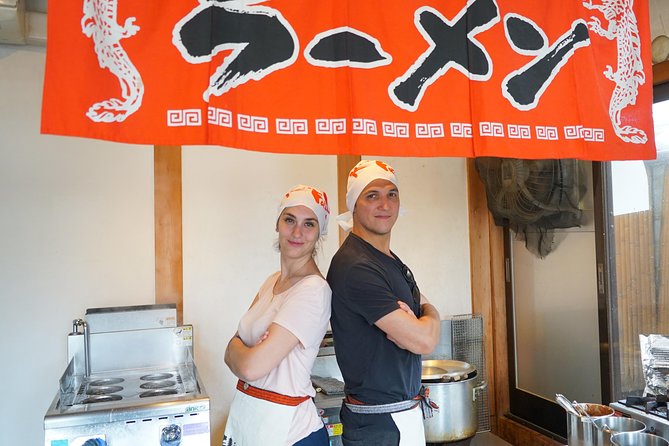
Kyoto offers endless temples, shrines, gardens, and markets. After several hours of walking, a seated cooking class gives your day a change of rhythm. You still learn about Japanese food, but you do it with your hands instead of standing in front of another display.
I especially like the way this class turns a familiar dish into a series of small decisions. Ramen can look simple when it arrives at a restaurant: noodles, broth, toppings, and perhaps a slice of meat. Here, you see how those parts come together. You knead the dough, shape the noodles, season the soup, and prepare the topping before bringing everything together.
The lesson is practical rather than academic. You are unlikely to leave with professional-level noodle-making skills after 90 minutes, but you can take home a basic understanding of the process. Several participants liked that they gained ideas they could try in their own kitchen.
The social side is just as important. The instructors use humor and encouragement, and the activities give families, couples, and friends something to do together. If you are on a honeymoon or celebrating a special trip, the class creates a shared memory without requiring formal dining manners or a long evening meal.
The class can also work well if you are shy about cooking. You are not left alone with a complicated recipe. The host demonstrates, the group follows, and assistance is available. One session may even have only your party in the room if the time slot is quiet, which can make the lesson feel almost private. That cannot be guaranteed, but the maximum group size is 20 people.
The food: tasty, filling, and made your way
The biggest practical advantage is simple: lunch is included. You do not finish the activity and then need to search for food elsewhere. Come hungry, since the meal is part of the point and the class is designed to leave you with a full bowl.
You choose flavors and toppings rather than receiving exactly the same ramen as everyone else. This is helpful for families with different tastes. One person may prefer a stronger soup, while another may want a different topping or a vegetarian bowl.
The food is also where expectations should stay sensible. You are paying for a cooking experience with a meal, not only for the meal itself. If you compare the $131.32 price with the cost of a ramen lunch in Kyoto, the class is expensive. If you compare it with a private or group food activity that includes instruction, ingredients, lunch, and an organized 90-minute program, the value is easier to understand.
Drinks are not included, so budget separately if you want something beyond the ramen. Local taxes, food tasting, lunch, and a tour host are included in the listed price.
The class is Halal-certified, and vegetarian options are available. Vegan preparation is available by request, but you need to contact the provider after booking. Do not wait until you arrive to explain a vegan requirement. Dietary planning is one of the most important details to handle in advance.
The instructors make the difference
A cooking class rises or falls on its teacher. Here, the staff receives especially strong praise for being warm, efficient, funny, and supportive. Mahiro is noted for a good sense of humor and clear demonstrations. Moeka is described as sweet and encouraging, while Haruka is praised as a friendly host and teacher.
Other instructors named in connection with the class include Fuku, Reika, Akemi, Moe, Hiro, and China. The descriptions of these teachers have a common thread: they keep the class moving while helping people who need extra guidance.
That matters because the process has several stages. You are handling dough, noodles, soup, toppings, and cooking in a relatively short period. A slow or unclear instructor could make the class feel rushed. The teaching team appears to focus on keeping the mood light while making sure each person reaches the final bowl.
You may also receive a free apron and photographs, depending on the arrangements of your session. Some participants mention a free photo, and others received souvenirs such as a T-shirt. Treat these as pleasant extras rather than guaranteed parts of the advertised package.
The factory also has a media notice. You may be photographed or filmed during promotional shoots, professional video production, or 360-degree recordings. The material can be used worldwide for promotional and advertising purposes without payment. If you do not want to appear, tell a staff member before the class begins. The team says it will try to accommodate that request.
More hands-on workshops in Kyoto:
- Kyoto: 45-Minute Tea Ceremony Lesson Experience
★ 4.3 · 2,378 reviews - Kyoto : Chopsticks Making Workshop in Gion with Engraving Option
★ 5.0 · 958 reviews - Kyoto: Samurai Sword Class by Experts in Traditional Arts
★ 4.9 · 657 reviews - Ninja 1-hour Hands-on Lesson by Japanese master in Kyoto -Entry
★ 5.0 · 489 reviews
Who should book this experience
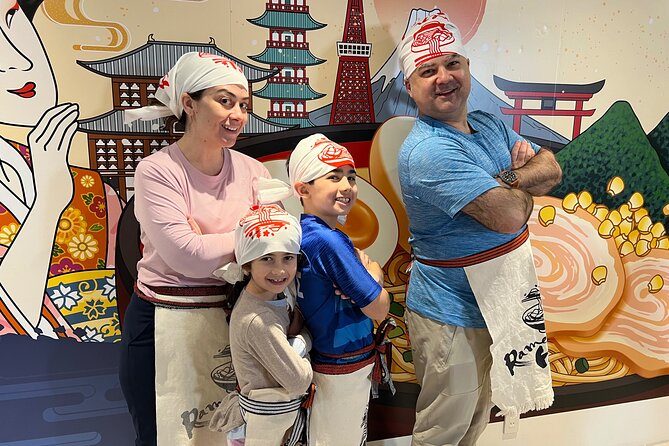
I would recommend this class most strongly to ramen fans, families, couples, and anyone who wants a Kyoto activity that is not another sightseeing stop. It is especially useful when you want a meal and an activity in one booking.
Families should find the short format manageable. The work is interactive, and children can take part in making the noodles and assembling the bowl. Adult supervision still matters around cooking and the torch, but the class is designed to be accessible to beginners.
It also suits people who enjoy food but do not want a formal culinary lesson. You can learn useful basics without committing to a full afternoon. Several departure times let you place it around temple visits, shopping, or an evening plan.
I would be more cautious if your only goal is to eat the cheapest or most refined ramen in Kyoto. A specialist restaurant will likely offer a broader menu and a more polished bowl for much less money. This class earns its price through participation, instruction, and the memory of making lunch yourself.
The experience may also be less appealing if you dislike group activities or kitchen work. The maximum is 20 people, and even a well-run class can feel busy when everyone is handling several steps at once. A quiet departure may offer a smaller setting, but no start time promises a private lesson.
Practical planning for your Kyoto day
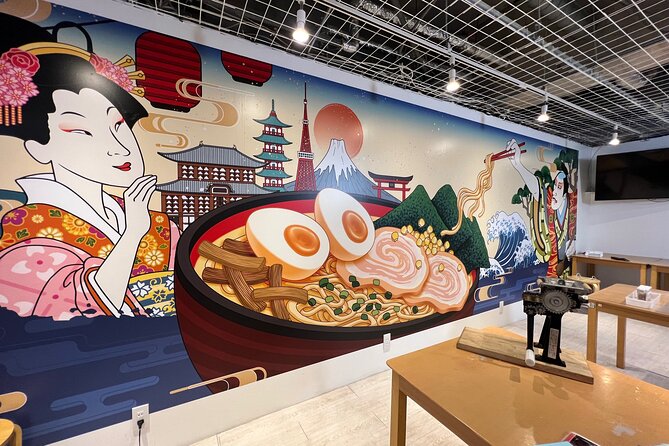
Choose a start time that lines up with lunch if possible. This is the most useful scheduling tip because you finish by eating your ramen, rather than treating the meal as an extra snack between sightseeing stops.
Wear something comfortable and arrive prepared to participate. The class provides the main cooking experience, but you should not plan to rush straight into it from a distant part of Kyoto. The address is in Kamigyo Ward, and the meeting point is in BF1, so give yourself enough time to locate it.
The mobile ticket is convenient. Your booking confirmation is received at the time of booking, which makes it easy to keep the admission details on your phone. The activity ends back at the meeting point.
Cancellation is flexible only up to a point. You can cancel for a full refund at least 24 hours before the local start time. Cancellations or changes made less than 24 hours ahead are not accepted for a refund, so check your Kyoto schedule before booking.
Is Ramen Factory Kyoto worth $131.32?
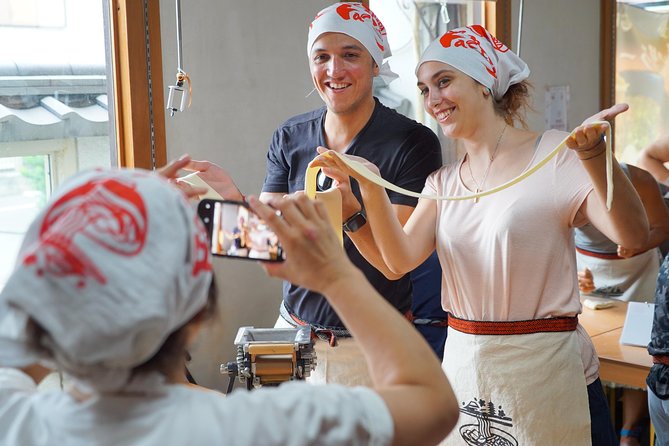
This is a food activity first, not a budget lunch. The price makes sense if you want a guided, hands-on experience and a filling meal in a compact 90-minute format. It is also a reasonable choice for a family that wants one shared activity rather than another restaurant stop.
The strongest reasons to book are the active noodle-making, the freedom to customize your bowl, the friendly teaching style, and the dietary options. The biggest reason to hesitate is cost, especially if you already plan to eat at several excellent ramen shops in Kyoto.
My call: book it if making the dish matters almost as much as eating it. Skip it if you want only a quick, inexpensive bowl. For families, couples, honeymooners, and curious food lovers, this is a cheerful way to spend part of a Kyoto day, with lunch waiting at the finish.
FAQ
Where does the ramen cooking class take place?
The class takes place at Ramen Factory Kyoto, Japan, 602-0841 Kyoto, Kamigyo Ward, Kajiichō 44714, BF1.
How long does the experience last?
The activity lasts approximately one hour and 30 minutes.
What do I make during the class?
You make ramen noodles from scratch, mix the soup, prepare toppings, and cook and assemble your personalized bowl.
Is lunch included?
Yes. Lunch and food tasting are included, and you eat the ramen you prepare during the class.
Are drinks included?
No. Drinks are not included in the listed price.
Are vegetarian and vegan options available?
Vegetarian options are available. Vegan options can be arranged by request, and you should contact the provider after booking.
Is the facility Halal-certified?
Yes. The Ramen Factory is Halal-certified.
How many people can join the class?
The activity has a maximum group size of 20 travelers.
Can I cancel for a full refund?
Yes, if you cancel at least 24 hours before the experience start time. Cancellations and changes made less than 24 hours in advance are not accepted for a refund.
Just added around Kyoto
- Kyoto: Zen Meditation at a Private Temple with a Monk★ 5.0 · 25 reviews
- Kyoto: Gion Geisha District & Sake-in-Hand Walking Tour★ 5.0 · 37 reviews
- Private Pewter Sake Cup Experience with a Kyoto Artisan★ 5.0 · 31 reviews
- Your Private Vacation Photography Session In Kyoto★ 5.0 · 110 reviews
- Private Guided Traditional Buddhist Cooking in Japan★ 5.0 · 16 reviews
- Kyoto Wagashi(Japanese sweets) Cooking Class near Fushimiinari★ 5.0 · 60 reviews
- Traditional Japanese Music show & Experience Tour in Kyoto★ 5.0 · 57 reviews
- Kyoto:Family-Friendly Kimono & Yukata Experience at WARGO★ 5.0 · 147 reviews
Kyoto Tours, compared.
Fushimi Inari, Kinkakuji, Bamboo Grove 1 Day Bus Tour
Read our review →
Tea Ceremony in a Traditional Tea House in Kiyomizu
Read our review →
Kyoto Geisha Walking Tour: Gion District & Hidden Gems
Read our review →

Gion Magical Night Walking Tour with Geisha Trivia
Read our review →

Gion Geisha District Walking Tour – Stories of Geisha
Read our review →Browse the lists this tour appears in