
Reviewed · KYOTO TOURS
Kyoto: Samurai Sword Class by Experts in Traditional Arts
A sword class in Kyoto is more than a chance to wave a katana for a photo. At Samurai Kembu Theater, you learn the careful bow, the controlled draw, and a short sequence of stylized strikes before watching trained performers show how Kenbu turns sword work into stage art. The costume session and the polished demonstration make this a memorable break from temple visits.
I like the small-group limit of 10, which gives the instructor room to correct your movements. I also like the balance between doing and watching: you practice basic techniques, then see the same ideas handled with grace by a master. The main consideration is that this is a beginner lesson in sword dance, not a combat course, and costume changes can be awkward if you arrive in a single hoodie or tight clothing.
Key points at a glance
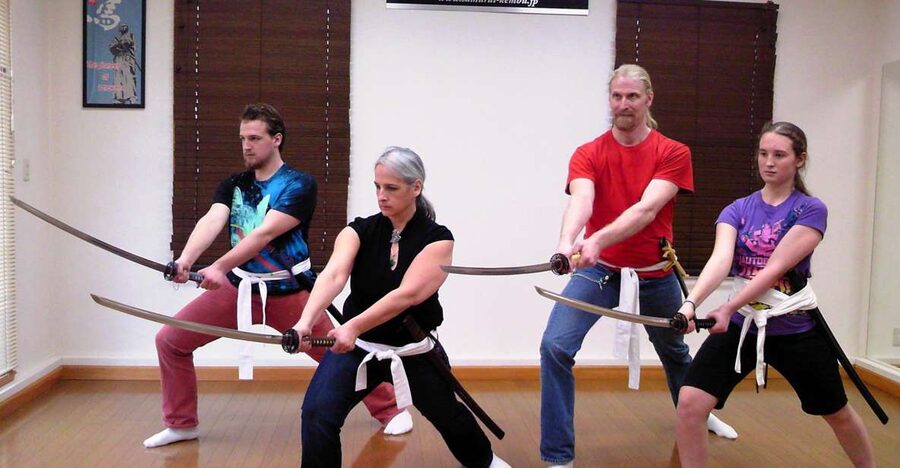
- A hands-on Kenbu lesson: Learn how to bow, draw a sword, return it to its scabbard, and perform basic choreographed strikes.
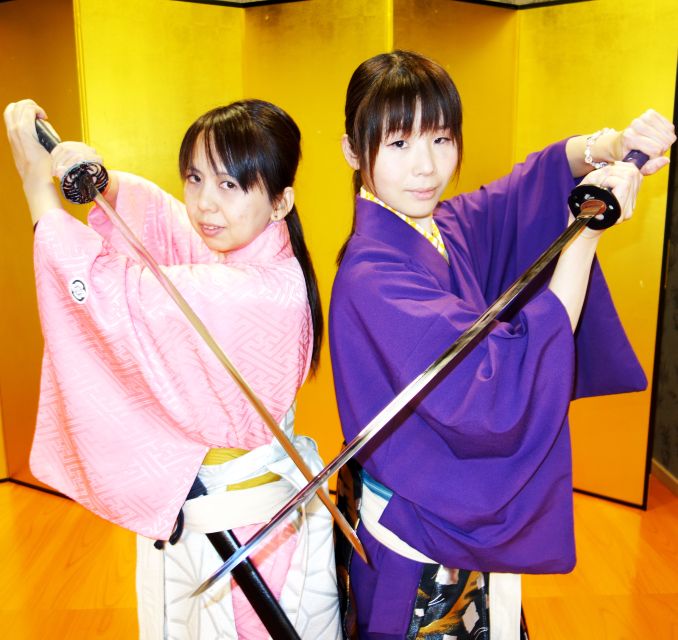
- Traditional clothing included: Choose samurai-style garments for the lesson and photo session, with a tenugui towel included as a keepsake.
- A 10 or 30-minute performance: Depending on your booking, you watch a short demonstration or a longer show with commentary from a sword dance instructor.
- Small groups make a difference: The class is limited to 10 people, and instructors such as Kazu, Hoga, and Kashin are praised for patient, clear teaching.
- Good for families with older children: Children under 4 cannot join, while children aged 5 to 10 should have some martial arts or similar learning experience.
- Easy to fit into a Kyoto day: The session lasts 90 minutes to 2 hours and takes place in Higashiyama, near the Sanjo-Hanamikoji area.
What Kenbu really is, and what you will learn
The class introduces Kenbu, a Japanese sword dance built around controlled movement, rhythm, posture, and respect. That distinction matters. You are not being trained to fight, and the lesson is not a free-for-all with sharp weapons. It is a structured introduction to the movements and manners associated with the samurai tradition.
You begin with a short film, either about four minutes for the basic introduction or a longer presentation depending on the option chosen. It gives you a quick frame for the lesson before you put on the costume. The history section is brief, so I would not book this as a full lecture on the samurai class or the Edo period. It works better as an introduction that gives purpose to the physical practice.
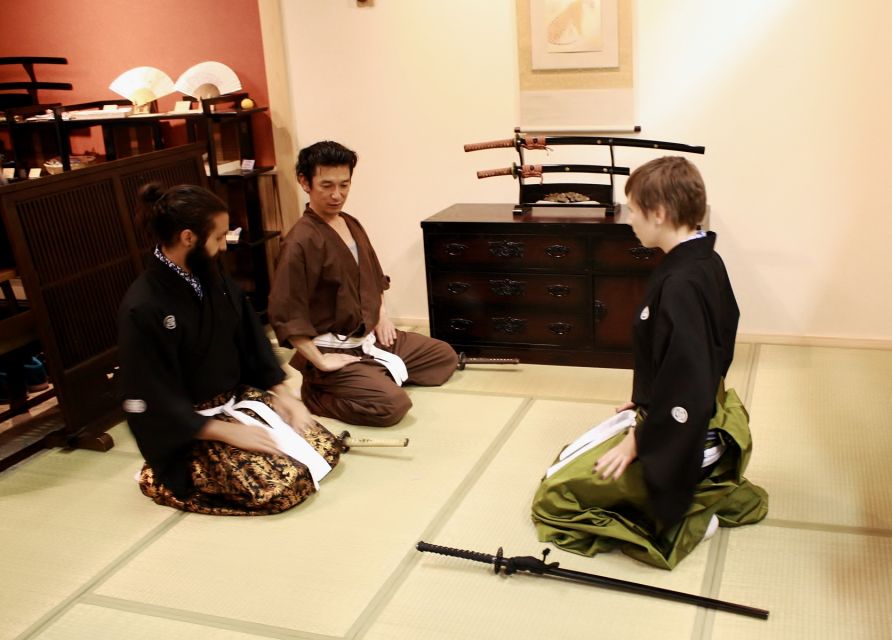
The instructor then explains how to bow before handling the sword. This is one of the most useful parts for understanding the activity. The sword is treated with respect, and the gestures are not just decoration for photographs. You learn that the sequence includes etiquette, attention, and restraint.
Next comes the sword draw. You practice taking the katana from its scabbard and returning it safely. The movements are deliberate, and your instructor will likely slow you down if you try to rush. That is part of the lesson. The goal is to connect posture, balance, hand position, and timing rather than simply make a dramatic swing.
The basic strikes are taught as a short routine. You repeat them until the sequence begins to feel natural, then perform them with the group. Some people find this surprisingly demanding because the movements require control rather than force. It is a light physical activity, but you should still wear clothes that let you move freely.
More Samurai and Ninja Experiences in Kyoto
- Kyoto Samurai Experience
★ 5.0 · 1,294 reviews - Kyoto: Kendo and Samurai Experience with Uniform and Gear
★ 4.9 · 815 reviews - Skip the lines Basic Ticket at SAMURAI NINJA MUSEUM KYOTO
★ 4.5 · 632 reviews
Choosing a samurai costume in Higashiyama
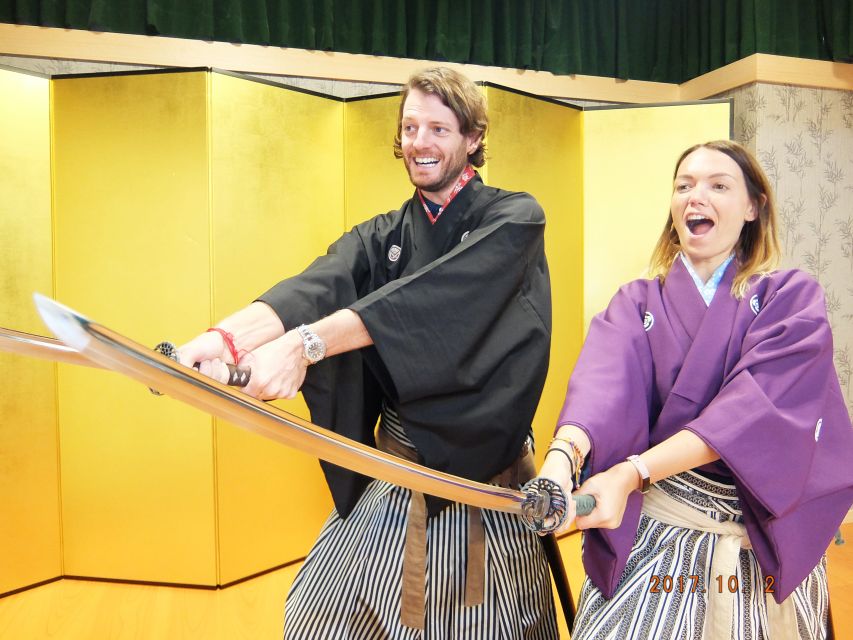
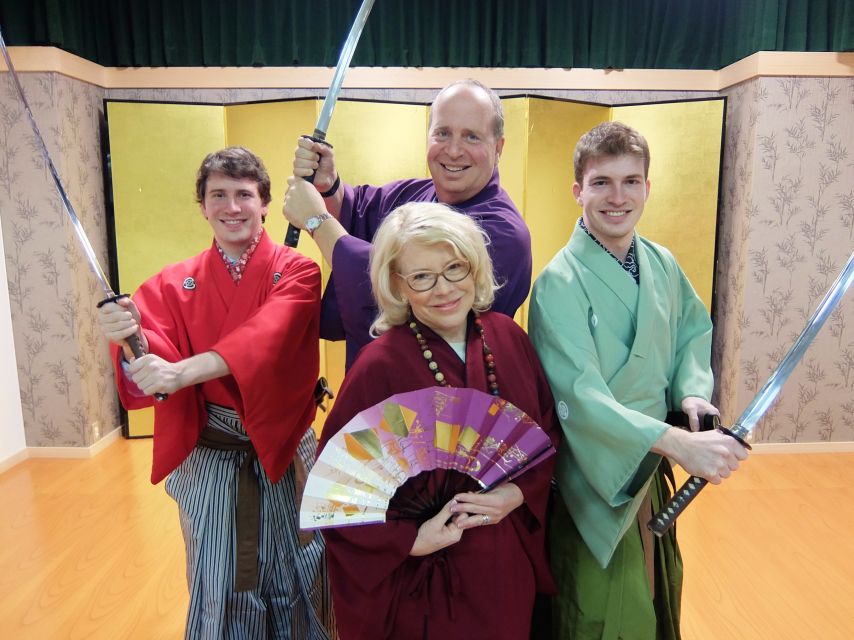
The costume change is a major part of the appeal, especially if you are looking for photographs that feel different from the usual kimono rental picture. Staff help you put on traditional samurai-style clothing, and several people appreciate being able to choose their outfit. The clothing also gives the movements more meaning: once dressed, you are not just practicing in street clothes in a basement studio.
Wear practical clothes underneath. A single hoodie or very tight leggings are specifically unsuitable for changing, and large bags cannot be stored in the room. Comfortable exercise clothing is the sensible choice. There is no waiting room, so arrive with your booking confirmed and avoid bringing luggage or a large travel bag.
The outfit is not merely a prop. One particularly observant participant appreciated the weave, cut, fit, and combinations of the garments, while the instructor explained the pieces. If you enjoy Japanese textiles or traditional dress, you may find this part as interesting as the sword lesson.
After training, you have time for a photo session. Staff organize the pictures and videos by individual group, giving you a chance to pose with the sword and costume without needing to rush through a self-timer setup. The exact amount of time depends on the pace of your session, but the experience allows room for photographs rather than treating them as an afterthought.
The included tenugui towel is a small but useful souvenir. Some participants also received or kept small costume items such as socks, depending on the session. The confirmed inclusion is the tenugui, so think of any extra item as a possible bonus rather than something to expect.
The lesson with Kazu, Hoga, Kashin, and other instructors
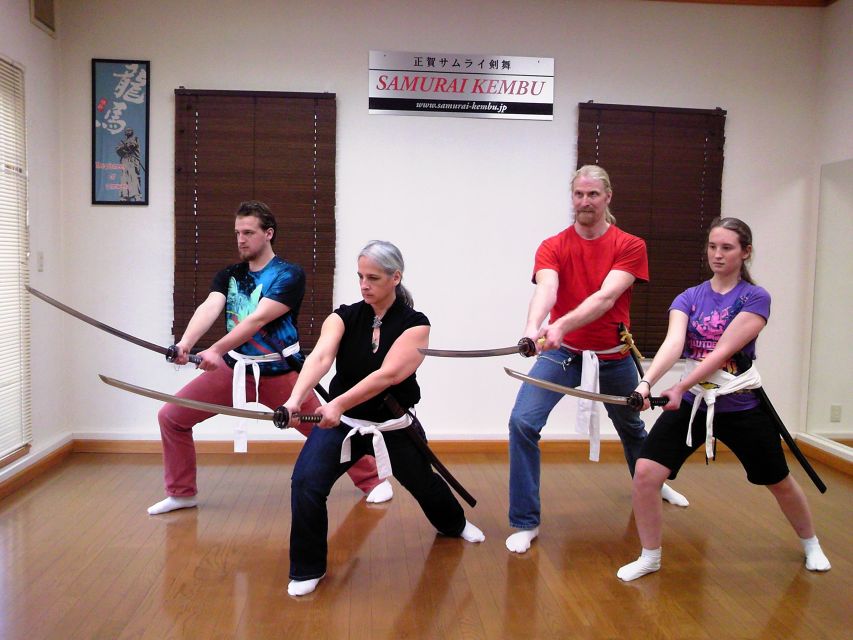
The instructor names can vary. Kazu is praised for patience, humor, and clear demonstrations, while Hoga is noted for his skill and entertaining manner. Kashin is also singled out for patient teaching and a calm approach. The staff teach in English and Japanese, and the activity is designed for international visitors.
That matters because sword movement is easy to misunderstand when you only watch it. A good instructor needs to show the position, explain it, watch you try, and correct you without making the class feel like a test. The strongest reports of this session focus on exactly that balance: serious enough to teach proper handling, relaxed enough for beginners to enjoy themselves.
You may receive individual attention even in a group. The maximum is 10 participants, and at quieter times the class can be much smaller. One person booked at a low-demand time and received a one-to-one lesson, which allowed the instructor to refine each stage of the technique. You should not count on a private class, but the small-group format improves your odds of receiving useful corrections.
The instructors also use humor. That helps when you feel self-conscious in unfamiliar clothing, trying to coordinate a sword, a bow, and a choreographed sequence. The activity does require participation, though. Observation only is not allowed, so you need to be willing to handle the practice sword and follow directions.
Safety instructions are part of the lesson. Follow the instructor closely, do not bring weapons or sharp objects, and do not attend under the influence of alcohol. Food, drinks, smoking, pets, fireworks, explosives, and drugs are also prohibited.
From basic strikes to a short Kenbu performance
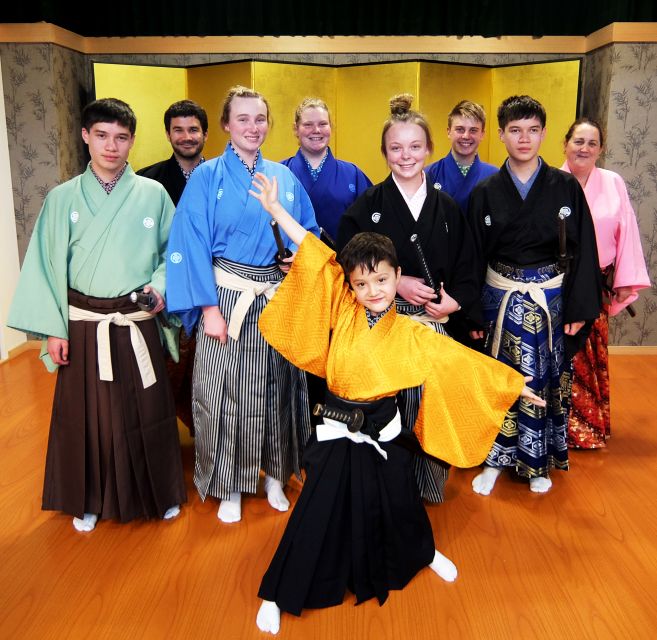
The performance is the payoff, but it also helps you understand what you have been practicing. Depending on the selected option, you watch either a 10-minute or 30-minute Kenbu presentation. A sword dance instructor provides commentary, so the show is not just a silent display of fast movements.
The difference between the student exercise and the professional performance is striking. Your lesson focuses on a few basic movements and a manageable routine. The masters show how those same ideas can become precise, expressive, and dramatic when handled by people who have trained for years.
Several people find the performance beautiful rather than aggressive. That is the point of Kenbu. The sword represents more than combat here. The choreography uses posture, pauses, direction, and controlled force to express a tradition passed down through generations.
If you can choose between the shorter and longer show, the 30-minute option gives you more time to see the art explained and performed. The 10-minute version is useful if your Kyoto schedule is tight. Both options add context that the basic class alone cannot provide.
The performance may take place before or after the lesson, depending on the option and schedule. Allow the full 90 minutes to 2 hours, not just the advertised hands-on portion. This is important if you are trying to connect the class with a restaurant booking, train departure, or another timed activity.
More samurai and ninja sessions in Kyoto:
- Ninja 1-hour Hands-on Lesson by Japanese master in Kyoto -Entry
★ 5.0 · 489 reviews - Kyoto: Ninja Weapon Forging Experience
★ 4.8 · 478 reviews - Kyoto: Samurai Kenbu Traditional Sword Dancing Show
★ 4.5 · 426 reviews - Samurai Training with Modern day Musashi in Kyoto
★ 5.0 · 256 reviews
How the 90 minutes to 2 hours are spent
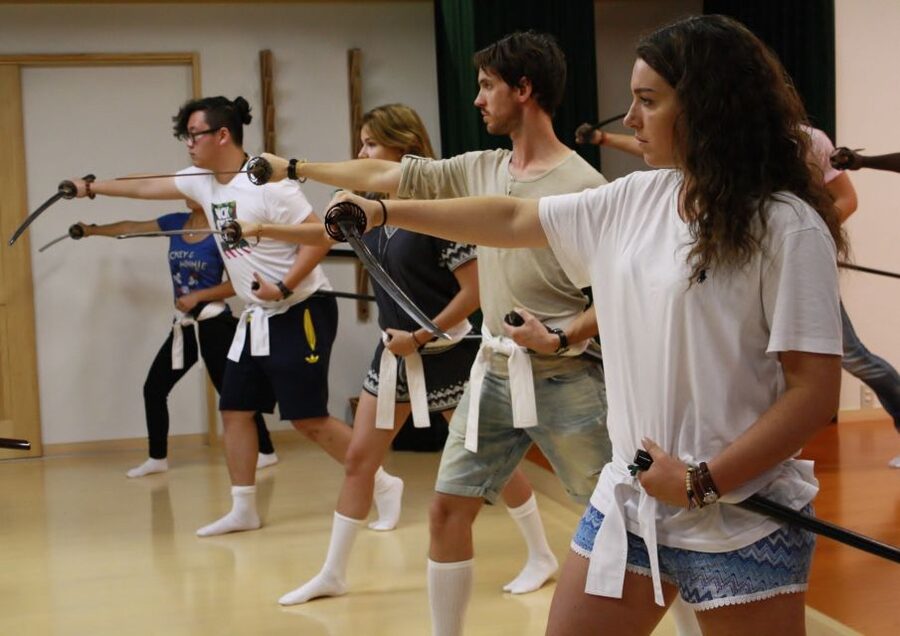
The session generally moves through several parts:
- A short introduction to samurai culture and Kenbu, supported by a film.
- Costume selection and changing.
- Instruction in bowing and sword etiquette.
- Practice drawing and sheathing the sword.
- Rehearsal of basic strikes and stylized movements.
- A photo session in costume.
- A Kenbu performance, either 10 or 30 minutes depending on the option.
- A respectful bow to the instructor and presentation of a completion certificate.
The order can vary, especially since the show may be scheduled at the beginning or end. Do not expect every minute to follow a fixed public timetable. The staff need to organize costumes, groups, photographs, and the performance.
The certificate is a pleasant finishing touch, particularly for children and anyone collecting activity memories from Japan. It is not a qualification in martial arts. It marks your completion of the introductory lesson.
Is $64 a fair price in Kyoto?
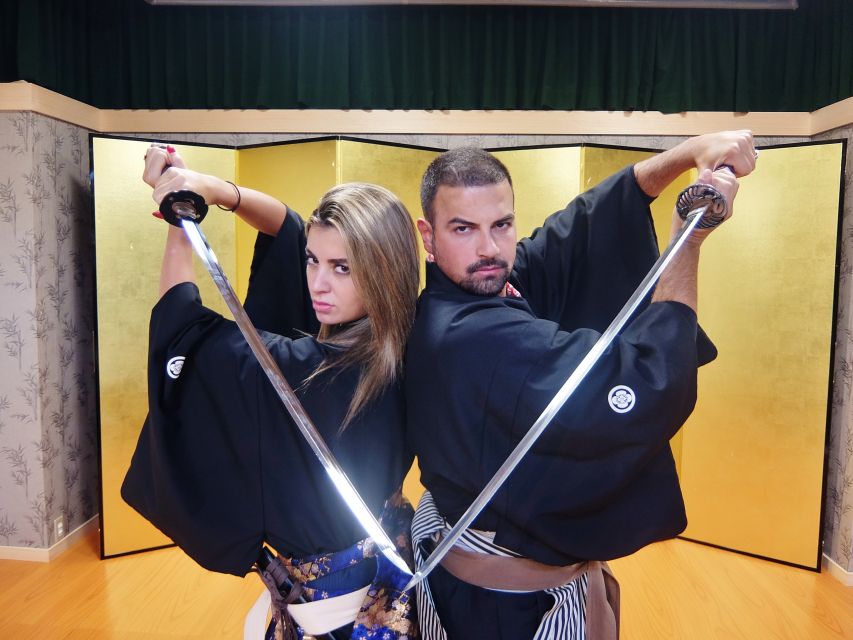
At $64 per person, this is not the cheapest way to spend an hour and a half in Kyoto. It is also more than a simple costume rental or a short cultural demonstration. The value comes from the combination of instruction, costume use, guided photography, performance, souvenir towel, and certificate.
I think the price is reasonable if you want an organized activity with real participation. You are paying for more than access to a room and a prop sword. The instructor explains the manners and mechanics, watches you practice, and connects the class to a living performance tradition.
The value is strongest for families, couples, and first-time visitors who want one scheduled cultural activity with a clear beginning and end. It is also useful on a rainy day, although the indoor setting and weather protection are not specifically presented as the main purpose.
The value is weaker if you already practice Japanese sword arts and want advanced technical training. This is an introductory class for beginners. You will learn a short sequence, not receive a long course in martial arts or historical swordsmanship.
Who should book this class?
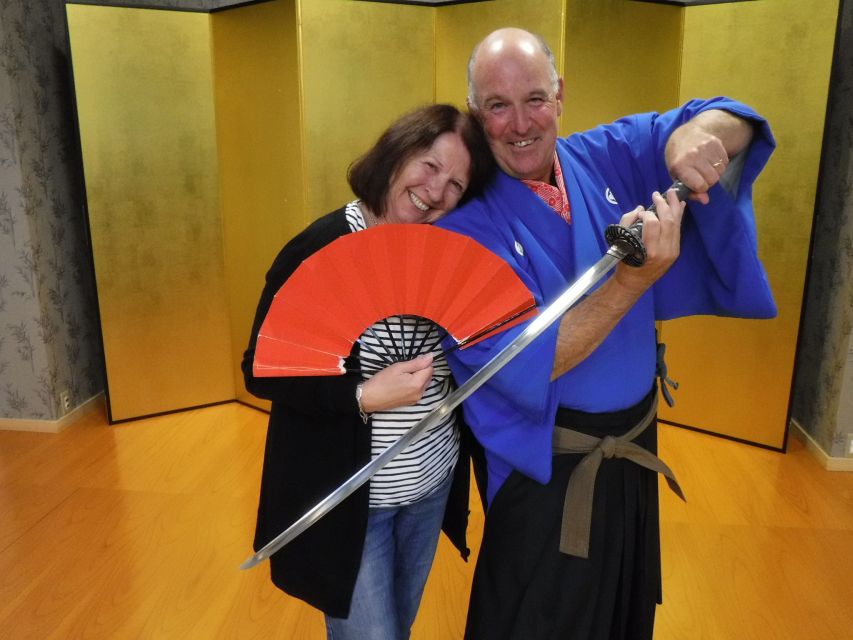
This activity suits people who enjoy doing something rather than only looking at monuments. You learn a routine, wear traditional clothing, and take home photographs that feel personal to the day.
Families can book it, but age needs attention. Children under 4 are not suitable for the activity. Children aged 5 to 10 should ideally have attended a martial arts class or learned something similar, because the lesson is taught alongside adults. Older children and teenagers appear to fit the format well, especially if they can listen carefully and control their movements.
It also works for adults who think they are not interested in swords. The class is not built around aggression. It includes etiquette, balance, controlled motion, history, costume, and performance. You may find the artistic side more appealing than the martial theme suggests.
You should skip it if you want to sit quietly and watch. No observation-only participation is allowed. You should also reconsider if you dislike costume changes, group activities, or following a set routine.
Location, clothing, and arrival advice
The meeting point is Samurai Kembu Theater, at the Kyoto dojo, 35-7 Sanchome, Higashi-iru, Sanjo-Hanamikoji, Higashiyama-ku, in the B1F Gozan Building, Kyoto 605-0005. Check the address carefully before leaving, since the dojo is in a basement building rather than a large outdoor attraction.
There is no hotel pickup or drop-off. Food and drinks are not included. Plan your own way to the meeting point and eat before or after the class rather than expecting refreshments on site.
Bring only what you need. Large bags and travel luggage do not fit, and there is no room for people without appointments to wait inside. If someone needs to accompany you but is not participating, contact the organizer in advance. The room cannot admit more people than the number booked.
Your reservation name should match the participant arriving for the class. If it will not, notify the provider ahead of time. Also cancel through the booking platform yourself if plans change. Free cancellation is available up to 24 hours before the activity, and the reserve-now-pay-later option can help if your Kyoto schedule is still moving around.
FAQ
How long does the samurai sword class last?
The activity lasts between 90 minutes and 2 hours. The exact length depends on the selected option and whether you watch the 10-minute or 30-minute performance.
Where does the class take place?
It takes place at Samurai Kembu Theater, Kyoto dojo, at 35-7 Sanchome, Higashi-iru, Sanjo-Hanamikoji, Higashiyama-ku, B1F Gozan Building, Kyoto 605-0005.
Is the class taught in English?
Yes. The instructors speak English and Japanese, and an English-speaking instructor is included.
Do I get to wear a samurai costume?
Yes. You change into samurai-style traditional clothing for the lesson and photo session. Wear clothes suitable for changing and movement. A single hoodie or tight clothing is not suitable.
Are children allowed to participate?
Children under 4 are not suitable. Children aged 5 to 10 should ideally have experience attending a martial arts class or learning something similar, since the lesson is conducted with adults.
What is included in the price?
The experience includes the instructor, costume use, a photo shoot, a tenugui towel, and a completion certificate. Hotel transfers, food, and drinks are not included.
Should you book the Kyoto Samurai Sword Class?
Book it if you want a short, well-organized cultural activity where you take part instead of simply watching. The best features are the patient small-group instruction, the chance to learn proper sword etiquette and basic Kenbu movements, and the performance that shows what the art looks like in expert hands.
I would especially recommend it for families with older children, first-time Kyoto visitors, and anyone who wants memorable photographs with real context behind them. Set your expectations correctly: this is a beginner sword dance lesson, not combat training and not a full course in samurai history.
At $64, the package earns its price through the costume, coaching, photos, performance, towel, and certificate. Arrive in comfortable clothes, leave your large luggage behind, book the right show length, and give yourself the full two-hour window. For most visitors, that makes this a lively and worthwhile addition to a Kyoto itinerary.
More Workshops in Kyoto
- Kyoto: 45-Minute Tea Ceremony Lesson Experience
★ 4.3 · 2,378 reviews - Ramen Cooking Class at Ramen Factory in Kyoto
★ 5.0 · 1,937 reviews - Kyoto : Chopsticks Making Workshop in Gion with Engraving Option
★ 5.0 · 958 reviews - Kyoto: Ramen Cooking Class at a Ramen Factory with Souvenir
★ 4.9 · 532 reviews
Just added around Kyoto
- Kyoto: Zen Meditation at a Private Temple with a Monk★ 5.0 · 25 reviews
- Kyoto: Gion Geisha District & Sake-in-Hand Walking Tour★ 5.0 · 37 reviews
- Private Pewter Sake Cup Experience with a Kyoto Artisan★ 5.0 · 31 reviews
- Your Private Vacation Photography Session In Kyoto★ 5.0 · 110 reviews
- Private Guided Traditional Buddhist Cooking in Japan★ 5.0 · 16 reviews
- Kyoto Wagashi(Japanese sweets) Cooking Class near Fushimiinari★ 5.0 · 60 reviews
- Traditional Japanese Music show & Experience Tour in Kyoto★ 5.0 · 57 reviews
- Kyoto:Family-Friendly Kimono & Yukata Experience at WARGO★ 5.0 · 147 reviews
Kyoto Tours, compared.
Fushimi Inari, Kinkakuji, Bamboo Grove 1 Day Bus Tour
Read our review →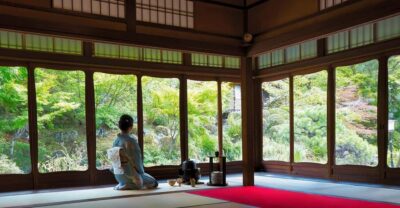
Tea Ceremony in a Traditional Tea House in Kiyomizu
Read our review →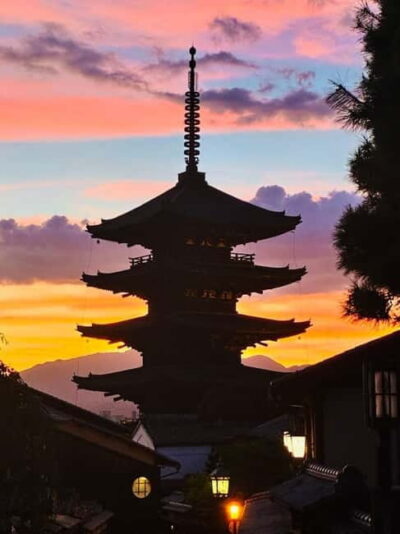
Kyoto Geisha Walking Tour: Gion District & Hidden Gems
Read our review →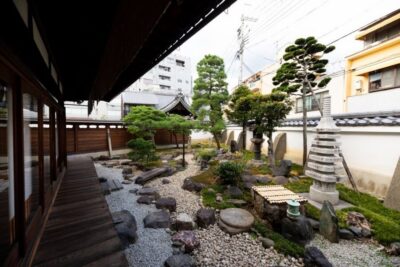

Gion Magical Night Walking Tour with Geisha Trivia
Read our review →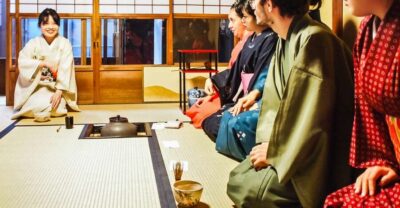
Gion Geisha District Walking Tour – Stories of Geisha
Read our review →Browse the lists this tour appears in