
Reviewed · KYOTO TOURS
Samurai Training with Modern day Musashi in Kyoto
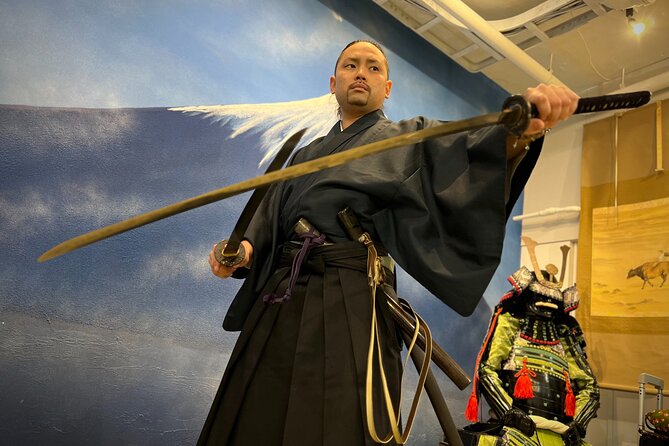
The most unusual part of this Kyoto activity is that your lesson takes place in a working martial arts dojo, not a stage set built for photos. Yushin Sensei leads the training, with Jordan and English-speaking staff helping you follow the movements and understand the etiquette.
I like the chance to dress in dōgi, obi, and hakama, then learn an actual kata rather than simply pose with a sword. I also like the careful attention to safety and form, plus the master’s powerful two-katana demonstration. The main consideration is that mat cutting with a real katana is not currently offered, so check the current format before booking if that is your main goal.
Key points to know before you book
- Training takes place in a genuine dojo: The basement setting includes a Shinto shrine and wooden name plaques connected with the dojo community.
- Yushin Sensei leads the lesson: He brings more than 20 years of experience to the session, with Jordan and other staff assisting.
- You learn a real kata: The class covers drawing, sheathing, handling, and wielding a katana in a controlled practice routine.
- Traditional clothing is part of the lesson: You put on dōgi, obi, and hakama, making the activity more than a quick sword photo stop.
- The finale is a live sword demonstration: The master performs with one or two swords and may explain the construction and parts of historical blades.
- The class is short but active: Plan on roughly 1 hour 45 minutes, sometimes stretching from 1.5 to 2 hours depending on group size.
Entering a real Kyoto dojo
This experience begins at 452-4 Matsugaechō in Nakagyo Ward, a central Kyoto location near public transportation. The training center is in the basement of a building, so do not expect a grand temple entrance or a theatrical samurai village. That modest arrival is part of the appeal.
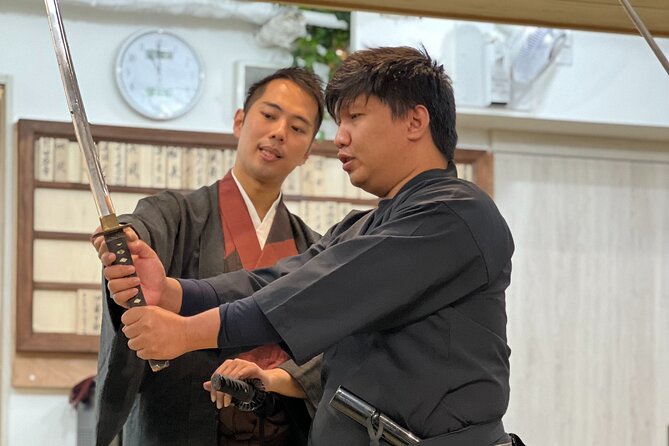
Inside, the setting feels like a place where martial arts are practiced regularly. Details such as the Shinto shrine and wooden plaques bearing students’ names help explain why this experience feels different from a costume-only attraction. You are entering a school with its own training culture, even if you are there for a single class.
The activity is provided by Yushinkan Co., Ltd., also identified as Yushinkan International. Yushin Sensei is the central instructor. Jordan assists with teaching, and John has helped interpret and answer questions in English. The combination gives you access to instruction while keeping the atmosphere relaxed and friendly.
Group size is advertised as six participants per class, though it can reach a maximum of nine. That distinction matters. A group of six should allow more correction and practice time, while a fuller class may mean more waiting between demonstrations. The operator notes that the group can be larger than six when only a small number of separate parties have booked.
More Samurai and Ninja Experiences in Kyoto
- Kyoto Samurai Experience
★ 5.0 · 1,294 reviews - Kyoto: Kendo and Samurai Experience with Uniform and Gear
★ 4.9 · 815 reviews - Kyoto: Samurai Sword Class by Experts in Traditional Arts
★ 4.9 · 657 reviews
Putting on dōgi, obi, and hakama
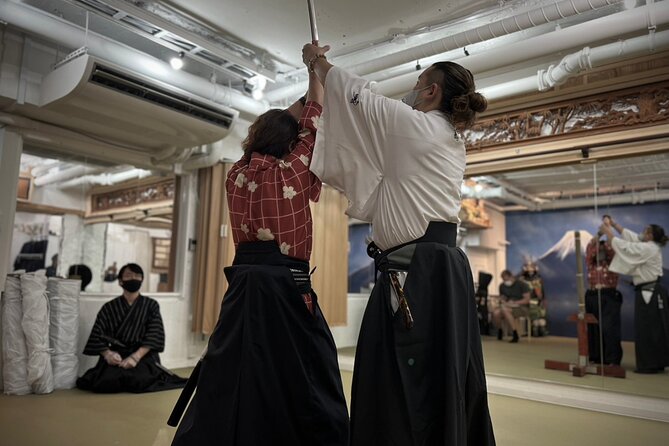
The class starts by getting dressed in samurai training gear. You put on a dōgi, tie an obi, and wear hakama. These clothes are not just decoration. They give you a small sense of the posture, movement, and discipline expected in Japanese sword practice.
The clothing also makes the lesson more memorable for families and groups of friends. You can take photographs, and the outfit creates the classic visual most people hope for when booking a samurai activity in Kyoto. Still, the clothing is only the beginning. The real value comes from what you do after changing.
Expect to move with care rather than rush into swordplay. The instructors place attention on how you stand, how you hold the sword, and how you move through each part of the routine. This slow start may feel restrained if you want an action show, but it is exactly what helps you understand that swordsmanship is built on control.
You should wear something that allows moderate movement underneath the training gear. The activity requires a moderate level of physical fitness, and participants must be at least 12 years old. The supplied information does not specify changing-room details, footwear rules, or exact clothing sizes, so ask the provider if those points affect your booking.
Learning what the samurai sword meant
The lesson includes an introduction to samurai culture, swordsmanship, history, and the honor code associated with the samurai tradition. This background gives the physical practice a useful frame. You are not simply being shown how to swing a prop. You are learning why etiquette, restraint, and correct handling matter.
The sword itself receives attention too. The class may cover what samurai swords were used for, who could use them, and how a Japanese sword is made. During the demonstration portion, Yushin Sensei can explain the different parts of a sword and show historical katana.
This is one of the strongest parts of the experience for curious adults. If you already know a little about Japanese martial arts, you can ask more focused questions about technique, blade construction, or tradition. If your knowledge starts and ends with films and television, the lesson gives you a more grounded picture.
The teaching style appears to balance seriousness with humor. Jordan and the other assistants help make the session approachable, while Yushin Sensei provides the authority and technical focus. That mix works well for a family group with mixed interests. A teenager can enjoy the physical practice, while a parent may spend more time asking about history and sword design.
Handling the katana safely
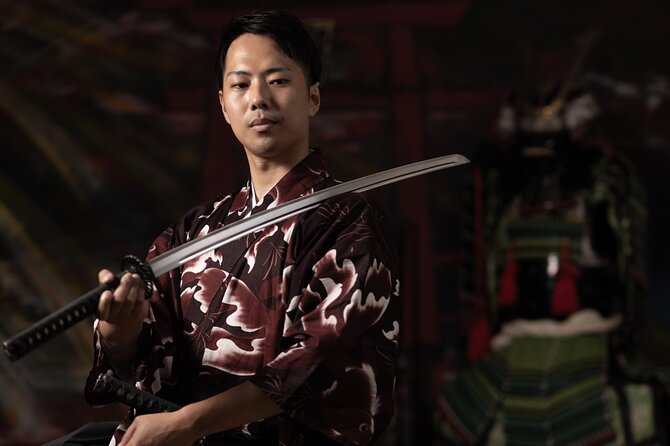
The central practical lesson is how to draw, sheath, and wield a katana. The class uses iaito for safe practice. These are training swords designed for iaido practice, allowing you to work on authentic movements without using a sharpened blade for the class exercises.
Safety is not a side note here. You learn how to handle the sword before you attempt the complete sequence. That makes this a good choice for a first introduction, especially if you are bringing a child aged 12 or older who is interested in samurai culture but has no martial arts background.
The instructors demonstrate the movements, then guide you through them step by step. They may correct your form and answer questions as you work. Because the kata requires a set order, you will need to watch closely and repeat carefully rather than improvise.
If you have experience in karate, martial arts, or other forms of training, you may appreciate the focus on small details. One experienced couple found the session far more serious than expected, with enough attention to technique to satisfy people who already practice martial arts. At the same time, the class is not presented as an advanced qualification. You receive a compact introduction, not a full course in iaido.
More samurai and ninja sessions in Kyoto:
- Skip the lines Basic Ticket at SAMURAI NINJA MUSEUM KYOTO
★ 4.5 · 632 reviews - Ninja 1-hour Hands-on Lesson by Japanese master in Kyoto -Entry
★ 5.0 · 489 reviews - Kyoto: Ninja Weapon Forging Experience
★ 4.8 · 478 reviews - Kyoto: Samurai Kenbu Traditional Sword Dancing Show
★ 4.5 · 426 reviews
Practicing an actual kata
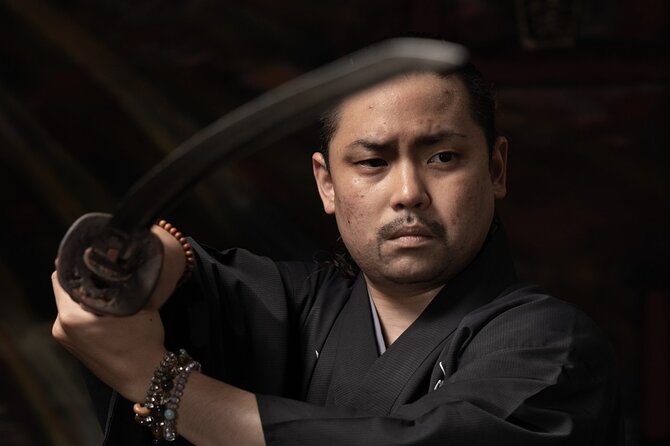
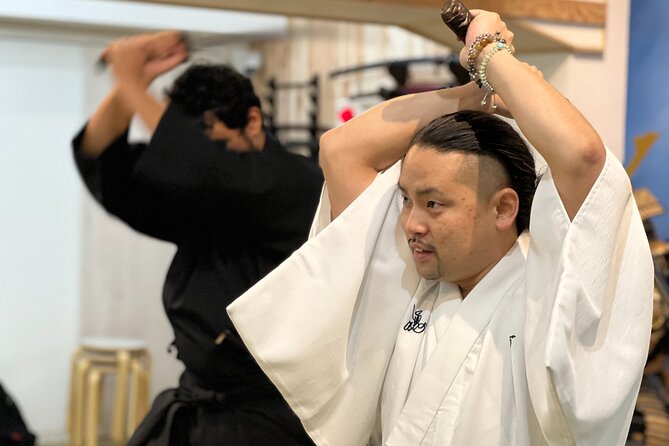
The class teaches a short kata, or formal sequence. Kata practice is where the experience moves beyond dress-up. You learn a pattern that joins posture, drawing, movement, and sheathing into one controlled form.
The routine can feel surprisingly demanding in less than two hours. There is a lot to remember, and the movements may look simple when Yushin Sensei performs them. Once you try them yourself, you will notice how much depends on balance, timing, hand position, and a clean finish.
The small-group format can make a real difference here. With six participants, the instructors have a better chance to spot uneven posture or a misplaced hand. A maximum of nine is still manageable, but it may reduce individual practice time. If personal correction is especially important to you, booking a quieter session could improve the experience, though the supplied information does not provide a way to predict class size.
You can generally take photographs or video while learning the kata, according to the information provided by the operator. Be respectful of the class flow and follow the staff’s direction about when to put your phone away. A good photo is a nice souvenir, but trying to film every movement can distract you from learning it.
Watching Yushin Sensei’s sword performance
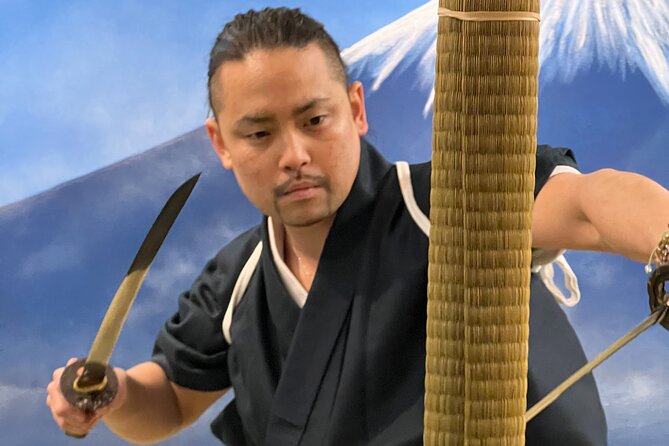
The demonstration gives the session its theatrical finish. Yushin Sensei performs with a katana, including a striking two-katana routine that is presented as a special feature of the experience. Watching a trained practitioner move at speed helps you see the control behind the slower exercises you have just practiced.
The contrast is useful. You begin with careful, deliberate movements. Then you watch the master perform with precision and force. It makes clear that the lesson is an introduction to a much deeper discipline, not a claim that a first-time participant can reproduce a professional performance in one afternoon.
The current activity information says that mat cutting with a real katana is not offered. Some older descriptions of the experience refer to cutting demonstrations, but you should rely on the current notice and book this session for the instruction, kata, clothing, history, and sword performance instead.
You may still see genuine historical swords and learn about their parts and construction. That is different from using a sharp blade yourself. For safety and legal reasons, the operator has changed the format, and the class now centers on iaito practice and demonstrations.
Is $132.65 good value?
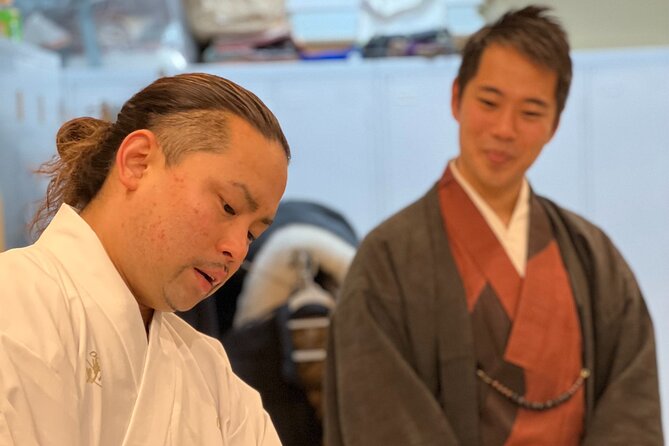
At $132.65 per person, this is not the cheapest costume activity in Kyoto. You can find simpler samurai photo sessions for less, but they usually do not include a lesson in a real dojo, a formal kata, or extended instruction from an experienced sensei.
I think the price makes more sense if you value substance over a quick photo opportunity. You receive traditional clothing, cultural explanation, hands-on sword practice, instructor corrections, and a live performance during a session lasting about 1 hour 45 minutes. The total can run from 1.5 to 2 hours depending on the number of participants.
The value is strongest for people who have a clear interest in Japanese martial arts, samurai culture, or the physical handling of a sword. It is also a good family splurge for a birthday, a special Kyoto day, or a teenager who has outgrown basic sightseeing.
The price is harder to justify if you mainly want to cut a mat with a sharp katana. That is not currently part of the experience. You should also know that a larger class may provide less one-on-one time, although the operator sets a maximum of nine people.
Who will enjoy this most?
I would recommend this for:
- Adults and teenagers aged 12 or older who want hands-on cultural activities.
- Families with children who can follow safety instructions and stand for moderate physical activity.
- People interested in iaido, kenjutsu, karate, or martial arts in general.
- Couples who want something more active and focused than another temple visit.
- Visitors who care about an actual training setting rather than a polished tourist show.
- Anyone who likes asking questions about swords, samurai customs, and Japanese martial traditions.
I would be more cautious about booking it for very young children, anyone with limited mobility, or someone expecting a high-energy combat lesson. The activity requires attention, discipline, and moderate fitness. It is controlled practice, not sparring.
English support is available through Jordan and English-speaking staff, based on the provided information. The exact language arrangement may vary by session, so contact the operator if fluent English instruction is essential to your plans.
Timing, location, and cancellation details
The meeting point is in central Kyoto at 452-4 Matsugaechō, Nakagyo Ward, postal code 604-8034. The activity ends at the same place, so you do not need to arrange transport from a separate finish point.
The dojo is near public transportation. Allow enough time to find the basement-level entrance, especially if you are coming directly from another Kyoto sight. The listing says confirmation arrives within 48 hours of booking, subject to availability. The ticket is mobile, which keeps the check-in simple.
Free cancellation is available up to 24 hours before the start time for a full refund. Within 24 hours, cancellations and changes are not accepted for a refund. The cutoff uses local Kyoto time, so check the time carefully if you are booking from another country.
The final call
I would book this if you want a serious, friendly introduction to Japanese sword practice in a real dojo. The combination of Yushin Sensei’s experience, Jordan’s teaching support, traditional clothing, a formal kata, and the two-sword performance gives you much more than a staged photo stop.
I would skip it if mat cutting is the one feature you care about, since it is not currently offered. For everyone else, this is a strong Kyoto choice for a half-day of active culture, especially for families and teenagers who need a break from temples and museum displays.
FAQ
Where does the samurai training take place?
The activity takes place at 452-4 Matsugaechō, Nakagyo Ward, Kyoto, 604-8034, Japan. The dojo is in a basement-level complex in central Kyoto and is near public transportation.
How long does the experience last?
Plan on about 1 hour 45 minutes. The session can take approximately 1.5 to 2 hours, depending on the number of participants.
What clothing will I wear?
You will put on samurai training gear consisting of a dōgi, obi, and hakama.
What will I learn during the class?
You will learn about samurai culture and swordsmanship, then practice how to draw, sheath, and wield a katana. The class also teaches an actual kata, or formal practice sequence.
Is a real katana used during the lesson?
The training uses iaito for safe practice. You may also see historical katana during the master’s explanations and demonstrations. Mat cutting with a real katana is not currently offered.
Is the experience suitable for children?
Participants must be at least 12 years old. The activity requires a moderate level of physical fitness and careful attention to safety instructions.
How many people can join a class?
The experience is designed for small groups of six participants per class, though the group may be larger when only a small number of parties have booked. The maximum is nine travelers.
Does the activity end at the meeting point?
Yes. The activity ends back at the same meeting point where it begins.
Can I cancel for a full refund?
Yes, if you cancel at least 24 hours before the experience start time. Cancellations or changes made within 24 hours are not refunded.
Just added around Kyoto
- Kyoto: Zen Meditation at a Private Temple with a Monk★ 5.0 · 25 reviews
- Kyoto: Gion Geisha District & Sake-in-Hand Walking Tour★ 5.0 · 37 reviews
- Private Pewter Sake Cup Experience with a Kyoto Artisan★ 5.0 · 31 reviews
- Your Private Vacation Photography Session In Kyoto★ 5.0 · 110 reviews
- Private Guided Traditional Buddhist Cooking in Japan★ 5.0 · 16 reviews
- Kyoto Wagashi(Japanese sweets) Cooking Class near Fushimiinari★ 5.0 · 60 reviews
- Traditional Japanese Music show & Experience Tour in Kyoto★ 5.0 · 57 reviews
- Kyoto:Family-Friendly Kimono & Yukata Experience at WARGO★ 5.0 · 147 reviews
Kyoto Tours, compared.
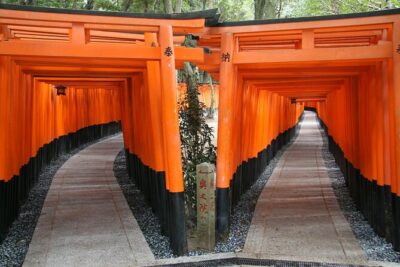
Fushimi Inari, Kinkakuji, Bamboo Grove 1 Day Bus Tour
Read our review →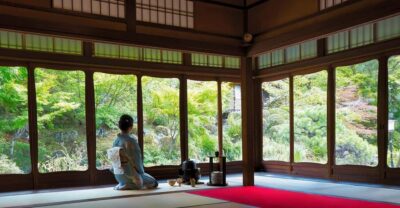
Tea Ceremony in a Traditional Tea House in Kiyomizu
Read our review →
Kyoto Geisha Walking Tour: Gion District & Hidden Gems
Read our review →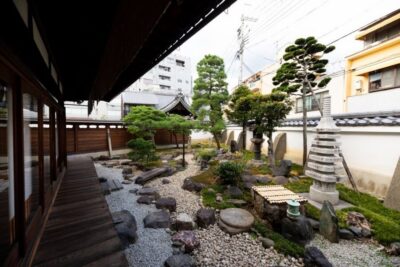

Gion Magical Night Walking Tour with Geisha Trivia
Read our review →
Gion Geisha District Walking Tour – Stories of Geisha
Read our review →Browse the lists this tour appears in