
Reviewed · KYOTO TOURS
Kyoto: Japanese Washoku Bento Small Group Cooking Class
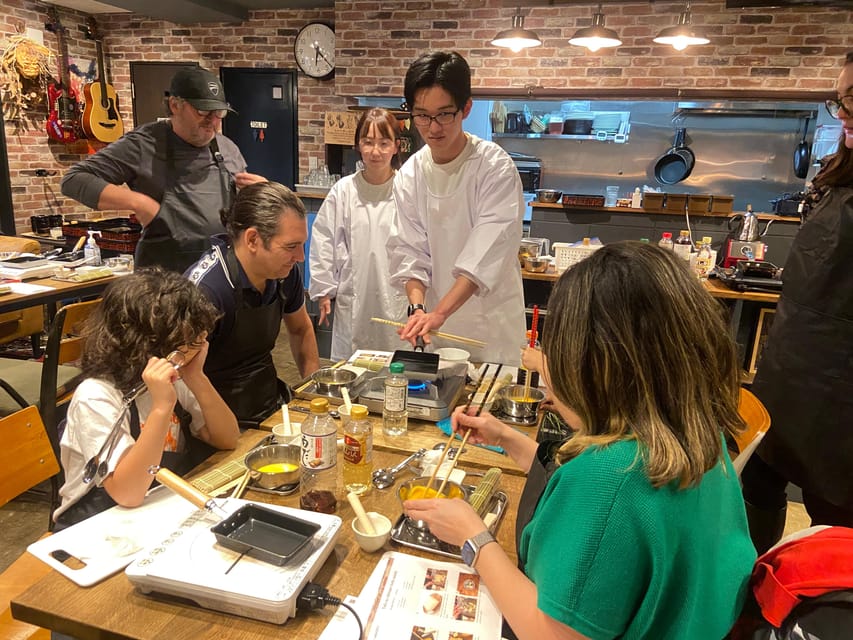
The best part of this Kyoto cooking class is that you do not simply watch a chef prepare Japanese food. You make a full washoku bento, with separate dishes that show how Japanese cooks balance flavor, color, texture, and seasonality in one portable meal.
I like the small limit of five people, which gives you real time with the chef. I also like the practical menu: dashi stock, tempura, sushi rolls, tofu salad, and Japanese rolled omelette teach different techniques rather than repeating one simple recipe. The main consideration is timing. Arrive more than 15 minutes late and the booking is automatically canceled, with no refund or same-day schedule change.
Key points to know before booking
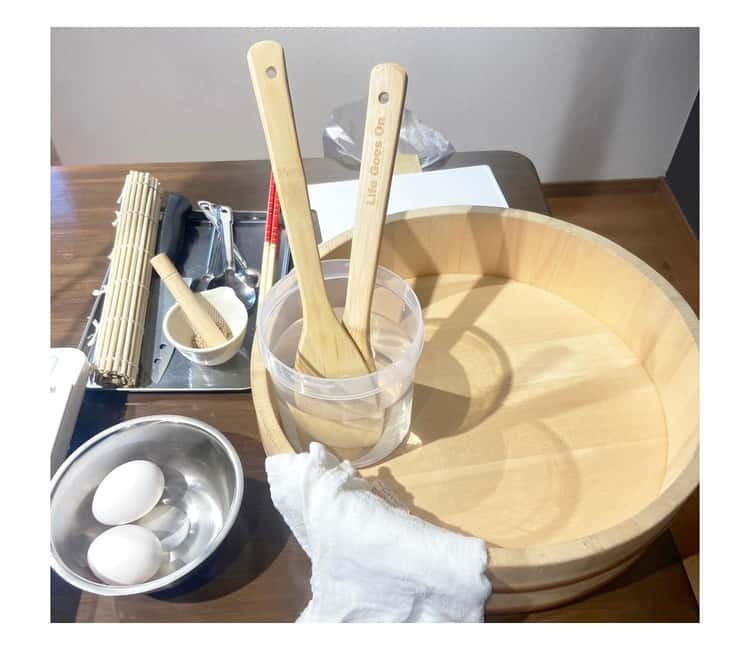
- A four-dish meal you cook yourself: Prepare sushi rolls, tempura, tofu salad, and dashimaki tamago, then sit down to eat your finished bento.
- A genuinely small class: The group is limited to five participants, so you can ask questions and receive hands-on help.
- Three named instructors appear in the schedule: Chef Rie, Ai, and Miyu are praised for clear English, patience, and explanations of Japanese food culture.
- Useful techniques for home cooking: Learn knife handling, dashi stock, tempura frying, and the rolling method for Japanese omelette.
- An easy-to-reach meeting point: Kyoto Laundry Cafe is about five minutes from Saiin Station on the Hankyu Railway.
- A filling afternoon or morning activity: The class lasts 150 minutes, and you make a large amount of food, so arrive hungry.
Why a bento class teaches more than one Japanese recipe
A bento box is not just a lunch container. It is a small lesson in Japanese meal planning. Several foods share one box, but each keeps its own flavor, shape, and texture. A good bento may combine rice, vegetables, protein, fried food, and a sweet or savory omelette without turning into one mixed dish.
That makes this class a useful choice if you want more than a quick sushi lesson. You work across several cooking methods and learn how the parts fit together. Dashi provides a base for Japanese flavor. Tempura teaches oil and batter. Dashimaki tamago requires control and timing. Sushi rolls bring careful shaping and knife work.
The class also introduces washoku, the Japanese approach to food that pays attention to fresh ingredients, seasonal produce, visual balance, and a clean spread of flavors. You are not expected to become a Kyoto chef in two and a half hours. You are given a working introduction to the habits that shape everyday Japanese cooking.
I find that useful because Japanese food can look simple on the plate. The simplicity often depends on small choices: how stock is made, how an ingredient is cut, how a fried item is handled, and how the food is arranged. This class gives those choices a place in the meal.
More cooking classes in Kyoto:
- Ramen Cooking Class at Ramen Factory in Kyoto
★ 5.0 · 1,937 reviews - Kyoto: Ramen Cooking Class at a Ramen Factory with Souvenir
★ 4.9 · 532 reviews - Kyoto: Ramen, Gyoza, and Onigiri Cooking Class
★ 5.0 · 445 reviews
Meeting the chef at Kyoto Laundry Cafe
Your meeting point is Kyoto Laundry Cafe, near Saiin Station on the Hankyu Railway. The cafe is about a five-minute walk from the station. On the day of the class, the chef comes to collect you there and takes you to the cooking location.
Use Google Maps for the address. The directions specifically warn against using the map function on Instagram, so this is one of those small travel details worth taking seriously. Kyoto has plenty of narrow streets and similar-looking buildings. Give yourself extra time, even though the cafe is close to the station.
The late-arrival rule is strict. If you are more than 15 minutes late, the reservation is automatically canceled. You cannot request a refund or change the schedule on the day because you missed the start. I would treat the meeting time as an appointment, not a loose suggestion.
This class works well early in a Kyoto visit. You learn dishes and flavor ideas that can help you understand meals later in the trip. It also suits an evening when you want something more active than another restaurant reservation.
The first lesson: washoku and the story of bento
The class begins with an introduction to bento and Japanese food culture. The instructors explain the role of bento in Japanese life and how the separate elements are prepared and eaten at home.
This background matters. Without it, you might see a box of small dishes as a pretty arrangement. With it, you begin to understand why the meal is divided into portions and why color, texture, and balance matter alongside taste.
Ai is especially praised for her explanation of bento’s past and its place in modern Japanese homes. Rie and Miyu are also described as warm, clear teachers who explain the food while you work. The instructors speak English and Japanese, so English-speaking visitors can follow the demonstrations and ask questions.
The teaching style appears to be relaxed rather than formal. You cook alongside the instructor instead of sitting through a long lecture. That is important in a short class, since the goal is to leave with skills you can use, not just facts you heard once.
Making dashi, the base of Japanese flavor
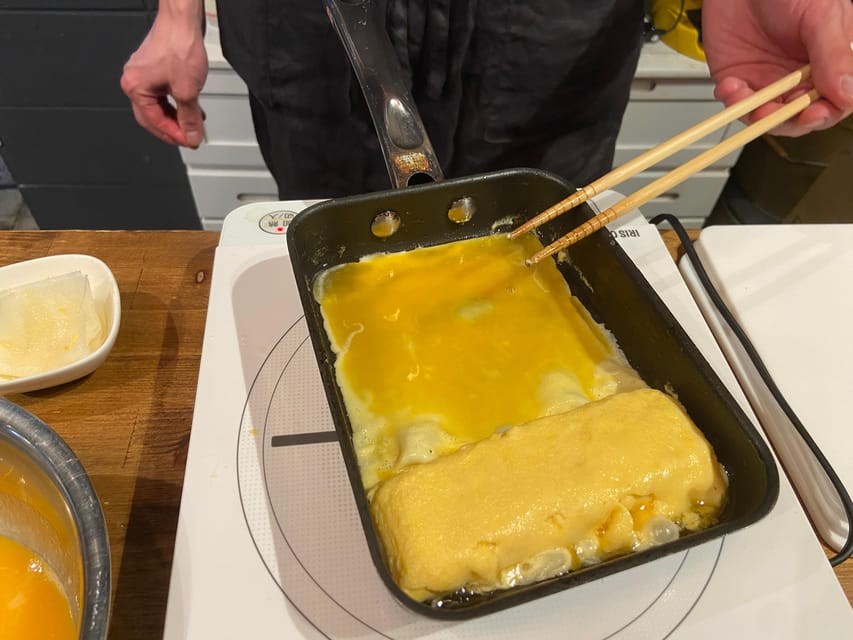
One of the most useful lessons is dashi, the stock used in many Japanese dishes. The class shows you how to make it and explains why it matters to washoku cooking.
Dashi is a good example of the Japanese approach: the finished taste can be light, but the preparation still has purpose. Learning the stock gives you a better sense of how Japanese cooks build flavor without relying on heavy sauces.
You also receive a recipe and process that can be used at home, according to the experience details. One participant later continued making dashi and dashimaki tamago for lunch. That is a good sign for anyone who wants a cooking class with lasting value.
The class does not promise a professional kitchen qualification. It gives you a clear starting point. If you already cook Japanese food often, you may find the dashi section familiar. If you usually depend on restaurant meals or packaged sauces, it should be one of the most useful parts.
More hands-on workshops in Kyoto:
- Kyoto: 45-Minute Tea Ceremony Lesson Experience
★ 4.3 · 2,378 reviews - Kyoto : Chopsticks Making Workshop in Gion with Engraving Option
★ 5.0 · 958 reviews - Kyoto: Samurai Sword Class by Experts in Traditional Arts
★ 4.9 · 657 reviews - Ninja 1-hour Hands-on Lesson by Japanese master in Kyoto -Entry
★ 5.0 · 489 reviews
Knife work and Japanese cooking habits
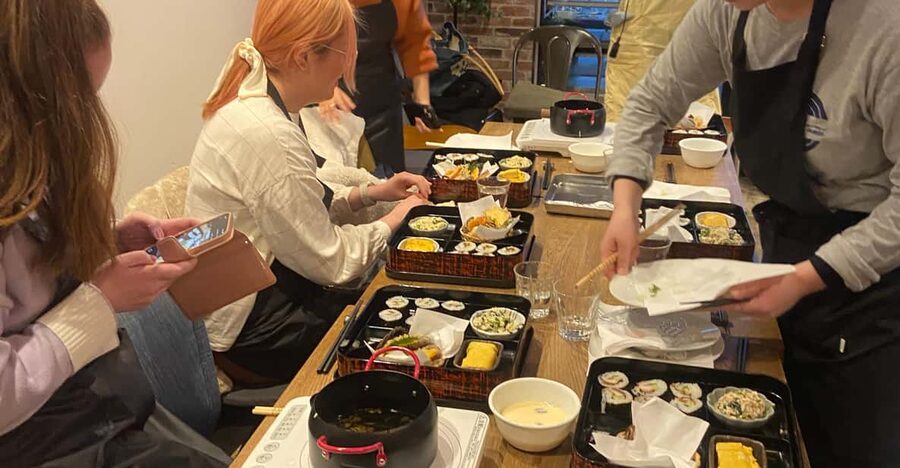
Knife skills are another central part of the class. You learn how to handle a knife in a Japanese cooking style and prepare ingredients for the different bento dishes.
This is practical rather than showy. The aim is not to perform fast chef tricks. It is to understand careful cutting and how the shape of an ingredient affects cooking and presentation.
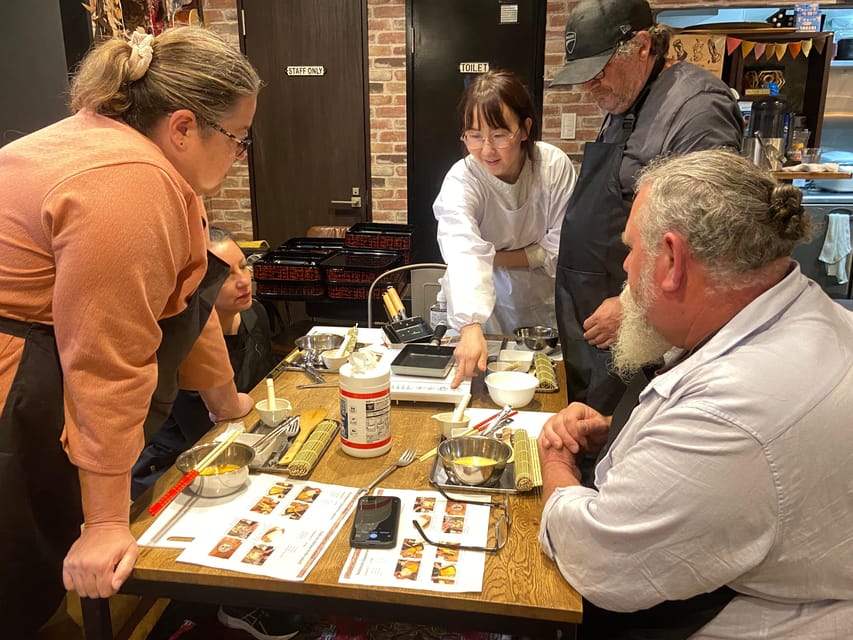
For beginners, having the chef demonstrate and then watching you work is much better than reading a recipe alone. The small group helps here. With only five participants, the instructor can correct your grip or technique before a minor mistake becomes a larger problem.
You should still expect to do real work. This is not a demonstration where the chef prepares everything while you take photographs. You will handle ingredients, utensils, and equipment throughout the class. Aprons and the needed cooking tools are provided.
Frying tempura without losing the light texture
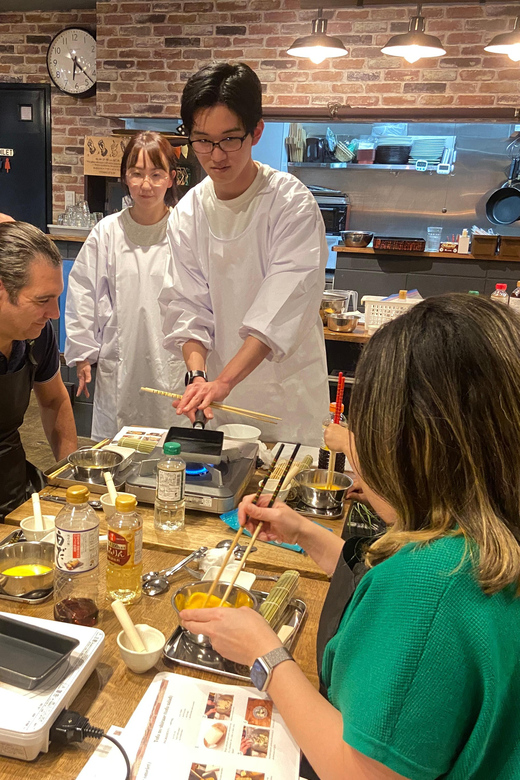
Tempura gives the class a different rhythm. You learn how to fry it, including the handling that helps produce a light coating rather than a thick, greasy crust.
Frying is one of the techniques that benefits most from direct instruction. The chef can show you the right sequence and watch how you manage the food. You get to try the method yourself rather than simply eating a finished piece.
Tempura also adds contrast to the bento. The meal includes soft, fresh, savory, and crisp elements, which is part of the point of a well-planned Japanese lunch. You are learning a dish, but you are also learning why the box contains different textures.
Take care around hot oil and listen closely during this section. The class is hands-on, but it is still a professional cooking environment where the chef’s instructions matter.
Rolling omelette and sushi
The menu includes a Japanese rolled omelette, known as dashimaki tamago, and sushi rolls. These are deceptively tricky dishes, which makes them good teaching exercises.
Dashimaki tamago is made by building and rolling layers of egg. It requires patience, controlled movement, and a sense of when one layer is ready for the next. The dashi gives the omelette its Japanese character, so this dish connects two lessons in the same meal.
Sushi rolling adds another type of precision. You need to arrange the fillings, roll the rice and seaweed neatly, and cut the finished piece without crushing it. The chef demonstrates the technique, then guides you through your own roll.
The finished food may not look exactly like a chef’s version. That is part of the appeal. You get to see how a few basic movements turn separate ingredients into something you can place in your bento. The class is encouraging for beginners, including families with older children.
Tofu salad and the completed bento
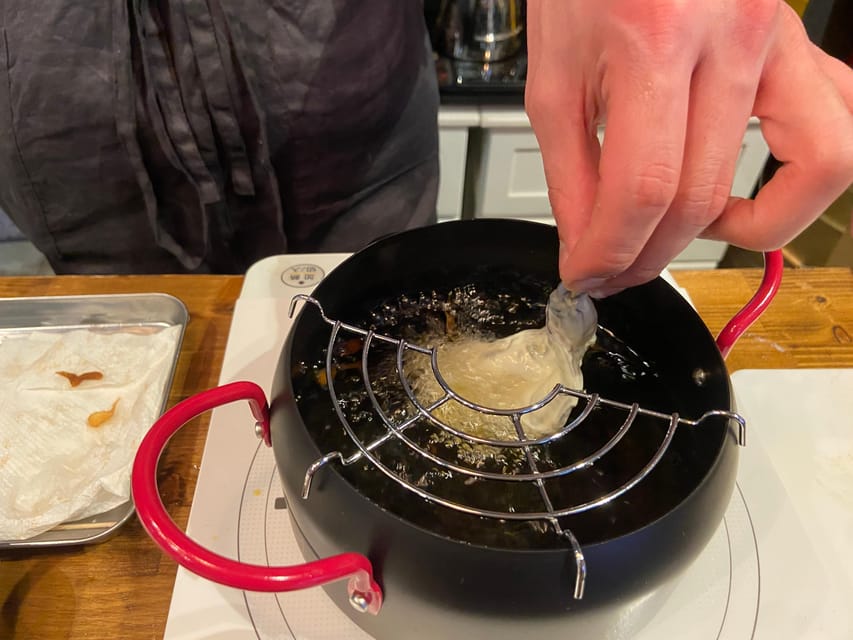
The tofu salad adds a cooler, softer element to the meal. Together with sushi, tempura, and rolled omelette, it gives you four distinct dishes and several different methods of preparation.
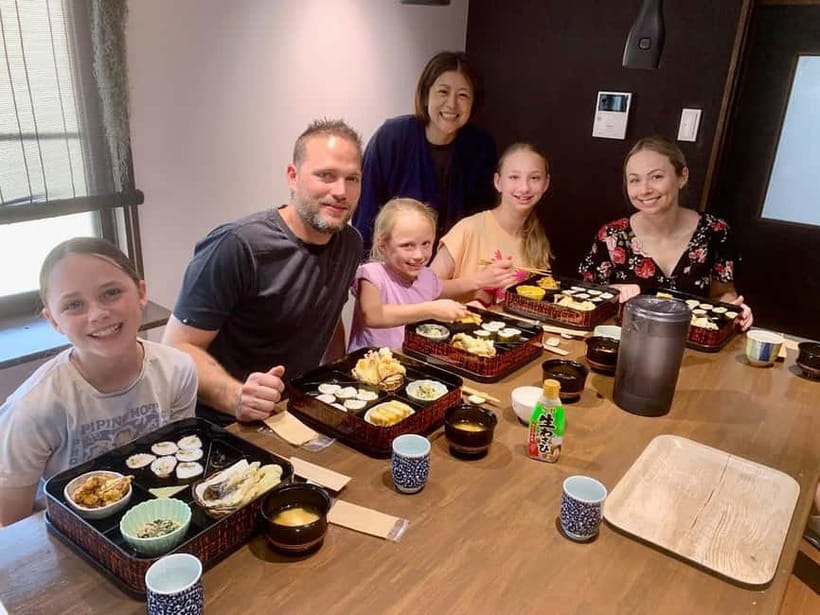
Once the cooking is finished, you arrange your own bento and eat it with the group. This shared meal is a useful final step. You can taste the balance you have just created, compare techniques, and ask any last questions while the food is fresh.
Expect plenty to eat. Several participants describe the final meal as large and filling, and one direct tip is to arrive hungry. The price includes the ingredients and four dishes, so the meal itself is not an extra purchase.
The group meal also gives the experience a social side. You cook with the other participants, chat as you work, and then sit together to eat. Since the group is limited to five, it is more personal than a large culinary workshop.
The instructors: Rie, Ai, and Miyu
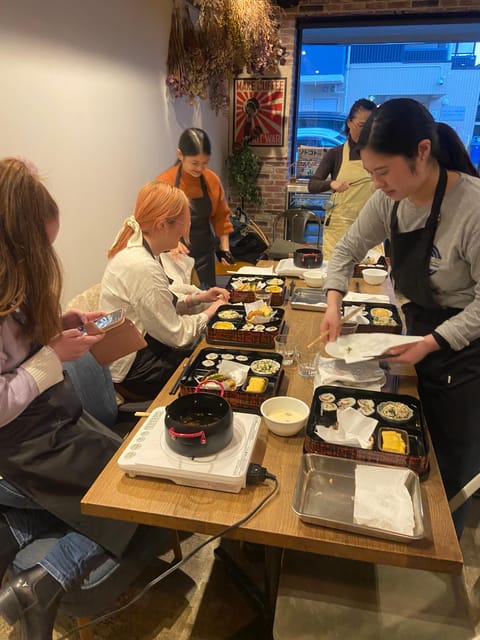
The instructor can vary, but the named chefs include Rie, Ai, and Miyu. Their teaching strengths are similar: clear explanations, patience, friendly conversation, and a good grasp of Japanese food customs.
Ai is often praised for her English and her explanations of bento history, ingredients, and their role in Japanese cuisine. Rie is described as encouraging and skilled at showing traditional techniques, particularly dashi and rolled omelette. Miyu is noted for making the class fun, informative, and easy to follow.
That variety matters because a cooking class depends heavily on the teacher. Here, the available feedback points to a consistently strong teaching experience across the different instructors. You should still expect a different personality depending on the day, but the format is built around personal instruction.
Recipes may be sent after the class. This is especially helpful for dishes such as dashi and dashimaki tamago, where remembering the sequence can be harder than remembering the ingredients.
Is the $58 price good value?
At $58 per person, this is not the cheapest meal you can buy in Kyoto. It is also not just a meal. The price covers 150 minutes, an instructor, ingredients, equipment, an apron, four dishes, instruction, and the bento you eat at the end.
I consider that fair value for a small group class, especially if you want to cook rather than watch. You are learning several techniques in one session, and the recipes can be repeated at home. The small group limit is a real part of the value because it gives you a better chance to work directly with the chef.
The value is lower if you mainly want a quick introduction or a light snack. This is a substantial time commitment, and you will make a lot of food. It may also feel too basic if you already prepare tempura, dashi, sushi rolls, and Japanese omelette with confidence.
For most visitors, the strongest value comes from the combination of food and context. You learn how the dishes work, why they belong together, and how to recreate them after returning home.
Who should book this Kyoto cooking class?
I would recommend it to first-time visitors who want a practical introduction to Japanese food. It is also a good choice for couples, families with older children, solo visitors who enjoy small-group activities, and anyone who wants a break from temples and sightseeing.
It suits people who like to participate. You will need to follow instructions, use a knife, work with hot oil, and help prepare several dishes. If you prefer watching a chef do the work, choose a different type of food experience.
The class can work well for children, but the supplied age information lists several restrictions for very young children, including children under two, three, and four years old. Since those entries are not fully consistent, confirm the applicable age rule before booking. Babies under one year are not suitable for the class.
Wheelchair users and people with diabetes are listed as unsuitable. If you have a food allergy, speak with the provider before booking. One participant with a shrimp allergy received a substitution, but you should not assume every dietary need can be handled without advance notice.
Practical details that can shape your day
The class lasts 150 minutes, or two and a half hours. Starting times vary, so check the available session when choosing your booking.
English and Japanese are offered. The class is limited to five participants, though private or nearly private sessions can occur when fewer people book. One family had the chef to themselves, while another group had only three people.
The meeting point is near Saiin Station, not in the heart of the main sightseeing district. Plan your route before the day begins, and allow enough time to find Kyoto Laundry Cafe. Arriving early is the simplest way to avoid the strict late-arrival rule.
Free cancellation is available up to 24 hours in advance for a full refund. You can also reserve and pay later, which helps if your Kyoto schedule may change. Same-day lateness is treated differently, so do not rely on those flexible booking terms after the class start time.
My verdict: book it if you want skills, not just lunch
I would book this class if I wanted a friendly, compact lesson in everyday Japanese cooking. The menu is varied, the group is small, the food is filling, and the techniques have use beyond the class.
The best reasons to choose it are the hands-on dashi and tempura lessons, the chance to practice dashimaki tamago and sushi rolling, and the clear attention to bento culture. The main drawbacks are the strict arrival rule, the limited suitability for very young children and some travelers with access or medical needs, and the fact that the class takes a full two and a half hours.
At $58, it offers good value for someone who wants to understand Japanese food while making it. Book it early in your Kyoto stay if you want to use the recipes during the rest of your trip or recreate the meal at home.
FAQ
Where does the Kyoto bento cooking class meet?
The meeting point is Kyoto Laundry Cafe, also written as Kyoto Laundry Cafe in Japanese. It is about five minutes from Saiin Station on the Hankyu Railway.
How long does the cooking class last?
The class lasts 150 minutes, or two and a half hours.
How many people can join the class?
The group is limited to five participants.
Which dishes will I make?
You will prepare sushi rolls, tempura, tofu salad, and a Japanese rolled omelette called dashimaki tamago. You will also learn how to make dashi stock.
Is the class offered in English?
Yes. The instructors speak English and Japanese.
Is food and cooking equipment included?
Yes. The price includes the instructor, cooking class, ingredients, four dishes, aprons, and other required equipment.
Will I eat the food I prepare?
Yes. After cooking, you arrange your bento box and eat the meal together with the group.
What happens if I arrive late?
If you arrive more than 15 minutes after the scheduled meeting time, your reservation is automatically canceled. Same-day refunds and schedule changes are not available for late arrivals.
Can I cancel the booking?
You can cancel up to 24 hours in advance for a full refund. The activity also offers a reserve-now, pay-later option.
Just added around Kyoto
- Kyoto: Zen Meditation at a Private Temple with a Monk★ 5.0 · 25 reviews
- Kyoto: Gion Geisha District & Sake-in-Hand Walking Tour★ 5.0 · 37 reviews
- Private Pewter Sake Cup Experience with a Kyoto Artisan★ 5.0 · 31 reviews
- Your Private Vacation Photography Session In Kyoto★ 5.0 · 110 reviews
- Private Guided Traditional Buddhist Cooking in Japan★ 5.0 · 16 reviews
- Kyoto Wagashi(Japanese sweets) Cooking Class near Fushimiinari★ 5.0 · 60 reviews
- Traditional Japanese Music show & Experience Tour in Kyoto★ 5.0 · 57 reviews
- Kyoto:Family-Friendly Kimono & Yukata Experience at WARGO★ 5.0 · 147 reviews
Kyoto Tours, compared.
Fushimi Inari, Kinkakuji, Bamboo Grove 1 Day Bus Tour
Read our review →
Tea Ceremony in a Traditional Tea House in Kiyomizu
Read our review →
Kyoto Geisha Walking Tour: Gion District & Hidden Gems
Read our review →

Gion Magical Night Walking Tour with Geisha Trivia
Read our review →

Gion Geisha District Walking Tour – Stories of Geisha
Read our review →Browse the lists this tour appears in