
Reviewed · KYOTO TOURS
Historical Kyoto E-Bike Tour
Kyoto is spread out, and this small-group e-bike tour helps you connect its major sights without spending the whole day on buses. You ride through ordinary neighborhoods, quiet lanes, and city streets before visiting Kitano Tenmangu, the Golden Pavilion, and Arashiyama’s famous bamboo grove.
I like the mix of famous sights and backstreet riding, and I like that the maximum group size is eight. Guides including Jody, Pohan, Diego, George, and Benjamin are praised for clear explanations, good humor, and careful handling of city traffic. The main drawback is that this is not a gentle cycle through empty lanes. You share roads with cars, buses, mopeds, pedestrians, and other cyclists.
Key points to know before you book
- Four major Kyoto sights in one day: Visit Kitano Tenmangu, Kinkakuji, the Arashiyama Bamboo Forest, and Tenryu-ji.
- Electric assistance makes the distance manageable: The e-bikes reduce the effort, especially when you are covering much of western Kyoto.
- A group of no more than eight: The guide can give more attention to questions, road crossings, and lunch preferences.
- Expect a mix of cycling and walking: At the temples and bamboo grove, you park the bike and explore on foot.
- Bring Japanese yen for lunch and small offerings: Lunch is not included, and some traditional temple or shrine activities require coins.
- Allow extra time to find the start: The meeting point is tucked into a back road in Nakagyo Ward, with limited signage according to one detailed account.
Why an e-bike works well in spread-out Kyoto
Kyoto rewards slow travel, but its sights are not all close together. Kinkakuji is in the northwest, while Arashiyama lies farther west. Reaching both by public transportation can involve transfers and waiting. Walking between them is out of the question for most people.
An e-bike gives you a useful middle ground. You still move at street level, but you cover much more ground than on foot. The electric motor takes the sting out of longer stretches, so you can arrive at the next temple with energy left for walking and sightseeing.
The bike is not just a faster taxi. You pass through regular Kyoto streets and see the spaces between the headline attractions. That change of pace matters. The city feels less like a series of isolated temple visits and more like a place where people live, work, shop, and commute.
You receive the bike and helmet, and a bottle of water is included. The bikes are described as comfortable and well maintained, with simple pedaling made easier by electric assistance. You should still be comfortable steering, braking, stopping at signs, and riding beside traffic.
More bike days around Kyoto:
- Hidden Kyoto E-Biking tour
★ 5.0 · 1,843 reviews - Bike Tour Exploring North Kyoto plus Lunch
★ 5.0 · 1,087 reviews - Arashiyama Bamboo Forest & Hidden Gems Bike Tour (Early Bird)
★ 5.0 · 613 reviews
A small group with guides who make the difference
The group limit of eight is one of the strongest features here. A guide leading eight people can usually keep the pace together more easily than a large coach group. You also have a better chance to ask about Japanese customs, shrine rituals, food, and everyday life.
Several guides are named in the tour feedback. Jody and Jodie are praised for humor, patience, and practical advice about Japan. Pohan is described as friendly and flexible, including when snow or rain changed the rhythm of the day. Diego is noted for fun facts and an easy manner, while George is praised for explaining street crossings and cycling rules.
Benjamin also receives praise for making a long day feel relaxed and entertaining. The important point is that the individual guide shapes much of the experience, and the listed names suggest a team with varied backgrounds and long experience in Kyoto.
The guides do more than point at buildings. They explain the difference between a shrine and a temple, introduce the customs connected with each site, and help you understand what you are seeing. At certain stops, you may have a chance to take part in traditional practices, such as making a small offering or lighting a prayer candle.
Bring low-value coins if you want to participate in these customs. You do not need to take part, but having a few coins avoids hunting for change during the visit.
Kitano Tenmangu, a shrine devoted to learning
The first listed stop is Kitano Tenmangu Shrine, where you spend about 30 minutes. The shrine is connected with Sugawara no Michizane, a respected scholar and political figure who became associated with learning and academic success.
That connection gives the visit a clear theme. You are not simply looking at gates and wooden buildings. You learn why students and families come to this shrine, and how a historical figure became honored as a deity of learning.
Kitano Tenmangu is also known for its plum trees. Around 1,000 trees bloom in early spring, creating one of the area’s most attractive seasonal displays. If your timing matches the blossoms, this can be a particularly memorable stop.
Thirty minutes is enough for an introduction, a short walk, and photographs, but it is not enough for a slow examination of every corner. The tour keeps moving because several major sights still lie ahead.
Kinkakuji and the Golden Pavilion
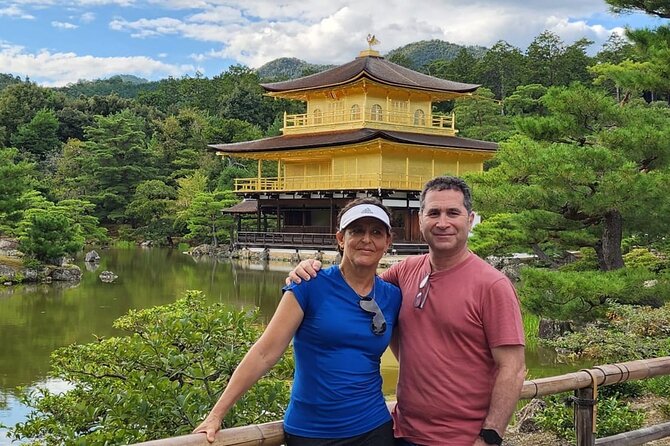
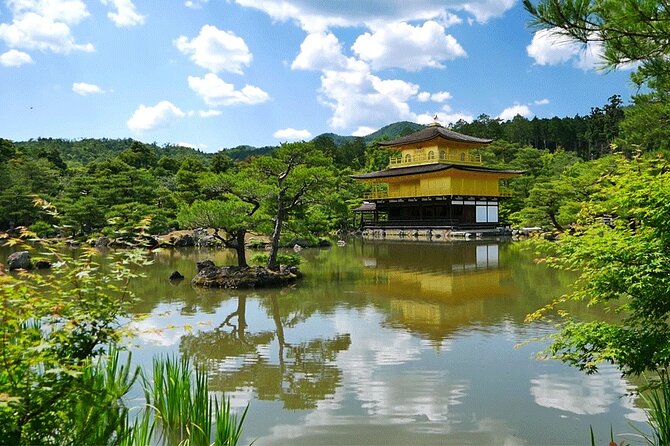
Kinkakuji, the Golden Pavilion, receives about 45 minutes. The building’s gold-leaf exterior reflects in the pond beside it, creating one of Kyoto’s most recognizable views.
The pavilion is visually powerful, but the visit is about more than the famous photograph. Your guide explains its origins and the historical changes that shaped the site. The setting also shows why Japanese garden design often relies on reflection, carefully framed views, and the relationship between buildings and water.
Kinkakuji is a major stop, so crowds are possible. The tour does not make the pavilion private or quiet. What it gives you is a clear way to understand the site before moving on, along with the convenience of arriving by bike rather than joining a long chain of public transport connections.
In winter, snow can turn the gold pavilion and surrounding grounds into a striking scene. Weather is never guaranteed, of course, but the tour has some flexibility. One guide rearranged parts of the day during heavy snow, and another adapted the schedule when rain arrived.
More e-bike rides in Kyoto:
- 5 Top Highlights of Kyoto Full Day Bike Tour (E-bike option)
★ 5.0 · 511 reviews - E-Bike Tours of the highlights of Kyoto!!!
★ 5.0 · 291 reviews - Kyoto: City Secrets eBike Tour
★ 4.9 · 196 reviews - Pedal Adventure Kyoto’s iconic landmarks on an e-bike tour
★ 5.0 · 189 reviews
Riding toward Arashiyama
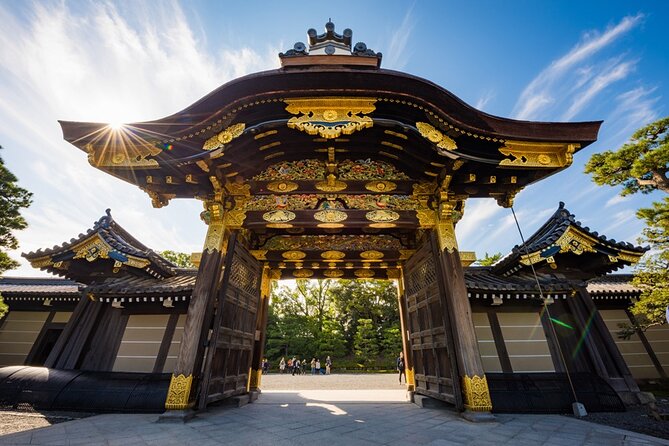
The cycling between stops is where this tour differs most from a standard temple route. You travel through Kyoto’s streets rather than moving directly between parking lots or train stations.
The ride lets you see narrower residential roads and less formal parts of the city. You may pass along riverside routes, and spring riders can find cherry trees lining the water. The exact route can change with traffic, weather, and group comfort, so do not expect a fixed scenic circuit.
You should also understand the road conditions. Kyoto does not provide a fully separated cycling route for this excursion. At times, you share the road with cars, buses, mopeds, pedestrians, and other cyclists. Stop signs and local traffic can feel challenging if you rarely ride in cities.
I would recommend this tour for confident riders who can control a bike around traffic. It may suit teenagers who are proficient on city streets, but basic recreational cycling is not quite the same thing. The e-bike reduces physical strain, not the need for attention.
The Bamboo Forest Trail in Arashiyama
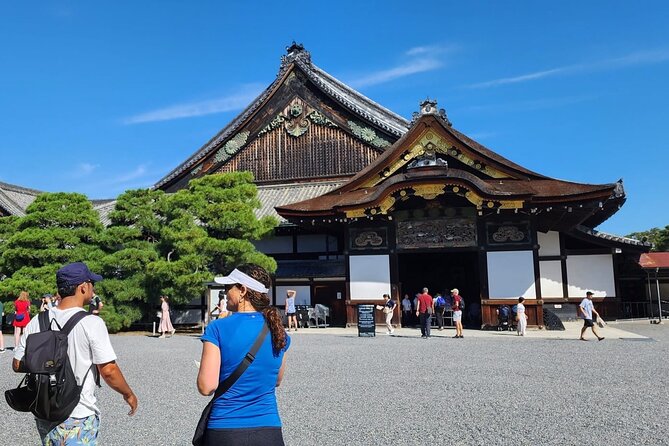
The Arashiyama Bamboo Grove is scheduled for about 45 minutes. Here, you leave the bike behind and walk among tall bamboo stalks that rise on both sides of the path.
This is one of Kyoto’s most photographed places, and the setting can be crowded. Still, the bamboo feels different from the city temples. The height, filtered light, and narrow walking route create a strong change of mood.
Do not expect to cycle through the grove. It is a walking visit, and the wider Arashiyama area also requires time on foot. That is important if you book this tour because the title may suggest more riding than you actually do.
One detailed account estimated the day at roughly 75 percent walking and 25 percent biking. That ratio should not be treated as a fixed promise, but it captures the basic feel: the e-bike helps you move between sites, while the main sightseeing happens on foot.
After the bamboo walk, the guide may allow some choice about where to finish the Arashiyama portion. The Kimono Forest, a collection of patterned textile pillars near the railway area, was an extra stop on one outing. It is a pleasant photo opportunity if the schedule and group pace allow.
Tenryu-ji and its garden
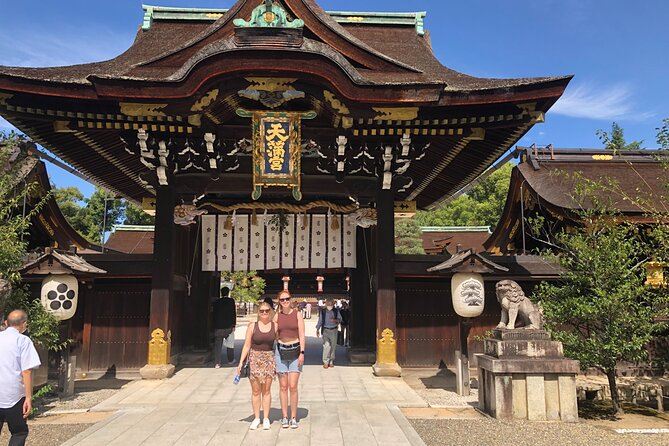
Tenryu-ji is the final listed sightseeing stop, with about 45 minutes for walking through its garden. The temple is part of the Historic Monuments of Ancient Kyoto UNESCO World Heritage site, recognized in 1994.
The garden is the reason to pay attention here. Rather than focusing only on the main hall, you walk through a designed setting where water, rocks, trees, and borrowed views work together. It offers a calmer counterpoint to the shiny precision of Kinkakuji and the narrow drama of the bamboo grove.
The timing gives you a useful introduction, though not a full study of the temple complex. If gardens are a major interest, you may wish you had more time. On the other hand, after several hours of riding and walking, 45 minutes keeps the day from becoming tiring or repetitive.
Lunch is part of the rhythm, but not part of the price
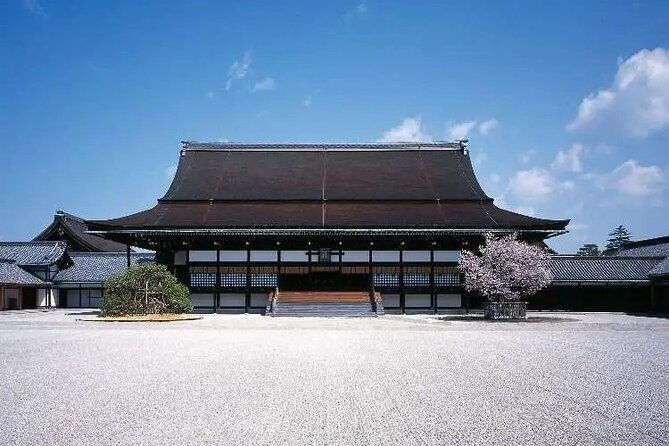
The remaining time includes cycling between locations and lunch. Food is not included in the $99.49 price, so bring yen. Several outings used a ramen restaurant or a food court with Japanese street-food choices, and one lunch was described as a riverside stop.
The exact restaurant can vary. You may find a cash-only ramen place, so do not rely only on a card. One group also enjoyed a venue with many choices and robot carts delivering food, which gives you a sense that lunch may be more local and casual than a formal sit-down meal.
This is a useful break, especially because the day involves more walking than the e-bike label might suggest. It also gives you a chance to ask the guide for food advice. If you have dietary needs, tell the guide early. Jody is specifically praised for paying attention to lunch preferences and dietary requests.
Do not budget the tour as an all-inclusive day. Admission to the listed temples and shrine is included, as are the bike, helmet, and water. Lunch, drinks beyond the supplied bottle, and optional shrine offerings are extra.
What the $99.49 price buys you
At $99.49 per person, this is not the cheapest way to see Kyoto. You can reach the same broad areas by train and bus for less, especially if you are happy to plan routes and research each temple yourself.
The value comes from combining transport, site admissions, an English-speaking guide, safety support, and cultural explanation in one half-day-plus outing. You also avoid spending time working out how to connect Kitano Tenmangu, Kinkakuji, and Arashiyama on your own.
The small group matters to the price. You are paying for a more personal format rather than a large vehicle and a microphone. If you have only a short stay in Kyoto, the ability to cover several major sights in five to six hours can make the cost easier to justify.
I would not book it solely for the e-bike. If your main goal is a long, fast ride, the walking portions may disappoint. Book it because you want a guided overview of western Kyoto with cycling used as the link between temples.
Timing, meeting point, and practical details
You can choose from two morning start options, which helps fit the outing around other Kyoto plans. The precise start times are not provided here, so check the selected option carefully before booking.
The tour begins and ends at Memory Kyoto Bike Tour, at 8-6 Umaryo-cho, Nishikyo Nakagyo-ku, Nakagyo Ward, Kyoto, postal code 604-8492. The office is near public transportation, but the meeting point is on a back road and may have limited signage. One person found it a little difficult to locate, while another found the ticket instructions clear, so I would arrive early and use the address rather than look for a large storefront sign.
Confirmation is issued when you book, and free cancellation is available up to 24 hours before the local start time. Changes or cancellations inside that window are not refunded.
Most people can take part, but road confidence matters more than athletic ability. The electric motor handles much of the effort, yet you still need to ride safely in an active city setting.
Who should book this Kyoto bike tour?
I would choose this for a first or second day in Kyoto, especially if you want an overview before returning to favorite sites on your own. It is also a good fit if your schedule is tight and you want temples, a shrine, bamboo, local streets, and lunch in one outing.
Families can enjoy it, particularly with older children and teenagers who already ride well. The small group and two-guide setup used on some outings can help keep everyone together, but young riders who are uncomfortable beside traffic may struggle.
This is less suitable if you want a slow temple day, a completely quiet route, or a ride with almost no walking. It is also not ideal if you dislike fixed sightseeing stops or prefer to spend several hours at one garden.
Should you book the Historical Kyoto E-Bike Tour?
Yes, if you want to cover a lot of western Kyoto in one guided day and feel comfortable riding on city streets. The combination of Kinkakuji, Kitano Tenmangu, Arashiyama, and Tenryu-ji gives you a strong first look at Kyoto’s major sights, while the back roads make the transfer time part of the sightseeing.
The tour’s 4.9 rating from 181 ratings and 98 percent recommendation fit its strongest qualities: well-kept e-bikes, attentive guides, useful cultural explanations, and an efficient route. Just plan for substantial walking, carry yen for lunch and offerings, and allow time to find the tucked-away start point.
At $99.49, I see it as a time-saving guided day rather than a budget transport option. If that trade makes sense for your Kyoto visit, this is a practical and enjoyable way to get oriented.
FAQ
How long does the Historical Kyoto E-Bike Tour last?
The tour lasts approximately five to six hours. The remaining time is used for cycling between sights and for lunch.
Which places does the tour visit?
The listed stops are Kitano Tenmangu Shrine, Kinkakuji Temple, the Arashiyama Bamboo Forest, and Tenryu-ji Temple.
Is the e-bike included?
Yes. A bike and helmet are provided, and the tour uses e-bikes to reduce physical effort.
Is lunch included in the tour price?
No. Lunch is part of the schedule, but you pay for your own food. Bring Japanese yen because at least one lunch location is cash only.
How large is the group?
The tour has a maximum of eight participants.
Where does the tour begin and end?
It begins and ends at Memory Kyoto Bike Tour, at 8-6 Umaryo-cho, Nishikyo Nakagyo-ku, Nakagyo Ward, Kyoto, 604-8492.
Are temple admission fees included?
Yes. Admission tickets are included for the listed sightseeing stops.
Can I cancel for a refund?
You can cancel up to 24 hours before the local start time for a full refund. Cancellations or changes made less than 24 hours before the start are not accepted for a refund.
More Historical Tours in Kyoto
- Kyoto Gion: 2-Hour Geisha Culture & History Walking Tour
★ 5.0 · 1,186 reviews - Kyoto Gion Historical Walking Tour
★ 5.0 · 188 reviews - Kyoto: Nijo Castle World Heritage Guided Tour with Admission
★ 5.0 · 128 reviews - Kyoto: Private 2.5 Hour Historical Walking Tour
★ 4.9 · 121 reviews
Just added around Kyoto
- Kyoto: Zen Meditation at a Private Temple with a Monk★ 5.0 · 25 reviews
- Kyoto: Gion Geisha District & Sake-in-Hand Walking Tour★ 5.0 · 37 reviews
- Private Pewter Sake Cup Experience with a Kyoto Artisan★ 5.0 · 31 reviews
- Your Private Vacation Photography Session In Kyoto★ 5.0 · 110 reviews
- Private Guided Traditional Buddhist Cooking in Japan★ 5.0 · 16 reviews
- Kyoto Wagashi(Japanese sweets) Cooking Class near Fushimiinari★ 5.0 · 60 reviews
- Traditional Japanese Music show & Experience Tour in Kyoto★ 5.0 · 57 reviews
- Kyoto:Family-Friendly Kimono & Yukata Experience at WARGO★ 5.0 · 147 reviews
Kyoto Tours, compared.


Fushimi Inari, Kinkakuji, Bamboo Grove 1 Day Bus Tour
Read our review →
Tea Ceremony in a Traditional Tea House in Kiyomizu
Read our review →
Kyoto Geisha Walking Tour: Gion District & Hidden Gems
Read our review →

Gion Magical Night Walking Tour with Geisha Trivia
Read our review →

Gion Geisha District Walking Tour – Stories of Geisha
Read our review →Browse the lists this tour appears in