
Reviewed · KYOTO TOURS
Kyoto 4hr Private Tour with Government-Licensed Guide
Kyoto is too spread out for a short visit to see everything, but this private four-hour tour helps you choose wisely. You work with a nationally licensed guide to select two or three places, then move around Kyoto by foot, train, bus, or taxi. Guides such as Yuri, Yuka, Nabet, and Akira have been praised for adapting plans to families, tight schedules, and specific interests.
I like the personal planning and the practical help with Kyoto’s transit system. I also like that the tour can go beyond the usual photo stops, with guides explaining shrine rituals, temple design, samurai connections, food, and local customs. The catch is simple: four hours is short, and entrance fees, transportation, lunch, and a private vehicle cost extra.
Key points to know before booking
- Choose only two or three main sites: The long attraction list is a menu, not a promise to visit everything.
- Meet your guide on foot at your hotel: Pickup is offered within a designated area of Kyoto, but this is not a hotel shuttle.
- Use local transportation: Trains, buses, walking, and taxis are part of the normal plan. A private car is an optional upgrade.
- Expect strong guide support: Guides help with transit, interpretation, history, food ideas, family pacing, and photo locations.
- Plan around admission charges: Several major temples and castles charge entry, and those costs are not included.
- Wear comfortable shoes and carry water: Kyoto sightseeing can include hills, temple steps, long walks, and hot weather.
Why a private Kyoto tour makes sense in four hours
The best feature here is not the number of attractions. It is the chance to shape the afternoon around what you actually want to see.
If this is your first visit, you can ask for a classic Kyoto introduction with places such as Fushimi Inari, Kiyomizu-dera, and Gion. If you have already seen the famous landmarks, you can focus on quieter temple grounds, a market, a garden, or a district tied to food and traditional craft.
Your guide contacts you before the tour or discusses your interests at the start. That matters because Kyoto’s sights are scattered across the city. Fushimi Inari is in the southeast, Kinkaku-ji is in the north, and Arashiyama is in the west. Trying to connect all three in four hours would leave you staring at train windows instead of enjoying Kyoto.
The tour is private, so only your group participates. That gives you room to ask questions, slow down for children, stop for photographs, or change the plan when heat or rain becomes a problem. One guide helped a family arrange taxis when an infant and other relatives tired out. Another made time for lunch when children needed a break.
The limitation is that private does not mean unlimited. The advertised price is $109.43 per person, but transportation and admission are separate. The value is strongest for a small group that wants a guide’s time and local navigation help, rather than for someone who only wants a quick ride between famous sights.
More Licensed Guide Tours in Kyoto
- Kyoto 6hr Private Tour with Government-Licensed Guide
★ 5.0 · 1,369 reviews - Kyoto: Private Tour with Local Licensed Guide
★ 4.8 · 463 reviews - Private Kyoto Tour with Licensed Guide & Vehicle (Max 15 persons)
★ 5.0 · 417 reviews
The classic starting point: Fushimi Inari Shrine
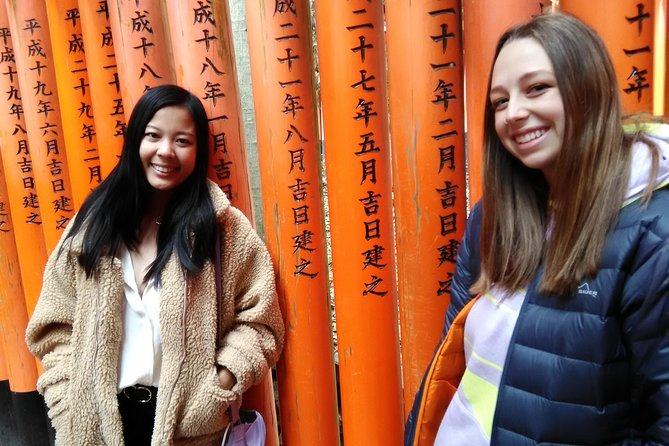
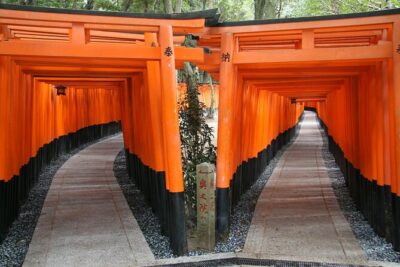
Fushimi Inari-taisha is one of Kyoto’s most recognizable places, with long rows of vermilion torii gates climbing Mount Inari. The first section is usually crowded, but the shrine is more than a quick photograph beneath the gates.
A guide can explain the shrine’s connection with Inari, the Shinto deity associated with rice, prosperity, and business, as well as the meaning of offerings and shrine customs. The gates continue uphill, and the farther you walk, the quieter the path can become.
For a four-hour tour, Fushimi Inari works well with other sites in southeastern or eastern Kyoto. It pairs naturally with Tofuku-ji, Kiyomizu-dera, Gion, or Kennin-ji. It is a poor match with Arashiyama or Kinkaku-ji if you want more than a rushed look, since crossing the city consumes valuable time.
Go early if you can. One highly praised route began at Fushimi Inari and then moved away from the crowds to quieter places. That is the smart approach: see the famous gates, then let your guide show you a less frantic side of Kyoto.
Kiyomizu-dera and the old streets of Higashiyama
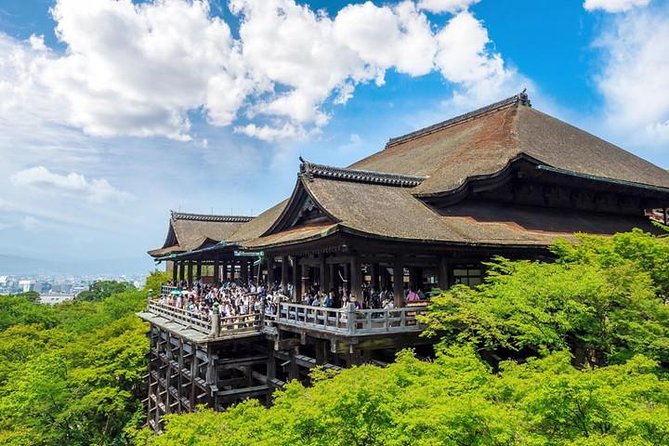
Kiyomizu-dera is a strong choice if you want a major temple plus old Kyoto streets. The temple sits on the eastern hills, and its wooden stage offers broad views over the city. The grounds include several religious buildings, gates, and paths, so a guide helps explain what you are seeing instead of leaving you with a collection of impressive but disconnected structures.
The surrounding Higashiyama district preserves traditional streets lined with shops, small restaurants, tea sellers, and souvenir stores. It can be crowded, especially around the lanes leading toward Kiyomizu-dera, but the area gives you a clear sense of Kyoto’s historic city fabric.
This is one of the more demanding choices physically. You may walk uphill, climb temple steps, and spend much of the time on foot. Comfortable shoes matter. Guides have also helped families adjust the pace, take taxis, and find places for food or rest.
Pair Kiyomizu-dera with Gion or Pontocho for an eastern Kyoto day. Add Nishiki Market only if you accept a brisk pace. Kinkaku-ji, Arashiyama, or Ninna-ji would usually make the route too ambitious for four hours.
Gion, Pontocho, and Kyoto after dark
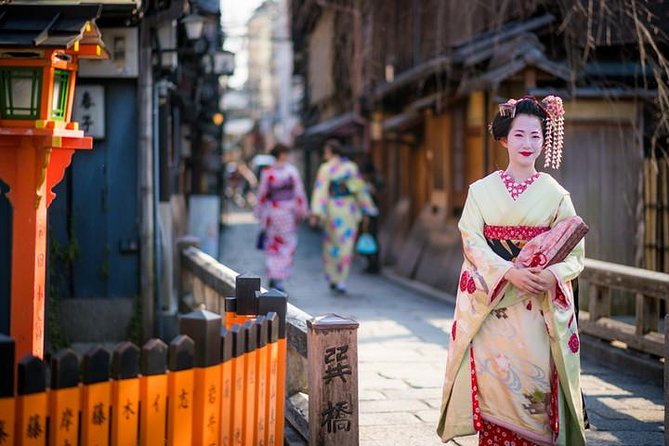
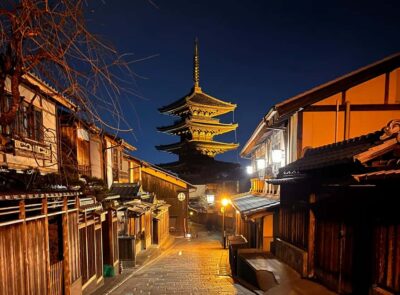
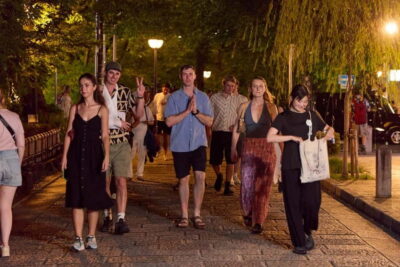
Gion is Kyoto’s best-known traditional entertainment district, with narrow lanes, wooden townhouses, tea houses, and a strong sense of old Kyoto. It is also a place where visitors need to behave thoughtfully. A guide can explain local customs, point out architectural details, and help you understand the difference between a historic district and a stage set for photographs.
A guided walk is useful here because the appeal is in the small details. You might pass a quiet lane, a traditional entrance, or a district building that would mean little without context. One family praised a guide for explaining rituals and taking photographs while keeping the route comfortable in the rain.
Nearby Kennin-ji gives you a temple option close to Gion. Its large grounds and dry gardens make a good contrast with the narrow streets outside. Pontocho, one block west of the Kamogawa River, is another atmospheric stop, especially if you want restaurant suggestions after the tour.
Pontocho is not a formal sightseeing attraction in the same way as a temple. It is a narrow dining alley, and its value lies in the setting and the chance to ask your guide where to eat. Several guides have offered dinner or restaurant advice at the end of the tour, which can be especially helpful on a first evening in Kyoto.
More licensed-guide days in Kyoto:
- Nara 8hr Private Tour – Kyoto DEP. with Licensed Guide
★ 5.0 · 115 reviews - Kyoto 8hr Private Tour with Government-Licensed Guide
★ 5.0 · 51 reviews - Kyoto Arashiyama & Sagano Bamboo Private Tour with Government-Licensed Guide
★ 5.0 · 49 reviews - Kyoto Early Morning Private Tour with Government-Licensed Guide
★ 5.0 · 23 reviews
Nishiki Market, Kyoto’s food corridor
Nishiki Market runs for about five blocks and is lined with more than one hundred shops and restaurants. It is known as Kyoto’s Kitchen, and it is a practical choice for anyone interested in Japanese ingredients, snacks, pickles, seafood, sweets, or everyday shopping.
The market is narrow, so it can feel crowded. A guide helps you understand what you are looking at and can point out foods that may be unfamiliar. This is a place for tasting and browsing, not a quiet cultural site. Keep your group moving and follow shop rules about eating.
Nishiki Market works well with Gion, Pontocho, Nijo Castle, or the Imperial Palace. It is less sensible as part of a route that also includes Fushimi Inari and Kinkaku-ji. The market itself has no admission fee, but food purchases are personal expenses.
If your group includes children or anyone who needs a break from temples, Nishiki adds variety. It also gives the tour a more everyday feel. Kyoto is not only shrines and gardens; it is also what people cook, sell, buy, and eat.
Nijo Castle and the Imperial Palace
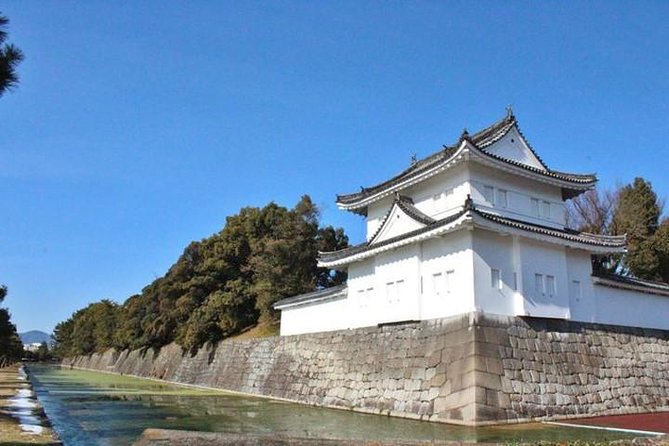
Nijo Castle was built in 1603 as the Kyoto residence of Tokugawa Ieyasu, the first shogun of the Edo period. It is a good pick if you want political history and architecture rather than a primarily religious visit.
The castle’s famous nightingale floors were designed to make a chirping sound underfoot, helping protect the shogun’s residence. A licensed guide can put the buildings, rooms, and Tokugawa authority into a wider story about Japan’s long period of military rule.
Admission to Nijo Castle is not included, so check the extra cost when planning. The castle also requires enough time to appreciate its rooms and grounds. It is not a quick roadside stop.
The Kyoto Imperial Palace offers a different look at power. It was the residence of Japan’s Imperial Family until 1868, when the capital moved to Tokyo. The palace sits within a large park, so it brings open space and imperial ceremony into a city tour.
Nijo Castle pairs well with Nishiki Market or the Imperial Palace. Combining it with distant eastern or western Kyoto sights may make the day feel rushed.
Golden Pavilion and northern Kyoto
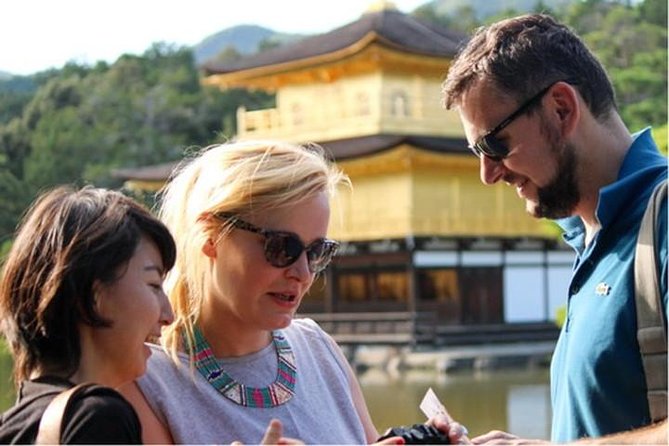
Kinkaku-ji, formally Rokuon-ji, is the Golden Pavilion. Its upper two floors are covered in gold leaf, and the building reflects in the surrounding pond. You get the famous view quickly, but the grounds offer more than the pavilion itself.
This is a high-demand stop, so timing matters. The normal visit includes a walk through the grounds rather than a long interior tour. Admission is not included, and the visit is listed as roughly 30 minutes, though the full experience depends on crowds and your pace.
Kinkaku-ji is a sensible choice for someone who wants one unmistakable Kyoto image. Pair it with Ryoan-ji and Ninna-ji for a northern temple route. Ryoan-ji is home to Japan’s best-known rock garden, where the spare arrangement of stones invites a slower, quieter visit.
Ninna-ji, founded in 888, is a World Heritage temple and head temple of the Omuro School of Shingon Buddhism. It offers broad grounds and a different style of temple experience from Kinkaku-ji.
Do not try to combine Kinkaku-ji with Fushimi Inari, Arashiyama, and Kiyomizu-dera in four hours. The map may make Kyoto look compact, but the city’s traffic and transit transfers are real.
Arashiyama’s bamboo, temples, and mountain edge
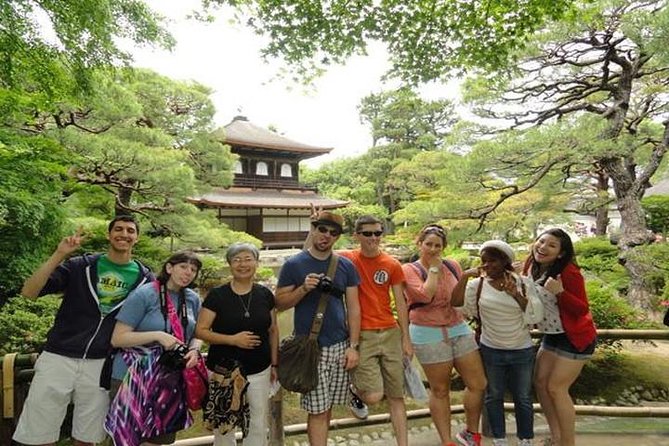
Arashiyama is in western Kyoto and is best treated as its own half-day area. The district includes the Togetsukyo Bridge, the bamboo groves, Tenryu-ji, and several smaller hillside temples.
The bamboo paths are attractive, but the famous section can be crowded. A guide can help you decide how much time to spend there and direct you toward nearby places that match your pace. The Togetsukyo Bridge, meaning Moon Crossing Bridge, has marked the area since the Heian period, though the present bridge was rebuilt in the 1930s.
Tenryu-ji is the major temple here and one of Kyoto’s five great Zen temples. Its gardens and buildings make it a strong choice for first-time visitors. Admission is extra.
If you want a quieter route, consider Okochi Sanso Garden, Jojakko-ji, Nison-in, Gio-ji, Adashino Nenbutsu-ji, or Otagi Nenbutsu-ji. Okochi Sanso was the former villa of actor Okochi Denjiro. Otagi Nenbutsu-ji is known for about 1,200 stone figures, each with a different expression.
These smaller sites require more walking and time. The route becomes especially attractive in autumn, when maple color changes the mood of the hills, but the same popularity can increase crowds. For a four-hour tour, choose two or three Arashiyama stops, not the entire district.
Quiet temples and northern mountain outings
Nanzen-ji and its Suirokaku aqueduct are good choices for a calmer eastern Kyoto route. Nanzen-ji is one of Japan’s major Zen temples, with spacious grounds at the foot of the Higashiyama mountains. It gives you room to breathe after crowded streets.
Ginkaku-ji, the Silver Pavilion, began as the retirement villa of shogun Ashikaga Yoshimasa in 1482. Despite its name, it is not covered in silver. The restrained buildings and gardens suit visitors who prefer subtle design to spectacle.
Tofuku-ji is another southeastern option, especially famous for autumn colors. To-ji, the East Temple, dates to the early Heian period after Kyoto became the capital in the late eighth century. Both offer a strong sense of Kyoto’s religious and architectural past.
The northern mountain choices are more specialized. Shugakuin Imperial Villa includes upper, middle, and lower villas and is managed by the Imperial Household Agency. Katsura Imperial Villa is celebrated for its architecture and garden design. Byodoin in Uji is known for its Phoenix Hall, a National Treasure and World Heritage site, but extra travel time is expected because it is outside central Kyoto.
Kibune and Kurama-dera also require more travel. Kibune sits in a forested valley around Kifune Shrine, while Kurama is a rural mountain town less than an hour from central Kyoto. These are poor choices for a first-time highlights tour, but excellent possibilities if you have already seen the central sights.
Getting around and keeping the route realistic
This tour is designed around public transportation and walking. Guides have helped people use trains and buses, interpret signs, and move through stations without wasting time. That practical support can be worth a great deal in Kyoto, especially when a tight schedule includes transfers.
Taxis may be used when they save time or help with hills and tired children, but you pay transportation costs yourself. A private vehicle is not included. You can arrange one as an upgrade for an additional charge.
Build your plan by neighborhood:
- Southeast: Fushimi Inari, Tofuku-ji, and To-ji
- East: Kiyomizu-dera, Higashiyama, Gion, Kennin-ji, and Nanzen-ji
- Central: Nishiki Market, Nijo Castle, the Imperial Palace, and Pontocho
- Northwest: Kinkaku-ji, Ryoan-ji, and Ninna-ji
- West: Arashiyama, Tenryu-ji, the bamboo groves, and nearby hillside temples
You can ask for an efficient route that limits backtracking. One guide prepared a plan in advance to reduce traffic and crowds. Another helped a family cover three major highlights despite a tight schedule. Still, Kyoto’s hills, heat, rain, and crowds can change the pace, so leave room to adjust.
Who gets the best value
I would choose this tour if you have one day in Kyoto, feel uneasy about public transportation, or want help deciding among dozens of temples and districts. It also suits families, couples, older relatives, and visitors who want cultural explanation rather than a checklist of photographs.
The tour has received a 4.9 rating from 629 ratings, with 97 percent recommending it. The guide quality is naturally personal, and one less enthusiastic experience pointed to a language barrier and weaker historical explanation. That is worth keeping in mind: a nationally licensed guide does not mean every guide will match your preferred depth or speaking style.
The strongest pattern is practical, warm service. Guides such as Yuka, Yuri, Tomy, Akira, Masa, Nabet, and Mizu have been praised for clear explanations, transit help, flexible pacing, family care, photo assistance, and food recommendations. You should share your interests before the day begins and ask for a route suited to your group’s walking ability.
At $109.43 per person, the price is reasonable for a small private group that values personal attention. It becomes less attractive if you are comfortable planning trains, reading temple information, and choosing your own route. Remember to add admission fees, transportation, lunch, and other personal spending.
Free cancellation is available when you cancel at least 24 hours before the start time. The tour is near public transportation, service animals are allowed, and most people can participate, but it remains a walking tour with pickup on foot.
Should you book this Kyoto tour?
Book it if you want Kyoto explained by a local guide and need help making four hours count. It is especially useful for a first visit, a short stop, a family group, or anyone who wants to combine major sights with food, neighborhoods, or quieter temples.
Skip it if you expect a private car, all entrance fees included, or a grand sweep of Kyoto’s entire attraction list. Pick two or three sites, group them by area, wear good shoes, carry water, and tell the guide what matters to you. Done that way, this tour can give you a clear first taste of Kyoto without turning the day into a race.
FAQ
How long is the Kyoto private tour?
The tour lasts approximately four hours.
How many attractions can I choose?
The tour includes a customizable plan covering two or three sites from the available attraction list.
Is hotel pickup included?
Yes. You meet the guide on foot at the front door of your hotel within the designated Kyoto pickup area.
Is a private vehicle included?
No. The standard tour uses walking and public transportation, with taxis possible at your own cost. A private vehicle is available as an extra upgrade.
Are entrance fees included?
No. Entrance fees for places such as Nijo Castle, Kiyomizu-dera, Kinkaku-ji, Ginkaku-ji, and several other temples are not included.
Is transportation included in the price?
No. Transportation fees are separate from the tour price.
Is this a private group experience?
Yes. Only your own group participates, and multiple tour groups cannot be combined.
Can I cancel for a full refund?
Yes, if you cancel at least 24 hours before the experience start time. Cancellations or changes made less than 24 hours before the start time are not accepted for a refund.
Just added around Kyoto
- Kyoto: Zen Meditation at a Private Temple with a Monk★ 5.0 · 25 reviews
- Kyoto: Gion Geisha District & Sake-in-Hand Walking Tour★ 5.0 · 37 reviews
- Private Pewter Sake Cup Experience with a Kyoto Artisan★ 5.0 · 31 reviews
- Your Private Vacation Photography Session In Kyoto★ 5.0 · 110 reviews
- Private Guided Traditional Buddhist Cooking in Japan★ 5.0 · 16 reviews
- Kyoto Wagashi(Japanese sweets) Cooking Class near Fushimiinari★ 5.0 · 60 reviews
- Traditional Japanese Music show & Experience Tour in Kyoto★ 5.0 · 57 reviews
- Kyoto:Family-Friendly Kimono & Yukata Experience at WARGO★ 5.0 · 147 reviews
Kyoto Tours, compared.
Fushimi Inari, Kinkakuji, Bamboo Grove 1 Day Bus Tour
Read our review →
Tea Ceremony in a Traditional Tea House in Kiyomizu
Read our review →
Kyoto Geisha Walking Tour: Gion District & Hidden Gems
Read our review →
Gion Magical Night Walking Tour with Geisha Trivia
Read our review →
Gion Geisha District Walking Tour – Stories of Geisha
Read our review →Browse the lists this tour appears in