
Reviewed · KYOTO TOURS
Private Kyoto Tour with Licensed Guide & Vehicle (Max 15 persons)
Kyoto’s crowded buses and confusing subway connections can eat up a day. This private tour puts a guide and vehicle at your disposal for six hours, letting you connect far-flung sights such as Fushimi Inari, Kinkaku-ji, and Arashiyama without constantly checking a transit map. The best part is the custom route: you choose three or four priorities, then your guide shapes the day around them.
I like the door-to-door pickup and the way a private car helps older visitors, families, and anyone arriving by train see more with less wasted time. I also like the human touch. Guides such as Ken, Michi, Yuka, Noriko, and Tomy have adjusted routes, found suitable lunch spots, taken photos, and helped visitors with wheelchairs or limited stair use. The drawback is price: at $634.72 for a group of up to two, entrance fees and lunch extra, this is a costly choice for a couple, though larger groups can spread the expense.
The Kyoto day this tour is built to deliver
This is not a fixed march through every famous temple. The long list of possible stops is a menu, not a promise. In six hours, you should plan on three or four major sites, with time for driving, parking, short walks, and explanations.
That distinction matters. You cannot sensibly visit all 24 places listed as options in one half-day. Arashiyama alone can absorb several hours, and the northern temples sit far from Fushimi Inari in the south. A good guide will help you resist the urge to collect names and instead build a route that works.
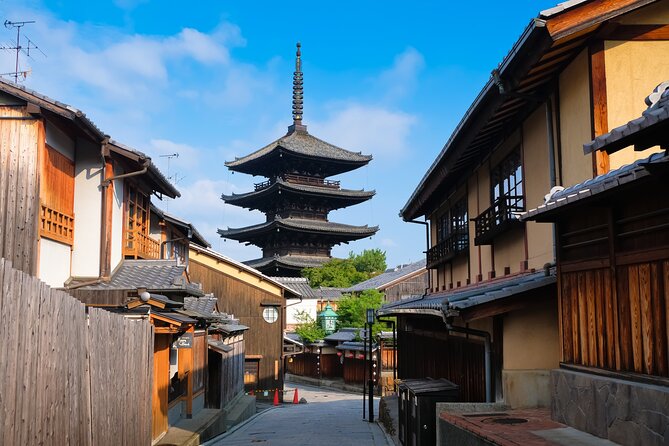
The usual formula is a mix of major sights and one district or market. For example, Fushimi Inari, Nijo Castle, Nishiki Market, and Kinkaku-ji make a strong first look at Kyoto. You get a shrine, a castle, food and shopping, and the city’s famous Golden Pavilion. Another route might pair Kiyomizu-dera with Gion, Pontocho, and Higashiyama for a more walkable old-Kyoto day.
Why a private vehicle changes the math
Kyoto’s public transport is useful, but the city’s sights are spread across several directions. Buses can be crowded, subway lines do not reach every temple, and changing between rail, bus, and walking takes time. A car will not remove Kyoto’s traffic, but it cuts out the uncertainty and gives you a place to rest between walks.
Parking close to some sights is another practical gain. One couple especially appreciated being dropped near special places, and several visitors found the vehicle helpful after tiring days elsewhere in Japan. The car is most valuable when your group includes children, older adults, someone with limited mobility, or people making a short stop from Kyoto Station.
Pickup is offered, and the tour can work well for a tight train timetable. One party arrived from Tokyo at 9:14 a.m. and caught a 4:01 p.m. departure after seeing four major sights. That sort of schedule requires advance coordination and an efficient route, but it shows how useful the arrangement can be for a short Kyoto visit.
The vehicle is not a substitute for walking. Temples, markets, and historic lanes still require time on foot, often over uneven ground or up steps. Think of the car as the connector between places, not a sightseeing pod.
More Licensed Guide Tours in Kyoto
- Kyoto 6hr Private Tour with Government-Licensed Guide
★ 5.0 · 1,369 reviews - Kyoto 4hr Private Tour with Government-Licensed Guide
★ 5.0 · 629 reviews - Kyoto: Private Tour with Local Licensed Guide
★ 4.8 · 463 reviews
Fushimi Inari and the southern temples
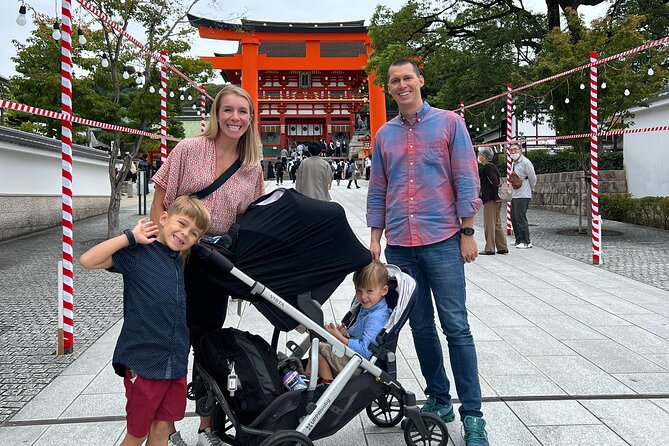
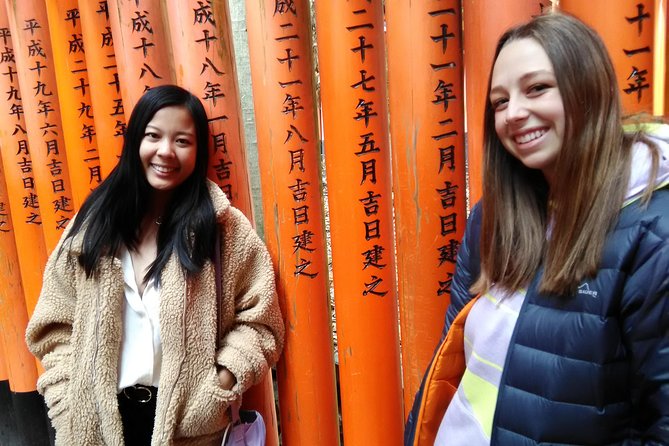
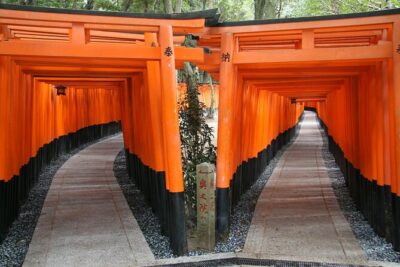
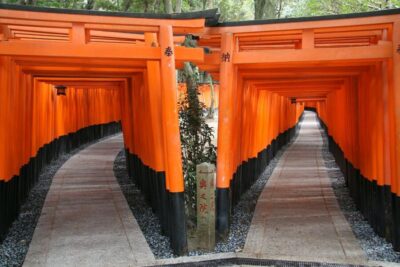
Fushimi Inari-taisha is one of Kyoto’s most recognizable sights, with long rows of orange torii gates climbing the wooded hillside. You can get a meaningful taste of the shrine without walking the entire mountain trail, but be clear with your guide about how far you want to go.
The shrine is a strong early stop because it offers an immediate sense of place: Shinto gateways, fox imagery, prayer plaques, and a route that changes from busy at the entrance to quieter as you continue uphill. The free admission helps keep the day’s extra costs down.
Nearby Tofuku-ji is another southern Kyoto option, especially appealing during autumn when its gardens and ravines are known for seasonal color. Toji, the East Temple, gives you a different view of Kyoto’s early Heian-era beginnings and is easier to pair with a central or station-area route.
Do not try to force Fushimi Inari, Tofuku-ji, Toji, and a northern temple into the same short day unless your group is happy with quick visits. The listed 15-minute times are best understood as planning placeholders. Each site deserves more time once you include entry, walking, photographs, and the guide’s explanation.
Nijo Castle and the Imperial Palace
Nijo Castle was built in 1603 as Tokugawa Ieyasu’s Kyoto residence. Its painted interiors, gardens, and famous nightingale floors make it one of the city’s most rewarding places for visitors who want political history along with architecture.
The castle requires an admission fee, which is not included. It also rewards a slower pace than a quick photo stop. If Nijo Castle is one of your priorities, tell the guide before the day begins so it receives enough time.
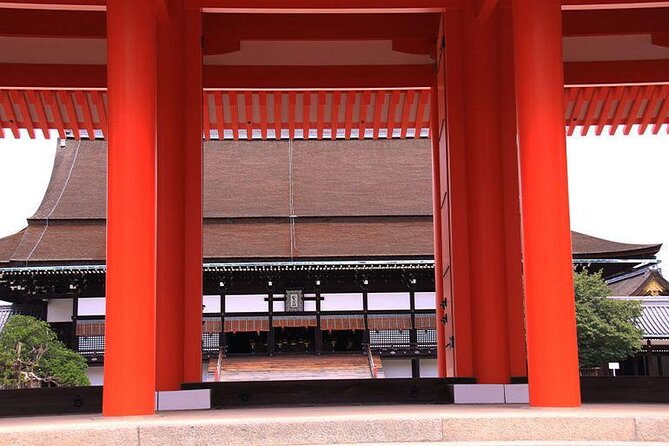
The Kyoto Imperial Palace offers a different scale. Once home to Japan’s imperial family, it sits within broad grounds that feel more open and spacious than the tight lanes around Gion. It suits visitors interested in court life, ceremonial architecture, and the way Kyoto functioned as Japan’s capital before the move to Tokyo in 1868.
Nijo Castle and the Imperial Palace can fit into a central Kyoto route, but combining both with several distant temples may leave you rushing. I would choose one of them unless your group prefers a quick overview to a close look.
Kiyomizu-dera, Higashiyama, and Gion
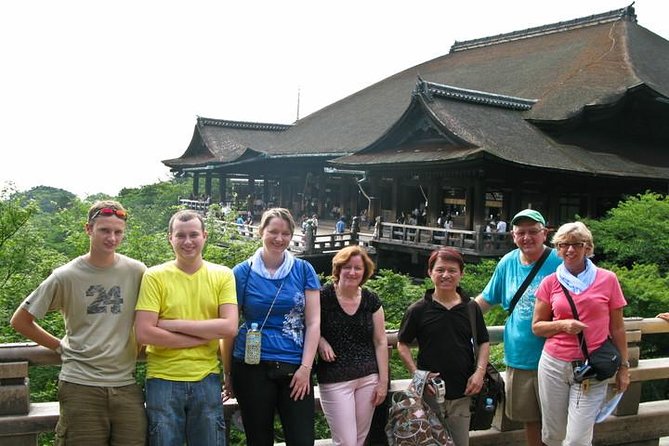
Kiyomizu-dera is one of Kyoto’s essential temple visits. Its setting on the eastern hills, broad wooden stage, and views across the city make it a natural choice for a first visit. Admission is extra, and the approach involves walking through the Higashiyama area.
The surrounding district is part of the appeal. Traditional streets, craft shops, snack stalls, and old wooden buildings lead toward the temple, though the area can be very crowded. A private vehicle gets you close to the district, but it cannot remove the walking or the crowds.
Gion is best treated as a place to stroll and observe, not as a stage set. Your guide can help you understand the narrow lanes, tea-house architecture, and etiquette around private establishments. You might see a geisha or maiko, but no sighting is guaranteed, and respectful behavior matters.
Kennin-ji, close to Hanamikoji and Shijo streets, is a useful alternative or addition in this part of town. Its dry gardens and temple grounds offer a calmer pause near Gion. Pontocho, the narrow dining lane beside the Kamogawa River, is another atmospheric stop, though its restaurants are better suited to an evening meal than a hurried daytime visit.
More licensed-guide days in Kyoto:
- Nara 8hr Private Tour – Kyoto DEP. with Licensed Guide
★ 5.0 · 115 reviews - Kyoto 8hr Private Tour with Government-Licensed Guide
★ 5.0 · 51 reviews - Kyoto Arashiyama & Sagano Bamboo Private Tour with Government-Licensed Guide
★ 5.0 · 49 reviews - Kyoto Early Morning Private Tour with Government-Licensed Guide
★ 5.0 · 23 reviews
Nishiki Market and Kyoto’s food culture
Nishiki Market is a long, narrow shopping street known as Kyoto’s Kitchen. More than 100 shops and restaurants sell food, kitchen goods, pickles, sweets, seafood, and other local specialties.
I like Nishiki as a lunch stop because it gives the day a sensory break from temples. You can sample small items, browse knives and cookware, and see how Kyoto’s food traditions are presented. It is also easy to overpack the schedule here. Five quick minutes will not do the market justice, especially if your group wants to eat.
Lunch is not included. Guides have helped visitors find sushi, conveyor-belt meals, okonomiyaki, and food suited to particular needs. If you have dietary restrictions, raise them before the tour and confirm what can be arranged. One past gluten-free meal search did not go smoothly, so this is an area where clear communication pays off.
Nishiki is crowded at popular times. The private car is useful for reaching the area, but you will leave it behind and walk through the market with everyone else.
Kinkaku-ji, Ryoan-ji, and western Kyoto
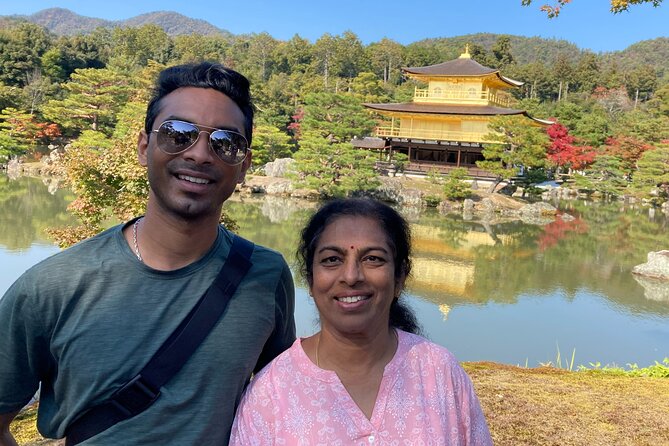
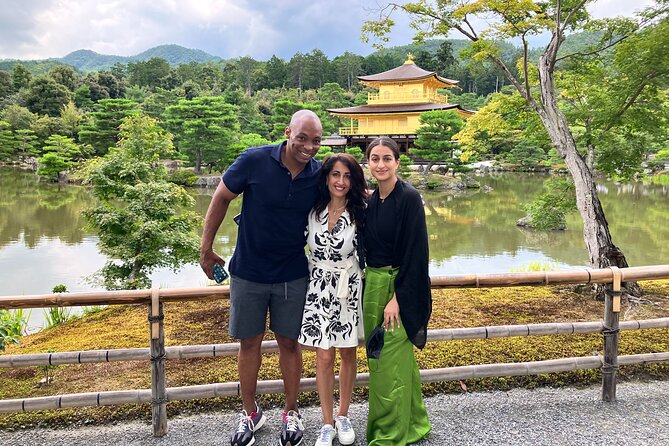
Kinkaku-ji, the Golden Pavilion, is Kyoto’s postcard sight. Its upper floors are covered in gold leaf, and the building reflects in a pond surrounded by gardens. Admission is extra, and the grounds can be packed, especially in good weather or during school visits.
The visit follows a set path, so your guide cannot change the basic flow. A good guide can still explain the pavilion’s role, point out details beyond the famous facade, and help you make the most of the photo stops. If you want a quiet, meditative temple visit, this is not always the best choice. If you want Kyoto’s most instantly recognizable image, it belongs near the top of your list.
Ryoan-ji is home to Japan’s best-known rock garden. Its spare design invites a slower look, but the site can feel crowded and the garden is deliberately simple. That makes it a poor match for anyone expecting ornate decoration, yet a fine choice if you want to discuss Zen design and perception.
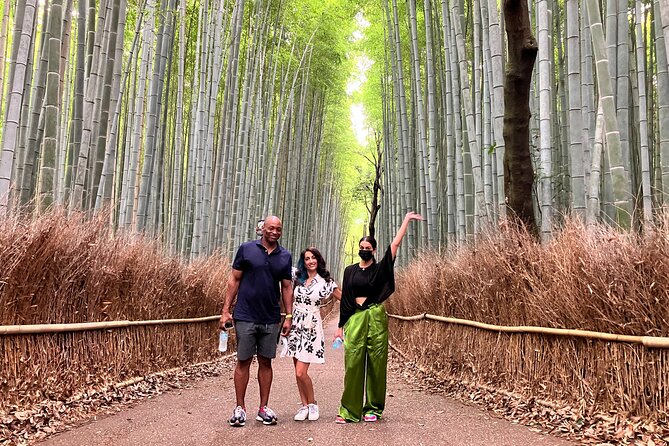
Ninna-ji adds imperial connections and broad temple grounds, while Arashiyama offers a very different setting with the famous bamboo grove, river area, and Tenryu-ji. Tenryu-ji is the leading Zen temple in Arashiyama and charges admission. Arashiyama is attractive but popular, and its distance from eastern Kyoto makes it hard to combine with many Higashiyama sights.
Daikaku-ji and Katsura Imperial Villa are more specialized choices. Katsura is prized for its architecture and gardens, while Daikaku-ji began as an imperial retreat. These options suit repeat visitors or people with a clear interest in Japanese design and court culture.
Northern mountains and quieter choices
Shugakuin Imperial Villa, Kibune, Kurama-dera, and Yoshimine-dera take you away from the central sightseeing circuit. The northern mountain options bring forest, religious history, and a slower rural feel, but they require more driving time.
Kibune developed around Kifune Shrine in a wooded valley, and Kurama is known for Kurama-dera and its hot spring. These are appealing choices if you have already seen Kyoto’s famous central temples or want scenery instead of a checklist of landmark buildings.
Yoshimine-dera sits in Kyoto’s western mountains and is built along the hillside. It can be a rewarding choice for visitors who want broad views and a less central temple, but the five-minute planning slot shown for it is not enough for a real visit. Ask how much walking and time the route allows before committing.
These outlying stops also make the tour more dependent on traffic and road conditions. If you choose one, plan fewer additional sights.
The guide makes or breaks the day
The strongest part of this experience is the guide. The vehicle gets you around, but a good guide turns a series of famous places into a connected day.
Guides assigned to this service have included Ken, Michi, Yuka, Noriko, Tomy, Haru, Hiroko, Chiyuki, Olive, Kazu, Kaori, and others. You cannot request that a particular person will lead your tour unless the operator confirms it, but these examples show the range of help available. Some have adjusted routes for children, limited walking, wheelchairs, train schedules, or specific food requests.
The best guide style here is practical rather than theatrical. You want someone who explains why a site matters, points out less crowded corners, helps with photographs, and keeps an eye on the clock. Several guides were praised for clear English, humor, patience, and a willingness to stay a little longer to help with lunch or directions.
The service is not perfectly uniform. One visitor found the guide pleasant but lacking energy and storytelling, while another felt the itinerary did not reflect personal preferences. There was also a report of confusion over the meeting time and place. Send your priorities in writing before the day, confirm pickup details, and say plainly if you want history, food, photography, gardens, shopping, or minimal walking.
Who gets good value at $634.72
The advertised price is $634.72 per group of up to two. That is a serious outlay, particularly because entrance fees, lunch, and personal purchases are separate. The price makes more sense for a larger private party, since the service can accommodate up to 15 people, though you should confirm the exact rate for your group size.
For two people, compare the cost with what convenience is worth to you. If you are comfortable using trains and buses, you can spend less and perhaps give each temple more time. If you have only one day, are arriving and departing by train, or want to avoid figuring out Kyoto’s transport, the private car may earn its keep.
Families can gain extra value because the route can change around energy levels. The same is true for older people or anyone with mobility limits. Car seats and booster seats are limited, and rear-facing seats are not available, so contact the operator before booking if you need child seating.
The tour has a 4.9 rating from 417 reviews and is recommended by 98 percent of purchasers. Those figures point to a strong overall service, but the individual guide still matters more than the number. Treat the tour as a premium time-saving tool, not a cheap sightseeing bus.
How to plan your six hours well
Before booking, make a short list of your top three sights and two backups. Tell the operator about walking limits, children, food needs, photography, and any train departure.
A few route ideas:
- Classic Kyoto: Fushimi Inari, Nijo Castle, Nishiki Market, and Kinkaku-ji.
- Old Kyoto: Kiyomizu-dera, Higashiyama, Gion, and Kennin-ji.
- Western Kyoto: Arashiyama, Tenryu-ji, Ryoan-ji, and Kinkaku-ji.
- Quiet Kyoto: Shugakuin, Kibune, Kurama-dera, or Yoshimine-dera, with fewer total stops.
Carry cash for admission fees. The exact amount depends on your chosen sights, and the tour price does not cover them. Wear shoes suited to walking, even though the vehicle handles the long transfers.
Free cancellation is available if you cancel at least 24 hours before the start time. Changes made within 24 hours are not accepted, and the amount paid is not refunded for late cancellation.
Should you book this Kyoto private tour?
Book it if you value time, comfort, and a route shaped around your group. It is particularly useful for a first Kyoto visit squeezed into one day, a family with mixed stamina, or a party arriving by train and leaving the same afternoon.
Skip it if you enjoy public transport, prefer slow temple visits, or find the price hard to justify for two people. The tour’s real strength is not seeing every landmark. It is connecting a few carefully chosen places with a capable guide and no transport puzzle between them. Plan the route firmly, confirm the pickup, and keep your expectations to three or four sites. That is when this expensive half-day can feel worth it.
FAQ
How long is the private Kyoto tour?
The tour lasts approximately six hours.
How many people can join the private tour?
The activity is private and can accommodate a maximum of 15 people. The listed price is for a group of up to two, so confirm the price for a larger party.
What places can I choose to visit?
You can choose three or four sites from a long list that includes Fushimi Inari-taisha, Nijo Castle, Gion, Nishiki Market, Kiyomizu-dera, Kyoto Imperial Palace, Kinkaku-ji, Arashiyama, Ryoan-ji, and other Kyoto temples and districts.
Are entrance fees included?
No. Entrance fees, lunch, and personal expenses are not included. Guide entry fees are covered only for sights listed in the tour details.
Is hotel pickup available?
Yes. Pickup is offered, and the tour includes a private vehicle. Pickup and drop-off arrangements should be confirmed when booking.
Can children or visitors with limited mobility join?
Most people can participate, and service animals are allowed. A limited number of car seats and booster seats are available, but rear-facing car seats are not provided. Contact the operator directly if you need child seating or have mobility concerns.
Just added around Kyoto
- Kyoto: Zen Meditation at a Private Temple with a Monk★ 5.0 · 25 reviews
- Kyoto: Gion Geisha District & Sake-in-Hand Walking Tour★ 5.0 · 37 reviews
- Private Pewter Sake Cup Experience with a Kyoto Artisan★ 5.0 · 31 reviews
- Your Private Vacation Photography Session In Kyoto★ 5.0 · 110 reviews
- Private Guided Traditional Buddhist Cooking in Japan★ 5.0 · 16 reviews
- Kyoto Wagashi(Japanese sweets) Cooking Class near Fushimiinari★ 5.0 · 60 reviews
- Traditional Japanese Music show & Experience Tour in Kyoto★ 5.0 · 57 reviews
- Kyoto:Family-Friendly Kimono & Yukata Experience at WARGO★ 5.0 · 147 reviews
Kyoto Tours, compared.
Fushimi Inari, Kinkakuji, Bamboo Grove 1 Day Bus Tour
Read our review →
Tea Ceremony in a Traditional Tea House in Kiyomizu
Read our review →
Kyoto Geisha Walking Tour: Gion District & Hidden Gems
Read our review →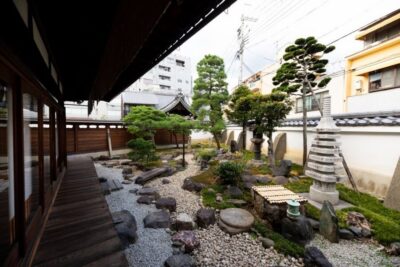
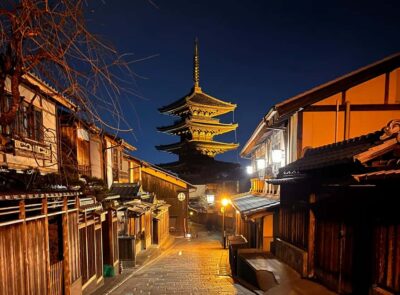
Gion Magical Night Walking Tour with Geisha Trivia
Read our review →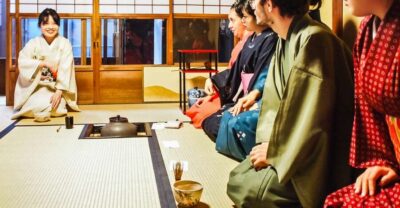
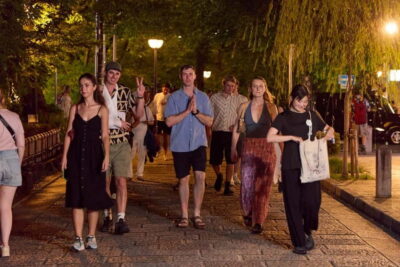
Gion Geisha District Walking Tour – Stories of Geisha
Read our review →Browse the lists this tour appears in