
Reviewed · TSUKIJI FISH MARKET TOURS
Tsukiji Food and Toyosu Market with Government-Licensed Guide
Toyosu is Tokyo’s modern wholesale market, while Tsukiji is the lively food quarter where you can still eat, shop, and sample your way through narrow lanes. This tour links both places with a private licensed guide, giving you context that signs and market crowds rarely provide.
I like the way the tour pairs the calm, organized Toyosu complex with the more hands-on food stalls of Tsukiji. I also like the cultural stops, especially Namiyoke Inari Shrine and Tsukiji Hongwanji Temple, which keep the morning from becoming a four-hour seafood crawl. The main catch is that transport, food, and some entrance fees are extra, and Toyosu can feel quiet if you visit late.
Key points at a glance
- See Tokyo’s new and old fish markets in one morning: Toyosu explains the wholesale system, while Tsukiji gives you the best chance to eat and browse.
- A private tour for your own party: Your guide can adjust the pace and answer questions without a large group slowing things down.
- The tuna auction is not included: Book the separate tuna-auction experience if that is your main goal.
- Food is paid separately: Bring cash and an appetite for sushi, sea urchin, eel, crab, wagyu, and market snacks.
- Public transport is part of the outing: Your guide organizes the route, but train or monorail fares are extra.
- Best for an early start: Tsukiji is most rewarding when its food shops are open, while Toyosu may have fewer active stalls later in the day.
Two Tokyo markets, two very different moods
This tour works because Toyosu and Tsukiji show different sides of Tokyo’s food culture. Toyosu opened in 2018 on a man-made island in Tokyo Bay, taking over the wholesale business from the old Tsukiji site. It is clean, planned, and built for large-scale commercial trade.
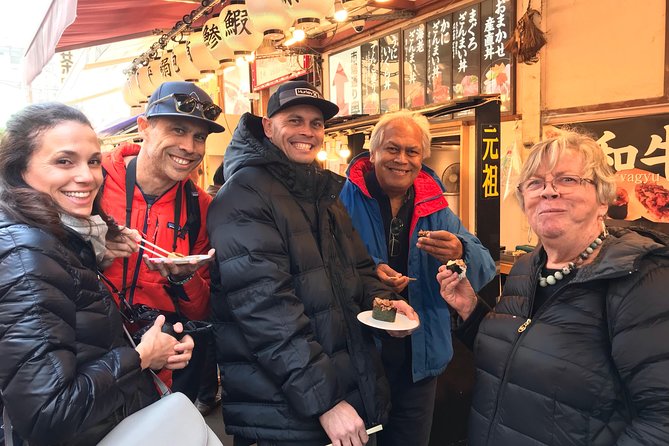
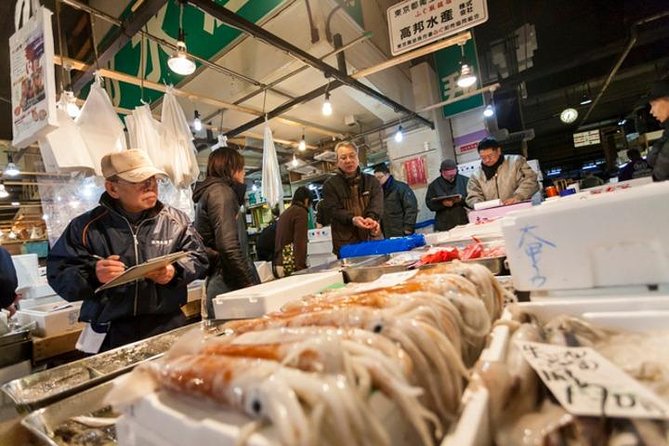
Tsukiji, by contrast, is the market you are likely picturing before you arrive in Tokyo. Its outer market remains packed with food shops, seafood counters, small restaurants, and stores selling kitchen goods and souvenirs. It is the place where you can stop for a bite, compare stalls, and watch the daily food trade at close range.
I would not book this tour expecting two equally busy markets. Toyosu is more about understanding how the market operates and seeing the auction facilities. Tsukiji is more rewarding for eating and shopping.
The private format is a real advantage. Guides such as Toyo, Suzuki, Yoshii, Show, Kazu, Mina, Mami, Koji, Shuji, and Lily have each been praised for explaining Japanese customs, helping with train cards, suggesting food stops, and adjusting the outing to suit families or individual interests. Your assigned guide will vary, but the format gives you room to ask questions and set the pace.
More Licensed Guide Tours in Tokyo
- Tokyo 6hr Private Tour with Government-Licensed Guide
★ 5.0 · 3,902 reviews - Tokyo 4hr Private Tour with Government-Licensed Guide
★ 5.0 · 1,394 reviews - Toyosu Market Morning Tuna Auction and Tsukiji Food Tour with Licensed Guide
★ 4.5 · 146 reviews
Starting at Toyosu’s modern market
The listed meeting point is Toyosu Market at 6-chōme-6-1 Toyosu, in Koto City. The tour allocates about an hour here, with admission listed separately where applicable. The market complex is not simply a row of seafood stalls. It is a working wholesale center, and the visitor experience is built around observation and explanation rather than free-roaming shopping.
Your guide can explain the role of the different buildings and how the wholesale business moved from Tsukiji to Toyosu. Viewing areas and market displays help you understand the tuna auction process, but this standard tour is not the morning tuna auction tour. The auction experience begins very early and requires the separate product listed for that purpose.
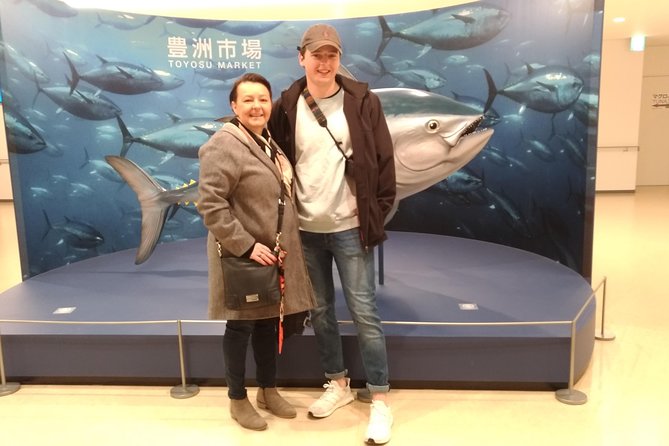
That distinction matters. If you have dreamed of watching the famous tuna sale in action, do not assume that this four-hour outing includes it. Guides can explain how the auction works, and one account describes seeing auction viewing areas, videos, and a replica of a very large tuna, but the regular tour should not be booked for the auction alone.
Toyosu also has fruit and vegetable facilities and places to eat. A guide may point out areas such as the Block 5 fruit and vegetable building, but the exact route can depend on opening times and the guide’s plan. One practical warning is important: at around noon, some stalls may already be closed. An early visit gives you a better chance of seeing the market at work.
The setting itself adds something. Moving between Toyosu and Tsukiji by public transport can give you a look at Tokyo Bay and the city beyond the market buildings. One guide used the monorail as part of the experience, making the transfer more than a simple change of location.
Riding public transport between the markets
The tour includes organized travel between the markets, but transportation fees are not included. Your guide handles the route on foot and by public transport, which is useful if Tokyo’s stations and ticket systems make you uneasy.
Several guides have helped visitors recharge IC cards such as Suica and find their way through major stations. That help can save time, especially if you are visiting Tokyo early in your trip and have not yet got used to the train network.
Still, think of this as a walking tour with transit, not a vehicle excursion. There is no private car, and pickup and drop-off are on foot within the designated Tokyo area. Some guides have met people at hotel lobbies, but you should confirm the exact meeting arrangement rather than assume hotel pickup is included.
The transfer also breaks up the food-market routine. You are not simply walking through one commercial district after another. You see how a modern wholesale center relates to an older market neighborhood, then arrive at Tsukiji ready for a more active visit.
Eating your way through Tsukiji Outer Market
The Tsukiji portion lasts about two hours and is the heart of the experience for most people. The listed meeting point is Tsukiji Hongwanji Temple, near the market’s main gate, though the tour information also gives Toyosu as the start point. Confirm your day’s meeting instructions carefully because the route may be arranged from Toyosu to Tsukiji or customized around your pickup.
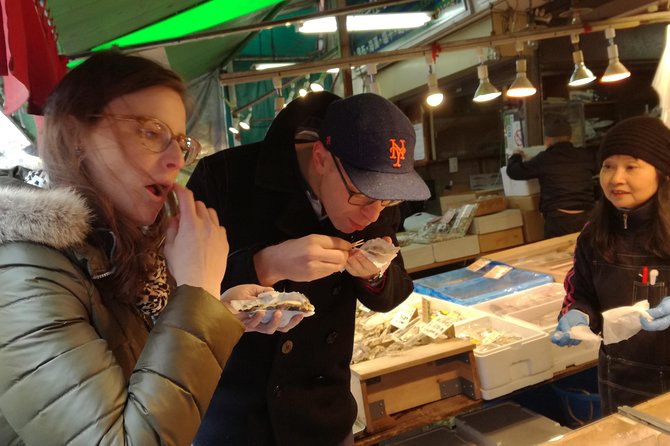
At Tsukiji, your guide helps you navigate the inner and outer market areas, identify worthwhile stalls, and understand what you are seeing. The lanes can be confusing, and it is easy to spend precious time wandering past food you cannot identify. A good guide can explain the difference between wholesale, retail, and customer-facing parts of the market.
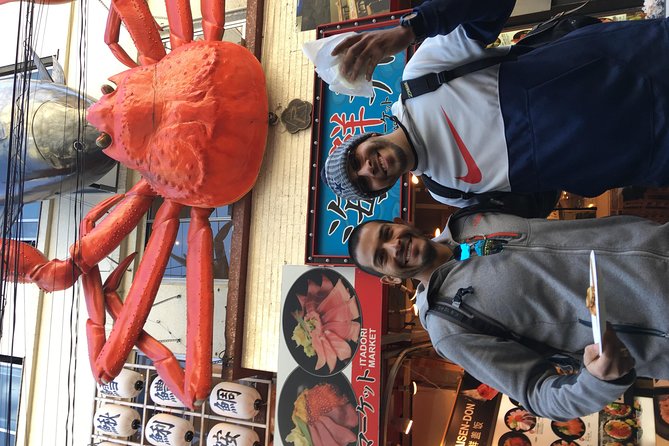
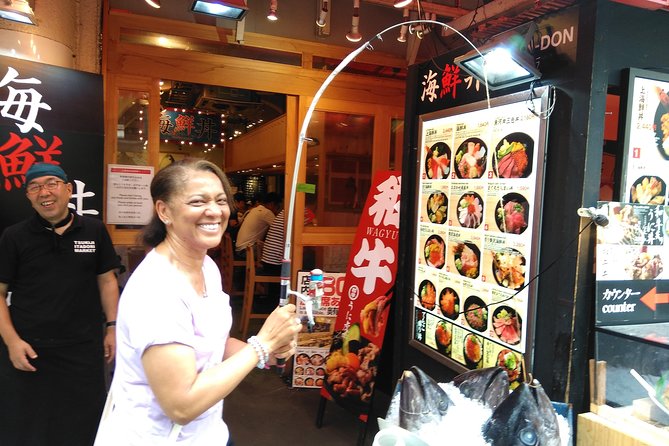
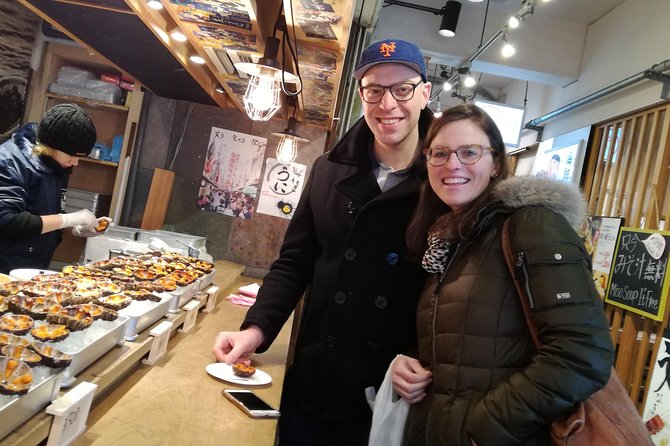
This is also where you should plan to spend money. Food and drinks are not included, and cash is a sensible choice. You might find opportunities for sushi, sea urchin, barbecued eel, tuna, crab, wagyu, and other small portions, but the exact food stops depend on the day, the market, and your guide.
Do not arrive expecting a formal tasting menu. This is a guided market visit, so you buy what appeals to you. That is part of the fun, but it means your final bill depends on your appetite. A sushi meal can turn the tour into a more expensive outing, while a few snacks keep costs modest.
Guides have taken visitors to particular sushi restaurants, local stalls, and less tourist-focused counters. Koji, for example, has been praised for helping people find sushi, street food, and a restaurant such as Daiwa Sushi. Mami has been noted for guiding visitors toward tuna and crab in a quieter market section. These examples show the value of asking your guide clearly what you want to eat.
If you have dietary limits, tell the guide before the tour. The supplied details do not promise special menus, and market food can contain seafood, meat, shellfish, or other ingredients that are hard to identify without help.
One limitation is time. Two hours sounds generous until you stop for food, photos, shopping, and explanations. One itinerary works best when the tour begins early and finishes near the market’s food court, giving you time to eat at the end without rushing. If your priority is a long sushi lunch, plan to stay after the official tour at your own expense.
More fish market mornings:
- Tokyo Tsukiji Fish Market Food and Culture Walking Tour
★ 5.0 · 3,184 reviews - Tokyo: Tsukiji Fish Market Food and Walking tour
★ 5.0 · 1,724 reviews - Tokyo: Tsukiji Fish Market Guided Walking Tour
★ 4.9 · 1,397 reviews - Tokyo Sushi Making Class in Tsukiji with Professional Chef
★ 5.0 · 1,177 reviews
Namiyoke Inari Shrine and the sea reclaimed from Tokyo Bay
The 15-minute stop at Namiyoke Inari Shrine adds a useful piece of local context. Tsukiji occupies land reclaimed from the sea, and the shrine is associated with protection from waves. Your guide can connect the shrine to the district’s relationship with the water and the fish trade.
This is a short visit, not a full shrine tour. That is a good fit for a market morning. You get a moment away from the food lanes and a glimpse of the religious traditions that shaped the neighborhood without losing too much eating time.
I especially like this stop because it explains why Tsukiji is where it is. Without that context, the market can seem like a random collection of shops. The shrine helps tie the district to its waterfront setting and working past.
Tsukiji Hongwanji Temple’s unusual design
The tour gives about 30 minutes to Tsukiji Hongwanji Temple. The temple is known for its distinctive construction and offers an introduction to Japanese Buddhism.
It is also a practical meeting landmark, located outside the market’s main gate. That makes it easy to recognize, but the building deserves more than a quick glance before you enter the food lanes. Your guide can explain elements of Buddhist practice and place the temple within the wider story of Japanese religious life.
Some guides include a short meditation here. That quiet pause can be welcome after Toyosu’s explanations and Tsukiji’s crowded food streets. It also gives the tour a better rhythm: wholesale market, public transit, food district, shrine, and temple.
The schedule allows only half an hour, so do not expect a lengthy temple study. Its value is as a focused cultural stop that rounds out the market visit.
What the private guide adds
A self-guided visit is possible, but the guide changes how much you get from the markets. At Toyosu, the buildings and viewing areas can be hard to interpret without background. At Tsukiji, the challenge is not finding food, but deciding where to stop and how to move through the lanes.
The strongest guides bring three useful skills:
- Market interpretation: They explain auctions, wholesale work, fish handling, and the move from Tsukiji to Toyosu.
- Food guidance: They can help you choose stalls and restaurants instead of leaving you to guess.
- Tokyo navigation: They organize the public-transport transfer and can help with IC cards or station directions.
The guides are also a major part of the experience. Toyo has been praised for tailoring the outing and offering broad Tokyo advice. Suzuki and Yoshii are noted for detailed explanations of food, culture, and history. Show has used a notebook to illustrate points, while Mina is described as easygoing and reassuring. Lily has helped visitors who felt daunted by Tokyo’s trains.
That variety cuts both ways. A private tour does not mean every guide delivers the same route or style. Some may add suggestions for other Tokyo sights if time allows, while others focus tightly on the two markets. If you care about sushi, architecture, family interests, or transportation, say so before the tour begins.
Is $109.01 a fair price?
At $109.01 per person, this is not the cheapest way to visit Tsukiji. You can walk through the outer market independently, and Toyosu is accessible without a private guide.
The price makes more sense if you are paying for time saved and good decisions. You receive about four hours with a licensed local English-speaking guide, a private experience for your party, help moving between two distant market areas, and explanations that turn food stalls into part of a larger story.
You still need to budget for public transport, food, drinks, admission fees where applicable, and personal purchases. A couple who eats a full sushi meal and samples several premium items will spend more than a couple who only buys small snacks.
I see the best value for first-time visitors, families, and anyone uneasy about Tokyo’s market customs or train system. Repeat Tokyo visitors who already know Tsukiji and Toyosu may find the cost harder to justify unless they want a food-focused guide or a custom morning.
Who should book this market morning?
Book it if you want structure without joining a large group. The private format suits families with teenagers, couples with specific food interests, and solo visitors who want a local person to help with choices.
It is also a good first or second-day activity. Guides can explain the city, suggest restaurants for later, and help you get comfortable with public transport. Several outings have included advice about other Tokyo districts, though the core schedule remains the two markets and the cultural stops.
This is less suitable if you want a long, slow meal, a dedicated tuna auction visit, or a quiet sightseeing morning. Tsukiji is crowded, Toyosu can feel subdued, and the four-hour schedule moves at a steady pace.
Wear comfortable shoes. The tour is on foot, and the transfer between markets does not turn it into a vehicle-based tour. Most people can participate, and service animals are allowed, but the supplied details do not promise a fully step-free route.
Practical details before you reserve
The experience is offered with a mobile ticket and free cancellation up to 24 hours before the local start time. Changes or cancellations inside that window are not accepted for a refund.
The listed end point is the Tsukiji Outer Market area, at Japan 104-0045, Chuo City, Tsukiji 4-chōme and nearby sections. Since the tour information also lists Toyosu as the starting point and describes pickup as an on-foot arrangement, read the final confirmation closely.
Bring an appetite and cash. Food and drinks are your responsibility, and cash can be useful at small market businesses. Ask in advance about the tuna auction if that is essential, because the regular experience excludes it.
The tour is usually booked well ahead, with an average lead time of 39 days. That is worth noting if your Tokyo dates are fixed, especially during a busy travel period.
FAQ
Does this tour include the Toyosu tuna auction?
No. The standard tour is not the tuna auction experience. A separate Toyosu Market Morning Tuna Auction and Tsukiji Food Tour is offered for that purpose.
Are food and drinks included?
No. You pay separately for all food, drinks, and personal purchases. Bring cash and plan your budget according to how much you want to sample.
Is transportation between Toyosu and Tsukiji included?
The guide organizes the public-transport transfer, but transportation fees are not included. The tour does not provide a private vehicle.
Is this a private tour?
Yes. Only your group participates, and multiple tour groups cannot be combined.
Where does the tour start and end?
The listed start point is Toyosu Market at 6-chōme-6-1 Toyosu, Koto City. The listed end point is the Tsukiji Outer Market area. The tour information also refers to on-foot pickup within a designated area, so check your confirmation for the exact meeting instructions.
Can I cancel for a full refund?
Yes, if you cancel at least 24 hours before the experience’s local start time. Cancellations or changes made less than 24 hours before the start are not refunded.
Should you book it?
I would book this tour if you want to understand Tokyo’s food markets rather than simply walk through them. The combination of Toyosu’s wholesale setting, Tsukiji’s edible streets, a shrine, a temple, and a private guide gives you a useful morning with several different faces of Tokyo.
I would skip it if the tuna auction is your main reason for going, or if you prefer to browse Tsukiji slowly and choose every stop yourself. For everyone else, especially first-time visitors who want help with trains, food choices, and market etiquette, the $109.01 cost can be fair value. Start early, bring cash, and leave room in your schedule to keep eating at Tsukiji after the guide says goodbye.
More Markets in Tokyo
- Tsukiji Fish Market Guided Tour and Sushi Making with Pro Chef
★ 5.0 · 775 reviews - Tokyo: Tsukiji Fish Market Food and Culture Walking Tour
★ 4.7 · 757 reviews - Tsukiji Fish Market: Street Food & Culture Walking Tour
★ 5.0 · 669 reviews - Tsukiji Fish Market Small-Group Food Walking Tour
★ 5.0 · 621 reviews
More Food Tours in Tokyo
- Tokyo: Shinjuku Food Tour (13 Dishes at 4 Local Eateries)
★ 5.0 · 6,603 reviews - Tokyo: Shinjuku Food Tour (15 Dishes and 4 Eateries)
★ 4.9 · 2,033 reviews - Best of Shinjuku: Izakaya Food Tour (4 Stops, 14+ Tastings)
★ 5.0 · 1,863 reviews - Eat and Drink Like a Local: Tokyo Ueno Food Tour-Taverns&Ramen
★ 5.0 · 957 reviews
Just added around Tokyo
- Private Transfer from Narita Airport to Yokohama Port and City★ 4.5 · 17 reviews
- Private Arrival Transfer : Narita International Airport to Central Tokyo City★ 4.5 · 12 reviews
- Narita Airport(NRT): Private Transfer to Tokyo/Yokohama 1-9pax★ 5.0 · 47 reviews
- [Narita Airport Terminals 1, 2] 40-60km Sawara Itako Historic Bike Tour★ 5.0 · 13 reviews
- 3 Day Japan Highlights Tour: Tokyo, Mt.Fuji, Nara, Kyoto, Osaka★ 5.0 · 22 reviews
- Small Town in the Big City: Tasting Tokyo’s Kichijoji★ 5.0 · 195 reviews
- Small Town in the Big City: Tasting Tokyo’s Kichijoji★ 5.0 · 16 reviews
- The 10 Tastings of Tokyo With Locals: Private Street Food Tour★ 5.0 · 48 reviews
Tsukiji Fish Market Tours, compared.
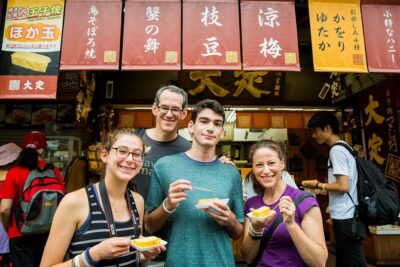
Tokyo Tsukiji Fish Market Food and Culture Walking Tour
Read our review →
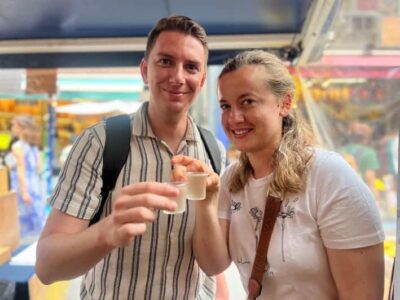

Tokyo Sushi Making Class in Tsukiji with Professional Chef
Read our review →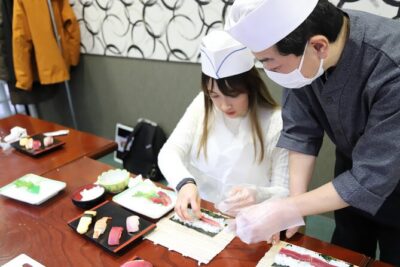
Tsukiji Fish Market Guided Tour and Sushi Making with Pro Chef
Read our review →Tsukiji Fish Market Food and Culture Walking Tour
Read our review →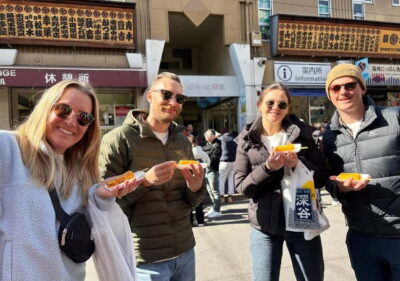
Tsukiji Fish Market: Street Food & Culture Walking Tour
Read our review →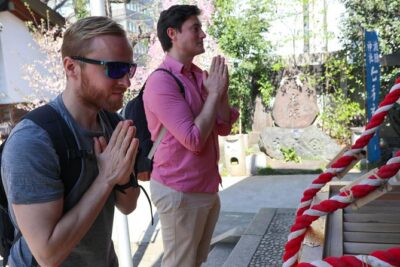
Tsukiji Fish Market Small-Group Food Walking Tour
Read our review →Browse the lists this tour appears in