
Reviewed · TSUKIJI FISH MARKET TOURS
Tsukiji Fish Market Small-Group Food Walking Tour
Tsukiji is one of Tokyo’s best places to eat your way through Japanese food culture. This three-hour small-group walk takes you through narrow market lanes for sushi, tamagoyaki, eel, scallops, crab, and other bites, then adds a Buddhist temple, Shinto shrine, and city views.
I like the included seafood lunch, which gives the tour a proper meal rather than a string of tiny samples. I also like the guides’ personal touch. Kazu, Yuki, Hitomi, Mark, and Tiger are among the guides praised for making food choices easier and explaining what you’re eating. The main catch is important: the wholesale fish market moved to Toyosu, so Tsukiji is now an outer market of retail shops and food stalls, not the giant auction floor many visitors expect.
Key things to know before you book
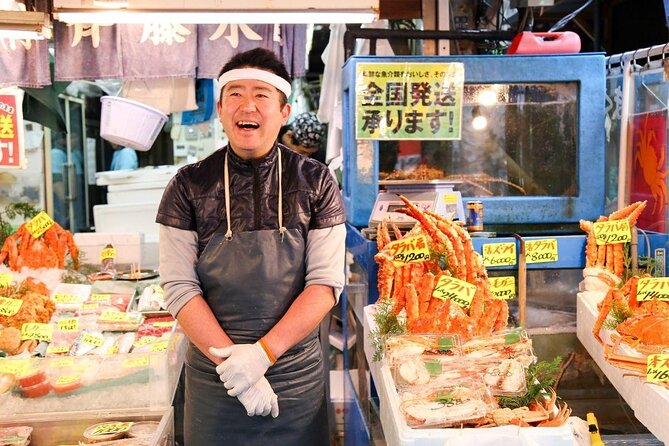
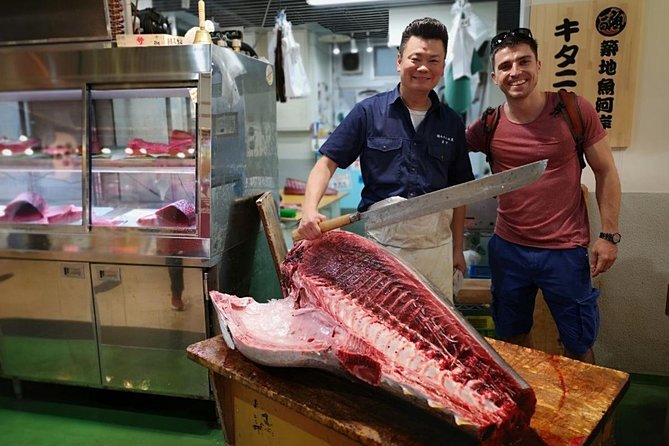
- The fish auction is no longer at Tsukiji: The inner wholesale market moved to Toyosu in 2018. This tour focuses on Tsukiji Outer Market and nearby seafood businesses.
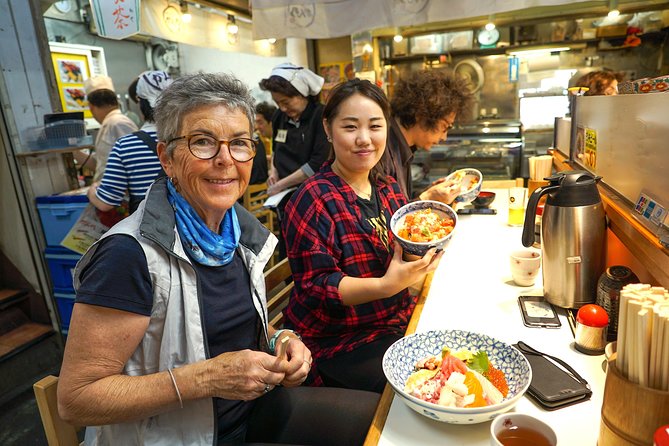
- Lunch is included: You get a sit-down seafood meal as well as samples from market stalls and shops.
- Expect a wide tasting range: Possible foods include tuna nigiri, tamagoyaki, grilled eel, scallops, crab legs, dried seafood, and local snacks.
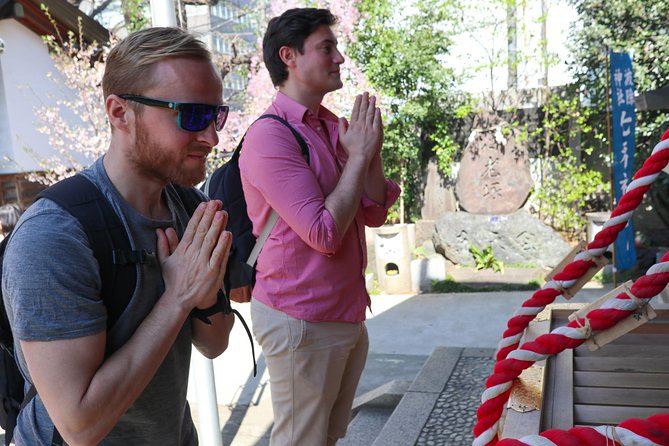
- The tour adds cultural stops: A Japanese Buddhist temple and Shinto shrine provide a useful break from eating.
- Groups stay small: The maximum is seven people, which helps in cramped market lanes.
- Plan for heat and food limits: Summer is hot and humid, vegan options are unavailable, and allergy-free meals cannot be guaranteed.
Tsukiji today, and what this tour actually covers
The name Tsukiji still carries the image of Tokyo’s huge wholesale fish market. That market moved to Toyosu in 2018, and this distinction matters when you decide what to book.
Tsukiji Outer Market remains an active food district. About 460 shops sell fish, fruit, vegetables, meat, dried goods, seasonings, cooking tools, and tableware. It is a working market, but it also serves local residents and visitors looking for a quick breakfast, ingredients for the kitchen, or a taste of Japanese seafood.
I see the outer market as a better fit for a food walk than the old wholesale floor. You can stop at small shops, look closely at unfamiliar foods, and eat as you go. You just should not book this experience expecting to watch tons of fish being traded in one central auction hall.
A guide is especially useful here because the lanes can feel confusing at first. Signs are crowded together, shops are close to one another, and some areas have notices asking people not to stop and eat in the passageways. A guide can help you keep moving, find the right stall, and explain what is worth trying.
More fish market mornings:
- Tokyo Tsukiji Fish Market Food and Culture Walking Tour
★ 5.0 · 3,184 reviews - Tokyo: Tsukiji Fish Market Food and Walking tour
★ 5.0 · 1,724 reviews - Tokyo: Tsukiji Fish Market Guided Walking Tour
★ 4.9 · 1,397 reviews
Meeting at Tsukiji Station Exit 1
The tour begins at Tsukiji Station, Exit 1, at 3 Chome-9 Tsukiji in Chuo City. The guide waits near the station meeting point, and the tour ends at Shiodome Tower in Higashi-Shimbashi.
Arrive early. One useful tip is to ask around if other people are also waiting for the same tour, since the station area can be busy and it may not be instantly obvious who your guide is. Your confirmation arrives at booking, and the ticket is mobile, so keep it easy to reach on your phone.
The area is close to public transportation, making this a practical morning plan. The three-hour length also leaves much of the day free for Ginza, Hamarikyu, Shiodome, or another Tokyo neighborhood.
Eating through Tsukiji Outer Market
The heart of the experience is the food. You begin by walking through the Outer Market, where shops display seafood, dried fish, seasonings, cookware, and other Japanese specialties.
I like this part because the food is connected to the place where it is sold. You are not simply sitting in a restaurant eating a set menu. You are seeing the ingredients, the tools, the shop counters, and the tight lanes that make Tsukiji feel like a real neighborhood market.
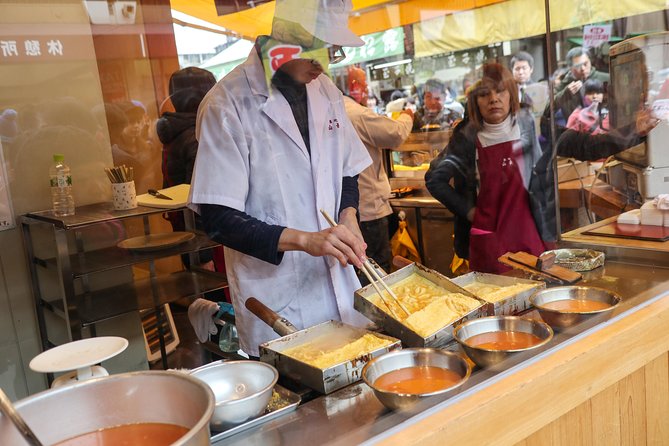
The exact stops can vary, but the foods described during the tour include tuna nigiri sushi, grilled eel, tamagoyaki, scallops on a stick, giant crab legs, and smaller snacks. Tamagoyaki is a sweet Japanese omelette, and it is a good reminder that Tsukiji is about more than raw fish.
Some samplers have also tried dried stingray meat and yakitori-style snacks. A stop might change if a line is too long, and a stall may offer a smaller sample than you expected. That is one reason the guide’s choices matter. The best part of the walk is not one guaranteed bite, but the range of foods you can try in a short time.
Come hungry. The food is not limited to two or three tiny tastes. Depending on the route and available stops, you may have several small samples, a few larger items, and then a full lunch.
The included seafood lunch
The sit-down lunch is one of the strongest reasons to consider this tour. Instead of finishing with only bites from counters, you eat a proper seafood meal at a local restaurant.
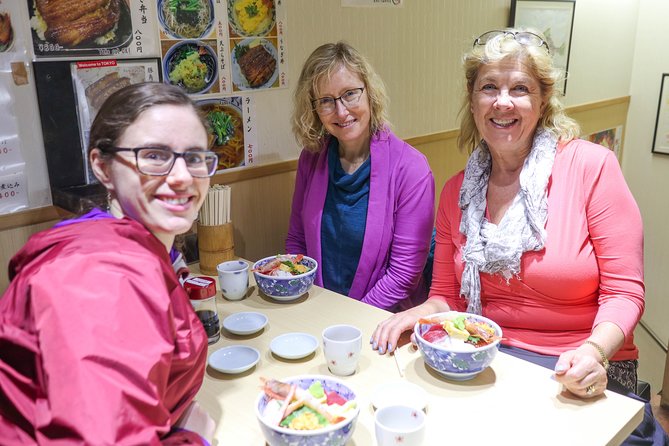
Several tour participants particularly enjoyed having some choice in the one sit-down meal. The lunch may include sushi or other fresh fish, and the restaurant setting gives you a chance to slow down after walking through tight market lanes.
I value this structure because it makes the $87.37 price easier to judge. If you bought every sample and then paid for a seafood lunch on your own, costs could add up quickly. The tour also saves you from guessing which restaurant will welcome a first-time visitor and what to order.
Still, do not treat the price as an all-you-can-eat deal. The value comes from the guide, the selection of tastings, the included meal, and the cultural stops. The precise foods and quantities can change, and some stall visits may feel less exciting than others.
More food tours in Tokyo:
- Tokyo: Shinjuku Food Tour (13 Dishes at 4 Local Eateries)
★ 5.0 · 6,603 reviews - Tokyo: Shinjuku Food Tour (15 Dishes and 4 Eateries)
★ 4.9 · 2,033 reviews - Best of Shinjuku: Izakaya Food Tour (4 Stops, 14+ Tastings)
★ 5.0 · 1,863 reviews - Eat and Drink Like a Local: Tokyo Ueno Food Tour-Taverns&Ramen
★ 5.0 · 957 reviews
What the guide adds to the food
A good guide makes unfamiliar food feel approachable. The strongest guiding on this tour includes explaining the market’s past, naming different seafood, describing Japanese food customs, and pointing out places you might otherwise walk past.
Kazu has been especially praised for helping a diner with coeliac disease find suitable alternatives. That is encouraging, but it does not remove the tour’s official warning: food is prepared in kitchens that do not belong to MagicalTrip, allergy-free preparation cannot be promised, and substitutions may not be possible at every stop.
Guide styles may differ. Kazu, Yuki, Hitomi, Mark, Tiger, Mia, and Mummy are among the named guides associated with especially positive experiences, but you cannot necessarily request a particular person when booking. The tour’s maximum of seven people gives the guide a fair chance to answer questions and keep the group together.
There is one practical risk. If your guide gives only brief explanations, you may get a food crawl without much context. If cultural background and ingredient explanations are important to you, ask questions early and clearly. The tour is at its best when the guide talks about what you are eating, not just where to stand next.
A Buddhist temple, Shinto shrine, and Tokyo views
This is more than a seafood walk. The route includes a Japanese Buddhist temple and a Shinto shrine, along with information about the building and the role of religion in Japan.
These stops give the morning some balance. After several food samples, a temple or shrine helps you shift from shopping and eating to observing local customs. If you are new to Japan, it is useful to see the difference between the two traditions in the same outing.
The route also includes a view over Tokyo, described as looking toward Tokyo Bay. This is a short but welcome change from the market’s close-packed lanes. You get a broader sense of the city before the tour finishes near Shiodome Tower.
Do not expect an extended temple tour or a long sightseeing walk. Food remains the main event, and the religious and viewpoint stops work as supporting parts of the route.
The narrow lanes and market manners
Tsukiji Outer Market can be crowded, and the lanes are not designed for a large tour group to stop wherever it wishes. You may need to eat while standing in an approved spot, keep your bag close, and follow instructions about where not to pause.
That setting is part of the appeal, but it can test your patience. Some stalls may have lines, and the group may leave one location if waiting would consume too much of the three-hour schedule. A guide helps manage that tradeoff.
Wear comfortable shoes and leave room in your schedule for shopping after the tour. The market sells more than ready-to-eat food, including cooking tools, tableware, seasonings, dried goods, and other Japanese specialties. You may find something practical to take home, but purchases are not included in the tour price.
Food restrictions and summer conditions
Vegan options are not available, so this is not the right food tour for a vegan diet. People with allergies or strict dietary restrictions should contact the operator before booking and understand that the tour cannot guarantee an allergy-free experience.
The food is prepared at several independent shops and restaurants. Substitutions may be possible at some stops, but not all, and the operator may compensate with another stop rather than replace every item.
Tokyo summers are hot and humid. Bring water and wear a hat to reduce the risk of heat exhaustion. The market’s crowded lanes can feel warmer than an open street, especially when you are eating several dishes and walking at a steady pace.
Most people can participate, and the activity is near public transportation. The supplied information does not promise step-free access or describe the route’s exact walking distance, so contact the operator if you need specific mobility details.
Who gets the best value from $87.37
At $87.37 per person, this is not the cheapest way to eat in Tsukiji. You can buy individual snacks on your own for less, especially if you already know what you want and are comfortable choosing a restaurant without help.
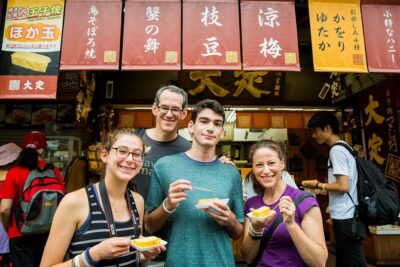
I think the price makes more sense for a first visit. You receive about three hours of guiding, multiple food samples, a seafood lunch, market orientation, and cultural stops. A group capped at seven is also far more manageable than a large coach-style outing.
The tour suits you if you want to try several foods without planning every stop yourself. It is also a good match for honeymooners, couples, and small groups who want a social activity but prefer not to join a large crowd. One booking may even end up with only a few participants, though the maximum is seven rather than a promise of a private tour.
It is less suitable if your main goal is the fish auction or the inner wholesale market. For that, you need to look at Toyosu separately. It is also a weaker choice for vegans and for anyone who wants strict control over ingredients.
Booking, cancellation, and timing advice
The experience is often booked about 40 days ahead, so reserve early if your Tokyo dates are fixed. You can cancel for a full refund up to 24 hours before the local start time. Changes or cancellations inside that 24-hour window are not accepted for a refund.
Keep the mobile ticket available and make sure you know you are meeting at Tsukiji Station Exit 1, not at Toyosu Market. The end point is Shiodome Tower, so you can plan your next stop from there rather than returning to the station where you began.
I would schedule this early in your Tokyo stay if possible. That gives you a guide’s introduction to Japanese seafood and leaves time to return to Tsukiji on your own for shopping or a second meal.
Should you book the Tsukiji food walk?
Book it if you want a friendly introduction to Tsukiji Outer Market, enjoy seafood, and value having someone choose and explain a range of foods. The included lunch, small group, temple and shrine stops, and chance to try foods such as tuna nigiri, eel, tamagoyaki, scallops, and crab make it a full morning rather than a quick market stroll.
Skip it if you want to see the famous wholesale auction, need vegan food, or require guaranteed allergy-free preparation. The key decision is simple: this is a guided food and culture walk through modern Tsukiji Outer Market, not a visit to the old inner market. Book with that expectation, arrive early, bring water, and come hungry.
FAQ
Where does the Tsukiji food tour begin?
It begins at Tsukiji Station Exit 1, at 3 Chome-9 Tsukiji, Chuo City, Tokyo.
Where does the tour end?
The tour ends at Shiodome Tower, 1 Chome-6-3 Higashishimbashi, Minato City, Tokyo.
How long does the experience last?
The tour lasts approximately three hours.
Is lunch included?
Yes. A fresh seafood lunch at the market is included, along with food samples at local shops and stalls.
Does the tour visit the famous fish auction?
No. The inner wholesale market moved to Toyosu in 2018. This experience visits Tsukiji Outer Market and nearby seafood businesses.
How many people can join the tour?
The maximum group size is seven people.
Are vegan options available?
No. Vegan options are not available on this tour.
Can the tour accommodate food allergies or dietary restrictions?
Allergy-free food and dietary substitutions cannot be guaranteed. The food comes from independent kitchens, and substitutions may not be possible at every stop.
Can I cancel for a full refund?
Yes. You can cancel at least 24 hours before the local start time for a full refund. Cancellations or changes made less than 24 hours before the start are not accepted for a refund.
More Shopping in Tokyo
- Tokyo Food Tour Taste Fresh Delights at Tsukiji Market
★ 5.0 · 429 reviews - Tokyo Tsukiji Fish Market Tour and Sushi Making Lesson
★ 5.0 · 390 reviews - Tsukiji Fish Market: Street Food & Culture Walking Tour
★ 4.8 · 259 reviews - Tokyo Washoku 4-hour Cooking Class: From Market to Table
★ 5.0 · 253 reviews
More Markets in Tokyo
- Tsukiji Fish Market Guided Tour and Sushi Making with Pro Chef
★ 5.0 · 775 reviews - Tokyo: Tsukiji Fish Market Food and Culture Walking Tour
★ 4.7 · 757 reviews - Tsukiji Fish Market: Street Food & Culture Walking Tour
★ 5.0 · 669 reviews - Tokyo: Tsukiji Fish Market Sushi Making Class with Pro Chef
★ 4.9 · 506 reviews
Just added around Tokyo
- Private Transfer from Narita Airport to Yokohama Port and City★ 4.5 · 17 reviews
- Private Arrival Transfer : Narita International Airport to Central Tokyo City★ 4.5 · 12 reviews
- Narita Airport(NRT): Private Transfer to Tokyo/Yokohama 1-9pax★ 5.0 · 47 reviews
- [Narita Airport Terminals 1, 2] 40-60km Sawara Itako Historic Bike Tour★ 5.0 · 13 reviews
- 3 Day Japan Highlights Tour: Tokyo, Mt.Fuji, Nara, Kyoto, Osaka★ 5.0 · 22 reviews
- Small Town in the Big City: Tasting Tokyo’s Kichijoji★ 5.0 · 195 reviews
- Small Town in the Big City: Tasting Tokyo’s Kichijoji★ 5.0 · 16 reviews
- The 10 Tastings of Tokyo With Locals: Private Street Food Tour★ 5.0 · 48 reviews
Tsukiji Fish Market Tours, compared.
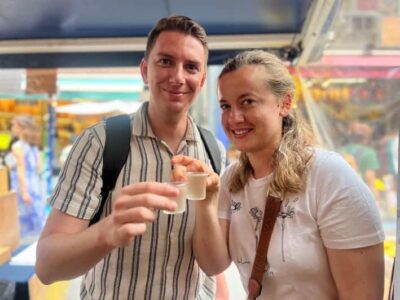
Tokyo Tsukiji Fish Market Food and Culture Walking Tour
Read our review →
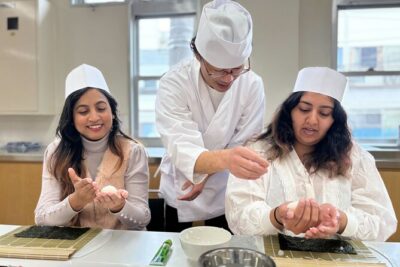
Tokyo Sushi Making Class in Tsukiji with Professional Chef
Read our review →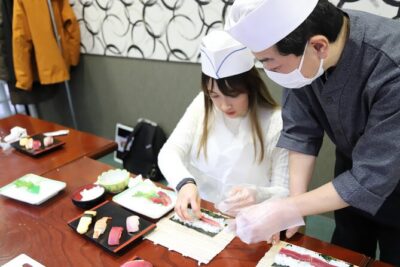
Tsukiji Fish Market Guided Tour and Sushi Making with Pro Chef
Read our review →Tsukiji Fish Market Food and Culture Walking Tour
Read our review →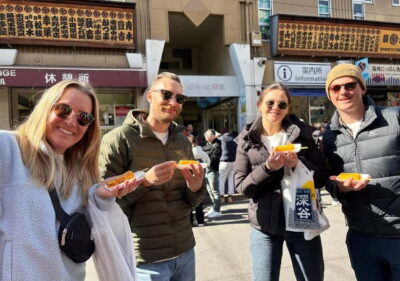
Tsukiji Fish Market: Street Food & Culture Walking Tour
Read our review →
Tsukiji Fish Market Sushi Making Class with Pro Chef
Read our review →Browse the lists this tour appears in