
Reviewed · TOKYO TOURS
Tokyo 6hr Private Tour with Government-Licensed Guide
Tokyo 6hr Private Tour with Government-Licensed Guide Review
Tokyo is easier to understand when someone helps you connect its old neighborhoods, grand shrines, crowded stations, and modern shopping streets. This private six-hour tour lets you choose three or four places, then leaves the routing to a licensed local guide. Guides such as An, Taichi, Sho, Koba, and Yusuke have helped visitors build days around history, food, architecture, family interests, or simply seeing as much of the city as possible.
I like two things right away: the itinerary is flexible, and the guide teaches you how Tokyo works rather than only pointing at sights. You might learn how to use the subway, how to behave at a shrine, or how to find your way back to your hotel after the tour. I also like the mix of major sights and ordinary city life, from Senso-ji and the Imperial Palace to local restaurants and neighborhood streets.
The main drawback is the distance between Tokyo’s highlights. You will likely spend a fair share of the six hours walking and riding trains. That is useful if you want to learn the city, but disappointing if you expect six hours of nonstop sightseeing or a private vehicle.
Key points to know before booking
- Choose three or four sights: The long list of possible stops is a menu, not a promise to see them all.
- Expect walking and trains: No private vehicle is provided, and transport costs are extra.
- Start with your priorities: The guide can shape the day around temples, gardens, food, shopping, architecture, or family interests.
- Use the guide as a Tokyo lesson: Several guides help visitors learn the subway, shrine manners, and routes for the rest of their trip.
- Budget for extras: Meals, entrance fees, and public transport are not included in the $155.86 per-person price.
- Private means personal: Only your own group takes part, with no combining of separate tour groups.
A six-hour introduction built around your interests
The tour begins with an on-foot meeting in a designated area of Tokyo. Pickup is offered, but it means meeting your guide on foot, not stepping into a waiting tour bus. You and your guide then decide how to spend the day from a menu of roughly 20 possible places.
That flexibility matters in Tokyo. A family with children may prefer Asakusa, Shibuya, and Harajuku. A first-time visitor may choose the Imperial Palace, Meiji Shrine, and Tsukiji. Someone interested in Japanese gardens could focus on Shinjuku Gyoen, Hama Rikyu, Koishikawa Korakuen, or Rikugien.
The practical limit is three or four sites. Tokyo’s train network is excellent, but the city is huge. A compact route gives you more time at each stop. A wish list that jumps from Shibamata to Odaiba to Tokyo National Museum can turn into a day of station corridors and train platforms.
This is best thought of as a guided orientation, not a checklist tour. You get local explanation, help with directions, and a private conversation about what you are seeing. The strongest guides also leave you with ideas for the next days of your trip.
More Licensed Guide Tours in Tokyo
- Tokyo 4hr Private Tour with Government-Licensed Guide
★ 5.0 · 1,394 reviews - Tsukiji Food and Toyosu Market with Government-Licensed Guide
★ 5.0 · 158 reviews - Toyosu Market Morning Tuna Auction and Tsukiji Food Tour with Licensed Guide
★ 4.5 · 146 reviews
Asakusa and Senso-ji: Tokyo’s old downtown
Asakusa is one of the best opening choices for a first visit. It is the center of Tokyo’s old low-city district, where the atmosphere feels less polished and more tied to earlier decades. The main draw is Senso-ji, one of the city’s most colorful and popular Buddhist temples.
You can spend about an hour here, and that is a sensible amount of time. The temple grounds offer plenty to explain, including Buddhist customs and the famous story of two fishermen who found a statue of Kannon in the nearby river. The guide can also show you the proper way to approach a temple and make an offering.
Asakusa works well for families and first-time visitors because it gives you an immediate sense of traditional Tokyo. It can also be crowded, so a guide is useful for keeping the visit moving without losing the meaning of the place.
The Imperial Palace: grand grounds, limited access
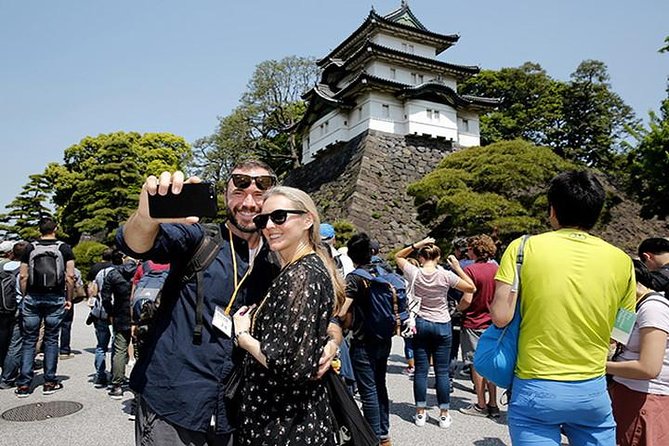
The Imperial Palace occupies the former site of Edo Castle. Moats, huge stone walls, and broad grounds hint at the power once concentrated here. The stop normally means viewing the palace area and grounds, not entering the palace itself.
That distinction is important. Inside access is not included, and the listed visit is about 30 minutes. You are seeing the setting and learning about Japan’s imperial institution, not taking an interior tour.
The Imperial Palace pairs well with Asakusa because the two stops show different sides of Tokyo’s past. The palace area is formal and spacious. Asakusa feels more local and religious. If you want long garden walks, ask your guide to choose one of the dedicated gardens instead.
Shinjuku Gyoen and Tokyo’s garden escapes
Shinjuku Gyoen is one of Tokyo’s largest and most popular parks, with lawns, winding paths, and a quieter pace than the streets outside. It is a good break from stations and traffic, especially if you have already spent time in central Tokyo.
The official stop time is listed as only five minutes, but that should be treated as a quick option rather than a full park visit. Entrance is not included. If gardens matter to you, say so before the day begins and give Shinjuku Gyoen more time.
Other garden choices offer different moods. Koishikawa Korakuen is one of Tokyo’s oldest Japanese gardens, created during the Edo period for the Mito branch of the ruling Tokugawa family. Rikugien was built around 1700 and takes its name from six classical poems. Hama Rikyu sits beside Tokyo Bay and has seawater ponds that change with the tides, along with a teahouse.
The listed times for Koishikawa Korakuen, Hama Rikyu, and Rikugien are short, mostly five to 30 minutes. You cannot properly explore all three in a quick stop, and entrance fees are extra. Pick one if you want a calm, focused garden visit.
More licensed-guide days in Tokyo:
- Tokyo Tsukiji Food & Culture Private Tour Licensed Guide
★ 4.9 · 28 reviews - Kawagoe 4hr Private Tour with Licensed Guide (Kawagoe Dep)
★ 5.0 · 13 reviews - Kyoto 6hr Private Tour with Government-Licensed Guide
★ 5.0 · 1,369 reviews - Hiroshima / Miyajima Full-day Private Tour with Government Licensed Guide
★ 5.0 · 1,298 reviews
Shibuya Crossing and Harajuku’s youth culture
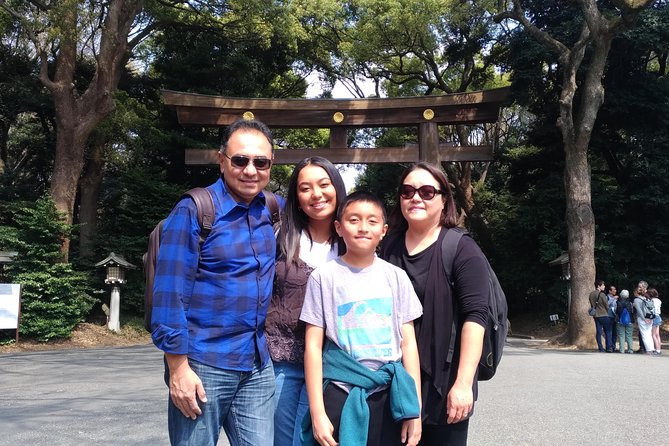
Shibuya Crossing is the visual jolt in this tour’s menu. When the signal changes, people cross from several directions at once. Nearby is the statue of Hachiko, the loyal dog whose story has become part of Tokyo’s popular culture.
Shibuya is ideal if you want to see present-day Tokyo at full speed. The stop can also be paired with Harajuku, where Takeshita Street is known for teenage fashion and unusual styles. The area also has a more traditional side at Meiji Jingu Shrine and nearby Yoyogi Park.
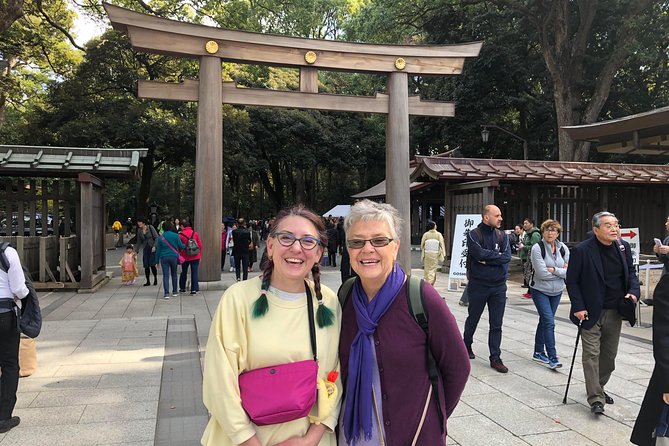
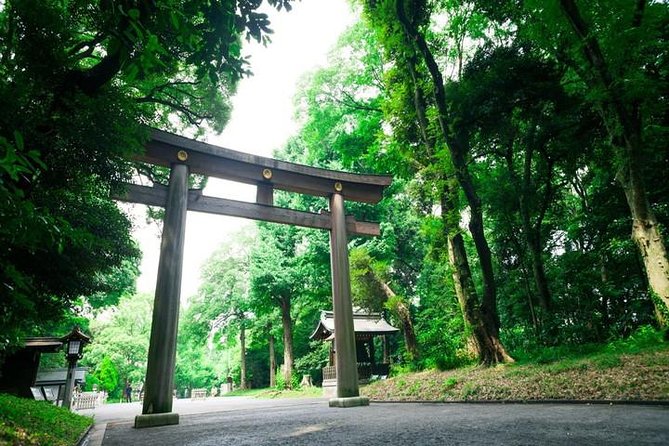
Meiji Shrine is dedicated to the deified spirits of Emperor Meiji and Empress Shoken. Reached through a wooded approach near Harajuku Station, it provides a clear lesson in Shinto worship. Yoyogi Park offers wide lawns, ponds, and wooded areas, though the listed visit is about 30 minutes.
A guide can make this cluster especially efficient. Shibuya, Harajuku, Meiji Shrine, and Yoyogi Park are close enough to form a coherent half-day section. You get shopping streets, a famous crossing, a shrine, and a park without crisscrossing the city.
Tsukiji: food without the old wholesale market
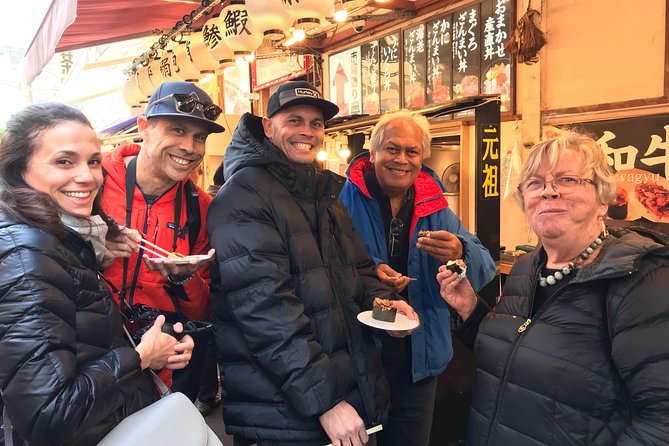
Tsukiji is the former fish market area and remains a popular place to browse food stalls and small shops. It is a good choice if you want to taste Tokyo rather than only look at monuments.
The scheduled stop is about 30 minutes, and food purchases are extra. That is enough for a quick walk and a snack, but not much time for a long meal or careful browsing. Some guides can recommend a sushi restaurant or a local place for lunch. Guides have also helped visitors find sushi, sake, Kobe beef, green tea, and other Japanese foods during the day.
If food is your main reason for choosing Tsukiji, tell the guide before the tour. Otherwise, the pace may feel too quick. One common criticism of this type of day is that too many stops can leave little time to enjoy a market properly.
Akihabara, Golden Gai, and Tokyo’s modern character
Akihabara is famous for electronics shops and is now also closely tied to anime, manga, games, and related fan culture. Its appeal depends on your interests. It may be a highlight for a teenager or pop-culture fan, but less useful if your priority is temples and gardens.
Shinjuku Golden Gai offers a different kind of urban history. Its small eating and drinking establishments grew from the black-market era around 1950. The narrow lanes are best seen as a short atmospheric stop rather than a full evening out, since the listed time is only five minutes.
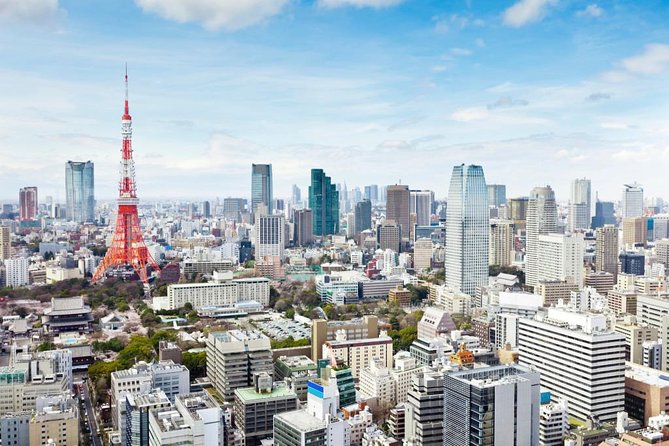
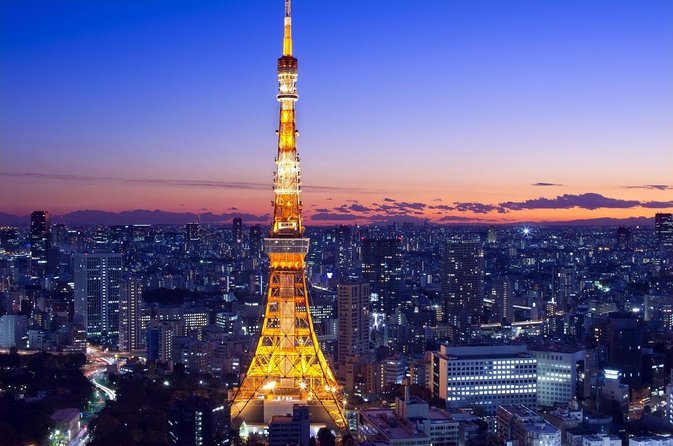
Tokyo Tower is another quick option. The vermilion tower is a long-running city symbol and appears in many anime scenes. The tour includes access only up to the main deck, and the top deck is not included. Admission is extra, so check your priorities before spending time and money here.
Ueno, Nezu, and the quieter old neighborhoods
Ueno Park gathers several museums, a zoo, Toshogu Shrine, and Shinobazu Pond in one large public space. It is also famous for cherry blossom parties. The listed five-minute stop is far too short for a serious museum or park visit, so choose Ueno only if you want a brief introduction or plan to return later.
Nezu, along with nearby Yanaka, survived major damage from wars and natural disasters and retains much of old downtown Tokyo’s character. This is a better choice for slow streets and local atmosphere than for famous landmarks. The listed stop is five minutes, so ask for more time if you want to walk the neighborhood.
Shibamata, at Tokyo’s eastern edge near the Edogawa River, also keeps an old-fashioned feel. It is less central than Asakusa or Shibuya, which makes it a poor fit for a first tour trying to cover several major sights. It can be a fine choice for a repeat visit or someone seeking a less familiar part of Tokyo.
Odaiba and Gotokuji for special interests
Odaiba is a shopping and entertainment district on a man-made island in Tokyo Bay. Its origins are old defensive forts, but its current appeal is modern recreation and bay views. The listed five-minute stop makes it more of a quick look than a full visit.
Gotokuji Temple is known as the supposed birthplace of the maneki-neko, the raised-paw cat figurine associated with good fortune. The stop is listed at about 10 minutes and admission is free. It is a fun choice if you like Japanese folk customs, unusual temple stories, or want a memorable theme for the day.
These stops show why advance planning matters. Tokyo has enough specialized districts to fill many days. The guide can help you avoid spending half your tour traveling to a place that does not match your interests.
What the guides add beyond directions
The best reason to book this experience is not simply finding the stations. It is the human explanation along the way. Guides have helped visitors understand Japanese history, architecture, shrine rituals, food customs, and the way Tokyo’s neighborhoods changed over time.
Several guides also tailor the day before arrival. Tachi exchanged emails to shape an itinerary around shrines, temples, architecture, and food. Masa adjusted a day for both a parent and a middle-school child. Sam planned a loop for a group of five, while Shigeru used visual aids to explain Japanese culture.
The names available on past bookings include Richie, Lily, An, Taichi, Sho, Koba, Atsushi, Taka, Yusuke, Toshiro, May, Lance, Fumiko, Yasuho Suzuki, Tachi, yabby, Shigeru, Noripy, Steve, Masa, Taku, and others. You should not assume a particular guide will be assigned unless the booking process confirms it.
English ability also matters. The guide is described as an English-speaking local, and specific guides such as Sho, An, and Steve received praise for clear communication. Still, every guide has a different style. Write down your interests before the tour so the person assigned can build the day around them.
The real cost and the value of a private day
The listed price is $155.86 per person. That is not a cheap sightseeing walk, but it includes a private licensed guide for six hours, and only your group participates. For a family or small group, the personal attention can make the cost easier to justify, especially with group discounts available.
You still pay for subway or bus fares, meals, personal purchases, and entrance fees. Guide admission is covered only for sights listed under the tour information, while several gardens and museums charge admission for you. No private vehicle is included.
I see the value most clearly on a first day in Tokyo. A good guide can show you how to use the rail system, explain shrine manners, point out a suitable lunch place, and help you understand the city’s layout. One guide even helped a visitor with train tickets to Narita after the tour.
The value drops if you only want transportation or a rapid photo stop at ten places. One person found the tour too expensive after spending about two hours on trains during a route from Haneda Airport. That experience makes the central lesson clear: choose nearby sights and do not confuse a walking and public transport tour with a chauffeured city tour.
Walking, timing, and practical preparation
Wear comfortable shoes. Six hours can include a great deal of walking, station navigation, stairs, and standing. A rainy-day experience showed that the tour can continue in poor weather, but your comfort will depend on suitable clothing.
Keep some yen available. Transport costs are extra, and the tour information specifically advises carrying yen for public transportation. A Suica card is also a practical idea, and one guide helped visitors learn the rail system well enough to get around independently afterward.
Tell the guide how fast you want to move. The menu contains far more places than you can reasonably visit in six hours. Three or four well-chosen stops will usually give you a better day than a rushed sweep through six neighborhoods.
You can request a food stop, but lunch is not included. Entrance fees are also extra, and sites such as Shinjuku Gyoen, Koishikawa Korakuen, Hama Rikyu, Rikugien, Tokyo National Museum, Tokyo Tower, and Ueno Park may require payment.
Most people can take part, and service animals are allowed. The tour is near public transport, but it is still a walking activity. Free cancellation is available up to 24 hours before the start time. Changes made inside that window are not accepted, and a date change can mean a different guide or no availability.
Who should book this Tokyo tour?
I would choose this tour for a first visit, a short stay, a family with mixed interests, or anyone uneasy about Tokyo’s scale. It is also useful for repeat visitors who want old neighborhoods such as Nezu, Shibamata, or Gotokuji rather than another standard highlights route.
It suits you if you want conversation, cultural context, and help using trains. It is less suitable if you want a fixed sightseeing program, a private car, long museum visits, or lots of unhurried shopping.
Before booking, decide on your top three priorities. Then ask for a compact route. That one step will protect your time and make the $155.86 price easier to defend.
Should you book the six-hour private Tokyo tour?
Book it if you want a personal introduction to Tokyo and are ready to walk, ride trains, and make choices. The strongest parts are the private format, the licensed English-speaking guide, and the chance to learn skills you can use for the rest of your stay.
Skip it if your main goal is maximum time inside museums, a luxury vehicle, or a cheap photo tour. Tokyo rewards a focused plan. Choose three or four nearby sights, keep cash ready for trains and admissions, and tell your guide exactly what you care about. Do that, and this can be a smart first day in a city that otherwise takes time to decode.
FAQ
How long is the Tokyo private tour?
The experience lasts approximately six hours.
Is the tour private?
Yes. Only your group participates, and separate tour groups cannot be combined.
How many sights can I visit?
The tour includes a customizable walking route covering three to four sites from the suggested options.
Is transportation included?
No. Public transportation is commonly used, but transport fees are not included. No private vehicle is provided.
Is hotel pickup included?
Pickup is offered on foot within a designated area of Tokyo. This is not pickup by private car or tour bus.
Are meals and entrance fees included?
No. Lunch, meals, entrance fees, transportation, and personal expenses are extra. Guide entry fees are covered only for sights listed under the tour information.
Can I enter the Imperial Palace?
No. The tour does not include access inside the Imperial Palace.
Does the Tokyo Tower visit include the top deck?
No. Access is limited to the main deck. The top deck is not included, and admission is extra.
What is the cancellation policy?
You can cancel up to 24 hours before the experience start time for a full refund. Cancellations or changes made less than 24 hours before the start time are not accepted for a refund.
Just added around Tokyo
- Private Transfer from Narita Airport to Yokohama Port and City★ 4.5 · 17 reviews
- Private Arrival Transfer : Narita International Airport to Central Tokyo City★ 4.5 · 12 reviews
- Narita Airport(NRT): Private Transfer to Tokyo/Yokohama 1-9pax★ 5.0 · 47 reviews
- [Narita Airport Terminals 1, 2] 40-60km Sawara Itako Historic Bike Tour★ 5.0 · 13 reviews
- 3 Day Japan Highlights Tour: Tokyo, Mt.Fuji, Nara, Kyoto, Osaka★ 5.0 · 22 reviews
- Small Town in the Big City: Tasting Tokyo’s Kichijoji★ 5.0 · 195 reviews
- Small Town in the Big City: Tasting Tokyo’s Kichijoji★ 5.0 · 16 reviews
- The 10 Tastings of Tokyo With Locals: Private Street Food Tour★ 5.0 · 48 reviews
Tokyo Tours, compared.

Mt Fuji and Hakone 1-Day Bus Tour Return by Bullet Train
Read our review →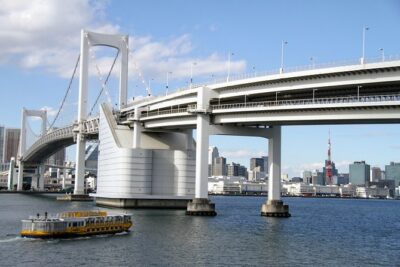
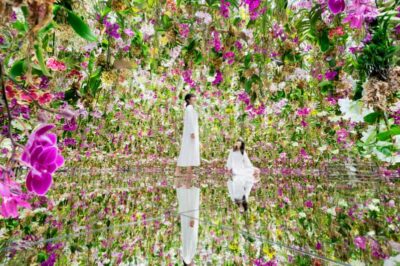
teamLab Planets TOKYO Digital Art Museum Entry Ticket
Read our review →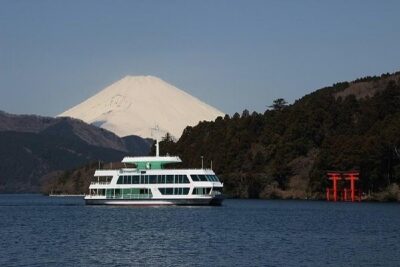
Mt Fuji & Hakone Cruise, Drum Show Bullet Train 1 Day from Tokyo
Read our review →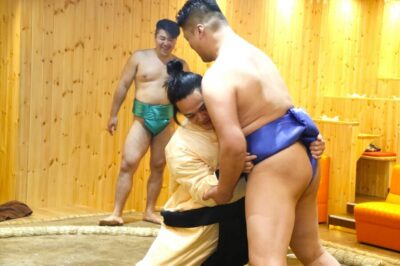
Sumo Show Experience with Chicken Hot Pot and a Photo
Read our review →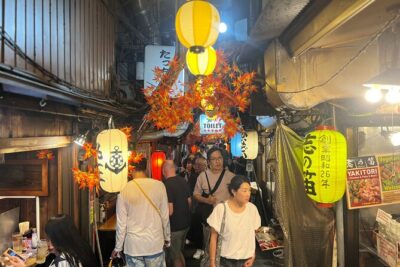
Shinjuku Food Tour (13 Dishes at 4 Local Eateries)
Read our review →
Tokyo Mt Fuji 5th St & Hakone Cruise Bus Tour w/Bullet Train
Read our review →
Flagship 2-Hours Official Street Go-Kart Tour – Tokyo Bay Shop
Read our review →Browse the lists this tour appears in