
Reviewed · KANAZAWA TOURS
1-Day Shirakawago & Takayama Tour (Round Trip from Kanazawa)
Shirakawago looks almost unreal: steep thatched roofs, mountain snow, and old farmhouses still used as homes. This tour pairs that UNESCO-listed village with Takayama’s Edo-era merchant streets, making a long day from Kanazawa feel like a useful introduction to rural Japan.
I like the simple logistics, with transportation, admissions, and a licensed guide included. I also like the mix of places: Shirakawago gives you mountain scenery and traditional houses, while Takayama adds sake shops, folk crafts, and famous festival floats. The tradeoff is time. Ten hours includes roughly two hours on the road each way, and lunch is not provided.
Key points
- Shirakawago farmhouse visit: Enter one of Ogimachi’s traditional thatched houses and see how these unusual buildings were used.
- Seasonal mountain scenery: Snow can make the village look like a storybook, while clear weather opens views from the observation deck.
- Takayama’s festival floats: See the elaborate wooden floats used in one of Japan’s best-known festivals.
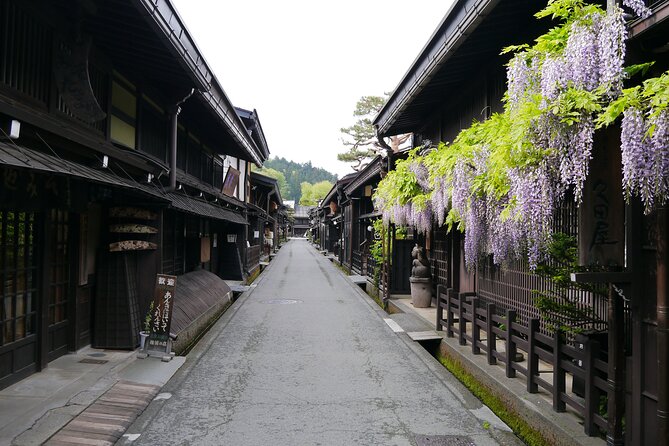
- Historic Kami-Sannomachi: Walk old merchant streets lined with traditional shops, sake breweries, miso sellers, and small craft stores.
- Small-group format: The maximum group size is 15, though the bus may include people from other tour plans.
- Useful flexibility in 2026: Kami-Sannomachi receives about 70 minutes rather than the 40 minutes listed for 2025, but the Kusakabe Heritage House is removed.
Why this Kanazawa day trip works
The appeal is not one single attraction. It is the contrast between two mountain communities that developed in different ways.
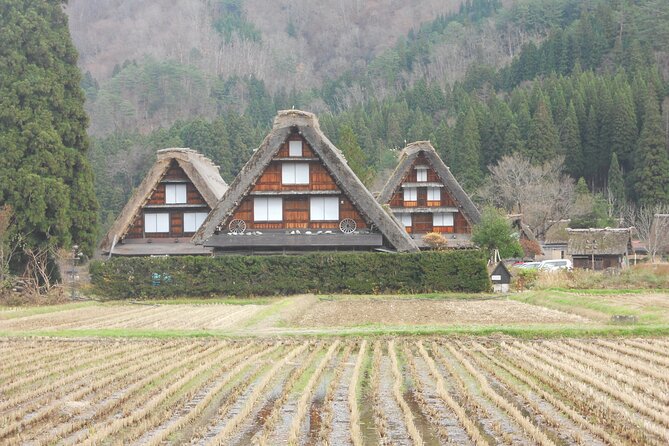
Shirakawago is a rural settlement shaped by heavy winter snow. Its gassho-zukuri houses have dramatically sloped roofs designed to shed snow, and the village still feels tied to farming and village life.
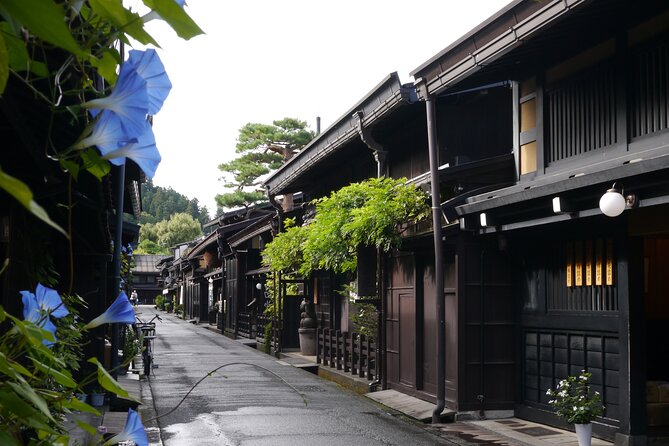
Takayama is more urban, though still compact and traditional. Its preserved merchant quarter gives you a close look at shops, homes, food culture, and crafts from an old castle town.
I like this pairing because you do not spend the whole day looking at similar streets. You get a village, a traditional house interior, a museum devoted to festival floats, and time to walk through an old commercial district.
The cost is $209.53 per person. That is not a bargain-priced bus outing, but the value is reasonable if you want both destinations in one day without arranging regional buses, reserving separate admissions, and working out the mountain connections yourself.
You also get a National Government Licensed Guide Interpreter or a region-specific licensed guide. That matters here. The buildings are attractive on their own, but an explanation of why the roofs are shaped as they are, how the houses functioned, and how Takayama’s festival traditions fit into local life makes the stops more meaningful.
A few more Kanazawa half-days to weigh up
- 1 Day Private Charter Tour to Shirakawa-go & Takayama
★ 4.5 · 253 reviews - [Day trip bus tour from Kanazawa Station] Weekend only! World Heritage Shirakawago Day Bus Tour
★ 5.0 · 46 reviews - Kanazawa private 1 day/Photoshoot by professional photographer
★ 5.0 · 33 reviews
Starting at Kanazawa Station at 8:15
The tour begins at Kanazawa Station at 8:15 in the morning. After departure, the bus may make hotel pickups within Kanazawa City, though these are not break stops where you can get off and stretch.
The vehicle is air-conditioned and heated, an important detail for a mountain route. The drive to Shirakawago can take about two hours or a little more, depending on road conditions and traffic. One departure reached the village after roughly two hours and fifteen minutes, with the mountain scenery making the ride part of the experience rather than dead time.
Still, prepare for a long day. You are spending around four hours in transit, with the rest divided among sightseeing stops. If you prefer slow mornings or long lunches, this schedule may feel tight.
The maximum group size is 15, which should allow for more personal guidance than a large coach tour. The operator may combine people from different tour plans on the same bus, so the exact feel of the group can vary.
Shirakawago and the gassho-zukuri houses
You get about two and a half hours at Shirakawago, the main event of the day. The village of Ogimachi is known for its gassho-zukuri farmhouses, with roofs that rise sharply like hands pressed together in prayer.
The design is practical rather than decorative. Heavy snow is common in the surrounding mountains, and the steep thatch helps it slide away. The village is also important because these are not simply outdoor museum buildings. People still live in the area, which gives the setting more substance than a reconstructed historic display.
The tour includes entry to one thatched-roof house. You will remove your shoes before entering, so wear socks in good condition and shoes that are easy to take off. Inside, you can expect a traditional Japanese-style interior and a closer look at how an old farmhouse was arranged.
Entry can take time if many groups arrive together. If the house is crowded, you may be allowed to explore the interior on your own rather than following the guide through every part. That is worth knowing because the guided explanation and the pace of the visit may not be identical on every departure.
After the house visit, you are free to stroll around the village. This is the point where I would slow down and pay attention to small details: temple and shrine gates, the shape of the roofs, narrow lanes, and the way the houses sit against the mountains.
A shuttle bus runs to the Shirakawago observation deck for an extra fee. It is not included, and operation can stop in poor weather. If the shuttle is running and you want the classic elevated view, pay locally. If conditions are bad or the line is long, the village itself still provides plenty to see.
Clear weather can give you a beautiful broad view over the roofs and surrounding mountains. Snow adds drama but can make walking more difficult. The tour runs in cold conditions, so winter visitors should bring warm layers and shoes with good grip.
The main limitation is freedom. Two and a half hours sounds generous, but part of that time goes to the farmhouse visit and possibly the observation deck. You will not have the same unhurried wandering time as someone staying overnight.
What the farmhouse visit adds
Photographs of Shirakawago tend to focus on the roofs, but the interior visit keeps the stop from becoming a quick photo call. You see the construction and household spaces at close range, not just a row of picturesque exteriors.
The house also helps explain why the village looks the way it does. The steep roofs are the result of weather, local materials, and shared building knowledge. That practical story is more interesting than treating the architecture as a fairy tale backdrop.
I would give the guide your attention here. Guides such as Hiro, Hiroko, Shin, and Joe have been noted for being helpful, attentive, and clear in their explanations on different departures. The assigned guide can vary, but the tour is designed around English-language interpretation rather than a ride with no cultural context.
Same base, a completely different sort of day:
- World Heritage Shirakawa-go and Experience Tours from Kanazawa
★ 5.0 · 4,049 reviews - Kanazawa: Kenrokuen Tea Ceremony Experience
★ 4.8 · 1,139 reviews - Kanazawa Half Day Tour (Private Guide)
★ 5.0 · 361 reviews - Kanazawa Full Day Tour (Private Guide)
★ 5.0 · 323 reviews
Takayama Festival Floats Exhibition Hall
After Shirakawago, the tour continues to Takayama. The first scheduled stop is the Takayama Festival Floats Exhibition Hall, with about 30 minutes inside and admission included.
The hall displays some of the colorful floats used in the famous Takayama Festival. These are large, carefully made structures with detailed decoration, and seeing them up close gives you a sense of the work behind the festival rather than only its public spectacle.
Thirty minutes is enough for a focused visit, though not a leisurely museum session. You will want to look at the carving, paint, metalwork, and layered design instead of rushing through for a few photographs.
This stop is especially useful if your Japan trip does not include a festival period. You can see the objects connected to the event even when the streets are quiet.
Kusakabe Folk Museum in 2025
For tours operating in 2025, the itinerary includes a 30-minute visit to the Kusakabe Folk Museum. It occupies a historical Japanese-style townhouse and presents folk art and traditional handicrafts.
This stop adds a domestic and artistic side to the day. Shirakawago shows mountain farmhouses, while the museum gives you a closer look at the materials and workmanship associated with traditional Japanese homes and local craft.
There is an important date change. The Kusakabe Heritage House will not be visited on tours in 2026. If you are booking a 2026 departure, do not count on this interior stop when deciding if the price suits you.
Kami-Sannomachi, Takayama’s old merchant quarter
Kami-Sannomachi is where you get time to wander rather than simply observe a collection. The streets developed as a merchant area in the old castle town, and traces of the Edo period remain in the traditional facades.
For 2025, the listed walking time is 40 minutes. For 2026, it is about 70 minutes, a meaningful improvement. An extra half hour gives you more room to browse, take photographs, and choose a snack without treating the whole quarter as a hurried corridor.
The area is associated with traditional sake breweries, artisanal miso shops, handcrafted folk art, and local foods. You can look into shopfronts, compare old building details, and get a taste of Takayama’s everyday commercial culture.
Do not expect a huge old town. The attraction is its compact scale and preserved character. You can cover a lot on foot, but the short 2025 time allocation means you should keep an eye on the meeting time.
Takayama feels less rural than Shirakawago, yet that is part of the appeal. It is a living town with a polished historic center, not a mountain village frozen in place. I like having both settings in the same day because each gives the other sharper definition.
Lunch, walking, and the rhythm of the day
Lunch is not included, so plan to buy food during the day. The supplied details do not promise a dedicated lunch stop or a specific restaurant, so you should not assume a long sit-down meal.
That makes timing important. You may want to carry a small snack and water, then use free time in Takayama or Shirakawago to find something appealing. Keep enough time to return to the bus. A beautiful old street is not worth missing the departure.
There is a fair amount of walking. The route includes village streets, a traditional house where you remove your shoes, museum visits, and old-town sidewalks. Most participants can join, but the day is not designed for staying seated except during the bus rides.
The schedule can change because of traffic, road conditions, crowds, weather, or a facility closure. The order of stops and the amount of time at each place are estimates. If a sightseeing facility is closed, the operator may substitute another destination.
That flexibility is normal for a mountain day trip, but it is worth accepting before you book. You are buying a structured route, not a fixed minute-by-minute promise.
The guide and the small-group advantage
The guide is one of the strongest reasons to choose this tour instead of trying to connect the destinations independently. A licensed English-speaking guide can explain the buildings, answer questions, and keep the day moving when road delays or crowded entrances cause changes.
The guide names associated with past departures include Hiro, Hiroko, Shin, and Joe. Their approach has been described as kind, professional, attentive, and informative, though you should understand that the guide for your date may be someone else.
A group capped at 15 is a useful middle ground. You get the convenience of a bus without the scale of a very large sightseeing operation. The possible downside is that the bus can carry people on other tour plans, so the exact group arrangement may not be identical from day to day.
The driver also matters on this route. Winter roads can be difficult, and a careful driver is part of the tour’s practical value. You still need to accept that snow or congestion may affect the timetable.
Is $209.53 a fair price?
At $209.53, this is a convenience purchase. You are paying for the round trip from Kanazawa, the bus, transportation between destinations, admissions, and a licensed guide.
The price makes the most sense if you value a simple plan. Building the same day independently would mean researching connections between Kanazawa, Shirakawago, and Takayama, checking schedules, buying or reserving transport, and paying separate entrance fees.
The value is weaker if you already have several days for the region. An overnight stay in Shirakawago or Takayama would let you walk after the day crowds leave and spend more time with each place. This tour is aimed at a first look, not a slow regional stay.
You also need to budget for lunch and the optional observation-deck shuttle. Those costs are not included. The mobile ticket is convenient, but confirmation can take up to 48 hours and remains subject to availability.
Free cancellation is available if you cancel at least 24 hours before the start time. Changes or cancellations inside that window are not accepted for a refund.
Who should book this day?
I would recommend it to you if Kanazawa is your base and you want to see two major cultural stops without changing hotels. It is also a good fit for a first visit, especially if you want historical explanation rather than only transport.
Families can join, and children up to age five may ride free without a bus seat. If a child needs a seat, the booking must use the child rate. Anyone under 18 needs written parental permission, and anyone under 15 or not yet in middle school must be accompanied by a parent or guardian.
You should think twice if you dislike early starts, long bus rides, fixed meeting times, or short visits. The day is full, and you will not have complete control over where you stop or how long you stay.
It is less suitable for someone who needs a fully accessible pace, since the supplied information only confirms that most participants can take part and does not provide detailed accessibility arrangements. Ask the provider before booking if mobility needs are important to your plans.
Should you book the Shirakawago and Takayama tour?
Book it if you want an efficient, guided day from Kanazawa and the combination of Shirakawago’s rural architecture with Takayama’s old-town culture appeals to you. The included transport and admissions remove much of the planning burden, while the small maximum group and licensed guide add useful structure.
Choose it with realistic expectations. You will spend a long time on the bus, buy your own lunch, walk quite a bit, and follow a schedule that can shift with weather and traffic.
For a one-day regional sampler, the route is strong. For a slow, intimate look at the mountains, stay overnight instead. If you have only one free day from Kanazawa, this tour gives you a sensible way to make it count.
FAQ
How long is the Shirakawago and Takayama tour?
The tour lasts about 10 hours. It begins at 8:15 in the morning at Kanazawa Station and returns to the meeting point at the end of the day.
Where does the tour depart?
It departs from Kanazawa Station in Kanazawa, Japan. The address provided is 1-1 Kinoshinbo-machi, Kanazawa, Ishikawa 920-0858.
Is lunch included?
No. Lunch is not included, so you need to arrange and pay for your own food during the day.
Is the Shirakawago observation deck included?
No. A shuttle bus to the observation deck costs extra and is paid for locally. The shuttle may stop operating in poor weather.
Does the tour include entry to a traditional thatched house?
Yes. Admission to one thatched-roof house in Ogimachi is included. Entry can take time when the village is crowded.
Is the Kusakabe Folk Museum visited in 2026?
No. The Kusakabe Heritage House will not be visited on tours in 2026. The 30-minute museum visit applies to the 2025 version of the tour.
Can I get off in Takayama instead of returning to Kanazawa?
A stop may be made at Takayama Station for drop-off. You must tell the guide in the morning if you want this option, and no return transport from Takayama Station to Kanazawa is provided by the tour.
Just added around Kanazawa
- Kanazawa: Sushi & Japanese Cooking Class at a Historic School★ 5.0 · 66 reviews
- Shirakawago & Kanazawa from Kanazawa★ 5.0 · 51 reviews
- Takayama and Shirakawago/Photoshoot by professional photographer★ 5.0 · 67 reviews
- Taste of Kanazawa (Food tasting in Omicho Market & Higashi Chaya)★ 5.0 · 58 reviews
- Kanazawa private 1 day/Photoshoot by professional photographer★ 5.0 · 33 reviews
- Photoshoot session by professional photographer in Kanazawa★ 5.0 · 42 reviews
- Private Tour Kanazawa, Shirakawago, Hida Furukawa,Takayama★ 5.0 · 108 reviews
- Kanazawa private half day/Photoshoot by professional photographer★ 5.0 · 38 reviews
Kanazawa Tours, compared.
World Heritage Shirakawa-go and Experience Tours from Kanazawa
Read our review →

![[One-day bus tour departing from Kanazawa Station] Shirakawa-go and Gokayama – Two World Heritage Villages Enjoyable Bus Tour](https://media3.thejapanesetraveller.com/wp-content/uploads/one-day-bus-tour-departing-from-kanazawa-station-shirakawa-go-and-gokayama-two-world-heritage-villages-enjoyable-bus-tour-400x267.jpg)
[One-day bus tour departing from Kanazawa Station] Shirakawa-go and Gokayama – Two World Heritage Villages Enjoyable Bus Tour
Read our review →
World Heritage Shirakawa-go Perfect Guided Tour from Kanazawa
Read our review →
Browse the lists this tour appears in