
Reviewed · KANAZAWA TOURS
Kanazawa: Sushi & Japanese Cooking Class at a Historic School
Kanazawa’s best souvenir may be a cooking skill, and this fully hands-on class gives you plenty to take home. At Nakata Cooking School, chef Seiji Nakata guides you through nigiri sushi, dashi, rolled omelet, jibuni, miso soup, and a seasonal side dish. You cook every dish yourself, rather than watching a chef work from the sidelines.
I especially like the small-group size, capped at eight, and the location just three minutes from Kanazawa Station. I also like the clever live AI translation system, which puts spoken and written English on a large screen and helps turn the language gap into part of the fun. The main consideration is dietary: vegan diets and meals made without fish-based dashi cannot be accommodated.
Key points
- Five Japanese dishes in one class: Make sushi, Kanazawa-style jibuni, dashi-maki tamago, dashi broth, miso soup, and a seasonal side dish.
- A 56-year-old culinary school: You cook in a long-established local school, not a temporary tourist kitchen.
- Chef Seiji Nakata leads the class: His energetic style, humor, and patience are central to the experience.
- Live translation keeps you involved: Voice and text translation appears on a large screen throughout the class.
- Fresh seafood from Omicho Market: The sushi uses seasonal fish selected from Kanazawa’s well-known market.
- Useful extras included: You receive an English recipe by email, class photos, an aperitif, and a named Japanese certificate.
Three minutes from Kanazawa Station
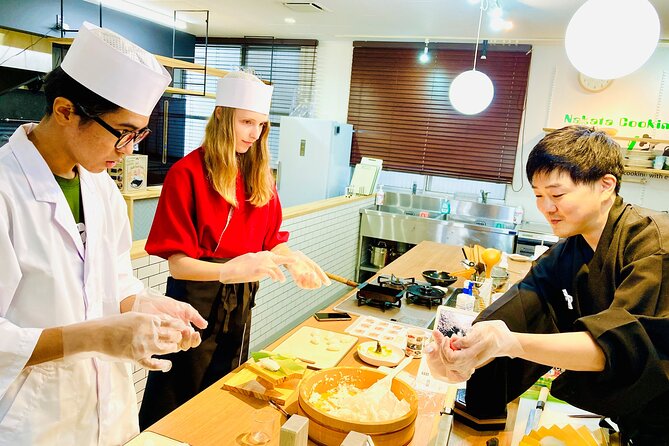
The class takes place at Nakata Cooking School and Knife Shop in Konohanamachi, only about three minutes from Kanazawa Station. That makes it a practical choice on a short Kanazawa visit, especially if you want a substantial activity without spending time crossing the city.
The meeting point is by appointment only, so check your booking details carefully and arrive at the stated time. The activity begins and ends at the school, with no private transport included. Since the class lasts about two and a half hours, you can fit it into a morning or afternoon without giving up an entire day of sightseeing.
The school itself has been operating for 56 years. That age matters here because the class is tied to a real culinary teaching setting and to Kanazawa food traditions, rather than being only a quick lesson designed around a photo opportunity.
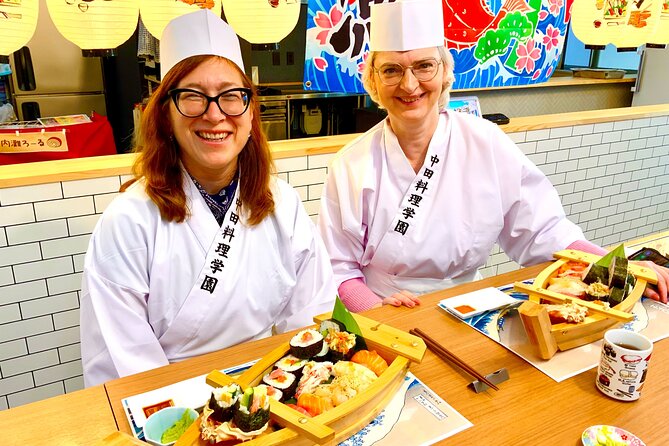
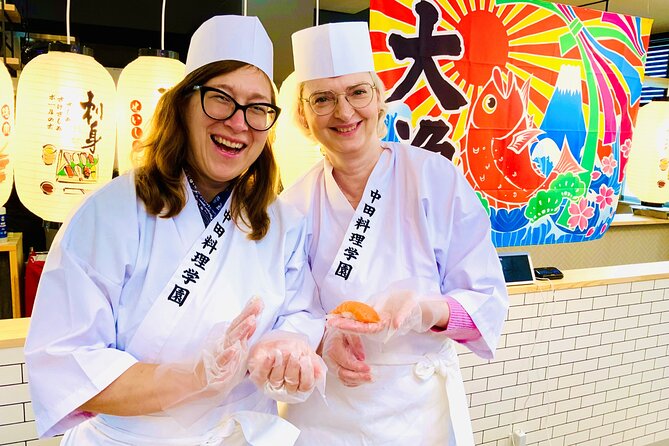
You change into a sushi chef-style uniform before cooking. It is a small touch, but it helps mark the shift from sightseeing to participation. You are not simply eating a prepared meal. You are handling the ingredients, tools, and techniques that shape the meal.
More cooking classes in Kanazawa:
- Ramen Cooking Class at Ramen Factory in Kyoto
★ 5.0 · 1,937 reviews - Ramen & Gyoza Cooking Class in Tokyo with Local Supermarket Visit
★ 5.0 · 823 reviews - Kyoto: Ramen Cooking Class at a Ramen Factory with Souvenir
★ 4.9 · 532 reviews
Chef Seiji Nakata and the live translation screen
Chef Seiji Nakata leads the instruction, with help from his wife, Ikumi, when she is part of the class. The teaching style is lively and humorous, with plenty of direct guidance. You should expect an entertaining lesson, not a quiet lecture.
English communication is supported by real-time AI translation, using both voice and text on a large screen. This is useful when the chef explains a cooking term, gives a timing instruction, or discusses the cultural meaning of a dish. It also allows questions and jokes to move back and forth more easily.
The system is not the same as having a native English-speaking instructor. Translations can be amusing or slightly awkward, and that becomes part of the atmosphere. Still, the setup means you are not left guessing what to do. The reviews of the class repeatedly praise the way the translation helps people stay involved.
I like this approach because it keeps the chef’s own personality in the room. Instead of replacing the local instructor with a generic English presentation, the screen helps Nakata communicate directly with you.
The group maximum is eight people. That is small enough for personal help at the cutting board and stove, yet large enough to give the class a social feel. Couples, families, and mixed-age groups can all take part. Families with teenagers may find the balance particularly good, since the cooking stays active and the humor keeps the lesson from feeling like school.
Nigiri sushi with seafood from Omicho Market
Sushi is likely to be the moment many people look forward to most. The fish comes from Omicho Market, Kanazawa’s major food market and a trusted source for local restaurants. The exact fish is seasonal, so you should expect the ingredients to change rather than a fixed species list.
You learn to shape nigiri sushi with the correct balance of rice and fish. One useful detail from the class is the attention given to rice portions, including the idea that roughly 15 grams of rice creates a better fish-to-rice proportion for a piece of sushi. That kind of measurement is easy to remember at home and shows why professional sushi can look simple while requiring control.
Sushi shaping also gives you a direct lesson in texture. Rice that is pressed too firmly becomes heavy. Rice that is handled too loosely may fall apart. You will learn by doing, correcting, and trying again rather than by watching a perfect demonstration.
The fish is a key reason the price feels reasonable. You are not making a casual snack from ordinary supermarket ingredients, then paying mainly for the setting. Premium, seasonal seafood is part of the meal, and you eat what you prepare.
Do not expect a sushi-master apprenticeship in two and a half hours. The class teaches approachable techniques you can repeat at home, not every detail of professional fish preparation. That is the right level for a short holiday activity.
Dashi, the quiet base of Japanese cooking
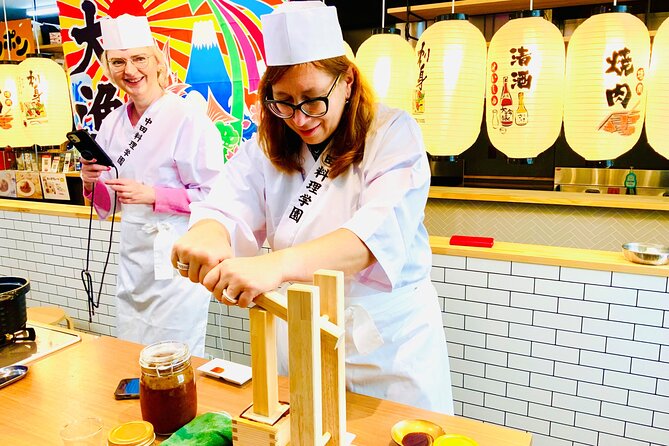
The class also teaches traditional dashi broth made with bonito and kelp. Dashi is easy to overlook because it often disappears into another dish, but learning it gives you a better grasp of Japanese flavor.
You see how a few basic ingredients create the savory base for soup, omelet, and other dishes. This is one of the most useful parts of the class for home cooks because dashi can change the taste of familiar recipes without requiring a long ingredient list.
The broth connects the dishes together. Instead of treating sushi, soup, omelet, and stew as separate tricks, the class shows how Japanese cooking uses a small set of carefully made foundations. You also hear cultural background as you work, so the food has context beyond a recipe card.
There is an important restriction here. The dashi is fish-based, using bonito and kelp. Vegan diets and guests avoiding fish-based dashi cannot be accommodated. If you have another dietary restriction, give the school the information when booking. Same-day changes are not accepted.
More hands-on workshops in Kanazawa:
- Kanazawa: Samurai Swordsmanship Lesson at a rented temple
★ 5.0 · 21 reviews - Sushi Making Tokyo Roll and Authentic Japanese Sushi Class
★ 5.0 · 3,971 reviews - Kyoto: 45-Minute Tea Ceremony Lesson Experience
★ 4.3 · 2,378 reviews - Tokyo: Roll and Authentic Sushi Making Class in Asakusa
★ 4.9 · 1,957 reviews
Jibuni, Kanazawa’s local specialty
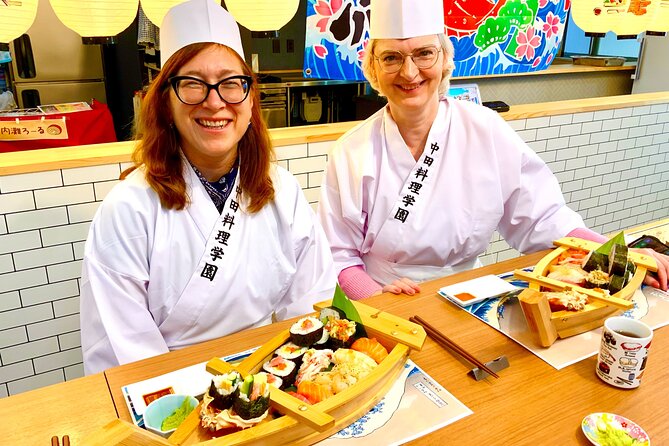
Jibuni is the most distinctive dish on the menu. This Kanazawa specialty is a stew with samurai-era roots, and it gives the class a strong local connection that a standard sushi lesson would lack.
The version taught here uses chicken. You learn the steps behind the dish and then eat it as part of the finished meal. Jibuni is a useful reminder that Kanazawa cuisine is not only about seafood. The city’s food culture also includes regional home-style dishes with their own history and methods.
For me, this is what makes the class more worthwhile than a basic roll-sushi workshop. You leave with a taste of Kanazawa, not just a familiar Japanese dish found in cooking schools around the world.
The recipes are not presented as difficult restaurant-level projects. The class is meant to be practical and enjoyable. Still, there are small points of Japanese presentation and preparation that give the dishes more care. Even something as simple as cutting or arranging a garnish can be treated as part of the meal’s appearance.
Dashi-maki tamago and the art of the soft omelet
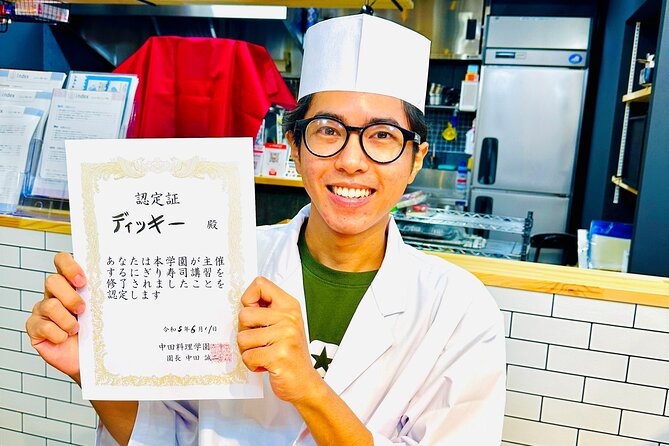
The rolled omelet, called dashi-maki tamago, looks modest but requires more control than many people expect. It is made with dashi, giving the egg a soft texture and a savory taste.
You work through the rolling process step by step. The pan must be managed carefully, and the egg has to be folded before it sets too firmly. The technique is approachable, but it is not automatic. A first attempt may look less tidy than the chef’s, which is part of the appeal.
The recipe is described as Michelin-style, but you should read that as a polished restaurant-inspired method rather than a promise of professional certification or a formal fine-dining lesson. The point is to show you how a familiar dish can be improved through timing, seasoning, and texture.
This is one of the strongest take-home skills from the class. Sushi can be hard to reproduce if you lack good fish or the right rice. A rolled omelet is much easier to practice in your own kitchen.
Miso soup and the seasonal side dish
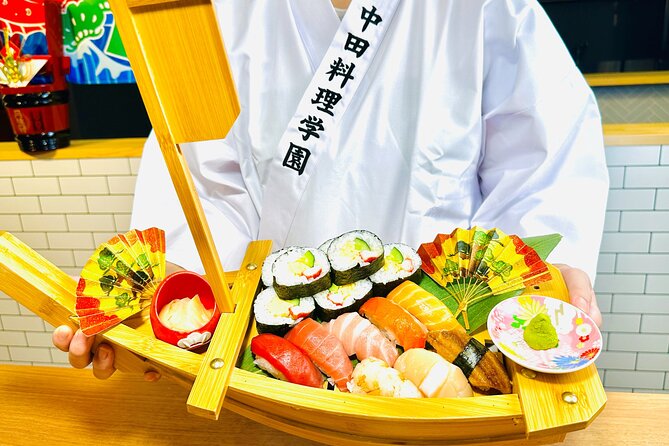
The menu also includes miso soup and a seasonal side dish. These courses round out the meal and give you more practice with Japanese seasoning and preparation.
The seasonal side dish changes with available ingredients. That is good for freshness, though it means the exact recipe may not be known far in advance. You get a better sense of how Japanese cooking follows the time of year, but you should not book expecting a specific side dish unless the school confirms it.
Miso soup is another simple dish where the dashi matters. By making the broth first, you see how the soup develops from a proper base rather than from a packet or instant powder. The class covers practical cooking rather than complicated restaurant plating, which suits people who want usable ideas for home.
By the time you sit down, you have made a varied Japanese meal: seafood, soup, stew, egg, and a vegetable or seasonal accompaniment. The range is one of the reasons the class feels like more than a single-skill activity.
Japanese knives, photos, and the final meal
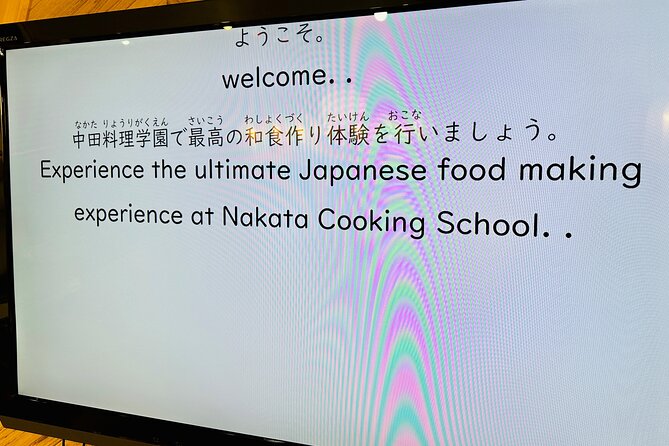
You use premium Japanese kitchen knives during the class. There is instruction in knife handling, and the knives are available for optional purchase afterward. If you are serious about cooking, this can be a useful chance to handle Japanese blades before spending money on one.
The knife purchase is not required, and the activity price does not depend on buying anything. Participants receive access to special purchase options, but you should treat that as an extra rather than part of the core experience.
A Knife Museum at the school is scheduled to open in July 2025, with a 10 percent discount for class participants. If that museum is open on your visit, it may add interest for anyone curious about Japanese blade-making and kitchen tools. Check the opening status before planning around it.
Photos are taken during the class, so you can concentrate on cooking instead of constantly reaching for your phone. The photos are sent to you at the end, with some participants receiving them by AirDrop. You also receive a Japanese certificate of completion with your name.
The class ends with you eating the dishes you prepared. One aperitif is included, either Kanazawa plum wine or local sake. Additional sake, beer, and soft drinks are available for purchase, but tips are not required.
Is $99.10 a fair price?
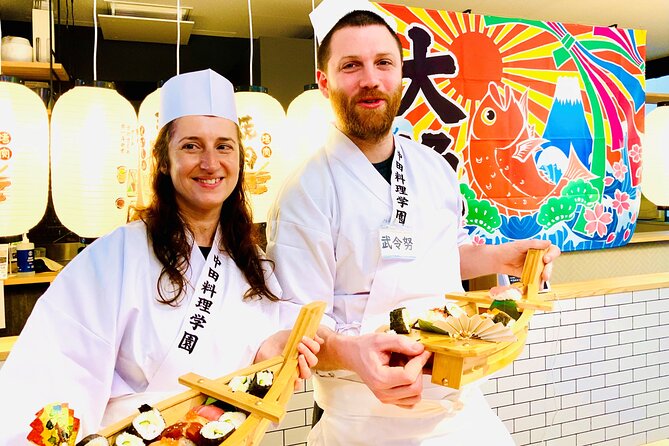
At $99.10 per person, this is not the cheapest cooking lesson in Japan. The value comes from the amount packed into the two-and-a-half-hour session.
You get instruction for five types of Japanese food, premium ingredients, the use of Japanese knives, a chef-style uniform, a full meal, an aperitif, live translation, photos, a recipe email, and a certificate. The small group also matters. You are paying for direct participation and personal help, not only for access to a kitchen.
The seafood from Omicho Market strengthens the value, especially in a city known for high-quality regional food. The class also includes jibuni, which gives you something specifically connected to Kanazawa rather than a menu that could be offered anywhere in Japan.
I would not choose this activity if your only goal is a cheap meal. You can eat for less elsewhere. I would choose it if you want a meal plus skills, cultural explanation, and a social experience close to the station.
The class also works well for a family or group that wants one shared activity. Five people can cook together without splitting up, and the eight-person limit should keep the instruction personal. For someone who already makes sushi at home, the lesson may still offer useful details about rice weight, fish balance, dashi, and Japanese presentation, but it will not be an advanced professional course.
Who should book this Kanazawa cooking class?
I recommend it most strongly for:
- First-time visitors who want more than a restaurant meal
- Home cooks interested in Japanese techniques
- Couples looking for a shared activity near the station
- Families with older children or teenagers
- People who value local dishes such as jibuni
- Visitors concerned about language barriers but comfortable with translation technology
- Anyone with a tight Kanazawa schedule who can spare 2.5 hours
You may want to skip it if you follow a vegan diet, avoid fish-based dashi, or need a menu free from seafood. The school asks about other restrictions at booking, but cannot make same-day changes.
You should also enjoy active participation. This is not a show where you sit back and watch a chef prepare everything. You will handle ingredients, use knives, shape sushi, cook eggs, and help produce the meal.
The tone is friendly and informal. If you prefer a quiet, formal culinary lesson, the jokes and translation screen may feel distracting. If you like a relaxed class with plenty of personality, they are likely to add to the experience.
Booking and cancellation details
The experience is available with a mobile ticket, and booking confirmation is provided at the time of reservation. The meeting point is Nakata Cooking School and Knife Shop, at Konohanamachi 4-13, second floor, Kanazawa, Ishikawa 920-0852.
The activity requires a minimum number of participants. If that minimum is not met and the school cancels, you are offered another date or experience, or a full refund.
You can cancel for a full refund up to 24 hours before the local start time. Cancellations or requested changes within 24 hours are not accepted, and the amount paid is not refunded.
Should you book it?
Book this class if you want to understand Japanese food by making it yourself. The combination of fresh Omicho Market seafood, local jibuni, dashi practice, a small group, and Seiji Nakata’s lively teaching gives the experience real substance.
The strongest reasons to go are the practical recipes and the sense of place. You learn dishes you can try again at home, while the Kanazawa specialty keeps the class tied to the city. The translation system makes the lesson accessible, even though it can bring a few comic moments.
At $99.10, the price is fair for a full meal, instruction, ingredients, photos, and extras. It is not the right pick for vegan diners or anyone wanting a purely observational tour. For most other visitors, especially families, couples, and curious cooks, this is a smart way to spend a half-day near Kanazawa Station.
FAQ
Where does the cooking class take place?
The class takes place at Nakata Cooking School and Knife Shop in Konohanamachi, Kanazawa. It is about three minutes from Kanazawa Station and ends back at the meeting point.
How long does the experience last?
The cooking class lasts approximately two hours and 30 minutes.
How many people can join?
The class has a maximum of eight participants.
Which dishes will I prepare?
You will prepare nigiri sushi, Kanazawa-style jibuni, dashi-maki tamago, dashi broth, a seasonal side dish, and miso soup.
Is the class taught in English?
Real-time AI translation provides voice and written translation in English on a large screen. The instructor also uses some English.
Can vegans join the class?
No. Vegan diets and guests avoiding fish-based dashi cannot be accommodated.
What is included in the price?
The price includes the hands-on class, ingredients, use of premium Japanese knives, a chef-style apron, tasting of the dishes, one aperitif, live AI translation, class photos, a Japanese certificate with your name, and an English recipe sent by email the day before.
Can I cancel for a full refund?
Yes. You can cancel at least 24 hours before the local start time for a full refund. Cancellations and changes within 24 hours are not accepted and are not refunded.
More Historical Tours in Kanazawa
- World Heritage Shirakawa-go and Experience Tours from Kanazawa
★ 5.0 · 4,049 reviews - [One-day bus tour departing from Kanazawa Station] Shirakawa-go and Gokayama – Two World Heritage Villages Enjoyable Bus Tour
★ 5.0 · 253 reviews - World Heritage Shirakawa-go Perfect Guided Tour from Kanazawa
★ 5.0 · 220 reviews - [Day trip bus tour from Kanazawa Station] Weekend only! World Heritage Shirakawago Day Bus Tour
★ 5.0 · 46 reviews
Just added around Kanazawa
- Shirakawago & Kanazawa from Kanazawa★ 5.0 · 51 reviews
- Takayama and Shirakawago/Photoshoot by professional photographer★ 5.0 · 67 reviews
- Taste of Kanazawa (Food tasting in Omicho Market & Higashi Chaya)★ 5.0 · 58 reviews
- Kanazawa private 1 day/Photoshoot by professional photographer★ 5.0 · 33 reviews
- Photoshoot session by professional photographer in Kanazawa★ 5.0 · 42 reviews
- Private Tour Kanazawa, Shirakawago, Hida Furukawa,Takayama★ 5.0 · 108 reviews
- Kanazawa private half day/Photoshoot by professional photographer★ 5.0 · 38 reviews
- Private Tour of Shirakawago from Kanazawa (Half Day)★ 5.0 · 24 reviews
Kanazawa Tours, compared.
World Heritage Shirakawa-go and Experience Tours from Kanazawa
Read our review →


![[One-day bus tour departing from Kanazawa Station] Shirakawa-go and Gokayama – Two World Heritage Villages Enjoyable Bus Tour](https://media3.thejapanesetraveller.com/wp-content/uploads/one-day-bus-tour-departing-from-kanazawa-station-shirakawa-go-and-gokayama-two-world-heritage-villages-enjoyable-bus-tour-400x267.jpg)
[One-day bus tour departing from Kanazawa Station] Shirakawa-go and Gokayama – Two World Heritage Villages Enjoyable Bus Tour
Read our review →
World Heritage Shirakawa-go Perfect Guided Tour from Kanazawa
Read our review →
Browse the lists this tour appears in