
Reviewed · TOKYO TOURS
Ramen & Gyoza Cooking Class in Tokyo with Local Supermarket Visit
The best part of this Tokyo cooking class is the setting: you enter YUCa’s home kitchen in Arakawa and learn everyday Japanese food rather than restaurant theater. The morning covers ramen and gyoza, with a short introduction to Japanese home cooking, plenty of cultural explanation, and lunch made by the group.
I like the small maximum group of seven, which keeps the class friendly, and I like that the recipes are practical enough to repeat at home. The main consideration is that the class can feel more demonstration-based than fully hands-on when several people share one kitchen. Also, the supermarket visit is optional, so confirm that it will take place if it is important to you.
Key points to know before booking
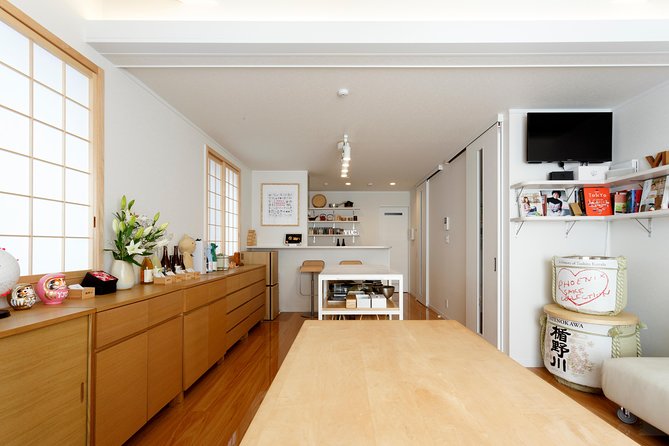
- Cook in YUCa’s own Tokyo home kitchen: This gives the class a personal feel and a look at an ordinary Japanese home setting.
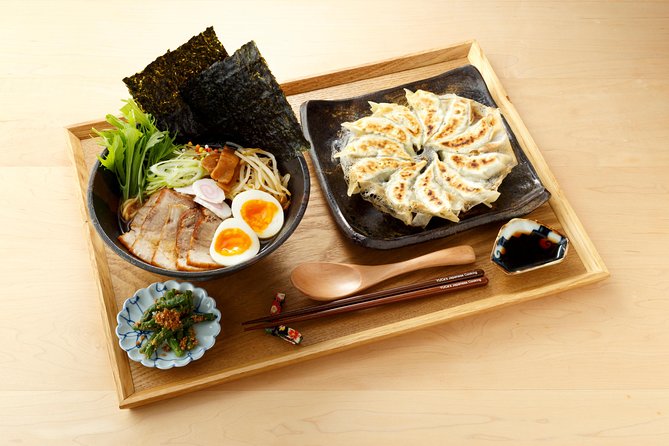
- Make two familiar Japanese dishes: You prepare ramen and minced pork gyoza with different vegetables and meat.
- A compact 2.5-hour morning: The class runs from the 10:00 am meeting time until about 12:30 pm, with an optional supermarket visit until 1:00 pm.
- Maximum of seven participants: The group size suits couples, families, solo bookers, and people who enjoy meeting others.
- Useful for beginners and families: Children, teenagers, grandparents, and first-time cooks can take part, according to the experience details.
- The supermarket tour is optional: It can add useful context, but it has not always been included in every session, so ask ahead.
A Tokyo food class with a home address
This is not a lesson in a polished restaurant kitchen. You meet at YUCa’s Japanese Cooking at 2-chome-34-8 Nishiogu in Arakawa City, a part of Tokyo outside the usual sightseeing circuit. The experience ends at the same address.
That location matters. Tokyo is often presented through neon districts, temples, department stores, and famous food streets. Here, you see another side of the city: a residential neighborhood and a real home kitchen. The class gives you a reason to go beyond central Tokyo without turning the outing into a long day trip.
The kitchen is described as cute, comfortable, and well equipped for the session. Since the group can include up to seven people, you should expect a social class rather than a private lesson. That can be a plus if you enjoy meeting people from different countries. It also means not everyone will spend the same amount of time at the counter.
YUCa is the named host and teacher. Her role is central to the experience. She explains the food, guides the preparation, shares cultural points, and works to involve everyone. Her English is described as easy to follow, which is useful when you are learning unfamiliar ingredients and techniques.
More cooking classes in Tokyo:
- Tokyo: Easy Ramen Cooking Experience in Kabukicho, Shinjuku
★ 4.6 · 321 reviews - Ramen and Sushi Cooking Class with Sake Pairing Set in Tokyo
★ 5.0 · 291 reviews - Tokyo: Wagyu and 7 Japanese Dishes Cooking Class
★ 4.9 · 273 reviews
The 10:00 am welcome and home-cooking talk
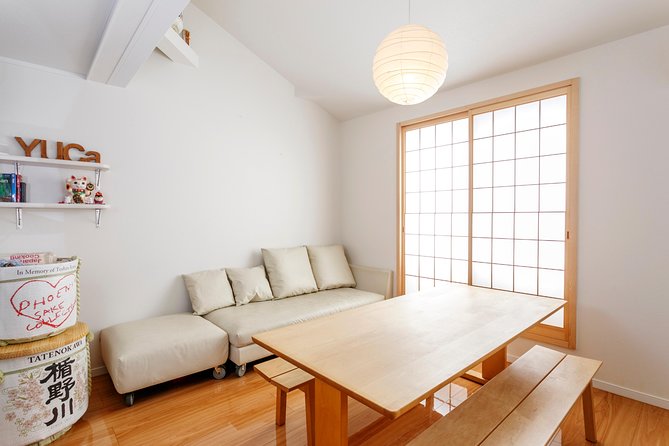
The morning begins at 10:00 am. From about 10:15 to 10:30, YUCa gives a short talk on Japanese home cooking and lifestyle.
This introduction helps place ramen and gyoza in a wider setting. You are not just collecting two recipes. You get some sense of how Japanese food fits into daily life, how home cooking differs from restaurant dishes, and why simple ingredients can create a satisfying meal.
The talk is brief, which is the right choice for a two-and-a-half-hour class. Most of the morning is reserved for cooking and eating. If you prefer a long cultural lecture, this will feel light. If you want to get to the food quickly, the pace works well.
One personal touch mentioned in the class experience is the chance to have your name written in Japanese characters based on its pronunciation. That is a small detail, but it fits the warm, informal character of a home-based class.
Making ramen without restaurant fuss
The main cooking period runs from 10:30 am to 12:30 pm. You learn to prepare ramen, the noodle soup that is one of Japan’s best-known dishes.
The class uses different vegetables and meat, and you learn how the ingredients come together in the bowl. You should expect a practical introduction rather than a professional ramen apprenticeship. This is about making a good meal at home, not reproducing the elaborate broth systems of a specialist ramen shop.
That distinction is important. Some participants have found parts of the ramen preparation less hands-on than expected, especially when the work involves adding measured powders or liquids rather than building every element from scratch. If you want to spend the whole class chopping, simmering, and making noodles by hand, this may not meet your ideal.
Still, there is value in learning the method YUCa actually teaches. The steps are approachable, and the final meal is designed to be recreated in your own kitchen. Several people have specifically liked that they could take the recipe home and make it again after returning from Japan.
The class also shows you how to assemble the ramen bowl. That final stage is more than decoration. It helps you understand how the noodles, soup, vegetables, meat, and toppings work together as one dish.
Folding gyoza while the ramen cooks
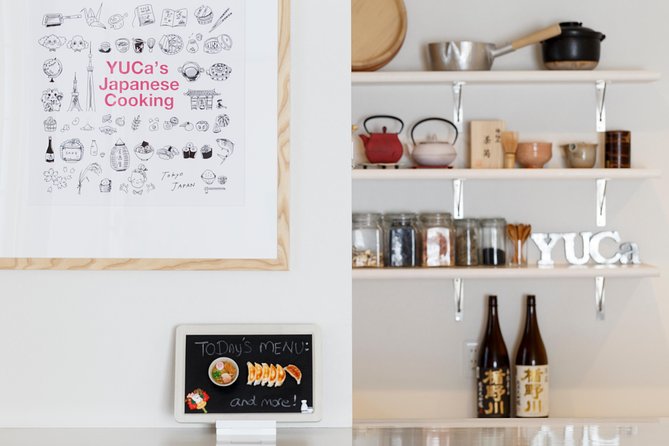
While the ramen ingredients cook, the class turns to gyoza. These are minced pork dumplings folded into wrappers and cooked as part of the meal.
This is often the most naturally interactive section. Participants shape the dumplings by hand, and families with children have found the folding process especially enjoyable. It gives everyone a task, even when there is only one main kitchen work area.
The recipe uses meat and vegetables, and YUCa explains the steps clearly enough for beginners to follow. You do not need to arrive with cooking experience. The class is also presented as suitable for people with dietary restrictions, provided you share those needs when booking.
The gyoza activity balances the ramen section well. Ramen can involve waiting while ingredients cook. Dumpling making keeps your hands busy and gives the group something to do together. It also creates the sort of simple kitchen rhythm that is hard to get from a standard food tour.
Do not expect every person to prepare every ingredient independently. With one kitchen and a group of up to seven, YUCa may demonstrate some steps while participants take turns or work on assigned parts. That is the tradeoff for having a host-led class in a home rather than a large cooking school.
More hands-on workshops in Tokyo:
- Sushi Making Tokyo Roll and Authentic Japanese Sushi Class
★ 5.0 · 3,971 reviews - Tokyo: Roll and Authentic Sushi Making Class in Asakusa
★ 4.9 · 1,957 reviews - Tokyo Shinjuku Chopsticks Making Class
★ 5.0 · 1,763 reviews - Tokyo: Sushi Making Class in a Happi Coat near a Famous Spot
★ 4.9 · 1,377 reviews
Eating the meal you made
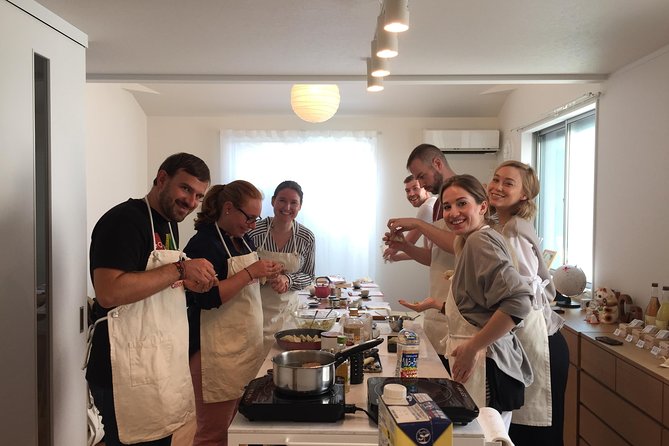
The reward comes near the end of the cooking session, when you assemble the ramen and eat it with the gyoza. The food is described as delicious, and the portions are generally satisfying, although one person felt they could have been larger.
I see the meal as part of the lesson, not just lunch. You can taste the result immediately, notice how the ingredients work together, and ask questions while the process is still fresh. That makes it easier to remember the recipe once you are home.
The menu also works well for mixed groups. A couple can share the morning with other participants. Parents can bring children and teenagers. Older family members can take part without needing advanced cooking skills. Solo participants can join a small social group rather than simply watching a guide talk about food.
The class has received strong praise for its welcoming atmosphere. YUCa is described as warm, patient, outgoing, and encouraging. That matters more than fancy equipment in a cooking lesson. A good teacher keeps the pace moving while making sure beginners do not feel awkward.
The optional supermarket visit until 1:00 pm
After the cooking and tasting, you may be able to join a local supermarket visit from about 12:30 to 1:00 pm. This is a useful add-on because Japanese supermarkets can be confusing at first. Package labels, unfamiliar vegetables, sauces, prepared foods, and regional products are easier to understand with someone who can explain them.
The setting also gives you a glimpse of neighborhood Tokyo. You are not browsing a shop aimed at international sightseers. You may see the kinds of ingredients used in ordinary home cooking and ask which products are worth buying.
However, this is the one part of the experience you should clarify before booking. It is listed as optional, and some participants have left without a supermarket visit. In one case, the host explained that a participant needed to return to a hotel because of a sick companion. Other people also understood the supermarket section to be absent or no longer routinely included.
So, if the supermarket is your main reason for choosing this class, contact YUCa in advance and confirm the plan for your date. The cooking class remains the main activity, and you should not treat the shop visit as guaranteed unless the provider confirms it.
What $122.70 represents
At $122.70 per person, this is not a budget lunch. You are paying for a hosted lesson, ingredients, access to a private home setting, cultural explanation, and the meal you prepare.
The value is strongest if you want more than a restaurant bowl of ramen. A restaurant can feed you faster and usually for less. It cannot give you the same look at home cooking, personal instruction, and a recipe you can repeat.
The price also makes more sense for a family or small group that wants a shared activity. You are not simply buying food. You are buying two hours of doing something together, with lunch included at the end.
For serious cooks, the value depends on expectations. You may find the instruction too basic or too demonstration-led if you want advanced broth making, handmade noodles, or detailed knife training. For beginners and food-focused visitors, the approachable recipes are likely to be the point.
The experience requires at least two people per booking. That makes it less suited to a last-minute solo plan unless you are able to join an existing booking. The maximum is seven participants, so it remains much smaller than a large group food workshop.
Getting there and planning your morning
The meeting time is 10:00 am at YUCa’s Japanese Cooking in Nishiogu, Arakawa City. The address is near public transportation, but the supplied details do not specify a particular station or walking route. Use the exact address in your map app and allow extra time for Tokyo navigation.
Because the class starts in a private home, arriving at the correct address matters. Check your confirmation carefully before leaving. The activity returns to the meeting point, so you can plan another Tokyo activity after 1:00 pm if you join the supermarket visit.
The total scheduled time is about two and a half hours, or three hours if you stay for the optional supermarket tour. That makes it easy to fit into a morning without sacrificing an entire day of sightseeing.
Tell the provider about dietary requirements when you book. A vegetarian option is available, but it must be requested in advance. The information does not promise every possible dietary adaptation, so be specific about what you can and cannot eat.
Mobile tickets are accepted. Confirmation is provided at booking. Free cancellation is available up to 24 hours before the start time, while cancellations or changes made inside that window are not refunded or accepted. The class also needs a minimum number of participants, so a cancellation for that reason may result in another date or a full refund.
Who will enjoy this class most
I would recommend this experience to you if you want food instruction with a personal connection to Tokyo. It suits:
- Families looking for an activity that works across several ages
- Couples who want a shared morning away from the main sightseeing areas
- First-time cooks who prefer clear, simple recipes
- Solo participants who enjoy small-group social settings
- People who want to recreate Japanese dishes at home
- Visitors interested in ordinary neighborhood life, not only major attractions
You may want a different class if you need intensive individual work. The one-kitchen format means that some steps are shown rather than completed separately by every participant.
You should also choose another option if the supermarket visit is essential and cannot be confirmed. The market stop can be useful, but it is not the core of the experience and is clearly optional.
Final decision: should you book it?
Yes, if you want a friendly introduction to Japanese home cooking and are happy with a shared, host-led format. YUCa’s warmth, clear English, cultural explanations, and home setting are the strongest reasons to book. The ramen and gyoza recipes are approachable, and the meal gives the class a satisfying finish.
Book with realistic expectations. This is not a professional culinary course, and the hands-on time may be uneven when the group is full. Confirm the optional supermarket tour, state dietary needs early, and allow time to reach Nishiogu.
For families, couples, and food-minded visitors, the class offers a welcome change from eating one more meal at a restaurant. At $122.70, it is worth the cost when the shared experience and take-home cooking skills matter as much as the lunch.
FAQ
Where does the ramen and gyoza class take place?
The class takes place at YUCa’s Japanese Cooking, 2-chome-34-8 Nishiogu, Arakawa City, Tokyo 116-0011, Japan.
What time does the experience begin?
The meeting time is 10:00 am.
How long does the cooking class last?
The main class runs from about 10:30 am to 12:30 pm, following the meeting and home-cooking introduction. The full activity lasts about two and a half hours.
Is the supermarket visit included?
The supermarket visit is listed as optional and takes place from about 12:30 to 1:00 pm. Confirm with the provider if this part is important to you.
What dishes will I make?
You will learn to prepare ramen and minced pork gyoza using different vegetables and meat.
Is a vegetarian option available?
Yes. A vegetarian option is available, but you must advise the provider when booking.
Can I tell the provider about dietary requirements?
Yes. You should provide details of any specific dietary requirements at the time of booking.
How many people can join?
The experience has a maximum of seven participants. A minimum of two people is required per booking.
Does the activity end at the same place?
Yes. The activity ends back at the meeting point.
Can I cancel for a full refund?
Yes, if you cancel at least 24 hours before the experience start time. Cancellations and changes made less than 24 hours before the start time are not refunded or accepted.
Just added around Tokyo
- Private Arrival Transfer : Narita International Airport to Central Tokyo City★ 4.5 · 12 reviews
- Narita Airport(NRT): Private Transfer to Tokyo/Yokohama 1-9pax★ 5.0 · 47 reviews
- Private Transfer from Narita Airport to Yokohama Port and City★ 4.5 · 17 reviews
- [Narita Airport Terminals 1, 2] 40-60km Sawara Itako Historic Bike Tour★ 5.0 · 13 reviews
- 3 Day Japan Highlights Tour: Tokyo, Mt.Fuji, Nara, Kyoto, Osaka★ 5.0 · 22 reviews
- Small Town in the Big City: Tasting Tokyo’s Kichijoji★ 5.0 · 195 reviews
- Small Town in the Big City: Tasting Tokyo’s Kichijoji★ 5.0 · 16 reviews
- The 10 Tastings of Tokyo With Locals: Private Street Food Tour★ 5.0 · 48 reviews
Tokyo Tours, compared.

Mt Fuji and Hakone 1-Day Bus Tour Return by Bullet Train
Read our review →

teamLab Planets TOKYO Digital Art Museum Entry Ticket
Read our review →
Mt Fuji & Hakone Cruise, Drum Show Bullet Train 1 Day from Tokyo
Read our review →
Sumo Show Experience with Chicken Hot Pot and a Photo
Read our review →
Shinjuku Food Tour (13 Dishes at 4 Local Eateries)
Read our review →
Tokyo Mt Fuji 5th St & Hakone Cruise Bus Tour w/Bullet Train
Read our review →
Flagship 2-Hours Official Street Go-Kart Tour – Tokyo Bay Shop
Read our review →Browse the lists this tour appears in