
Reviewed · TOKYO TOURS
Sushi Making Tokyo Roll and Authentic Japanese Sushi Class
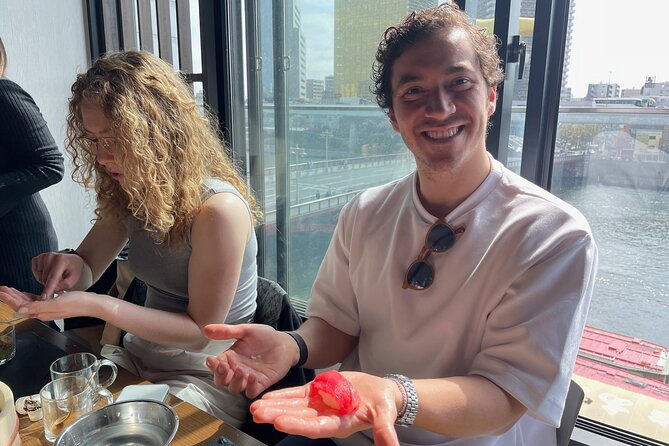
The best part of this Tokyo experience is that you do not simply watch a chef work. You handle the rice, fillings, and fish yourself, then sit down to eat the results. The class takes place near Senso-ji Temple in Asakusa, so you can pair a practical food lesson with one of Tokyo’s most traditional neighborhoods.
I like the hands-on teaching, especially for beginners and families. I also like the generous meal: you make both sushi rolls and nigiri, not just one small sample. The main consideration is that this is a friendly, tourist-focused introduction rather than a formal apprenticeship in traditional sushi craft.
Key points at a glance
- Make both maki and nigiri: Learn rolled sushi and hand-formed sushi in the same class.
- Eat a full lunch: The included ingredients provide enough food to leave you satisfied.
- English-speaking instruction: Clear explanations, demonstrations, and table-side help keep the class easy to follow.
- Near Senso-ji Temple: The Kaminarimon meeting point makes it simple to combine the class with Asakusa sightseeing.
- Good for families: Children as young as six have taken part, with instructors adjusting the pace when needed.
- Plan to arrive early: The cooking venue can be a little tricky to find, so 15 minutes early is sensible.
Making sushi beside Senso-ji Temple
This class begins at 2-chōme-17-9 Kaminarimon, in Taito City’s Asakusa district. That address puts you just steps from Senso-ji Temple, the red-gated, incense-scented center of old Tokyo. It is a useful location for your itinerary because you can visit the temple, stroll Nakamise shopping street, and then turn your attention to lunch.
The meeting point is near public transportation, but the cooking venue may not be instantly obvious. I would not cut it close. Give yourself about 15 minutes to find the entrance, particularly if you are arriving with children or navigating Tokyo for the first time.
The class lasts about 1 hour and 40 minutes. That is long enough to learn several techniques and eat a proper meal, but short enough to fit neatly into a morning or afternoon in Asakusa. There is no hotel pickup or drop-off, so you make your own way to the starting point and finish there as well.
More Sushi Making Classes in Tokyo
- Tokyo: Roll and Authentic Sushi Making Class in Asakusa
★ 4.9 · 1,957 reviews - Tokyo: Sushi Making Class in a Happi Coat near a Famous Spot
★ 4.9 · 1,377 reviews - Tokyo Sushi Making Class in Tsukiji with Professional Chef
★ 5.0 · 1,177 reviews
A friendly introduction to sushi culture
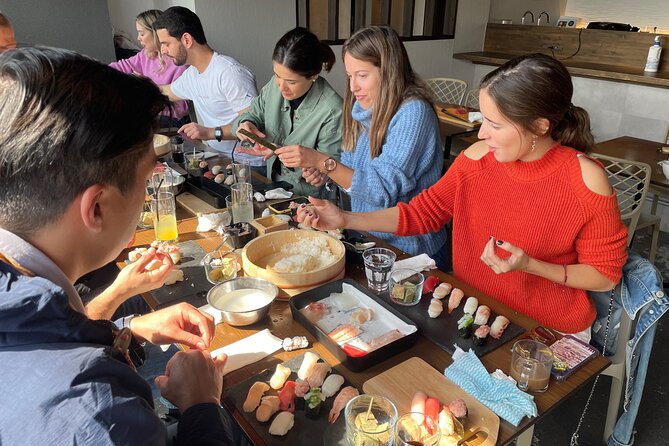
The class does not rush straight to the cutting board. Instructors first explain some of the history and customs behind sushi, along with the role different types play in Japanese food culture. You may also pick up useful Japanese food words for the rest of your trip.
The cultural material is presented in an approachable way. One useful feature is that instructors have used visual demonstrations, presentations, and step-by-step examples rather than relying on spoken instructions alone. That matters in a group class, especially when English is not your first language.
Past instructors have included Moe, Kazu, Ken, Ellie, Arisa, Kyuto, Kaori, and Jun. The exact teaching team may vary, but the consistent pattern is clear: the class depends on energetic instructors who explain the process, keep the mood light, and offer help at the table.
You should think of this as sushi 101 with a meal attached. It gives you enough understanding to try basic sushi preparation at home, but it does not promise the precision, knife work, or years of training associated with a professional sushi counter.
Rolling maki without making a mess
The first practical challenge is usually the roll. You learn how to arrange rice and fillings, control the amount, and form the sushi into a neat cylinder. The instructors demonstrate each stage before you try it, so you are not left guessing why your roll is loose, lopsided, or too large to eat comfortably.
This is where personal guidance helps. You can follow the main demonstration, then ask for assistance as you work. The class is designed for people with no cooking experience, and the clear pace makes it manageable even if you have never prepared Japanese food before.
The roll-making section is also the most social part of the activity. You work alongside classmates, compare your results, and share a few laughs when the first roll does not look like the one in the demonstration. That relaxed tone suits families, couples, and small groups looking for something more active than another restaurant meal.
Do not expect every piece to look perfect. That is part of the appeal. The point is to learn how the process works and to make food you can enjoy, not to produce a platter worthy of a specialist sushi shop.
Shaping nigiri by hand
The class also covers nigiri, the familiar sushi form made by placing fish or another topping over a small mound of seasoned rice. This gives you a useful contrast with maki. Rolling sushi is mainly about controlling the outer shape, while nigiri requires a lighter touch and a feel for the amount of rice.
The instructor guides you through the process in small steps. You learn how to handle the rice and place the topping, then make your own pieces for the meal. For many people, this is the moment when sushi feels less mysterious. The finished form may look simple, but the balance of rice, topping, and hand pressure takes practice.
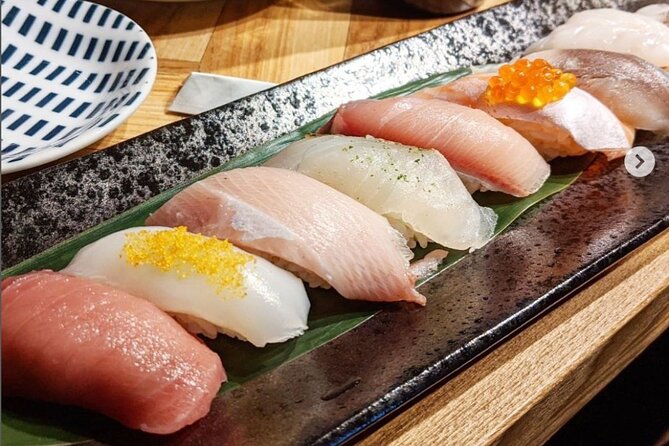
The food quality receives frequent praise, with particular attention to fresh fish and good rice. The ingredients are included in the class price, and the portions are substantial enough to function as lunch. That is a real benefit in Tokyo, where a hands-on activity can otherwise leave you searching for another meal immediately afterward.
The class does not give you a full professional sushi kitchen or a long list of advanced cuts. Still, it teaches a practical foundation and helps you understand why sushi preparation calls for care rather than speed.
More sushi classes in Tokyo:
- Tsukiji Fish Market Guided Tour and Sushi Making with Pro Chef
★ 5.0 · 775 reviews - Tokyo: Tsukiji Fish Market Sushi Making Class with Pro Chef
★ 4.9 · 506 reviews - Tokyo: Sushi Making Class
★ 4.9 · 390 reviews - Tokyo Tsukiji Fish Market Tour and Sushi Making Lesson
★ 5.0 · 390 reviews
Eating what you prepare
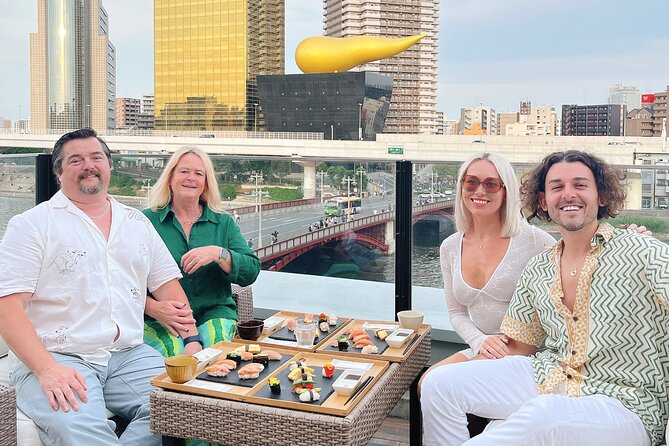
After the instruction and preparation, you sit down to eat your sushi. This simple ending gives the class its value. You are not making decorative samples that disappear into a kitchen. You see the finished pieces, taste them, and get a direct sense of how your technique affected the result.
For children, this can be especially rewarding. Kids who might hesitate at an unfamiliar restaurant dish often take more interest when they have helped prepare it. The activity has worked well for families with children around six, eight, ten, and thirteen, as well as for adults traveling together.
The meal is also useful for picky eaters because the act of making the food creates a little curiosity. Still, the class is centered on sushi, so you should book it only if the group is broadly comfortable with the ingredients provided.
Some participants add a sake flight pairing, and it can be a pleasant option for adults celebrating a honeymoon or special occasion. The supplied details do not establish that pairing as part of the standard package, so check the available booking choices if that matters to you.
Why the Asakusa setting adds value
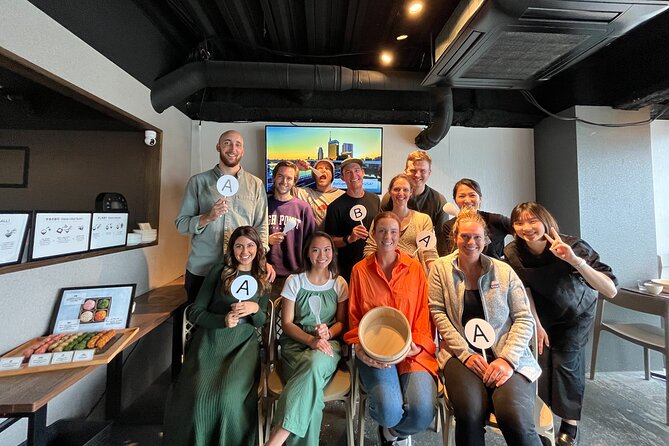
Asakusa is one of the better areas in Tokyo for combining a food activity with sightseeing. Senso-ji, Kaminarimon Gate, and Nakamise street are all close to the meeting point. The neighborhood gives the class a stronger sense of place than a cooking school in an anonymous commercial building.
You can schedule the class before or after a visit to the temple. A morning session followed by sightseeing works well if you want lunch after the lesson. An afternoon class can be a pleasant change of pace after exploring the shrines and shops.
The location is not a guided tour of Asakusa, so do not expect a walking commentary through the district. The cultural focus is sushi and Japanese food, with the neighborhood serving as a convenient setting. That distinction helps you plan your day accurately.
A good fit for families and first-time cooks
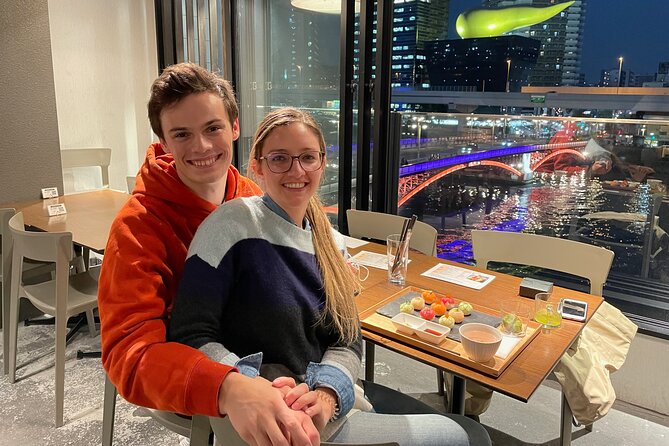
This is one of the easier Tokyo activities to recommend to a mixed-age group. The instructions are broken into manageable stages, the English is clear, and the class has enough activity to hold the attention of children and teenagers.
Parents should still remember that sushi preparation involves food handling and close attention to instructions. The class is family-friendly, but younger children may need help from an adult during the rice and rolling portions.
Couples can also make good use of the format. You have a shared task, a meal at the end, and photos to remember the experience. It offers more conversation than sitting across from each other in a restaurant, without requiring a full day or serious cooking ability.
Solo participants should fit in well, too. The class is social by design, and the shared table setup gives you natural contact with other people. The maximum group size is 30, so this is not guaranteed to feel like a private lesson. Several instructors may be present, but the experience remains a group activity.
How authentic is the cooking?
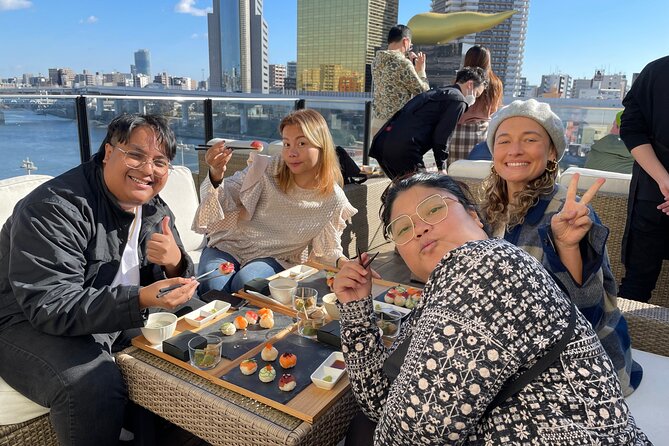
The word authentic needs a little care here. You will learn real sushi terms, prepare actual maki and nigiri, work with Japanese ingredients, and hear about sushi culture from English-speaking instructors. That makes the experience a sound introduction to Japanese food.
At the same time, the style is clearly built for international visitors. The teaching is simplified, the English is central, and the atmosphere is upbeat and accessible. One useful way to view it is as a bridge between eating sushi in Tokyo and understanding how the food is assembled.
If you want a serious lesson in traditional sushi technique, this class may feel too basic. If you want to understand the basics, enjoy a generous lunch, and take part in a distinctly Japanese activity, the lighter approach is an advantage.
The class also avoids a common problem with food demonstrations: watching someone else do all the work. Here, you are expected to prepare the food yourself, with help when you need it.
Is $59.69 a fair price?
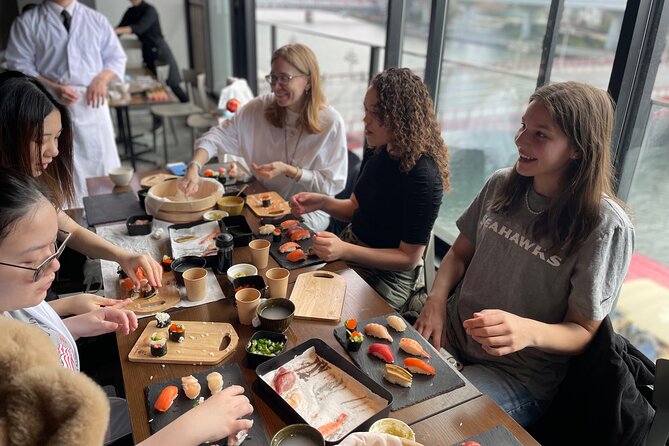
At $59.69 per person, the price is reasonable if you value both the meal and the activity. You receive an English-speaking instructor, all cooking ingredients, and enough sushi to serve as lunch. You are also paying for instruction, cultural context, the venue, and the convenience of a central Asakusa location.
It is not the cheapest way to eat sushi in Tokyo. A casual restaurant meal can cost less, especially if you are interested only in tasting rather than learning. The class becomes better value when you want a memorable activity that gives you a skill to take home.
The 1-hour-40-minute duration keeps the commitment modest. You are not giving up an entire day of sightseeing, and you avoid the cost of booking a separate lunch immediately afterward.
For families, the value depends on how much everyone will participate. If adults and children all make sushi and eat the meal, the fee covers a shared experience as well as food. If one member of the group dislikes sushi or will only watch, the price feels less attractive.
What to know before you book
The experience includes the instructor and ingredients for the class and meal. It does not include hotel transportation, so plan your route to Kaminarimon in advance.
A mobile ticket is provided, and confirmation is received at booking. Service animals are allowed, and the venue is near public transportation. The maximum group size is 30 people, so ask yourself how much personal attention your group needs. The class offers hands-on help, but it is not a one-on-one chef lesson.
Free cancellation is available if you cancel at least 24 hours before the start time. Cancellations or changes made inside that window are not accepted for a refund, and the cut-off uses Tokyo local time.
I would place this activity on a day when you are already visiting Asakusa. That saves travel time and lets you enjoy the temple district before or after class. Arriving 15 minutes early is wise because finding the exact venue can take longer than expected.
Should you book Sushi Making Tokyo?
Book it if you want to do more than eat sushi, especially if your group includes children, first-time cooks, or anyone who enjoys a shared activity. The combination of clear English instruction, sushi history, hands-on preparation, and a filling meal gives you a lot for a compact Tokyo experience.
I would also choose it for a honeymoon or family trip when you want photos and a story to bring home. The instructors’ upbeat style, including the memorable hoi hoi hoi spirit used by some teachers, keeps the class playful without making the food lesson meaningless.
Skip it if you are seeking advanced knife skills, a quiet private lesson, or a deeply traditional professional setting. For most visitors, though, the class is an easy and useful addition to an Asakusa itinerary. At 99 percent recommended with a five-star rating from 3,971 reviews, it has a strong record, and the practical test is simple: you make lunch, eat it, and leave knowing more about sushi than when you arrived.
FAQ
How long does the sushi-making class last?
The experience lasts approximately 1 hour and 40 minutes.
Where does the class start and finish?
It starts at 2-chōme-17-9 Kaminarimon, Taito City, Tokyo 111-0034, Japan, near Senso-ji Temple. The activity ends back at the same meeting point.
Is the class taught in English?
Yes. An English-speaking instructor leads the class and explains the sushi-making steps and culinary background.
Do I need cooking experience?
No. The class is designed for beginners and provides step-by-step, hands-on guidance.
Is food included in the price?
Yes. The ingredients used in the cooking class and the sushi meal afterward are included.
Can I cancel for a full refund?
Yes, if you cancel at least 24 hours before the experience start time. Cancellations or changes made less than 24 hours before the start time are not accepted for a refund.
More Workshops in Tokyo
- Tokyo Shinjuku Chopsticks Making Class
★ 5.0 · 1,763 reviews - Chopstick Making Workshop in Ginza
★ 4.8 · 1,366 reviews - Ramen & Gyoza Cooking Class in Tokyo with Local Supermarket Visit
★ 5.0 · 823 reviews - Matcha Making Class in Tokyo with Authentic Japanese Sweets Set
★ 5.0 · 744 reviews
Just added around Tokyo
- Private Transfer from Narita Airport to Yokohama Port and City★ 4.5 · 17 reviews
- Private Arrival Transfer : Narita International Airport to Central Tokyo City★ 4.5 · 12 reviews
- Narita Airport(NRT): Private Transfer to Tokyo/Yokohama 1-9pax★ 5.0 · 47 reviews
- [Narita Airport Terminals 1, 2] 40-60km Sawara Itako Historic Bike Tour★ 5.0 · 13 reviews
- 3 Day Japan Highlights Tour: Tokyo, Mt.Fuji, Nara, Kyoto, Osaka★ 5.0 · 22 reviews
- Small Town in the Big City: Tasting Tokyo’s Kichijoji★ 5.0 · 195 reviews
- Small Town in the Big City: Tasting Tokyo’s Kichijoji★ 5.0 · 16 reviews
- The 10 Tastings of Tokyo With Locals: Private Street Food Tour★ 5.0 · 48 reviews
Tokyo Tours, compared.

Mt Fuji and Hakone 1-Day Bus Tour Return by Bullet Train
Read our review →

teamLab Planets TOKYO Digital Art Museum Entry Ticket
Read our review →
Mt Fuji & Hakone Cruise, Drum Show Bullet Train 1 Day from Tokyo
Read our review →
Sumo Show Experience with Chicken Hot Pot and a Photo
Read our review →
Shinjuku Food Tour (13 Dishes at 4 Local Eateries)
Read our review →
Tokyo Mt Fuji 5th St & Hakone Cruise Bus Tour w/Bullet Train
Read our review →
Flagship 2-Hours Official Street Go-Kart Tour – Tokyo Bay Shop
Read our review →Browse the lists this tour appears in