
Reviewed · TOKYO TOURS
Tokyo: Wagyu and 7 Japanese Dishes Cooking Class
Wagyu is the headline here, but the real treat is learning how it fits into an everyday Japanese meal. In about three hours, you prepare a full spread that can include dashi miso soup, rolled omelette, cucumber salad, sesame potato salad, stuffed tofu, Wagyu sukiyaki, and dorayaki pancakes.
I like the small class size of eight. It gives you room to work without turning the kitchen into a crowded demonstration. I also like that the recipes are practical rather than restaurant tricks. You learn how to make dashi, handle Japanese seasonings, and find substitutes for ingredients at home. The main caution is that the studio sits in a quiet residential building and can be tricky to locate, so allow extra time to find it.
Key points to know before booking
- Wagyu comes as sukiyaki hotpot: The beef is tender, highly marbled, and prepared as part of a complete Japanese meal.
- Seven dishes cover the whole table: You make food from appetizer and soup through main course and dessert.
- English instruction is hands-on: Instructors demonstrate each step, then let you prepare the dishes yourself.
- The recipes are made for home kitchens: You get the recipes, cooking tips, and advice on ingredient substitutions.
- The class takes place in residential Shinjuku: The neighborhood feels local, but the beige building and right-hand entrance require careful directions.
- The $67 price includes the meal: Ingredients, utensils, apron, towel, welcome tea, recipes, instruction, and the food you prepare are included.
A full Japanese meal, not just a Wagyu lesson
Many Tokyo cooking classes focus on one famous food. Sushi, ramen, and tempura are popular choices, but they do not always show you how a Japanese household meal comes together.
This class takes a broader route. You prepare several small dishes that use different flavors, textures, and methods. The meal may include a light vegetable preparation, soup built from dashi, an egg dish, a potato or cucumber side, a filled tofu dish, the Wagyu course, and a sweet finish.
That variety is the biggest reason I would choose this class over a single-dish workshop. You get a useful introduction to the structure of Japanese cooking. Dashi provides the savory base, while miso, sesame, soy sauce, ginger, and seasonal produce add different layers without making the food feel heavy.
You also get a look at food that is closer to home cooking than spectacle. The dishes are traditional, but they are not presented as difficult culinary tests. One past menu included an omelette rolled by hand, accordion-cut cucumbers, sesame potato salad, tofu filled with ground chicken, ginger, and edamame, and dorayaki made with rice flour.
More cooking classes in Tokyo:
- Ramen & Gyoza Cooking Class in Tokyo with Local Supermarket Visit
★ 5.0 · 823 reviews - Tokyo: Easy Ramen Cooking Experience in Kabukicho, Shinjuku
★ 4.6 · 321 reviews - Ramen and Sushi Cooking Class with Sake Pairing Set in Tokyo
★ 5.0 · 291 reviews
What happens during the three-hour class
The scheduled experience lasts three hours, with roughly two and a half hours devoted to cooking and the remaining time used for settling in and eating. You begin with a welcome tea and an introduction to the instructors, ingredients, and menu.
The instructors demonstrate each dish before you work on it. This keeps the pace manageable, especially if you have never used Japanese ingredients or tools. You are not simply watching a chef cook while standing at the back of a room. You take part in preparation, mixing, cutting, shaping, and cooking.
The menu is handled in stages so that the finished meal comes together at the end. Some ingredients are prepared in advance, which is sensible. Making every item from the first knife cut would turn the class into a long kitchen shift, not a pleasant holiday activity.
Starting with Japanese foundations
Dashi is one of the most useful things you learn. This soup stock is a foundation of Japanese cooking, and making it from scratch helps explain why Japanese soups and sauces taste so savory without being overly rich.
You also learn about miso. The instructors explain the difference between red and white miso, a small detail that matters when you try to repeat the soup at home. The class also covers the role of ingredients and why they appear in particular dishes, rather than treating each recipe as a list of steps.
This background adds value. You leave with more than a bowl of soup. You understand how a key Japanese flavor base is made and how different types of miso affect the result.
Egg, cucumber, potato, and tofu dishes
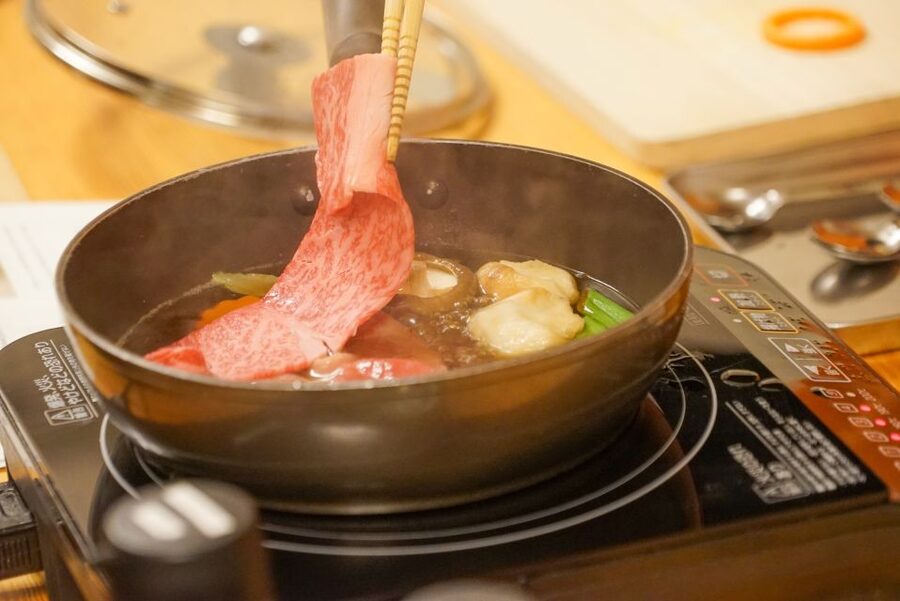
The smaller preparations give the class its practical feel. Rolling a Japanese omelette takes a little coordination, but it is approachable, and the instructors guide you through the process.
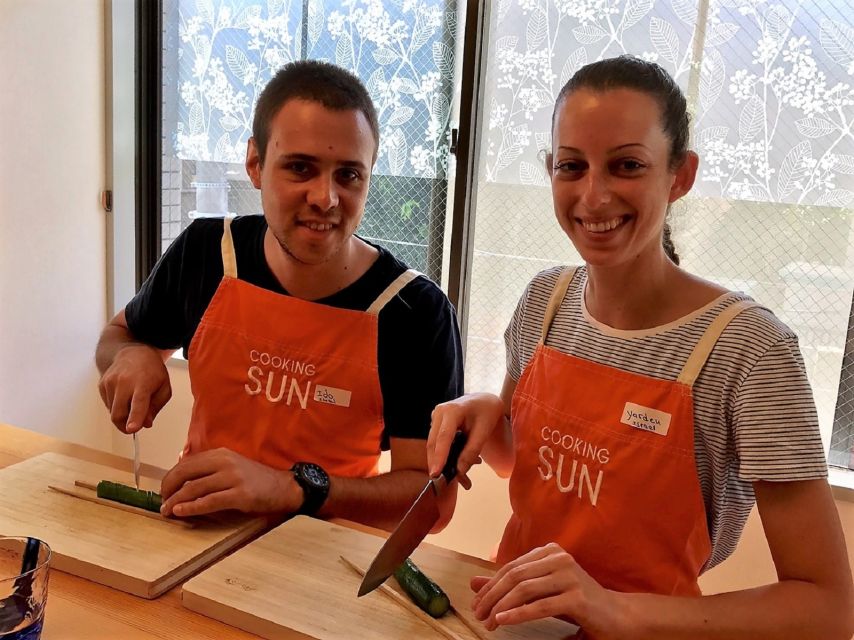
The cucumber salad uses an accordion cut, a simple technique that gives the vegetable more surface area for seasoning. It also makes the dish look far more elaborate than the method really is. The sesame potato salad offers another texture and flavor, with nutty sesame balancing the mild potato.
A stuffed tofu dish brings together ground chicken, ginger, and edamame. This is the kind of recipe that shows how Japanese cooking can be delicate without being bland. You work with several familiar ingredients, but the seasoning and presentation give them a distinctly Japanese character.
I especially like this part of the menu for home cooks. These are not recipes that require a professional kitchen. The instruction also includes suggestions for finding Japanese ingredients and making substitutions outside Japan, which is useful if your local supermarket does not carry every item.
More hands-on workshops in Tokyo:
- Sushi Making Tokyo Roll and Authentic Japanese Sushi Class
★ 5.0 · 3,971 reviews - Tokyo: Roll and Authentic Sushi Making Class in Asakusa
★ 4.9 · 1,957 reviews - Tokyo Shinjuku Chopsticks Making Class
★ 5.0 · 1,763 reviews - Tokyo: Sushi Making Class in a Happi Coat near a Famous Spot
★ 4.9 · 1,377 reviews
The Wagyu course is the main event
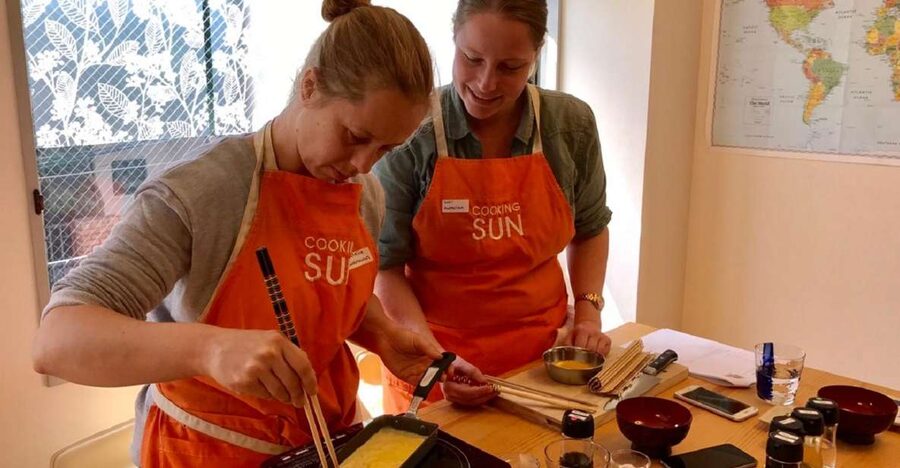
The Wagyu is prepared as sukiyaki hotpot, a classic Japanese dish in which thin slices of beef cook with a sweet-savory sauce and accompanying ingredients. It is a better teaching choice than simply grilling a steak because you learn how the beef works in a complete dish.
Wagyu is prized for its marbling. The fat gives the meat a tender texture and rich flavor, but the class does not treat it as a separate luxury tasting. You prepare it, cook it, and eat it alongside the other dishes you have made.
That approach makes the price easier to assess. At $67 per person, you are not paying only for a serving of premium beef. The fee also covers a three-hour lesson, all ingredients, use of utensils, apron and towel rental, welcome tea, recipes, and a substantial meal.
I would not book this only for the largest possible Wagyu portion. The information provided does not specify the quantity of beef, and the experience is built around a full menu. If you want a focused Wagyu tasting, a restaurant or specialty food experience may suit you better. If you want to understand how Wagyu appears in Japanese cooking, this class offers better value.
Dessert gives the class a satisfying finish
The final dish is dorayaki, a Japanese sweet made here with rice flour pancakes. You prepare the pancakes and finish the meal with something that feels distinctly Japanese but remains accessible to a first-time cook.
Dessert also helps balance the pace of the class. After working through soup, sides, tofu, and the Wagyu course, you get a lighter, sweeter task before sitting down to eat. The result is a full-course meal rather than a collection of unrelated samples.
At the end, you sit down and enjoy everything prepared during the session. This shared meal is an important part of the experience. You can see how the dishes work together, compare textures, and appreciate the meal as a whole rather than tasting each item in isolation.
Why the instructors matter
The class is taught in English, and the instruction is designed for beginners. The strongest feature is the way the instructors combine clear demonstrations with short explanations about ingredients, food customs, and the background of the dishes.
Names can vary by session. In the supplied details, instructors named Yuki, Yuko, Kaori, Bifuka, and Aya are associated with the class. The important point is not to expect one fixed teacher, but to expect local English-speaking staff who work together in the studio.
The teaching style is patient and organized. That matters when several dishes are being prepared at once. You need someone to explain not only what to do, but when to do it, how finely to cut something, and what result to look for.
The class is also social without requiring you to arrive with a group. With a maximum of eight participants, you cook alongside a small mix of people and then share the meal. A solo visitor can take part comfortably, and families with older children have also found the format manageable.
This is not a professional knife-skills course. One useful warning is that the techniques are generally simple. If your main goal is advanced cutting practice or difficult restaurant-style cooking, you may find the class too basic. If your goal is to learn Japanese flavors and repeatable recipes, the accessible level is a strength.
The residential Tokyo setting
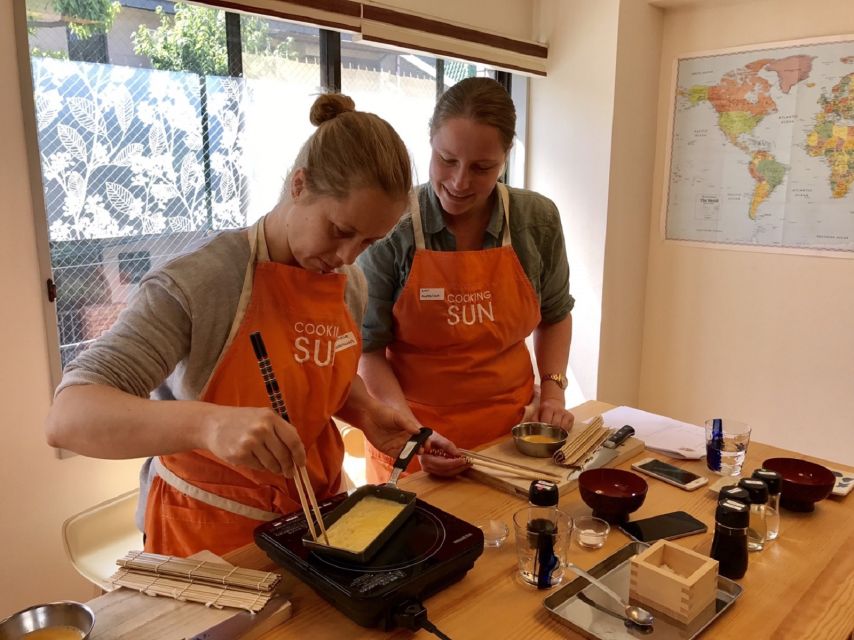
The studio is in Shinanomachi, in Shinjuku-ku, rather than inside a large commercial cooking school or tourist attraction. That gives you a look at a quieter residential part of Tokyo, an area you might otherwise pass through without seeing.
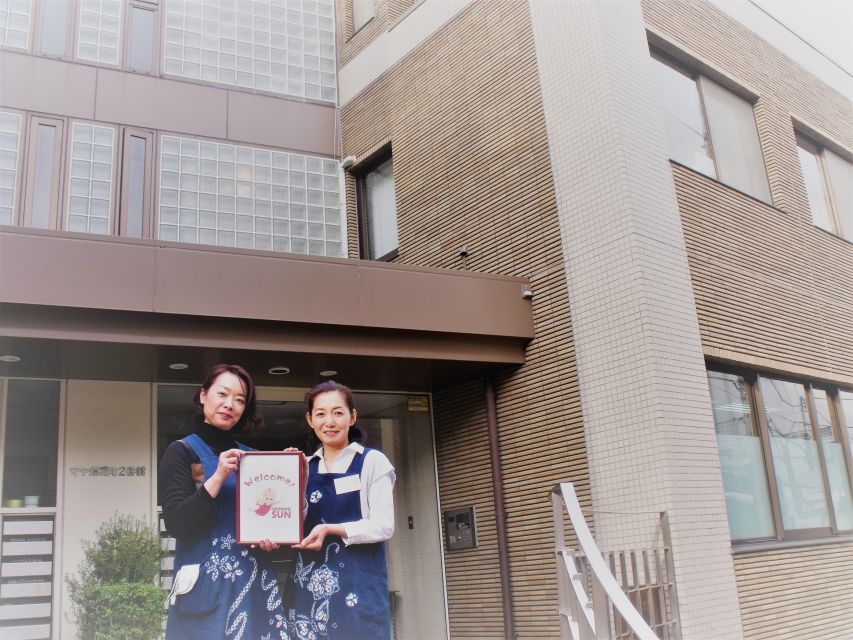
The trade-off is navigation. The studio is on the second floor of a beige residential building. At the entrance, you will see two doors. Use the right-hand door, then press 314 on the intercom to call the studio.
If you have Wi-Fi, search Google Maps for Cooking Sun Tokyo, Shinanomachi 18-39, Shinjuku-ku, Tokyo. If you do not have Wi-Fi, prepare the directions before leaving your hotel. The studio itself is easy to miss if you are hurrying or expecting a prominent sign.
Arrive with enough time to find the building. This is not the place to be dropped off at the last minute and rush inside. If you use a privately arranged vehicle, ask the driver not to wait in front of the building or block the quiet neighborhood. A nearby coin-operated parking lot is the better place for a driver to wait.
There is no hotel pickup or transportation included. You make your own way to the meeting point, so check the route before booking a morning session.
A clean, friendly place to learn
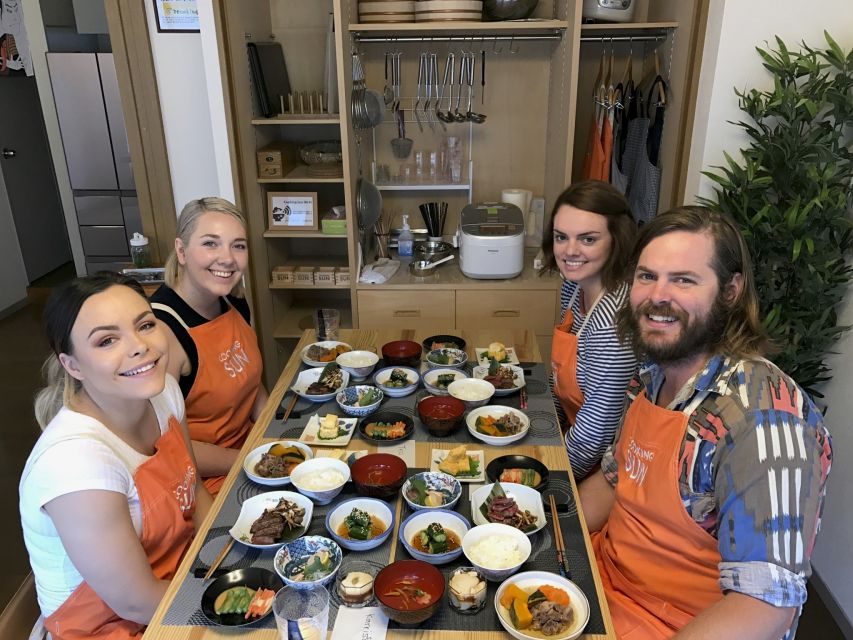
The studio is described as clean, bright, and homey. That combination suits the menu. Japanese cooking can seem exacting, but a welcoming kitchen makes it easier to ask questions and try a technique without worrying about getting it wrong.
Aprons and towels are provided, and utensils and ingredients are included. You do not need to pack cooking equipment. The class also provides recipes, so you have something practical to take home instead of relying on memory after a busy day in Tokyo.
The kitchen setup has been praised for its good knives, pans, tables, and general organization. That may sound like a minor detail, but equipment affects the lesson. When the tools are ready and the ingredients are prepared, more of your time goes toward learning rather than waiting.
The atmosphere is friendly rather than formal. You will cook with other participants and work with instructors who explain the cultural side of the food without turning the class into a lecture.
Dietary needs and food preferences
The class can substitute ingredients for food allergies, gluten-free diets, religious restrictions, vegetarian preferences, and other dietary needs. You must tell the provider about these requirements when making the booking.
That advance notice matters because the menu includes meat and may use ingredients that do not suit every diet. The Wagyu course is central to this particular class, so ask for a suitable substitution if you do not eat beef.
The class can also work well for people who do not eat fish. The menu described here focuses on Wagyu and other meat, tofu, vegetables, soup, and sweets rather than sushi. Still, be precise about allergies and restrictions when you reserve. A preference mentioned at the door may be too late for proper preparation.
Who will get the most from this class?
I would recommend it to you if you want an activity that adds context to your time in Tokyo. It works especially well early in a Japan trip because you learn about dashi, miso, seasoning, meal structure, and everyday dishes before encountering them in restaurants.
It suits couples, solo visitors, families with older children, and people who enjoy cooking at any skill level. You do not need to be an experienced cook. The recipes are simple enough for beginners, while the ingredient explanations give more experienced home cooks useful ideas.
It is also a good choice if you prefer food beyond sushi. The menu shows a different side of Japanese cuisine, one based on soup, sides, hotpot, vegetables, tofu, and sweets.
I would look elsewhere if you want a market visit, a long cultural walking tour, or advanced culinary training. You also need to be comfortable finding a residential address without hotel pickup. The class is about preparing and eating a meal, not touring several Tokyo neighborhoods.
Is $67 per person good value?
For Tokyo, $67 is a reasonable price for three hours of instruction plus a full meal. The value improves if you use the recipes at home, since the class teaches methods that go beyond this one lunch.
You receive all ingredients and utensils, a towel and apron, welcome tea, recipes, and the food you prepare. You also get a small group format limited to eight people, which gives the instructors time to help with individual steps.
The menu is substantial. You are not paying for one Wagyu sample and a short demonstration. You prepare multiple courses, including the soup, side dishes, main course, and dessert. The class also explains ingredient choices and offers suggestions for substitutions abroad.
The main limitation is that premium beef is only one part of the value. If you care mainly about eating a large Wagyu serving, the price may feel less attractive. If you care about learning a complete Japanese meal and sharing it afterward, the cost is well judged.
You can cancel up to 24 hours before the activity for a full refund, and the reserve-now, pay-later option keeps your schedule flexible. Starting times vary, so check availability when choosing a date.
Should you book the Cooking Sun Tokyo class?
Book it if you want a friendly, practical introduction to Japanese home cooking rather than a flashy one-dish lesson. The Wagyu sukiyaki is the draw, but dashi, miso, tofu, omelette, seasonal vegetables, and dorayaki make the class far more useful.
I would place it near the beginning of a Tokyo visit. You will gain a better sense of the ingredients you see in restaurants, and you may leave with recipes you can actually prepare at home.
Skip it if you dislike group activities, want advanced knife training, or expect hotel pickup. Otherwise, the small class, English instruction, complete meal, and manageable recipes make this one of the stronger food activities at its price.
FAQ
How long does the Wagyu and Japanese dishes cooking class last?
The activity lasts three hours. About two and a half hours are spent learning and preparing the meal, followed by time to enjoy the food you made.
How many people can join the class?
The class is limited to eight participants, making it a small-group experience.
Is the class taught in English?
Yes. The instructors speak English and guide you through the recipes, cooking methods, ingredients, and cultural background.
What dishes will I prepare?
The menu includes seven Japanese dishes and a Wagyu main highlight. Examples include dashi miso soup, rolled egg omelette, accordion-cut cucumber salad, sesame potato salad, tofu stuffed with ground chicken, ginger, and edamame, Wagyu sukiyaki hotpot, and rice flour dorayaki pancakes.
Is Wagyu included in the price?
Yes. Wagyu is included as part of the meal you prepare and eat during the class.
Are ingredients and cooking equipment provided?
Yes. All ingredients and utensils are included. The studio also provides a towel and apron rental, plus a welcome tea.
Can dietary requirements be accommodated?
Ingredient substitutions are available for allergies, gluten-free diets, religious dietary restrictions, vegetarian preferences, and other needs. Tell the provider about your requirements when booking.
How do I find the studio?
The studio is on the second floor of a beige residential building at Shinanomachi 18-39, Shinjuku-ku, Tokyo. Use the right-hand entrance door and press 314 on the intercom. Google Maps can find Cooking Sun Tokyo if you have Wi-Fi.
Just added around Tokyo
- Private Arrival Transfer : Narita International Airport to Central Tokyo City★ 4.5 · 12 reviews
- Narita Airport(NRT): Private Transfer to Tokyo/Yokohama 1-9pax★ 5.0 · 47 reviews
- Private Transfer from Narita Airport to Yokohama Port and City★ 4.5 · 17 reviews
- [Narita Airport Terminals 1, 2] 40-60km Sawara Itako Historic Bike Tour★ 5.0 · 13 reviews
- 3 Day Japan Highlights Tour: Tokyo, Mt.Fuji, Nara, Kyoto, Osaka★ 5.0 · 22 reviews
- Small Town in the Big City: Tasting Tokyo’s Kichijoji★ 5.0 · 195 reviews
- Small Town in the Big City: Tasting Tokyo’s Kichijoji★ 5.0 · 16 reviews
- The 10 Tastings of Tokyo With Locals: Private Street Food Tour★ 5.0 · 48 reviews
Tokyo Tours, compared.

Mt Fuji and Hakone 1-Day Bus Tour Return by Bullet Train
Read our review →

teamLab Planets TOKYO Digital Art Museum Entry Ticket
Read our review →
Mt Fuji & Hakone Cruise, Drum Show Bullet Train 1 Day from Tokyo
Read our review →
Sumo Show Experience with Chicken Hot Pot and a Photo
Read our review →
Shinjuku Food Tour (13 Dishes at 4 Local Eateries)
Read our review →
Tokyo Mt Fuji 5th St & Hakone Cruise Bus Tour w/Bullet Train
Read our review →
Flagship 2-Hours Official Street Go-Kart Tour – Tokyo Bay Shop
Read our review →Browse the lists this tour appears in