
Reviewed · OSAKA TOURS
Osaka Sushi Miso soup Adventure: A Journey of Exotic Flavors
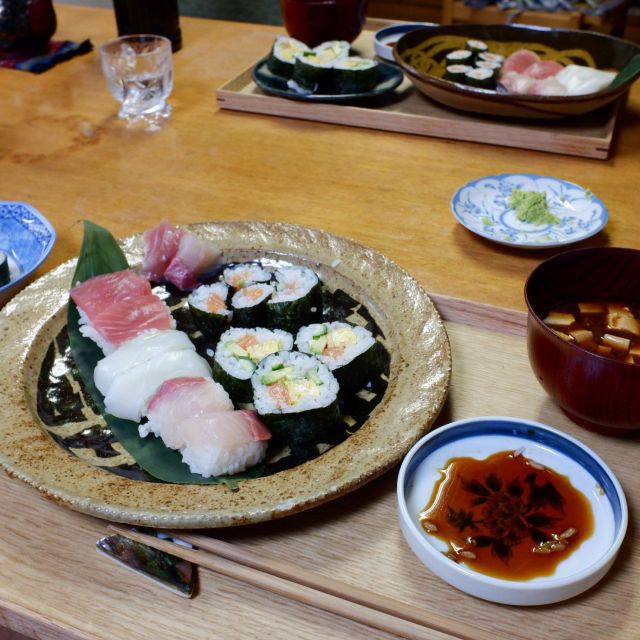
Osaka’s sushi lesson with Chef Yuki goes well beyond putting fish on rice. You learn how to season rice, prepare tuna zuke and kombu-jime salmon, roll hosomaki, shape nigiri, cook tamagoyaki, and make miso soup from scratch. I like the practical focus, especially the curing methods that can help fish keep for three to four days. I also like the small groups, capped at six, where Yuki can answer questions and guide each pair of hands.
The main consideration is the location. You’ll need about 30 minutes on the Kintetsu Nara Line from Osaka Namba, followed by a five-minute walk to Nukata-cho. That is easy enough, but this class is not a quick stop between sights in central Osaka. Plan it as a three-hour food outing, not a drop-in activity.
Key details before you book
- Prepare several Japanese dishes: Make nigiri, hosomaki, tamagoyaki, tuna zuke, kombu-jime salmon, dashi, and miso soup.
- Learn with Chef Yuki: Yuki has more than 10 years of cooking experience and trained under a sushi master with over 40 years in the craft.
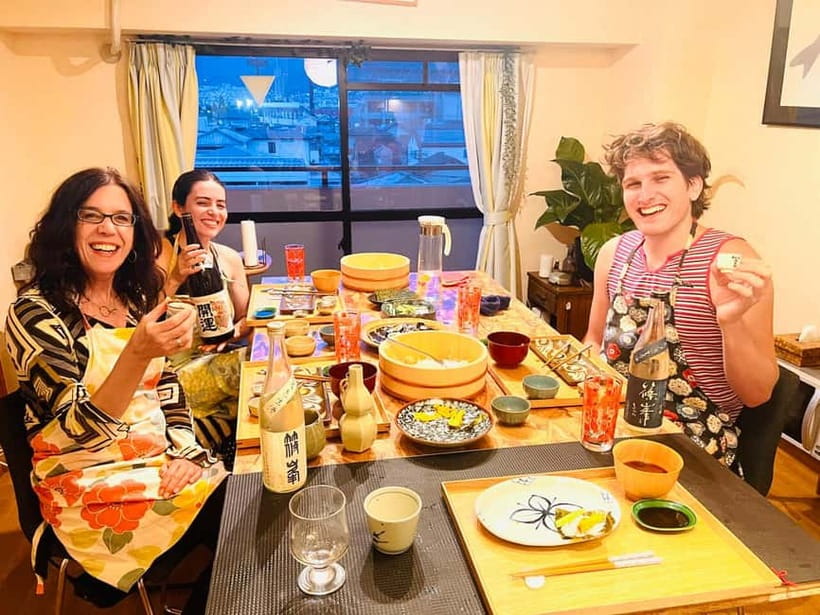
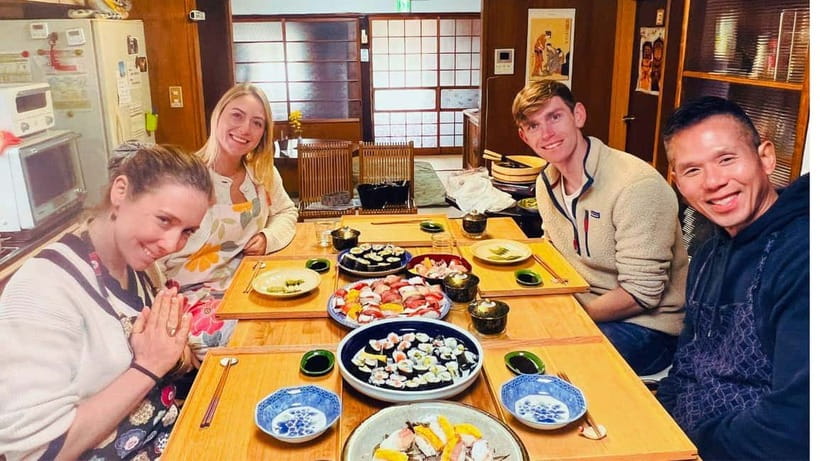
- Small, personal setting: Groups are limited to six, and past classes have included as few as one to four participants.
- Reach it from Namba: Take the Kintetsu Nara Line to Nukata Station, around 30 minutes and ¥430, then walk about five minutes.
- English instruction: The class is conducted in English, with fresh ingredients and traditional seasonings included.
- Useful after Japan: Recipes are sent afterward, and the techniques are designed for home kitchens, including places where sushi-grade fish is harder to find.
A sushi class built around useful skills
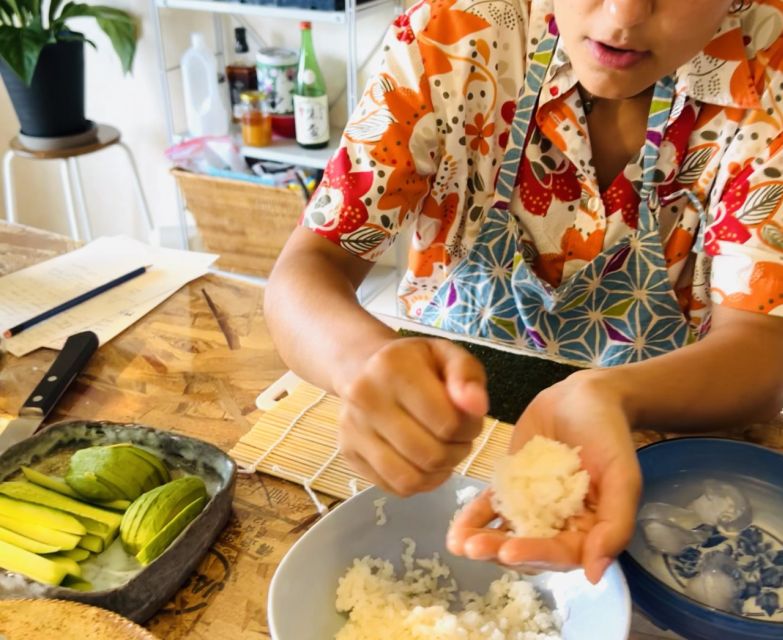
Many sushi classes show you how to assemble a few rolls, then send you home with a full stomach and little idea how to repeat the meal. Chef Yuki’s course takes a more useful route. You work through the parts that make sushi taste right: rice, seasoning, fish preparation, broth, and careful shaping.
That matters because sushi is less forgiving than it looks. Rice that is too wet will not hold its form. Rice that is too warm or too strongly seasoned can overpower the fish. A thin roll can split if the filling is off center, while nigiri depends on a light touch rather than a tight squeeze.
The class is taught in English and lasts three hours. That gives you enough time to move at a steady pace rather than rush through a single recipe. You should expect active instruction, not a demonstration where you sit and watch Chef Yuki do all the work.
Yuki brings more than a decade of cooking experience to the lesson. She was trained by a sushi master with more than 40 years of experience, so the class connects home cooking with traditional sushi technique. You are not simply following a recipe card. You are learning why each step matters.
A few more Osaka half-days to weigh up
- Osaka Go Karting Tour with Funny Costume
★ 5.0 · 2,658 reviews - Osaka Castle: Museum and Tower Entry Ticket
★ 4.5 · 2,380 reviews - Osaka: Shinsekai Food Tour with 13-15 Dishes at 5 Eateries
★ 4.8 · 2,204 reviews
Meeting Chef Yuki near Nukata Station
The class takes place at 4-19 Nukata-cho, in a white building about five minutes from Nukata Station. The meeting point is directly at the cooking class, and the instructions ask you to arrive 10 minutes early.
From Osaka Namba, take the Kintetsu Nara Line toward Kintetsu Nara. Get off at Nukata Station. The stated journey takes about 30 minutes and costs ¥430, then you walk roughly five minutes northeast along Route 308 toward the white building.
This trip is simple, but it affects how you plan your day. If you are staying around Namba, budget travel time in both directions. The class makes more sense as the main plan for an afternoon or morning, rather than something squeezed between Osaka Castle and a shopping district.
The setting is personal rather than a large commercial kitchen. Past classes have taken place in Yuki’s apartment, and the intimate format is part of the appeal. It also means you should be comfortable with a home-style cooking environment instead of expecting a formal culinary school.
Starting with rice, dashi, and the Japanese pantry
The quality of sushi begins before you touch the fish. A useful part of the lesson is learning how to treat the rice properly, including preparation in a traditional pot. You may already know how to shape sushi, but the rice lesson gives you the foundation for better results at home.
The course also introduces basic Japanese ingredients and methods. You work with traditional seasonings and learn about dashi broth, the savory base used in many Japanese dishes. The class includes the basics of preparing wasabi paste as well, which helps you understand how familiar sushi accompaniments fit into the meal.
This is where the class feels more like a food lesson than a simple tourist activity. Sushi often gets all the attention, but miso soup, dashi, rice seasoning, and omelet are equally important parts of a Japanese meal. You leave with a clearer sense of how those pieces work together.
Fresh ingredients and traditional seasonings are included in the price. The information provided does not specify every fish cut or ingredient used on a particular date, so expect the exact selection to depend on the class preparation.
Tuna zuke and kombu-jime salmon
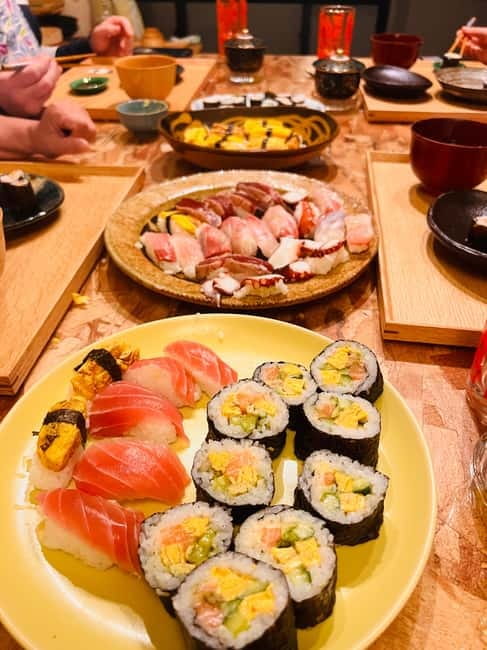
The most useful part of the menu may be the two prepared fish toppings. Tuna zuke uses a traditional soy-based marinade to season the tuna. Kombu-jime salmon rests with kelp, a centuries-old method that changes the flavor and helps preserve freshness.
These are not just decorative additions. They give you methods you can use at home. The class explains that marinating or curing can help the fish keep for three to four days, which is especially helpful if you live somewhere with limited access to very fresh fish.
That does not mean you should ignore food-safety guidance at home. You still need suitable fish, clean preparation, and proper refrigeration. But the basic idea is practical: sushi at home does not have to depend on using every ingredient immediately.
Kombu-jime also shows how Japanese cooking often gets strong flavor from time and restraint. Instead of covering the salmon with a heavy sauce, the kelp adds seasoning gradually. Tuna zuke offers a different result, with the marinade giving the fish a savory, seasoned character.
Same base, a completely different sort of day:
- Osaka Food Tour: 13 Dishes at 5 Local Eateries
★ 5.0 · 2,149 reviews - Hungry Osaka Street Food Tour:15 Tastings & 3 Drinks with a Local
★ 5.0 · 1,727 reviews - Osaka: teamLab Botanical Garden Entry Ticket
★ 4.5 · 1,710 reviews - Osaka: Tea Ceremony Experience
★ 4.9 · 1,426 reviews
Making nigiri, hosomaki, and tamagoyaki
You will prepare several styles of sushi rather than repeat one easy roll. Nigiri pairs seasoned rice with fish, and shaping it teaches you to balance size, pressure, and topping. The aim is a piece that holds together but still feels light.
Hosomaki, or thin rolls, require a different skill. Because the roll is narrow and usually uses a single main filling, there is nowhere to hide uneven rice or a misplaced center. You get practice spreading rice, placing the filling, and cutting the roll cleanly.
Tamagoyaki adds a cooked element to the meal. This Japanese rolled omelet is made in a square pan, and the technique can take patience. You build layers rather than simply scramble eggs, learning how to fold and roll the mixture into a neat block.
The menu gives the class a good rhythm. You move between raw fish, rice, seaweed, broth, and cooked egg. That variety keeps the three hours active, while also showing how several textures and temperatures can share one Japanese meal.
Miso soup completes the meal
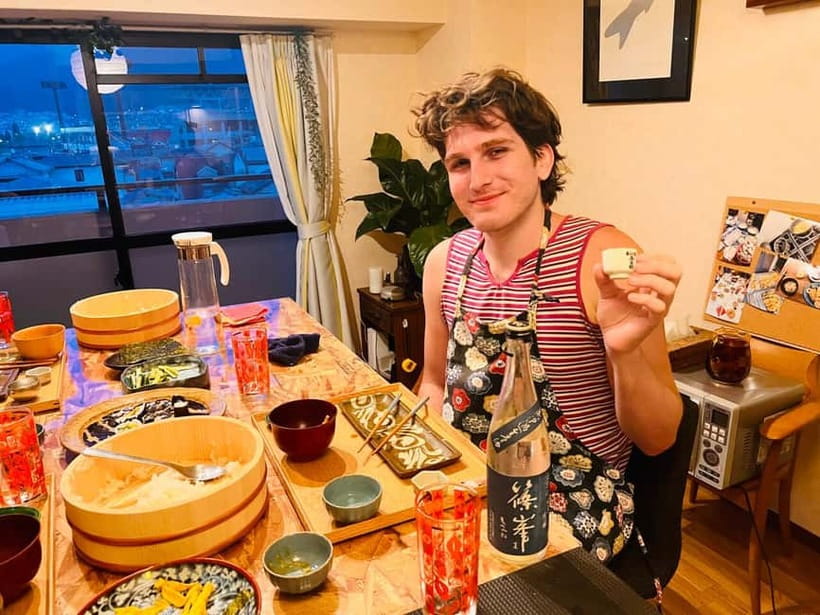
The title promises miso soup, and it is not treated as an afterthought. You prepare homemade miso soup from scratch, using dashi as part of the process. This is a good choice for a cooking class because it is simple enough to repeat at home but full of small details that affect the final taste.
A bowl of miso soup also puts the sushi in context. You are not only learning restaurant-style pieces. You are preparing a complete Japanese meal with a broth, omelet, rice, fish, and rolls.
The class ends with everyone eating the food they prepared together. That shared meal gives you a chance to compare the different dishes and see how the techniques work as a group. It also helps you judge your own sushi without the pressure of making a perfect restaurant plate.
Why the small group matters
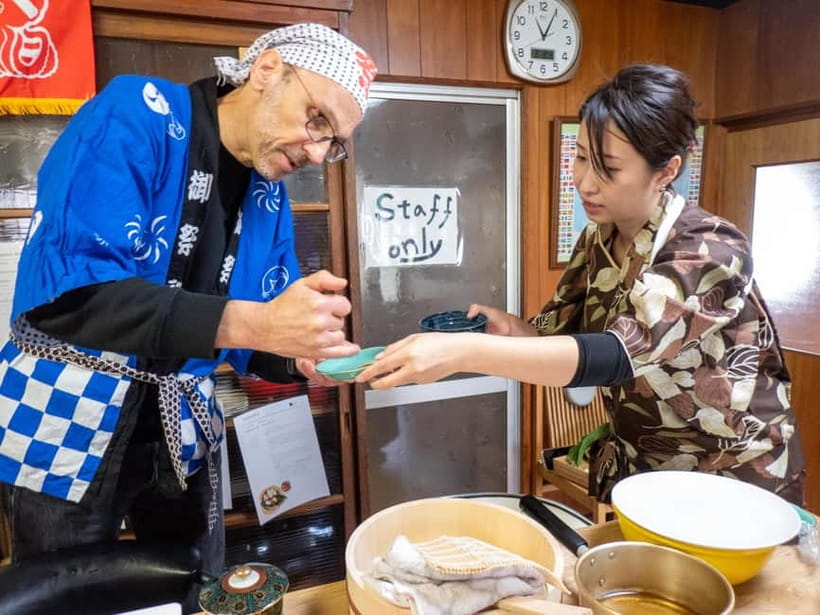
The maximum group size is six, and the class can be much smaller. One participant had a private-style lesson, while other sessions had four people. This changes the feel of the instruction.
You can ask about rice, fish, Japanese cooking, or Osaka without waiting for a large group to move along. Yuki can watch your technique and correct it as you work. For a hands-on class, that personal attention is worth more than a long list of recipes.
The small format can also suit families. Babies have been accommodated when arranged in advance, and Yuki has helped make the class workable for parents. This is not a guarantee for every booking, so contact the provider before reserving if you need a particular arrangement.
Vegetarians should also ask ahead. One participant who forgot to mention being vegetarian was still accommodated, but advance notice is the sensible approach for a class centered on fish.
What the teaching style adds
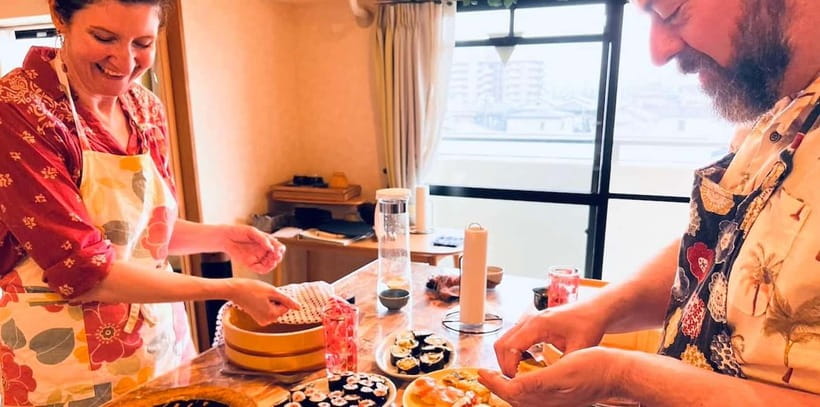
Yuki’s role is not limited to giving cooking instructions. She shares details about her life, Japanese cooking, and Osaka. That local conversation is one of the reasons this class offers more than a standard recipe lesson.
You might hear practical tips that do not appear in a printed guide, such as how to treat rice, how to prepare dashi, or how to handle a particular sushi style. The class also leaves room for questions, which is especially useful if you already have some kitchen experience.
Beginners should not feel out of place. The lesson starts with foundations and guides you step by step. At the same time, people who have made sushi before can still learn from the rice preparation, fish curing, or traditional techniques.
Recipes are sent afterward, giving you a reference for making the dishes at home. A cookbook is also available for purchase, although it is not listed as part of the included package. If you want to recreate the meal, save the recipe information and ask questions during the class while the methods are fresh.
Is $96 a fair price?
The price is $96 per person for three hours. That is more than the cost of a casual sushi lunch, so the value depends on what you want from the outing.
If you only want to eat sushi, this is not the cheapest way to do it. You are paying for instruction, ingredients, a small group, practical techniques, and a prepared meal at the end. The value improves if you actually use the recipes and methods after your trip.
The class also covers a generous range of dishes: several sushi styles, two fish preparations, tamagoyaki, dashi, and miso soup. You are learning a meal rather than one narrow skill. For couples, families, and food-focused visitors, that makes the price easier to justify.
I would be less enthusiastic about the cost if you dislike hands-on cooking or have no interest in repeating the recipes. The experience works best when you see the meal as both lunch and a lesson you can take home.
Timing, flexibility, and practical planning
The activity lasts three hours, and starting times vary, so check availability before you plan the rest of the day. Arriving 10 minutes early is sensible, especially if you are making the trip from central Osaka.
Free cancellation is available up to 24 hours in advance for a full refund. You can also reserve now and pay later, which helps if your Osaka schedule is still changing.
The class is conducted in English. The group is limited to six people, and fresh ingredients and traditional seasonings are included. The meeting point is easy to identify as a white building near Nukata Station, but contact Yuki if you need help finding it.
You should also tell the provider about dietary needs before the class. The vegetarian accommodation described in the available information is encouraging, but fish is central to the standard menu, so planning ahead is important.
Who will enjoy this Osaka food experience?
I would choose this class if you want to understand Japanese food instead of simply photograph it. It suits sushi beginners, home cooks, couples, small families, and anyone who likes returning from a trip with a skill rather than another souvenir.
It is also a good fit if you have already tried making sushi and want better control over rice, thin rolls, nigiri, or fish preparation. The lesson covers enough basics for a first-timer while offering useful refinements for someone with kitchen experience.
The class may not suit you if your Osaka schedule is packed into central neighborhoods or if you want a quick activity near Dotonbori. Nukata is easy to reach from Namba, but it still requires a separate train ride and a planned block of time.
I also would not book it if you want a formal restaurant tasting with no work involved. You will be preparing the food yourself, and the best part is the process.
Should you book Chef Yuki’s sushi class?
Book it if you want a personal English-language lesson with a strong home-cooking focus. The combination of nigiri, hosomaki, tamagoyaki, miso soup, dashi, tuna zuke, and kombu-jime salmon gives you plenty to do, and the small group makes the instruction feel direct.
The biggest strengths are the practical techniques and the chance to repeat them at home. The main tradeoff is the trip to Nukata Station and the $96 price, which is easiest to justify if you value learning as much as eating.
For a relaxed food activity away from Osaka’s busiest sightseeing areas, this is a smart choice. Give yourself enough time to reach the white building, arrive early, and come ready to work with your hands.
FAQ
Where does the sushi-making class take place?
The class takes place at 4-19 Nukata-cho, Osaka. It is in a white building about a five-minute walk from Nukata Station.
How do I reach the class from Namba?
Take the Kintetsu Nara Line from Osaka Namba Station toward Kintetsu Nara. Get off at Nukata Station, a journey of about 30 minutes costing approximately ¥430, then walk for about five minutes.
How long does the activity last?
The class lasts three hours. Starting times vary, so check availability when booking.
Who teaches the class?
Chef Yuki teaches the class. She has more than 10 years of culinary experience and trained with a sushi master who has over 40 years of experience.
Is the class taught in English?
Yes. English is the listed language for the instruction.
How many people can join?
The class is limited to six participants. Some sessions may be smaller, including private-style classes with only one participant.
What dishes will I make?
You will make nigiri sushi, tuna zuke, kombu-jime salmon, hosomaki, tamagoyaki, and miso soup. The class also includes preparation of dashi and basic wasabi paste.
Are ingredients included?
Yes. Fresh ingredients and traditional seasonings are included.
Can vegetarians join?
Vegetarian accommodation has been provided, but you should contact Chef Yuki before booking so the class can be prepared for your dietary needs.
Can I cancel or pay later?
You can cancel up to 24 hours in advance for a full refund. The reservation option also allows you to book now and pay later.
Just added around Osaka
- Discover Real Osaka: A Cultural Walk with Food & Drink★ 5.0 · 13 reviews
- From Osaka/Kyoto: Kyoto & Nara Day Trip with Optional Lunch★ 4.5 · 79 reviews
- Osaka 6hr Private Walking Tour with Government Licensed Guide★ 5.0 · 174 reviews
- Private Airport transfer Kansai Intl. Airport(KIX) to OSAKA CITY★ 4.5 · 12 reviews
- Osaka: Namba Local Food Walking Tour (Taste 15 Dishes)★ 5.0 · 20 reviews
- Osaka Delights: Traditional Japanese Food Tour★ 4.5 · 33 reviews
- Badminton in Osaka & Kyoto with Locals!★ 5.0 · 15 reviews
- From Osaka or Kyoto: Kyoto and Nara 1-Day Bus Tour★ 3.5 · 141 reviews
Osaka Tours, compared.


Shinsekai Food Tour with 13-15 Dishes at 5 Eateries
Read our review →
Osaka Food Tour: 13 Dishes at 5 Local Eateries
Read our review →
Hungry Osaka Street Food Tour:15 Tastings & 3 Drinks with a Local
Read our review →



Hotspots & Hidden Gems Walking Tour Private or Group
Read our review →Browse the lists this tour appears in