
Reviewed · FUKUOKA TOURS
Fukuoka’s Sacred Path: Temples, History & Culture
Fukuoka’s old Hakata district packs centuries of religious life into a walkable afternoon. You’ll see Japan’s first Zen temple, a 10.8-meter wooden Buddha, the shrine at the heart of the Gion Yamakasa festival, and a modern shopping complex with dancing fountains.
I like the thoughtful contrast between quiet temple grounds and lively Canal City, and I like the way the guides explain everyday Buddhist and Shinto customs instead of simply pointing out buildings. The main thing to consider is the walking: the pace is leisurely, but the route covers a fair stretch of central Fukuoka.
Key points to know
- Japan’s first Zen temple: Shōfukuji offers a calm opening stop and an introduction to Zen Buddhism.
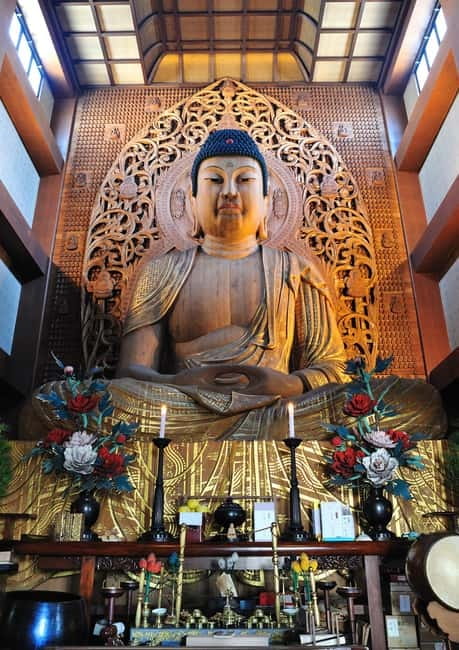
- A 10.8-meter wooden Buddha: Tōchōji’s Great Buddha is the tour’s most powerful sight, with an unusual underground passage below the temple.
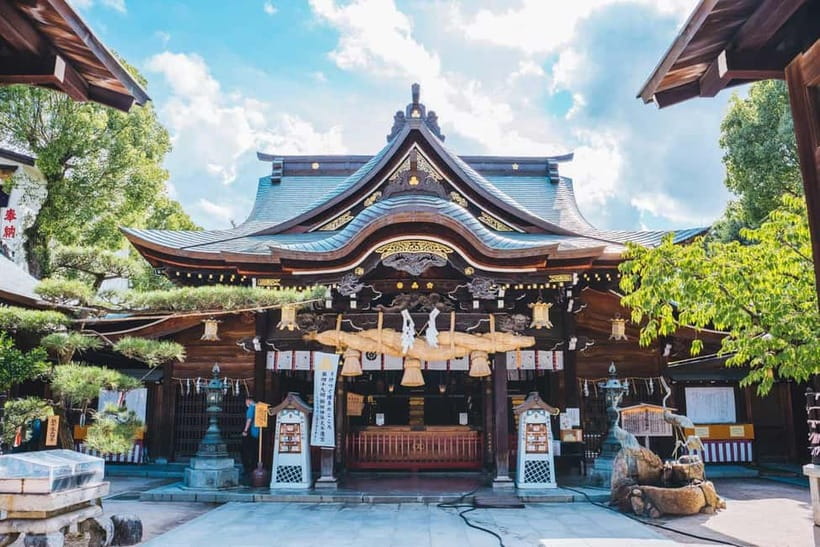
- Festival-centered Fukuoka: Kushida Shrine connects the city’s religious life with the famous Hakata Gion Yamakasa festival.
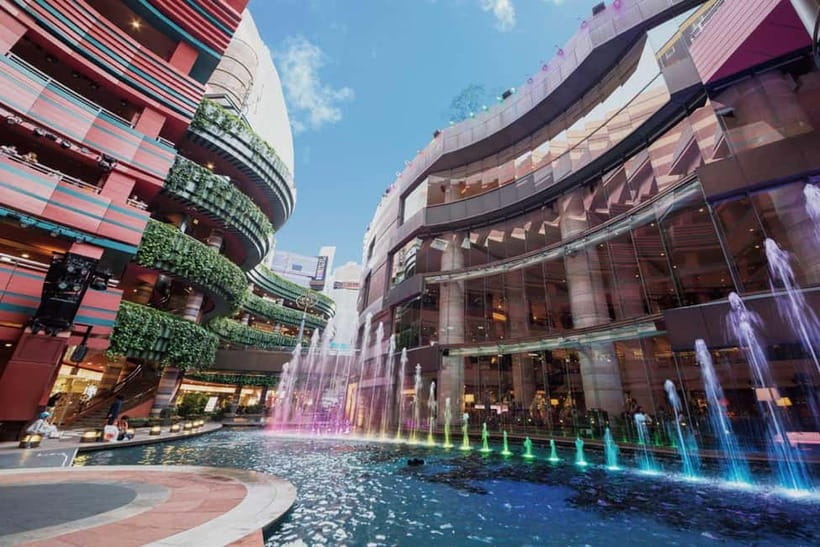
- Old and new in one walk: Canal City’s water show provides a sharp change of mood between historic stops.
- A private, conversational experience: Guides including Andy, Paula, and Arianna have led the tour, with English and German available.
- Three hours on foot: Comfortable shoes matter, especially in warm, wet, or humid weather.
Why this route gives you a useful first look at Hakata
Many city tours rush from one famous sight to the next. This one has a clearer idea behind it: show you how Buddhist temples, Shinto shrines, local festivals, modern shopping, and daily customs fit together in Fukuoka.
You begin outside the Casetify shop at Amu Plaza Hakata, just outside Hakata Station’s West Exit. That is a practical meeting point if you have arrived by train or Shinkansen. From there, the route moves westward and southward through central Hakata before returning to the station area.
The walk is not a strenuous hike, but it is not a short temple sampler either. The planned walking sections add up to about 75 minutes, with another two hours set aside for visits and sightseeing. The schedule is advertised as three hours, so you should expect a steady afternoon outing with time to ask questions.
I especially like the order. Shōfukuji starts the tour in a quiet, traditional setting. Tōchōji adds scale and drama. Kushida Shrine brings in local festival life. Canal City changes the subject completely, and Sumiyoshi Shrine gives the route a calmer finish.
More history-led days in Fukuoka:
- Fukuoka Essentials: History, Culture, & Charms
★ 4.8 · 39 reviews - Hakata Old Town Walking Tour Tracing the True History of Fukuoka
★ 5.0 · 17 reviews - World Heritage Shirakawa-go and Experience Tours from Kanazawa
★ 5.0 · 4,049 reviews
Shōfukuji: a quiet start at Japan’s first Zen temple
After roughly 10 minutes on foot from the meeting point, you reach Shōfukuji. The temple was founded in 1195 by Eisai, the monk associated with bringing Zen Buddhism from China to Japan.
The value here is not just the date or the title of Japan’s first Zen temple. Shōfukuji gives you space to notice the basics of temple design: wooden buildings, open grounds, restrained decoration, and a sense of order that feels far removed from Hakata Station’s traffic and signs.
The guided visit lasts about 20 minutes. That is enough time for an introduction to the temple’s background and Zen ideas without turning the stop into a long lecture. Your guide can also help explain how to behave at a Buddhist temple, which is useful if this is your first visit to Japan.
Do not expect a dramatic interior spectacle at every turn. The appeal is the peaceful setting and the chance to slow down. If you want a large museum collection or a long meditation session, this stop may feel brief. If you want to understand why temples matter in the middle of a modern city, it is a strong beginning.
Tōchōji and the 10.8-meter Great Buddha
A five-minute walk brings you to Tōchōji Temple, one of Fukuoka’s major Buddhist sites. The main reason to come is the wooden Great Buddha, which measures 10.8 meters high.
The size is impressive, but the material matters too. A wooden Buddha has a different presence from the enormous stone or bronze figures you may have seen elsewhere in Japan. Inside the temple, the statue gives the visit a solemn center and a clear visual memory.
The guided stop lasts around 30 minutes, making it the longest temple visit on the route. Your guide can put the statue into a wider Buddhist context and explain details you could easily miss if you walked through on your own.
Tōchōji also has an underground passage linked with the afterlife. This is one of the tour’s more unusual moments. The passage symbolizes a journey through darkness and toward release, adding a physical experience to ideas that might otherwise remain abstract.
The underground section may not suit anyone uncomfortable in enclosed or dark spaces. The supplied information does not give further details about its length or accessibility, so ask your guide before entering if you have concerns. For most people, it is likely to be the most distinctive part of the temple visit.
Kushida Shrine and the festival that shapes Fukuoka
The route then takes about 15 minutes on foot to Kushida Shrine. Plan on roughly 30 minutes here for a guided visit and sightseeing.
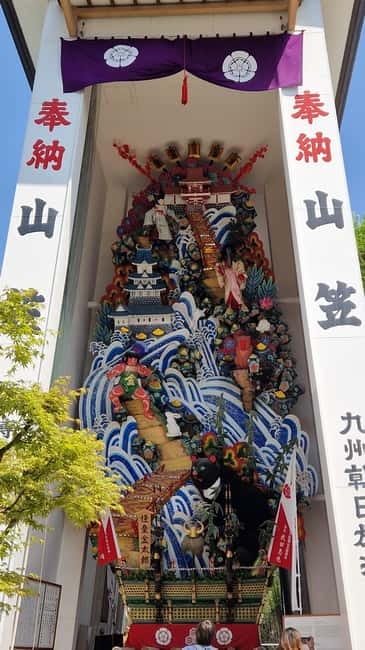
Kushida is closely tied to the Hakata Gion Yamakasa festival, held each summer. The event is one of Fukuoka’s defining traditions, and the shrine is the place to understand its religious and community role. A towering Yamakasa float on display helps make the connection visible.
This is where the tour shifts from broad religious history to local identity. You learn not only what the shrine is, but also how seasonal festivals bring the city together. Your guide can explain customs and etiquette, including the difference between visiting a Shinto shrine and a Buddhist temple.
That distinction is one of the tour’s strongest features. In Japan, Buddhism and Shinto are often practiced side by side, and visitors can easily confuse the two. The tour gives you a working set of clues: how the spaces differ, what the rituals mean, and how both traditions remain part of ordinary life.
Kushida Shrine is an active place of worship, not a staged attraction. Keep your voice low, follow the guide’s instructions, and leave room for people who have come to pray. The 30-minute stop should give you a useful introduction, though anyone wanting a detailed study of the festival will need more time elsewhere.
A few more Fukuoka half-days to weigh up
- Mt. Aso & Takachiho Gorge Tour with Optional Boat Ride
★ 4.7 · 222 reviews - Fukuoka: Takachiho Gorge & Scenic Railway One Day Tour
★ 4.8 · 178 reviews - Private Fukuoka Tour with a Local, Highlights & Hidden Gems 100% Personalised
★ 5.0 · 143 reviews - Fukuoka Your Way: 100% Customisable Private Tour with Local Guide
★ 5.0 · 83 reviews
Canal City’s fountain show: a modern break in the route

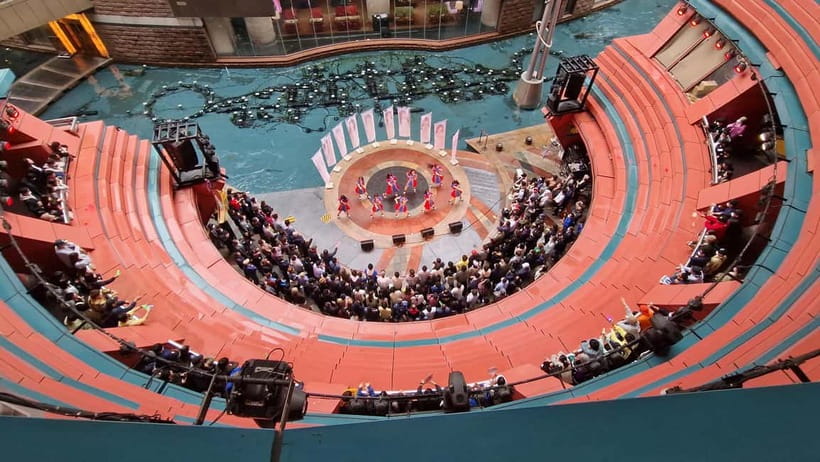
From Kushida Shrine, you walk about five minutes to Canal City Hakata. The complex is a shopping and entertainment center, so it looks and feels very different from the temples and shrines.
The planned sightseeing stop lasts about 15 minutes and centers on the fountain show. Water, music, and lights create a lively interlude before the final shrine. It is a clever part of the route because it prevents the afternoon from becoming a string of similar religious buildings.
I like this contrast. Fukuoka’s culture is not locked in old districts or preserved behind glass. The city’s traditional sites sit beside modern retail, food, and entertainment spaces. Canal City helps you see that continuity without needing a separate city tour.
The drawback is that the fountain show is schedule-dependent. The exact performance time is not provided, so the guide will need to fit the stop around the show. If you are hoping for a long shopping visit, this tour does not allow it. You get a quick look and the fountain display, not free time to browse the complex.
Still, 15 minutes is enough to reset your attention. After the quiet atmosphere of the temples and the festival focus of Kushida, the water show adds sound, movement, and a little urban fun.
Sumiyoshi Shrine brings the walk to a calm finish
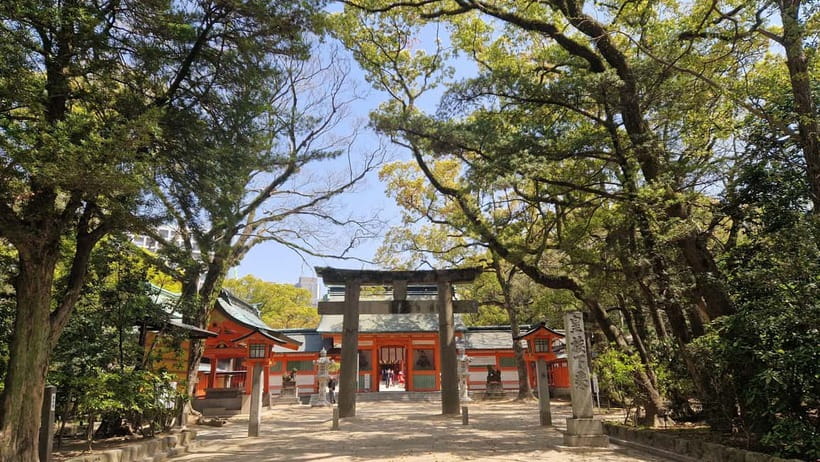
The final major stop is Sumiyoshi Shrine, reached after about five minutes on foot from Canal City. The guided visit lasts approximately 25 minutes.
Sumiyoshi shrines are associated with safe travel and protection, making this a fitting place to finish a walking tour. The shrine’s vermilion torii gates and quieter atmosphere offer a final chance to reflect on the route.
This stop also connects neatly with your own journey. You began at a transport hub, walked through religious sites and festival spaces, and end at a shrine dedicated in part to safe passage. That link may be simple, but it gives the afternoon a satisfying shape.
As at Kushida, you will get more from the visit if you pay attention to etiquette. Ask your guide about the proper approach and prayer customs rather than copying the first person you see. Religious practice in Japan can look simple from the outside, but small details matter.
The return walk to the meeting point takes about 15 minutes. By the end, you will have covered a good section of Hakata on foot, so plan your next activity with a little breathing room.
What the guide adds to the experience
The buildings are worth seeing on their own, but the guide is the key reason to book this route instead of following a map.
The best use of a guide here is interpretation. Dates and names are easy to find. It is harder to understand why a shrine matters to local people, why a temple has an underground passage, or how Shinto and Buddhism are practiced together. The tour is designed around those connections.
Andy has led many of the reported outings, and his style is described as patient, conversational, and generous with practical advice after the walk. Paula has also guided the route, with a focus on local temples, shrines, and food and market suggestions. Arianna has led a private afternoon tour as well.
Guide assignments can change, so you should not book on the assumption that one particular person will lead your group. Still, the repeated pattern is useful: the experience is intended to be personal rather than scripted. The private-group format should make it easier to ask questions and adjust the conversation to your interests.
English and German tours are offered. Conversational Japanese is also listed as available. Confirm your preferred language when booking, since the main guide-language information identifies English and German.
The walking, timing, and comfort level
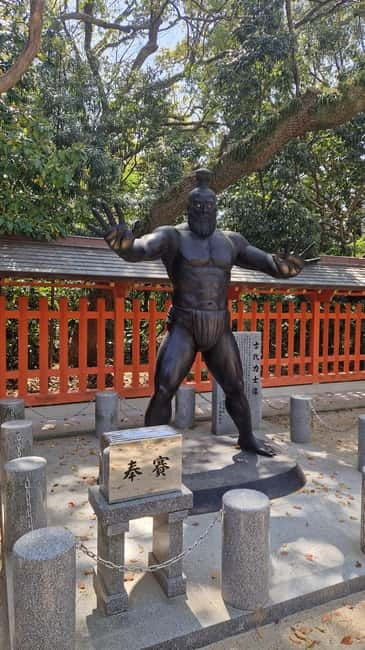
The route is manageable for anyone comfortable with an afternoon walk, but do not treat it as a hop-on, hop-off sightseeing tour. You walk between all the stops, and one direct comment from the supplied feedback is worth taking seriously: prepare for a long walk around the temples and shrines.
Wear supportive shoes. Sandals may be fine for some people, but comfortable walking shoes are the safer choice. Check the weather before you go, and carry what you need for the conditions. Fukuoka can be warm and humid, and rain would make the outdoor portions less pleasant.
The tour lasts three hours, with a leisurely pace that allows time for questions. That slower rhythm is a benefit if you want to absorb the explanations instead of racing through photographs. It also means you should not expect to squeeze in a large meal, a full Canal City shopping session, or several extra sights during the same block of time.
Bring a camera, but remember that some temple and shrine areas may have rules about photography. Keep money with you for souvenirs, and note that food, drinks, and transportation costs are not included.
Is $77 a fair price?
At $77 per person, the tour is not the cheapest way to see these places. Most of the route is on foot, and the admission details do not list a separate bundle of paid attractions. You are mainly paying for the guide, the planning, the private format, and the explanations that tie the sights together.
That can be good value if you are new to Fukuoka, short on time, or unsure how to read the differences between temples and shrines. The tour covers four religious sites plus Canal City in three hours, and the guide can also offer suggestions for food and markets after the walk.
The value is weaker if you already know Hakata well, are comfortable researching religious etiquette, or want a slow, independent visit. You could visit the area on your own, but you would need to build the route and learn the background separately.
Free cancellation up to 24 hours before the tour and reserve-now, pay-later booking add useful flexibility. These policies do not change the walking demands, but they help if your schedule in Fukuoka is still shifting.
Who should book this Fukuoka walking tour?
I would recommend it most strongly to first-time visitors who want cultural context without spending a full day in museums. It also suits couples, families with older children, and private groups who prefer conversation over a large guide-led crowd.
History fans will appreciate Shōfukuji and Tōchōji. Festival enthusiasts will get the most from Kushida Shrine. Anyone interested in daily religious customs will value the explanations of Buddhist and Shinto practice.
The tour is less suitable if you dislike walking, need long breaks, or want extensive time at each site. It is also not the right choice if Canal City is your main goal. The complex is a short sightseeing stop, not a shopping excursion.
Should you book it?
Book this tour if you want a compact cultural introduction to Hakata and prefer to ask questions as you go. The route gives you a strong mix: Zen history, a huge wooden Buddha, local festival tradition, modern Fukuoka, and a shrine linked with safe travel.
Skip it if you would rather explore slowly on your own or if a long afternoon walk sounds tiring. For most first visits, though, $77 is a reasonable price for a private, guided route that explains the meaning behind sights you might otherwise simply photograph.
FAQ
How long does the Fukuoka Sacred Path tour last?
The tour lasts three hours.
Where does the tour begin?
It begins outside the Casetify shop at Amu Plaza Hakata, just outside Hakata Station’s West Exit.
Where does the tour finish?
The walking route returns to the Casetify shop at Amu Plaza Hakata.
Which sites are included?
The tour visits Shōfukuji Temple, Tōchōji Temple, Kushida Shrine, Canal City Hakata, and Sumiyoshi Shrine.
Is the tour conducted in English?
Yes. English and German tours are offered. Conversational Japanese is also listed as available.
Is this a private tour?
Yes. The activity is described as a private group experience, with a small-group feel and personal guiding.
Are food and drinks included?
No. Food and drinks are not included. Transportation costs are also separate.
What should I bring?
Bring comfortable walking shoes and a camera. You should also check the weather and carry money if you plan to buy souvenirs.
Just added around Fukuoka
- Fukuoka Sumo Tournament November 2025 with a Sumo Expert Guide★ 5.0 · 21 reviews
- Tour Nagasaki or Fukuoka in Privacy and Comfort.★ 5.0 · 17 reviews
- From Fukuoka: Miyazaki, Takachiho Gorge And Shrine Day Tour★ 4.5 · 44 reviews
- Kyushu: Aso Vocano, Grassland,Onsen and Aso shrine 1-Day Tour★ 4.5 · 23 reviews
- Fukuoka Group/Private Tour by Local Professionals!★ 5.0 · 15 reviews
- Hakata Old Town Walking Tour Tracing the True History of Fukuoka★ 5.0 · 17 reviews
- Dazaifu and Yanagawa Canal Cruise Private Guide Day Tour by Train★ 5.0 · 13 reviews
- Fukuoka Full-Day Private Tour with Government Licensed Guide★ 5.0 · 55 reviews
Fukuoka Tours, compared.

Mt. Aso & Takachiho Gorge Tour with Optional Boat Ride
Read our review →
Private Fukuoka Tour with a Local, Highlights & Hidden Gems 100% Personalised
Read our review →
Fukuoka Your Way: 100% Customisable Private Tour with Local Guide
Read our review →
Day Tour to Miyazaki Takachiho Gorge & Shrine depart from Fukuoka
Read our review →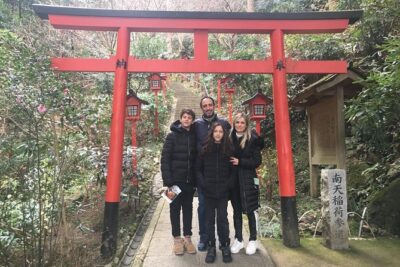
Fukuoka Full-Day Private Tour with Government Licensed Guide
Read our review →
Nakasu Food Stall Private Guided Tour with Tastings
Read our review →
Fukuoka Private and Personalized Walking Tour with a Local
Read our review →Browse the lists this tour appears in