
Reviewed · NAGOYA TOURS
Nagoya: 2026 Hida Takayama Shirakawa-go Light-up Winter Tour
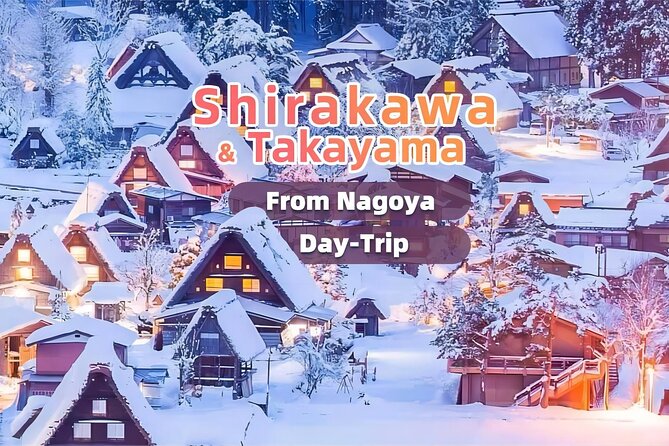
Shirakawa-go is the star here: on select winter dates, snow-covered gassho-zukuri farmhouses glow after dark, creating one of rural Japan’s most striking seasonal scenes. The day also gives you time in Hida Takayama, a handsome old town with wooden streets, market stalls, Hida beef, and local sweets.
I like the efficient pairing of two very different places, and I like having a bus from Nagoya rather than piecing together several trains and local connections. Guides such as Amy, Jin, and Jane have offered useful food and sightseeing tips, but the experience can feel more like guided transportation than a full walking tour, especially when English, Chinese, and Japanese commentary are combined.
Key points to know before booking

- Winter illumination dates are limited: The special evening display is offered only on selected dates, including January 25 and February 1.
- Two rural highlights in one day: You visit Hida Takayama in the morning and Shirakawa-go later, with about two hours at each stop.
- Mostly independent sightseeing: Your guide gives directions and suggestions, then you explore without being led around with a flag.
- Bilingual or multilingual commentary: The guide may speak English, Chinese, and Japanese, so English explanations can take longer or feel brief.
- Weather can change the plan: If severe weather closes the road to Shirakawa-go, the replacement destination is Gujo Hachiman.
- A long but useful day from Nagoya: The tour lasts about 10 hours and returns to the same meeting point near Nagoya Station.
Why this Nagoya day trip is worth considering
At $176, this is not the cheapest outing from Nagoya, but it covers a lot of ground. You get round-trip transport, an air-conditioned vehicle, fuel charges, gratuities, and an English-speaking guide. The main value is time and simplicity: Hida Takayama and Shirakawa-go are far easier to combine by coach than by public transport in a single day.
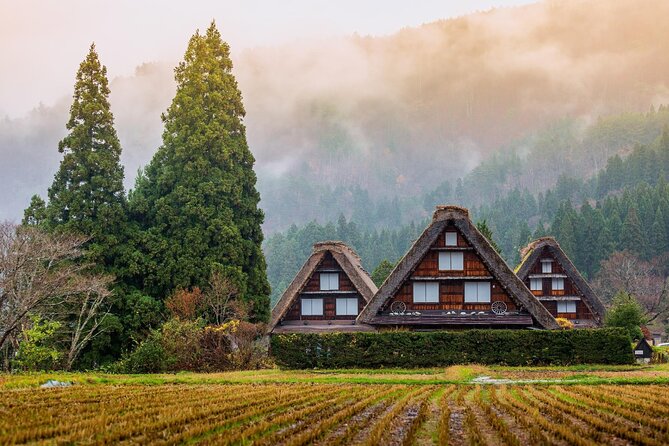
I especially like the contrast between the two stops. Takayama gives you old merchant streets, market food, and a town center that feels lived in. Shirakawa-go is more rural and scenic, with steep thatched roofs designed for heavy snow. You are not seeing two versions of the same place.
The catch is the schedule. Ten hours sounds generous, but the bus ride from Nagoya takes a large part of the day. You receive about two hours at each main stop, which is enough for a first look, lunch, photographs, and a few shops. It is not enough for a slow visit to every lane, museum, café, and viewpoint.
This is also not the right choice if you want a detailed historical walking tour. The strongest guides give clear instructions before arrival and useful recommendations for food and shops. Once you leave the bus, though, you generally explore independently.
A few more Nagoya half-days to weigh up
- Nagoya: 2026 Hida Takayama Shirakawa-go Light-up Winter Tour
★ 4.3 · 13 reviews - 1-Day Snow Monkeys, Zenko-ji Temple & Sake in Nagano
★ 5.0 · 1,020 reviews - Nagano: Snow Monkeys, Zenkoji Temple & Sake Day Trip
★ 4.9 · 833 reviews
Meeting in Nagoya at 8:30 a.m.
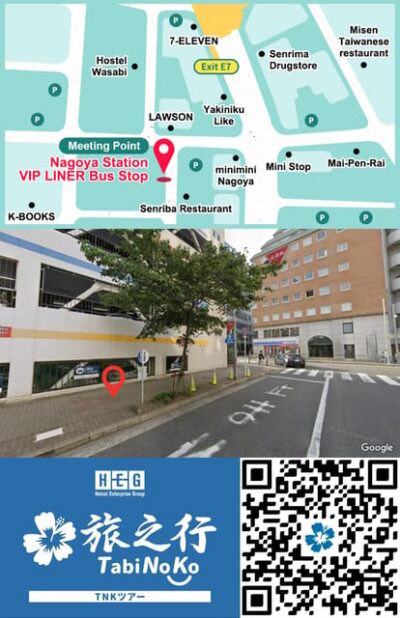
The meeting point is at Nagoya Eki Taikodoriguchi, 6 Tsubakicho, in Nakamura Ward. The tour begins at 8:30 a.m. and ends back there after roughly 10 hours.
Arrive early. A city meeting point can be harder to find than it looks, especially near a large station with several exits. The listed location is on the Taikodori side of Nagoya Station, so check your route before the morning of departure and allow time to get oriented.
The coach is a practical part of the experience. You can sit back while the city gives way to mountain roads, rather than worry about transfers or winter driving. A careful driver matters here. One account described dense fog on the return route, with the driver handling difficult conditions safely.
The maximum group size is listed as 25 people. In practice, group arrangements have not always been consistent. Some departures have felt much larger, and a few people have had trouble finding their names on the list at pickup. Bring your confirmation message on your phone and show it if needed.
Hida Takayama and the Miyagawa Morning Market
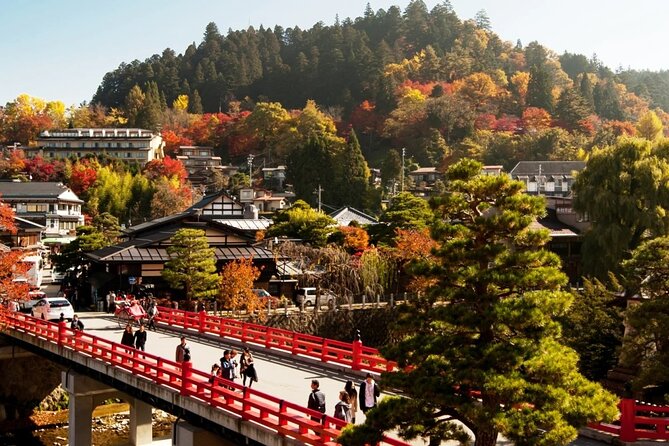
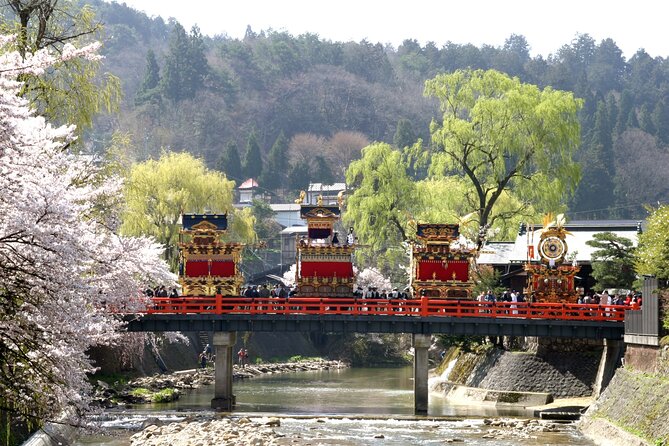
The first major stop is Hida Takayama, often called Hida’s Little Kyoto. Its appeal comes from preserved wooden buildings and narrow streets associated with the Edo period. You can walk past dark timber shopfronts, browse small stores, and get a feel for a mountain town that has kept much of its traditional character.
The Miyagawa Morning Market is the practical center of the visit. It is a good place to sample local food rather than simply admire old buildings. You might find fresh produce, handmade items, snacks, and regional specialties arranged along the market area.
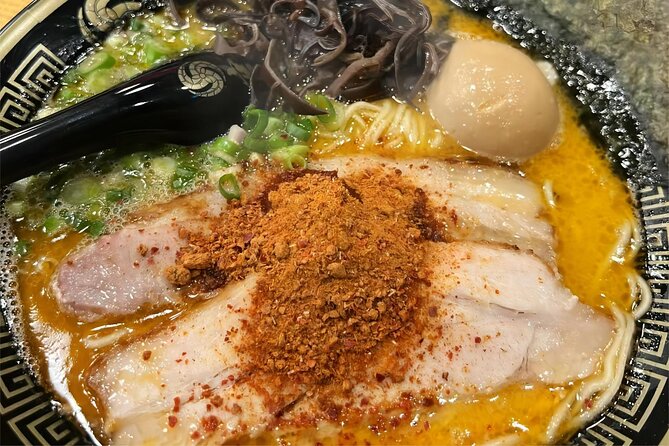
Hida beef is the obvious treat. Look for beef skewers if you want something quick, or plan a sit-down meal if your timing allows. Dango, small rice-flour dumplings, are another easy snack. Food is not included, so keep yen available and remember that a busy market stop can make a proper meal feel rushed.
Two suggested restaurants are Ajizo Heaven, at 4-147 Huali, Takayama City, and Maruaki Hida Takayama Store, at 6-8-1. Ajizo Heaven focuses on Hida beef platter options, while Maruaki is known for Hida beef barbecue. The tour does not guarantee seating at either place, so treat these as suggestions, not reservations.
You have about two hours here. I would use the first few minutes to listen carefully to the guide’s orientation. Guides such as Amy and Jin have been praised for pointing out where to eat, which shops are worth a look, and how to manage the limited time. Then choose one priority: market food, old streets, or a meal.
The drawback is that Takayama deserves more than a quick stop. If you are interested in museums, sake breweries, or a slower look at the old town, this schedule will feel tight. Still, as a first visit, two hours gives you a useful taste and leaves the most scenic part of the day ahead.
Shirakawa-go’s steep roofs and mountain setting
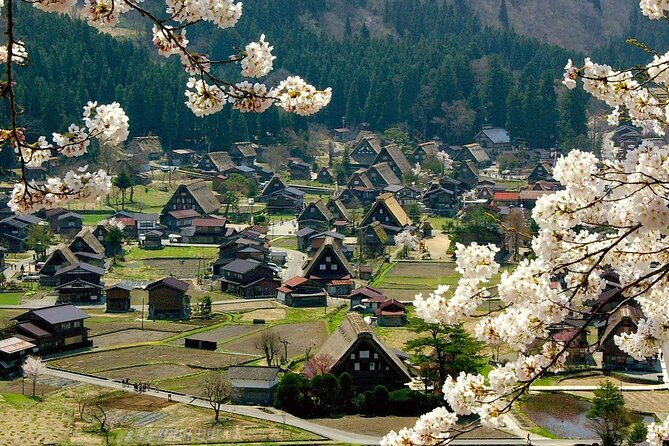
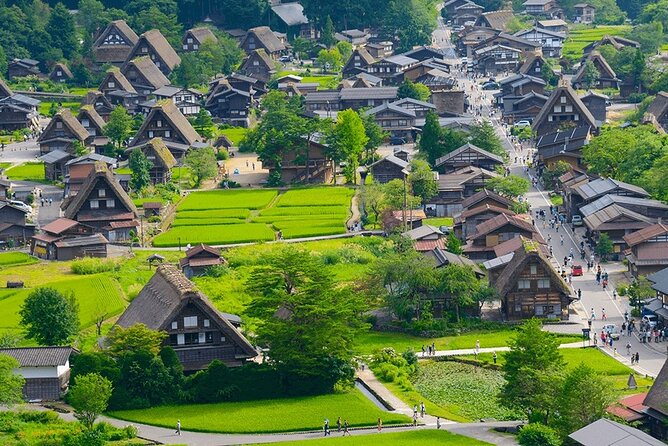
Shirakawa-go is a UNESCO World Heritage site known for its gassho-zukuri farmhouses. The roofs rise sharply, like hands pressed together in prayer, a shape suited to the area’s heavy snowfall. In winter, snow on those roofs changes the whole mood of the village.
The Shiroyama Observation Deck is the key viewpoint. From above, you can see the clustered farmhouses and the Hakusan Mountains behind them. This is the view that makes the trip worthwhile for many people, so make it a priority rather than assuming you will find it by accident.
You receive about two hours in Shirakawa-go. That gives you time to reach the viewpoint, walk through part of the village, and stop for a snack. It does not give you unlimited time for every farmhouse and side road, especially if snow or crowds slow your pace.
Wear shoes with good grip. The information provided does not specify walking distances or snow conditions, but the winter setting means you should expect cold surfaces and possible slippery paths. Keep your phone charged, since the village and observation deck offer many photograph stops.
A charming optional stop is Rakuto, a gassho-style café associated with the manga ONE PIECE. Its red bean porridge and dango offer a warm break in a traditional setting. Food and drinks cost extra, and the short stop must fit inside your free time.
Shirakawa-go is also beautiful outside winter. The tour description notes that the area changes with the seasons, so non-winter departures still offer the old farmhouses and mountain setting. The winter illumination, however, is a separate reason to choose particular dates.
Same base, a completely different sort of day:
- From Nagoya: Gujo, Hida Takayama, and Shirakawa-go Day Tour
★ 4.4 · 398 reviews - Ghibli Park 1-Day Bus Tour from Nagoya
★ 4.5 · 277 reviews - From Nagoya: Hida Takayama & Shirakawa-go Tour w/Opt. Lunch
★ 4.5 · 256 reviews - Hiking the Historic Nakasendo Trail [1 Day Tour from Nagoya]
★ 5.0 · 104 reviews
What the winter illumination adds
The special illumination takes place after dusk on only a few evenings each year. Dates given for this tour include January 25 and February 1. Confirm the exact date before booking, because a winter departure does not automatically mean the light-up event is included.
During the display, the thatched roofs are lit softly against the night sky. Snow catches the light, and the village takes on a very different character from its daytime appearance. This is less about entertainment and more about a short seasonal window in a historic rural setting.
The schedule may feel long on an illumination date, since you leave Nagoya in the morning and return at night. That is the price of seeing Shirakawa-go after dark. If the light-up is your main goal, check how much time is allocated after sunset and listen closely to the guide’s return instructions.
Stay aware of the meeting time. In a large group, one late person can delay everyone, and winter mountain roads leave little room for a relaxed departure. Several guides have been praised for clear time reminders, which are especially important on illumination evenings.
The guide makes a big difference
The tour includes an English guide, but the language setup deserves careful thought. Some departures combine English-speaking, Chinese-speaking, and Japanese-speaking participants. The guide may repeat the same information in several languages before each stop.
That arrangement can work well. Jin has been described as giving information in three languages, while Amy and Jane have been praised for practical suggestions and clear departure instructions. A strong guide can tell you where to go, what to eat, and how to return to the bus without wasting time.
It can also become frustrating. Some English-speaking customers have found the repeated language changes difficult to follow, while others felt the English explanation before arrival was too brief. One person described the experience as a transport service rather than a guided tour.
My advice is simple: book this for access, orientation, and transport, not for a long stream of detailed commentary. If you want a fully English walking tour with historical explanation at every site, choose a tour that clearly promises an English-only group.
The free time is a benefit if you enjoy setting your own pace. You do not have to follow a flag through every street. It is a weakness if you need constant guidance or want someone to explain each building as you see it.
Price, group size, and comfort
The $176 price makes the most sense for people who value convenience. You avoid separate transport planning, fuel costs, and the risk of missing a connection in a mountain region. The air-conditioned vehicle and return to the original meeting point also make the day easy to manage.
Food, drinks, optional activities, and personal purchases are extra. Accommodation is not included, though this is a day trip that returns to Nagoya.
The listed group limit is 25, but group size should be treated as a point to verify. Reports of much larger groups and pickup-list confusion suggest that booking communication can sometimes go wrong. Keep your booking confirmation handy and check the departure details before leaving your hotel.
Most people can participate, and the tour is near public transportation at the start. If you are booking for a child aged two or younger, notify the operator in advance so the booking can be specially noted.
Weather is the largest practical risk. If access to Shirakawa-go is blocked by severe weather or road closures, the tour switches to Gujo Hachiman. That keeps the day running, but it means you would miss the main destination and the illumination if the road is closed.
Cancellation is flexible up to 24 hours before the start time, with a full refund. Inside 24 hours, cancellations and changes are not accepted for a refund.
Who should book this day trip?
I would choose this tour if you have a short stay in Nagoya and want to see rural Japan without arranging several train and bus legs. It suits you if you enjoy scenic places, market food, old wooden streets, and independent wandering.
It is particularly appealing on a confirmed illumination date. The chance to see snow-covered Shirakawa-go lit after dark is the strongest reason to accept the long day and limited time at each stop.
Families and older adults may appreciate the direct coach, but seat arrangements are not always ideal. A couple traveling with two seniors reported being placed in the back row and finding it uncomfortable. If seating matters, ask about the arrangement before booking, though a particular seat cannot be guaranteed from the information provided.
I would hesitate if you need an English-only tour, extensive history talks, or a slow pace. I would also hesitate if missing Shirakawa-go would ruin your plans, since severe weather can force a change to Gujo Hachiman.
Should you book the Hida Takayama and Shirakawa-go tour?
Book it for efficient access to two memorable mountain destinations, especially if you can travel on a confirmed winter illumination date. The scenery, Hida beef, Miyagawa Market, traditional houses, and Shiroyama viewpoint give you a full day beyond Nagoya’s city streets.
Go in with the right expectations. This is a structured bus trip with useful guidance and independent sightseeing, not a deeply narrated cultural tour. Check the language arrangement, confirm the illumination date, arrive early at the Nagoya meeting point, and prepare for cold weather and a long return ride.
For a first look at Hida Takayama and Shirakawa-go, the convenience is worth serious consideration. For a slower or more personal visit, spend a night in the region instead.
FAQ
How long is the tour?
The experience lasts approximately 10 hours, beginning at 8:30 a.m. and ending back at the Nagoya meeting point.
Where does the tour start?
It starts at Nagoya Eki Taikodoriguchi, 6 Tsubakicho, Nakamura Ward, Nagoya, Aichi 453-0015, Japan.
Is transportation included?
Yes. The tour uses an air-conditioned vehicle and includes the fuel surcharge and gratuities.
Is food included in the price?
No. Food and drinks are at your own expense. Optional activities and personal purchases are also excluded.
Does every winter departure include the Shirakawa-go illumination?
No. The light-up is offered only on selected dates, including January 25 and February 1. Confirm your chosen date before booking.
Is the tour conducted in English?
An English guide is included, but departures may combine English, Chinese, and Japanese commentary. The amount of English explanation can vary by guide and group.
What happens if bad weather blocks Shirakawa-go?
If severe weather or road closures prevent access, the destination is replaced with Gujo Hachiman so the tour can continue.
What is the cancellation policy?
You can cancel at least 24 hours before the local start time for a full refund. Cancellations or changes made less than 24 hours before departure are not accepted for a refund.
Just added around Nagoya
- Walking Small-Group Nagoya City Tour★ 5.0 · 13 reviews
- Nagoya Endoji Food and Cultural Tour★ 5.0 · 12 reviews
- Pub Crawl in Nagoya★ 5.0 · 15 reviews
- Sumo Tournament Experience in Nagoya★ 5.0 · 12 reviews
- Nagoya Street Food Walking Tour of Osu★ 5.0 · 28 reviews
- Private Full-day Nagoya City Tour★ 5.0 · 22 reviews
- Specialties of Nagoya Food Tour★ 5.0 · 12 reviews
- Nagoya Highlight Tour guided by a friendly local★ 5.0 · 86 reviews
Nagoya Tours, compared.
![Hiking the Historic Nakasendo Trail [1 Day Tour from Nagoya]](https://media3.thejapanesetraveller.com/wp-content/uploads/hiking-the-historic-nakasendo-trail-1-day-tour-from-nagoya-400x267.jpg)
Hiking the Historic Nakasendo Trail [1 Day Tour from Nagoya]
Read our review →
Nagoya Highlight Tour guided by a friendly local
Read our review →
Japanese Traditional Sweets making and Tea Ceremony
Read our review →
Magome-juku, Tsumago-juku & Ena-kyo 1d Bus Tour from Nagoya
Read our review →
Nagoya Full-day Private Custom Tour with National Licensed Guide
Read our review →Browse the lists this tour appears in