
Reviewed · NAGOYA TOURS
Magome-juku, Tsumago-juku & Ena-kyo 1d Bus Tour from Nagoya
The real prize here is a day among Edo-era post towns, where wooden buildings, stone lanes, and old Nakasendo routes give rural Japan a much stronger sense of place than a quick city sightseeing loop. Magome and Tsumago are the stars, but the temple gardens and Ena Gorge add welcome variety.
I like the easy Nagoya departure and the fact that transport between these out-of-the-way sights is handled for you. I also like the generous self-guided time, especially at Tsumago, where you can wander without being hurried from one photo stop to the next. The main consideration is the schedule: Magome gets two hours, which some people may find longer than needed, while Tsumago gets about 70 minutes.
Key points at a glance
- Four very different stops: Visit a temple, a gorge viewpoint, and two preserved post towns in one day.
- Magome gets the longest visit: Two hours allows time for lunch, shopping, and a relaxed walk along the old street.
- Tsumago feels especially atmospheric: Its 70-minute stop is shorter, but the compact town is easy to explore on foot.
- The bus solves a rural transport puzzle: You avoid arranging separate connections from Nagoya to the Kiso Valley.
- Bilingual support is available: The conductor speaks English and Chinese, though both language groups may share one bus.
- Come ready to walk: Comfortable shoes matter, and the tour is not suitable for wheelchair users.
Why this day trip works from Nagoya
Nagoya is a useful base for central Japan, but some of the region’s most appealing historic towns are not simple add-ons by local train. Magome-juku and Tsumago-juku sit along the old Nakasendo route, the inland road that once connected Edo, now Tokyo, with Kyoto.
This bus tour gives you a practical way to see both in one day. You meet at the VIPLINER Nagoya bus stop near the Taiko-dori side of Nagoya Station, then settle into an air-conditioned vehicle for the countryside ride. The day lasts about nine hours, including all transfers and stops.
At $61 per person, the value comes mainly from the transport. You are paying for a full day of driving between places that would take more planning by yourself, plus an English- or Chinese-speaking conductor and an organized return to Nagoya. Lunch, temple admission if applicable, and personal purchases are not included, so keep some extra money handy.
This is not a deep-dive history tour with a guide beside you at every stop. You receive direction and timing, then explore each place independently. That arrangement suits you if you like freedom but do not want to calculate rural bus connections.
A few more Nagoya half-days to weigh up
- Ghibli Park 1-Day Bus Tour from Nagoya
★ 4.5 · 277 reviews - Hiking the Historic Nakasendo Trail [1 Day Tour from Nagoya]
★ 5.0 · 104 reviews - 1-Day Tour from Nagoya: Hiking the Historic Nakasendo Trail
★ 4.9 · 34 reviews
Starting smoothly at Nagoya Station
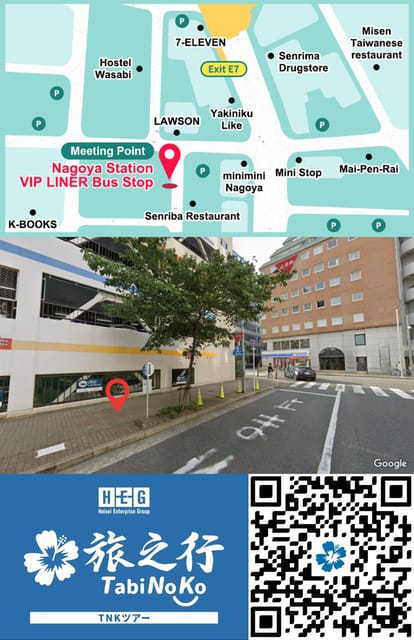
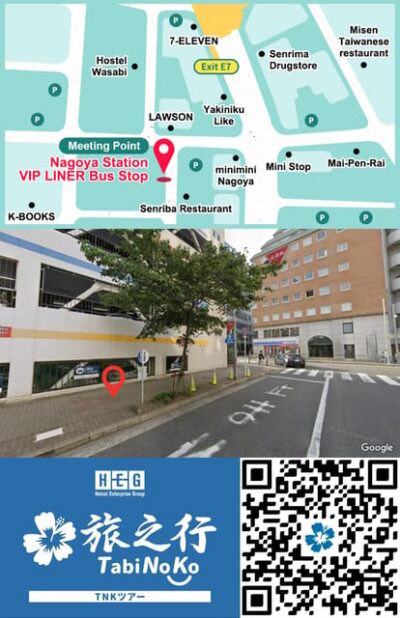
The meeting point is the VIPLINER Nagoya bus stop, about a three-minute walk from Nagoya Station’s Taiko-dori exit. Meet at 8:20 a.m. for an 8:30 departure.
This is one part of the day where precision matters. The bus leaves on time, and late arrivals may not receive a refund even if you contact the operator before departure. I would arrive at Nagoya Station early, locate the Taiko-dori side, and then use the Google Maps pin or the photo reference supplied with the booking to confirm the exact stop.
Look for the guide at the meeting point, check in, and confirm your name on the list. The operator may use different QR codes or meeting references for different departure points, so check that you have the correct one before leaving your hotel.
The vehicle is air-conditioned, a useful comfort during Japan’s warmer months and a welcome break after walking on uneven streets. English-speaking and Chinese-speaking participants may share the same bus, with the conductor switching between languages. This can mean announcements take a little longer, but the arrangement lets the tour serve both language groups in one departure.
Kokeizan Eihoji Temple: a quiet first stop
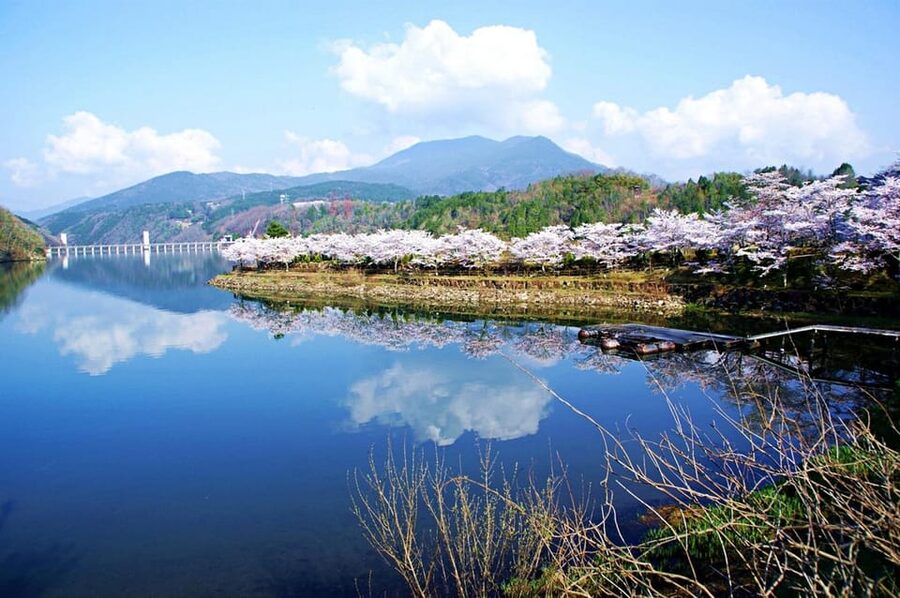
The first visit is Kokeizan Eihoji Temple, with about one hour for sightseeing. It offers a calm start before the bus reaches the more famous post towns.
The temple grounds include gardens and old structures, giving you time to slow down and look closely. This is not a stop built around a single grand viewing platform. Its appeal is the peaceful setting, the arrangement of the grounds, and the chance to see a different side of central Japan’s cultural life.
Because the visit is self-guided, you can set your own pace. Use the hour to walk through the grounds, photograph the gardens, and take in the architecture rather than trying to cover every corner. The tour’s moderate walking requirement begins here, so this is also a good place to notice how your shoes feel.
The timing works well as an opening stop. You are not thrown straight into shops and crowds, and the temple provides a quieter contrast to Magome and Tsumago. If your main goal is only old post-town streets, this stop may feel like a detour. If you appreciate gardens, religious architecture, and a slower first hour, it adds welcome balance.
Ena Gorge from the observatory
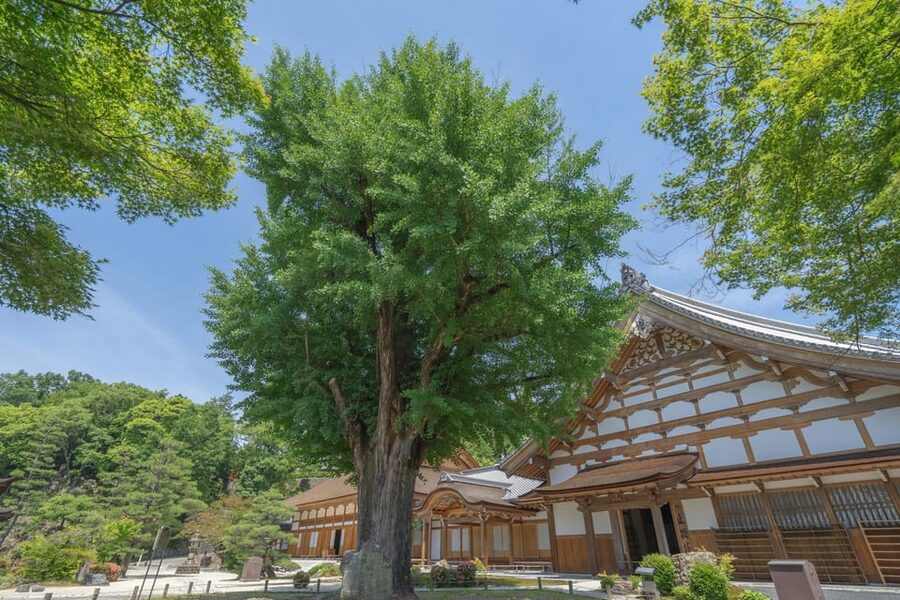
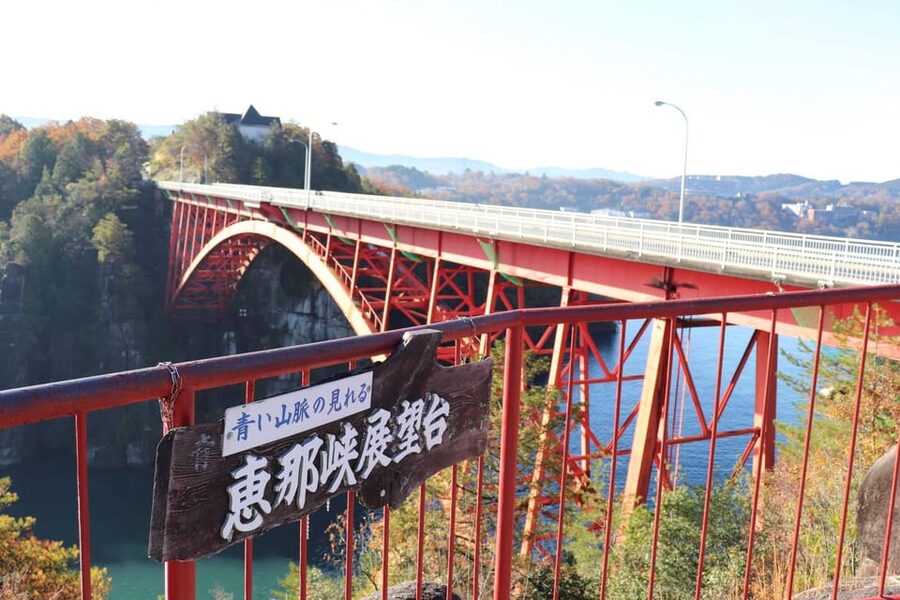
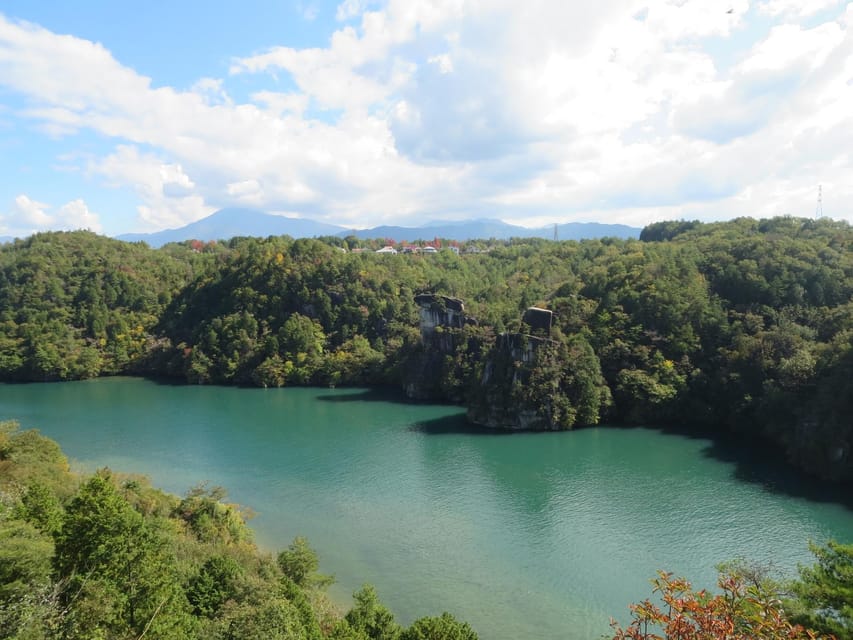
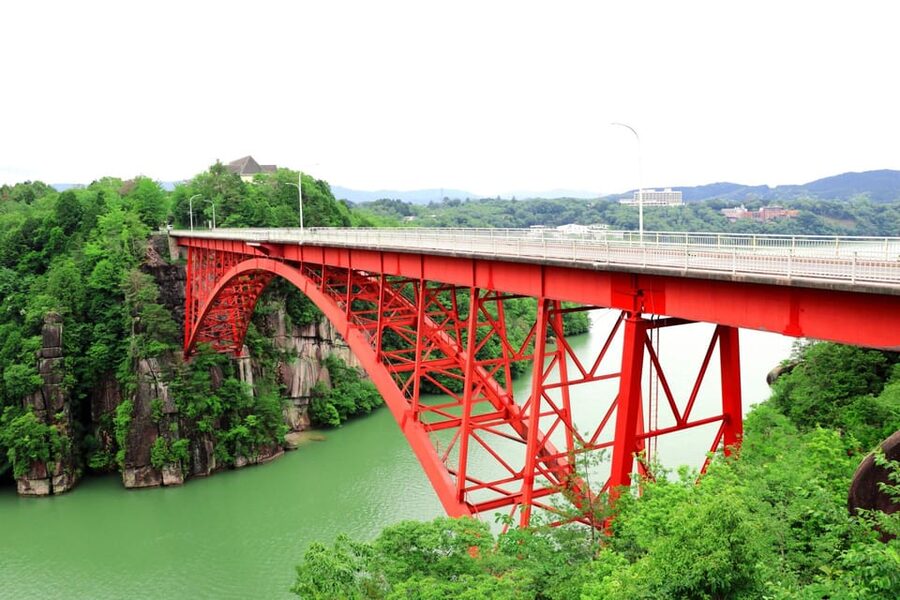
Next comes the Ena Gorge observatory, with about 30 minutes for photographs and sightseeing. This is a short stop, so think of it as a viewpoint rather than a full gorge excursion.
From the observatory, you can look across the winding river and surrounding mountains. The view gives the bus journey a strong countryside moment and breaks up the historic-town visits with open scenery.
Thirty minutes is enough for photographs and a quick look around, but not enough for a long walk or extended exploration. Keep your camera ready and listen carefully for the return time. It is easy to lose track of the clock when the view opens up, especially if weather makes the gorge particularly clear.
This stop also shows why the day is more varied than a simple Magome and Tsumago transfer. You get gardens, water, mountains, wooden townscapes, and food time, all without changing hotels or managing several local connections.
Same base, a completely different sort of day:
- From Nagoya: Gujo, Hida Takayama, and Shirakawa-go Day Tour
★ 4.4 · 398 reviews - From Nagoya: Hida Takayama & Shirakawa-go Tour w/Opt. Lunch
★ 4.5 · 256 reviews - Nagoya Highlight Tour guided by a friendly local
★ 5.0 · 86 reviews - Nagoya: Japanese Traditional Sweets making and Tea Ceremony
★ 4.9 · 76 reviews
Magome-juku: two hours on the old Nakasendo
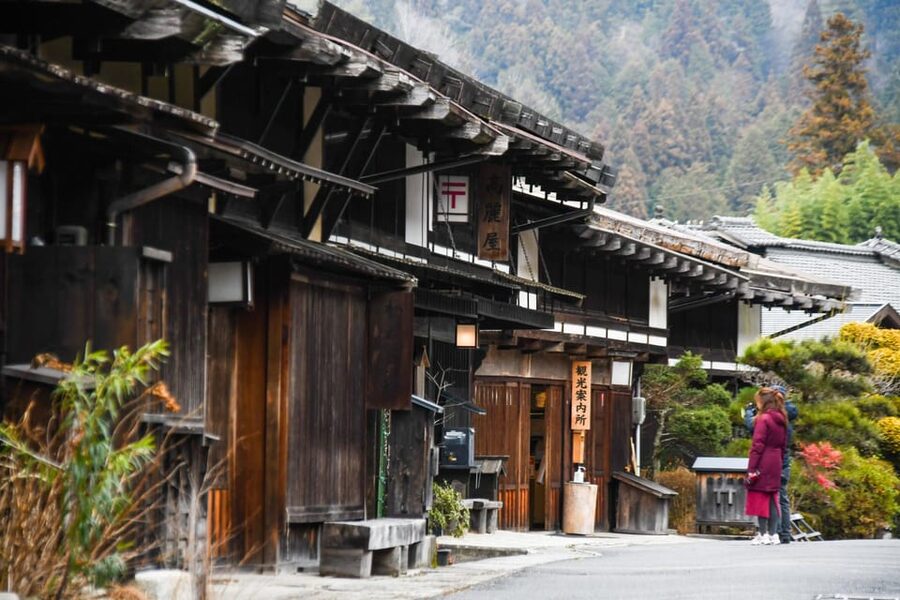
Magome is the longest stop, with two hours for lunch and independent sightseeing. That extra time matters because this is where you are most likely to pause for food, browse shops, and take photographs.
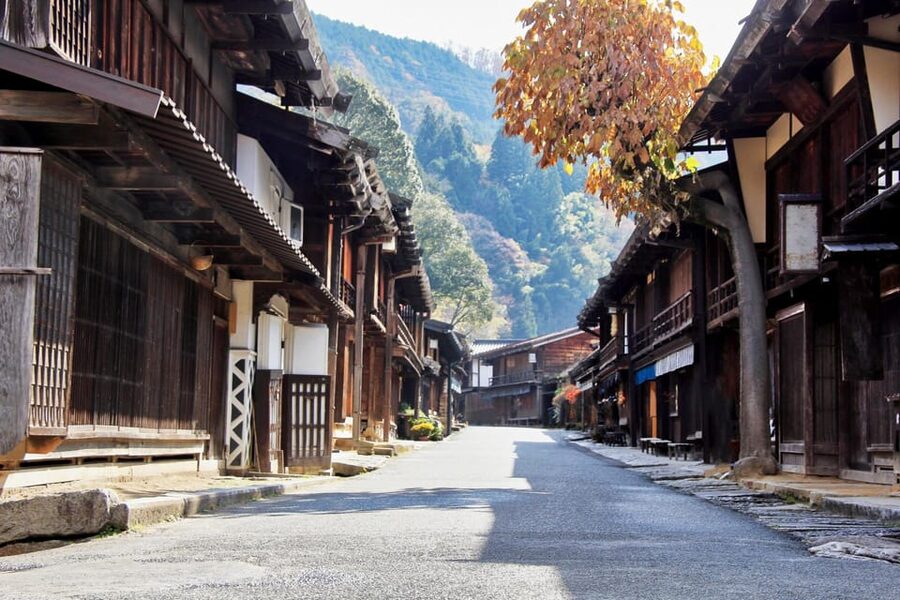
The town is a preserved post station on the old Nakasendo Trail. Its traditional wooden buildings line a stone-paved street, creating a strong visual sense of an earlier Japan. You can walk the main route, examine the shopfronts, and stop for local delicacies without following a guide from point to point.
I would use the first few minutes to get your bearings, then choose between three simple priorities: eat, walk, or shop. Trying to do all three in detail may feel rushed, especially if you stop often for photos. Lunch is not included, but the free time lets you choose what appeals to you rather than being tied to a group meal.
Magome is attractive and easy to photograph, but its popularity is also part of the experience. The main street can feel more visitor-oriented than a completely ordinary rural village, with shops and food counters designed for day visitors. That does not erase its character, but it means you should look beyond the obvious photo angles.
The two-hour allocation has divided opinions. Some people appreciate the relaxed pace and the chance to eat without watching the clock. Others feel it is longer than necessary. Your ideal use of time depends on how much you enjoy browsing, taking photographs, and sitting down for lunch.
If you want a more active walk, ask the conductor about the timing and boundaries before setting off. The tour does not promise a full hike along the Nakasendo between Magome and Tsumago, and you must return to the bus at the stated time. Do not wander too far simply because the old route continues beyond the main street.
Tsumago-juku: the more intimate final town
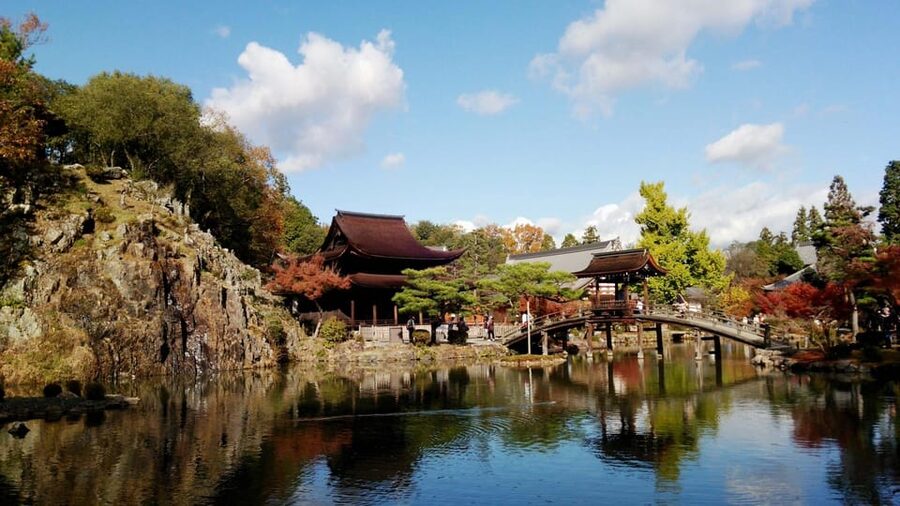
Tsumago gets about 70 minutes. It is shorter than Magome, but many visitors find the town more compact and especially charming.
Like Magome, Tsumago preserves the look of an Edo-period post town, with wooden buildings and a traditional street plan. The atmosphere is quieter and less commercial in feel, making it a good place to simply walk and observe. You can focus on the old facades, small details, and the relationship between the buildings and the surrounding countryside.
The shorter stop is manageable because the central area is compact. You will not have time for a long meal and an extensive wander, so I would arrive with a clear plan. Walk the main street first, then use any remaining minutes for photographs or a brief look at the shops.
Tsumago works particularly well as the final cultural stop because you have already seen Magome’s broader range of food and shopping. Here, you can concentrate on the town’s atmosphere. The tradeoff is that if you fall in love with the place, 70 minutes may feel too brief.
The two post towns are similar enough to form a clear theme, but different enough to justify visiting both. Magome gives you more room for lunch and browsing. Tsumago offers a tighter, quieter walk through preserved streets. Seeing them together lets you compare rather than relying on one town to represent the entire Nakasendo.
How much walking should you expect?
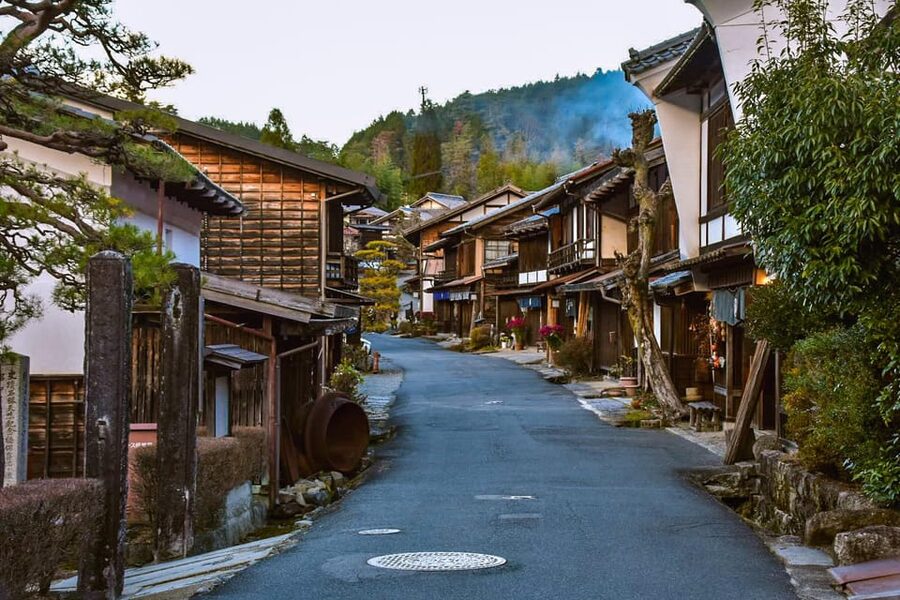
The tour calls for a moderate amount of walking. That means you should expect to move around temple grounds, viewpoints, stone-paved streets, and traditional town lanes during several stops.
Comfortable shoes are essential. The old streets are part of the appeal, but smooth modern pavements are not the point here. Wear clothing that lets you walk comfortably and handle changes in weather.
This is not suitable for wheelchair users. The supplied information does not provide a detailed mobility assessment for every stop, so anyone with limited walking ability should ask the operator before booking.
You should also bring water, sun protection, and a small amount of cash for lunch and purchases. These are practical suggestions rather than listed tour inclusions, but they can make the free-time stops easier.
Weather, traffic, and seasonal planning
The tour operates in normal weather and traffic conditions, and it is scheduled to depart even when conditions are less than ideal unless the operator contacts you. Transfer times are approximate, since traffic can change the length of the day.
Holiday traffic and severe weather can lead to an altered schedule without a refund. This matters most during busy Japanese holiday periods, when rural roads may move slowly and popular towns can be crowded.
Winter deserves special attention. On January 2, several locations were closed, although the outdoor sights could still be enjoyed. If you plan a New Year visit, check opening conditions in advance and expect that some shops or facilities may not operate.
The tour is still useful in poor weather because the historic streets and temple grounds remain visible, but the Ena Gorge viewpoint depends more on clear conditions. In rain or mist, the gorge views may be limited. Bring suitable clothing rather than assuming the bus will shelter you for the entire day.
Guide support and the self-guided format
The conductor’s role is mainly practical and organizational. You check in at the start, receive instructions, hear meeting times, and explore each stop on your own.
That format gives you breathing room. You can choose your lunch, linger over a building, or focus on photography without keeping a group together. It also means you should pay close attention to return instructions. Missing the bus is not a small inconvenience on a rural day trip.
The conductor speaks English and Chinese. On a shared bilingual bus, explanations may alternate between the two languages. You may not receive a long commentary at every stop, but the arrangement provides useful support for timing, directions, food suggestions, and photo spots.
This is a good fit if you want a little context and steady organization, but prefer to explore independently. It is less suitable if you want a private guide delivering detailed commentary throughout the day.
Who gets the best value from $61?
I see the $61 price as fair for a nine-hour day with air-conditioned transport between four separate areas. The biggest saving is your time and planning effort. Reaching the temple, gorge, Magome, and Tsumago independently would require more research and careful connections.
The price is less of a bargain if you only want to visit one post town or prefer to spend a full day in one place. You also need to budget for lunch and any paid items not included in the tour.
You will get the most from this trip if you:
- Have a free day in Nagoya and want rural scenery
- Like historic streets, gardens, and photography
- Prefer organized transport with independent exploring
- Can walk comfortably for several hours
- Want to visit both Magome and Tsumago without arranging local transport
You may want another plan if you need wheelchair access, dislike fixed departure times, or want a slow, detailed visit to just one town.
Booking details worth getting right
Free cancellation is available up to 24 hours before departure for a full refund, and you can reserve now and pay later. Those terms help if your Nagoya plans are still shifting.
The most important booking detail is the meeting point. The VIPLINER Nagoya bus stop is not simply any bus stop near the station. Use the supplied map, check the product photo, and arrive at least 10 minutes early. The official meeting time is 8:20 a.m., with departure at 8:30 a.m.
The operator’s regular contact hours are 9:30 a.m. to 6 p.m. Japan time, Monday through Saturday. If you are uncertain about the location, ask before the morning of departure rather than trying to solve the problem at the last minute.
Should you book this Nagoya day trip?
Book it if you want an efficient introduction to the Nakasendo area and value having the countryside transport handled for you. The combination of Magome’s two-hour visit, Tsumago’s quieter streets, temple gardens, and Ena Gorge creates a full day with plenty of visual variety.
I would book this especially for a first visit to Nagoya, a short Japan itinerary, or anyone who wants traditional rural scenery without renting a car. Just accept the fixed schedule, prepare for walking, and check holiday opening conditions if you are visiting around New Year.
If Magome is your main interest, the two-hour stop should satisfy you. If Tsumago appeals more, use its 70 minutes carefully and avoid spending too long at the first shop or photo point. At $61, this is a practical, well-priced way to reach four difficult-to-link sights, provided you want a guided framework rather than a completely independent day.
FAQ
Where does the tour start?
The tour starts at the VIPLINER Nagoya bus stop, about a three-minute walk from Nagoya Station’s Taiko-dori side, also called the Taiko-dori exit.
What time should I meet the bus?
Meet the guide at 8:20 a.m. The bus departs at 8:30 a.m., and it leaves on time.
How long does the tour last?
The total duration is about nine hours, including transportation and sightseeing stops.
Which languages are available?
The tour provides an English-speaking or Chinese-speaking conductor. English- and Chinese-speaking participants may share the same bus.
Is lunch included?
No. Lunch is not included, but you have free time to arrange lunch during the two-hour visit to Magome-juku.
How much time is available at Magome-juku?
You have about two hours at Magome for lunch and self-guided sightseeing.
How much time is available at Tsumago-juku?
You have about 70 minutes for visiting and independent exploration.
Is the tour suitable for wheelchair users?
No. The tour is not suitable for wheelchair users.
What should I bring?
Bring comfortable shoes and comfortable clothes. The itinerary includes a moderate amount of walking.
Just added around Nagoya
- Walking Small-Group Nagoya City Tour★ 5.0 · 13 reviews
- Nagoya Endoji Food and Cultural Tour★ 5.0 · 12 reviews
- Pub Crawl in Nagoya★ 5.0 · 15 reviews
- Sumo Tournament Experience in Nagoya★ 5.0 · 12 reviews
- Nagoya Street Food Walking Tour of Osu★ 5.0 · 28 reviews
- Private Full-day Nagoya City Tour★ 5.0 · 22 reviews
- Specialties of Nagoya Food Tour★ 5.0 · 12 reviews
- Nagoya: 2026 Hida Takayama Shirakawa-go Light-up Winter Tour★ 3.5 · 16 reviews
Nagoya Tours, compared.

![Hiking the Historic Nakasendo Trail [1 Day Tour from Nagoya]](https://media3.thejapanesetraveller.com/wp-content/uploads/hiking-the-historic-nakasendo-trail-1-day-tour-from-nagoya-400x267.jpg)
Hiking the Historic Nakasendo Trail [1 Day Tour from Nagoya]
Read our review →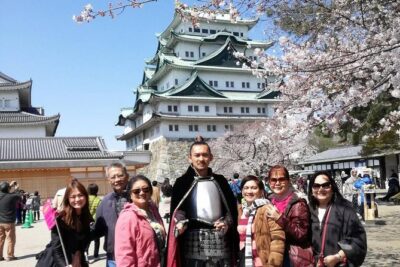
Nagoya Highlight Tour guided by a friendly local
Read our review →
Japanese Traditional Sweets making and Tea Ceremony
Read our review →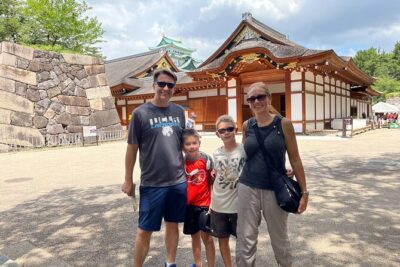
Nagoya Full-day Private Custom Tour with National Licensed Guide
Read our review →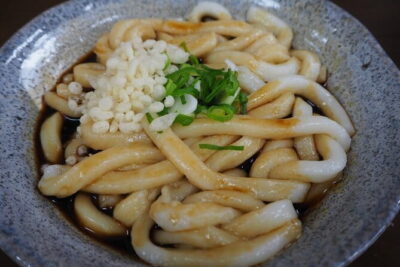
Ise’s Sacred Shrines and Captivating Coastlines – From Nagoya
Read our review →Browse the lists this tour appears in