
Reviewed · NAGOYA TOURS
Specialties of Nagoya Food Tour
Nagoya’s best food stories arrive in small portions: red miso broth, freshwater eel, peppery chicken wings, unusual pickles, and a sweet potato snack tied to demons and famine. This private food walk takes you through Sakae, Oasis 21, and Matsuzakaya Nagoya, with the guide handling orders and payments at each stop.
I like the six-person limit, which gives you room to ask questions and makes restaurant stops less awkward. I also like that the food is not just presented as a tasting menu. You learn how to eat hitsumabushi, hear why local foods developed as they did, and get practical tips for eating in Nagoya after the tour.
The main consideration is the price, $150.89 per person, and the fact that the menu is pre-selected. This is not a good match for vegans or vegetarians, and anyone with allergies or dietary limits should contact the provider before booking.
Key points at a glance
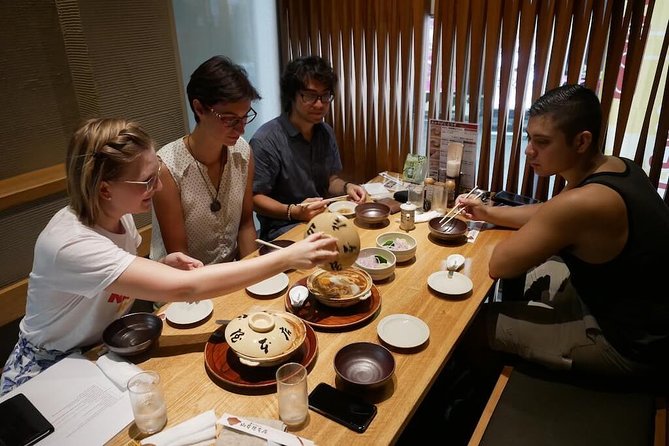
- Red miso takes center stage: Try Miso Nikomi Udon in a hot red miso broth, one of Nagoya’s defining local dishes.
- Hitsumabushi comes with instructions: Your guide explains the different ways to eat Nagoya’s freshwater eel specialty.
- A private group keeps things personal: Only your group participates, with the stated group size limited to six people.
- The route mixes food with city sights: Walk through Sakae, see Oasis 21, and explore the underground level of Matsuzakaya Nagoya.
- Orders and tastings are handled for you: Food, fees, and five to six foods or snacks are included, so you do not need to stop and pay at each restaurant.
- Dinner adds izakaya culture: Nighttime tours include one alcoholic or non-alcoholic drink and peppery chicken wings.
Why Nagoya food makes a good walking tour
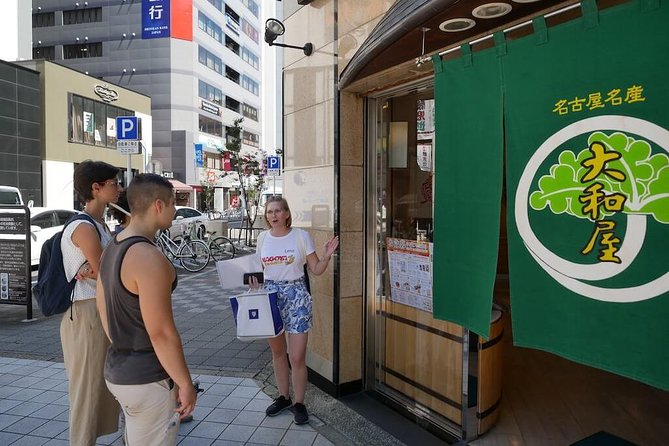
Nagoya cooking has a clear local character. Red miso is central, and you will taste it in the broth of Miso Nikomi Udon, a hearty noodle dish served steaming hot. The tour also introduces dishes and snacks that are easy to miss if you only visit the city’s best-known attractions.
That matters because Nagoya is often treated as a stop between Tokyo and Kyoto. A food walk gives you a reason to slow down and notice how the city eats. Instead of simply being handed a plate, you hear the story behind the food and learn how locals approach it.
The experience lasts about three and a half hours. That is long enough for several stops without turning the evening into a marathon meal. You will walk between locations, but restaurant breaks provide time to sit, eat, and recharge.
The route is based in central Nagoya, beginning near Chubu Electric Power MIRAI TOWER. Since the tour ends back at the meeting point, it is simple to plan around a hotel or evening activity in the same central area.
More food tours in Nagoya:
- Nagoya Street Food Walking Tour of Osu
★ 5.0 · 28 reviews - Tokyo: Shinjuku Food Tour (13 Dishes at 4 Local Eateries)
★ 5.0 · 6,603 reviews - Osaka: Shinsekai Food Tour with 13-15 Dishes at 5 Eateries
★ 4.8 · 2,204 reviews
Starting beneath MIRAI TOWER in Sakae
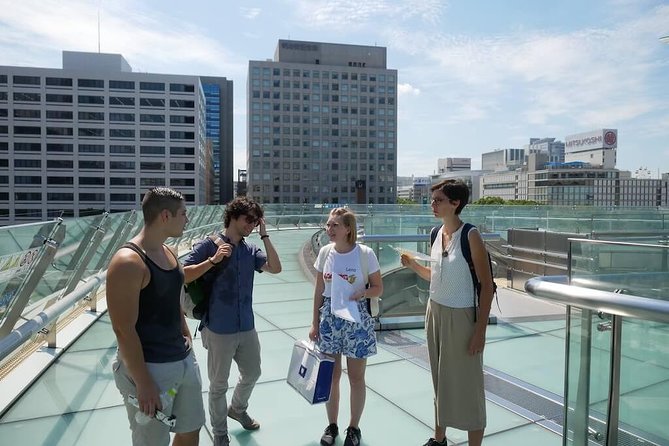
Your guide meets you at Chubu Electric Power MIRAI TOWER, at 3-chōme-6-15 Nishiki, Naka Ward. Sakae is a useful starting point because it puts you in the center of Nagoya’s shopping, dining, and entertainment district.
The first part of the walk helps set the tone. Rather than rushing straight into a large meal, you begin exploring the city on foot and learning how local specialties fit into daily life. The guide orders the food, which is a real help if you do not read Japanese menus or are unsure how much to order.
The private format also makes this opening more useful. You can ask about ingredients, portion sizes, or foods you may have seen elsewhere in Japan. Guides named Patricia, Erica, and Lena have led this experience, and Patricia’s personal background gives the tour an especially interesting angle. She has Japanese ancestry, grew up in Peru, and moved to Japan at 19, giving her more than one cultural viewpoint on Japanese food and customs.
Because you meet in a central spot, you are responsible for getting yourself to the tower. Transportation to and from the tour is not included. The meeting point is near public transportation, so you can reach it without arranging a private transfer.
Oasis 21 and the city between bites
Oasis 21 is one of the route’s named stops. The tour does not treat Nagoya as a series of restaurants only. You also get a look at a central urban meeting point while moving between food stops.
This is one of the reasons the walking format works. Food in Japan can be easy to reduce to a checklist, especially when you are trying to fit many dishes into a short visit. Walking gives each stop a little context and helps break up the eating.
You should expect a fair amount of time on your feet. The pace includes restaurant breaks, but this is not a seated tasting in one location. Comfortable shoes will make the experience easier, especially if you are joining in the evening after a day of sightseeing.
The route also gives your guide a chance to explain local habits. On a dinnertime tour, the conversation turns toward Japan’s drinking culture and the role of the izakaya, a casual place for food and drinks. That setting can be more useful than a formal restaurant if you want to understand how people share small dishes and order drinks together.
Red miso udon, the first major taste
Miso Nikomi Udon is one of the most important food stops. The dish features udon noodles in a steaming soup made with red miso paste. Red miso has a stronger, more savory character than the lighter miso varieties many visitors first encounter elsewhere in Japan.
The heat of the dish matters. You are not tasting a small cold sample from a market stall. You get a proper local specialty, served hot, with the guide explaining what you are eating and how it fits Nagoya’s food identity.
This stop also shows the value of having a guide order for you. Udon dishes can vary in size and preparation, and a local guide can choose the intended version of the food without forcing you to decode a menu. One guide, Patricia, received particular praise for the handmade udon and its red miso broth.
If you prefer mild flavors, red miso may taste bold. That is part of the point, but it is worth knowing before you book. The tour leans into Nagoya’s distinctive tastes rather than staying with neutral dishes designed for everyone.
Same base, a completely different sort of day:
- From Nagoya: Gujo, Hida Takayama, and Shirakawa-go Day Tour
★ 4.4 · 398 reviews - Ghibli Park 1-Day Bus Tour from Nagoya
★ 4.5 · 277 reviews - From Nagoya: Hida Takayama & Shirakawa-go Tour w/Opt. Lunch
★ 4.5 · 256 reviews - Hiking the Historic Nakasendo Trail [1 Day Tour from Nagoya]
★ 5.0 · 104 reviews
Pickles, giant radishes, and shrimp tempura rice balls
The food stops go beyond the familiar. You try pickles made from the world’s longest radish, a detail that turns a simple side dish into a local food lesson. The unusual ingredient gives the guide something concrete to explain, and it adds contrast to the warm noodles and richer dishes.
You also hear the story behind local rice balls stuffed with shrimp tempura. This is the kind of food that can be hard to discover by walking into a restaurant at random. It may look like a simple snack, but the filling and preparation give it a clear local connection.
These smaller bites are important for pacing. With five to six foods and snacks included, the tour is not built around one giant meal. You get several tastes, with enough pauses to talk and move on before any one dish takes over the afternoon or evening.
The exact foods may change based on availability. That means you should book this experience for the chance to sample Nagoya specialties, not for a fixed menu where every item is guaranteed. The core food themes are clear, but the final selection can vary.
Matsuzakaya Nagoya and department-store food culture
Matsuzakaya Nagoya is another named stop, and the tour explores the underground level of this historic department store. Japanese department-store basements are often important food destinations, with prepared dishes, sweets, produce, and specialty items arranged for shoppers.
Here, the value is not only what you taste. You also see how food is sold in a polished urban setting, quite different from a small neighborhood restaurant or an izakaya. The guide can help you understand what you are looking at and point out foods you might otherwise pass without recognizing.
The underground visit is a useful addition for anyone who wants ideas for gifts or snacks during the rest of a Japan trip. The tour description does not promise specific shopping time or purchases, so treat this as a guided food-culture stop rather than a dedicated shopping excursion.
The department-store setting can also provide a break from outdoor walking. Since the route moves through central Nagoya and includes multiple food stops, the chance to step indoors is welcome, especially in poor weather or during a long sightseeing day.
Sweet potatoes, demons, and famine
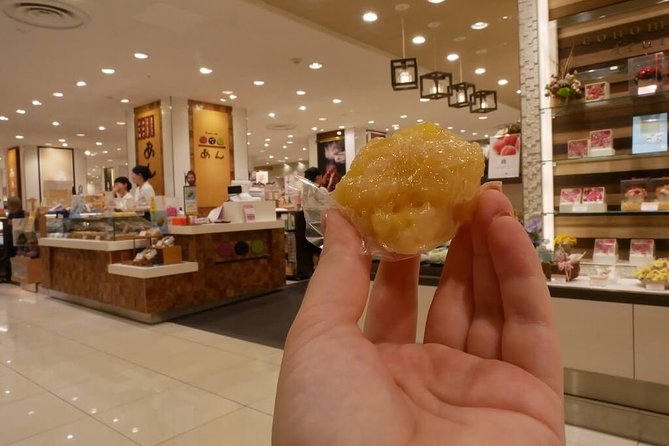
One of the more memorable explanations concerns a local sweet potato treat. Your guide connects it with Japanese demons and famine, showing how food stories can carry memories of hard times as well as folklore.
This is the sort of detail that gives the tour more substance than a string of tastings. You are not expected to study Japanese history, but the food becomes easier to remember when it comes with a story. The connection also shows how sweets can have a cultural role beyond dessert.
The exact sweet potato item is not specified, so do not book expecting a named confection. Expect a local sweet treat with an explanation of its background, and be ready for the food selection to shift if supplies change.
Learning the right way to eat hitsumabushi
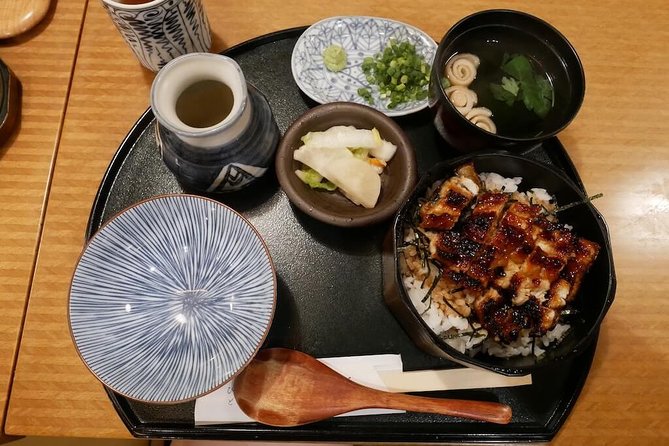
Hitsumabushi is Nagoya’s famous freshwater eel dish, and the guide explains how to eat it. That instruction is worthwhile because the dish is traditionally approached in stages, rather than simply eaten all at once in the same way.
Eel is often a first-time food for visitors, and the tour gives you a supported way to try it. One earlier participant specifically enjoyed having unagi for the first time. If eel is new to you, ask your guide about the different portions and seasonings as you go.
This is also one of the richer stops, so the overall pacing matters. The smaller snacks, noodles, and pickles help create variety around the eel. You get a better sense of Nagoya food than you would from ordering only one large specialty dish.
There is no promise of a particular restaurant name or exact preparation. The useful guarantee is the subject: you will learn about hitsumabushi and how to eat it, while the specific food choice remains subject to availability.
Evening izakaya food and peppery chicken wings
The nighttime version adds a popular Nagoya izakaya. This is where the tour shifts from daytime food exploration to Japan’s casual drinking culture.
You get peppery chicken wings and one drink at the final stop. The included drink can be alcoholic or non-alcoholic, so you can take part even if you do not drink beer. The food and drink are included in the tour price, which makes ordering easier and keeps the final stop relaxed.
The wings offer a sharper, saltier contrast to the miso udon and eel. They also suit the izakaya setting, where dishes are often shared and paired with drinks. If you want to see how a typical evening food stop differs from a formal dinner, this part of the tour is especially useful.
The provided hours list the experience from 10:00 AM to 5:00 PM, while the description also refers to dinnertime tours. Confirm the available start time when you book, particularly if you specifically want the nighttime izakaya stop and included drink.
What the $150.89 price really covers
At $150.89 per person, this is not a cheap way to grab street food. The price makes more sense if you value interpretation, several tastings, and an easy ordering process.
You receive five to six foods and snacks, all fees and taxes, and, on nighttime tours, one drink at the last stop. You also receive a private experience for your group, with only your party participating and a stated limit of six people.
That format can be good value for a first day in Nagoya. A guide can help you identify dishes worth seeking out later, explain unfamiliar customs, and steer you toward foods you might miss on your own. The benefit is less about the raw amount of food and more about the time saved and the confidence gained.
The price is harder to justify if you already know Nagoya’s specialties, speak Japanese comfortably, or prefer choosing every dish yourself. It is also not ideal for anyone who wants a fixed menu, since food is pre-selected and may change.
Who will enjoy this Nagoya food walk
I would recommend this experience to first-time visitors who want a quick introduction to Nagoya’s local dishes. It suits couples, families, and small groups who prefer asking questions without sharing the guide with strangers.
It is also a good choice if language barriers make restaurant ordering stressful. The guide orders the food for you, and the included tastings mean you do not need to manage separate payments at each stop.
Food-focused visitors will appreciate the range. You move from noodles to pickles, rice balls, sweets, eel, and chicken wings, with cultural stories connecting the stops. The tour is particularly helpful if Nagoya is a short stop in a larger Japan itinerary.
You should think twice if you are vegan or vegetarian. The experience is explicitly not suitable for those diets. If you have allergies or other restrictions, contact the provider before booking rather than assuming substitutions will be available.
Practical details before you book
The tour lasts about three hours and thirty minutes and includes a fair amount of walking. Plan to arrive at Chubu Electric Power MIRAI TOWER with enough time to find the meeting point.
The tour ends back at the starting point. Transportation to and from the activity is not included, but the meeting point is near public transportation.
The experience can be booked with a mobile ticket. Confirmation is sent within 48 hours, subject to availability. It is often booked about 60 days ahead, so reserve early if your Nagoya dates are fixed.
Free cancellation is available up to 24 hours before the start time for a full refund. Changes or cancellations made less than 24 hours before the start time are not accepted for a refund, and the cut-off follows local Nagoya time.
Should you book the Specialties of Nagoya Food Tour?
Book it if you want a guided introduction to Nagoya’s food culture, especially if this is your first visit or your Japan itinerary gives you little time in the city. The strongest reasons are the private format, the guide’s help with ordering, the varied tasting list, and the practical lessons on dishes such as red miso udon and hitsumabushi.
Skip it if you need a vegan or vegetarian menu, dislike walking, or want complete control over every restaurant and dish. At $150.89, you are paying for guidance and cultural context as much as for food.
For most omnivorous visitors who want Nagoya to feel like more than a stop between larger cities, this is a well-focused introduction. Just confirm the start time, disclose dietary restrictions, and remember that the exact foods can change with availability.
FAQ
Where does the Nagoya food tour start?
It starts at Chubu Electric Power MIRAI TOWER, at 3-chōme-6-15 Nishiki, Naka Ward, Nagoya, Aichi 460-0003, Japan.
Where does the tour end?
The activity ends back at the meeting point.
How long does the experience last?
The tour lasts approximately three hours and thirty minutes.
How much does the tour cost?
The listed price is $150.89 per person.
How many people can join?
The tour is private, so only your group participates. It is also described as limited to six people.
What food is included?
You receive five to six foods and snacks. Possible specialties include Miso Nikomi Udon, pickles, shrimp tempura rice balls, a sweet potato treat, hitsumabushi, and spicy chicken wings.
Is a drink included?
Nighttime tours include one drink at the final stop. You can choose an alcoholic or non-alcoholic beverage.
Is transportation included?
No. Transportation to and from the tour is not included.
Is the tour suitable for vegetarians or vegans?
No. The experience is listed as unsuitable for vegans and vegetarians. Contact the provider about food allergies or other dietary restrictions.
Can I cancel for a full refund?
Yes. You can cancel at least 24 hours before the start time for a full refund. Cancellations or changes made less than 24 hours before the start time are not refunded.
Just added around Nagoya
- Walking Small-Group Nagoya City Tour★ 5.0 · 13 reviews
- Nagoya Endoji Food and Cultural Tour★ 5.0 · 12 reviews
- Pub Crawl in Nagoya★ 5.0 · 15 reviews
- Sumo Tournament Experience in Nagoya★ 5.0 · 12 reviews
- Nagoya Street Food Walking Tour of Osu★ 5.0 · 28 reviews
- Nagoya: 2026 Hida Takayama Shirakawa-go Light-up Winter Tour★ 3.5 · 16 reviews
- Private Full-day Nagoya City Tour★ 5.0 · 22 reviews
- Nagoya Highlight Tour guided by a friendly local★ 5.0 · 86 reviews
Nagoya Tours, compared.

![Hiking the Historic Nakasendo Trail [1 Day Tour from Nagoya]](https://media3.thejapanesetraveller.com/wp-content/uploads/hiking-the-historic-nakasendo-trail-1-day-tour-from-nagoya-400x267.jpg)
Hiking the Historic Nakasendo Trail [1 Day Tour from Nagoya]
Read our review →
Nagoya Highlight Tour guided by a friendly local
Read our review →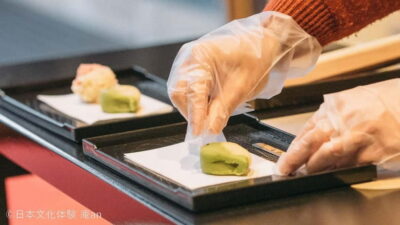
Japanese Traditional Sweets making and Tea Ceremony
Read our review →
Magome-juku, Tsumago-juku & Ena-kyo 1d Bus Tour from Nagoya
Read our review →
Nagoya Full-day Private Custom Tour with National Licensed Guide
Read our review →Browse the lists this tour appears in