
Reviewed · OKINAWA TOURS
Afternoon Adventure: Okinawa Local Cycling with Spectacular Views
Naha’s best cycling route is not along the shore. It runs through pottery lanes, old neighborhoods, Shuri’s stone streets, and up to a broad view over the city. This small-group e-bike ride gives you a useful look at Okinawa beyond the main shopping arcades.
I like the route’s mix of everyday life and Ryukyu history. I also like the helmet microphones, which let you hear the guide while riding. The main consideration is the terrain: Shuri has steep sections, and the ride may feel warm in Okinawa’s summer heat.
Key points to know before you book
- See five different sides of Naha: pottery streets, local shopping areas, traditional homes, Shuri’s old town, and a city viewpoint.
- Ride with no more than five people: The small group makes it easier to ask questions and keep a steady pace.
- Use an assisted bicycle on the hills: The e-bikes help on the climbs toward Shuri Castle, though you still need basic cycling confidence.
- Hear the guide while riding: The helmets include microphones for communication between the guide and the group.
- Allow 3 to 3.5 hours: The ride is long enough for history and photos without taking your whole day.
- Plan for changing weather: If rain probability rises above 70 percent or severe weather is expected, the operator may alter or cancel the plan.
Why this route gives you more than a standard Naha ride
At $99.10 per person, this is not the cheapest way to get around Naha. You are paying for the bicycle, helmet, guide, route planning, and a tightly managed group of no more than five people.
That price makes better sense if you want context as you ride. Instead of simply passing a pottery street or a castle gate, you can stop and learn why those places matter. You also avoid spending time working out a route through Naha’s hills and narrow lanes on your own.
The ride begins near Makishi Monorail station, just one minute from the shop. That is useful if you are staying near Kokusai Street or arriving by monorail. You collect the bicycle, receive a short safety briefing, and set off with the guide.
The experience is listed as an afternoon adventure, but some departures can run toward sunset. That timing matters. The final viewpoint in Shurisakiyamacho can look especially good as the light fades, and one December ride included a sunset over Naha. Check the exact departure time when booking if sunset is important to you.
More bike days around Naha:
- Naha: Guided E-Bike Tour of the 12 Zodiac Temples
★ 4.9 · 50 reviews - Zodiac Shrines and Naha Backstreets Cycling Tour
★ 5.0 · 29 reviews - E-Bike Nature Tour in Shuri
★ 5.0 · 25 reviews
Starting at Makishi and riding into local Naha
The meeting point is e-CHARIty Naha Kokusai Street, at 3-chōme-13-20 Makishi. The shop is close to Makishi Monorail station, so you do not need a taxi from the central Naha area.
The first 15 minutes cover bike pickup and the safety briefing. This is also the time to tell the staff about your riding comfort, especially if you are not used to an electric bicycle or have a shorter reach.
The route then moves through the area near Asato Shotengai. This district once had a very different reputation as a red-light area. Today, the evening brings izakayas and small eateries, giving you a look at a part of Naha that is easy to pass without understanding.
You also ride through local streets where a few traditional houses remain. This section is less about famous sights and more about seeing how Naha feels away from the main visitor routes. You might notice older homes beside newer buildings, a useful reminder that the city is not only a collection of historic monuments.
The roads and lanes are part of the challenge. You need to pay attention, follow the guide’s instructions, and be comfortable riding in an urban setting. The small group helps here, since the guide can keep an eye on each rider rather than managing a large line of bicycles.
Tsuboya Yachimun Dori and Okinawa’s pottery tradition
The first major stop is Tsuboya Yachimun Dori, with about 30 minutes to look around. Yachimun means pottery in the Okinawan language, and this neighborhood has been linked to local ceramic production for roughly 300 years.
The Ryukyu Kingdom gathered pottery kilns from different parts of the islands and brought them together here. That decision shaped Tsuboya into a working pottery quarter, not just a pretty old street arranged for visitors.
This stop gives the tour a strong cultural start. You can see the narrow street, traditional buildings, pottery shops, and signs of a craft that remains part of Okinawan life. The route is especially useful if you have already seen Naha’s major shopping streets and want a quieter look at local work.
The stop lasts long enough for an explanation and photos, but not for a full pottery-shopping session. If you want to buy ceramics, keep your shopping focused or return after the ride. The tour finishes at the same shop, and you can continue exploring Naha on your own afterward.
Shuri’s stone road and the old Ryukyu capital
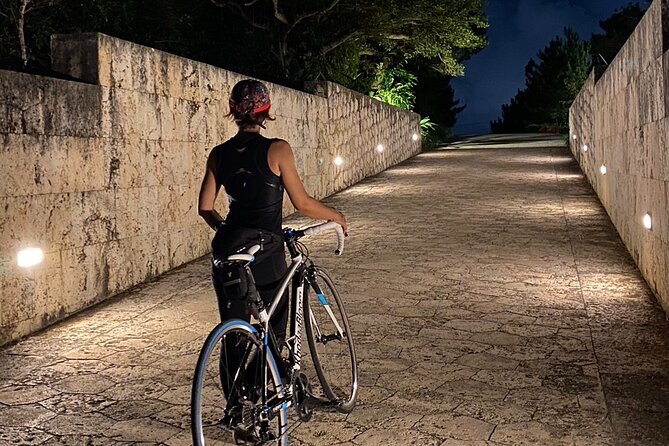
The ride continues uphill toward Shuri, the former capital of the Ryukyu Kingdom. The Shurikinjocho Stone-Path Road receives about an hour, making it one of the main parts of the experience.
Here, the character of the city changes. Cobblestones, temples, shrines, and old routes replace the more modern streets around Makishi. The road connects you with the former royal city in a direct, physical way. You are not only looking at a reconstructed gate or a museum display. You are riding through the kind of street network that shaped Shuri’s daily life.
The stone surface can make riding slower and less comfortable than smooth pavement. That is part of the appeal, but it also means you should not expect a fast cycling workout. The guide controls the pace, and the electric assistance helps with the hills.
Several riders have singled out the e-bikes as a major help on the climbs toward Shuri Castle. That does not make the tour effortless, and you still need to handle the bicycle carefully. It does make the route more accessible to someone who cycles occasionally rather than every week.
Shorter riders should ask about the available bicycle size before setting off. One useful point from the operator is that some smaller riders may receive a Mama-chan style bicycle rather than a small mountain bike. It can work for a short urban ride, but riders who prefer a compact frame should raise the issue in advance.
A few more Naha half-days to weigh up
- Official Street Go-Kart Tour – Okinawa Shop
★ 5.0 · 699 reviews - Naha: North Okinawa Sightseeing Tour & Churaumi Aquarium
★ 4.4 · 472 reviews - Okinawa: From Naha: Kerama Islands 1-day snorkeling tour
★ 4.4 · 423 reviews - From Naha: Tokashiki Island Day Trip by Boat
★ 4.3 · 385 reviews
Shurijo Castle Park for gardens, walls, and photographs
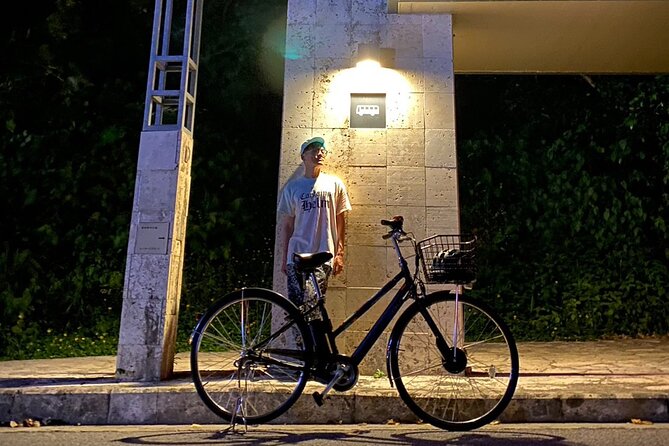
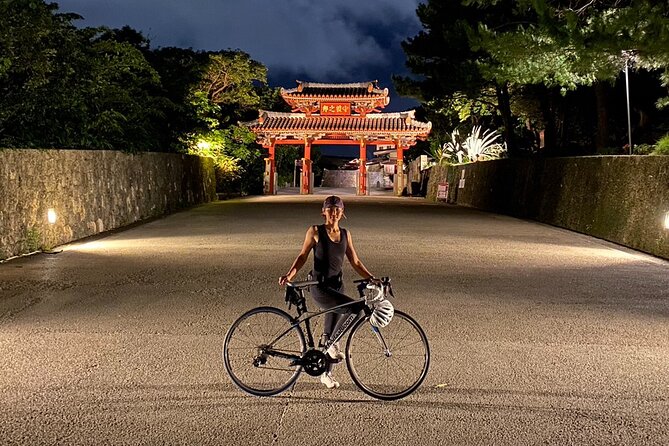
The next hour is spent passing through Shurijo Castle Park. The park includes plants that change with the seasons, old stone walls, and the well-known Shureimon gate.
The tour does not present this as a long castle visit with time inside every building. Instead, you ride through the park and pause to take in its setting. That makes the stop efficient if you have limited time in Naha, though you may want a separate visit if Shurijo Castle is a top priority and you want a slower look at the full complex.
Shureimon is one of the most recognizable sights in Okinawa. The gate’s red and decorated form makes an easy photograph, while the stone walls give the park a calmer feel than central Naha. Your guide can connect the physical setting to the Ryukyu Kingdom and explain why Shuri mattered as the island kingdom’s capital.
The park section also provides a welcome change of pace. The route begins in the city, moves through pottery lanes, and then reaches a more open historic setting. You should still expect some climbing and uneven surfaces, especially around the old stone routes.
If you join during a hot month, bring water and dress for the weather. The supplied information specifically advises bringing an extra layer in case it gets cooler in the evening. That is sensible for a sunset departure, when the temperature can change after the ride has begun.
The Shurisakiyamacho viewpoint
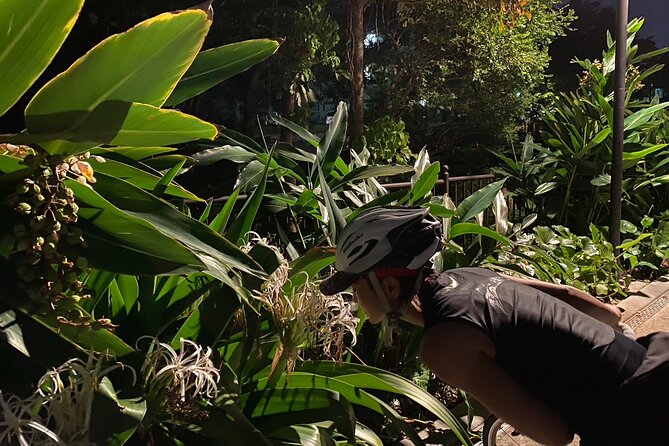
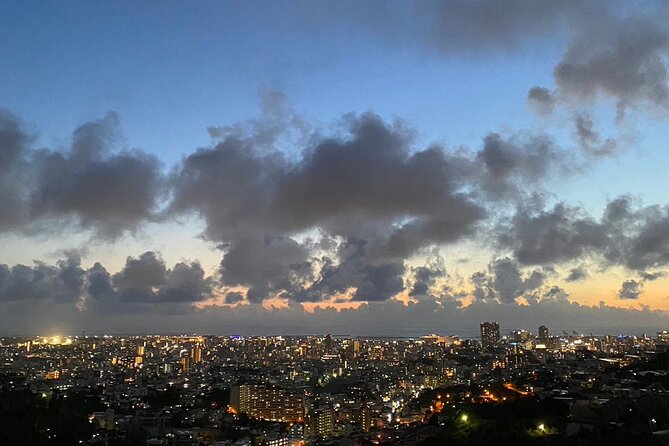
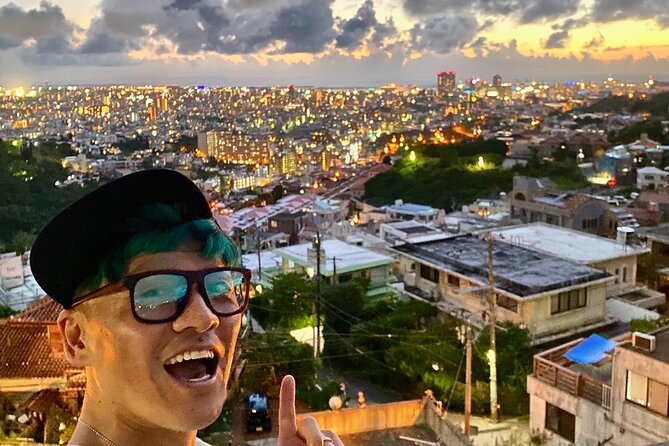
The final sightseeing stop is Shurisakiyamacho, where you spend about 20 minutes at a viewpoint over Naha City. This is the tour’s clearest payoff for the uphill riding.
From here, you can look back across Naha and take photographs. The view is especially appealing late in the day, when the city lights begin to appear. Several guides have been praised for taking photographs during sunset rides, so you can ask your guide about a good angle and let them know if you would like a picture of the group.
Do not think of this as a remote mountain lookout. The point is the quick change in perspective. After riding through ordinary streets and historic lanes, you see how much of Naha spreads below Shuri.
The 20-minute stop is enough for pictures and a short rest. It is not a long break, so use the earlier stops for extended browsing or snacks. The tour does not include food or drinks, and no meal stop is listed.
Guides, communication, and the small-group feel
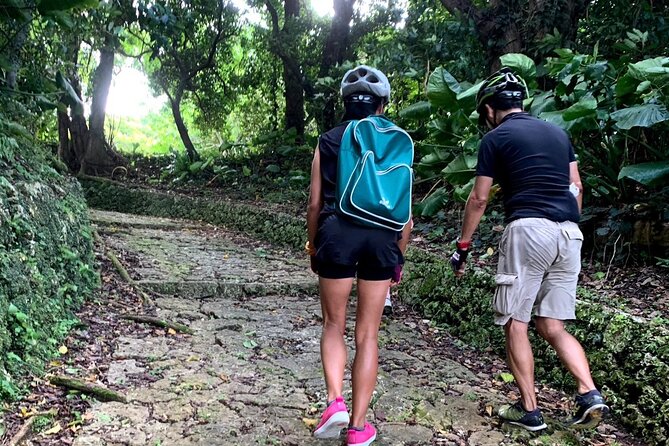
The guide is a large part of the experience. Names associated with this route include Aki, Tony, Maki, Jojo, Hiro, Aziz, Sammi, and Rechi. The guiding style described across the experience is friendly, patient, and focused on explaining Okinawan history and local customs while keeping the ride moving.
Aki, for example, has been praised for giving detailed explanations without letting the group lose momentum. Tony is noted for his clear explanations of Okinawan history and local culture. Maki has been described as thoughtful and accommodating, while Hiro received high marks for communication, safety, and practical help.
You should not assume a specific guide will lead your departure unless the booking confirms it. Still, the range of guide feedback points to an important strength: this is not simply a bicycle rental with a person at the front. The guide shapes the pace, explains what you are seeing, and steers you through streets that might be awkward to navigate alone.
The helmets include microphones, so the guide can communicate while the group is riding. That is a small feature with real value. Without it, you would often need to stop completely for every explanation. It also helps the group stay together at turns.
The group limit is five people. For a city ride with narrow roads and hills, that is much more manageable than a large procession. It also gives you a better chance to ask about pottery, local houses, Shuri, or anything else that catches your attention.
Is the e-bike suitable for you?
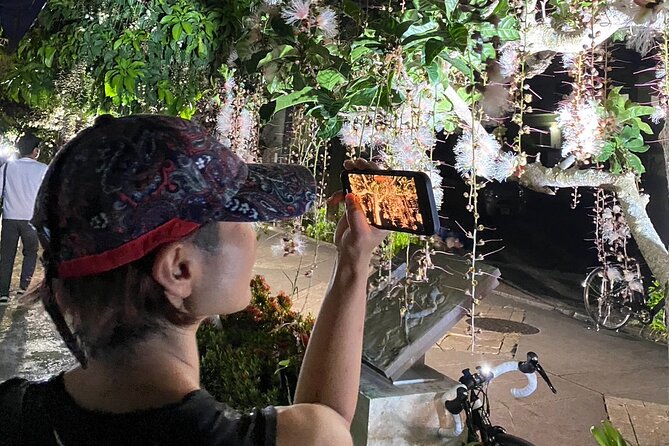
You need to be able to ride a bicycle and manage ordinary urban cycling. The e-bike reduces the effort needed on climbs, but it does not replace balance, braking, steering, or awareness of other road users.
The route includes hills toward Shuri Castle, cobbled sections, and tight streets. If you are a nervous cyclist, ask the operator about the route and bicycle before booking. The available information says most people can participate, but it does not promise a flat or beginner-only ride.
Children aged one to five can use a child seat attached to a parent’s bicycle. You should consult the staff about this arrangement before the tour. No child e-bike is provided, and the operator has noted that smaller riders may have limited bicycle choices.
The ride is a good match for you if you:
- Like learning local history without spending hours inside museums
- Want to see Naha beyond Kokusai Street
- Are comfortable cycling for several hours
- Prefer a small group over a large bus tour
- Want a city viewpoint and possible sunset photos
- Need electric assistance for moderate hills
It is less suitable if you want a flat seaside ride, a fast athletic cycle, or a long independent visit inside Shurijo Castle.
What to bring and how to plan the afternoon
Wear clothes that allow easy movement and shoes suitable for cycling. Okinawa can be hot, especially in summer, while an evening finish may feel cooler, so bring an extra layer.
The bicycle and helmet are included. Camera mounts and mobile phone holders are not included, so do not count on attaching your phone to the handlebars. You can still carry your phone safely and use it during stops, but avoid trying to photograph while riding.
The tour ends back at e-CHARIty Naha Kokusai Street after the bicycles are returned. That location works well for an evening meal, more shopping around Kokusai Street, or a return trip by monorail.
The operator may change plans if the precipitation probability exceeds 70 percent or if severe weather is expected. You should receive notice the day before when a weather change is needed. If the operator cancels because of poor weather, you can choose another date or receive a full refund.
Free cancellation is available up to 24 hours before the start time. Cancellations or changes made within 24 hours are not refunded or accepted, so keep that deadline in mind when planning around flights, cruise schedules, or other fixed activities.
Is $99.10 a fair price?
I would call the price reasonable for the right kind of visitor. A basic bicycle rental costs less, but it does not give you a local route, a helmet with communication equipment, historical explanations, or help on the hills.
The small maximum group is another part of the value. You are paying for personal attention and a carefully planned half-day rather than simply hiring a bike. The price is harder to justify if you are happy riding alone, already know Shuri, or plan to spend only an hour on a bicycle.
The route also packs several distinct parts of Naha into one outing. You see Tsuboya’s ceramics, Asato’s local streets, surviving traditional houses, Shuri’s stone road, Shurijo Castle Park, and the city from above. That variety is the main reason I would choose this tour over an ordinary rental.
Should you book this Naha cycling tour?
Book it if you want a practical introduction to Naha’s history and local streets, especially if the idea of climbing to Shuri sounds better with an electric motor and a guide. The route has enough variety to feel like more than sightseeing by bicycle, and the five-person limit keeps it personal.
I would be cautious if you dislike hills, uneven stone roads, heat, or riding near city traffic. Also, choose a different experience if your main goal is a long beach ride or a detailed interior visit to Shurijo Castle.
For most active visitors with a half-day free, this is a strong way to connect central Naha with the old Ryukyu capital. The best timing is likely a late afternoon departure, when you can finish at Shurisakiyamacho with the city below and the evening beginning around you.
FAQ
Where does the cycling tour start?
It starts at e-CHARIty Naha Kokusai Street, at 3-chōme-13-20 Makishi, Naha, Okinawa 900-0013, Japan. The shop is a one-minute walk from Makishi Monorail station.
How long does the tour last?
The tour takes approximately 3 to 3.5 hours.
How much does the tour cost?
The listed price is $99.10 per person.
What is included in the price?
The price includes bicycle use, bike rental, an Incom-installed cycling helmet, and a cycling guide.
Are camera mounts or phone holders provided?
No. Camera mounts and mobile phone holders are not included.
How many people can join the tour?
The maximum group size is five travelers.
Can young children join?
Children aged one to five can use a child seat attached to a parent’s bicycle. You should consult the staff for more information before booking.
What happens if the weather is poor?
If the precipitation probability exceeds 70 percent or severe weather is expected, the operator may change the plan and contact you the day before. If the experience is canceled because of poor weather, you can receive a different date or a full refund.
Can I cancel for a full refund?
Yes. You can cancel at least 24 hours before the experience start time for a full refund. Cancellations or changes made less than 24 hours before the start time are not accepted for a refund.
Just added around Naha
- Tokashiki Island Day Trip from Naha★ 4.0 · 15 reviews
- E-Bike Nature Tour in Shuri★ 5.0 · 25 reviews
- Zodiac Shrines and Naha Backstreets Cycling Tour★ 5.0 · 29 reviews
- Kintsugi Experience in Naha, Okinawa – Art from Broken Pieces!★ 5.0 · 28 reviews
- Sushi Making Experience Class in Naha Makishi Public Market★ 5.0 · 35 reviews
- Port Pick-Up: Naha Private Tour Licensed Guide& Vehicle★ 4.5 · 16 reviews
- Okinawa 2-Hours Genuine Kendo/Samurai Experience in Japan★ 5.0 · 28 reviews
- Okinawa:Kerama Islands experience Diving/Snorkeling/WhaleWatching★ 4.5 · 16 reviews
Okinawa Tours, compared.


North Okinawa Sightseeing Tour & Churaumi Aquarium
Read our review →
From Naha: Kerama Islands 1-day snorkeling tour
Read our review →

Naha, Okinawa: Keramas Island Snorkeling Day Trip with Lunch
Read our review →![[Miyako Island/Half Day] Sea Turtle Snorkeling](https://media3.thejapanesetraveller.com/wp-content/uploads/miyako-island-half-day-sea-turtle-snorkeling-400x267.jpg)


Snorkeling in the Blue Cave area【Okinawa Prefecture: Free feeding & photo images!English and Chinese speaking guide available!
Read our review →Browse the lists this tour appears in