
Reviewed · OSAKA TOURS
Absolute Osaka Food Tour
Osaka’s food culture makes the most sense on foot, one small plate at a time. This three-hour evening tour moves from the famous Glico sign into quieter lanes, pairing takoyaki and kushikatsu with stories about Osaka’s eating traditions. I like the route’s mix of headline sights and less obvious corners, especially Hozenji Yokocho and a small shrine away from the main crowds.
I also like the small maximum of 10 people, which gives the guide room to explain unfamiliar dishes and help you order. Guides including Asli, Melissa, and Marie have been praised for their warm manner, local history, and care with vegetarian choices. The main drawback is the price: at $231 per person, this is a costly three-hour outing, particularly since extra food, drinks, and transport are not included.
Key points to know before you book
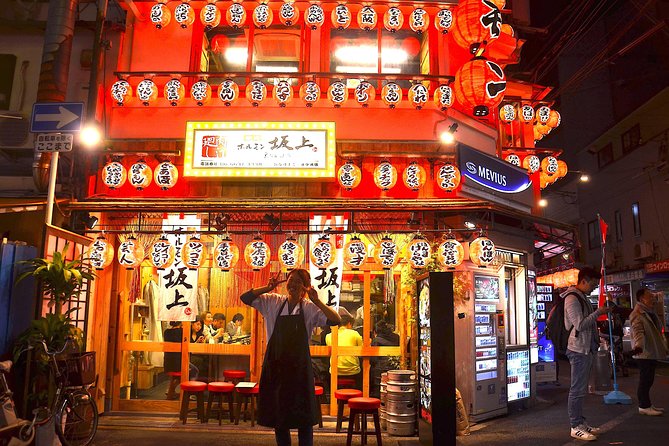
- Four food stops build a proper Osaka sampler: You get local dishes, one drink, and a traditional Japanese dessert rather than one large restaurant meal.
- The evening setting matters: Starting at 5 p.m. lets you see Dotonbori’s lights come on and finish in Osaka’s lively Namba area.
- The route mixes famous and quieter Osaka: The Glico sign and Kuromon Market bring the city’s big sights, while Hozenji Yokocho and a secret shrine offer a calmer pause.
- Vegetarian and pescetarian visitors can be accommodated: Guides have found suitable options at each stop, but gluten-free diners should choose another tour.
- The group stays small: With no more than 10 people, you should have a better chance to ask questions and receive help with dishes.
- The cost is the key decision: The value lies in guidance, food introductions, and local context, not in the quantity of food alone.
Starting beneath the Glico runner in Dotonbori
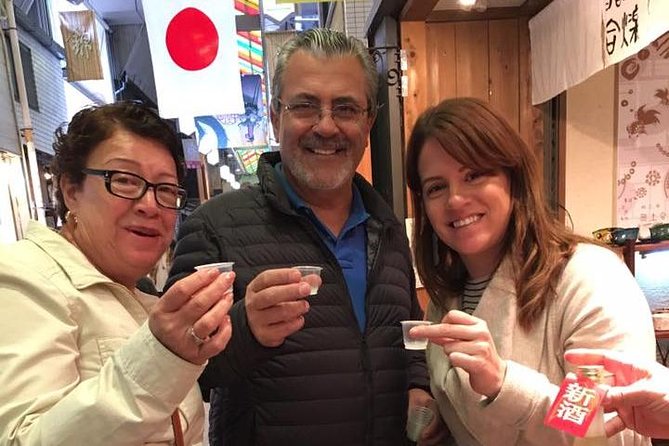
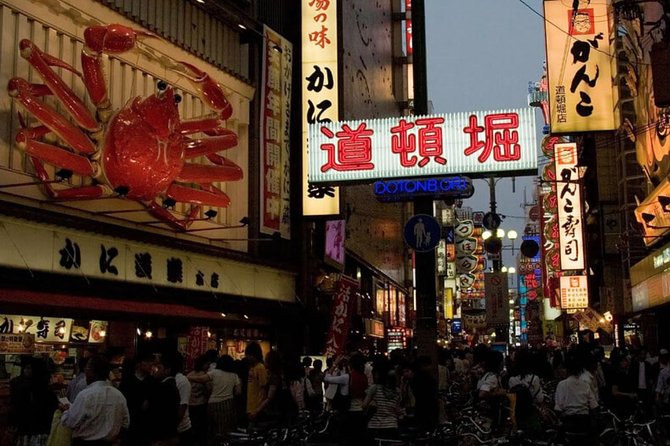
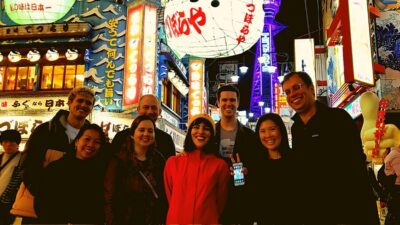
The meeting point is in Dotonbori, Osaka’s famous entertainment and food quarter, at 5 p.m. That timing is useful. You begin before the night is fully underway, then watch the signs and restaurant fronts grow brighter as the tour continues.
The opening stop is the familiar Glico running man sign. It is easy to treat the giant athlete as just another photo backdrop, but the guide gives it a human story. The image was inspired by Fortunato Catalon, a Filipino sprinter whose athletic success helped inspire a nation and became part of the Glico company’s identity.
You spend only about five minutes here, so this is not a long history lecture. It is a quick piece of context that helps you look at one of Dotonbori’s best-known symbols with fresh eyes. Take your photos before the group moves on, since the area becomes harder to navigate as the evening crowd builds.
More Food Tours in Osaka
- Osaka: Shinsekai Food Tour with 13-15 Dishes at 5 Eateries
★ 4.8 · 2,204 reviews - Osaka Food Tour: 13 Dishes at 5 Local Eateries
★ 5.0 · 2,149 reviews - Hungry Osaka Street Food Tour:15 Tastings & 3 Drinks with a Local
★ 5.0 · 1,727 reviews
Leaving the bright main street for local food
Dotonbori is famous for its oversized signs, glowing shop fronts, and endless food choices. It is also easy to eat badly here. The most obvious restaurants may have long lines, tourist-focused menus, or prices that reflect the location more than the cooking.
The useful part of this tour is the guide’s ability to steer you away from the main commercial strip. You still get the sights and energy of Dotonbori, but the food stops are chosen to show more than the postcard version of Osaka. That distinction matters if you have only a short stay and do not want to spend your evening guessing which restaurant is worth your time.
The route moves through Minami, the larger Namba district that includes Dotonbori. This is Osaka’s classic food zone, and the tour uses it as a working classroom. You learn how local dishes fit into everyday eating, how to approach unfamiliar menus, and where the atmosphere changes once you leave the main arcade.
Takoyaki, kushikatsu, and four chances to taste Osaka
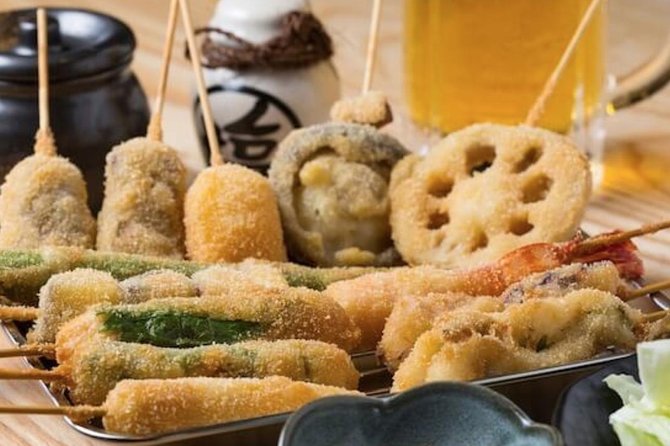
The four food stops are the heart of the experience. You receive local dishes, one included drink, and a traditional Japanese dessert. Exact dishes can change with the season and availability, but takoyaki and kushikatsu are specifically part of the experience.
Takoyaki are the soft, hot octopus-filled balls associated with Osaka. They are usually served very hot, so follow the guide’s lead before taking a large bite. For many people, this is the dish that defines Osaka street food: inexpensive, casual, and made for sharing.
Kushikatsu consists of skewered ingredients coated and fried. It gives you a different texture and style of eating from takoyaki, and it is closely tied to Osaka’s casual food culture. The guide can explain how to approach the dish and which ingredients are being served, which is useful if you do not read Japanese.
Four stops sound generous for three hours, but keep your expectations sensible. This is a tasting walk, not an all-you-can-eat dinner. Extra food and drinks cost more, and you may want to buy something additional if you arrive hungry. The included drink helps, but the tour price is not designed around a large volume of food.
The food changes when restaurants, holidays, seasons, or other conditions require a different plan. That flexibility protects the tour from a closed venue, but it also means you should not book expecting a fixed menu. The food themes are dependable, while the exact plates may shift.
Hozenji Yokocho and the small shrine pause
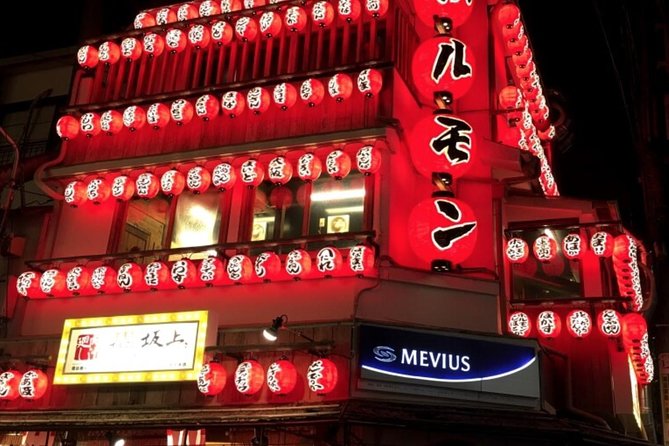
Hozenji Yokocho brings a welcome change of pace. Its narrow lanes feel removed from the large signs and noise of Dotonbori, even though they are close to the main district. The stop gives the guide room to talk about local customs and Osaka traditions without competing with the biggest crowds.
The tour also includes a secret shrine away from the main flow of the district. The supplied details do not name the shrine, so do not expect a major temple complex or a long sightseeing stop. Its value is in the contrast: after the bright commercial streets, you get a quieter corner and a glimpse of the spiritual side of central Osaka.
This is one of the strongest parts of the route for anyone who wants more than restaurant hopping. Food remains the focus, but the walk connects eating habits with the streets, shrines, and old lanes that shaped the area.
Same base, a completely different sort of day:
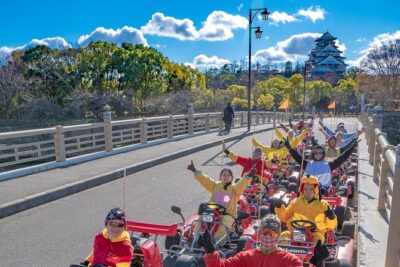
- Osaka Go Karting Tour with Funny Costume
★ 5.0 · 2,658 reviews - Osaka Castle: Museum and Tower Entry Ticket
★ 4.5 · 2,380 reviews - Osaka: teamLab Botanical Garden Entry Ticket
★ 4.5 · 1,710 reviews - Osaka: Tea Ceremony Experience
★ 4.9 · 1,426 reviews
Kuromon Market and Doguyasuji’s kitchen tools
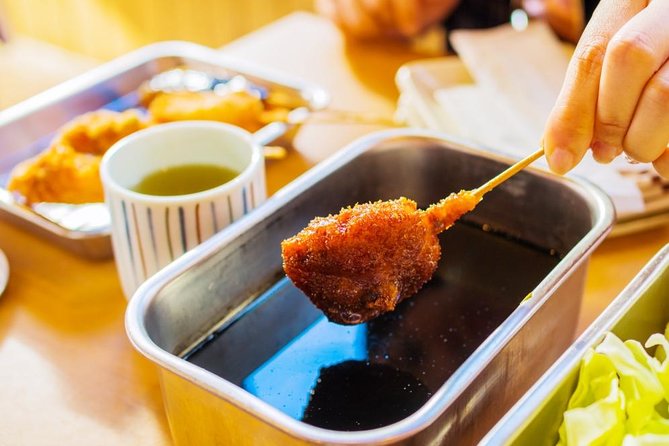
Sennichimae Doguyasuji Shotengai is known for shops serving the restaurant trade. The name may not mean much before you arrive, but the setting helps explain Osaka’s food identity from another angle. You are not only looking at finished dishes. You are seeing the tools and supplies behind the city’s restaurants.
Kuromon Market adds another food-centered stop. Market streets can be difficult to read on your own, especially when you are trying to decide what is worth tasting and what is simply eye-catching. The guide gives you a better framework for understanding the place and keeps the walk tied to the tour’s food theme.
The order and exact use of these stops can change. Restaurant schedules, public holidays, weather, and other practical issues may lead to substitutions. That is worth accepting if you value a guided introduction over a rigid checklist.
Misono Building and the changing face of Minami
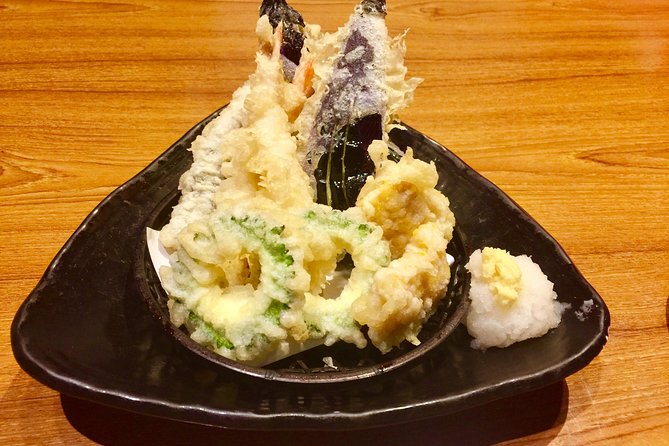
Misono Building is another stop in the Minami area. Its inclusion broadens the walk beyond the most polished parts of Dotonbori and Namba. It helps you see how Osaka’s dining districts include older, less predictable spaces alongside the bright restaurant streets.
The available details do not promise a specific meal or attraction inside the building, so I would treat it as part of the area’s character rather than a stand-alone landmark. The guide’s explanation is what makes this type of stop useful. Without context, you might simply pass through and wonder why it matters.
The tour ends in the Sennichimae area. That is a practical finish because you remain in central Osaka, with the rest of Namba and nearby transport links close at hand. The end point is not hotel drop-off, and you arrange your own way back.
What the guides add to the food

A food walk is only as good as the person explaining it. This experience uses an English-speaking local guide, and the guide is expected to do more than lead you between restaurants. You get stories about Dotonbori, the Glico sign, local customs, and Osaka’s food traditions.
The named guides associated with past tours include Asli, Melissa, and Marie. Their strengths have included clear explanations, friendly coordination, and help finding vegetarian dishes. Melissa, in particular, has been able to arrange vegetarian choices at each food stop while adding historical context for the area.
That matters because Japanese menus can be difficult to decode, even when you know a few basic words. A guide can identify ingredients, explain what you are eating, and make the experience less awkward when you are unsure how to order or behave at a particular stop.
The guide also acts as a filter. Dotonbori offers too many choices, not too few. A good route saves you from spending your limited evening in a queue for an average meal.
Is $231 good value for three hours?
At $231 per person, this is not a budget food walk. You need to judge the price against what you actually want. The fee covers four food stops, one drink, a traditional Japanese dessert, and an English-speaking guide. It does not cover extra food, additional drinks, transport, or hotel pickup.
The case for the price is convenience and access. You receive a planned route through some of Osaka’s hardest-to-read food districts, with someone helping you make sense of the dishes and neighborhoods. A small group of up to 10 also gives the tour a more personal feel than a large coach-style outing.
The case against it is just as clear. Three hours is short, the included food is tasting-sized, and Dotonbori, Namba, Kuromon Market, and Doguyasuji can all be visited independently. If you enjoy researching restaurants and are comfortable ordering on your own, you can spend much less.
I see the tour as better value for a first evening in Osaka, a solo visitor, or a couple who wants a guided start to the city’s food scene. It is weaker value for a large group, a serious food hunter who wants a full dinner, or anyone counting every meal yen by yen.
Dietary needs, age rules, and walking demands
Vegetarian and pescetarian diners can join, but tell the operator about your needs before the tour. The experience is not recommended for gluten-free diners, so a strict gluten-free diet is a strong reason to skip it.
Children are welcome when accompanied by an adult. A copy of passport information is required for children aged 10 and above. The minimum drinking age is 21, which matters because one drink is included, even though the tour is not built around alcohol.
You should have a moderate level of physical fitness. The experience lasts about three hours and includes walking through central Osaka, standing at food stops, and moving through busy streets. Exact distances are not provided, so wear comfortable shoes and avoid bringing luggage.
The route is near public transportation, but transportation costs are not included. Hotel pickup is also not included, though it can be arranged for an extra charge.
Booking timing and weather flexibility
The experience is often reserved around 38 days ahead, so popular dates may disappear well before your trip. Same-day booking is available, but it is safer to book early if your Osaka schedule is tight.
Free cancellation is available up to 24 hours before the 5 p.m. start time. Cancellations or changes inside that window are not refunded or accepted. The tour also needs good weather and a minimum number of participants. If poor weather or low enrollment cancels the outing, you are offered another date or experience, or a full refund.
Because the food and stops can change, keep a little flexibility around this evening. Do not schedule a nonrefundable show immediately afterward.
Who should book the Absolute Osaka Food Tour?
Book it if you want a guided first taste of Osaka, prefer a small group, and would like help navigating dishes that you might otherwise overlook. It is especially useful for solo visitors and for anyone who wants food, local stories, and a walk through several parts of Minami in one evening.
Vegetarians have a reasonable path into the experience, provided they confirm their needs. Families can join, though the walking, evening start, and passport rule for older children deserve attention.
Skip it if you need gluten-free food, want a large dinner, or would rather explore independently. At $231, this is a premium introduction rather than a cheap meal deal. If the price fits your budget, the best reason to book is not simply the takoyaki. It is the guide’s help in connecting Dotonbori’s bright food scene with the quieter lanes, shrines, markets, and local habits behind it.
FAQ
Where does the Absolute Osaka Food Tour start?
It starts at Japan, 542-0071 Osaka, Chuo Ward, Dotonbori, 1-chome 819, at 5 p.m.
Where does the tour end?
The tour ends in the Sennichimae area of Osaka.
How long does the tour last?
The experience lasts approximately three hours.
How many people can join the tour?
The tour has a maximum group size of 10 people.
What food and drinks are included?
The tour includes local dishes at four food stops, one drink, and a traditional Japanese dessert.
Is the tour suitable for vegetarians?
Yes. Vegetarian and pescetarian options are supported. Food choices may vary with season and availability.
Is the tour suitable for gluten-free diners?
The experience is not recommended for gluten-free diners.
Can I cancel for a full refund?
Yes, if you cancel at least 24 hours before the local start time. Poor weather or failure to meet the minimum number of participants may also lead to a different date or a full refund.
Just added around Osaka
- Discover Real Osaka: A Cultural Walk with Food & Drink★ 5.0 · 13 reviews
- From Osaka/Kyoto: Kyoto & Nara Day Trip with Optional Lunch★ 4.5 · 79 reviews
- Osaka 6hr Private Walking Tour with Government Licensed Guide★ 5.0 · 174 reviews
- Private Airport transfer Kansai Intl. Airport(KIX) to OSAKA CITY★ 4.5 · 12 reviews
- Osaka: Namba Local Food Walking Tour (Taste 15 Dishes)★ 5.0 · 20 reviews
- Osaka Delights: Traditional Japanese Food Tour★ 4.5 · 33 reviews
- Badminton in Osaka & Kyoto with Locals!★ 5.0 · 15 reviews
- From Osaka or Kyoto: Kyoto and Nara 1-Day Bus Tour★ 3.5 · 141 reviews
Osaka Tours, compared.
Shinsekai Food Tour with 13-15 Dishes at 5 Eateries
Read our review →
Osaka Food Tour: 13 Dishes at 5 Local Eateries
Read our review →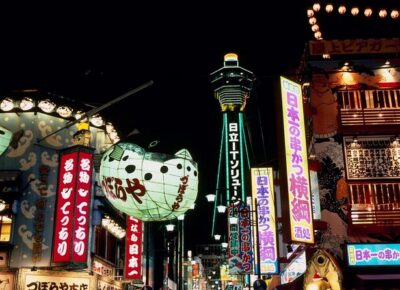
Hungry Osaka Street Food Tour:15 Tastings & 3 Drinks with a Local
Read our review →
Hotspots & Hidden Gems Walking Tour Private or Group
Read our review →Browse the lists this tour appears in