
Reviewed · OSAKA TOURS
All Inclusive Kuromon Markets Tour: Flavors Of Osaka
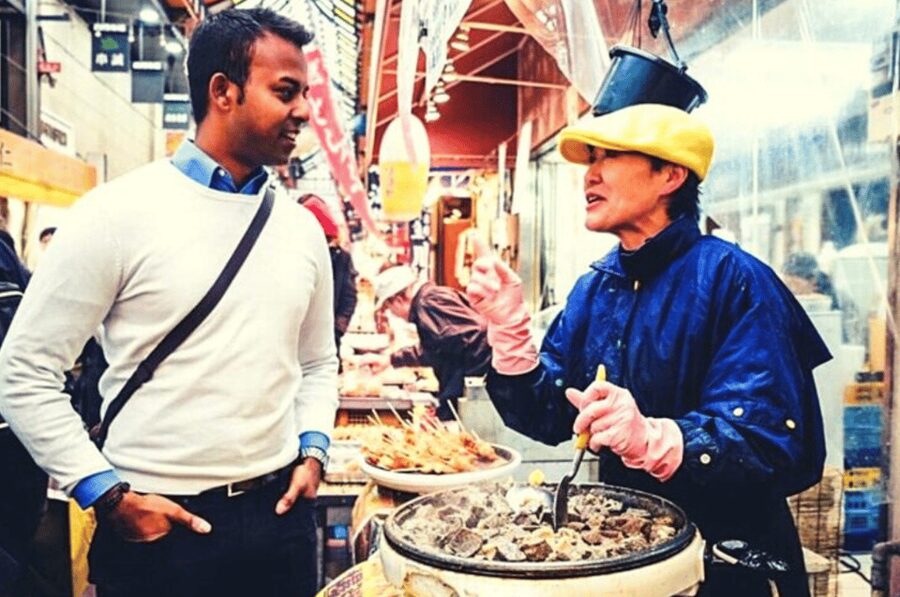
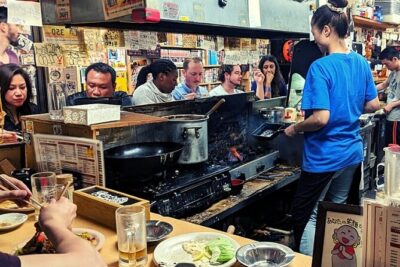
Kuromon Market is the kind of place where a simple walk can turn into a full meal. In two hours, you may try scallops, tuna sashimi, gobo tempura, okonomiyaki, pickled vegetables, dried fish, green tea, and cherry blossom red bean mochi, all while moving through a market with more than 200 years of food tradition. The English-speaking guide is especially useful here, since many vendors speak little or no English.
I like the generous tasting format, with five to seven dishes plus three to four smaller samples. I also like the small group size, limited to nine people, which lets guides such as Anna, Hikaru, Taka, Mico, Michael, and Hakuri explain what you are eating and help with ordering. The main drawback is clear: this is a seafood-focused tour, so it is not suitable for vegans and may disappoint anyone hoping for a broad selection of meat or vegetable dishes.
Key points at a glance
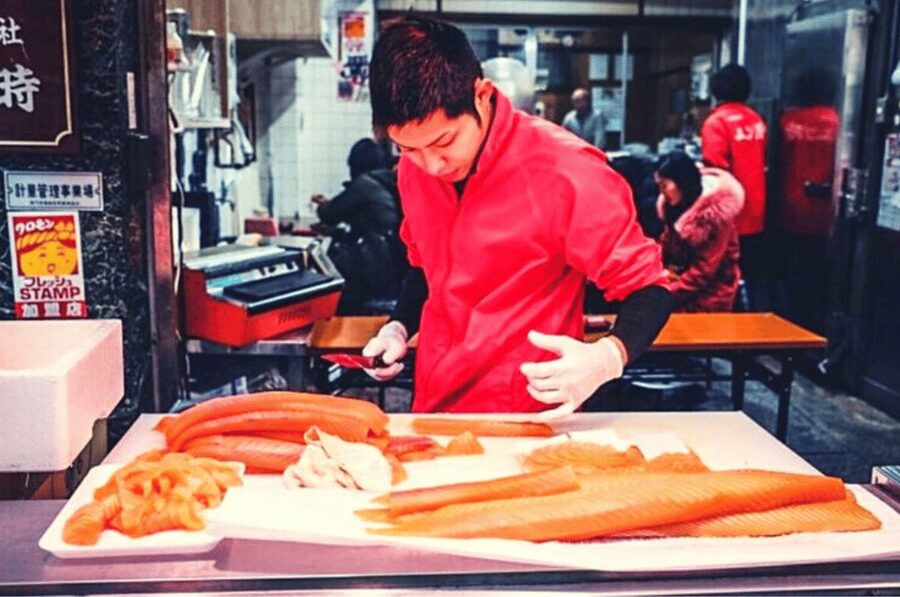
- Five to seven full tasting dishes: Expect local favorites and market specialties rather than one large meal.
- Three to four extra samples: Green tea, pickled vegetables, dried fish, wasabi beans, and similar bites add variety.
- Seafood is central: Scallops and tuna sashimi are among the listed tastings, with sweets providing some balance.
- Guides handle the hard part: Your English-speaking guide orders food, explains ingredients, and helps you navigate handwritten menus.
- Small groups matter: With no more than nine participants, it is easier to hear explanations and stay together in the crowded market.
- Arrive early: Meet at Nipponbashi Station Exit 6 at 1:45 to 1:50 p.m. for the exact 2 p.m. start.
Why Kuromon Market makes a good first food stop in Osaka
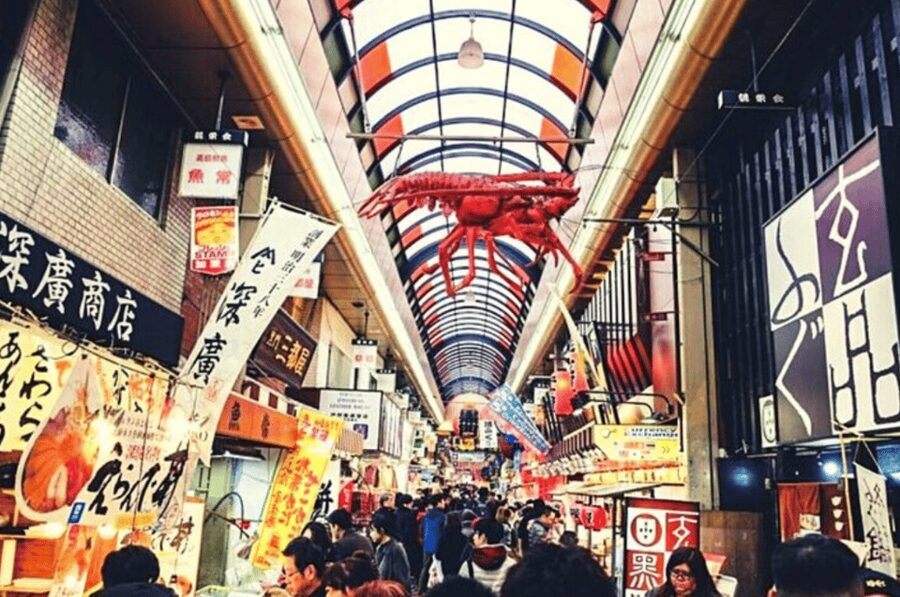
Osaka has a long reputation as Japan’s food capital, and Kuromon Market gives you a compact way to see why. The covered market has drawn food lovers for over two centuries. Its vendors specialize in particular dishes, and many food traditions have passed from one generation to the next.
That history matters because Kuromon is not simply a row of restaurants designed for sightseeing. It is a working food district where vendors prepare and sell ingredients and ready-to-eat dishes. The experience comes from watching food being selected, prepared, served, and eaten in the same place.
You will also get a stronger sense of the market than you would by wandering alone with no plan. Kuromon can be hard to read at first. Signs may be handwritten in Japanese calligraphy, menus are not always available in English, and ordering often requires more than pointing at a photograph.
Your guide gives the market a clear shape. Instead of stopping at random stalls, you follow a planned tasting route and learn what makes each item distinct. That is useful on a short visit, especially if this is your first day in Osaka.
A few more Osaka half-days to weigh up
- Osaka Go Karting Tour with Funny Costume
★ 5.0 · 2,658 reviews - Osaka Castle: Museum and Tower Entry Ticket
★ 4.5 · 2,380 reviews - Osaka: Shinsekai Food Tour with 13-15 Dishes at 5 Eateries
★ 4.8 · 2,204 reviews
Meeting at Nipponbashi Station Exit 6
The tour begins at the top of the stairs outside Exit 6 of Nipponbashi metro station. The meeting point is convenient if you are already exploring central Osaka, but you should not cut the timing close.
The start is exactly 2 p.m. You are asked to arrive around 1:45 to 1:50 p.m., and that advice is worth following. On a two-hour food tour, the group cannot easily wait or retrace its route for a late arrival.
Once the group is together, the guide gives a short introduction before entering the market. The small group limit of nine helps here. You can usually hear the guide more easily than in a large food tour, and the guide can keep the tastings organized without making the experience feel like a formal lecture.
The guide assigned to your departure may vary. Past tours have been led by Anna, Hikaru, Taka, Mico, Michael, and Hakuri. Their backgrounds and approach may differ, but the role remains the same: explain the food, manage ordering, and connect the dishes to Osaka’s culinary culture.
Scallops, tuna sashimi, and the seafood heart of the market
The first major point to understand is that Kuromon is strongly associated with fish and seafood. The advertised tastings include scallops and tuna sashimi, and the food selection can also include shellfish, fish-based dishes, and other savory market specialties.
The scallop offers a good example of why a guide helps. A vendor may prepare a familiar ingredient in a way you would not know to request, and the guide can explain what you are receiving and how it was cooked. You are not just checking seafood off a list. You are learning how the market presents it.
Tuna sashimi brings a different texture and style to the meal. For some people, this will be a highlight. For others, raw fish may be the main concern, so consider your comfort level before booking.
One useful point from the food selection is the range of textures. You are not eating seven versions of the same item. The meal may move between raw fish, cooked shellfish, fried vegetables, savory pancakes, pickles, and sweets. That keeps the two hours interesting, though seafood remains the main theme.
If you do not eat fish or shellfish, this is the wrong experience for you. The information specifically rules out vegans, and one past participant found the seafood emphasis less clearly stated than expected. Vegetarians should also ask before booking, since the tasting plan is built around fish, shellfish, and other local specialties.
Gobo tempura and the pleasure of small unfamiliar bites
Gobo tempura is one of the more distinctive foods on the list. Gobo is burdock root, a common Japanese ingredient that many first-time visitors may not recognize. In tempura form, it adds a crisp, earthy item to a tasting menu otherwise heavy on seafood.
This is where a market tour can be more useful than a standard restaurant meal. A restaurant menu may tell you the name of a dish, but a guide can explain the ingredient and show you how it fits into Japanese cooking.
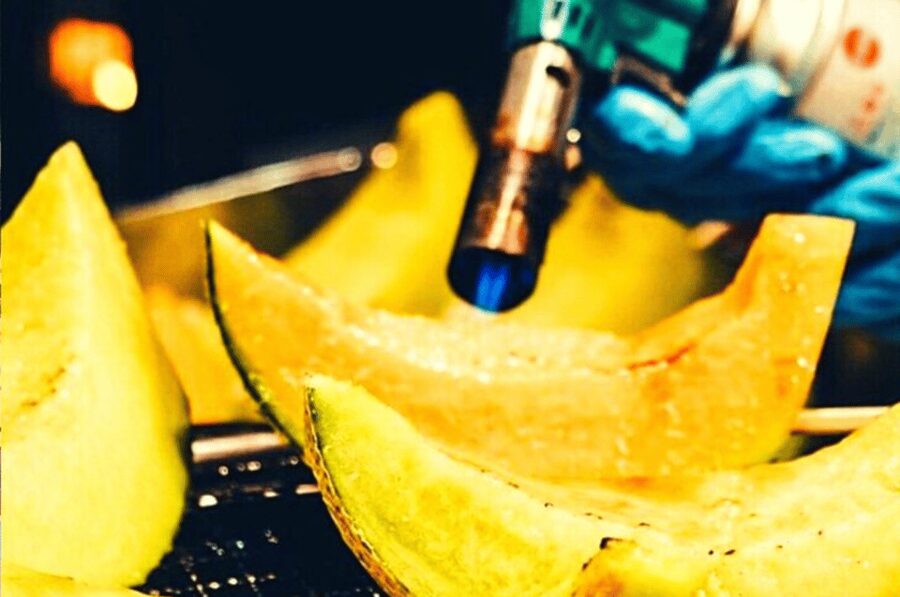
The smaller sample tastings add another layer. You may try pickled vegetables, dried fish, wasabi beans, or green tea. None of these is likely to fill you up by itself, but together they show how Japanese food uses sharp, salty, sweet, bitter, crisp, and savory flavors.
The wasabi beans, in particular, can bring a strong hit of heat. You do not need to treat every sample as a challenge. The point is to notice how the flavors work, and your guide can tell you what to expect before you try each one.
The tasting style also helps you manage a full meal. You receive several bites at different stops rather than sitting down immediately with one large dish. Some food is served as a proper portion, while other items are sample-sized.
Same base, a completely different sort of day:
- Osaka Food Tour: 13 Dishes at 5 Local Eateries
★ 5.0 · 2,149 reviews - Hungry Osaka Street Food Tour:15 Tastings & 3 Drinks with a Local
★ 5.0 · 1,727 reviews - Osaka: teamLab Botanical Garden Entry Ticket
★ 4.5 · 1,710 reviews - Osaka: Tea Ceremony Experience
★ 4.9 · 1,426 reviews
Okonomiyaki brings Osaka to the plate

Okonomiyaki is one of Osaka’s best-known local foods, so its place on the tour makes sense. The dish is often described simply as a savory Japanese pancake, but that short label does not tell you much about its texture, toppings, or place in Osaka food culture.
Here, the value comes from tasting it as part of a wider market route. You can compare its cooked, filling character with the cleaner taste of sashimi or the crisp texture of tempura.
Your guide also provides context about Osaka’s food traditions, the market, and the vendors. Guides with a strong cooking background, such as Hakuri, can answer detailed questions about ingredients and preparation. Others, including Anna and Hikaru, have been praised for their warmth, food knowledge, and connections with the market vendors.
Do not expect a full cooking class. This is a tasting walk, not a lesson where you prepare the dishes yourself. You are there to eat, listen, and ask questions while moving through the market.
Sweet bites and green tea soften the seafood focus
The tasting plan includes cherry blossom red bean mochi, which gives the meal a needed sweet turn. Mochi has a soft, chewy texture, while the red bean filling adds sweetness without tasting like a Western dessert.
The cherry blossom element also gives you a seasonal Japanese flavor, though the exact presentation may vary. It works well near the end of a meal because it feels light compared with the savory seafood and fried foods.
Green tea is another useful counterpoint. It helps reset your palate after salty or oily bites and gives your guide a chance to explain a familiar part of Japanese food culture.
There may also be additional sweets available for purchase. One guide helped a participant order mochi to take away after the tour, but that extra purchase was not part of the included tastings. You should treat such purchases as optional and separate from the $61 tour price.
What the guide adds to the experience
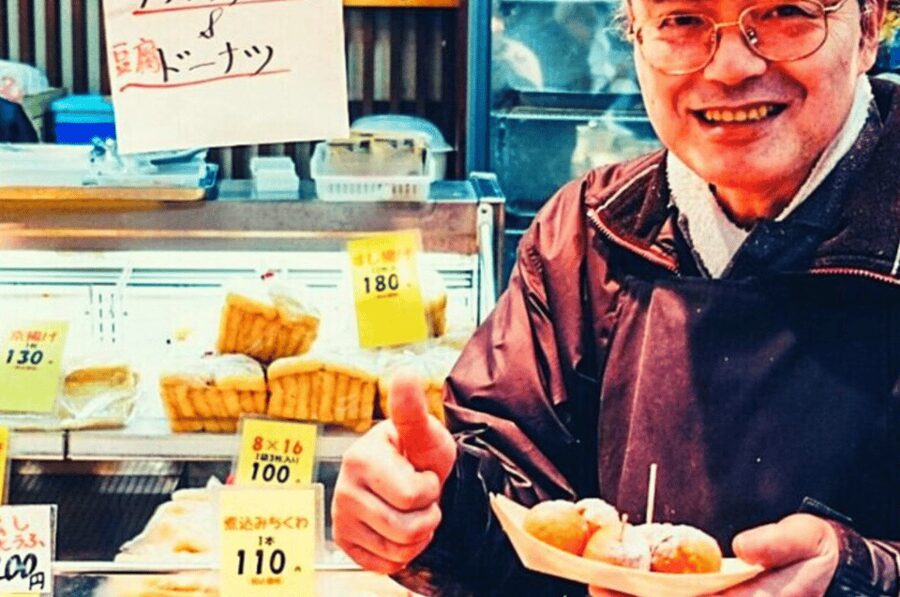
The guide is the main reason to choose this tour instead of simply walking through Kuromon Market on your own. You can see the market without paying for a tour, but you may not know which stalls to choose, what the handwritten signs say, or how to order several different items efficiently.
An English-speaking guide removes that friction. The guide orders for you, explains ingredients and cooking methods, and helps the group move from one tasting to the next.
This is particularly useful for visitors who have never ordered food in Japan. The issue is not only language. Even if you read Japanese, handwritten menu boards can be difficult to decipher, and market vendors may not speak English.
The strongest guide feedback centers on food knowledge, history, and personal attention. Anna has been described as warm and well connected with vendors. Hikaru has a food background and has been praised for explaining Japanese food culture. Hakuri is also a chef and has handled detailed questions about the dishes and Osaka’s food scene.
You should still keep expectations realistic. The guide’s name is not guaranteed, and each guide will have a different personality. What you can count on is an English-speaking host and help with the practical side of the market.
How filling is two hours of tasting?
Although the tour lasts only two hours, the food can amount to a full meal. The listed plan includes five to seven dishes and three to four taste tests, and one past participant had skipped lunch and found the food filling by the end.
That makes the 2 p.m. start useful. You can treat the tour as a late lunch, but do not arrive hungry enough to feel rushed or uncomfortable. The food comes in several rounds, and some items may be more substantial than expected.
The exact amount you eat may depend on the group, the vendors, and the day’s offerings. You should expect plenty of tasting rather than a fixed restaurant menu. If you have a large appetite, you may still want to plan dinner later, but you should not book this expecting to remain hungry after the final stop.
The seafood focus also affects how filling the route feels. Fish, shellfish, okonomiyaki, tempura, and mochi create a varied meal, but the balance will not suit everyone.
Is $61 good value?
At $61 per person, this is not the cheapest way to eat in Osaka. Kuromon Market has many individual stalls, and you could buy food on your own for less if you speak Japanese, know what to order, and are comfortable navigating the market without help.
The price becomes easier to justify if you value several tastings in one outing. Five to seven dishes plus three to four smaller samples would require planning and repeated purchases on your own. The tour also includes the guide’s explanations, ordering assistance, and coordination with vendors.
I see the value in the first visit to Osaka, especially if you want a broad introduction to Japanese market food without spending hours studying menus. The small group is another plus. A nine-person limit is much more manageable than a large group when everyone is eating at different stalls.
The tour is less useful for repeat visitors who already know Kuromon Market and can order comfortably. It is also poor value if you dislike seafood, since the main food selection leans heavily in that direction.
Souvenirs beyond the food stalls
The experience includes a chance to discover Japanese knives and tableware souvenirs. These can be more useful reminders of Osaka than a generic souvenir, especially if you cook at home or enjoy Japanese dining customs.
The tour does not promise a dedicated shopping session or a particular brand. Think of this as an introduction to items you might notice while walking through the market.
Your guide may also offer suggestions for what to do after the tasting. One route included extra time in Dotonbori, and another guide gave recommendations for later food stops. These additions depend on the pace and guide, so do not treat them as guaranteed parts of the itinerary.
Who should book the Kuromon Market tour?
I would choose this tour if you are visiting Osaka for the first time, enjoy trying unfamiliar foods, and want help ordering in a market where English menus are not reliable.
It is especially suited to:
- Couples and friends who want a food-centered afternoon
- First-time visitors who want local context with their meal
- People who prefer several small tastings to one restaurant dish
- Anyone interested in seafood, Japanese snacks, and market traditions
- Visitors who want an English-speaking guide in a small group
I would skip it if you are vegan, pregnant, strongly opposed to raw fish, or hoping for a mostly vegetarian menu. You should also skip it if your schedule is too tight to reach Nipponbashi Station before 2 p.m. The guide cannot wait for late arrivals, and missing the start would undermine the whole experience.
Final call: book it for guided access to Osaka’s food culture
Book the All Inclusive Kuromon Markets Tour if you want a well-organized introduction to Osaka’s food scene, with enough tastings to replace lunch and a guide to handle the language gap.
The best parts are the range of food, the small group, and the guides’ strong grasp of local dishes and market traditions. The main limitation is just as important: this is primarily a seafood experience, not a general Japanese food tour.
Arrive at Exit 6 by 1:50 p.m., come ready for raw and cooked seafood, and leave room for savory, salty, spicy, and sweet bites. At $61, it earns its price when you value expert help and variety more than the lowest possible food bill.
FAQ
How long does the Kuromon Market tour last?
The tour lasts two hours.
Where does the tour meet?
Meet at Nipponbashi metro station, Exit 6, at the top of the stairs.
What time should I arrive?
Arrive around 1:45 to 1:50 p.m. for the exact 2 p.m. start. Late arrivals cannot catch up with the group.
What food is included?
The tasting may include scallops, tuna sashimi, gobo tempura, okonomiyaki, cherry blossom red bean mochi, green tea, pickled vegetables, dried fish, wasabi beans, and other local specialties.
Is the tour suitable for vegans?
No. The tour is not suitable for vegans and has a strong seafood focus.
Is the tour conducted in English?
Yes. The tour includes a live English-speaking guide.
How large is the group?
The group is limited to nine participants.
Just added around Osaka
- Discover Real Osaka: A Cultural Walk with Food & Drink★ 5.0 · 13 reviews
- From Osaka/Kyoto: Kyoto & Nara Day Trip with Optional Lunch★ 4.5 · 79 reviews
- Osaka 6hr Private Walking Tour with Government Licensed Guide★ 5.0 · 174 reviews
- Private Airport transfer Kansai Intl. Airport(KIX) to OSAKA CITY★ 4.5 · 12 reviews
- Osaka: Namba Local Food Walking Tour (Taste 15 Dishes)★ 5.0 · 20 reviews
- Osaka Delights: Traditional Japanese Food Tour★ 4.5 · 33 reviews
- Badminton in Osaka & Kyoto with Locals!★ 5.0 · 15 reviews
- From Osaka or Kyoto: Kyoto and Nara 1-Day Bus Tour★ 3.5 · 141 reviews
Osaka Tours, compared.


Shinsekai Food Tour with 13-15 Dishes at 5 Eateries
Read our review →
Osaka Food Tour: 13 Dishes at 5 Local Eateries
Read our review →
Hungry Osaka Street Food Tour:15 Tastings & 3 Drinks with a Local
Read our review →

Hotspots & Hidden Gems Walking Tour Private or Group
Read our review →Browse the lists this tour appears in