
Reviewed · NAGOYA TOURS
From Nagoya: Inuyama Castle, Ena Gorge, Magome, Tsumago Tour
The best part of this day is the contrast: you move from a hilltop samurai castle to a quiet gorge, then into two preserved post towns along the old Nakasendo Road. Inuyama Castle gives you a rare look inside an original castle tower, while Magome and Tsumago offer slow streets, wooden houses, waterwheels, and mountain scenery.
I like the easy round-trip bus transport from Nagoya Station, especially because these places are spread across central Honshu and take effort to connect by public transport. I also like the generous free time at the villages, which lets you choose between local snacks, photographs, small shops, or simply walking the old streets. The drawback is a long day with several transfers, plus lots of walking on stone streets and sloping roads.
Key points to know before booking
- Inuyama Castle is the main historic prize: You get admission to one of Japan’s twelve surviving ancient castle towers.
- Ena Gorge changes with the seasons: Cherry blossoms, summer greenery, autumn color, or winter birds give the stop a different mood.
- Magome-juku is your main food and free-time stop: Plan to use this hour and a half for snacks, lunch, shops, and photos.
- Tsumago-juku is smaller and quieter: You get about an hour to explore its preserved streets.
- The day runs for 10 hours: Expect about two hours back to Nagoya after Tsumago, so this is not a relaxed half-day outing.
- Guiding is in Japanese or Chinese: English support is not listed, although a past Italian-speaking participant used translation audio with the guide.
Why this route works from Nagoya
Nagoya is a useful base for central Japan, but the castles, gorge, and Nakasendo villages are not gathered around one convenient rail line. This tour solves that problem with a bus, taking you to four very different places without asking you to manage several train connections and local buses.
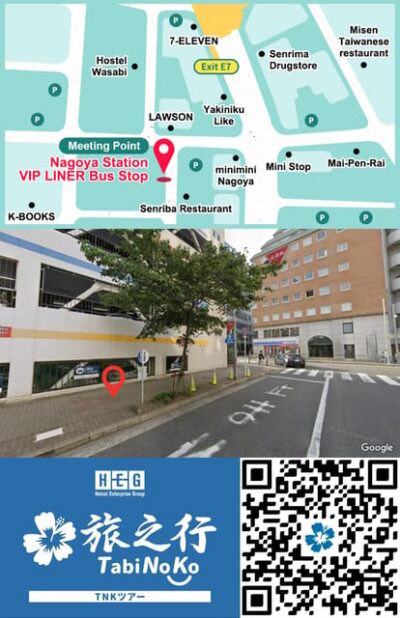
You meet near the west exit of Nagoya Station. Look for the BIC CAMERA, then find the Ministop convenience store behind it. Arrive at least 10 minutes before departure. That extra time matters in the station area, where a wrong exit can quickly turn into a rushed start.
The tour costs $60 per person. For that price, you receive round-trip transportation, a live guide, and admission to Inuyama Castle. Meals, drinks, and personal purchases are not included, but the price is still appealing if you want to see several out-of-town sights in one day.
The value is strongest for you if convenience matters more than choosing your own train times. A self-guided version may give you more control, but transport connections would take planning, and a missed connection could spoil the day. Here, the bus handles the long stretches, leaving you to focus on the stops.
A few more Nagoya half-days to weigh up
- From Nagoya: Gujo, Hida Takayama, and Shirakawa-go Day Tour
★ 4.4 · 398 reviews - Ghibli Park 1-Day Bus Tour from Nagoya
★ 4.5 · 277 reviews - From Nagoya: Hida Takayama & Shirakawa-go Tour w/Opt. Lunch
★ 4.5 · 256 reviews
Inuyama Castle, a rare original tower
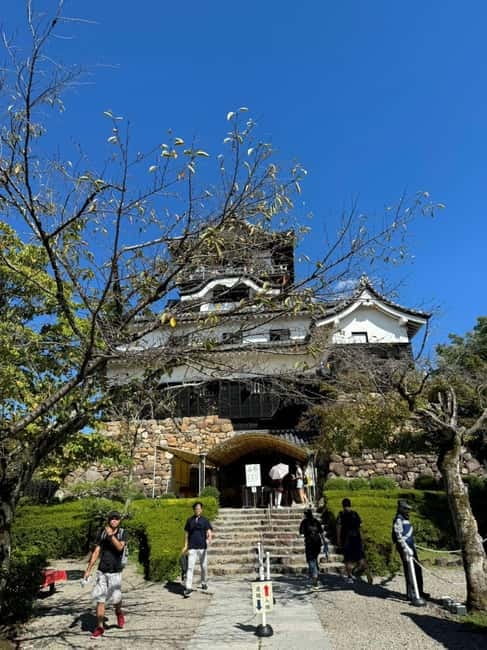
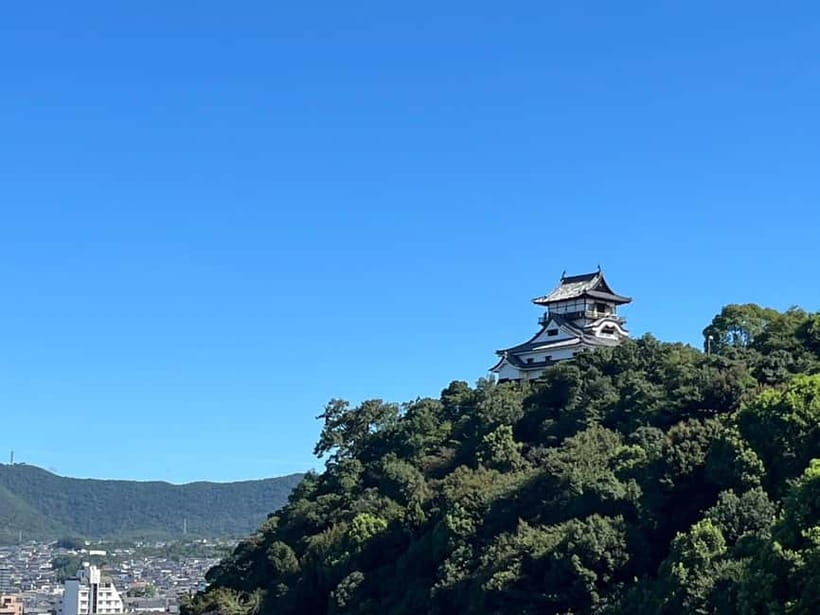
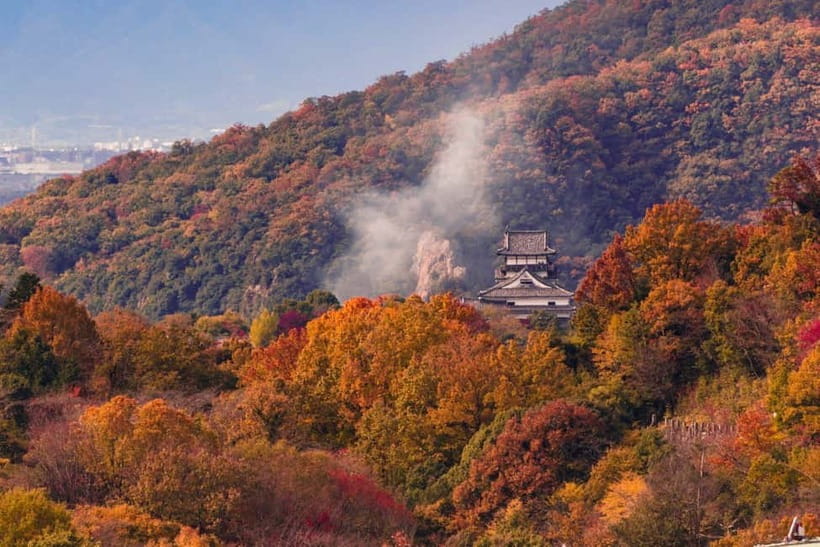
The first stop is Inuyama Castle, built during the Muromachi Shogunate period. It sits on a hill beside the Kiso River, giving the approach a strong sense of place. The castle is also called Baidi Castle, a name connected with the Chinese poet Li Bai and his poem Early Departure from Baidi Castle.
What makes Inuyama especially valuable is its age and survival. It is one of only twelve ancient castle towers still existing in Japan. Along with Himeji Castle, Matsumoto Castle, and Hikone Castle, it is counted among Japan’s four National Treasure castles.
The tower looks compact from outside, with three visible floors. Inside, it has four floors and two underground levels. That unusual arrangement gives you more to explore than its modest exterior suggests.
You have about an hour here for a guided visit, sightseeing, and walking. The time is enough for a focused look, but it is not enough for a slow, detailed castle study. Wear shoes you can manage on stairs and uneven surfaces. The castle visit is the part of the day where practical footwear matters most.
The included ticket removes one extra cost and keeps the group moving. You do not need to arrange entry separately. Bring your camera, but also pay attention to the structure itself. A castle like this is valuable not just for the river view, but for the chance to see an old Japanese tower in a form that has survived rather than been rebuilt as a modern replica.
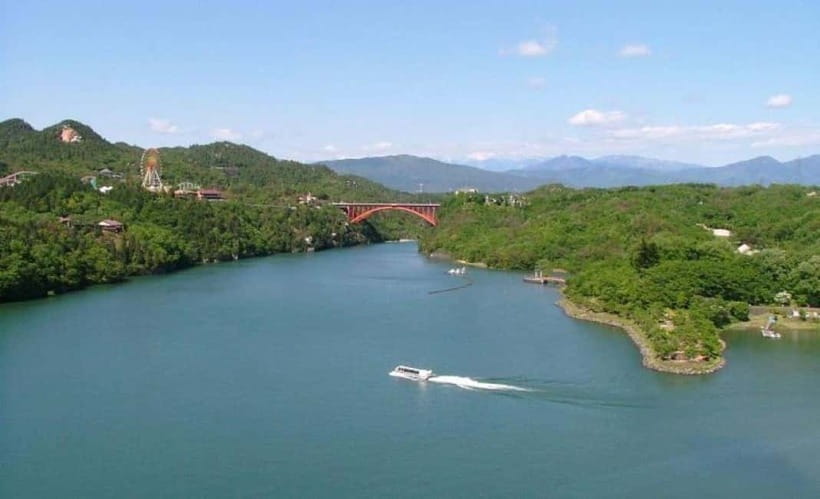
Ena Gorge and the red bridge
After Inuyama, the bus continues toward Ena Gorge. The transfer takes about an hour and a half, so this is a good point to settle in, drink water, and rest your feet.
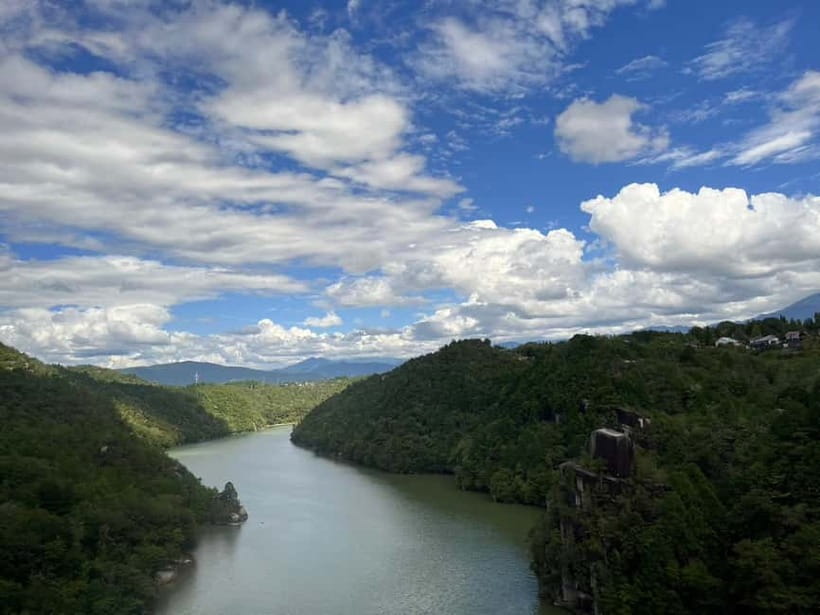
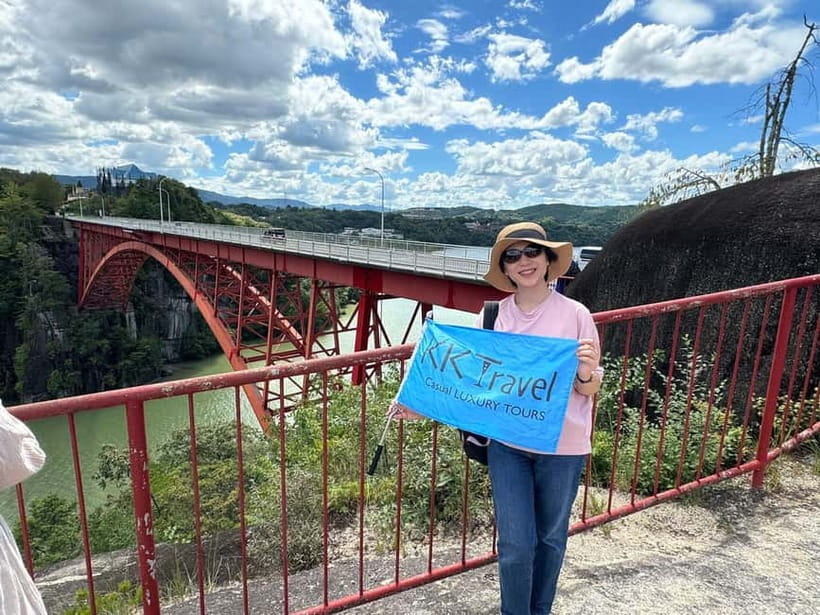
Ena Gorge is not an untouched natural river valley. It is a man-made lake formed when the Kiso River was blocked for the Oi Dam around 80 years ago. That fact adds an interesting layer to the view. You are seeing nature shaped by engineering, with the lake extending from the dam area toward the Nakatsu River upstream.
The gorge is known for unusual rock formations created by natural erosion. Umbrella Rock is the best-known example, rising from the ground in a shape that looks like an umbrella or a spike. It is a nationally protected natural area. Brown moss on red rock adds color and texture to the gorge.
The stop here is short, about 30 minutes. That is enough for a guided look and photographs, but not for an extended walk along the water. If you like quiet scenery, this may feel too brief. If you prefer a day with several different sights, the short stop keeps the schedule moving.
The setting changes through the year:
- In spring, around 200 cherry trees bloom in Ren Park, with azaleas adding another layer of color.
- In summer, the red Ena Gorge Bridge contrasts with the thick green trees.
- In autumn, red and maple leaves reflect across the lake.
- In winter, mandarin ducks and starlings make the area useful for bird watching.
The gorge is best understood as a scenic pause between the castle and the old post towns. Take a few minutes to look beyond the bridge and water. The rocks, dam-created lake, and wooded slopes explain why the place has a different character from the villages later in the day.
Magome-juku, old Nakasendo streets and local food
The next transfer takes about 45 minutes, bringing you to Magome-juku. This is the main lunch and free-time stop, with about an hour and a half for food, walking, shopping, and sightseeing.
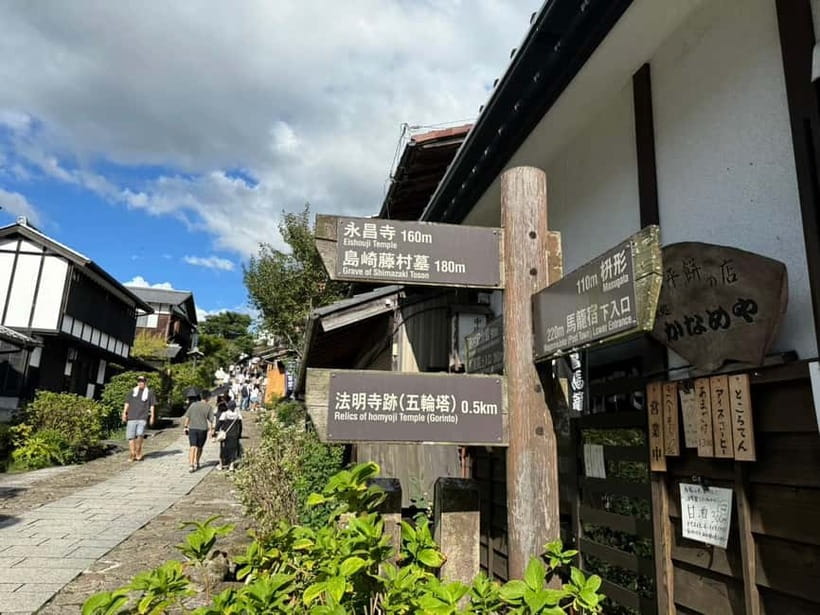
Magome was the 43rd of the 69 post stations on the Nakasendo Road during the Edo period. The route connected Edo, now Tokyo, with other parts of Japan across roughly 540 kilometers. Magome was about 332 kilometers from Edo Nihonbashi, the road’s starting point.
That old road system was built after Tokugawa Ieyasu unified the country. Five major roads began from Edo, and the Nakasendo became an important route for merchants and other people crossing the country. Magome’s steep position on a mountain road explains its stone paving and uphill feel.
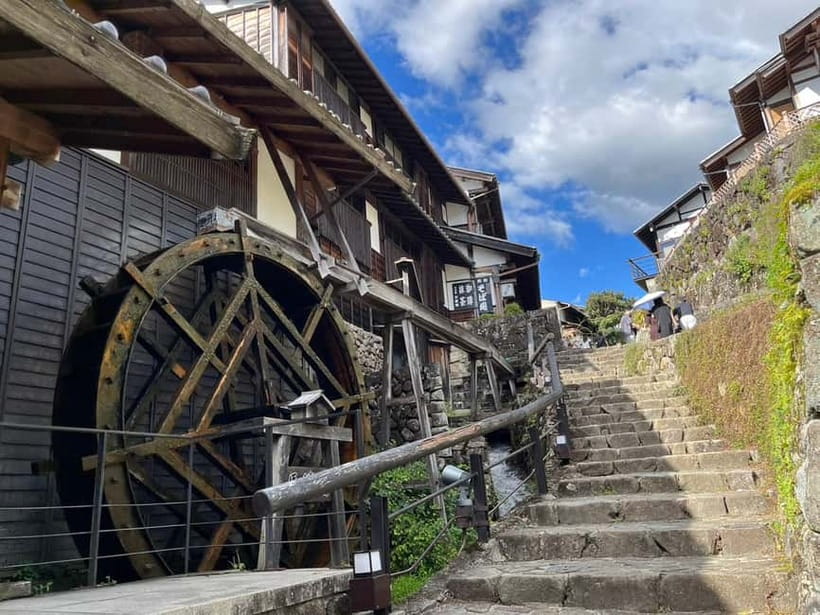
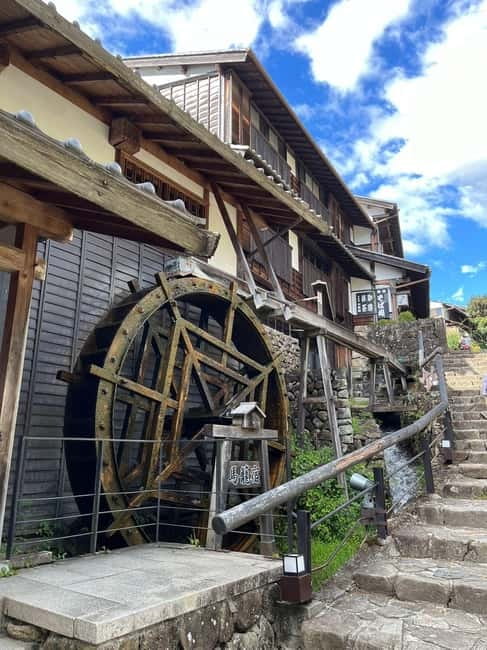
Today, the street remains lined with wooden buildings. You will find old tea shops, izakayas, art shops, and accommodations. Wells and waterwheels have also been preserved, while flowers outside the houses soften the stone and timber setting.
This is the stop where you should make your own choices. You can sit down for a meal, pick up local snacks, browse small shops, or use the time for photographs. Dining is not included, so carry cash. The information for the tour specifically warns that not every place accepts credit cards.
Magome is attractive, but it can feel busy compared with Tsumago because it has more shops and food options. You should also expect uneven stone streets and slopes. Comfortable shoes are not a minor suggestion here. They make a real difference after a morning of castle stairs and gorge walking.
The schedule gives you enough time to enjoy Magome without making lunch a rushed five-minute stop. Still, you cannot explore every shop at leisure. I would decide early whether food or photographs matter more to you, then use the remaining time for the other.
Same base, a completely different sort of day:
- Hiking the Historic Nakasendo Trail [1 Day Tour from Nagoya]
★ 5.0 · 104 reviews - Nagoya Highlight Tour guided by a friendly local
★ 5.0 · 86 reviews - Nagoya: Japanese Traditional Sweets making and Tea Ceremony
★ 4.9 · 76 reviews - Magome-juku, Tsumago-juku & Ena-kyo 1d Bus Tour from Nagoya
★ 4.6 · 75 reviews
Tsumago-juku, a smaller post town
From Magome, the bus reaches Tsumago-juku in about 30 minutes. You get roughly an hour for a guided visit and free time.
Tsumago is described as a charming small place, and its appeal comes from scale. The preserved buildings and quieter streets create a gentler finish than the more commercial parts of Magome. You can walk, look into the traditional streetscape, and take photographs without needing a long list of attractions.
The old route between Magome and Tsumago is now a popular hiking path and has received one star in the Michelin Green Guide. This tour does not present the full route as a dedicated hike, so do not book it expecting a long walk between the villages. Instead, you visit both settlements by bus and explore each one on foot.
That distinction matters. The tour gives you the pleasure of seeing both Nakasendo towns, but it does not provide the same experience as walking from one to the other. If the historic road itself is your main goal, you may want a separate hiking plan. If you want an efficient introduction to the villages, this format is more practical.
Tsumago is also a good place to slow down at the end of the sightseeing portion. By this point, you will have seen a castle, a gorge, and Magome’s shops. Use the final hour for details you may have missed earlier: old wooden facades, the line of the road, preserved features, and the overall feel of a former post station.
The bus day: timing, language, and comfort
The full outing lasts 10 hours. The return trip from Tsumago to Nagoya takes about two hours, and the earlier transfers add up as well. This is a full sightseeing day, not a quick regional excursion.
The route includes approximately:
- One hour from the meeting point to Inuyama
- One hour at Inuyama Castle
- One and a half hours to Ena Gorge
- About 30 minutes at the gorge
- About 45 minutes to Magome
- One and a half hours at Magome
- About 30 minutes to Tsumago
- One hour at Tsumago
- About two hours back to Nagoya
The listed driver languages are Japanese and Chinese. English guiding is not promised. That is important if you need detailed commentary in English. Some previous participants found the guide’s explanations clear through audio translation, and one guide used translation tools to communicate with an Italian-speaking passenger. Another person praised a guide who could speak three languages, but you should still book with the stated language information in mind.
The positive side of this arrangement is that the guide can explain routes, meeting times, and practical details at each stop. Clear instructions matter when a day has four sightseeing areas and several departures to catch.
Seat selection is not specified. If choosing your exact seat is important to you, check before booking rather than assuming it is available.
What to bring for this particular day
Pack lightly, but bring the basics. You will spend time outdoors and on foot in several different settings.
- Comfortable walking shoes for castle stairs, slopes, and stone streets
- Water for the transfers and walks
- Cash for food, drinks, and personal expenses
- Weather-appropriate clothing
- A camera or phone for the castle, gorge, bridges, and preserved streets
Check the forecast before leaving Nagoya. Ena Gorge looks different in every season, but rain, cold, or strong heat will affect how much you enjoy the walking portions. A small layer you can remove or add is useful on a long day.
Free cancellation is available up to 24 hours before departure for a full refund. You can also reserve now and pay later, which helps if your Nagoya schedule is still changing.
Who will get the most from this tour
I would choose this tour if you want a broad sample of central Japan beyond Nagoya and do not want to plan a complex transport day. It suits first-time visitors, couples, families with older children, and anyone who values seeing several historic places in one outing.
It is also a good fit if you like variety. Inuyama is about architecture and samurai-era history. Ena is about water, rock, and seasonal scenery. Magome offers food and shops. Tsumago provides a smaller, more restrained old-town finish.
I would think twice if you dislike long bus transfers, need extensive English commentary, or want a slow visit at each stop. The schedule is carefully packed. You get a useful amount of time at Magome and Tsumago, but only a short look at Ena Gorge, and the castle visit is focused rather than leisurely.
Should you book it?
Book this tour if your priority is efficient access to four hard-to-connect sights from Nagoya. The $60 price is strong for transportation, a live guide, and Inuyama Castle admission, especially when you factor in the time and transfers you would otherwise arrange yourself.
Skip it if you want a dedicated Nakasendo hike, a long castle visit, or guaranteed English commentary. For everyone else, this is a practical day with real variety, good seasonal appeal, and enough free time to make Magome and Tsumago feel like places rather than quick photo stops.
FAQ
Where does the tour meet in Nagoya?
The meeting point is at the Ministop convenience store behind the BIC CAMERA at Nagoya Station’s West Exit.
How early should I arrive?
You should arrive at the meeting point 10 minutes before departure.
How long does the tour last?
The total duration is 10 hours.
What transportation is included?
Round-trip bus transportation from Nagoya Station is included.
Is admission to Inuyama Castle included?
Yes. The tour includes the Inuyama Castle First Avenue admission ticket.
Are meals included?
No. Dining expenses are not included, so bring cash for lunch, snacks, and drinks.
What languages are available for the tour?
The listed languages are Japanese and Chinese. The driver is also listed as Japanese and Chinese speaking.
Just added around Nagoya
- Walking Small-Group Nagoya City Tour★ 5.0 · 13 reviews
- Nagoya Endoji Food and Cultural Tour★ 5.0 · 12 reviews
- Pub Crawl in Nagoya★ 5.0 · 15 reviews
- Sumo Tournament Experience in Nagoya★ 5.0 · 12 reviews
- Nagoya Street Food Walking Tour of Osu★ 5.0 · 28 reviews
- Private Full-day Nagoya City Tour★ 5.0 · 22 reviews
- Specialties of Nagoya Food Tour★ 5.0 · 12 reviews
- Nagoya: 2026 Hida Takayama Shirakawa-go Light-up Winter Tour★ 3.5 · 16 reviews
Nagoya Tours, compared.

![Hiking the Historic Nakasendo Trail [1 Day Tour from Nagoya]](https://media3.thejapanesetraveller.com/wp-content/uploads/hiking-the-historic-nakasendo-trail-1-day-tour-from-nagoya-400x267.jpg)
Hiking the Historic Nakasendo Trail [1 Day Tour from Nagoya]
Read our review →
Nagoya Highlight Tour guided by a friendly local
Read our review →
Japanese Traditional Sweets making and Tea Ceremony
Read our review →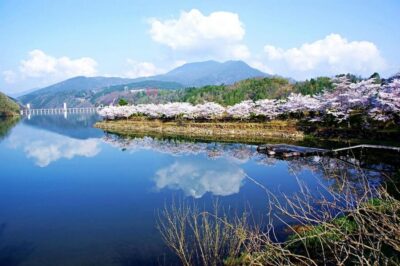
Magome-juku, Tsumago-juku & Ena-kyo 1d Bus Tour from Nagoya
Read our review →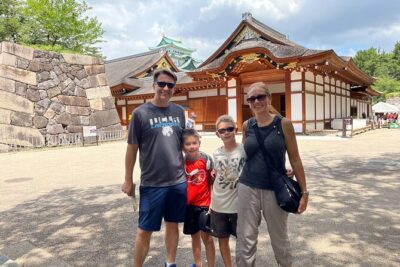
Nagoya Full-day Private Custom Tour with National Licensed Guide
Read our review →Browse the lists this tour appears in